
Bradwell-on-Sea:
Overview
Bradwell-on-Sea is a coastal village in the County of Essex, England. It is located on the Dengie peninsular, 19 miles (xkm) easty of the county town of Chelmsford.
History
Bradwell-on-Sea was the location for Othona, one of the Roman Saxon Shore Forts which defended the Blackwater Estuary, but no Roman remains are visible above ground. During WWII an RAF Airfield was constructed nearby, which acted as both a squadron base and as a landing ground for distressed aircraft returning from Europe. Bradwell nuclear power station now stands on the site and was decommissioned in 2002.
Chapel of St. Peter-on-the-Wall
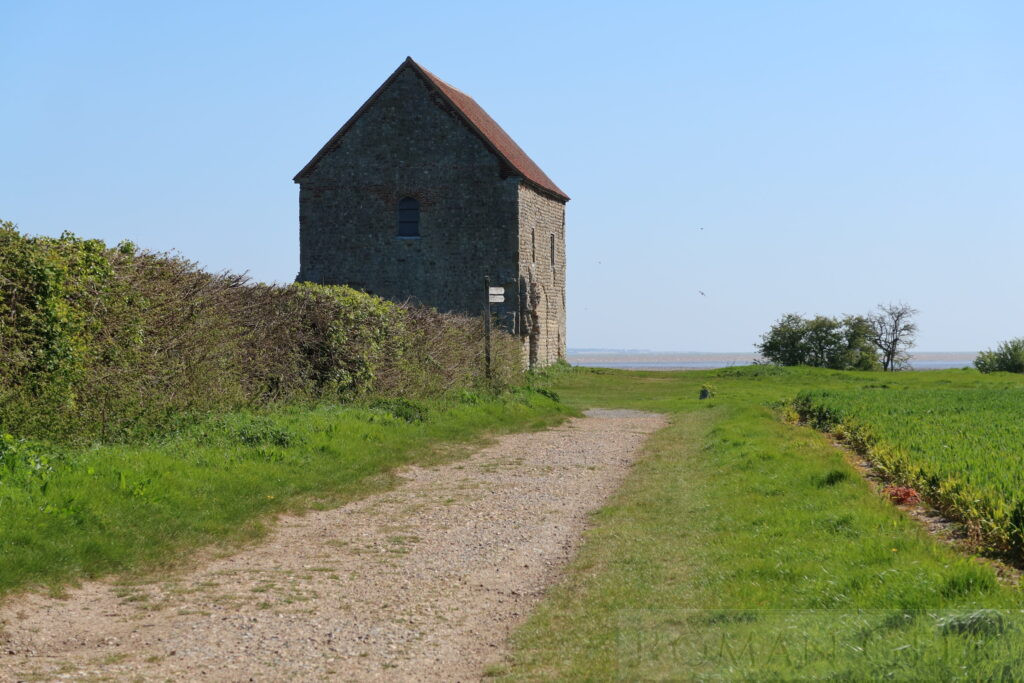
St. Peter’s Chapel, Bradwell-on-Sea
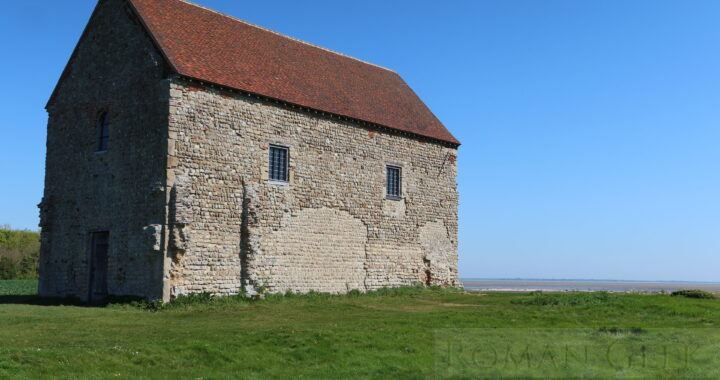
Description: St. Peter-on-the-Wall is a Grade I listed building located over the western gate of the former Roman fort of Othona which guarded the River Blackwater estuary. According to Bede, the Chapel was built by Bishop Cedd between 654-662 CE by reusing the Roman masonry. It is one of the oldest churches in England. No visible Remains of the Fort exist, although the site has been excavated. The footpath to reach the chapel follows the old Roman road and inside it holds a map of the walls and outline of Othona. In 1920 the Chapel was restored and reconsecrated.
It belongs to Chelmsford Cathedral and is looked after by the Rector of St. Thomas’ Church in Bradwell-on-Sea. The Chapel is not normally open to the Public unless Services are held there. The nearby Othona Community is a Christian Community and retreat centre founded in 1946.
Historical Tip: The Chapel of St. Peter-on-the-Wall (654 CE) is considered to be the second oldest Christian church in England still in use as a place of worship, after St.Martin’s church in Canterbury (598 CE).
St. Thomas’ Church
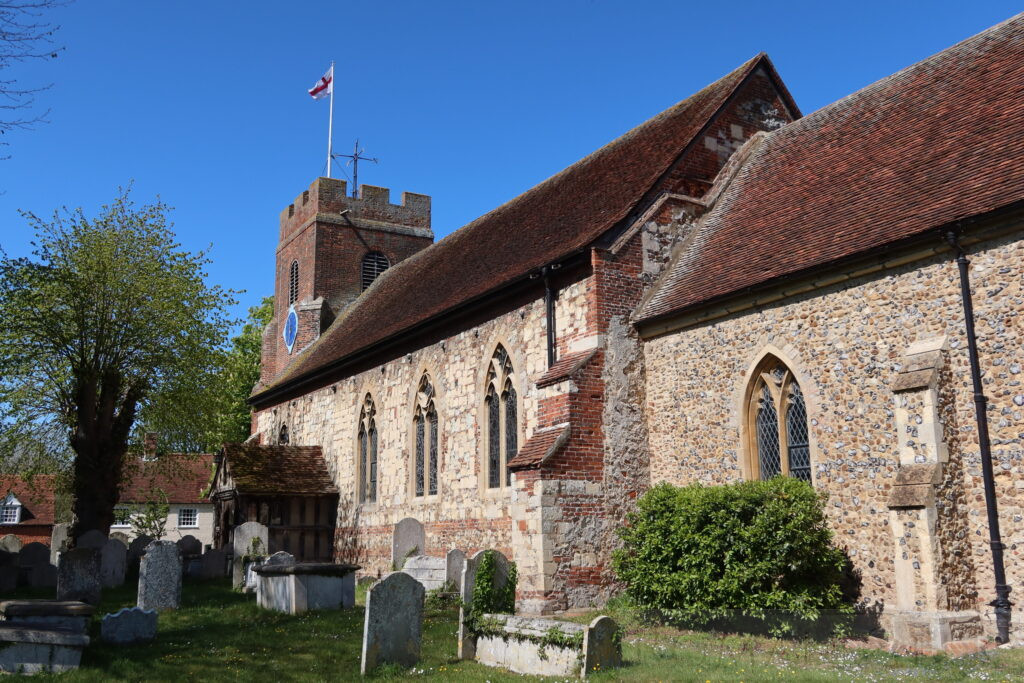
St. Thomas’ Church, Bradwell-on-Sea
St. Thomas’ Church in Bradwell-on-Sea is an active church with regular Services in the Diocese of Chelmsford Cathedral. The 14th century church was rebuilt in 18th century when the brick tower was added and a new Nave built. The 14th century wooden south porch was brought here in the 1950’s when St. Mary Magdalene in Shopland was demolished. There is a mounting block at the gate and the village gaol still stands to one side. The unusual Norman font has four grinning heads supporting it.
Saxon Shore Forts
The Saxon Shore Forts were a chain of Roman Naval Forts in southeastern England that stretched from Portchester to the Wash, whose function was to defend the River estuaries and coastline from Pirate attacks by seaborne invaders. The Forts date to the third century CE and are mentioned in a 4th century CE document known as the Notitia Dignitatum.
Roman Roads
The Pye Road passed nearby connecting London with Caistor St Edmund near Norwich.