
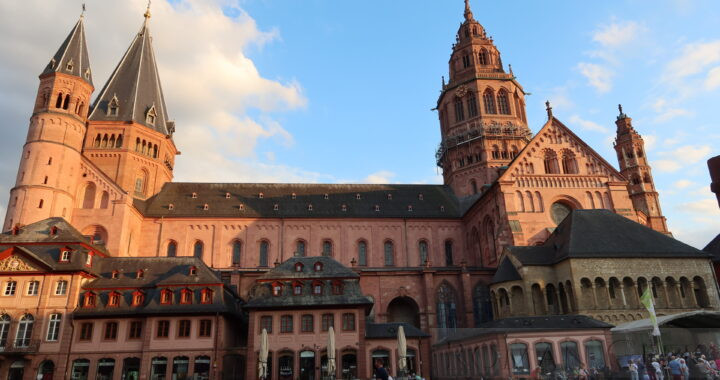
Mainz – A Roman city in Western Germany
Mainz is a cathedral city located east of the confluence of the rivers Rhine and Main, in the State of Rhineland-Palatinate in western Germany. It is famed for Johannes Gutenberg’s invention of the first Printing Press with movable type in 1440 CE.
Roman History
Mainz was a double Roman Fortress and the naval base of Mogontiacum by Drusus in c.12 BCE. It later became the capital of the Roman Province of Germania Superior. Mainz was first occupied by the Legio XVI Gallica between c. 12 BCE and 43 CE. It then became a double fortress with two Legions, with the last legion to occupy the fortress being the Legio IIII Italica (231-c. 400 CE). The Roman Navy on the Rhine, the Classis Germanica, also had a fleet based at Mainz. Forty Lusoriae was the size of the fleet based at here under the Emperor Julian (361-363 CE), according to Ammianus Marcellinus (Roman Antiquities, Book XVIII, chap 2, line 12). One of these 30 noared warships has been reconstructed in the Mainz Ship Museum.
Mainz Walking Tour
- Your geolocation will appear as a blue icon that moves on the map as you walk.
- You may start anywhere on the map and just follow the blue line to the next point of interest.
Things to Do and Places to See in Mainz
1. Rhine Promenade and location of Roman Stone Bridge (No Ruins)
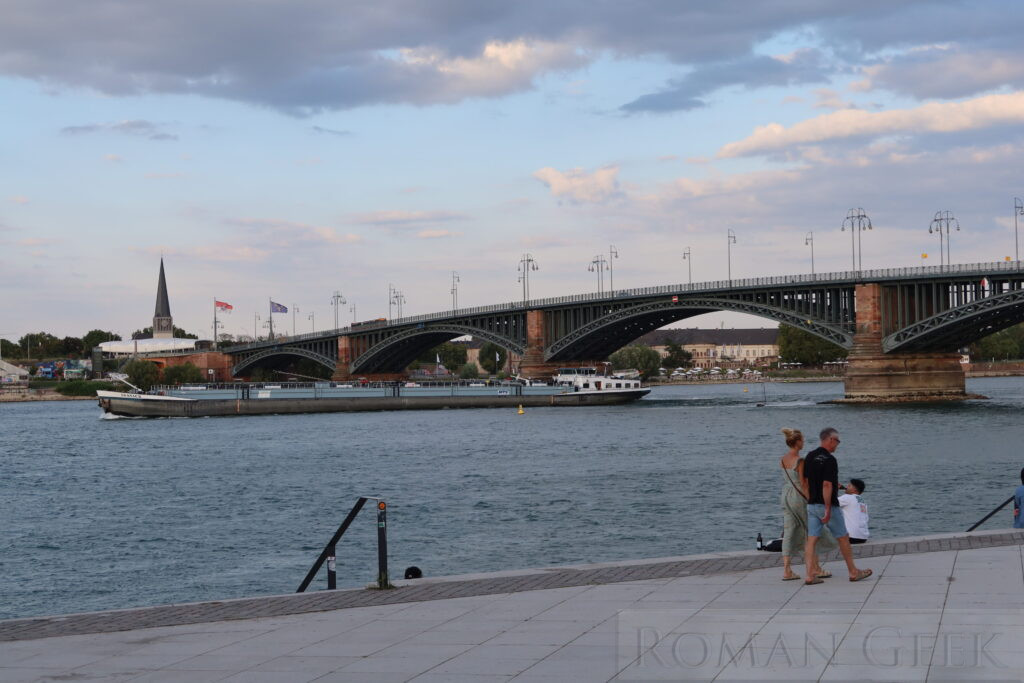
Theodor Heuss Bridge, Mainz
The Rhine Promenade is a popular meeting place for everyone who loves being near water and enjoying views of the Rhine and Theodore Heuss Bridge. There are seating areas along the banks to relax in, with green lawns, wide paths, and playgrounds.
Mainz had one of the four Roman Bridges to cross the Rhine, but no remains are visible today. However, the location is placed at 325 ft (100m) downstream of Theodor Heuss Bridge. It stood from 71-406 CE, and used stone buttresses anchored in the bed of the Rhine to support a wooden deck above.
2. Electoral Palace Mainz
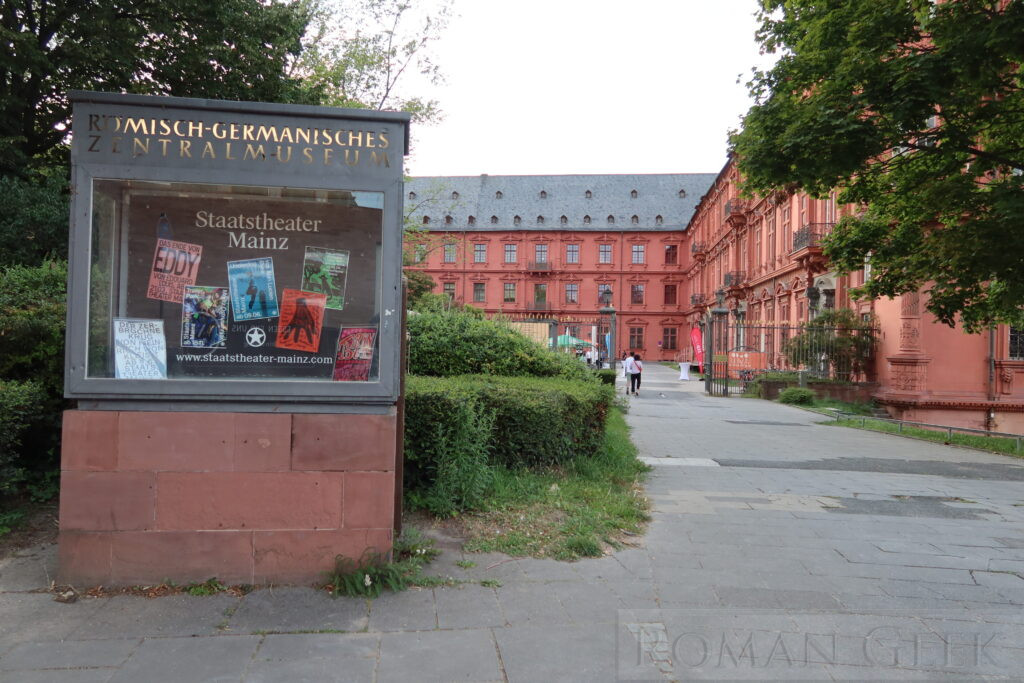
Electoral Palace, Mainz
Built in the German Renaissance style between 1627-1752, this castle was formerly the electoral Palace of the Prince-elector and Archbishop of Mainz. The castle is now marketed as a conference and event venue and not open to visitors.
3. The Jupiter Column
Currently, only the plinth stands in front of the Mainz Parliament Building, with the original in the Mainz Landesmuseum. Jupiter Columns are mostly to be found in Roman Germania. They normally stood on a stone depicting the four gods Juno, Minerva, Mercury and Hercules. Then came a carving personifying the seven days of the week. This supported a column crowned with a statue of Jupiter, often on horseback, trampling a snake.
4. Arch of Dativius Victor
Located in Ernst-Ludwig-Platz, this is a copy of the original 3rd century arch which is now in the Mainz Landesmuseum. There is an Inscription, with a dedication to an unnamed Roman Emperor, thought to have been Valerian (253-260 CE)
5. Landesmuseum Mainz
The Landesmuseum is an Art and History Museum located at Große Bleiche 49-51, 55116 Mainz and holds 200,000 Finds. The Museum holds a copy of a Bronze Roman Abacus, dating from the first century CE. The original is held in the Bibliotheque Nationale de France.
6. Natural History Museum and Gutenberg Museum
Located at Reichklarastraße 1, the Natural History Museum is the largest museum of its kind in southwest Germany. It holds 25,000 finds from the Mosbach sands near Mainz-Amöneburg, consisting of Ice Age animals that lived 500,000 years ago. There is also an extensive mineral collection.
Also located inside the Natural History Museum is the Gutenberg Museum, one of the oldest museums of printing in the world. It is named after Johannes Gutenberg (1393-1468), the inventor of printing from movable metal type in Western Europe. On display is a reconstruction of Gutenberg’s original printing press and a copy of the Gutenberg Bible printed in 1456. The museum also holds a collection of 100,000 book plates.
7. Saint Martins Cathedral
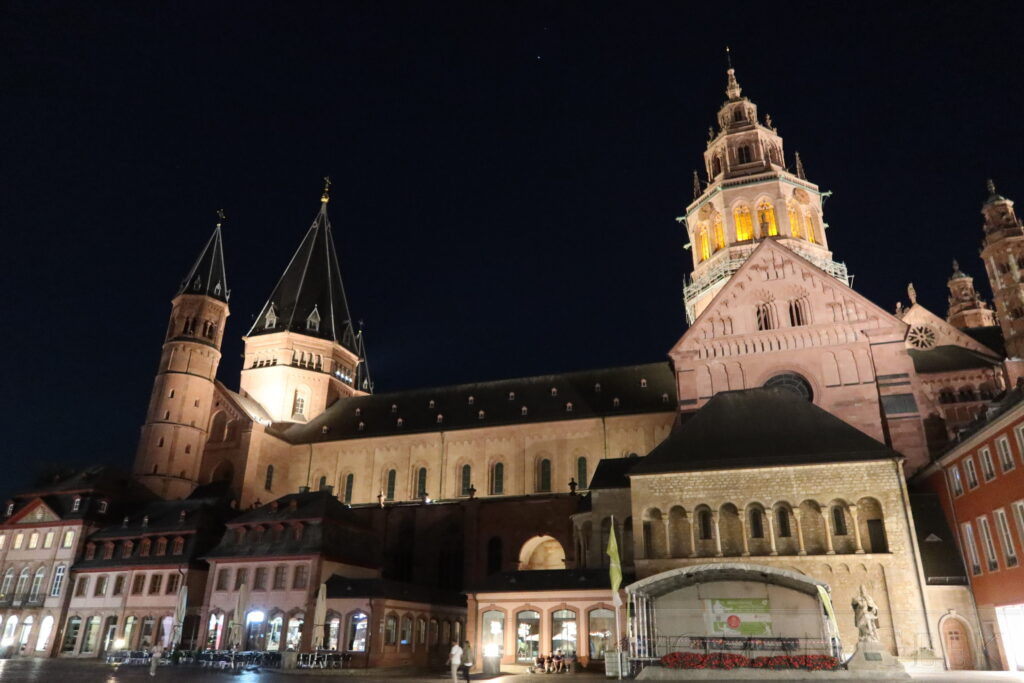
Mainz Cathedral
One of the most important cathedrals in Germany, it was inaugurated in 1,009 CE, and built in the 11th century Romanesque style under Archbishops Willigis and Bardo. It is dedicated to St. Martin of Tours and Saint Stephen. Between 1024 and 1246, the Right to crown German Kings and Queens was given to the Archbishop of Mainz. Seven German monarchs were crowned here. Today, it is the episcopal see of the Bishops of Mainz.
8. Mainz Ancient Ship Museum (Currently closed for Restoration)
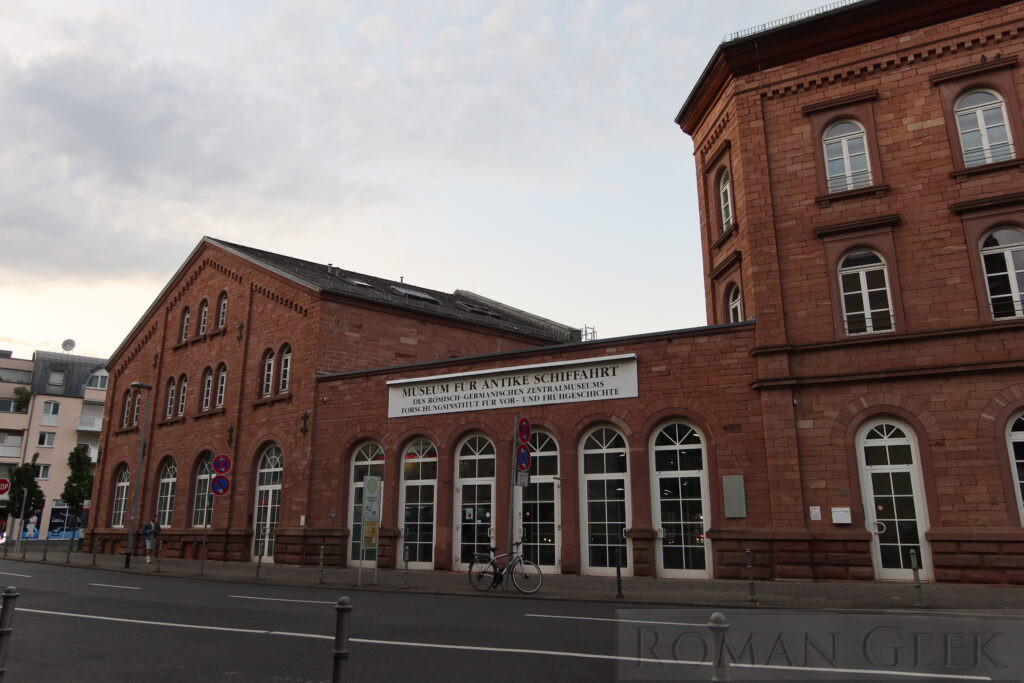
Roman Ancient Ship Museum, Mainz
Mainz Ancient Ship Museum is located at Neutorstrasse 2b, 55116 Mainz. The museum holds reconstructions of a Roman naval galley and a cargo galley, found buried beside the River Rhine. On display are artefacts from the Roman Navy. The Museum was installed in 1994 in the former central covered market near Mainz Römisches Theater station, as a branch of the Romano-Germanic Central Museum. The remains of five Roman vessels dated to the 4th century CE, were found in November 1981-82 during excavation in the course of constructing the Hilton Hotel at Mainz.
9. Roman Theatre
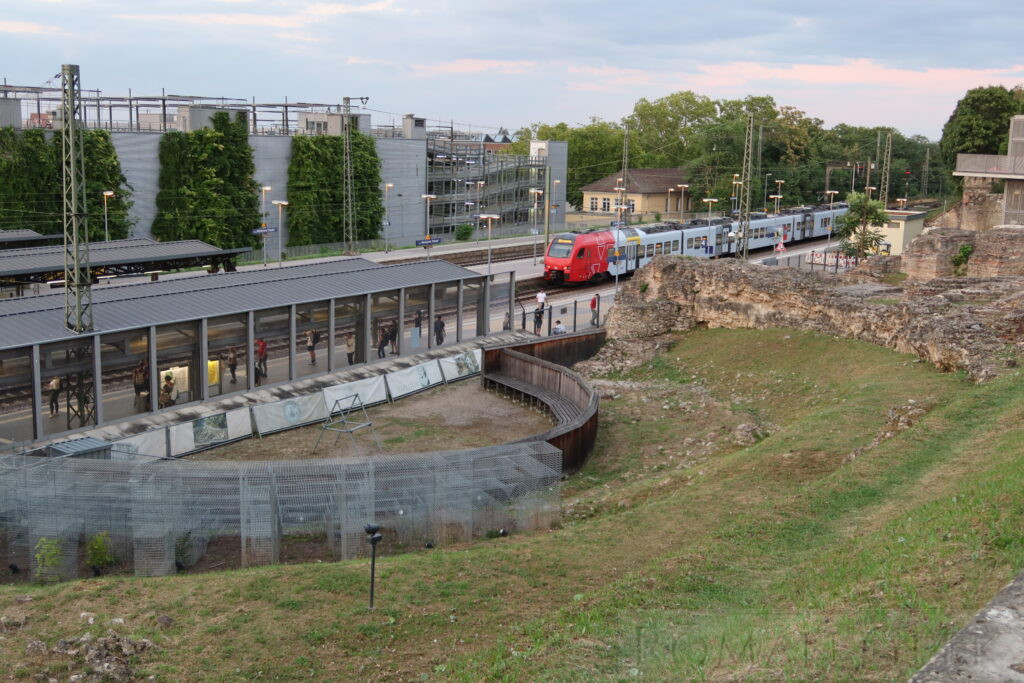
Roman Theatre, Mainz Railway Station
With seating for 10,000 spectators, this was the largest Roman Theatre north of the Alps. The theatre was only excavated in 1999, and restored to a workable site to host concerts beside the new railway station, appropriately called ‘Mainz Roman Theatre Station’. The site of the Roman Amphitheatre has still not been located.
10. Mainz Citadel
Constructed in 1660, the citadel remained part of the defences of Fortress Mainz, a garrison town, until 1919. The citadel is now owned by the city of Mainz and house municipal offices. The citadel is home to the Drusus Monument and next door to it in Building D, is the Mainz City History Museum which has limited opening hours.
11. Mainz City Museum
Located in Building D in the Citadel, the museum offers a detailed overview of the history of the city of Mainz, with particular emphasis on its social and economic past.
12. Drusus Monument (the Drusus stein) – Roman Tower
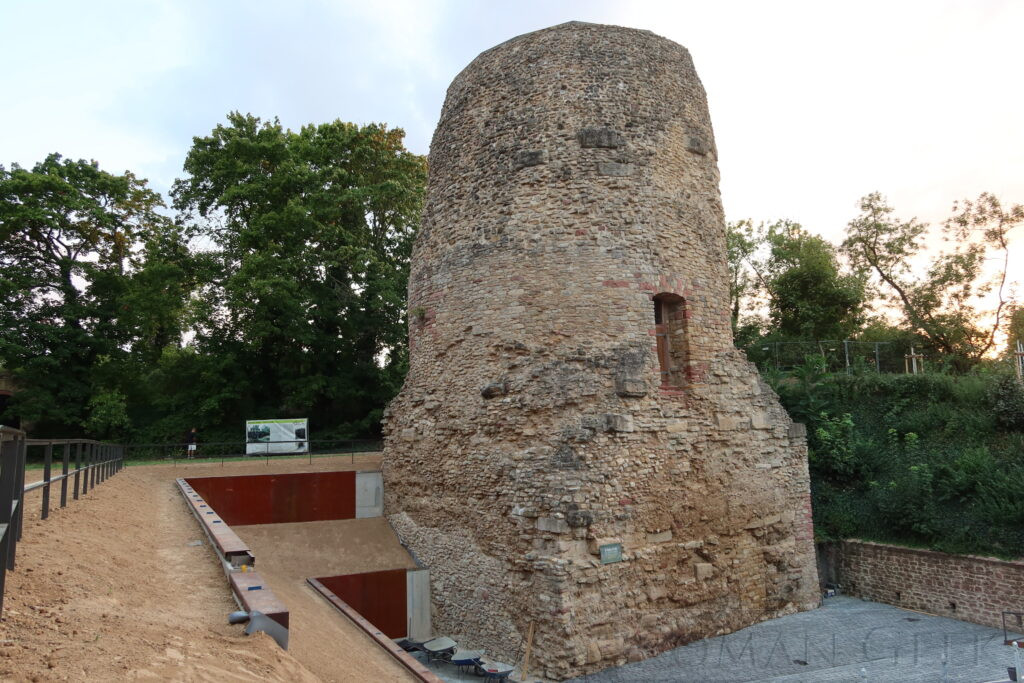
Drusus Monument, Mainz
The Drusus Monument is a 65 ft (20 m) high Roman masonry tower in the grounds of the citadel of Mainz, Germany. It was originally solid stone and covered in marble. Archeologists are agreed that this is the remnant of the cenotaph mentioned by writers such as Eutropius and Suetonius, which was erected in 9 BCE by Roman legionaries in Mainz in honour of the deceased general Drusus.
Further Afield:
13. Roman City Gate (Ruins at Kaestrichtown)
The Roemertor (Roman Gate) is a 4th-century gate located at Kastrich 61, 55116, Oberstadt district, Mainz. Constructed around 360–370 CE using recycled stones from the demolished legionary camp, it is one of the last remaining Roman city gates in Germany. The site features visible, nearly 6 ft 6 inch (2 m) wide wheel ruts in the sandstone.
14. Roman Aqueduct (Ruins)
The aqueduct of Mainz was built during the reign of the Flavian Emperors (69-96 CE) to serve the 12,000 men based at Mainz. The aqueduct was 5 miles (9km) long, with the first 4 miles (6 km) built in an underground tunnel. Over time, the entire superstructure has been reused for building material, and only some foundations of the pillars are preserved. 58 foundations of the aqueduct pillars remain visible along a footpath called the ‘An den Romersteinen’.
What were the Roman Roads of Mainz?
The Rhine Military Road was the Roman Road that ran along the west bank of the Rhine alongside with the Limes Germanicus, the defensive fortification that reached from the North Sea to Switzerland.
The road connected all the Forts along the Rhine, passing through Xanten, Cologne, Mainz, Lorch, Augsburg and Regensburg on the Danube.
Travel Tips
- Best time to visit: Spring and autumn for mild weather and fewer tourists.
- Photography hotspots: Mainz Roman theatre, Drusus monument, Mainz cathedral, Theodore Heuss Bridge.
- Nearby Attractions: Lorelei Rock, Drusus Bridge, Bingen, Saalburg Roman Fort, Jupiter Column, Wiesbaden
Visitor FAQ
- What is Mainz famous for?
- The home of the inventor of modern movable type printing, Johannes Gutenberg, and capital of Rhineland-Palatinate, Germany’s largest wine-growing region.
- Can I see Roman Ruins in Mainz?
- Yes, multiple Roman monuments are visible including the Roman theatre, Drusus monument, Roman aqueduct and city gate.
- How far is the Lorelei Rock from Mainz city centre?
- Approximately 55 minutes by car.
- Are there Guided Tours of Mainz historical sites?
- Yes, local guides offer walking tours highlighting the cathedral, the old town and other venues.
- Is Mogontiacum the same as Mainz?
- Yes, Mainz was founded as a double Roman Fortress and naval base called Mogontium by Drusus in c.12 BCE.
- Which Roman Province was Mainz located in?
- What was the role of Mogontiacum (Mainz) in the Roman Empire?
- Mogontiacum served as a key economic and military hub on the Rhine, connecting with the Roman Military Road, and guarding the Rhine crossing leading to Regensburg and the Danube Limes. It later became the capital of the Roman Province of Germania Superior.
Quick Facts
- Modern Location: Mainz, Germany
- Category: Historic city centre, Roman monuments, theatre and tower, tourist destination
- Activities: Walking tours, Sightseeing, Photography
- Nearby Roman Site: Drusus Bridge, Bingen, Saalburg Roman Fort, Jupiter Column, Wiesbaden
- Roman Province: Germania Superior
Nearby Attractions
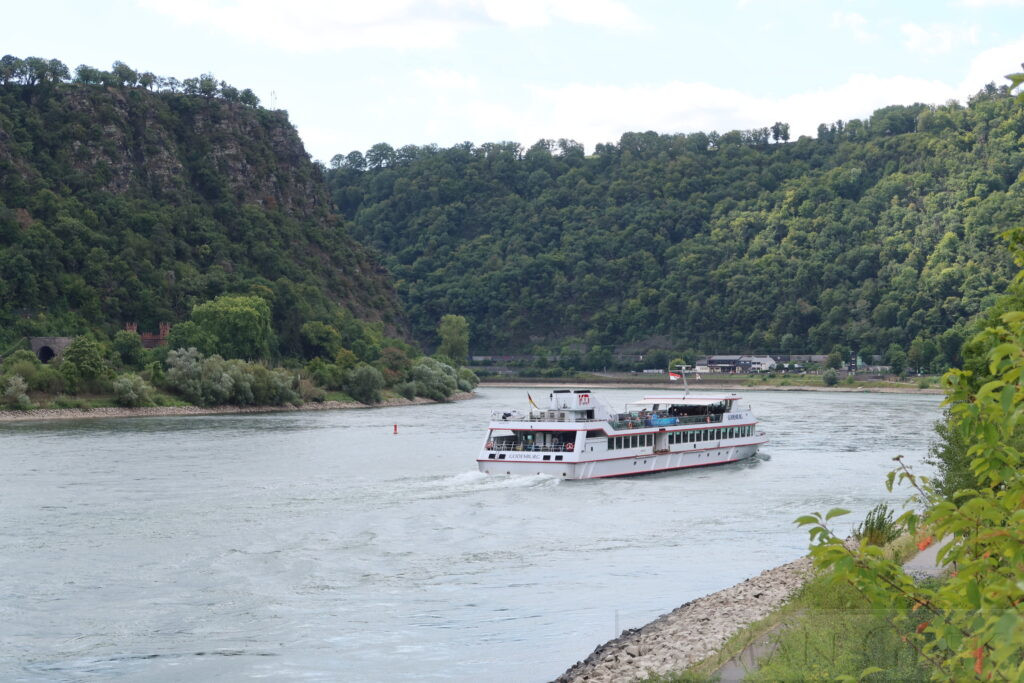
Lorelei Rock, Rhine Gorge
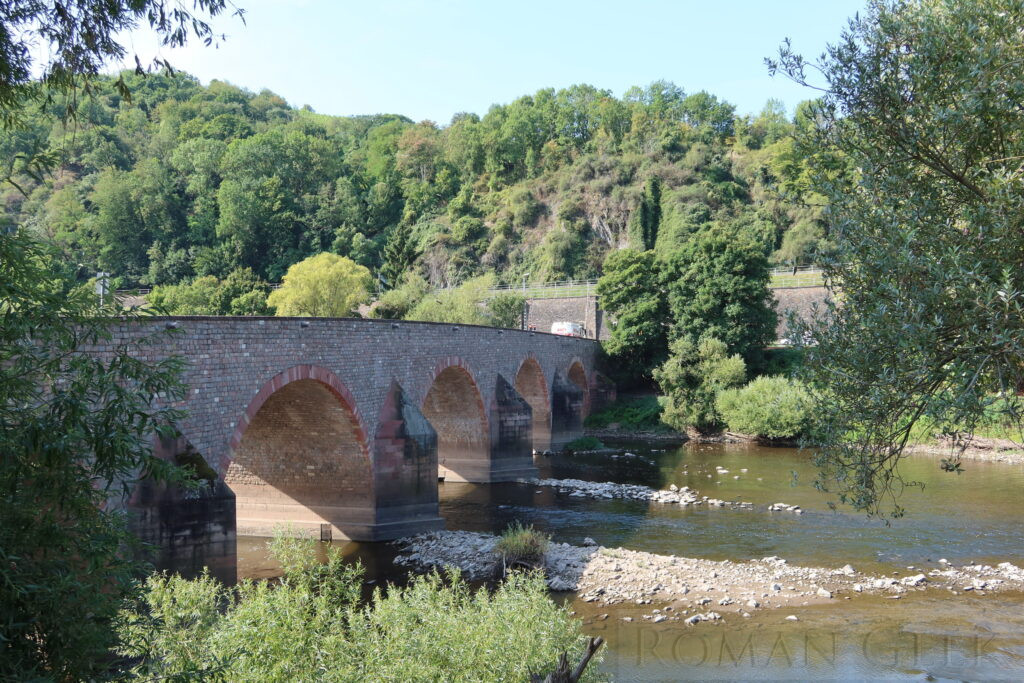
Drusus Bridge, Bingen
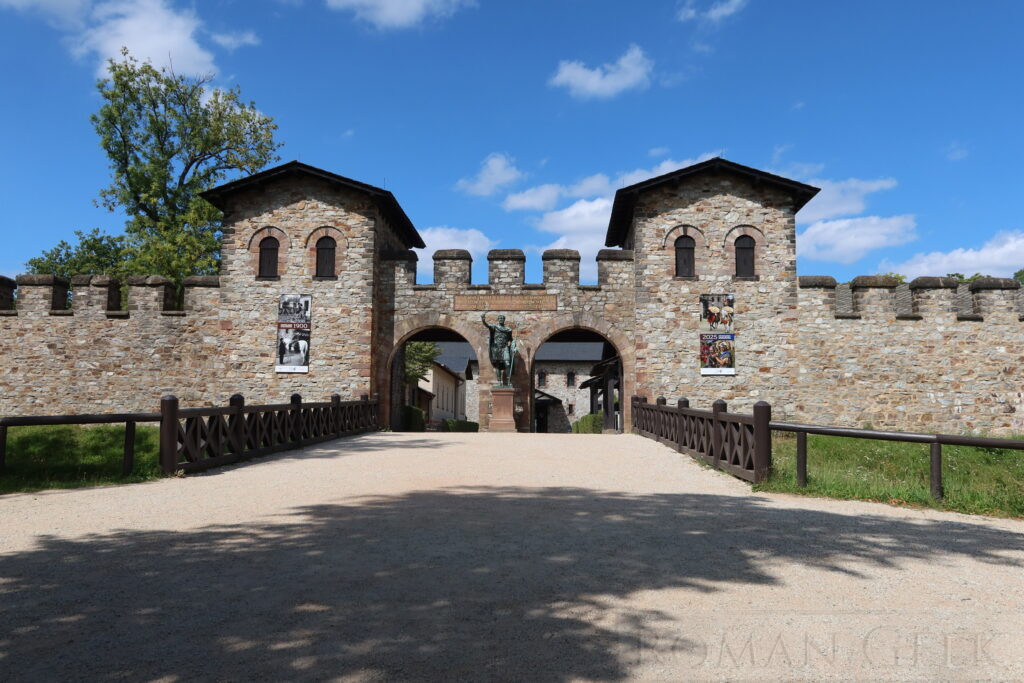
Saalburg Roman Fort, Bad Homburg
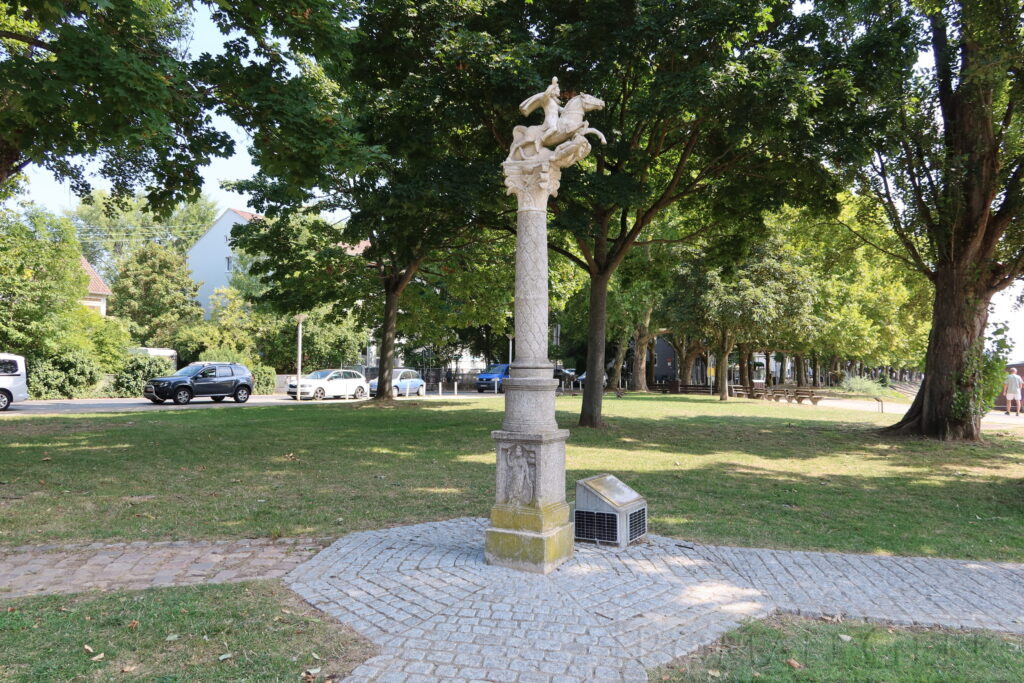
Jupiter Column, Wiesbaden