
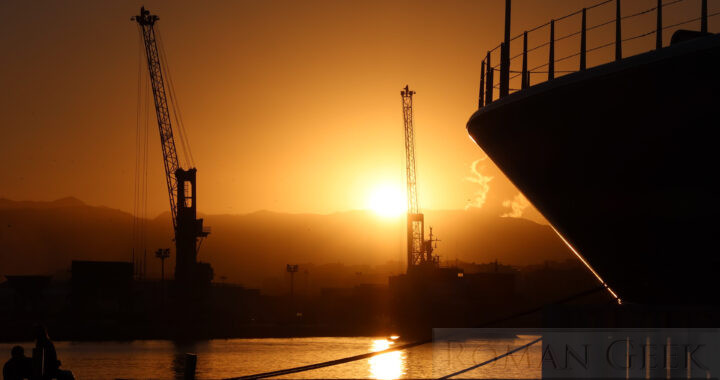
Malaga: Port city with Phoenician, Roman and Moorish history.
Overview
Malaga is a cathedral and port city on the Mediterranean coast in the Andalucia Province of southern Spain. Founded 2,800 years ago, it is one of the oldest continuously inhabited cities in the world.
History
Originally founded by the Phoenicians from Tyre, they ran the city from 770-218 BCE. Malaga was then acquired by Rome after the Second Punic War (218-201 BCE) and was known to the Romans as Malaca, located in the Province of Baetica. Between the 5th-8th century CE, it became a Visigothic and Byzantine city. From 711-1487 CE it came under the Moorish Caliphate of Cordoba, during which period the Alcazaba palace-fortress was built. The Maghrebi explorer Ibn Battuta passed through in 1325 and described it as ‘one of the most beautiful towns of Andalusia’. After the Reconquista in 1487, Malaga was ruled by the Catholic Monarchy.
Things to Do and Places to See in Malaga
1. Mercado Central de Atarazanas
Description: Housed in an impressive 14th-century Nasrid shipyard, the market holds a stunning stained-glass window depicting the city’s history. Opened in 1879, the Market was designed in the Neo-Mudejar style by Joaquin Rucoba, who also designed the Malagueta Bullring.
Tip: You can buy fresh produce and enjoy delicious tapas while admiring the market’s iron structure.
2. Malaga Cathedral
Description: Known locally as “La Manquita” (the one-armed lady) due to its unfinished tower, the cathedral’s official title is the Basilica de la Encarnacion de Malaga. It was constructed between 1528-1782, in the Renaissance style by the Spanish architect Diego de Siloe, although the facade is in the Baroque style. The cathedral Sanctuary holds many paintings, sculptures and artworks. The crypt was opened to visitors in 2023 and is entered via a separate doorway in the Plaza.
Historical Insight: The north tower is 276 ft (84m) high, the second highest in Andalucia after the Giralda of Seville. Funds to build the cathedral were derived from taxes on ships entering the port of Malaga. When the funds ran out, the north tower was never completed. Above the side doors of the cathedral facade are effigies of the Patron saints of Malaga, Saint Ciriaco and Saint Paula, local Christians who were martyred in 303 CE during the Diocletianic Persecution (303-313 CE).
3. Museo Carmen Thyssen Malaga
Description: This Art Museum is located Calle Compania in the 16th century Baroque Villalon palace. The collection focuses on 19th century Spanish paintings and there is an old Masters collection.
Tip: The museum offers prebooked guided tours of the collection on their website.
4. Calle Granada
Description: Calle Granada is an east-west historic pedestrianised street located in the Historic Centre of the old city of Malaga. It is a bustling commercial street which extends from Plaza de la Constitution to the Plaza de la Merced.
Tip: Highlights are the Bodega Bar El Pimpi at no. 62 for discovering local Malaga wines from the cask, and the adjacent Picasso Museum in Calle San Agustin.
5. Picasso Museum Malaga
Description: Located in the Palacio de Buenavista, Calle San Agustín 8, the Museum holds over 200 works donated by Picasso’s family and covering all the styles and periods of his life. The collection is called ‘Pablo Picasso: Structures of Invention. The Unity of a Life’s Work’. The pieces cover his journey through cubism and surrealism, uncovering Picasso’s creative genius and thought process.
Tip: The museum holds a garden with laurels, geraniums, orange trees and bougainvillea to relax in, and there is a cafe, a shop and a bookshop.
6. Cervantes Theatre
Description: Opened in 1870 and designed in the Neo-Classical style, the theatre is a multi-arts venue and has seating for 1,134 spectators.
Tip: It is the main venue for the Malaga Film Festival, a 10 day festival held every Spring.
7. Museo Casa Natal Picasso
Description: Located in the Plaza de la Merced, the ‘Casa Natal’ is the birthplace of Pablo Ruiz Picasso. The Picasso Foundation took over the building in 1998 and converted it into their headquarters, making it into a monument to Picasso’s life and work.
The museum holds Picasso’s prints and ceramics, and graphic art from the period 1931-1971. On display are some 3,500 examples of contemporary art by over 200 artists, such as Miro, Bacon, Guinovart, Brossa and others.
8. Roman Salting Tanks
Description: Viewed through a glass pyramid in the street, the tanks were built between the 1st-3rd century. They were used by the Romans to make Garum (fish sauce) on an industrial scale for export up until the 5th century.
9. Roman Theatre Ruins
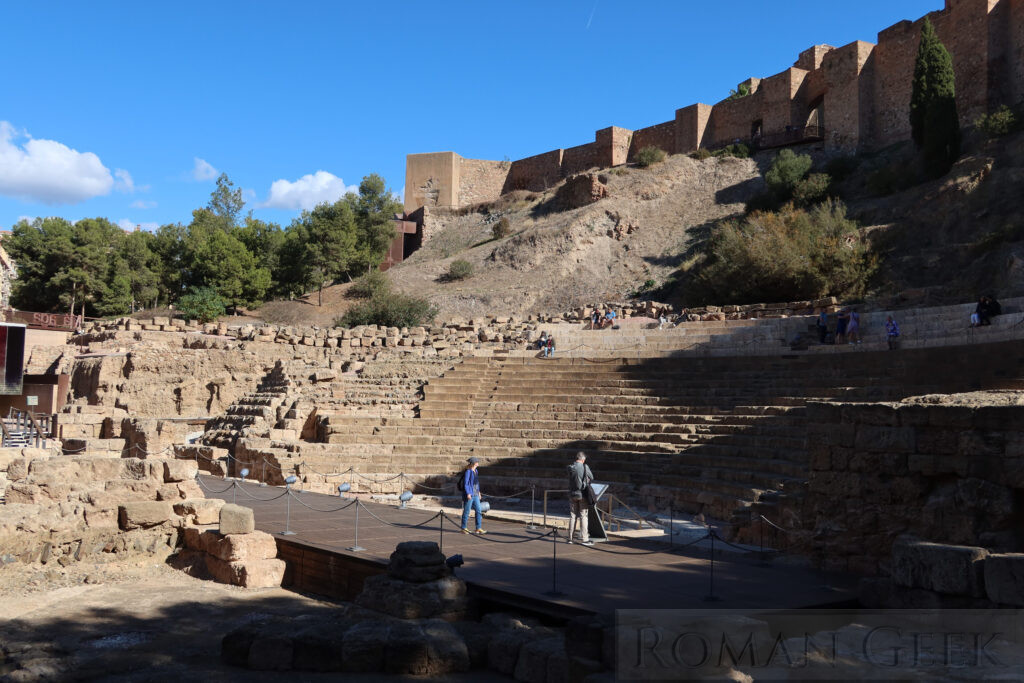
Roman Amphitheatre, Malaga
Description: The theatre lies below the Alcazaba Moorish Fort. After remaining hidden underground for centuries, it was finally excavated in 1961. It dates from the 1st century BCE and had a height of 52 feet (16m). The building retains much of the original cavea (grandstand seating), the orchestra (where the choir sang), and the scaena (stage). It could accommodate 2,000 spectators in 13 rows within its 100 foot (31m) radius. Today, the restored seating offers open air performances for 220 spectators in 13 rows. Next to the theatre is a large modern steel, wood and glass cube, home to the Roman Theatre Interpretation Centre. Here you can take a virtual tour of the excavation work and learn about Roman life and customs.
Historical Insight: In the Centre, one of the walls displays a reconstruction from fragments of the ‘Lex Flavia Malacitana’, a bronze tablet dated to 81-84 CE (reign of Domitian), with the original held in the National Archeological Museum, Madrid. Of the original 5 tablets, only this one survived and provides chapters 51-66 of the Lex Latii, and is the only surviving copy of Flavian municipal law. The tablet describes the statutes that dictate municipal duties of the duoviri iuri dicundo or Duumvirs, the chief magistrates of Roman Malaca.
10. The Alcazaba
Description: The Alcazaba is an extensive palace-fortress which is one of the best-preserved in Spain. It was the seat of the city government during the Islamic period. The first fortress dated from the 8th century, while the current structure was constructed between the 11th-14th centuries. A model of the Alcazaba is on display in the palace.
Historical Insight: The fortress was designed to be impregnable and consists of an Outer Citadel and an Inner Citadel. The outer wall is defended by towers, while an inner wall, also with towers, encloses the summit of the hill and the palace area. Five gateways, built one behind the other, protect the entrance to the Palace from outside, and the climbing passage through them doubles back on itself, twice. The fortress was also connected to the city ramparts, forming a third wall surrounding the medieval town. In addition, there is a walled corridor extending up a nearby higher hill to Gibralfaro castle.
11. Museum of Malaga
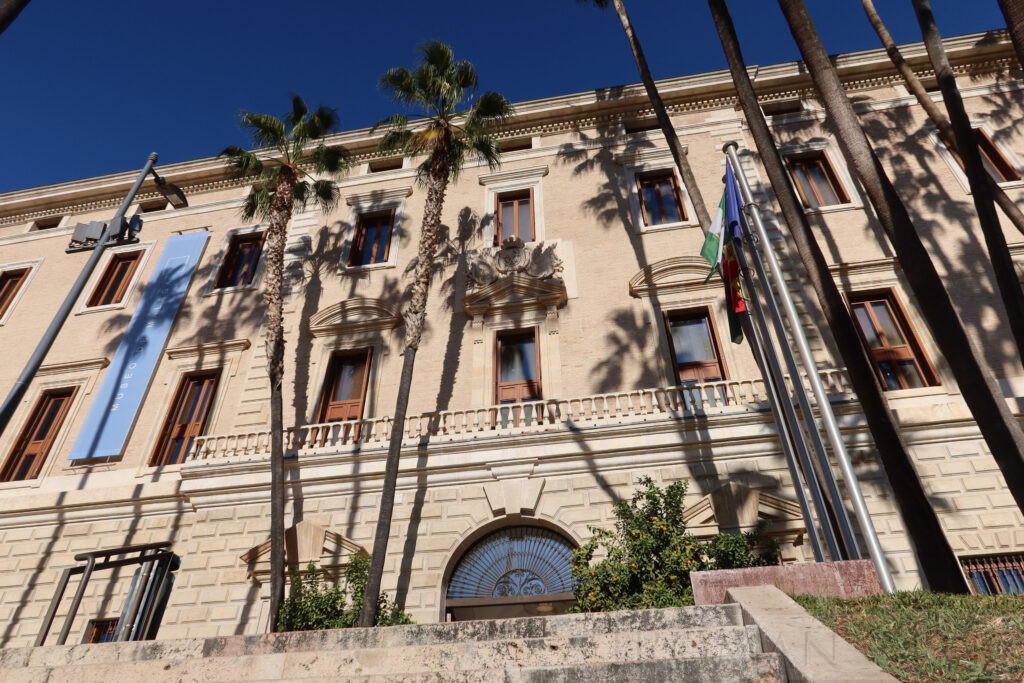
Museum of Malaga
Description: The museum is divided into two sections with a Fine Arts section holding over 2,000 pieces and an Archeology section holding over 15,000 items. The Archeological collection includes the Roman 1st century Hercules Mask and many items from the archeological digs in the Alcazaba.
Tip: The Paintings collection include works by the Spanish painters Goya, Murillo, Enrique Simonet and Picasso.
12. Malaga City Hall
Description: Also known as the ‘Mansion in the Park’, this impressive building functions as the seat of the city council of Malaga, where the mayor (alcalde) and the councillors (concejales) meet. Completed in 1919 in the Baroque Revival style, the city hall is listed as a Historic Monument.
13. Malaga Park
Description: This 100 year old Park evolved between the 1890’s to the 1940’s, with involvement by the architect Joachin Rucoba and others, and features Renaissance and Baroque style promenades. The Park is home to over 100 species of plants and offers a blend of Mediterranean and sub-tropical trees including Jacarandas, Sausage Trees, Canary Island Dragon Trees and various species of Palms. There are citrus, mango and avocado trees. Plants include Hibiscus and Bougainvillea. Near the Town Hall is a rosebed with orange trees. There are several historic fountains including the Fuente de las Tres Gracias (Fountain of the Three Graces).
Tip: The sausage tree (Kigelia africana) is a tropical tree from sub-Saharan Africa, famed for its dangling, large sausage-shaped fruits that can reach 3 feet (1m) in length.
14. Muelle Uno Shopping Centre, Malaga
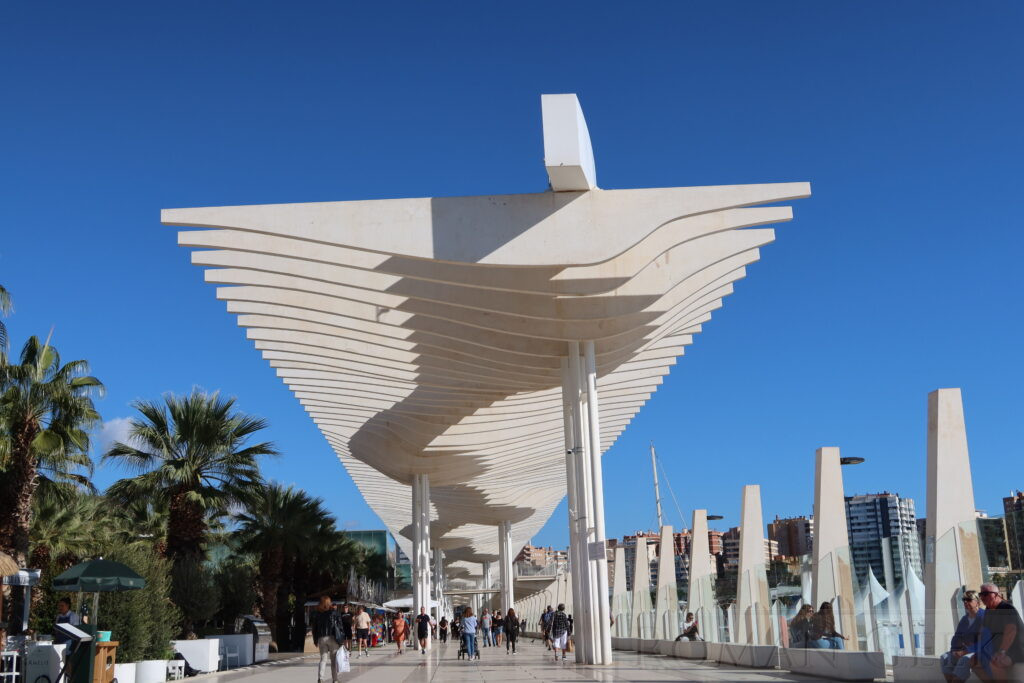
Muelle Uno Shopping Centre, Malaga
Description: Located on the waterfront facing the sea in the Port of Malaga, the Muelle Uno (Pier One) is an atmospheric open shopping centre hosting retail shops and leisure activities. The bars and restaurants extend all around the waterfront to the Lighthouse. There is a regular schedule of concerts, art displays, children’s activities, theatre, crafts markets and outdoor films in the summer.
Tip: Boat Trips around the harbour start from the waterfront.
15. Boat Trips
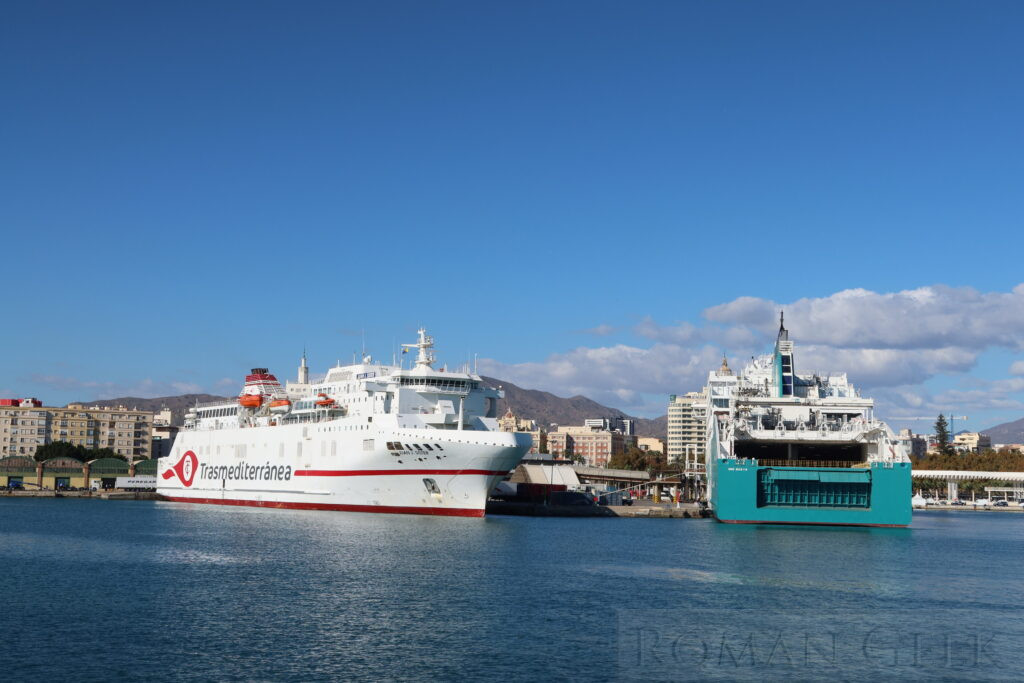
Melilla Ferry, Port of Malaga
Description: Vessels operate from the Muelle Uno (Pier One) area of the Port of Malaga. Excursions include trips around the harbour, dolphin spotting trips and sunset cruises along the coast. You will pass the Ferry Port with Ferries to Mellila in Morocco and the Malaga Cruise Terminal where the Cruise ships berth.
16. Pompidou Centre Malaga
Description: Located in Muelle Uno beside the waterfront is the Pompidou Centre Malaga whose entrance is in ‘El Cubo’. The museum holds temporary exhibitions of works from the Paris Pompidou Art Collection.
Further Afield
17. La Malagueta Beach
Description: Located near to Muelle Uno the beach offers numerous chiringuitos (beach bars with fresh seafood), sunbed rentals, and a children’s play area.
18. La Malagueta Bullring Tour & Immersive Museum
Description: Opened in 1876, the Bullring was designed in the Neo-Mudejar style as a 16 sided hexadecagon by Joaquin Rucoba, who also designed the Atarazanas Market. It holds 9,032 spectators and features in the annual Malaga Feria de Agosto street fair.
19. Gibralfaro Castle
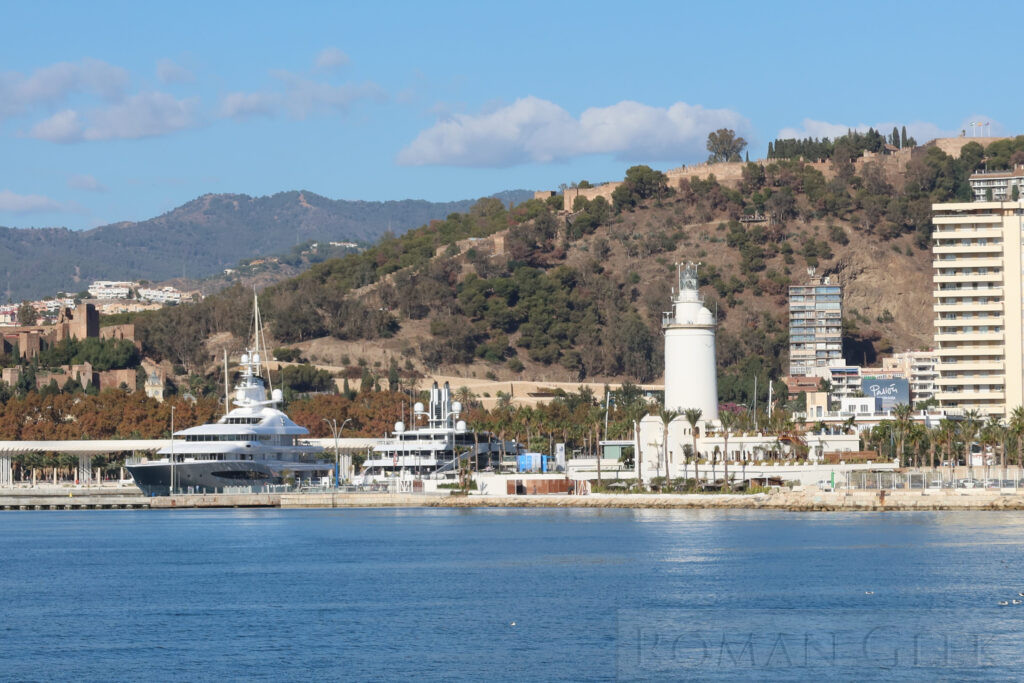
Gibralfaro Castle, Port of Malaga
Description: Located above the Alcazaba, this 14th century castle presents panoramic views over the city and the Mediterranean. The original castle was built in 929 CE by Abd-al-Rahman III, Caliph of Cordoba. It was later enlarged in the 14th century by the Sultan of Granada, Yusef I, who added the double wall down to the Alcazaba, which can be walked today. The restored ramparts rise above the surrounding pine trees and can be walked around. Inside there are buildings and courtyards. In 1487, the Catholic Monarchs Ferdinand and Isabella held a successful three-month siege here, as a prelude to the siege of Granada which completed the Reconquista in 1497.
Tip: It is a steep climb up from the Alcazaba, but worth it for the panoramic views. Or you can take the No. 35 Bus from Malaga Park which takes 15 minutes. Near the entrance is the Interpretation Centre, a small military museum, as the fort was in use until 1925.
20. Automobile and Fashion Museum
Description: Located at Avenida de Sor Teresa Prat, 15, this is the former tobacco factory known as the ‘Tabacalera’. It is a historic 1920’s Mudejar style building which houses the Russian Museum and the Automobile and Fashion Museum. The latter is home to over 100 cars, including a gull-wing Mercedes, Hispano Suiza, Bugatti, Bentley, Rolls-Royce and Ferrari. There are also over 200 items showing the evolution during the 20th century of haute couture clothing explained in 7 exhibitions, along other contemporary works of art.
Tip: One of the cars is a highly unusual propeller driven Helicron 2, built in France in 1932 by Marcel Leyat.
Malaga Walking Tour (2-3 hrs)
- Your geolocation will appear as a blue icon that moves on the map as you walk.
- You may start anywhere on the map and just follow the blue line to the next point of interest.
Travel Tips
- Best time to visit: Spring and autumn for mild weather and fewer tourists.
- Photography hotspots: Roman Theatre, The Alcazaba, Gibralfaro Castle, Atarazanas Market, Port of Malaga.
- Nearby Attractions: Ronda, The Alhambra in Granada.
Visitor FAQ’s
- What is Malaga famous for?
- Malaga is famous as the birthplace of Pablo Picasso
- The Alcazaba Moorish Palace-Fortress, one of the best preserved in Spain.
- Gibralfaro castle
- Extensive Easter Week (Semana Santa) celebrations
- Sweet Malaga wine
- Can I see Roman Ruins in Malaga?
- Yes, there is a Roman Theatre and a Roman Fish factory.
- How far is Granada from Malaga city centre?
- Approximately 1 hr 50 mn drive.
- Are there Guided Tours of Malaga historical sites?
- Yes, local guides offer walking tours highlighting the Cathedral, the Historic Centre and other venues. Contact the Tourist Information Centre.
- Is Malaca the same as Malaga?
- Yes, Malaga was the Roman city of Malaca.
- Which Roman Province was Zaragoza located in?
- What was the role of Malaca (Malaga) in the Roman Empire?
- Malaga served as a key port and economic hub with roads leading to Baelo Claudia, Ronda and Cordoba.
- What Roman Roads connected Malaga?
- A coastal road connected to other ports such as Baelo Claudia and Motril, while another connected to the Provincial capital at Cordoba and the Via Augusta.
Quick Facts
- Modern Location: Malaga, Spain
- Category: Historic city centre, medieval cathedral, tourist destination
- Activities: Walking tours, sightseeing, photography
- Nearby Roman Site: Malaga itself holds a Roman Theatre
- Nearest Roman road: Via Augusta from Cadiz to Rome
- Roman Province: Baetica
Nearby Attractions
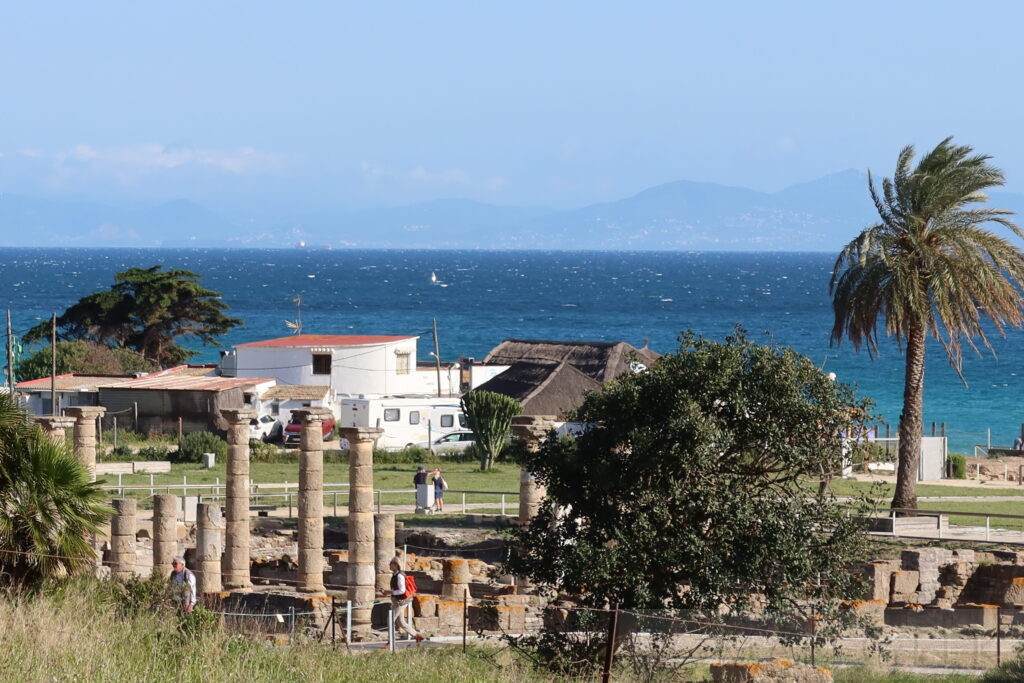
The Columns of Baelo Claudia Roman Town near Gibraltar facing Tangier in Morocco
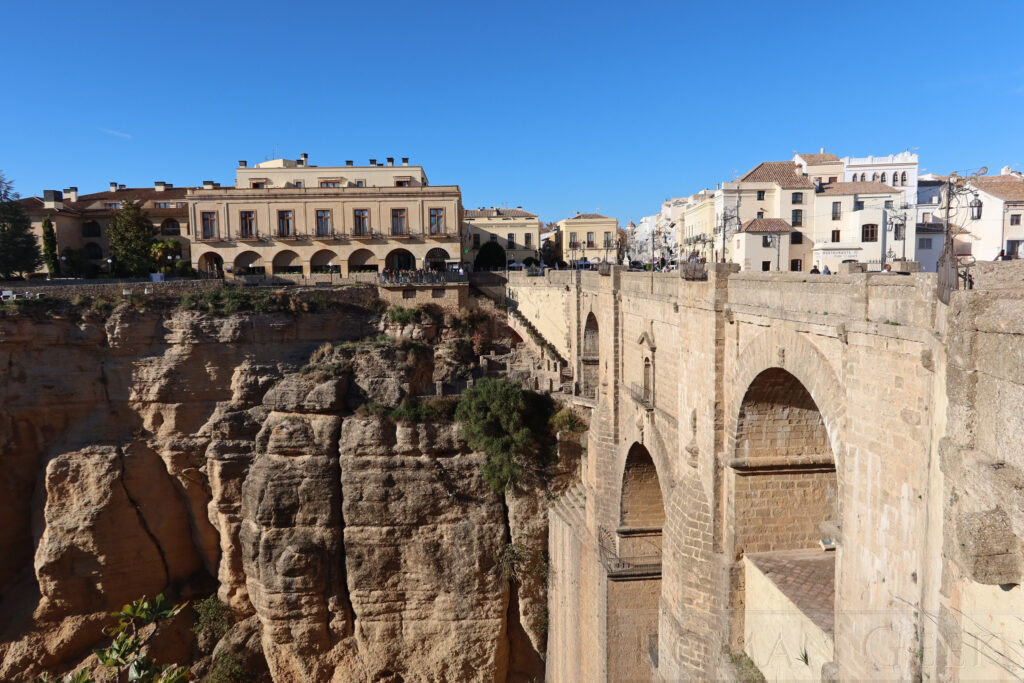
Puente Nuevo, Ronda
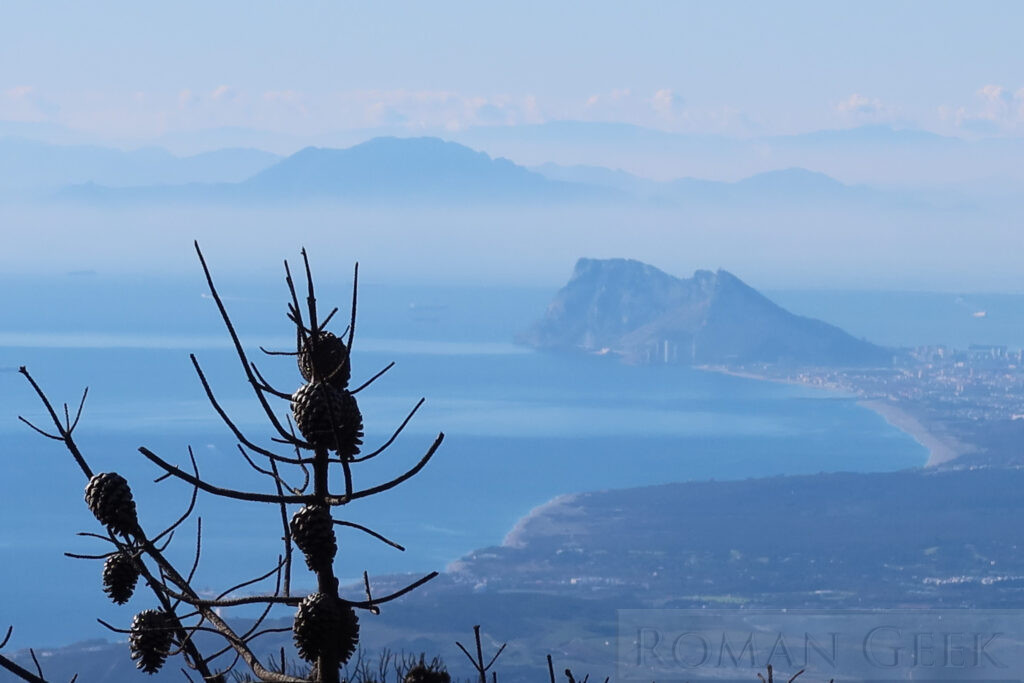
Gibraltar and Jebel Musa from Los Reales de Sierra Bermeja, Estepona
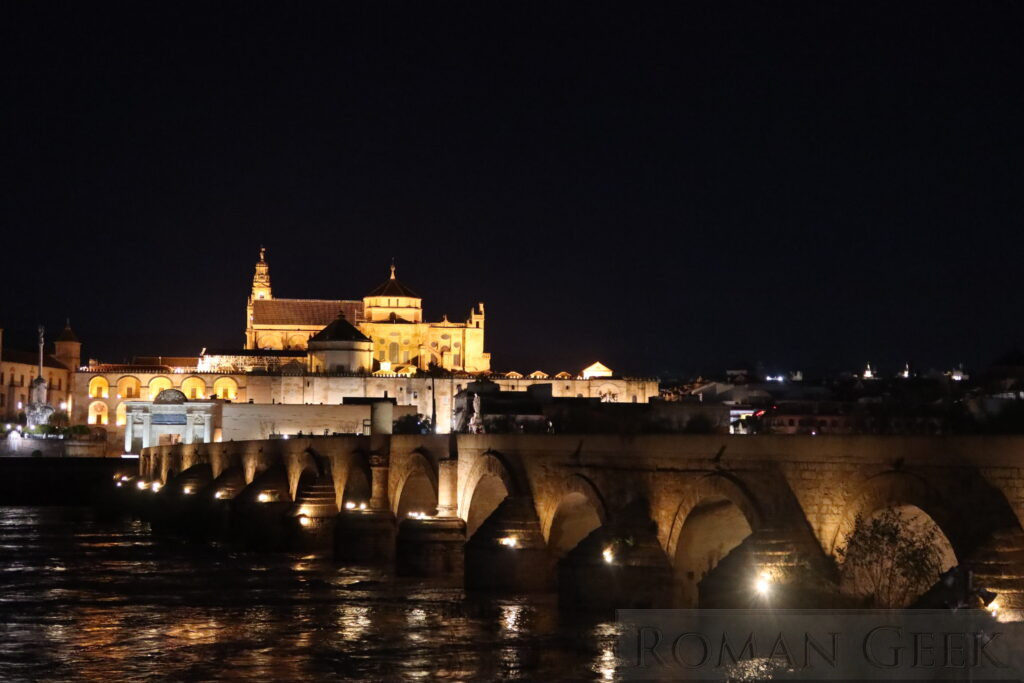
Cordoba Roman Bridge