
Winchester: The Saxon capital of England
Overview
Winchester is a city located on the River Itchen in Hampshire. It was the Saxon capital of England until 1066 CE, and is noted for its Cathedral containing the Relics of the Saxon Kings and the Danish King Canute. Winchester is the County town of Hampshire.
History
Winchester was founded in 70 CE as the civitas capital of the Belgae tribe, and named Venta Bulgarum (market of the Bulgae). The Romans built temples, public buildings and town houses. At the beginning of the 3rd century CE they encircled it with a defensive stone wall. Venta Belgarum was at the centre of the Roman Wool trade and like London, had a Procurator of the Wool Warehouse.
In 519, The Saxon King Cerdic established the kingdom of Wessex and Winchester became one of his capitals, known as Wintanceaster. From 871 CE Alfred the Great (871-899) ruled Saxon Wessex from Winchester castle. Between 927 and 1066 Winchester was the capital of Anglo-Saxon England. After the Norman Conquest, William I built a new castle here in 1067, and Winchester continued as the Norman capital until they finally moved the Court and Administration to London during the 12th century.
Winchester Walking Tour (2-3 hrs)
- Your geolocation will appear as a blue dot that moves on the map as you walk.
- You may start anywhere on the map and just follow the blue line to the next point of interest.
Things to Do and Places to See in Winchester
1. Westgate Museum
Westgate Museum, Wichester
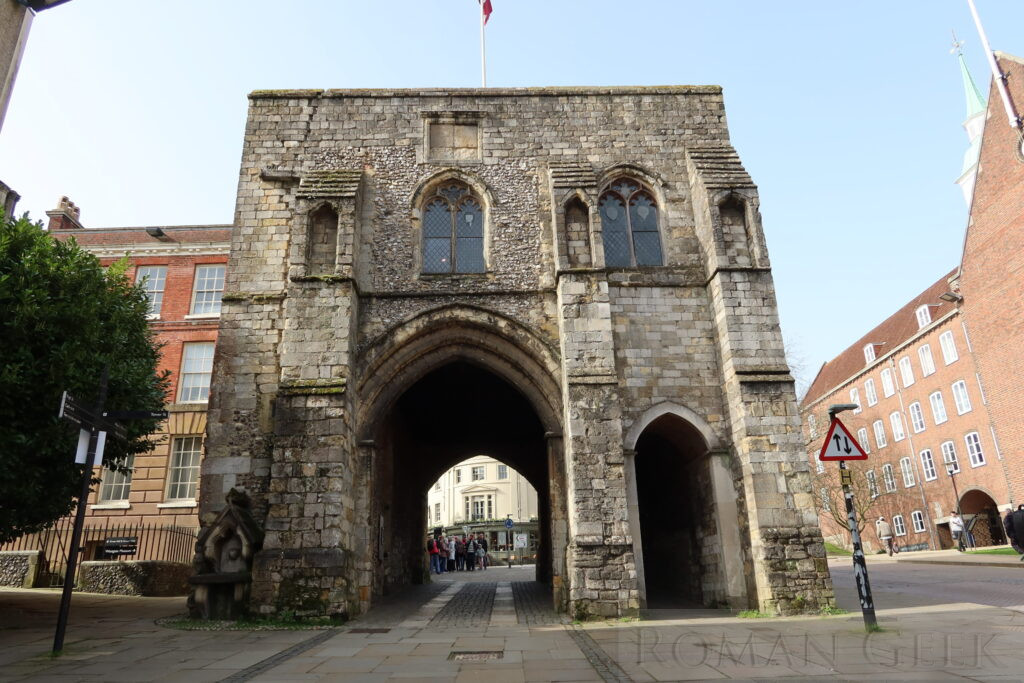
Description: Located in the High Street and built in the 12th century over the old Roman gate, the Westgate was medieval Winchester castle’s primary gateway and now houses a museum of Winchester’s history.
2. Great Hall and Round Table
Great Hall, Winchester
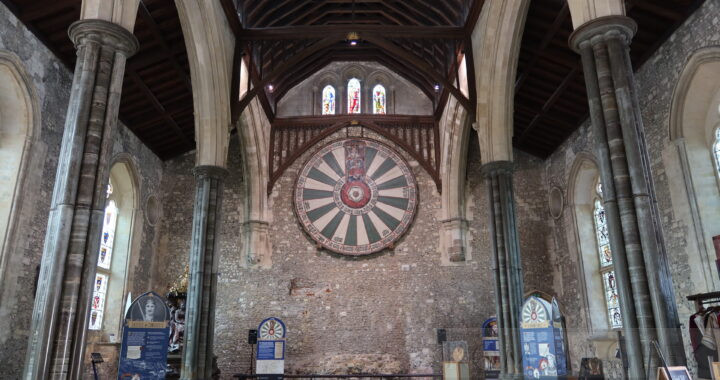
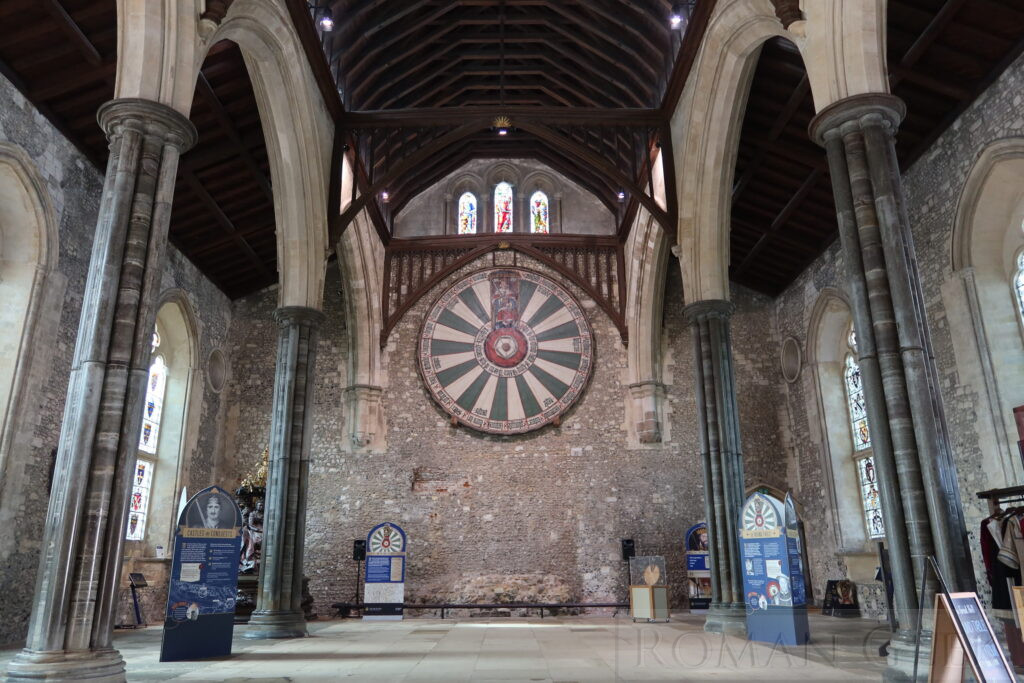
Description: Located in Castle avenue, the Great Hall was built in 1235 by Henry III, and is only building that has survived from Winchester Castle. The Great Hall was home to the Winchester Assize Court for 700 years, from 1273 until 1974. Famous cases held here were the trial of Sir Walter Raleigh for treason in 1603, and after the Monmouth Rebellion, Judge Jefferies conducted part of the ‘Bloody Assizes’ here in 1685.
Winchester Round Table
Winchester Round Table
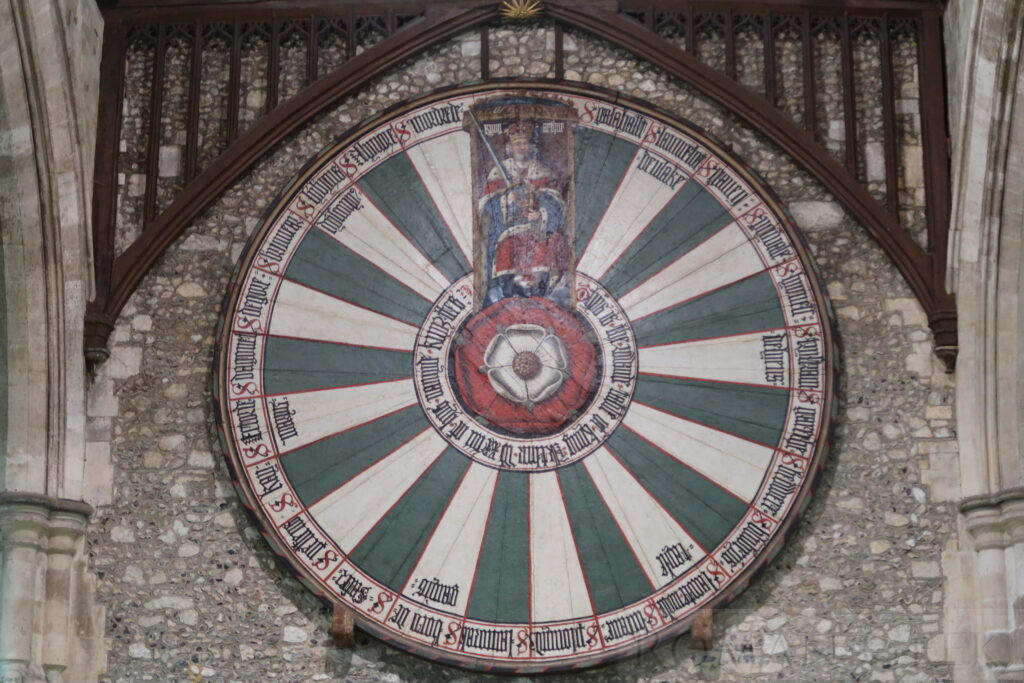
Description: Hanging in the Great Hall is the Winchester Round Table, around the edge are the names of the 25 knights of the legendary King Arthur. It was commissioned by Henry VIII, although the wood has been dated to 1280. The table is round to signify that all 25 knights had equal status.
3. The Rifleman’s Museum
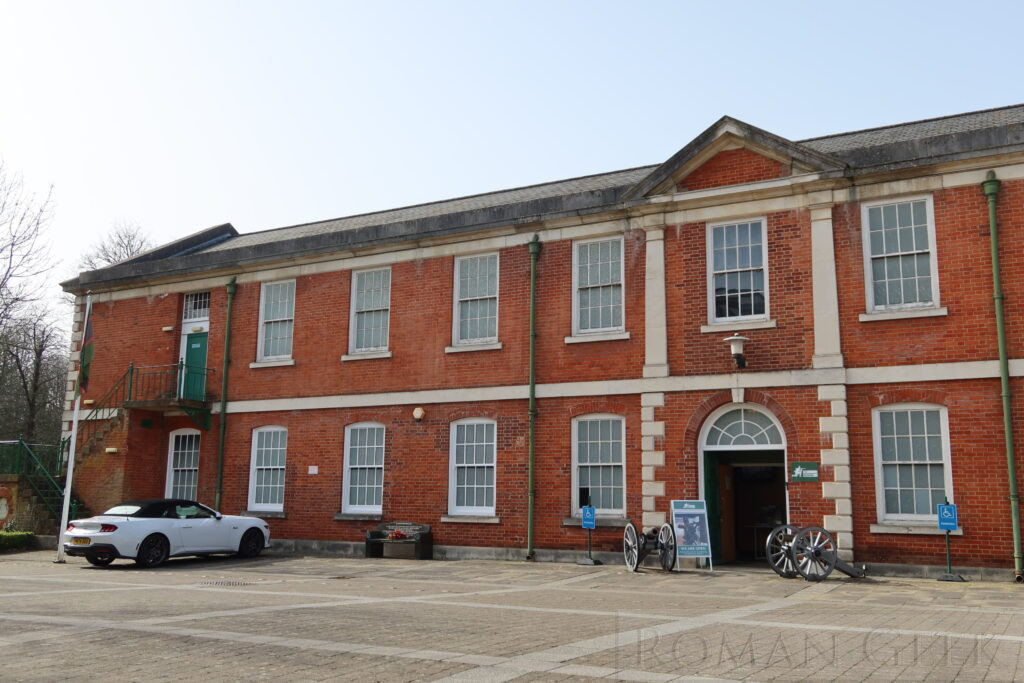
Rifleman’s Museum, Winchester
Description: Located at Peninsular Barracks, the museum forms part of Winchester’s 6 military museums and brings together the collections of several regiments of the British Army, which united to form the Royal Green Jackets Regiment. There is an exhibition on the Napoleonic Wars featuring a 25 square metre Diorama of the Battle of Waterloo in 1815 with 30,000 model soldiers and horses, with a light and sound commentary. Other displays cover the Two World Wars and other wars since 1945, such as the First Gulf War 1990-91.
4. Theatre Royal
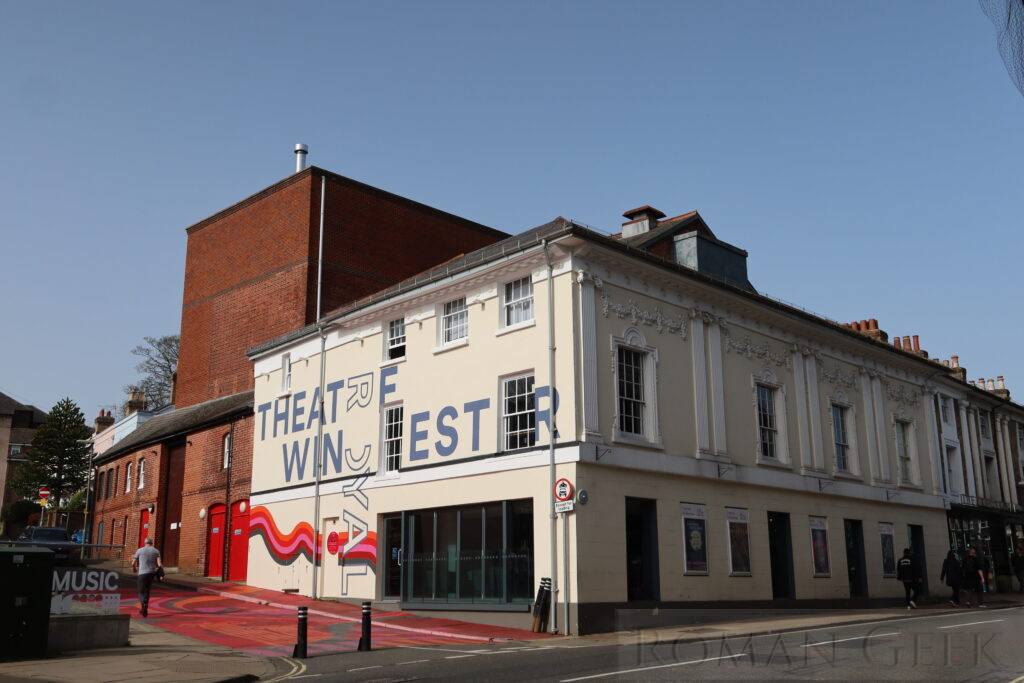
Theatre Royal, Winchester
Description: Located at 21-23 Jewry street, the theatre opened in 1914, and is the last surviving Cine-variety theatre in England. The Auditorium has 400 seats and was built in the Edwardian style on two levels with stalls and a circle. By the 1930’s a cinema showing often included a feature film, a B movie, a newsreel, a cartoon and a complete live stage show, featuring famous stars from variety theatre or radio. The theatre presents a diverse programme of drama, dance, family theatre, music and talks throughout the year and a Christmas Pantomime.
5. Buttercross Monument and High Street
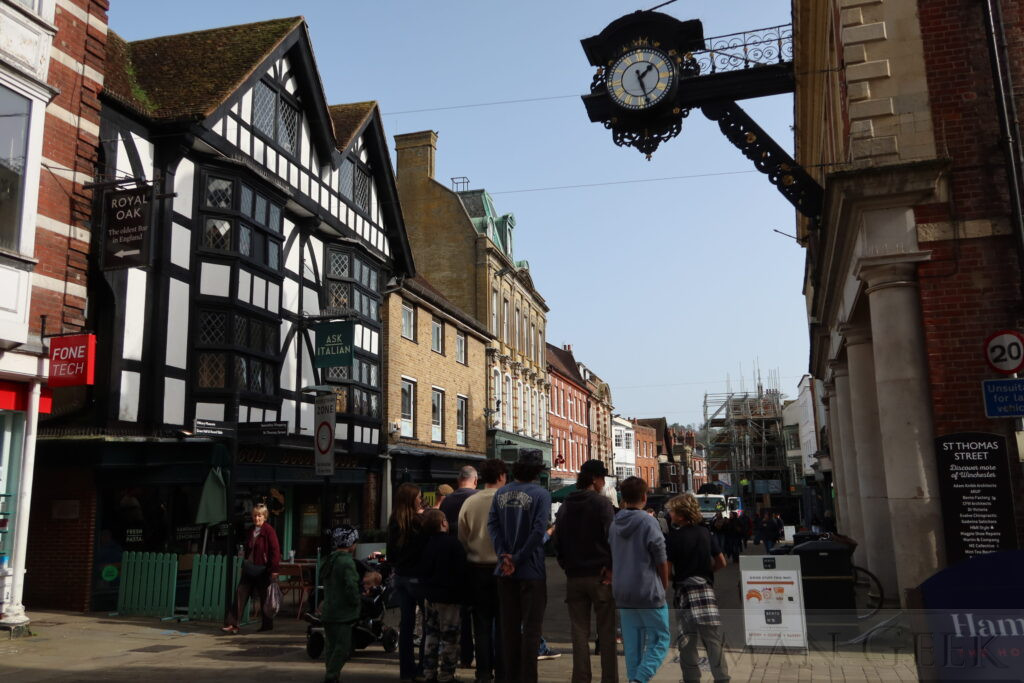
High Street, Winchester
Description: Located in the High Street, this is a 15th century Ancient Scheduled Monument that features 12 statues of Saints and the Virgin Mary. It was restored in 1865 by George Gilbert Scott. The High Street is a pedestrianised road with atmospheric cafes, speciality shops, pubs and restaurants.
6. Winchester City Museum
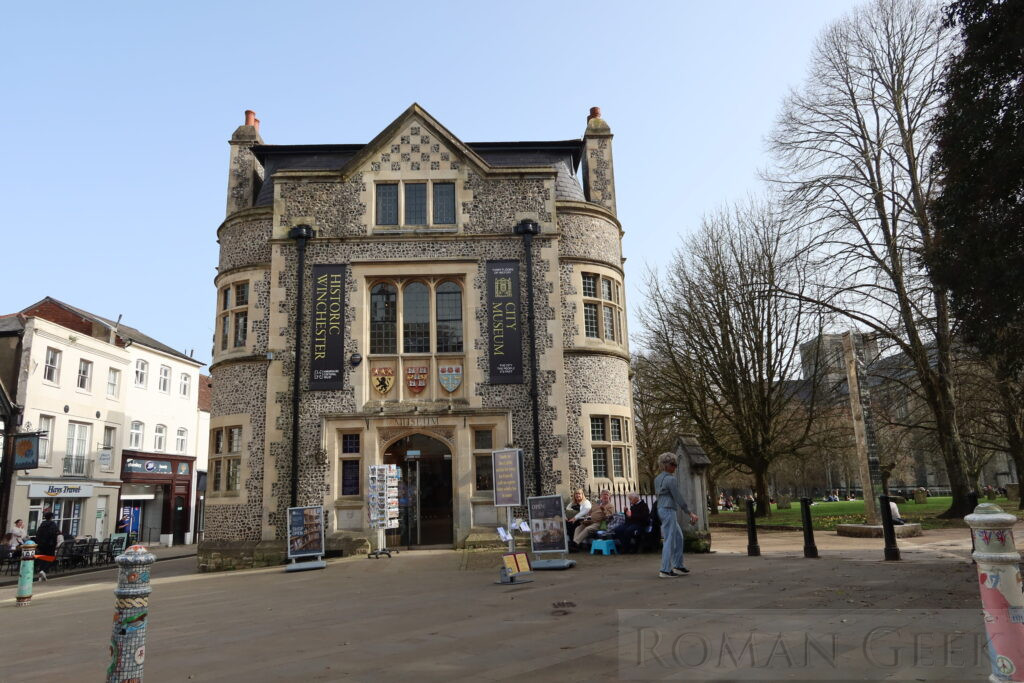
Winchester City Museum
Description: Winchester City Museum is located at The Square, adjacent to Winchester Cathedral. The museum holds a Venta Bulgarum Gallery describing the Roman town.
7. Winchester Cathedral
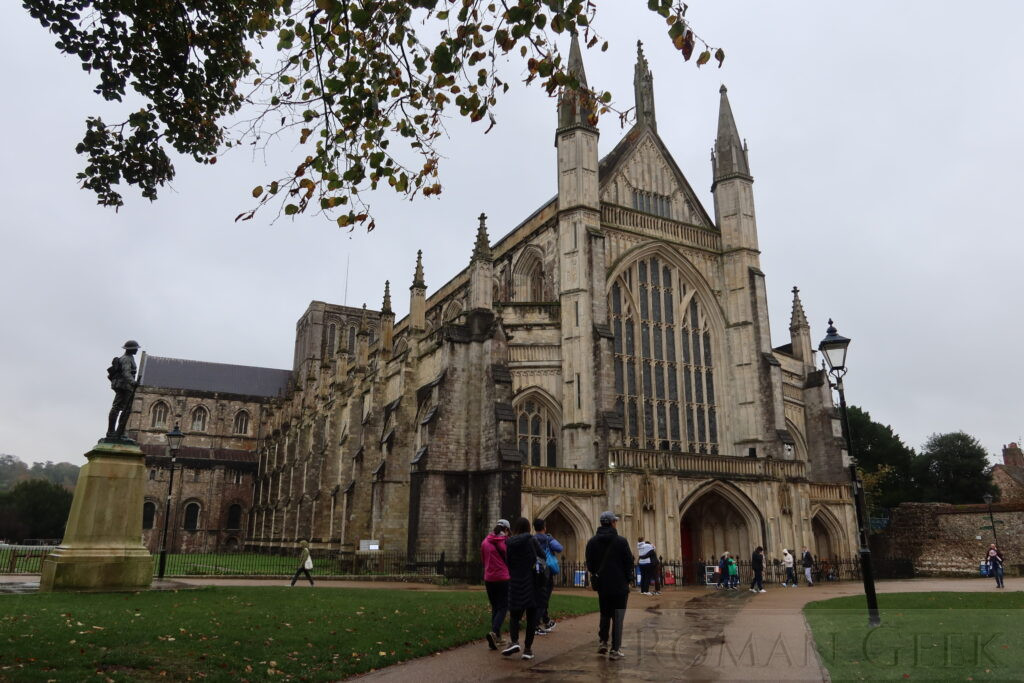
Winchester Cathedral, burial place of King Canute.
Description: Located at 9 the Close, Winchester Cathedral was opened in 1093 and is the sixth largest medieval cathedral in Britain, with the longest medieval nave in northern Europe, at 558 feet (170 m). The Nave ceiling is vaulted and best viewed in a mirror. It was built in the Norman and Early Gothic style of architecture. The 12th century Winchester Bible is on display in the cathedral and the Morley library holds a collection of rare books. The Cathedral Crypt holds a sculpture by Anthony Gormley called ‘Sound II’.
Historical Insight: The cathedral holds the Relics of the Saxon Kings, the Danish King Canute and the resting place for the author Jane Austen is in the north aisle. The shrine of St. Swithun once stood here.
Tip: The Movie ‘The Da Vinci Code’ used the cathedral as a set in 2005.
Jane Austen Statue
Description: The statue is located in the Cathedral Inner Close, It was unveiled in October 2025 to mark the 250th anniversary of the author’s birth. Jane Austen left her home in Chawton to be near her physician and spent her last eight weeks at No. 8 College street in Winchester, where she died aged 41 on July 18th 1817. She is buried in the North Nave aisle of the cathedral.
8. Prior’s Gate
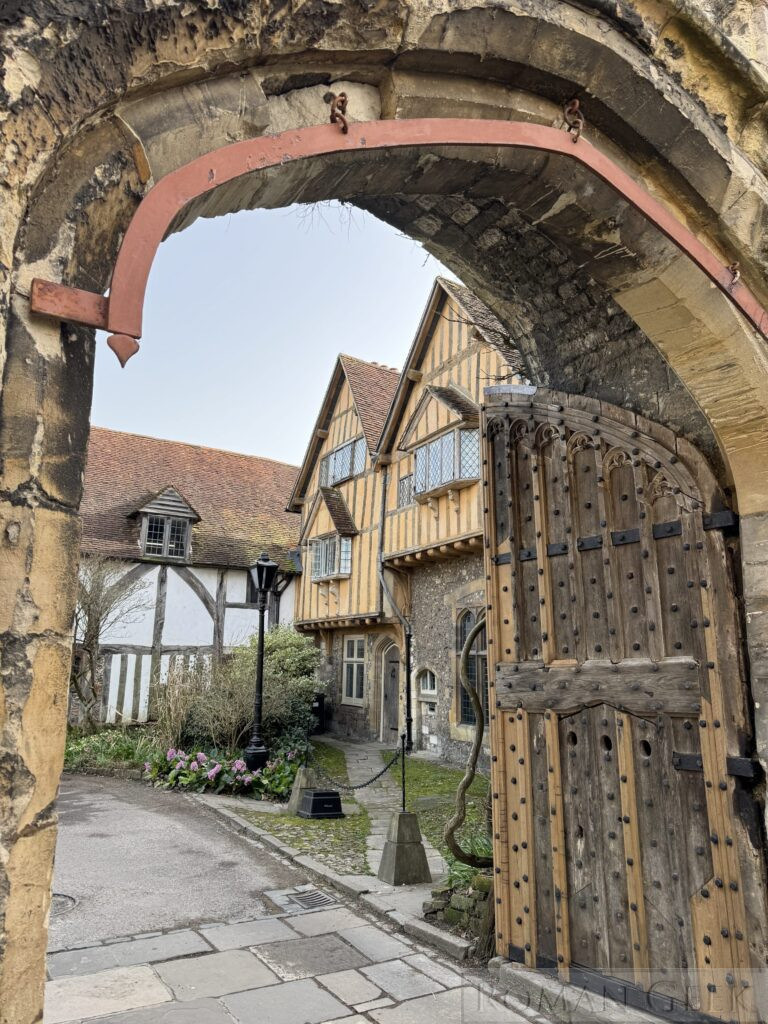
Prior’s Gate, Winchester
Description: The Prior’s Gate is the main entrance to the Cathedral Close and is set in the Close Boundary Walls. It was built in the 15th century and consists of a stone arch with the original traceried wooden gates, a castellated parapet and a Coat of Arms over the arch.
Historical Insight: This is one of three surviving Medieval Gates, the other two being fortified, the adjacent Kingsgate and the Westgate.
9. The Kingsgate
Description: The Kingsgate is a two-storey medieval building which was first documented in 1148. It was built over a Roman Gateway. The present gate is 14th century, with 18th century pedestrian walkways. It is open to the Public at certain visiting hours.
Historical Insight: Directly above the gate is the only ‘Gateway Church’ in active use in England, the Church of St. Swithun-upon-Kingsgate. First mentioned in 1264 when it was rebuilt after being burnt down in a citizens’ riot against the Priory. After the Reformation, it ceased to be used as a church and was used before 1660, by a gatekeeper named Robert Allen and his wife who scandalously kept pigs at one end of the room.
Tip: The Church was made famous by the author Anthony Trollope who attended Winchester College. He used it as the inspiration for ‘St. Cuthbert’s’ in his 1855 novel ‘The Warden’, the first book in his ‘Chronicles of Barsetshire’ series.
10. Wolvesey Castle (Old Bishop’s Palace)
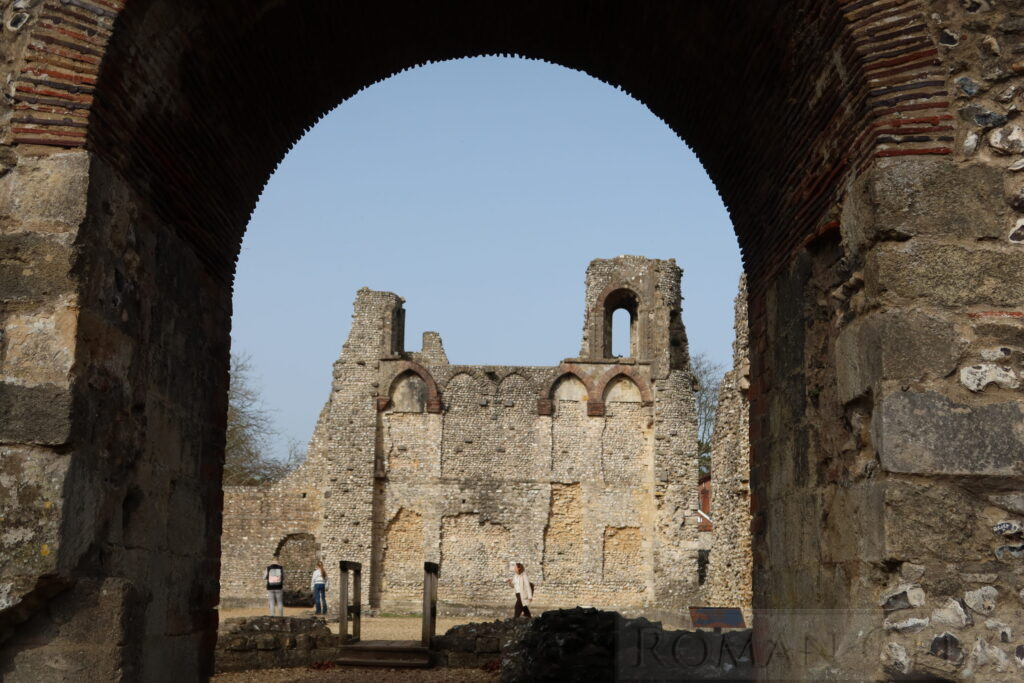
Description: The entrance is located in College street, where stand the monumental remains of the 12th century Bishop’s Palace, once the residence of the Bishops of Winchester. It is managed by English Heritage and is open to the public.
11. Winchester City Walls
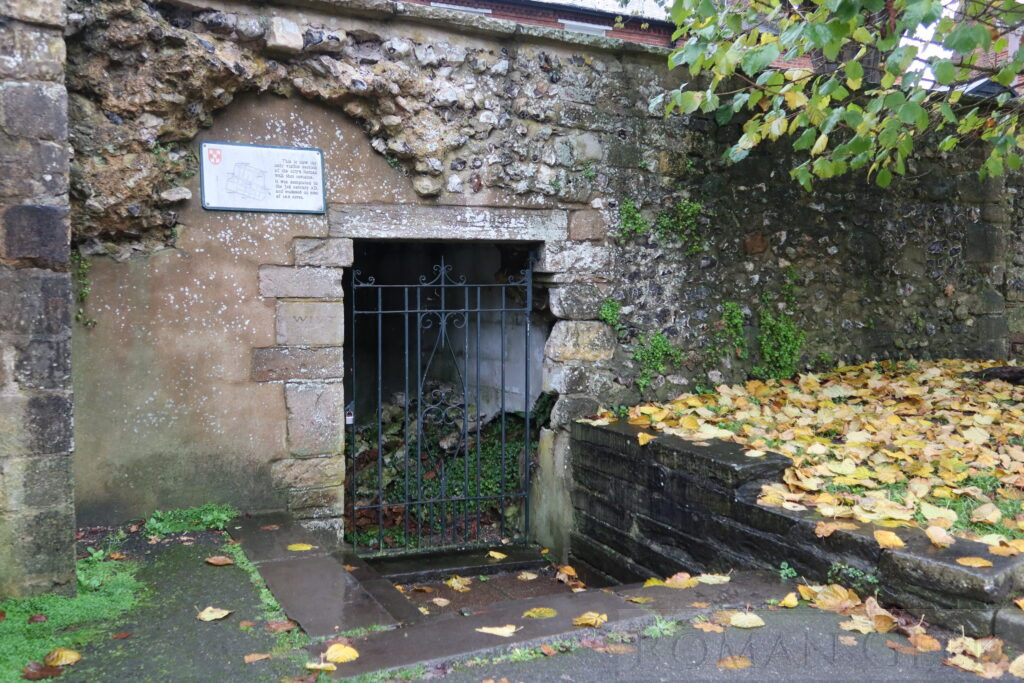
Remains of the Roman Wall
Description: The surviving part of the medieval city walls are located between Wolvesey Castle grounds and the river Itchen. The Roman city built its walls in the 3rd century CE. Today, there are no Roman remains above ground, although one tiny piece of the wall is preserved in an alcove on the riverside behind the Bishop on the Bridge Pub. The medieval walls were built over the Anglo-Saxon walls, but they still follow the line of the original Roman Walls. Of the six original gates, only two survive, Westgate and Kingsgate.
12. Winchester City Mill
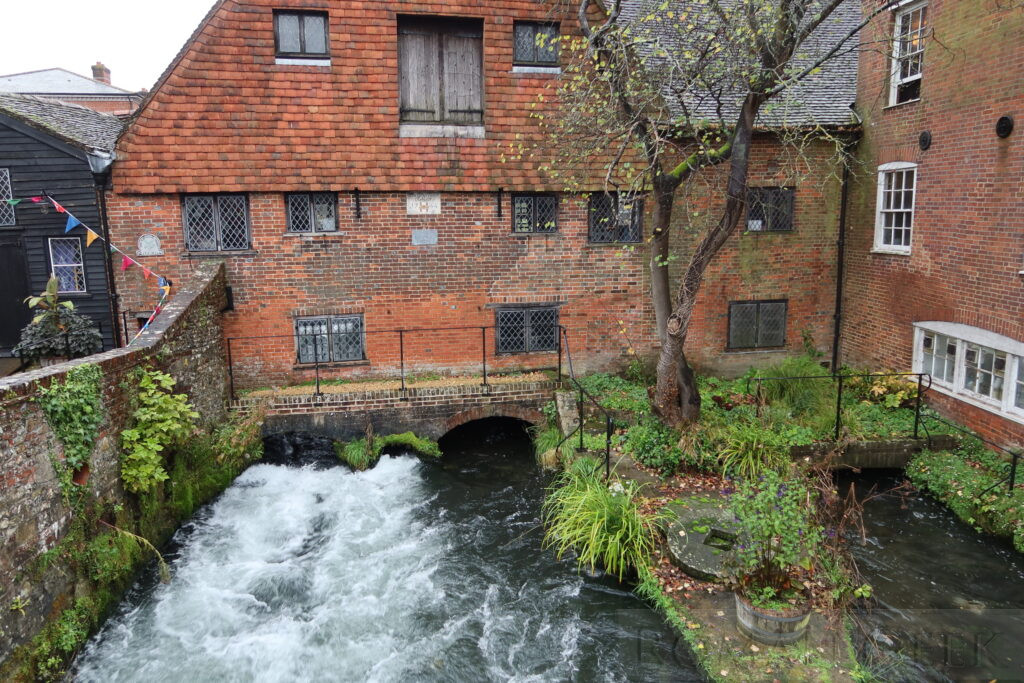
Winchester Water Mill
Description: Located on Bridge street, this is a working water mill on the river Itchen, with the current building dating from 1744. However, the first record of a mill here dates back to 1086 in the Domesday Book. The mill is currently owned by the National Trust who operate a cafe and shop and keep the water wheel running daily with flour milling demonstrations at weekends. Film of otters passing through the river under the mill are played back on a monitor.
13. Alfred the Great Statue
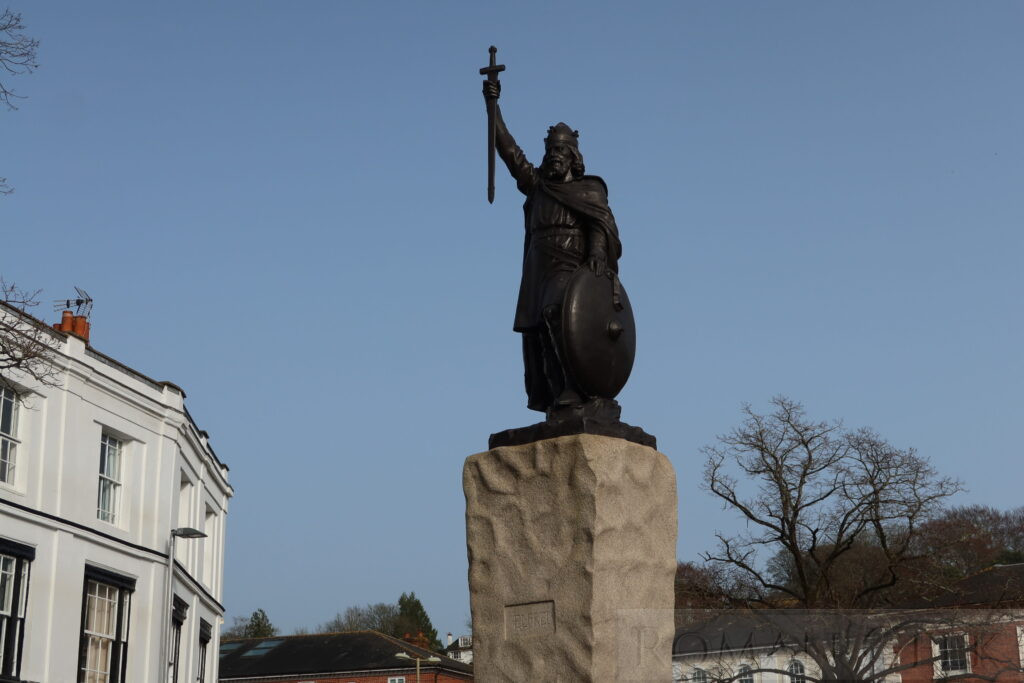
Alfred the Great Statue, Winchester
Description: Located on Broadway, Alfred the Great was the Anglo-Saxon king of Wessex who ruled from Winchester and is considered to be the founder of the Kingdom of England. By convention the list of kings and queens of England begins with Alfred the Great as the first English Monarch (886-899).
Further Afield
14. Hospital of St. Cross
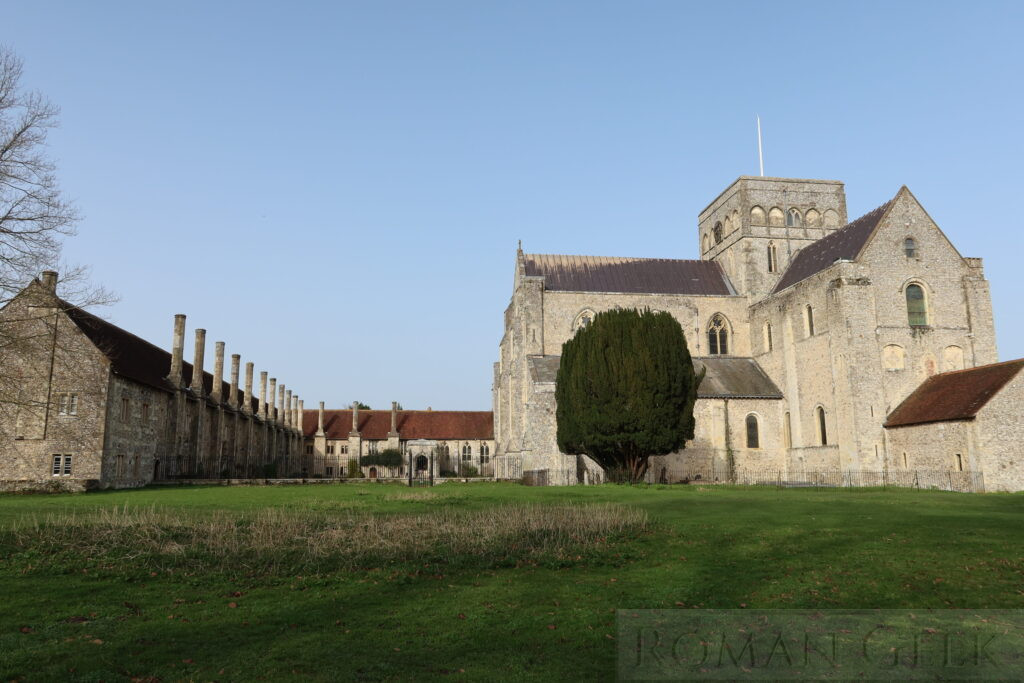
Hospital of St. Cross, Winchester
Description: Locate on Back street, the Hospital is a Grade I listed building which is known as England’s oldest Almshouse, and was founded by the Bishop of Winchester in 1136. The building is constructed of stone and consists of a church and two quadrangles. The Norman chapel was begun in 1135 and resembles a miniature cathedral rather than a chapel. The Hospital was used as a set during filming of the 2009 film, ‘The Day of the Triffids’. The Hospital continues an ancient tradition known as the ‘Wayfarer’s Dole’, consisting of a cup of ale and a portion of bread.
15. St. Catherine’s Hill
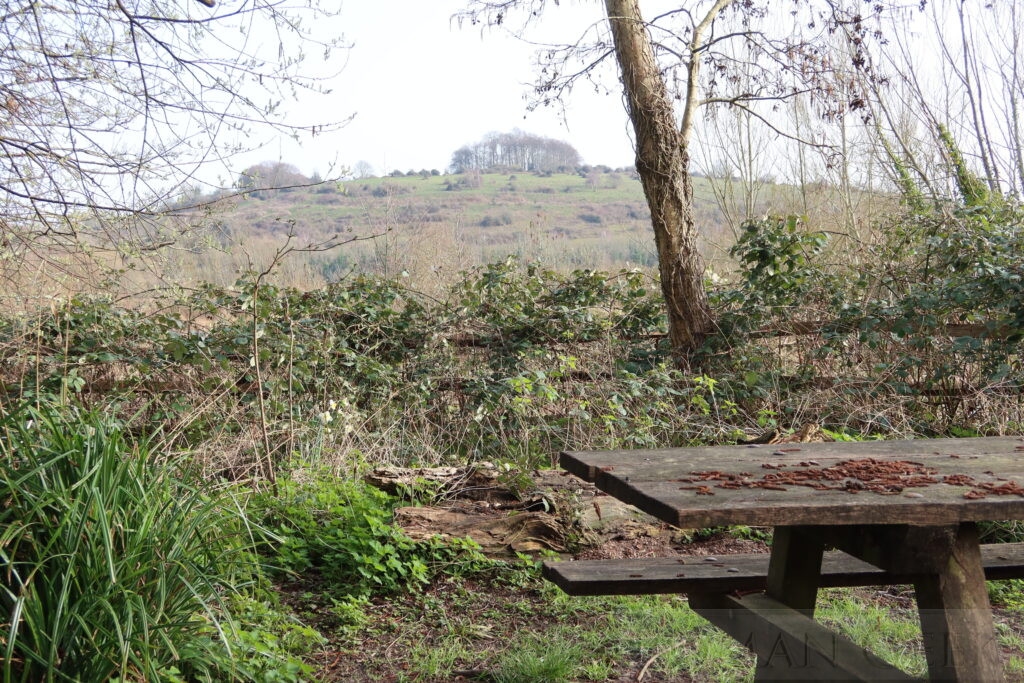
St. Catherine’s Hill, Winchester
Description: Located opposite the Hospital of St. Cross are the Iron Age Ramparts on top of St. Catherine’s Hill, a 220 foot (117m) chalk hill beside the river Itchen. There are wooden stairs to reach the top with panoramic views over Winchester and the surrounding areas. It has been designated a Site of Special Scientific Interest (SSSI) because of its unusual flora. Once a year the pupils and staff from Winchester College assemble at dawn on top of the hill.
Travel Tips
- Best time to visit: Spring and autumn for mild weather and fewer tourists.
- Photography hotspots: Winchester Cathedral, City Mill, medieval city walls, St. Catherine’s Hill for panoramic views
- Nearby Attractions: Stonehenge, Rockbourne Roman Villa, Portchester, Butser Ancient Farm, Silchester
Visitor FAQ
- What is Winchester famous for?
- Winchester is known for being the Saxon capital of England, the seat of King Alfred the Great. An 11th century medieval cathedral holding the 12th century Winchester Bible and containing the Relics of the Saxon Kings and the Danish King Canute, and the burial place of author Jane Austen. It has medieval city walls, the 13th century Great Hall holding the Round Table linked to Arthurian Legend. Winchester college, which is the oldest continuously running school in England since 1382. John Keats wrote ‘To Autumn’ here and Thomas Hardy’s Wessex novels refer to Winchester as Wintoncester. The pop song ‘Winchester cathedral’ composed by Geoff Stephens reached number 4 in the UK in 1966 and number 1 in the US and Canada.
- Can I see Roman Ruins in Winchester?
- Yes, the medieval city walls are built on the original Roman walls. There are many Roman artefacts in Winchester city museum.
- How far is Stonehenge from Winchester city centre?
- Approximately 50 minutes by car.
- Are there Guided Tours of Winchester historical sites?
- Yes, local guides offer walking tours highlighting the Cathedral, the Old Town and other venues. Contact Walking Tours of Winchester.
- Is Venta Bulgarum the same as Winchester?
- Yes, Winchester was founded by the Romans in 70 CE, when they moved the Belgae tribe from their Oppidum nearby.
- Which Roman Province was Canterbury located in?
- What was the role of Venta Bulgarum (Winchester) in the Roman Empire?
- Winchester served as a key economic hub for the wool trade, with its own Procurator of the Wool Warehouse, and roads leading to other Roman cities, including the Portway to London. The River Itchen probably connected Winchester with Clausentum at Bitterne Manor, Southampton, where the wool would have been transferred to sea-going vessels.
- Which Roman Roads connected to Winchester?
- Portway from London to Dorchester, had a branch at Silchester to Winchester, Southampton and Portchester. Ermin Street from Gloucester to Silchester, also had a branch to Winchester, Southampton and Portchester. Iter XV, Iter XII and Iter VII of the Antonine Itinerary all show connections to Winchester.
Quick Facts
- Modern Location: Winchester, England
- Category: Historic city centre, medieval cathedral, tourist destination
- Activities: Walking tours, Sightseeing, Photography
- Nearby Roman Site: Portchester, Rockbourne Roman Villa, Roman villa at Butser Ancient Farm
- Nearest Roman road: Portway
- Roman Province: Britannia
Nearby Attractions
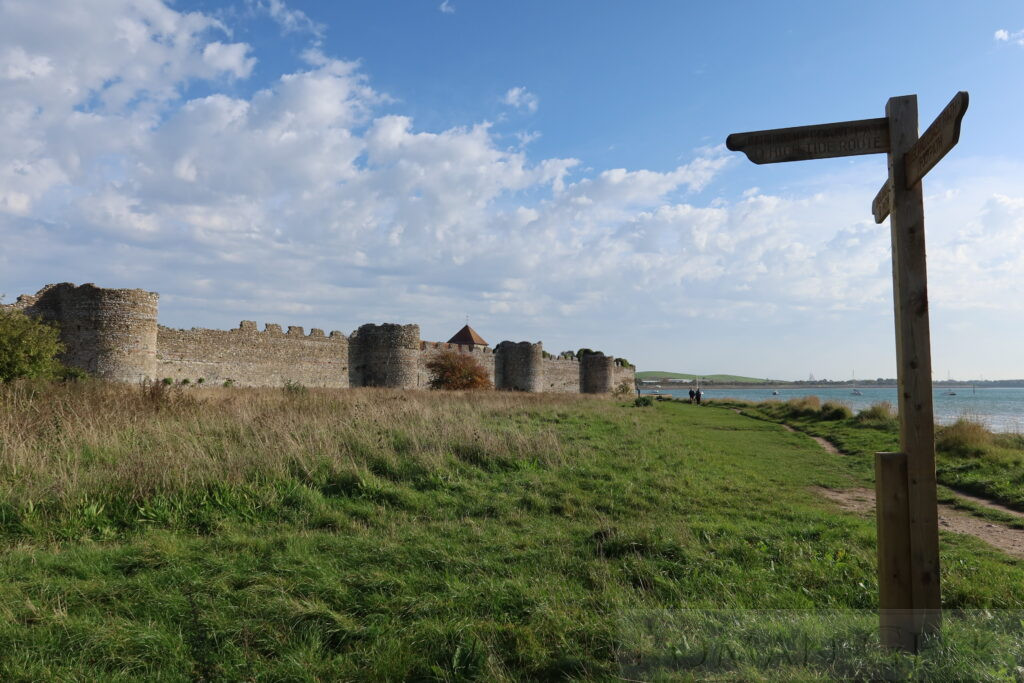
Portchester Castle
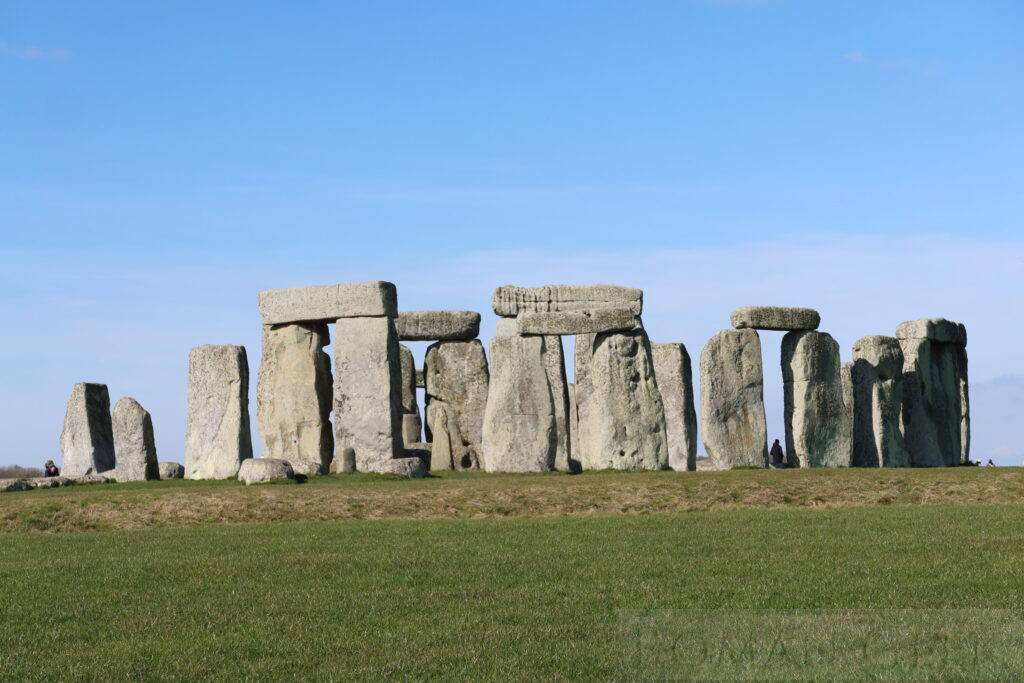
Stonehenge, Wiltshire
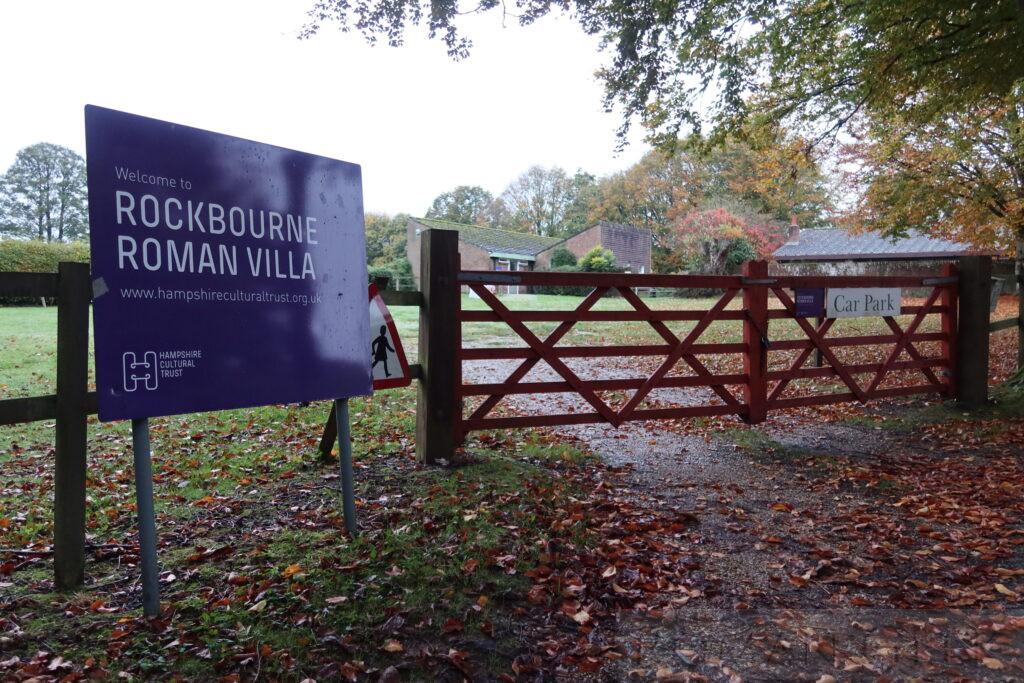
Rockbourne Roman Villa. The villa has a museum, mosaics, hypocaust and baths.
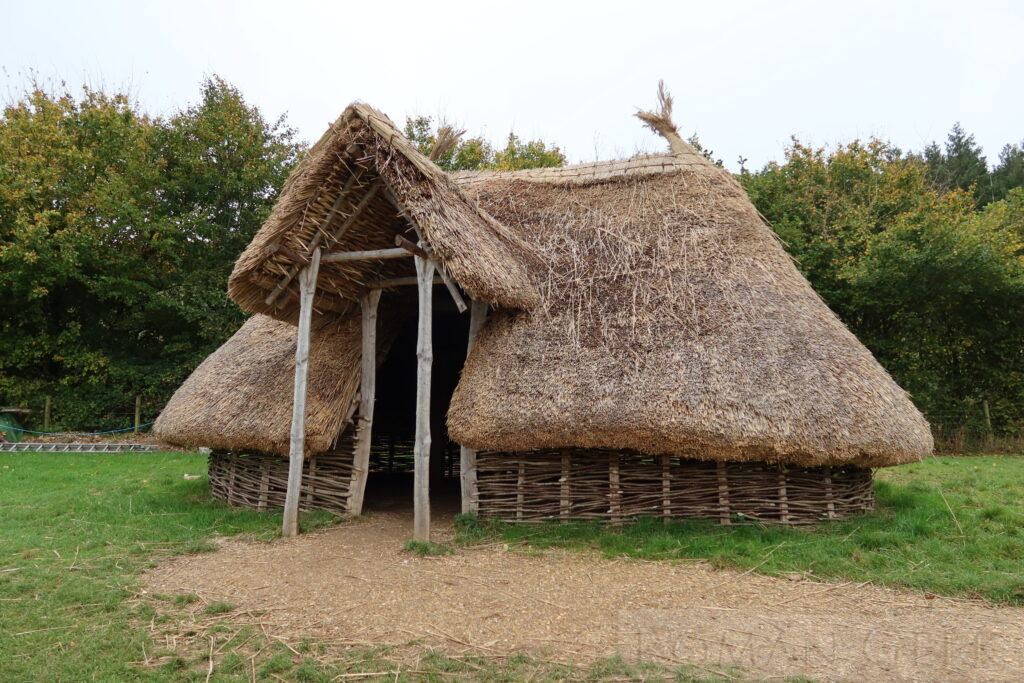
Neolithic House at Butser Ancient Farm near Petersfield.