
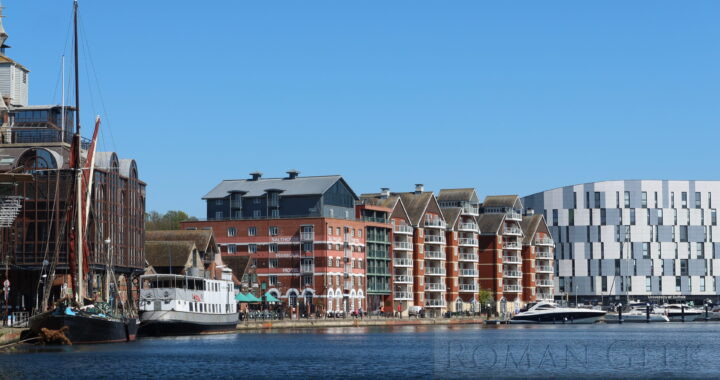
Ipswich: A Saxon Port in East Anglia
Overview
Ipswich is a Port town located on the river Orwell in the County of Suffolk. The town dates from the Anglo Saxon Period and was known as Gippeswic. It is the county town of Suffolk.
History
Around 700 CE, Frisian potters from the Netherlands set up large scale potteries, and exported their wares across the country. Between 869-920 CE Ipswich became part of the Viking Danelaw. After 1066, The Normans ruled Ipswich from Bigod Castle, but it was dismantled by Henry II in 1176. Edward III sailed his fleet from Orwell Haven for Crecy in 1346. Ipswich had became a wealthy port by the Tudor period. In 1606, Ipswich sent three ships to colonise Virginia in the New World. The railway arrived in 1846.
Ipswich Walking Tour (2-3 hrs)
- Your geolocation will appear as a blue dot that moves on the map as you walk.
- You may start anywhere on the map and just follow the blue line to the next point of interest.
Things to Do and Places to See in Ipswich
1. Ipswich Museum (Closed for a £12.3M refit and reopens in Spring 2027)
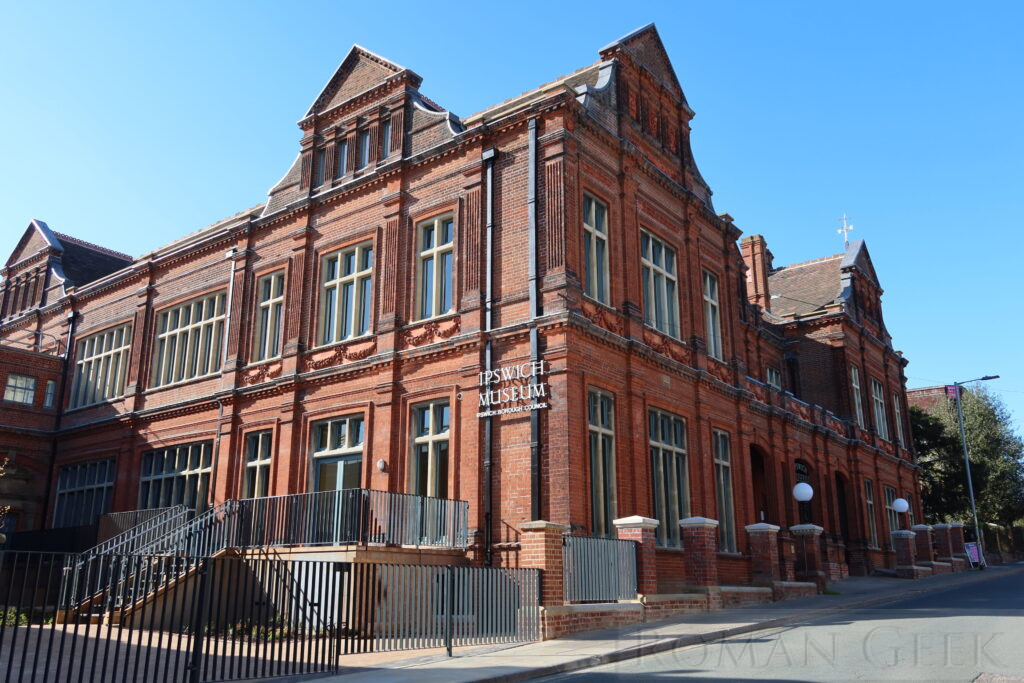
Ipswich Museum
Description: The Ipswich Museum contains a number of rare hoards from different periods of history.
The Second Ipswich Hoard
- 6 Iron Age Gold Torcs
- Copies are in the Ipswich Museum. The originals are in Room 50 of the British Museum.
- (The First Ipswich Hoard of 150 Anglo-Saxon coins has been dispersed and lost)
The Wickham Market Hoard
- Found in 2008, the Hoard consists of 840 Iron Age Gold Staters dating between 40 BCE to 15 CE.
- The Hoard is now in the Ipswich Museum in the Suffolk archeology and prehistory galleries, opening in Spring 2027.
The other Suffolk Hoards are located in the British Museum
- Hoxne Hoard
- 14,865 gold, silver and bronze roman coins, and almost 200 items of gold jewellery and silver tableware of which 98 silver spoons and ladles, many of which are gilded.
- The latest coin dates from 408 CE, the earliest from 367 CE.
- The Hoard is located in the British Museum in London.
- Mildenhall Treasure
- The Hoard is in the British Museum and a copy is in the Mildenhall Museum.
- Eye Hoard: Clint Farm.
- 1781 CE. The largest number of Roman gold coins ever found in Britain, consisting of a Roman lead box containing 600 Roman gold coins dating from 364-423 CE.
- The Hoard is now all dispersed and untraceable.
2. Ipswich Art Gallery (Closed for a refit and reopens in Spring 2027)
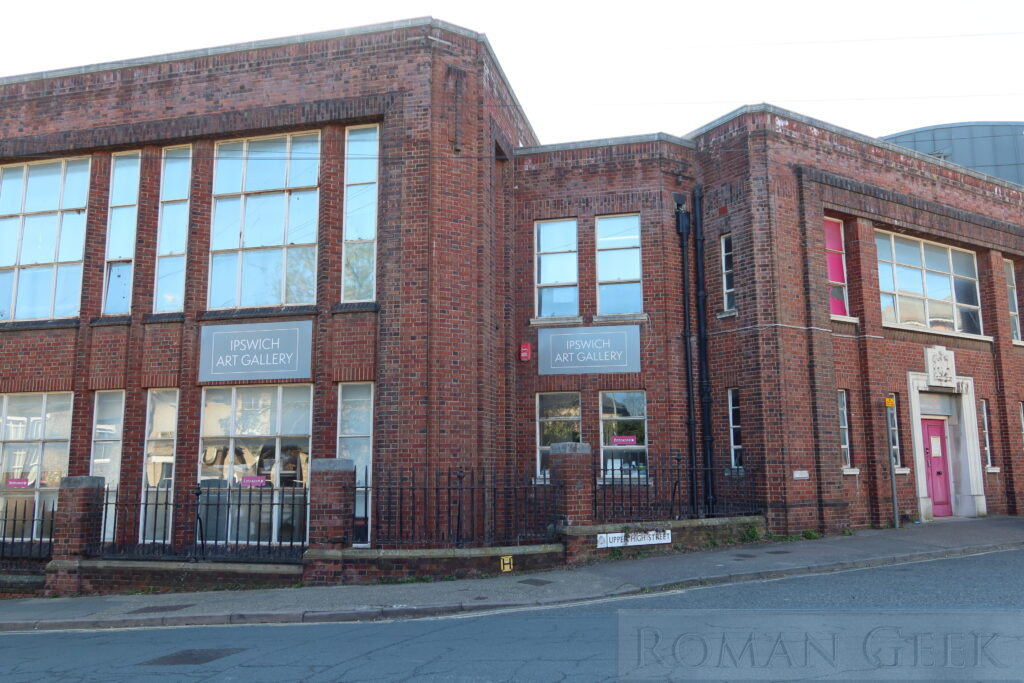
Ipswich Art Gallery
Description: The Art Gallery forms part of the Ipswich Museum, and is located next door. It is a venue for major international art exhibitions, and displays local artists and regional talent.
3. Christchurch Park
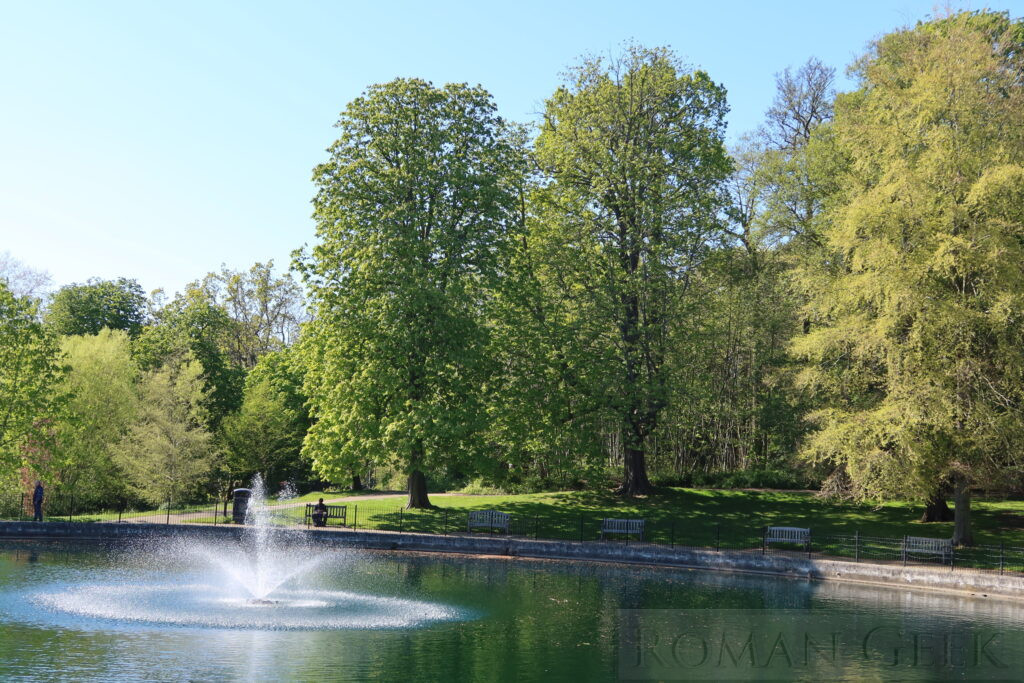
Christchurch Park, Ipswich
Description: Built over the site of Holy Trinity Priory, of which no buildings remain. There were three Priories in Ipswich, Blackfriars (Dominican), Whitefriars (Carmelite) and Greyfriars (Franciscan).
Historical Insight: The Ipswich Martyrs monument located in the park is dedicated to the nine Protestants burnt between 1553-1558.
4. Christchurch Mansion
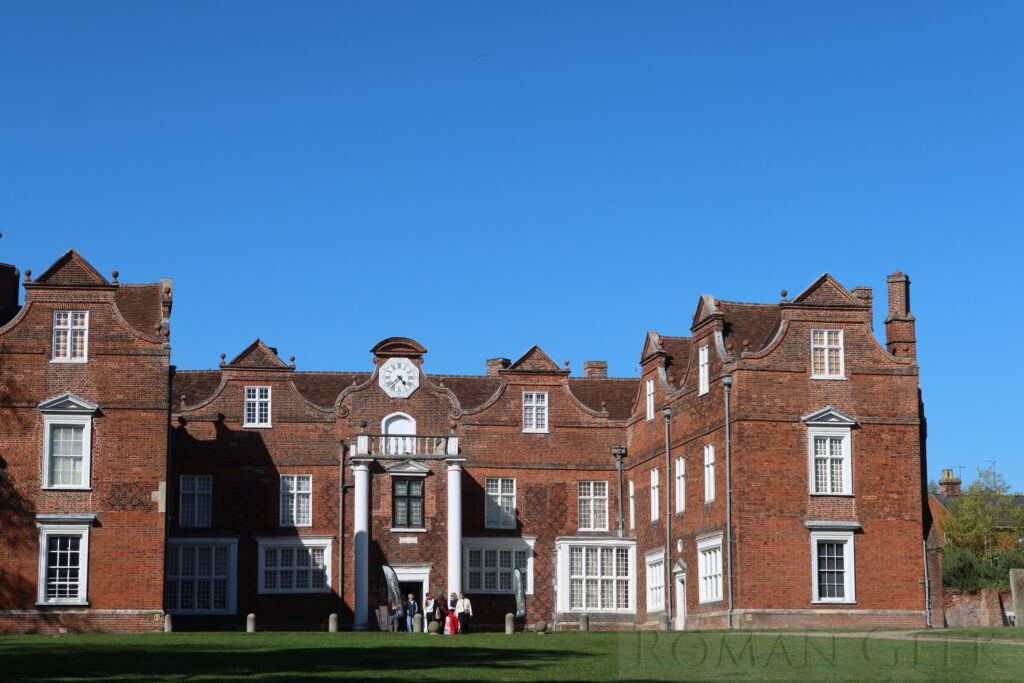
Christchurch Mansion, Ipswich
Description: Christchurch Mansion is a 500 year old well-preserved Grade I Tudor brick structure. It has been a public museum and art gallery since 1896 and is free to enter. The rooms are preserved as if the past inhabitants still lived there, with each room holding period furniture, fine clothing and toys. The premises were enlarged by the addition of the new Wolsey Art Gallery, a Tudor merchant’s house rescued from demolition.
Artworks in the Gallery include paintings by local artists John Constable, Thomas Gainsborough and George Frost.
Historical Insight: When Henry VIII enacted the Dissolution of the Monasteries, the former Priory lands were purchased by the Merchant Taylor and Merchant Adventurer Edmund Withypoll who completed the Mansion in 1550. It was visited by the monarchs Queen Elizabeth I in 1561 and 1579, and by Charles II in 1668.
Tip: In 2019 the museum hosted an exhibition called Made in Suffolk, dedicated to Suffolk global superstar Ed Sheeran.
Wolsey Art Gallery, Ipswich
5. St. Margaret’s Church
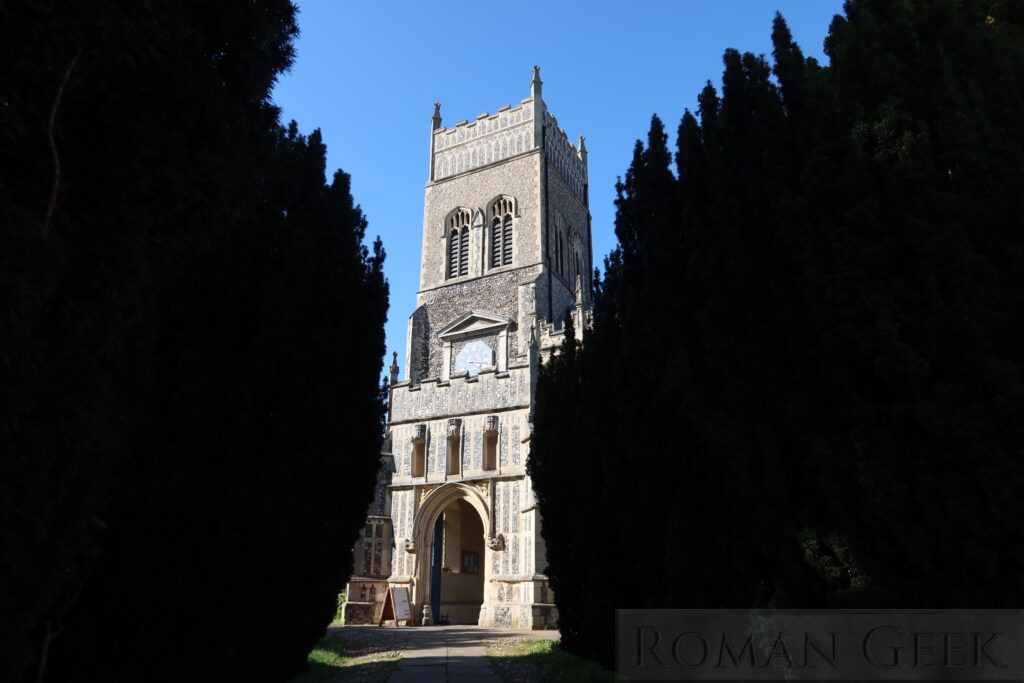
St. Margaret’s Church. Ipswich
Description: Commenced around 1300 with today’s structure dating from the 15th-century, it is a Grade I Listed building built in the Perpendicular style of Gothic architecture.
Historical Insight: It features a 15th-century hammer-beam roof with merchant marks and carvings of the benefactors, 17th-century painted ceiling panels and an 1859 Organ.
6. St. Margaret’s Plain
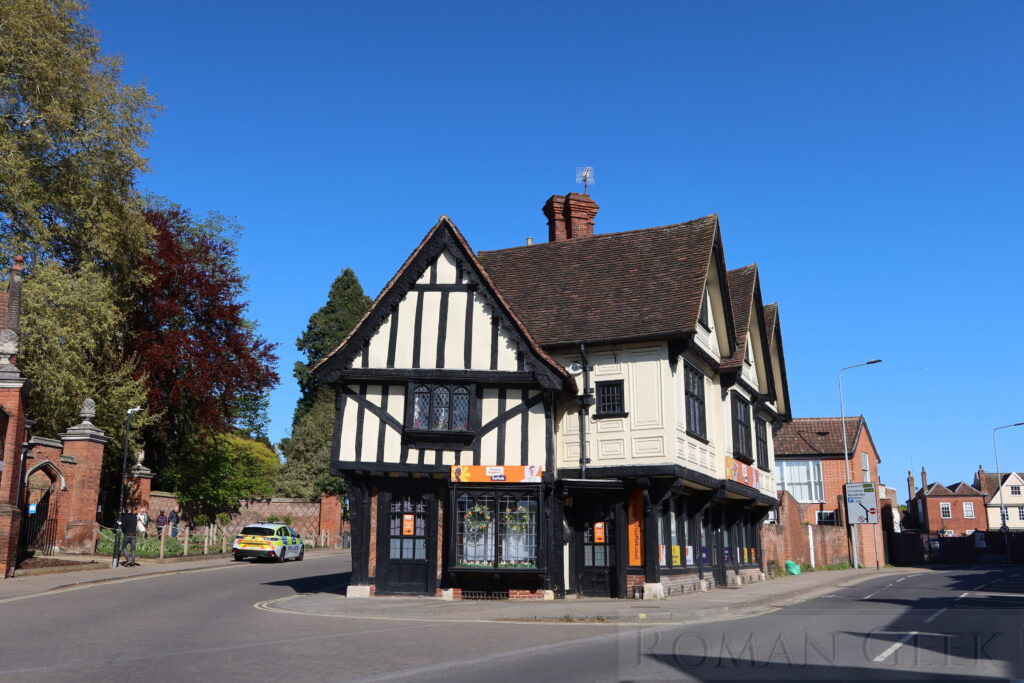
Old Houses on St. Margaret’s Plain, Ipswich
Description: St. Margaret’s Plain holds four historic buildings: 2-4 St. Margaret’s Plain (Photo) is an extensive Grade II Listed building on three floors occupying the prime position at the junction with Old Foundry Road. 9 St. Margaret’s Plain is occupied by a 19th-century grey gault brick Grade II Listed house on three floors. The Old Manor House in St. Margaret’s Green belonged to the Cobbold Brewing family, and is where Margaret Catchpole first worked in service as a cook before becoming a notorious smuggler and folk figure. And the timber framed Old Pack Horse Inn on St. Margaret’s Plain dates from the 16th-century.
7. Pykenham’s Gateway & Brick Boundary Wall
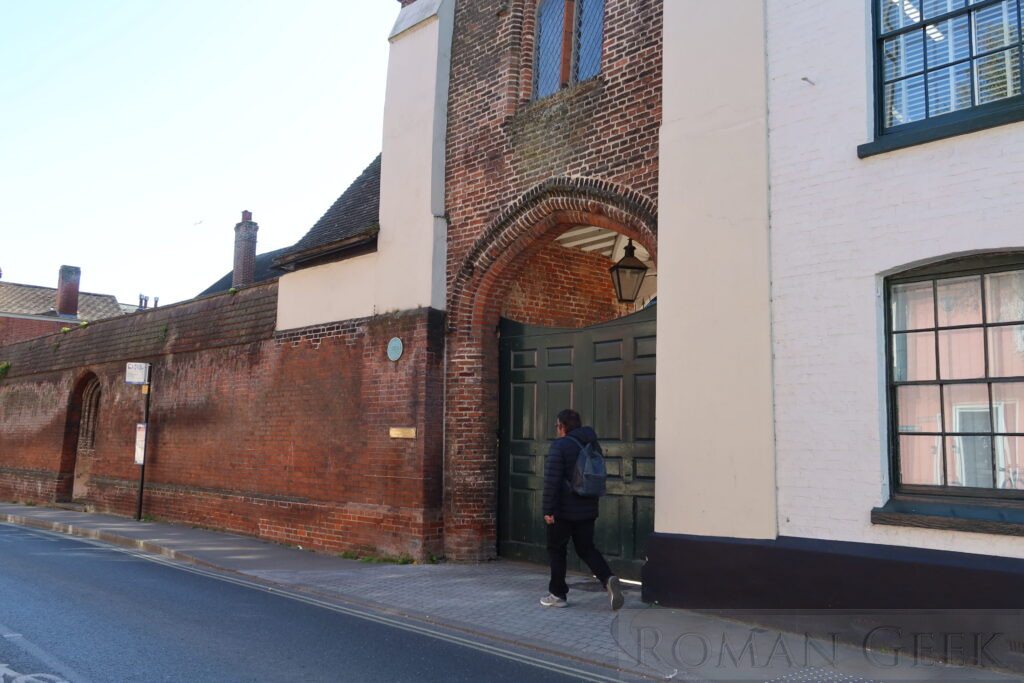
Pykenham’s Gateway & Brick Boundary Wall
Description: This is a Grade I Listed building built around 1471 located on Northgate Street. When William Pyckenham was appointed Archdeacon in 1471, he built a palace on the old rampart wall. All that survives today is the Gatehouse and Boundary Wall.
Historical Insight: The Gatehouse features a late-Gothic 4-centred archway and a rebuilt crow-stepped gable. The upper chamber features mullioned windows with latticed leaded lights. The Boundary Wall extends south and includes older doorways and an arched carriage path.
8. Ipswich Minster
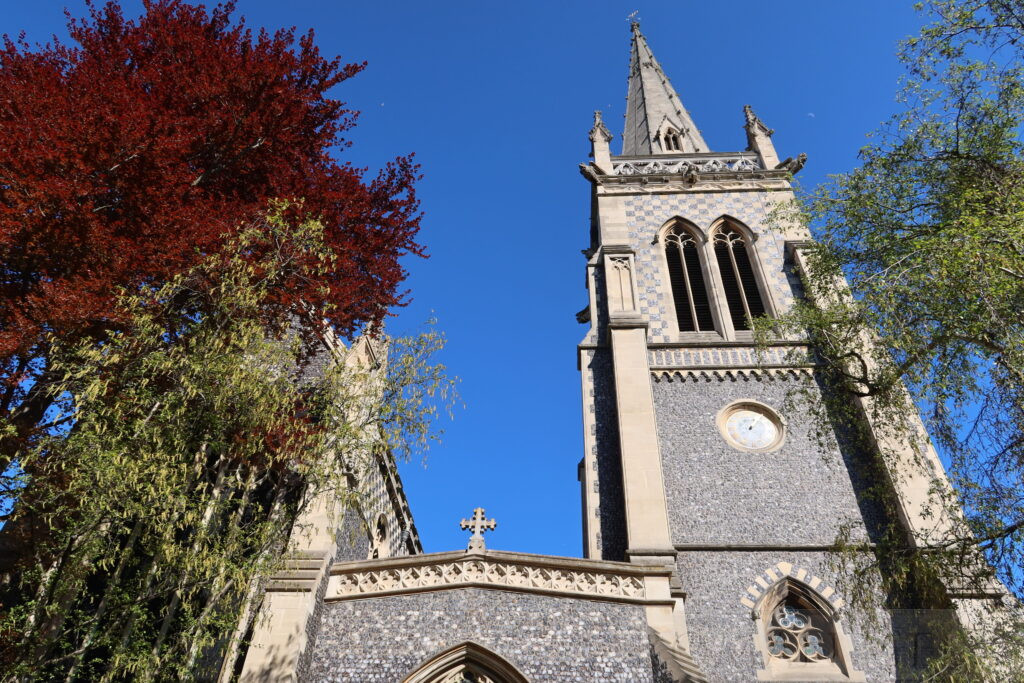
Ipswich Minster
Description: Ipswich Minster, previously known as St. Mary-Le-Tower, is a Grade II Listed building and the civic church of Ipswich. Although medieval, the church was rebuilt in 1870 and was designated as a Minster in 2025. In 1553 the tower was given 5 bells and a Sanctus altar bell, later increased to a tower peel of 12 bells in 1865.
Historical Insight: A church occupying the site was mentioned in the Domesday Book of 1086. The town charter of Ipswich was written in the churchyard in 1200.
9. Dial Lane
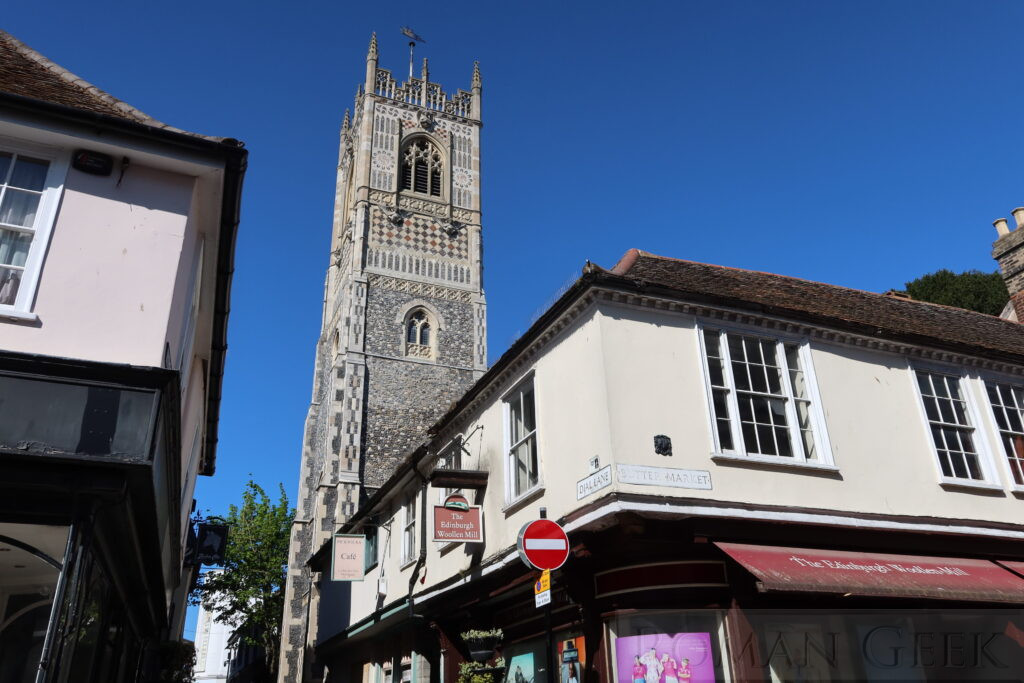
Dial Lane and St. Lawrence Church, Ipswich
Description: One of the town centre’s most historic and atmospheric streets, it is pedestrianised, and features timber framed buildings beside St. Lawrence’ Church. The Lane took its modern name in the 19th-century from a large, prominent clock dial that once adorned the nearby tower of St. Lawrence Church. Along the street, numbers 2, 4, 6, 8, 10, 12 and 14 are all Grade II Listed Buildings.
Historical Insight: St. Lawrence Church is a Grade II Listed building, and although now a community hub and cafe, the tower holds 5 church bells dating from the 15th-century, making it the oldest ring of church bells in a Christian church in the world. Known as ‘Wolsey’s Bells’, as Thomas Wolsey would have heard them as a child, they were restored and returned to the tower in 2009.
10. The Ancient House
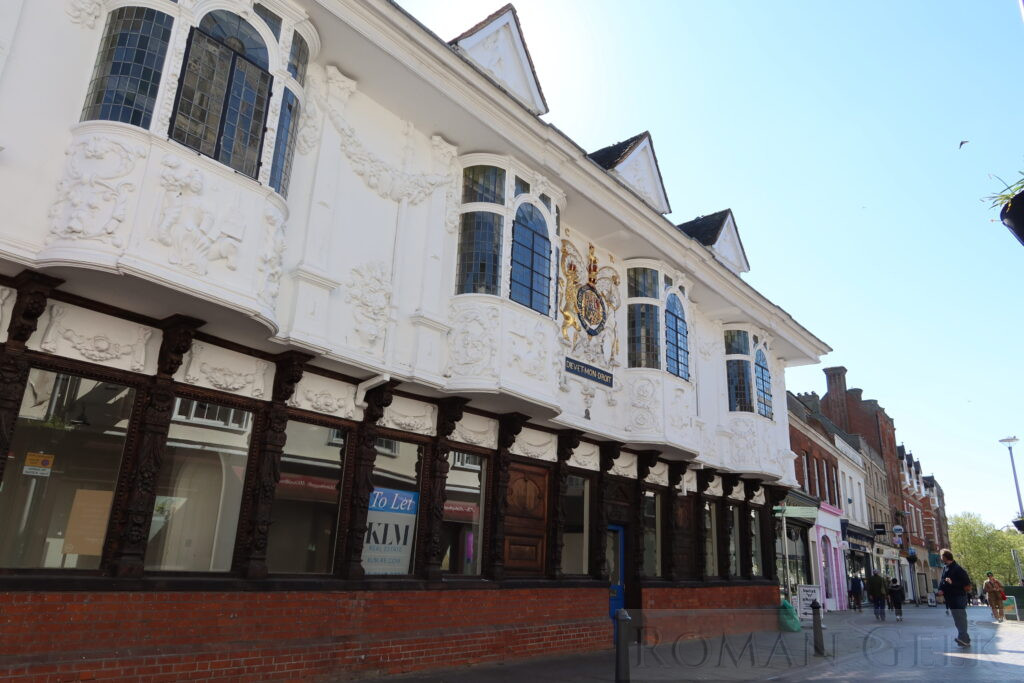
The Ancient House, Ipswich
Description: Also known as Sparrowe’s House, after the family that owned it for 300 years, the Ancient House is located in Buttermarket. It is a 15th-century Grade I Listed building with fine examples of Pargeting (Plaster Relief) on the facade.
Historical Insight: The four upper-bay panels depict scenes from the four continents known to the Tudors – Africa, Asia, America and Europe, but without the undiscovered Australia. In the centre is the Royal Arms of King Charles II and the motto of the Order of the Garter.
11. Lloyd’s Archway
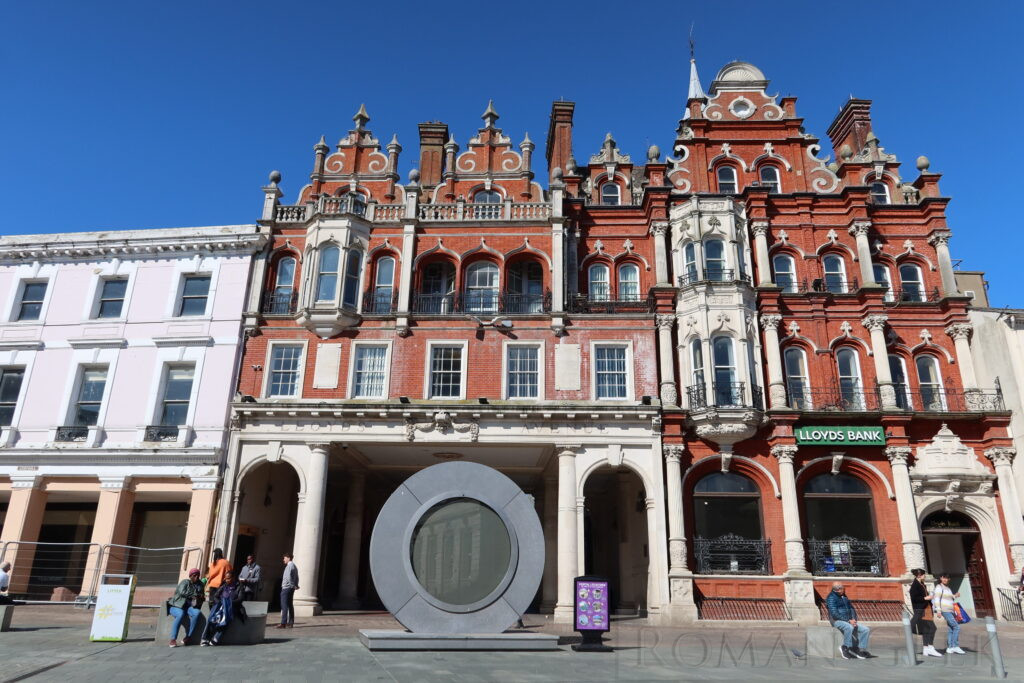
Ipswich Portal
Description: The Lloyds building is a Grade II Listed landmark completed in 1890 and featuring an Italianate Venetian-inspired style with arched windows, Corinthian-style columns and stone-carved masonry. To alleviate traffic congestion, Lloyd’s Archway and Lloyd’s Avenue were completed in 1930, linking Cornhill with Crown street.
The Ipswich Portal: Unveiled in October 2025, the Ipswich Portal is positioned in front of the Lloyd’s Archway in Cornhill. The Portal is a circular structure featuring a live-streaming video connection to other cities worldwide, allowing passers-by to see and interact with other people. Operating hours are between 6:00 AM to 11:00 PM. As the first-ever UK Portal, it became the 5th sculpture in the global network of identical Portal sculptures. Being all located in the public space, Portals offer a real-time, unfiltered livestream, inviting people of different cultures to meet above borders and differences.
12. Ipswich Town Hall
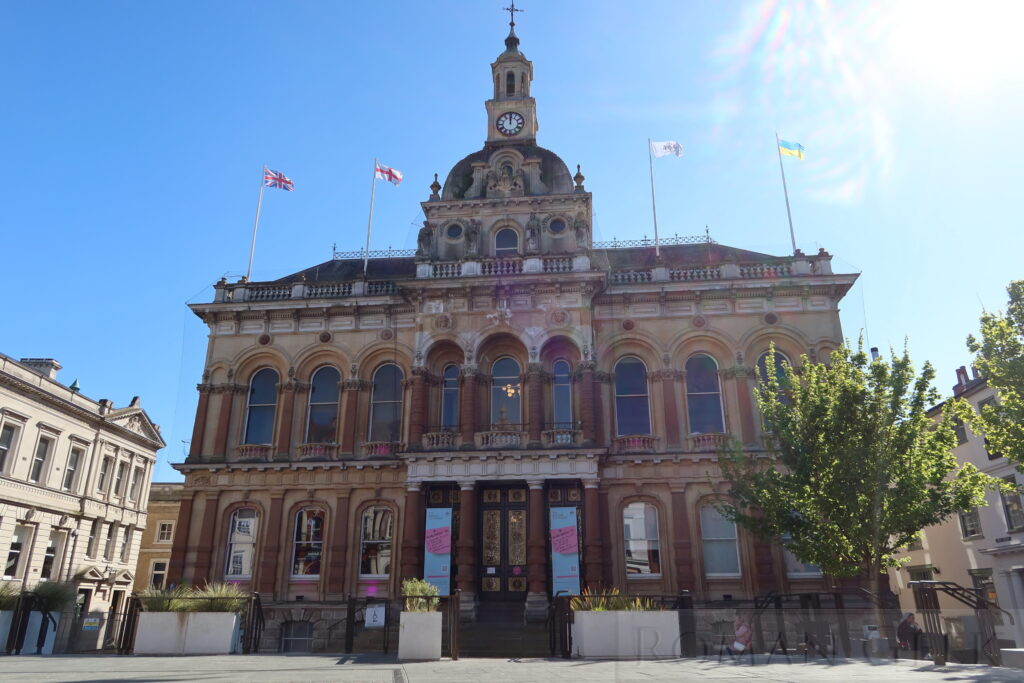
Ipswich Town Hall
Description: Located in the Cornhill, the building was designed in the Grand Baroque Revival style and completed in 1868. Although a new Civic Centre has replaced its administrative functions, the Mayor’s Office and Council Meetings are still held here.
Architectural Insight: The facade features four prominent stone statues which represent Commerce, Agriculture, Law and Order, and Justice. Below are three roundel heads depicting King Richard I, Cardinal Wolsey (born in Ipswich) and King John.
Cornhill: This a historic pedestrianised town square surrounded by Victorian buildings, which hosts Christmas markets and live music shows. It is also where 9 of the town’s Protestants were martyred between 1515-1558.
13. Willis Building
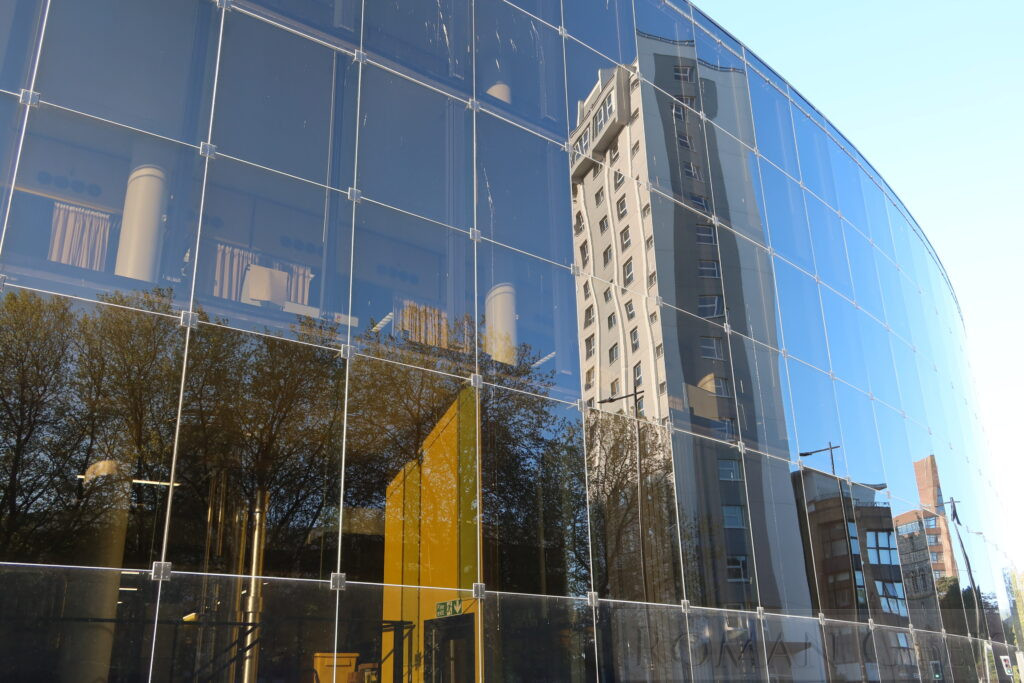
Willis Building, Ipswich
Description: The Willis Building was completed in 1975 as the regional HQ for the Insurance firm now known as Willis Towers Watson. It was given Grade I Listed status in 1991, as a result of its highly innovative ‘hi-tech’ design by Norman Foster and Wendy Cheesman of Foster Associates. The building houses 1300 office staff over three floors in open-plan offices.
Design Technique:
Based on the Art Deco Express Building in Manchester, the building uses a grid of concrete pillars to support cantilevered concrete slab floors. This allows the curtain wall to be units of apparently free-standing smoked glass. There are no right angled corners, and a central escalator leads to a rooftop staff restaurant in a rooftop garden. Originally, there was a swimming pool on the ground floor.
14. Silent street
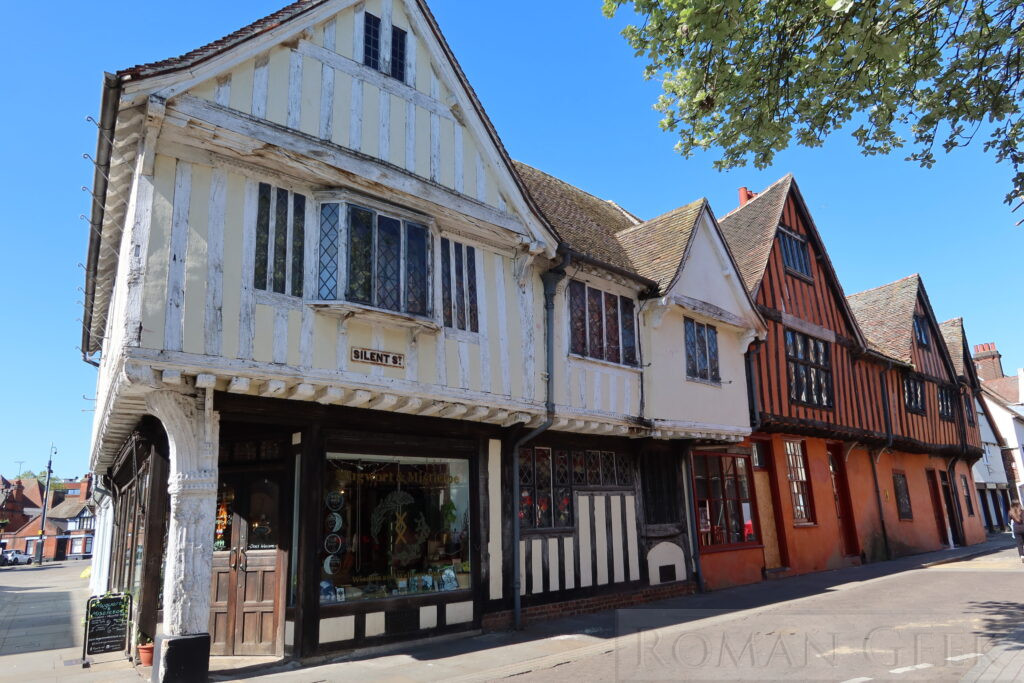
Silent Street, Ipswich
Description: Curson Lodge is a 15th-century Grade II Listed building located at 45, 45a (Now 47) St. Nicholas Street. It consists of three buildings which were renovated in 2009; 45, 45a St. Nicholas Street, 3-9 Silent Street and 1 Silent Street.
Historical Insight: The name Silent Street was established in 1764, but its origin is a mystery. It was originally called Half Moon Street and Cole Hill. One suggested theory believes that the outbreak of Plague between 1665-1666 wiped out most of its residents leaving the street unnaturally quiet. Another theory believes that during the Anglo-Dutch Wars (1652-1784) when Curson Lodge was the King’s Hospital, straw was laid on the road to muffle the sound of passing horse and carts, which was disturbing the wounded soldiers there. However, neither theory can be confirmed, but remain popular in local folklore.
15. Thomas Wolsey Statue
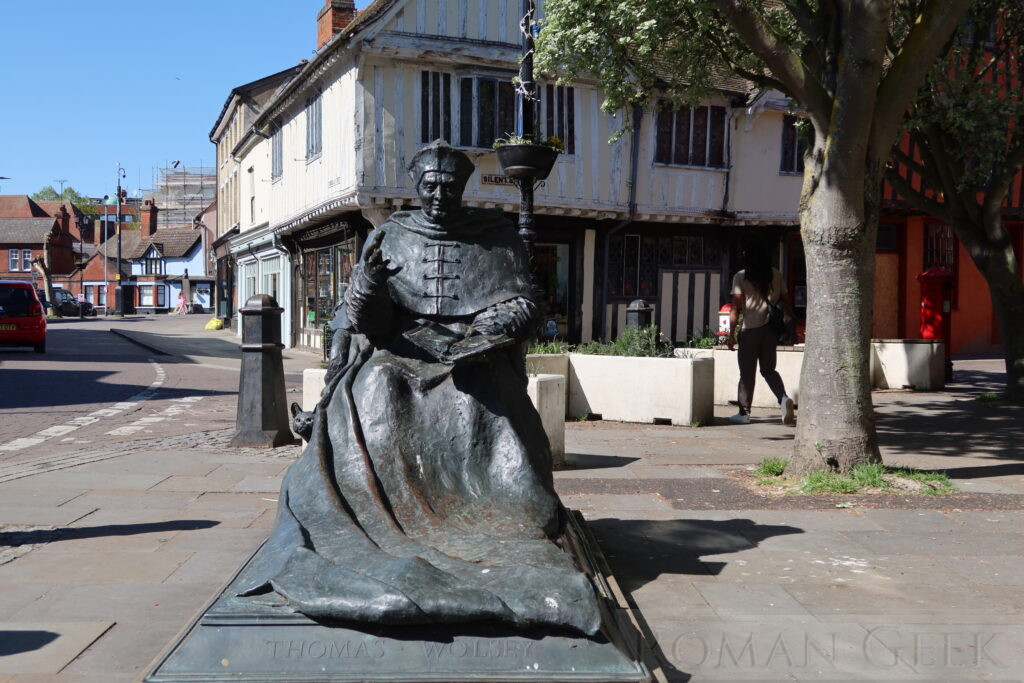
Wolsey Statue, Ipswich
Description: The statue depicts Cardinal Thomas Wolsey who was born in Ipswich and became a Statesman, Cardinal and Educator. It is located on the corner of Silent Street and St. Peter’s Street.
Tip: The Cardinal is depicted in his traditional Cardinal’s robes and holding a book. Closer inspection however, reveals a small sculpted cat clinging to his robes and peering out from under the seat. Wolsey kept his adored cat beside him even during state meetings.
16. Sailor’s Rest
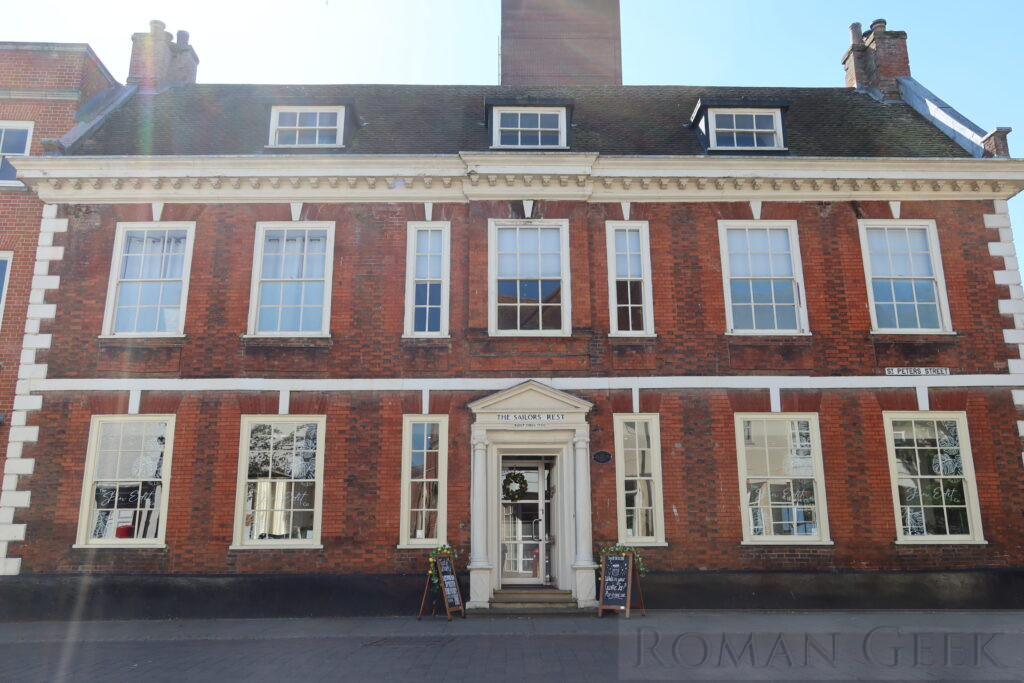
The Sailor’s Rest, Ipswich
Description: The Sailor’s Rest is a red brick, timber framed building with stucco corners, which is Grade I Listed and was built around 1700. It is located at 2 St. Peter’s Street. Part of the maritime history of Ipswich, it served as the British Sailor’s Society and Seamen’s Residential Club. Restored in 1970, it now serves as a restaurant with the upper floors being residential.
17. Wolsey’s Gate
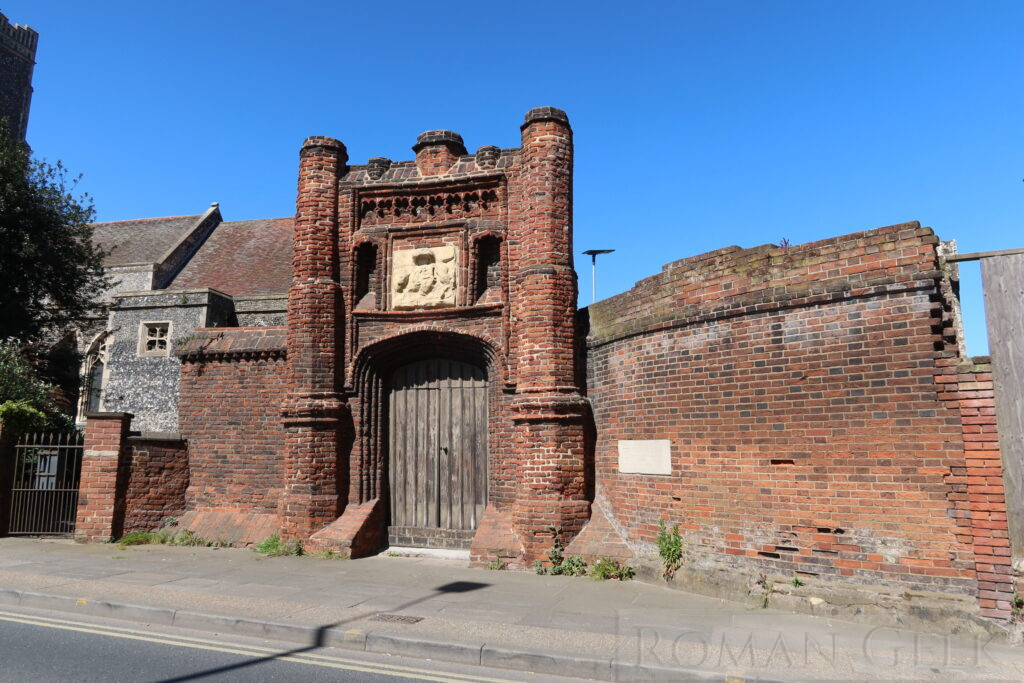
Wolsey’s Gate, Ipswich
Description:
Historical Insight: Cardinal Wolsey decided to found colleges in every diocese in England, whose alumni would attend a new college at Oxford, Cardinal College. However, the Cardinal College of St. Mary, Ipswich was the only college whose construction began, as Wolsey fell from power in 1529. Henry VIII seized all the building construction materials and sent them by sea to be used at Westminster. However, as the water gate was already constructed it was left in situ. In 1852, the Ipswich School resurrected the design for Cardinal College of St. Mary, and the school was constructed with reference to the Tudor original.
Tip: Although Wolsey set the foundation stone for Cardinal College Oxford, in 1525, he never completed it. However, King Henry VIII refounded the site in 1532 and re-established it as Christ Church, Oxford, both as a university college and as a cathedral for the Diocese of Oxford.
18. The Old Custom House
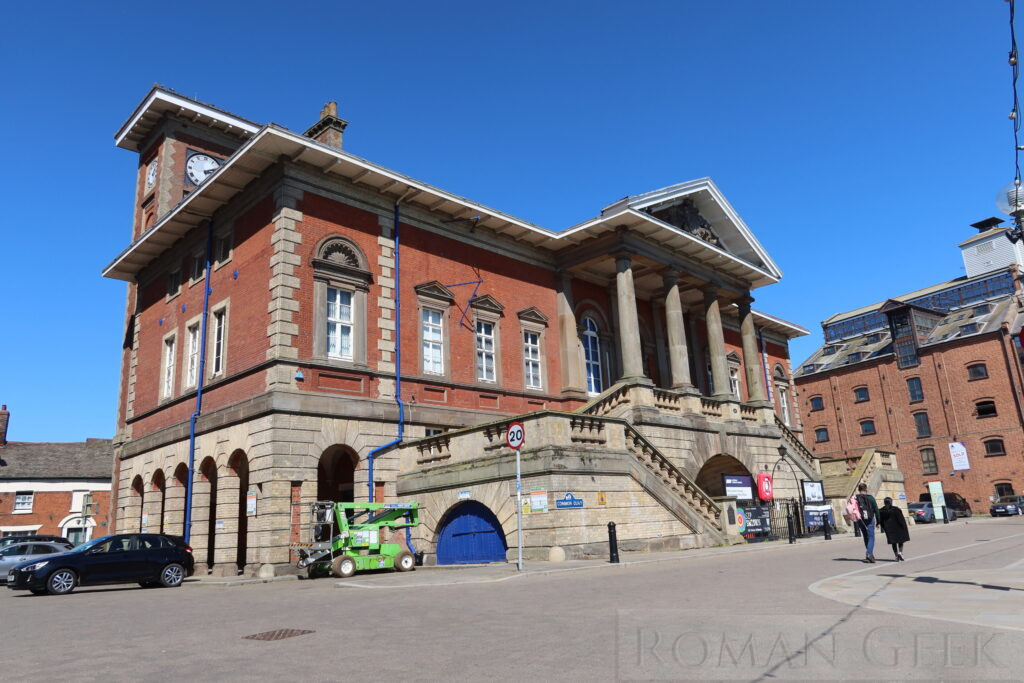
The Old Custom House, Ipswich
Description: A Grade II Listed building opened in 1845. It still serves as the HQ and commercial centre for the Port of Ipswich. It was built in the neo-classical style using red brick and grey gault dressings. It features a tetrastyle Tuscan portico overlooking a Palladian staircase, with the pediment displaying the Ipswich Borough Coat of Arms – a rampant lion with the sterns of three ships supported by sea-horses.
Historical Insight: It replaced a timber framed building that had stood on the site for 500 years.
19. Ipswich Waterfront
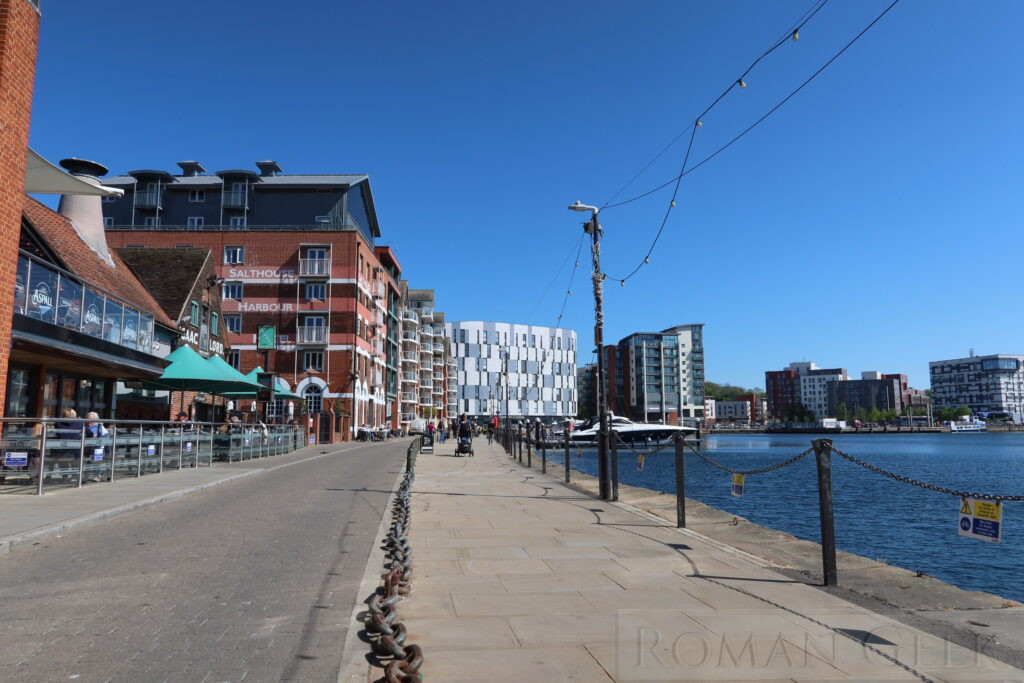
Ipswich Waterfront
Description: An Iconic Waterfront where cafés, bars and restaurants sit alongside boutiques, galleries and museums. The Window museum on the quay explores the history of Ipswich’s maritime history. Located here is the Salthouse Harbour Hotel, the Neptune Marina, The Mill, one of multiple high rise apartment buildings and the University of Suffolk.
Historical Insight: The Quay has been in use since the 7th century, with the current Dock being constructed in 1842 and known as ‘the biggest and most important enclosed dock in the kingdom’. During the 7th and 8th centuries, the principal English Ports were York and London, and the next two were Ipswich (known as Gipeswic) and Southampton (Hamwic). Gipeswic was the port for the East Saxon Kingdom based at Rendlesham and Sutton Hoo.
Tip: Ipswich even has its own Thames Barrier style flood gate, known as the Ipswich Tidal Barrier, and which was completed in 2019 to prevent storm surges.
20. River Trips
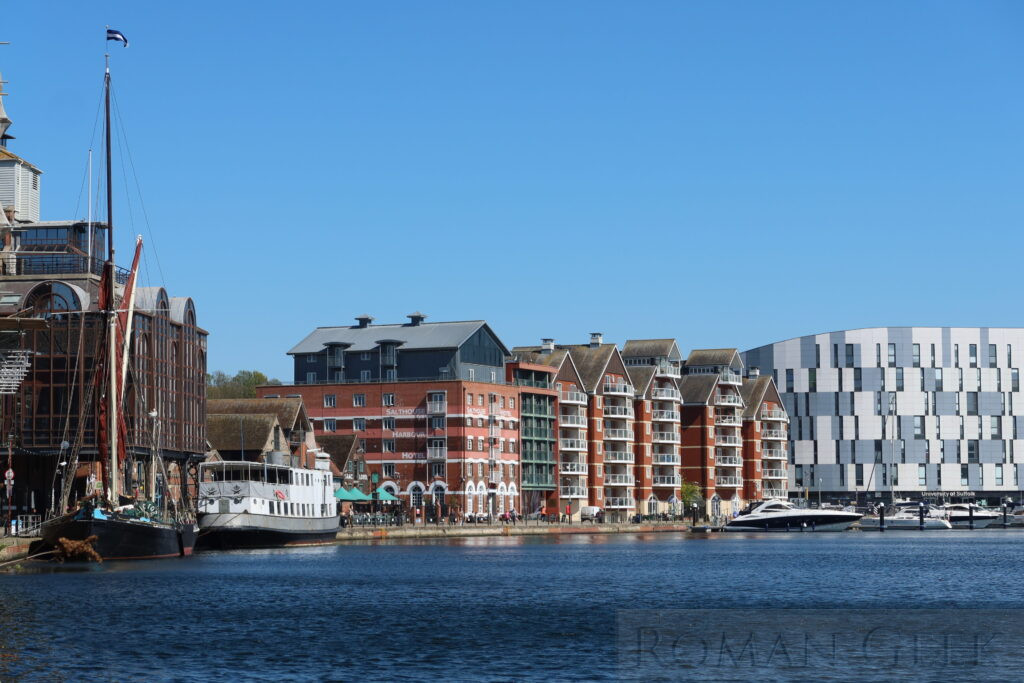
Ipswich Waterfront
Description: There are two operators: The Orwell Lady which offers river trips for up to 118 passengers from Orwell Quay. The short trips last 1 hour, offering views of the Orwell Bridge single span concrete viaduct. The longer cruise up the Orwell takes 3.5 hours and offers views of the massive container port at Felixtowe. The sailing Barge Victor also offers cream tea cruises and dinner cruises. Excursions run from April to December.
Further Afield
21. Regent Theatre
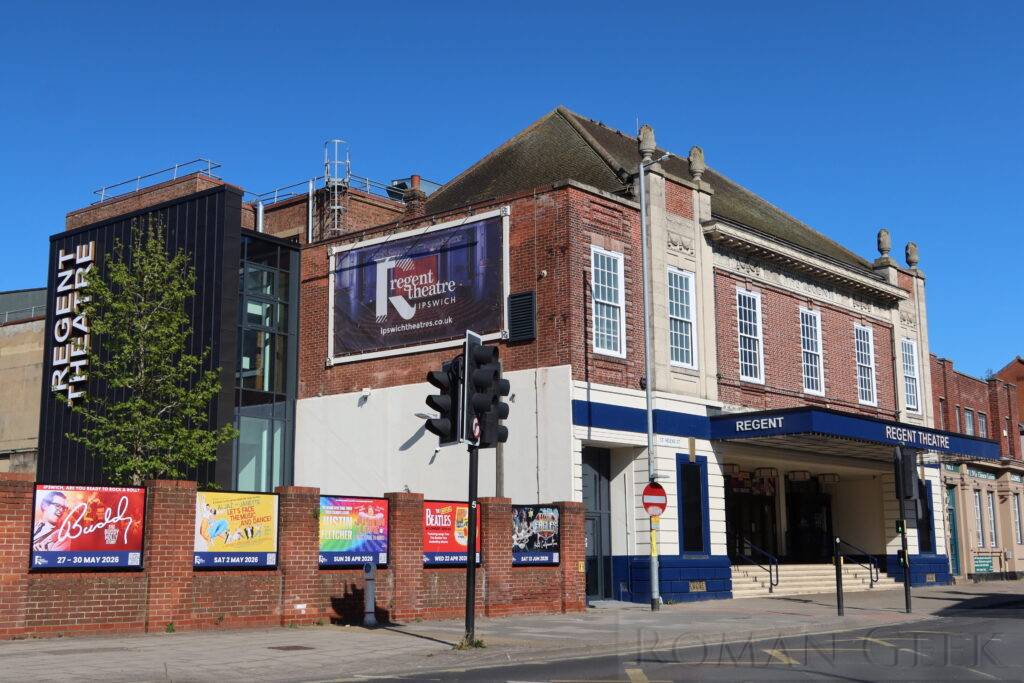
Regent Theatre, Ipswich
Description: The Regent Theatre is an Art Deco building opened in 1929 as a ‘cine-variety hall’ to play movies with sound. It is a steel framed building with precast concrete floors and brickwork. It is Grade II Listed and offers 1551 seats making it the largest theatre in East Anglia.
Tip: Many famous bands have performed here including Buddy Holly, The Rolling Stones, Ike & Tina Turner, Status Quo, Roy Orbison, Jimi Hendrix, Ian Drury, Elvis Costello, the Boomtown Rats and Genesis.
22. Ipswich School (1399)
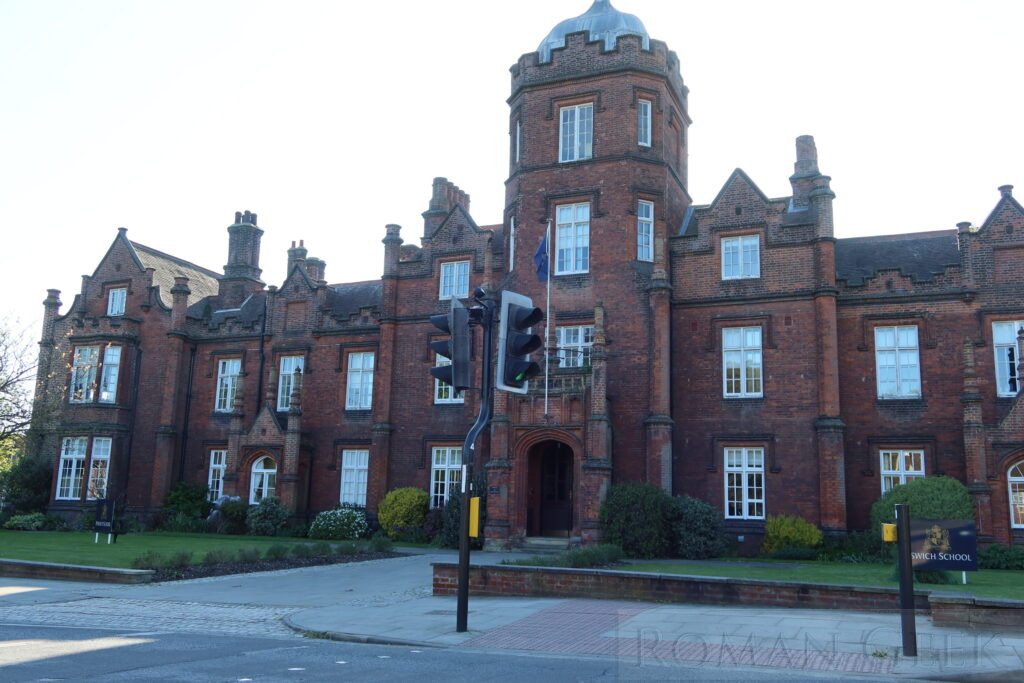
Ipswich School
Description: Established in 1399, Ipswich school is an independent public school. The current Victorian building was built in 1852 with the architect resurrecting Cardinal Wolsey’s 1529 design for his Cardinal College of St. Mary. The school is built in the red-brick Tudor Elizabethan style and holds Grade II Listed status.
23. New Wolsey Theatre
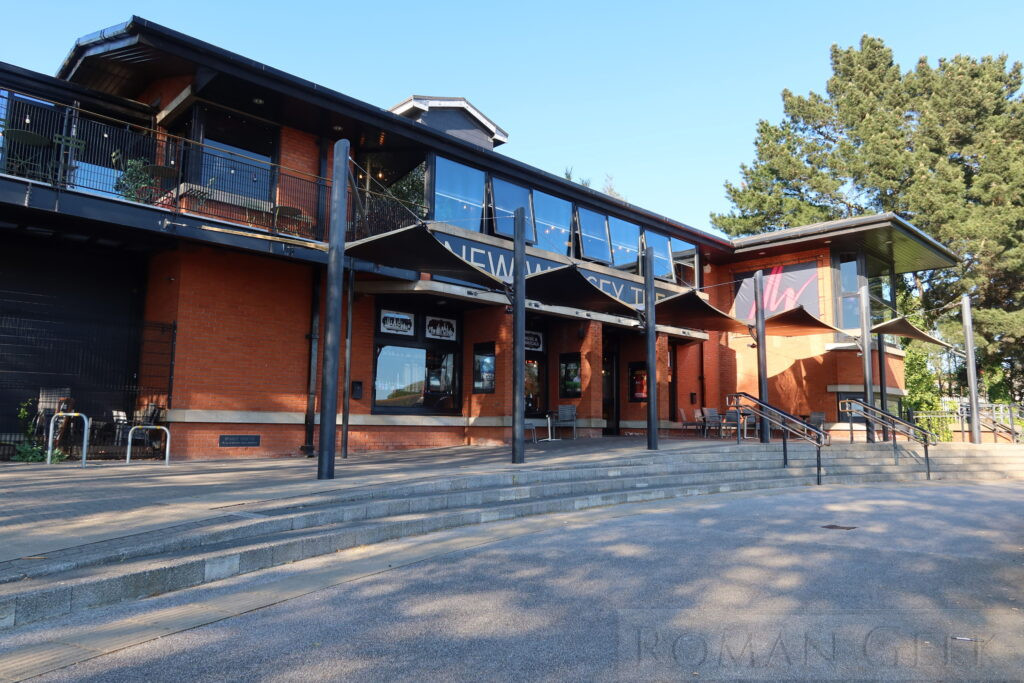
New Wolsey Theatre, Ipswich
Description: The New Wolsey Theater is a midsized regional theatre opened in 1979 with a seating capacity 400.
24. The Avenue Theatre
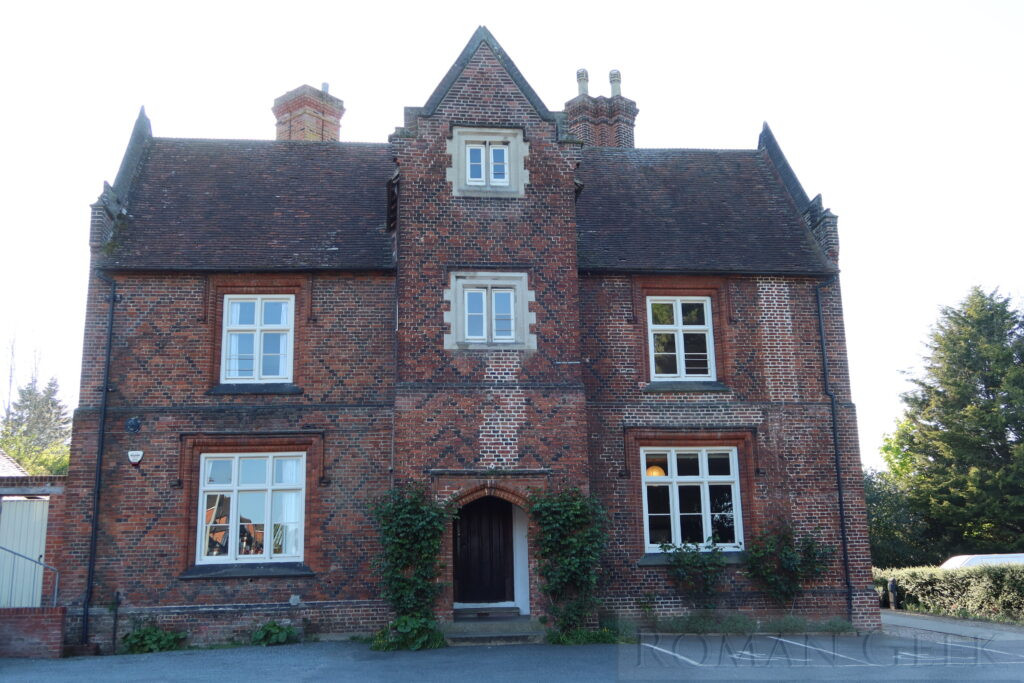
The Avenue Theatre, Gibbeswyk Hall, Ipswich
Description: Gibbeswyk Hall is a Grade II Listed building operated by the not for profit Red Rose Chain theatre company who offer a vibrant professional and community programme.
25. Ipswich Transport Museum
Description: Located at the Old Trolleybus Depot in the Cobham Road. It is only open from March to December on Sundays between 11-4pm. The Museum has over 100 vehicles and engineering objects on display, including Buses, a 1903 Tramcar, an 1880’s Horse Tram, Commercial and Emergency vehicles such as Lorries, Fire Engines, Ambulances, Police Cars, Funeral Hearses, Motorcycles, Bicycles and Prams and Agricultural items such as Combine harvesters, Cranes, Forklifts and Lawnmowers.
Travel Tips
- Best time to visit: Spring and autumn for mild weather and fewer tourists.
- Photography hotspots: The Ancient House, Ipswich Waterfront, Christchurch Mansion
- Nearby Attractions: Sutton Hoo Ship Burial
Visitor FAQ
- What is Ipswich famous for?
- Cardinal Thomas Wolsey, one of King Henry VIII’s closest allies, was born in Ipswich.
- Ed Sheeran the musician, grew up in Framlingham, 15 miles (24km) from Ipswich.
- Birth of the Power Lawnmower in 1902.
- Roman Hoards in the Ipswich Museum: Wickam Market Hoard, Second Ipswich Hoard.
- In 1800 Sir Horatio Nelson was chosen as High Steward of Ipswich.
- Can I see Roman Ruins in Ipswich?
- No. An extensive Roman Villa was excavated at Castle Hill, but it is now under housing.
- How far is Sutton Hoo Ship Burial from Ipswich city centre?
- About 30 minutes by car.
- Are there Guided Tours of Ipswich historical sites?
- Yes, local guides offer walking tours.
- Is Gippeswic the same as Ipswich?
- Yes. It’s the Saxon name for Ipswich.
- Which Roman Province was Ipswich located in?
- Ipswich did not exist during the Roman Empire, but it would have been in Britannia.
- What was the role of Gippeswic (Ipswich) in the Roman Empire?
- Ipswich did not exist during the Roman Empire. It was founded later by the Saxons in the 7th century.
- Which Roman Roads connected to Ipswich?
- The Pye Road linked London with Colchester– and Caistor St Edmund. It passed near the present location of Ipswich.
Quick Facts
- Modern Location: Ipswich, England
- Category: Historic city centre, Port, University town, tourist destination
- Activities: Walking tours, Sightseeing, Photography
- Nearby Roman Site: Colchester
- Nearest Roman road: Pye Road
- Roman Province: Britannia
Nearby Attractions
1. Aldeburgh
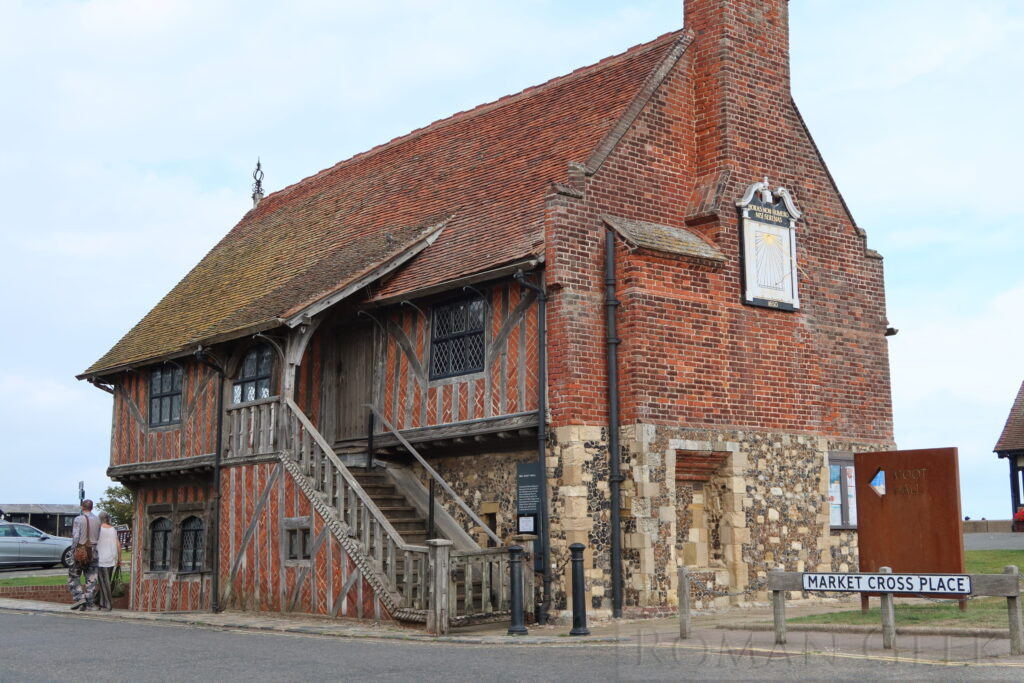
Aldeburgh Museum, Suffolk
2. Dunwich
- Now lost to the Sea, but it was a huge Port during the Medieval Period.
- Many Roman roads radiated out from Dunwich.
3. Sutton Hoo Ship Burial
- Sutton Hoo near Woodbridge, 10 miles (16km) northeast of Ipswich, was the site of the discovery of an Anglo Saxon Ship Burial known as the Sutton Hoo. The ship was 88 feet (27m) long and dated to 625 CE.
- The Artefacts from the vessel, such as the Helmet, Shield Fittings, Gold Shoulder Clasp, Coins and Belt Buckle are now in the British Museum.