
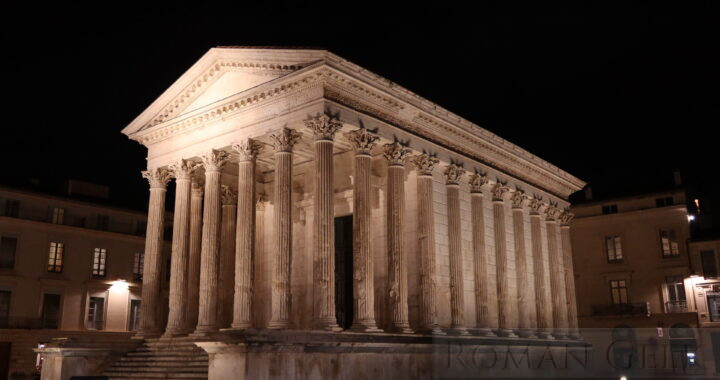
Nimes: A Roman City in the South of France
Overview
Nimes is a cathedral city located near the river Gardon, a tributary of the Rhone, located 22 miles (34km) from Arles in the Occitanie Region of southern France. Nimes holds some of the best preserved Roman Monuments in France, and is sometimes referred to as the ‘French Rome’. Water was delivered to Nimes by the world famous Pont du Gard Roman Aqueduct.
History
The Oppidum de Nages, located 18 miles (29km) away, was the home of the Volques Aricomiques Gallic Tribe. Nemausus was a Gallic God, and Nimes was called Nemausus in his honour. In 28 BCE, Nimes became a Roman colony in the Province of Gallia Narbonensis. The population of Nimes was 60,000 under Augustus (27 BCE-14 CE). The family of the Roman Emperor Antoninus Pius came from Nimes, although he was born in Italia. Although Narbonne was the Provincial capital, Nimes was the second most important city. Nimes was finally lost to the Visigoths in 473 CE.
Later, from the 16th to 19th century, Nimes became a successful producer of cotton fabric called bleu de Nimes. The word Denim is made up from Serge de Nimes, the cotton fabric that goes into making jeans, overalls and shirts.
Walking Tour of Nimes
- Your geolocation will appear as a blue icon that moves on the map as you walk.
- You may start anywhere on the map and just follow the blue line to the next point of interest.
Things to Do and Places to See in Nimes
1. Museum of Fine Arts
Description: The museum holds a collection of 3,600 works. In 1864, the original collection was gathered from private collections and housed in the La Maison Carre. It consisted mainly of Roman Antiquities, old master paintings and modern paintings. It was later enriched by legacies and gifts by professional and amateur artists. It includes the 1831 painting by Paul Delaroche of ‘Oliver Cromwell opening the coffin of Charles I’.
2. Porte de France
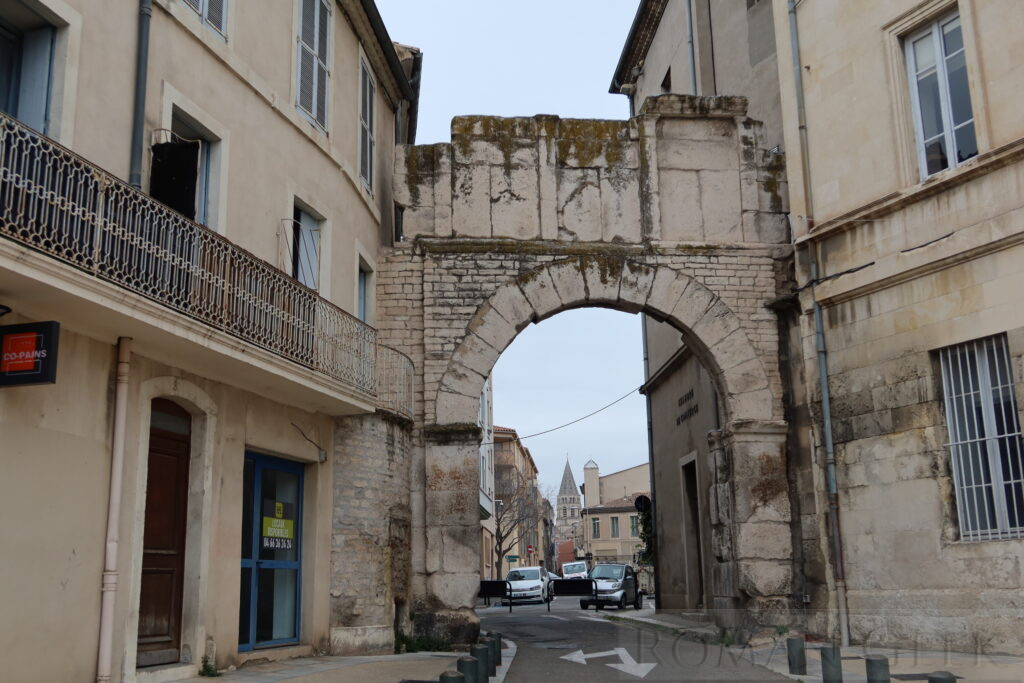
Porte de France, Nimes
Description: One of two Roman Gates built in the 1st century, it is all that remains of the 14 towers that defended the 3.7 mile (6km) Roman walls. The other surviving Roman gate is the Porta Augusta.
3. Musee de la Romanite (Museum of Romanity)
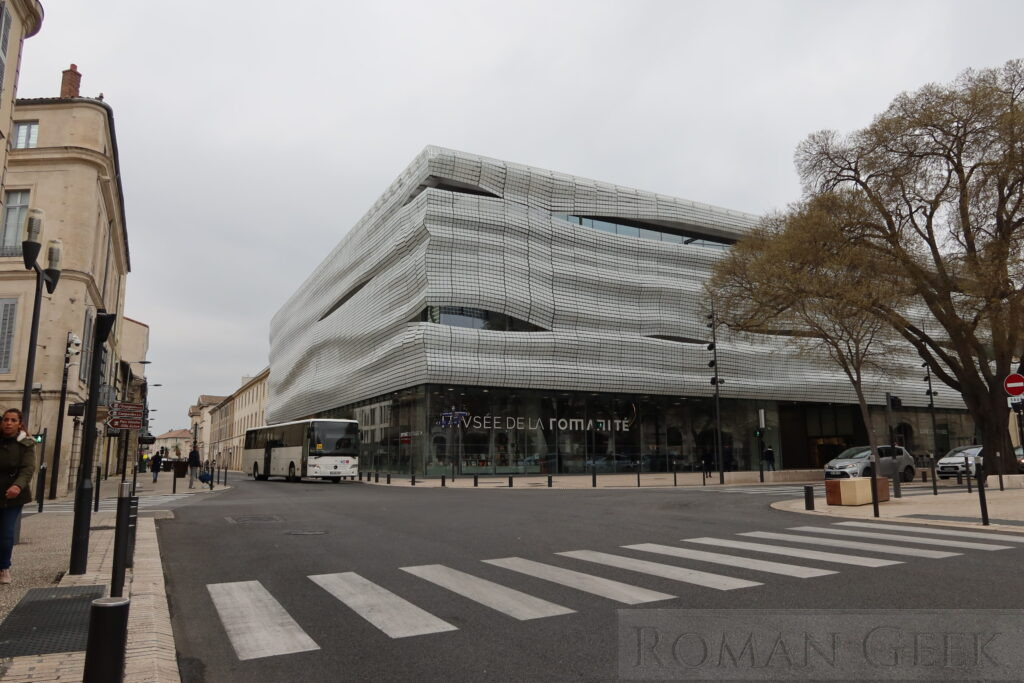
Musee de la Romanite, Nimes
Description: Located at 16 Bd des Arenes, opposite the the Roman Amphitheatre. This is a modern interactive museum dealing with the pre-Roman era, with visitors able to discover Gallic houses, the Roman era and some well-preserved mosaics such as the Mosaic of Pentheus, and the Medieval era.
4. Nimes Roman Amphitheatre
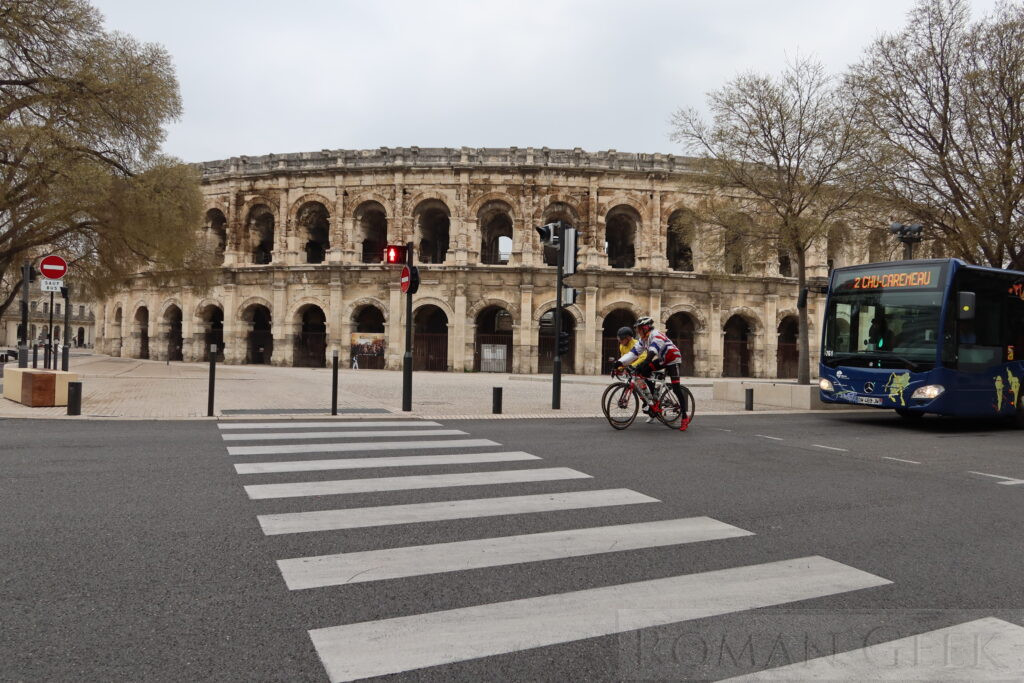
Nimes Amphitheatre
Description: Nimes Roman Amphitheatre is one of the best preserved Amphitheatres in the Roman world. It still functions today hosting concerts during the Festival de Nimes (June-July), and the Feria de Nimes (May-September), with Bullfights and Roman Games.
Historical Insight: It was built in c. 100 CE and seated 24,000 spectators. Today, due to modern seating restrictions, it now hosts between 13,000 to 15,000 spectators.
5. Esplanade de Charles de Gaulle and the Church of St. Perpetua and St. Felicity
Description: The Esplanade is a triangular Park designed as a Mediterranean garden from where pedestrians can continue walking along a small canal that runs along the wider Avenue de Faucheres, up to Nimes Railway Station.
Pradier Fountain: In the centre of Esplanade is the Pradier Fountain, featuring a statue of a woman who is an allegorical representation of Nimes. She is surrounded by four statues, each representing the four rivers near Nimes, each river has its name engraved on the base.
The church of St. Perpetua and St. Felicity: Completed in 1864, the Church dominates the Esplanade and represents a combination of styles typical of the French Second Empire. Historical Insight: The Church is named after two Saints who were among the first Christian Martyrs in Roman Africa, whose deaths were documented in Carthage in 203 CE.
6. Place du Marche
Description: The Place du Marche is a large open square which hosts lively bars and restaurants. There used to be a covered food market, but after it was demolished in 1846, it moved to Les Halles de Nimes.
Historical Insight: The centrepiece of the square is the Crocodile Fountain, which depicts a crocodile chained to a palm tree. This is the Coat of Arms of Nimes, a design which originated from the Roman coins minted in Nimes to celebrate the Battle of Actium (31BCE). It was officially adopted in 1535 by King Francis I, to represent the Roman heritage of Nimes and the submission of Egypt as a Roman colony.
7. Eglise St. Paul
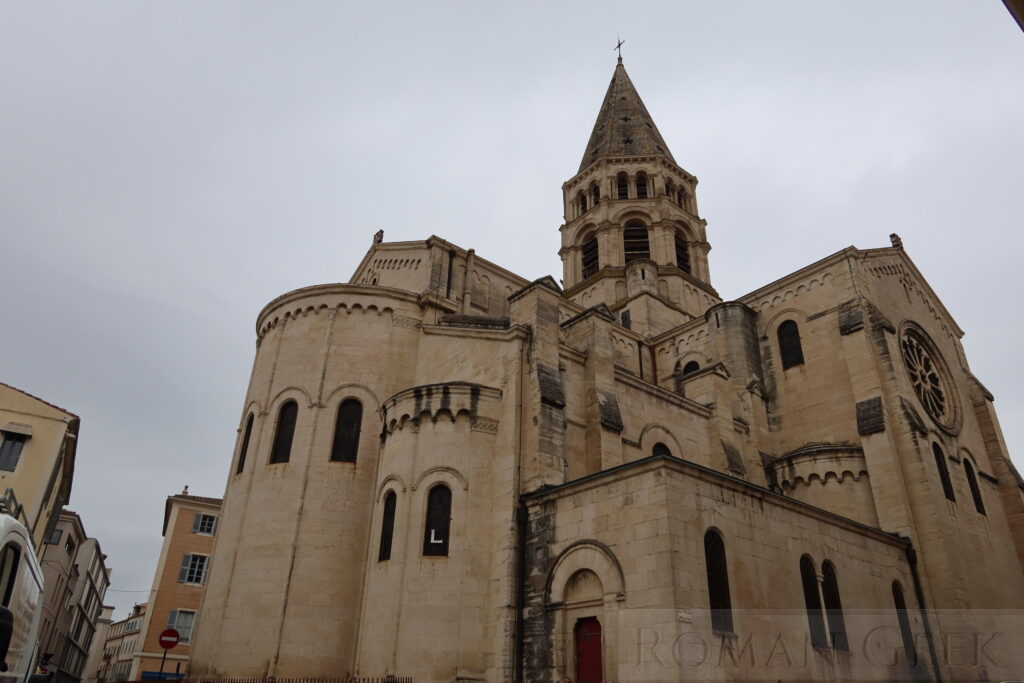
Eglise Saint Paul, Nimes
Description: The Church was completed in 1849 in the Romanesque Revival Style. The height of the Bell Tower reaches 203 feet (62m), and it sits astride of the Transept.
8. Museum of Modern Art (Carre d’Art)
Description: The glass and steel museum stands opposite the Roman Temple called La Maison Carre, and was designed by the British Architect Sir Norman Foster, after winning a competition. Opened in May 1993, it houses Contemporary Art and the Nimes Public Library. To fit in with the adjacent Monument, its nine stories are mostly underground.
9. La Maison Carre
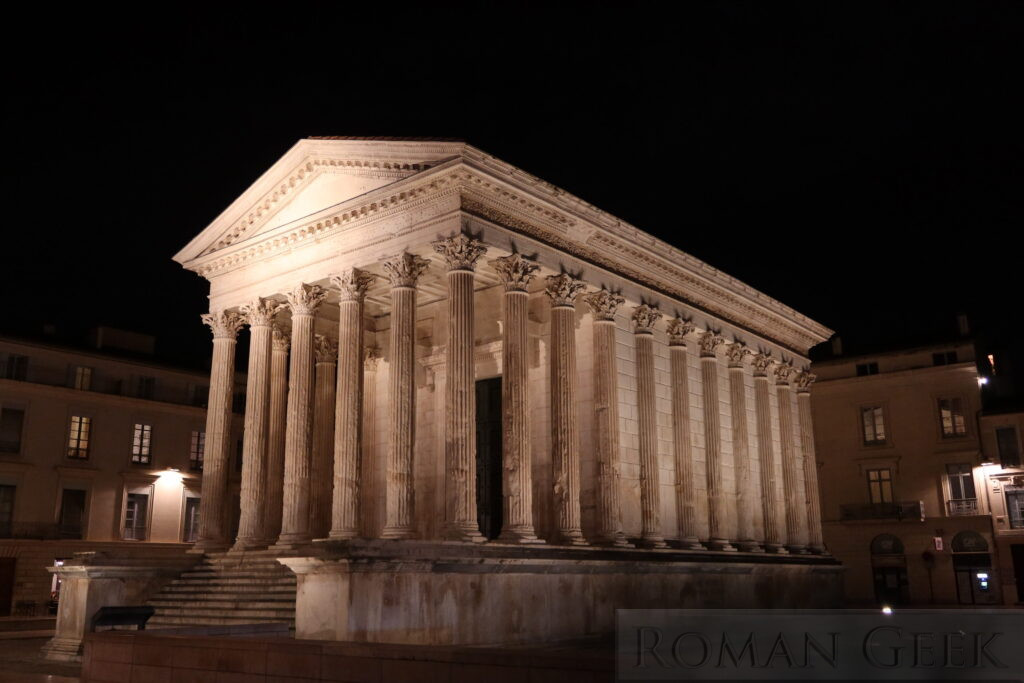
La Maison Carre, Nimes
Description: La Maison Carre was built in c. 20 BCE by Agrippa. It is possibly the best preserved Roman Temple in the entire Roman Empire. An almost identical Roman Temple still stands in Vienne. It is a listed UNESCO World Heritage Site.
Historical Insight: This temple was used as a model for two much larger projects: L'Eglise de la Madeleine in Paris consecrated in 1842, and the Virginia State Capitol in the USA, completed in 1788 and used as the Confederate States Capitol during the American Civil War (1861-65).
10. Clock Square
Description: The Square holds a 101 foot (31m) high clock tower erected in 1754, which replaced an earlier bell tower. The square is lined with shops, cafes and restaurants, giving it a lively atmosphere.
11. Museum of Old Nimes
Description: The museum holds a room dedicated to history of Denim from Nimes. The word Denim is made up from Serge de Nimes. This cotton fabric was made using a twill weave, with the weft passing under the warp threads. The weavers used indigo to dye the warp threads blue, but left the weft threads their natural white colour. This process gave the fabric a unique blue colour on one side, with white on the other. The weavers called it Serge de Nimes.
12. Notre Dame Cathedral of Nimes
Description: Founded in 1096 CE, the cathedral was destroyed in the Wars of Religion 1562-1598). It was later reconstructed between 1867-1877 by the architect Henri Revoil using a magnificent blend of Romanesque and Gothic Art. It is dedicated to the Blessed Virgin Mary and St. Castor of the Apt, and is the seat of the Bishop of Nimes.
Historical Insight: It is thought to stand on the site of a former temple to Augustus.
13. Grand Temple of Nimes
Description: Completed in the Baroque style in 1736, it served as the church for a Dominican Convent, before being abandoned during the French Revolution. After 1803, it became a Protestant church and was renamed the Great Temple. An organ was added in 1821.
14. Porta Augustus
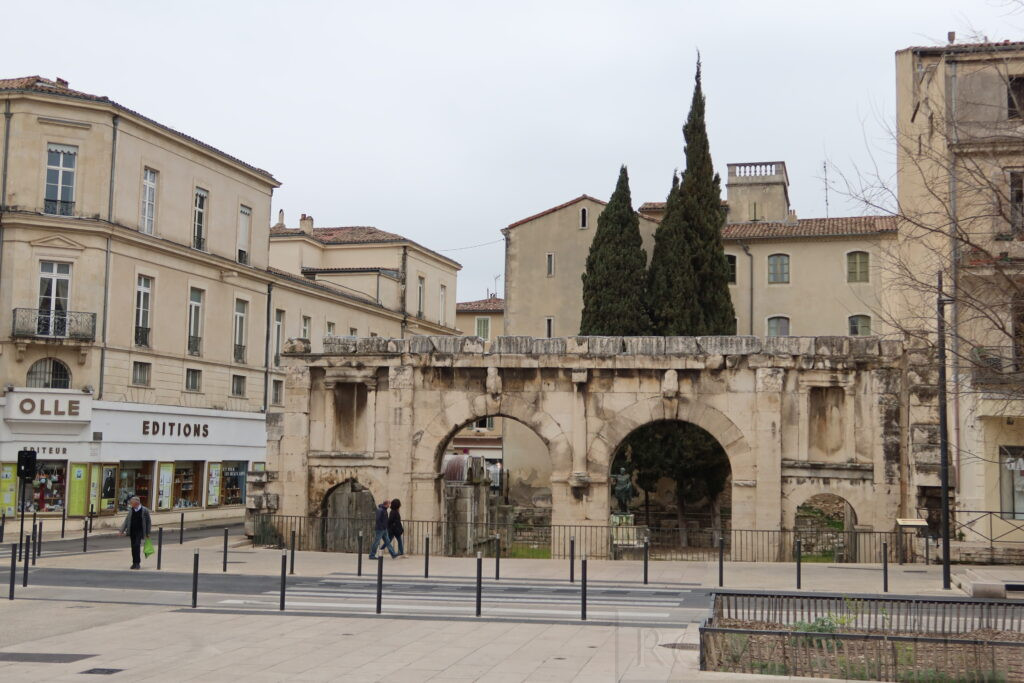
Porta Augusta, Nimes
Description: This is a Triumphal Arch standing over the Via Domitia, and is one of the two surviving gates of Nimes, the other being the Porte de France. The Porta Augusta was the Eastern Gate leading towards Beaucaire (Ugernum).
Historical Insight: The Gate retains its two main carriageway arches, with foot passages on either side, each with a niche for statues above it. Originally, there would have been two projecting towers and an arcaded gallery above, as on the Gates of Autun and Aosta.
15. Church of St. Baudile de Nimes
Description: Built in the Neo-Gothic Style, this is the largest church in Nimes, being sometimes confused with Nimes Cathedral. It has two imposing Bell Towersreraching a height of 230 feet (70m). It holds a prestigious Cavaille-Coll organ, which is often used for concerts.
Historical Insight: St. Baudilus was a Christian, who was martyred nearby either during the 3rd or 4th century. The alleged spot where St. Baudilus was martyred was later marked by the Chapelle Saint Baudile (Crypt of St. Baudilus), and is located at the corner of rue des Moulins and rue des Trois Fontaines, approximately one mile (1.5km) to the north of the Church.
16. Les Halles de Nimes
Description: Les Halles de Nimes is a vibrant indoor food market with around 50 permanent stalls offering fresh produce, cheeses, meats, seafood and local specialities such as Pate Nimois, providing a lively experience for both locals and visitors alike.
Opening Hours: Les Halles is open every day of the year. from 0700 am to 1 pm, including Public Holidays. Some stalls stay open in the afternoon.
17. Antonin Square
Description: Antonin Square is a public square established in 1862 to honour the Roman Emperor Antoninus Pius, whose family was originally from Nimes, then known as Nemausus.
Historical Insight: The square was built on the former terminal basin of the Canal de la Fontaine, developed a century earlier alongside the Jardins de la Fontaine. Its main highlight is a monumental statue of Emperor Antoninus Pius made of Carrara marble, created by sculptor Auguste Bosc and unveiled in 1874.
18. Nimes Castellum Divisorum
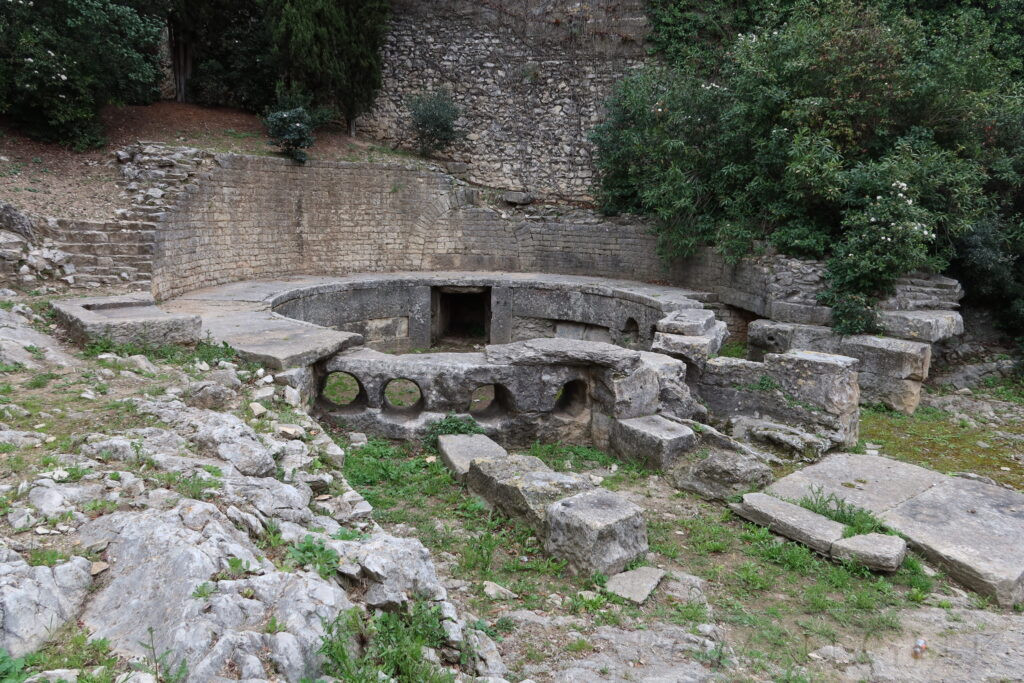
Castellum Divisorum, Nimes
Description: Nimes Castellum Divisorum is a well-preserved 1st century CE Roman circular water cistern, fed by a source 50 miles (80km) away, with the water brought by the famous Pont du Gard Roman Aqueduct. Ten lead pipes then each distributed water into the city. At the rear of the Castellum, a sluice gate could be raised or lowered to control the flow of the supply of water.
Tip: There are only two Castellums left in the world, one here in Rue du Lampeze in Nimes, and the other in Pompeii in Italy.
19. Tour Magne
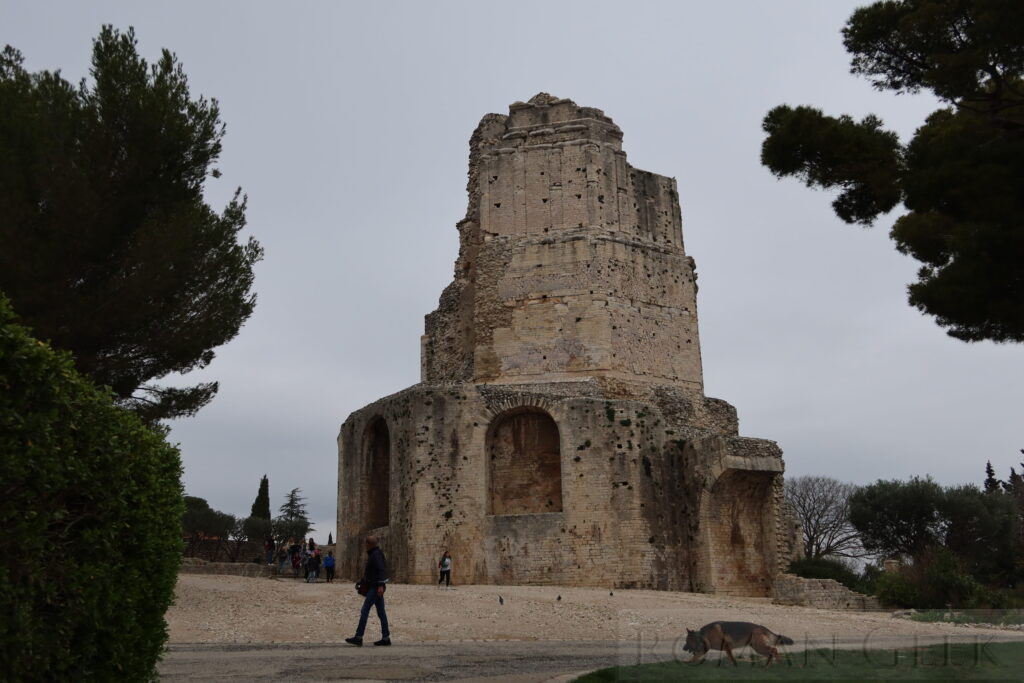
Tour Magne, Nimes
Description: Standing on top of Mount Cavalier, the highest point on the Roman city, this Roman Watchtower has panoramic views overlooking the whole city and the Plain with its trade routes below.
Historical Insight: It is the only remaining vestige of the Roman defensive Walls of Nimes built by the Emperor Augustus. The original Gallic observation tower was 59 feet (18m) high, which Augustus decided to double in size and incorporate into the city’s defensive walls. Today, the tower is 105 feet (32m) high and there are 140 steps to the summit with its panoramic views.
20. Viewing Point
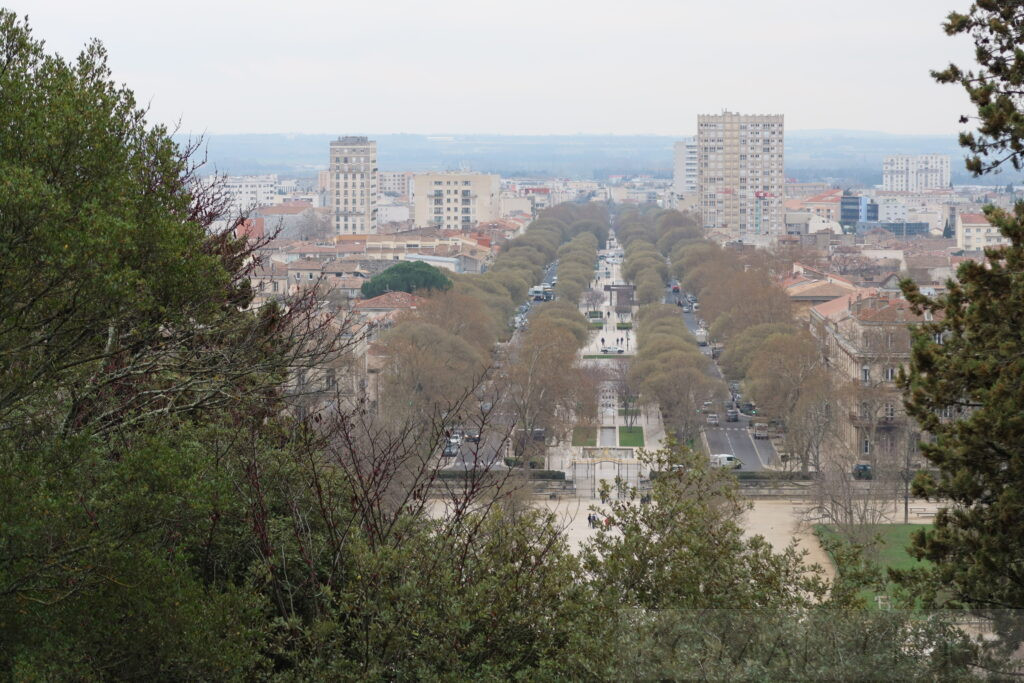
Viewpoint from Tour Magne, Nimes
Description: Located below the Tour de Magne, as the footpath descends to the Temple of Diana, is a Viewing Point from which can be seen the Jardins de la Fontaine below, and the 1.2 mile (2km) Avenue Jean Jaures stretching out in a straight line.
21. Temple of Diana
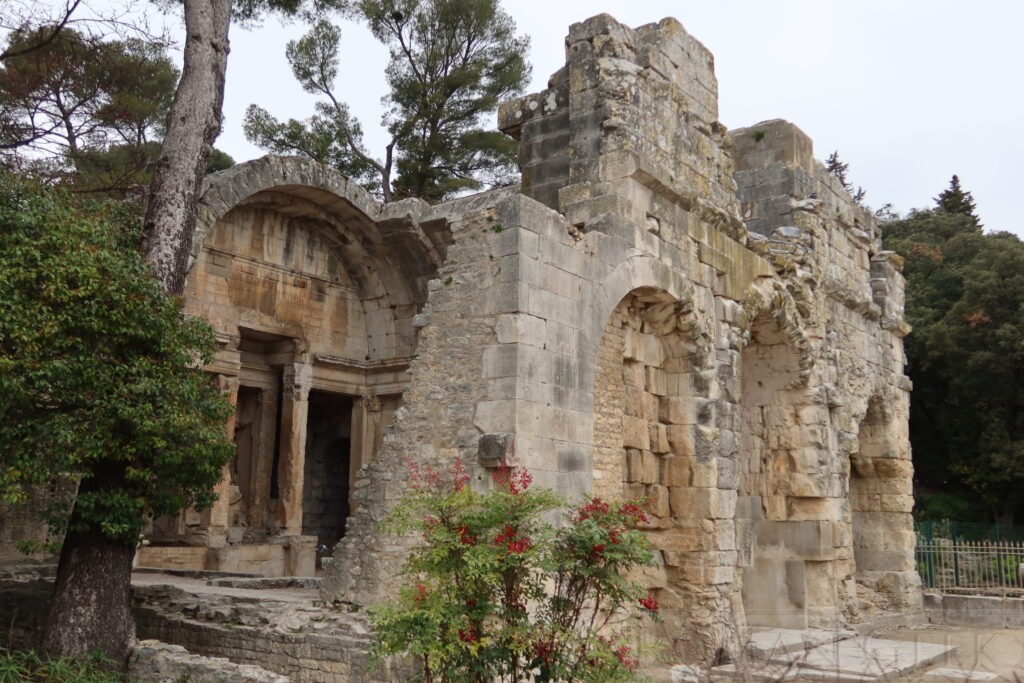
Description: Although it is known as the Temple of Diana, the purpose of this building remains a mystery, and was in all probability a library, not a temple. It is located next to the source of the spring of ‘La Fontaine’, where stood an Augusteum, a sanctuary dedicated to the Cult of the roman Emperor Augustus, centred on a Nymphaeum (an area consecrated to the Nymphs of the Spring).
Historical Insight: It has a Basilica style floor plan and is partly dug into Mount Cavalier. There are several barrel vaulted rooms and a vaulted hall flanked by two staircases. Three of the rooms have ceilings decorated with carved coffer ceilings. An Opus Sectile floor was excavated in 1745, when the gardens were being created.
22. Jardins de la Fontaine
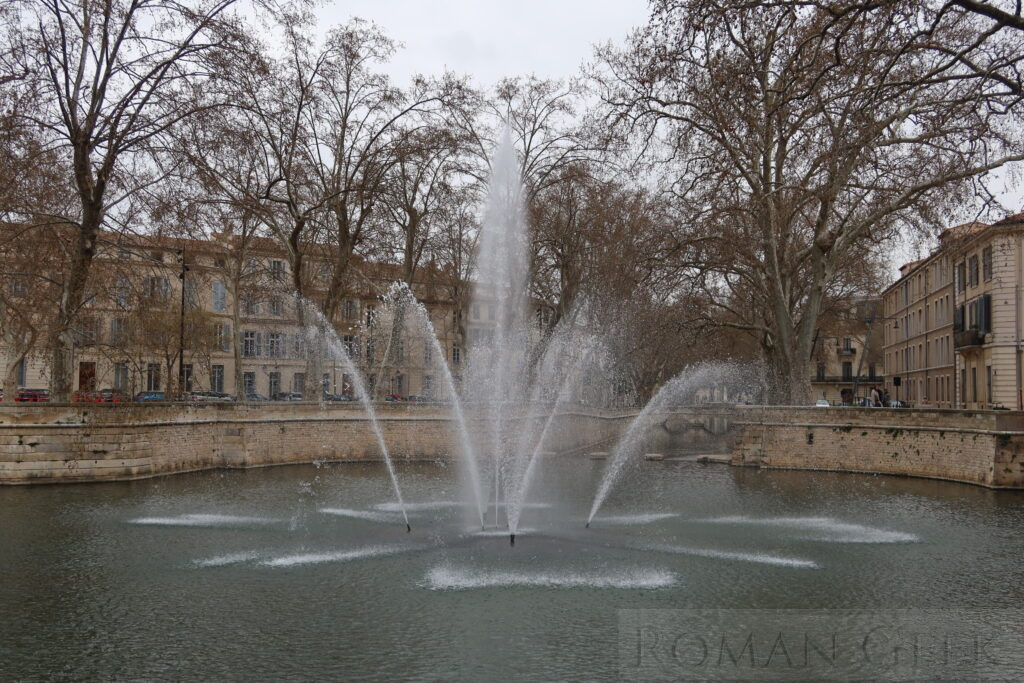
Jardin de la Fontaine, Nimes
Description: The Fountain Gardens are a public park, built around the original Nimes Spring, already venerated before the arrival of the Romans, and dedicated to the Gallic God Nemausus, who gave his name to Nimes.
Historical Insight: These gardens were the first public gardens in Europe, designed by an engineer named Jacques Philippe Mareschal who served under King Louis XV. Between 1740-45, Mareschal worked to supply the water from the Spring to the dyeing workshops of the emerging Nimes textile industry.
In 25 BCE, the Romans had constructed a pond with two semi-circular stone staircases, and as Mareschal excavated the Source, he uncovered the Roman Gardens and Nymphaeum under the rubble. In an ambitious plan, Mareschal decided to restore the Nymphaeum and create a landscaped public garden that included the Roman ruins of the Temple of Diana and the Tour Magne. He then built a canal that led the springwater to the workshops of the textile manufacturers.
At the centre of the Nymphaeum today, where the waters flow around, you will see an allegorical statue representing Nimes. It is surrounded by vases and cherubs sitting on bales of fabric which symbolised the then thriving textile trade of Nimes.
Tip: The Feerie des Eaux is a water and light show that illuminates these magnificent gardens every year during the month of August, attracting more than 30,000 visitors.
Travel Tips
- Best time to visit: Spring and Autumn for mild weather and fewer visitors
- Photography hotspots: Tour Magne, La Maison Carre, Roman Amphitheatre
- Nearby Attractions: Pont du Gard Roman Aqueduct
Visitor FAQ:
- What is Nimes famous for?
- Nimes is known for its historic Roman origins as Nemausus, the intact La Maison Carre Roman Temple and Roman Amphitheatre. There are only two Roman Castellum Divisorums (water cisterns) left in the world, one here in Rue du Lampeze in Nimes, and the other in Pompeii in Italy. The word Denim is made up from Serge de Nimes, the cotton fabric that goes into making jeans, overalls and shirts.
- Can I see Roman Ruins in Nimes?
- Yes, there are multiple Roman Monuments and Ruins in the city, whilst the Fountain Gardens hold La Tour Magne and the Temple of Diana.
- How far is the Pont du Gard Roman Aqueduct from Nimes city centre?
- Approximately 30 minutes by car or taxi.
- Are there Guided Tours of Nimes historical sites?
- Yes, local guides offer walking tours highlighting Roman Nemausus, the Roman Monuments and the Fountain Gardens’ history. Contact the Nimes Tourist Office at Nimes Tourisme-Guided Tours.
- Is Nemausus the same as Nimes?
- Yes, Nemausus corresponds to modern Nimes. It was settled by the retired Roman Legionaries from Augustus’ Egyptian campaign.
- What was the role of Nemausus in the Roman Empire?
- Nemausus held a strong economic, cultural and religious importance, being a key Roman colony with extraordinary monuments and a connection with a Roman Emperor.
- Which Roman Province did Nemausus belong to?
- Nemausus was part of the Roman Province of Gallia Narbonensis.
- Which Roman Road connected Nimes?
- The Via Domitia: This was the main arterial road connecting Italy with Spain, via southern Gaul. The road crossed the Alps to Glanum, crossed the Rhone on a pontoon bridge at Arles, then carried on to Nimes. From Nimes it went to Spain via Narbonne.
Quick Facts:
- Modern Location: Nimes, France (Roman Nemausus)
- Category: Historic city centre, Roman Monuments, Tourist destination
- Activities: Walking tours, historical sightseeing, photography
- Nearby Roman Site: Pont du Gard Roman Aqueduct
- Roman Province: Gallia Narbonensis
- Nearest Roman Road: Via Domitia
- Economic Significance: Trade hub on the Via Domitia
Nearby Attractions
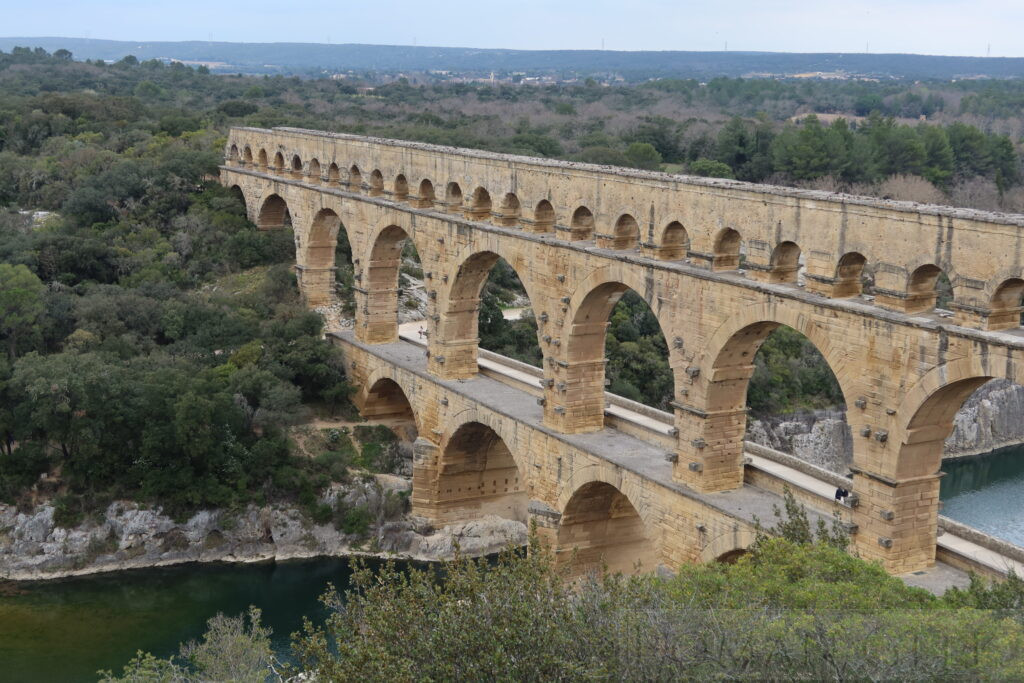
Pont du Gard Roman Aqueduct, Nimes
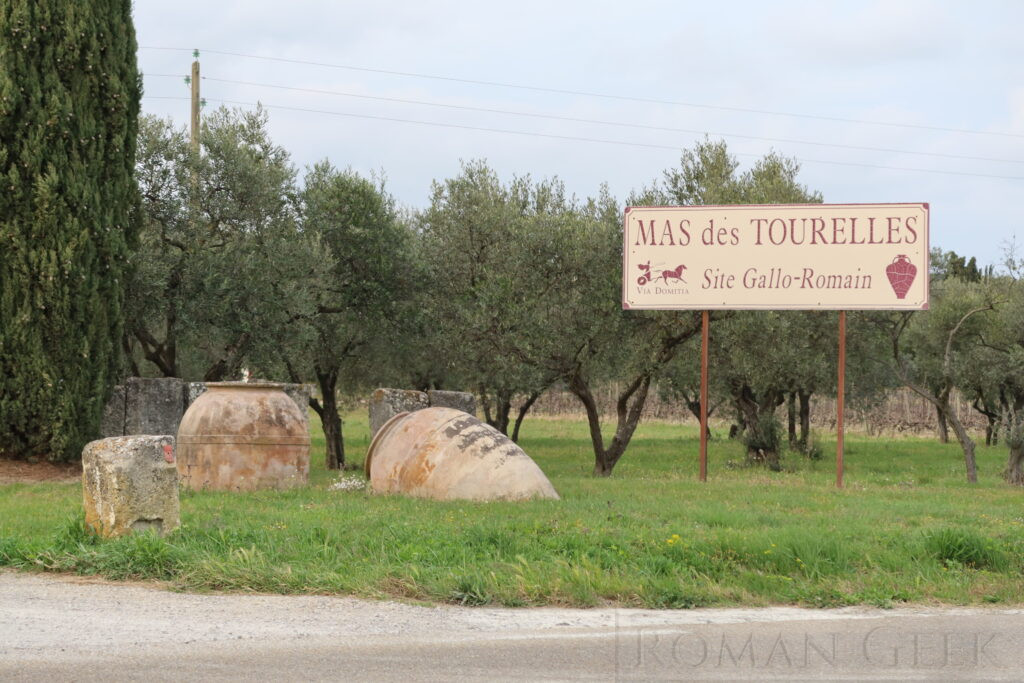
Mas des Tourelles Roman Vineyard
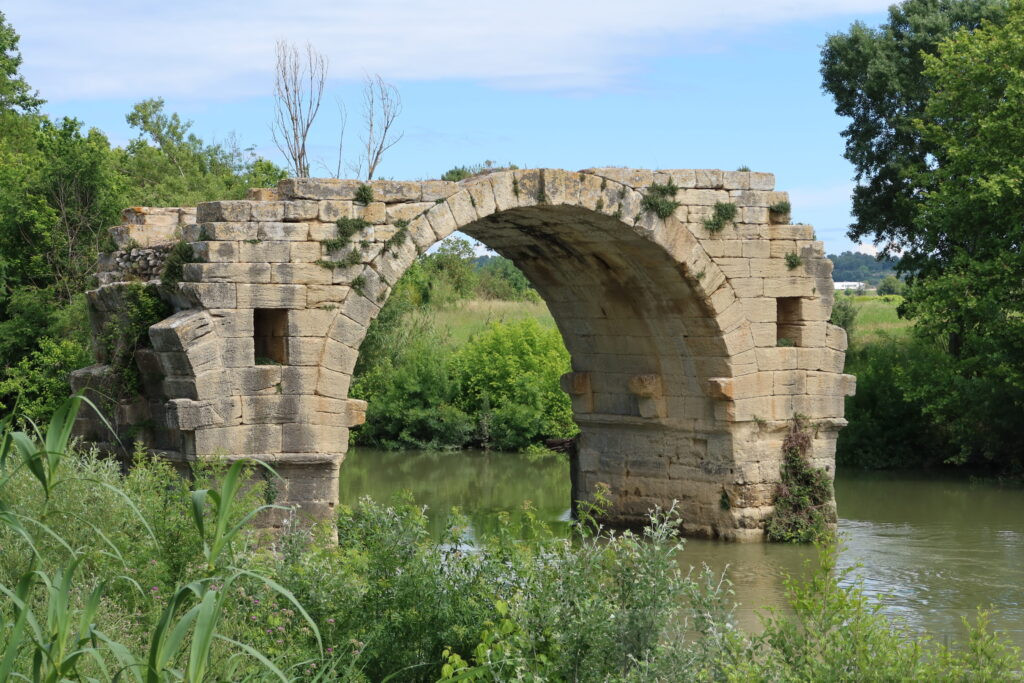
Ambrussum Roman Bridge, Lunel
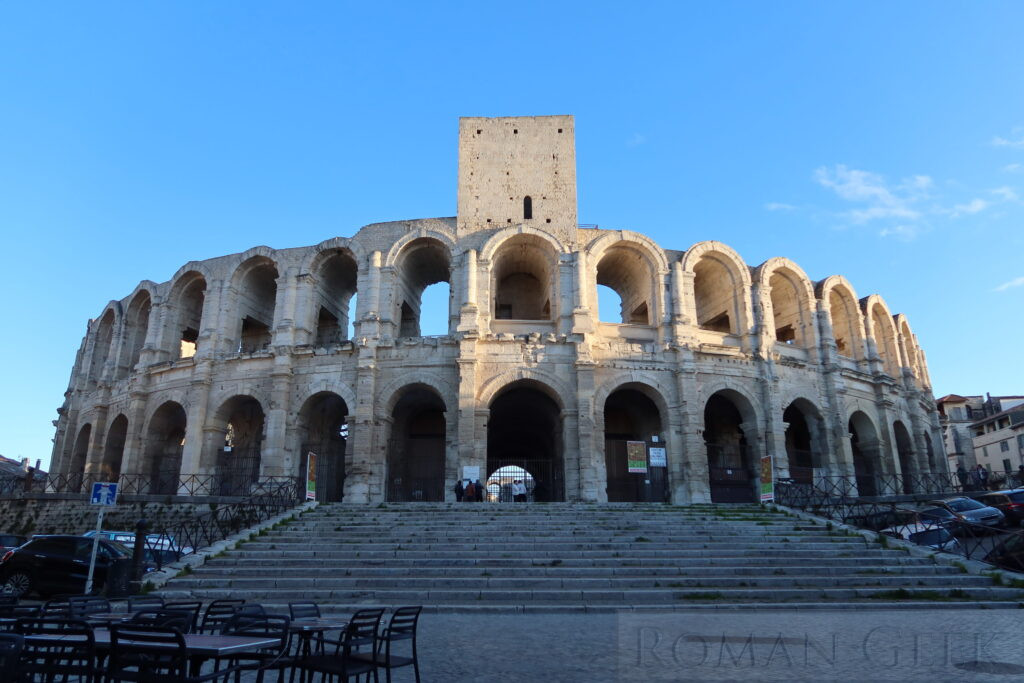
Arles Roman Amphitheatre