
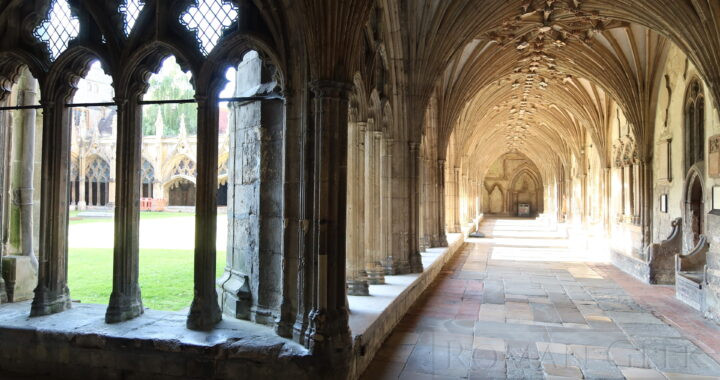
Canterbury: a Roman city in Kent
Overview
Canterbury is a Cathedral city on the river Great Stour in the County of Kent. The Cathedral is a UNESCO World Heritage Site.
History
Canterbury was founded by the Cantiaci around 30 BCE, which then became the Roman city of Durovernum Cantiacorum in 43 CE based on Watling Street, the Roman Road between London and Richborough. The cathedral was founded in 597 CE by St. Augustine, and is the seat of the Archbishop of Canterbury. After the murder in 1170 of Thomas Becket, then archbishop of Canterbury, the cathedral became a major site of pilgrimage. These pilgrims are the subject of the Canterbury Tales written by Geoffrey Chaucer in 1400.
Things to Do and Places to See in Canterbury
1. Westgate Towers Museum and Viewpoint
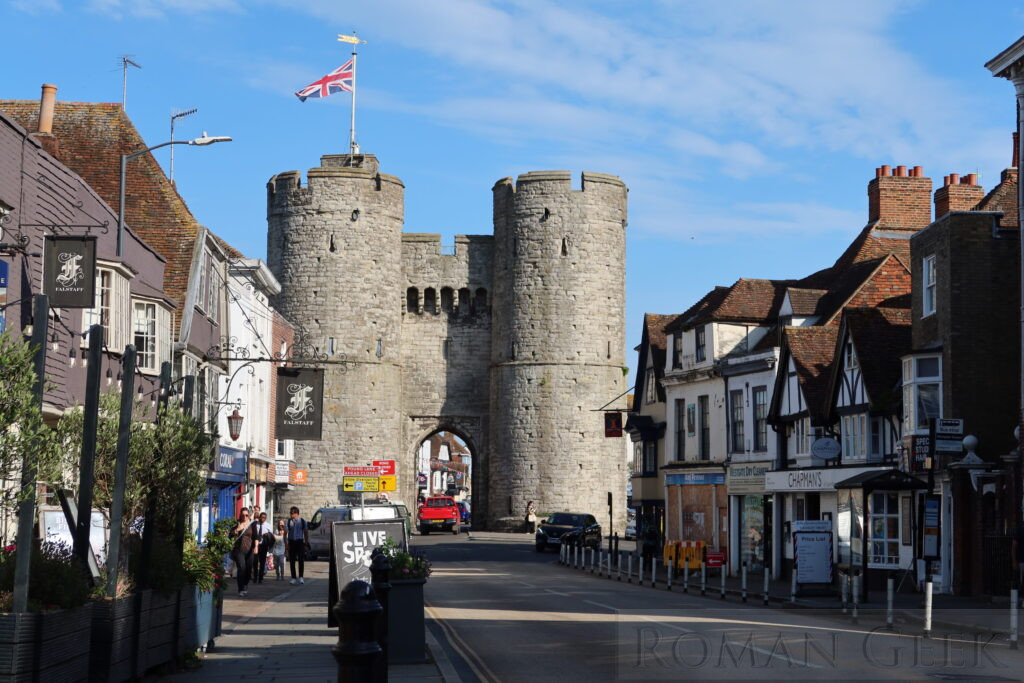
Westgate Towers Museum, Canterbury
Description: Located at 1 Pound Lane, Westgate Towers was built around 1379. It is a 60 feet (18 m) high medieval gatehouse, making it the largest surviving city gate in England. Originally, there was a drawbridge over the Stour and a portcullis. The road still passes between the towers. It acted as a prison for Canterbury for 400 years. Inside is the Westgate Towers Museum which holds exhibits from the city’s history.
Tip: There is access to the rooftop with panoramic views over Canterbury.
2. Westgate Gardens and Punt Tours
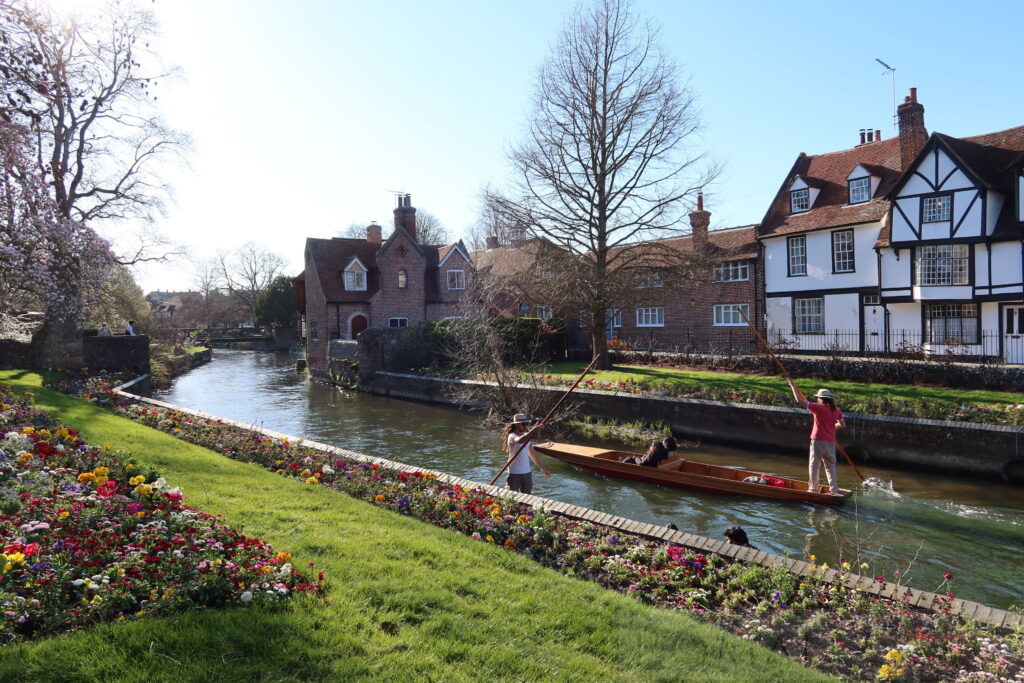
Westgate Gardens and Punt Tours, Canterbury
Description: Located by the Westgate Towers Museum, Punts operate sightseeing tours from Westgate Bridge through the Westgate gardens which and offer a relaxing riverside atmosphere. Visitors can also walk through the gardens beside the river surrounded by beautiful flower beds. The gardens are free to enter.
3. Marlowe Theatre

Marlowe Theatre, Canterbury
Description: Located at The Friars, The Theatre offers year-round productions of Shakespeare, musicals, dance and stand-up comedy. It was completed in 2011 and has seating for 1,200 spectators.
Historical Tip: The theatre is named after the English Playwright Christopher Marlowe, who was born in Canterbury in 1564. Marlowe was the leading Elizabethan Playwright before Shakespeare. He established the popular drama and blank verse style, that William Shakespeare (also born in 1564), was able to refine after Marlowe’s premature death at 29.
4. High Street Shopping Area
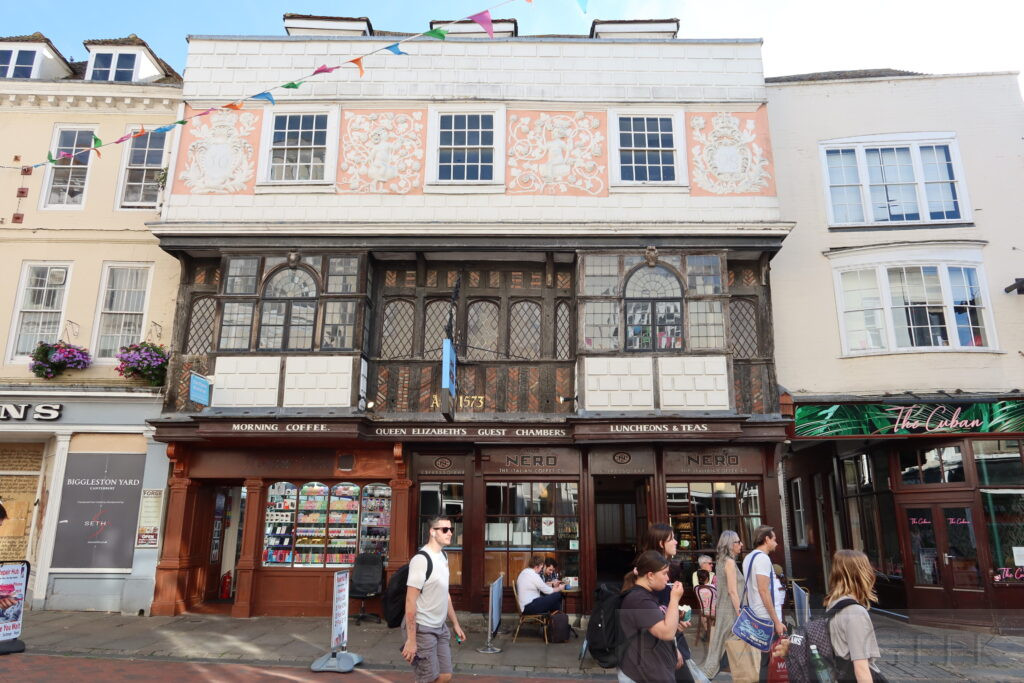
Queen Elizabeth’s Guest Chamber, Canterbury
Description: Canterbury’s main shopping area centres on the High Street and St. Georges street, where a market takes place on Wednesdays and Fridays. Here you will find many cafes, pubs and restaurants located in atmospheric houses. Located at 43-45 High Street is Queen Elizabeth’s Chamber and Crown Yard, where she is alleged to have stayed in 1573. Another area full of vibrant boutiques, cafes and restaurants is located in the cathedral quarter and Buttermarket.
5. Franciscan Gardens and Greyfriars Chapel
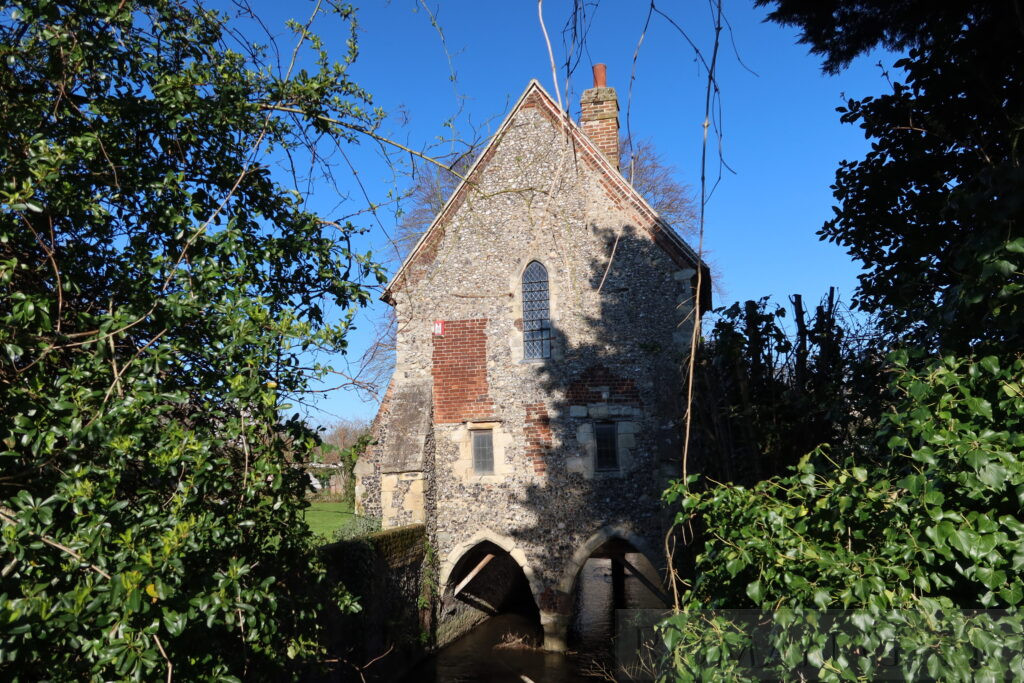
Franciscan Gardens and Greyfriars Chapel, Canterbury
Description: Located at 25 High St, the 800-year-old site is a 1.5 acre Heritage garden along the river Stour. There is an entry fee. The Greyfriars Chapel is the only building to survive from the Friary and is unusual in that it spans the river Stour which runs beneath it.
6. King’s Bridge, The Old Weavers House and Punt Tours
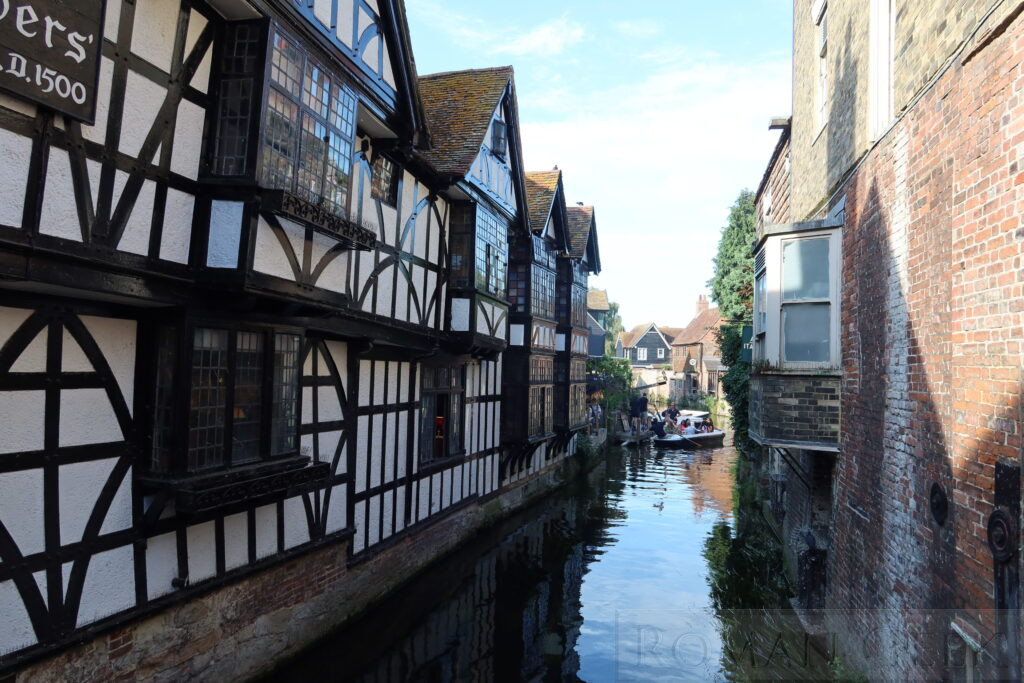
Old Weaver’s House, Canterbury
Description: The King’s Bridge is where the High Street crosses the Stour offering atmospheric views of the buildings along the river. The Old Weavers House is a historic half-timbered 16th century Tudor building that sits beside the Bridge on the river Stour. It derives its name from the Flemish and Huguenot weavers who had fled religious persecution and were granted the right to operate their business in Canterbury by Elizabeth I. It is now a restaurant with Punt tours being offered from a landing at the back of the building.
Historical Insight: Behind the building is a medieval ‘Ducking stool’ which overhangs the river. The unfortunate ‘witch’ would be ducked for several minutes. If she survived she was guilty, if she drowned she was innocent!
7. Punting on the River Stour: Water Lane
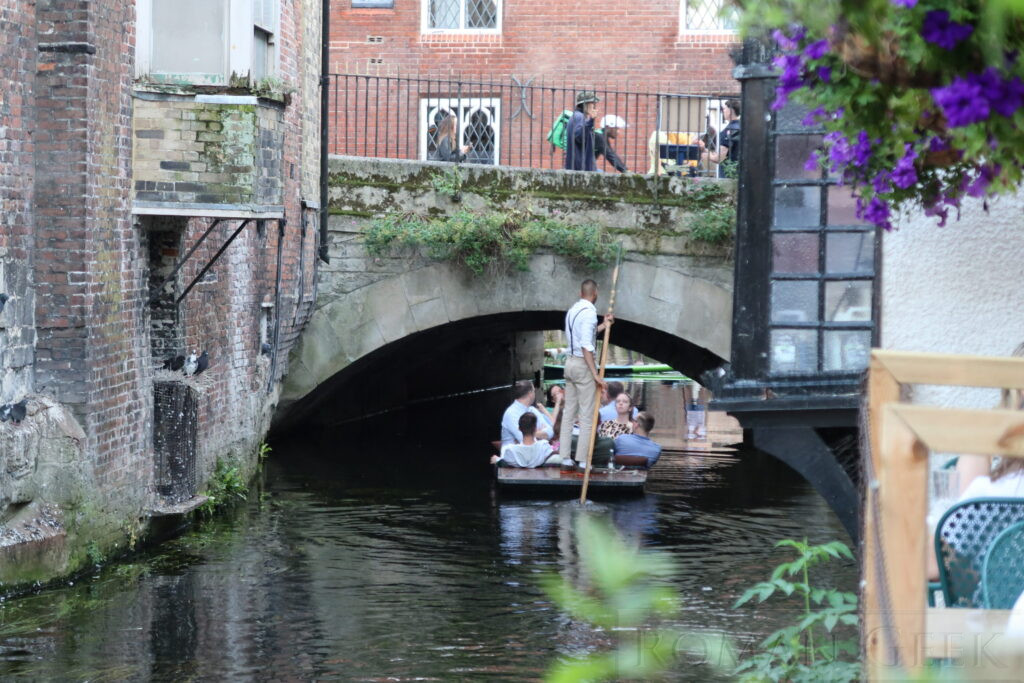
Punt under the King’s Bridge on the Great Stour, Canterbury
Description: This scenic river divides into two arms and the part that flows through the heart of the city is considered to have been a Roman canal. Punts operate sightseeing tours from Westgate Bridge, Water Lane and King’s Bridge behind the Old Weaver’s House.
8. Beaney House of Art & Knowledge
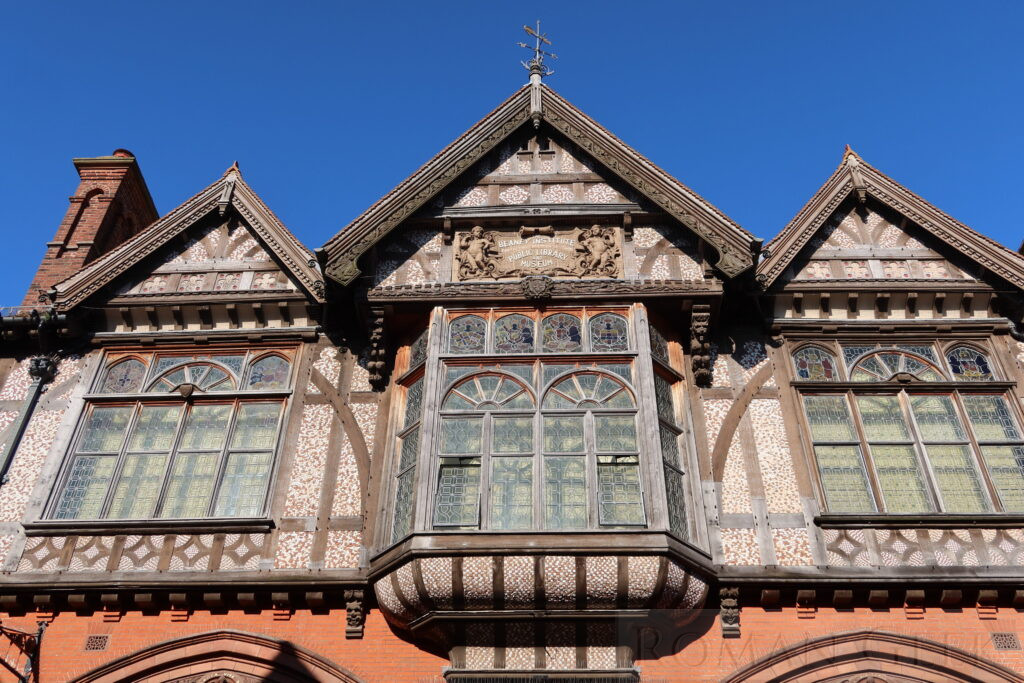
Beaney House of Art and Knowledge, Canterbury
Description: Located at 18 The High Street, this is the Canterbury museum, library and art gallery. Opened in 1899, this Grade II Listed building is constructed in the style of the Tudor Revival (also known as mock Tudor).
9. Canterbury Roman Museum
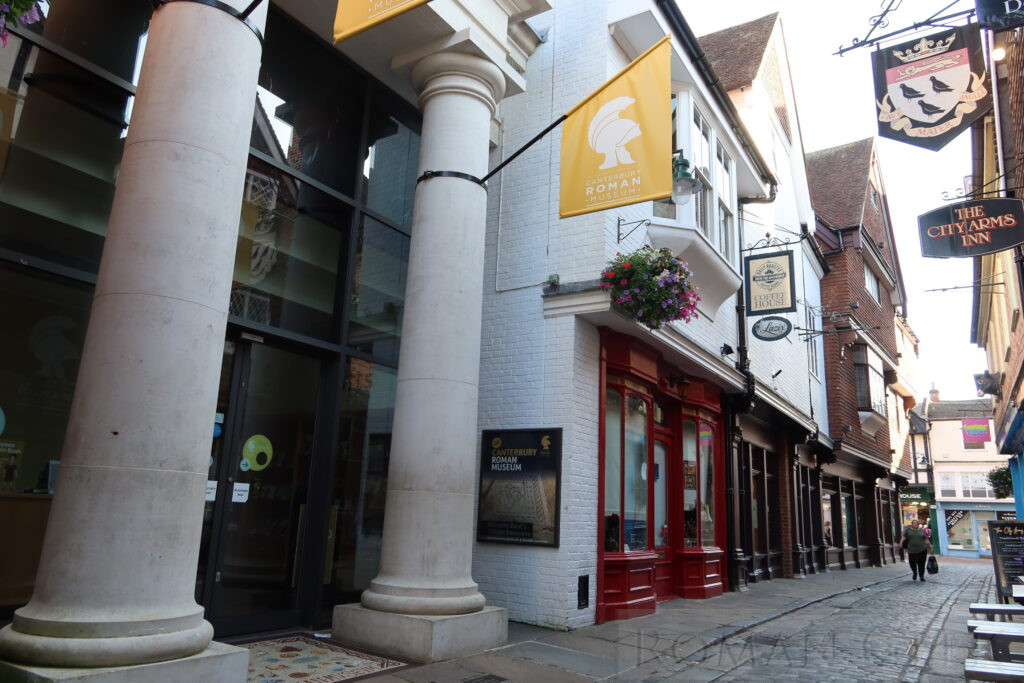
Canterbury Roman Museum
Description: Canterbury Roman Museum is located at 11a Longmarket, Butchery Lane, Canterbury. The Museum holds three Roman Mosaics, a Roman Silver Hoard and a reconstructed Roman House.
10. Christchurch Gate and Butter Market
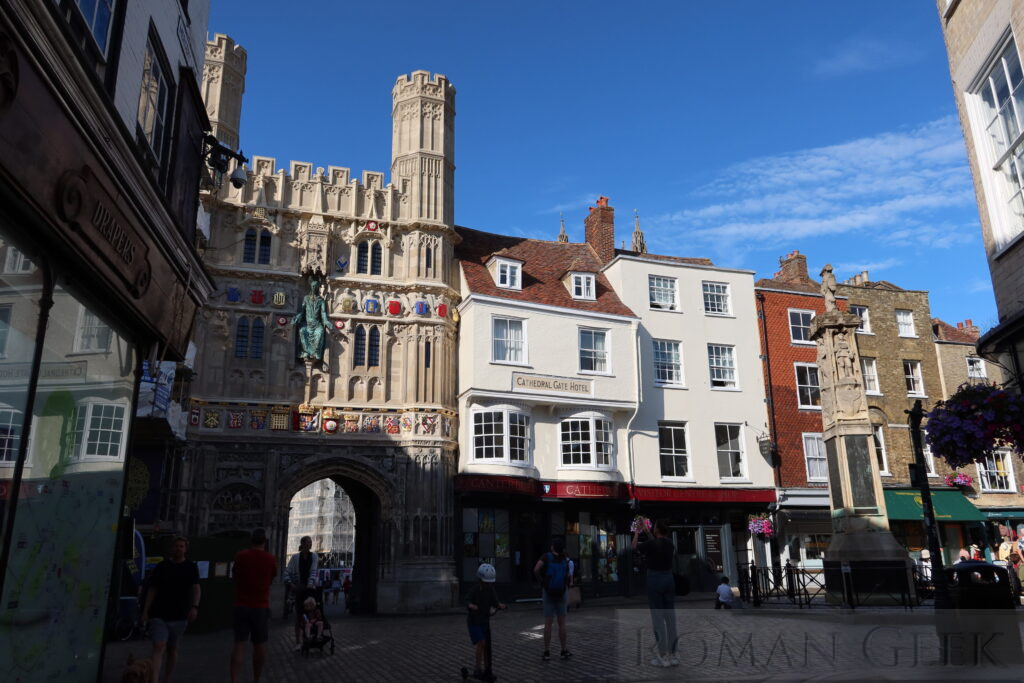
Christchurch Gate in Butter Market, Canterbury
Description: Visitors to the cathedral must pass primarily through Christchurch Gate located in Buttermarket. Completed in 1521, it was built in the Renaissance style and has twin octagonal towers overlooking the square below.
Historical Insight: Buttermarket was the site of a Bull Stake where bulls were tied up and baited by dogs, until the construction of a market hall in 1664. This was demolished in 1888 and replaced by a memorial to Christopher Marlowe, Canterbury’s Playwright. In 1921, this was replaced by Canterbury’s World War I War Memorial which still stands in the square.
11. Canterbury Cathedral
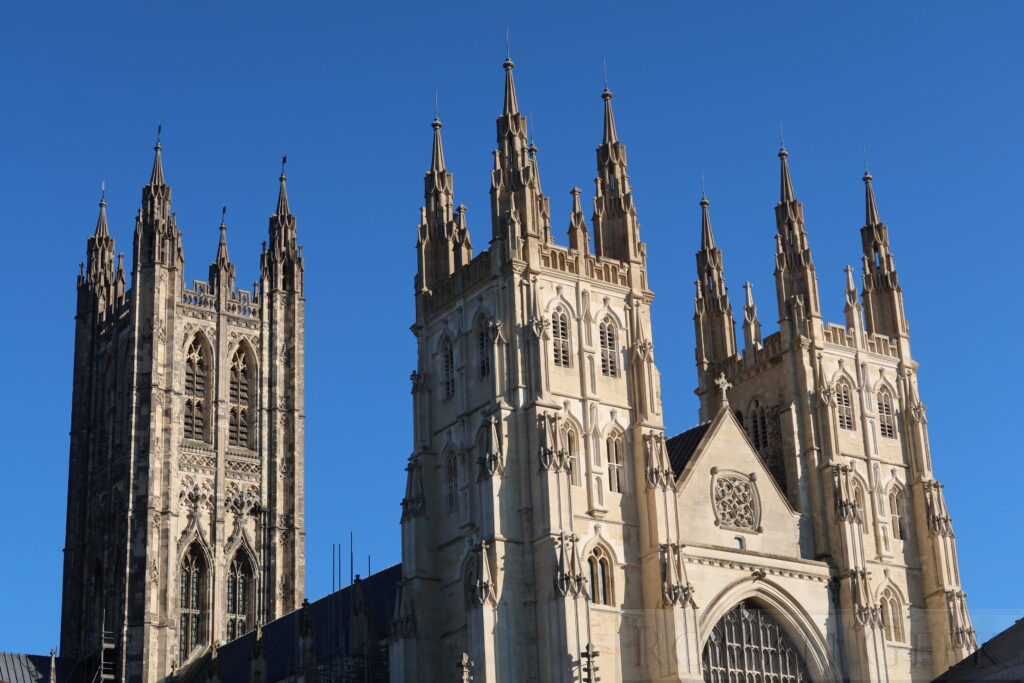
Canterbury Cathedral
Description: Located at 11 The Precincts, Canterbury Cathedral is the seat of the Archbishop of Canterbury. Founded in 597 by St. Augustine of Canterbury, it is one of the oldest Christian buildings in England and a UNESCO World Heritage Site. The cathedral was rebuilt by the Normans in 1077 using stone from Caen in France, using a mixed style of Romanesque (Norman) and Early English Gothic Architecture. It features flying buttresses, high vaulting and pointed arches. After the assassination of the Archbishop in 1170, the cathedral became a place of pilgrimage to visit the shrine of St. Thomas Becket in the Trinity chapel. Destroyed during the Dissolution of the Monasteries in 1538, a candle now marks the spot where the shrine once stood.
Historical Insight: Unusually, England has two Archbishops, the Archbishop of Canterbury (Primate of all England) who is the senior Bishop, and the Archbishop of York (Primate of England). This because in the sixth century, there were two dominant Anglo-Saxon Kingdoms, Northumbria and Kent, and each Kingdom received an Archbishop, a tradition which has been maintained to the present day.
12. King’s Mile Shopping Area
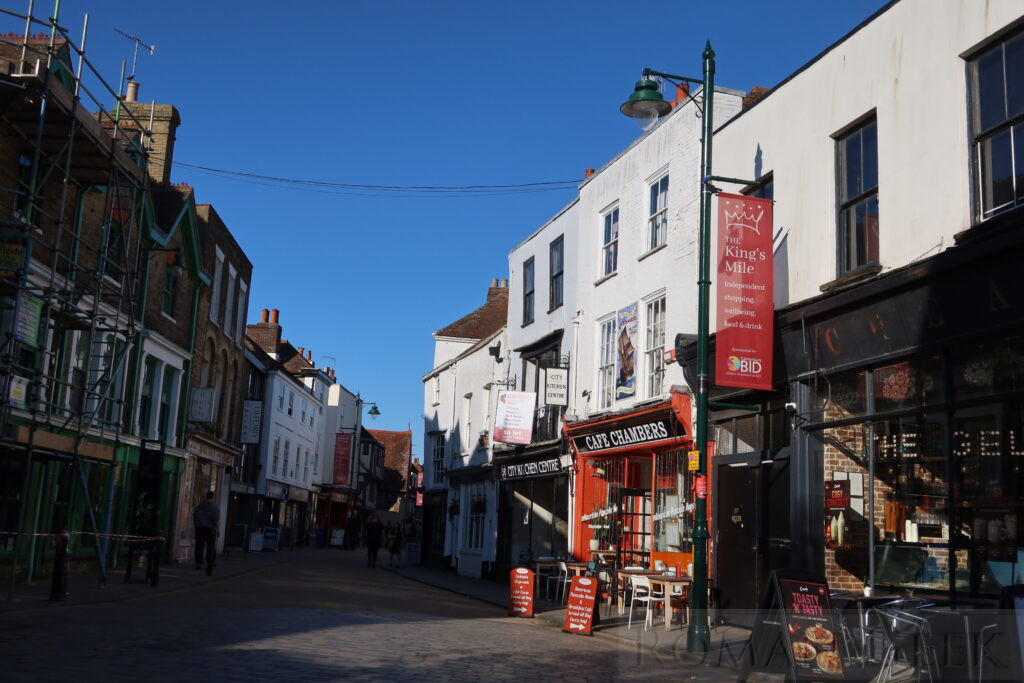
King’s Mile Shopping Area, Canterbury
Description: More shops and cafes can be found in the King’s Mile shopping area, which runs from the cathedral along Palace Street and North Street.
13. The Crooked House
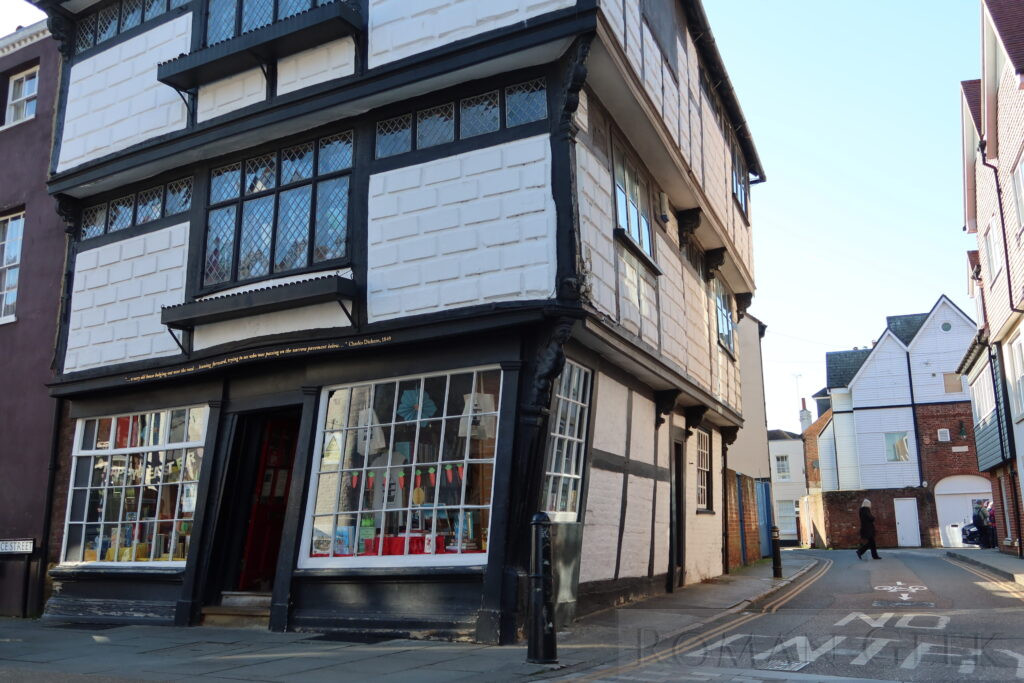
Crooked House Canterbury
Description: Located in Palace Street, it was built in 1617 and is currently a second-hand bookshop. The structure is now held together by a steel frame and is possibly the most photographed building in Canterbury.
Tip: It has an interesting slanted front door with a quote from David Copperfield by Charles Dickens written above it: ‘A very old house bulging over the road…leaning forward, trying to see who was passing on the narrow pavement below’. Part of the novel is set in Canterbury.
14. St. Augustine’s Abbey and Museum
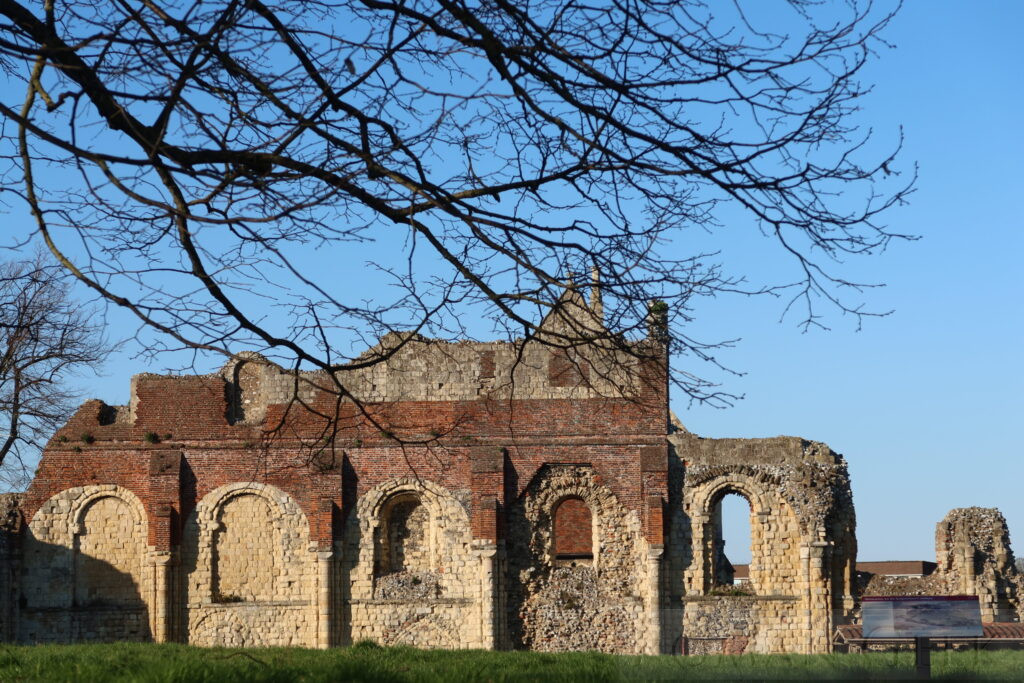
St. Augustine’s Abbey and Museum, Canterbury
Description: The Abbey was a Benedictine Monastery founded in 598 CE by St. Augustine himself, and which continued until the Dissolution of 1538, after which it was mostly dismantled. Run by English Heritage, there is a museum, shop and picnic area.
15. St. Martin’s Church
Description: Founded before 597 CE, but rebuilt in that year, St. Martin’s Church is the oldest Christian Church still in use in England. It is a Grade I listed building and a UNESCO World Heritage Site along with Canterbury Cathedral and St. Augustine’s Abbey.
Historical Insight: Queen Bertha was a Christian Frankish Princess who married the pagan Aethelberhrt of Kent in 580 CE, with the proviso that she could continue to practise her religion. She brought her chaplain Liudhard, the Frankish Bishop of Senlis. They were given an existing building, which they dedicated to St. Martin of Tours. Bertha was instrumental in bringing over St. Augustine of Canterbury in 597 CE, who used this church as his base until the cathedral was built.
Tip: In 1844, the Canterbury-St. Martin’s hoard of 6th century Saxon gold coins was found in the churchyard, including the Liudhard Medalet, the oldest example of Saxon coinage dated to between 578-589 CE. It bears a Latin inscription naming Bertha’s Chaplain, Bishop Liudhard, who died in the 590’s. The coin is now in the World Museum collection in Liverpool. The Churchyard also contains the grave of Mary Tourtel (d. 1948), creator of Rupert Bear.
16. Canterbury Roman and Medieval Walls
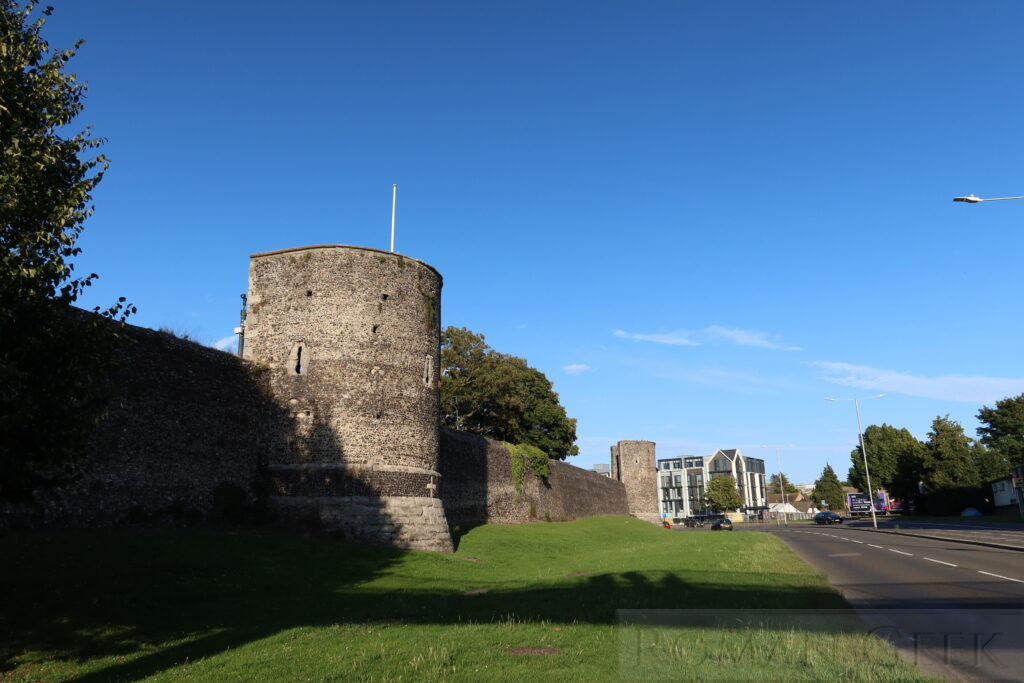
Canterbury City Wall
Description: The 3rd century CE Roman walls and towers were rebuilt after 1363 CE in preparation for the One Hundred Years War. Over half of the circuit survives today and can be walked on.
17. Dane John Mound and Gardens
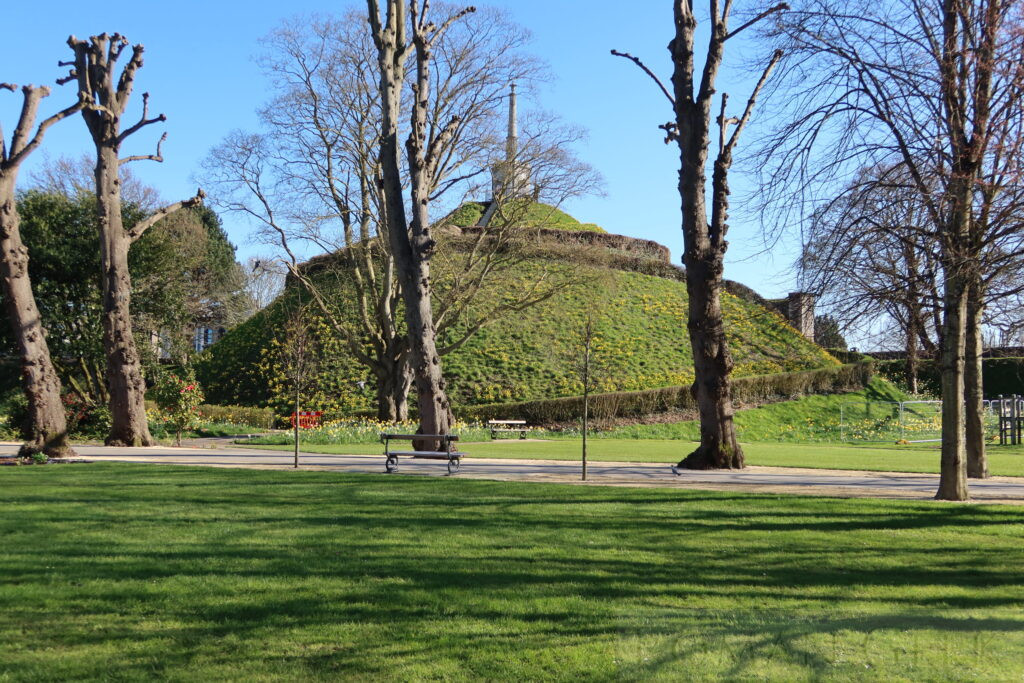
Dane John Mound and Gardens, Canterbury
Description: Located in Dane John Gardens, Dane John Mound is a former Roman Cemetery which was later converted into a Norman Motte and Bailey (Dane John is from the French Donjon). On top of the Mound is a sundial and stone obelisk, dedicated to Alderman James Simmons, who created the Gardens around 1803.
18. Canterbury Castle
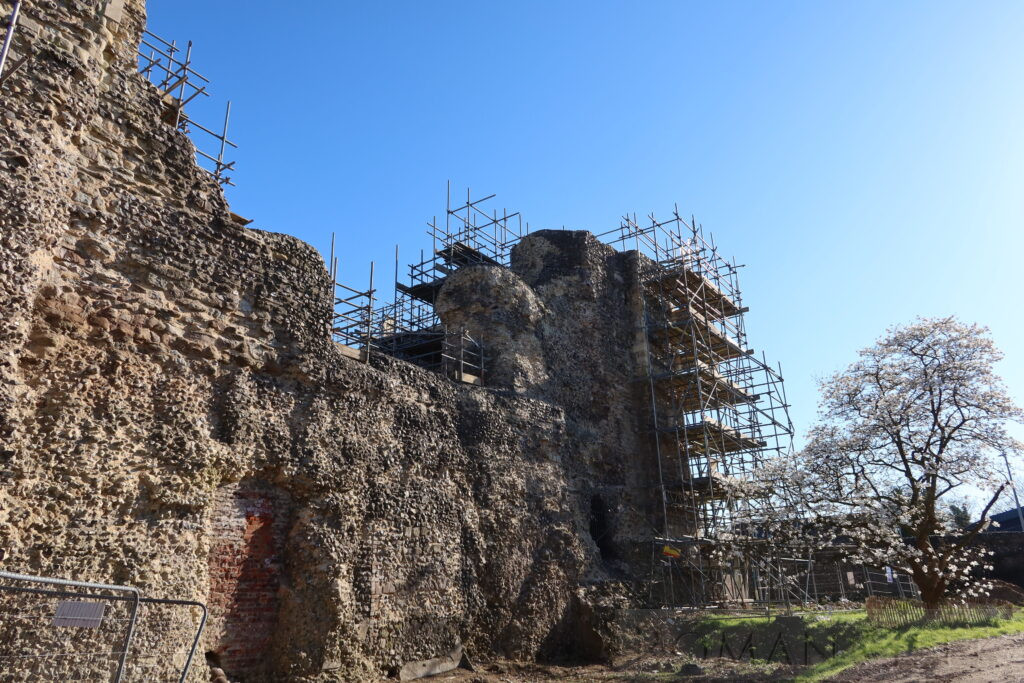
Canterbury Castle
Description: The ruined castle consists of a stone Keep built by Henry I after 1100 CE. It is not open to visitors. The Normans built three castles to guard the road from Dover to London: Dover castle, Canterbury castle and Rochester castle.
Canterbury Walking Tour
- Your geolocation will appear as a blue icon that moves on the map as you walk.
- You may start anywhere on the map and just follow the blue line to the next point of interest.
Travel Tips
- Best time to visit: Spring and autumn for mild weather and fewer tourists. King’s Mile Summer Run (June), Great Stour RiverFest (September), Canterbury Festival (October to November), Canterbury Christmas Market (December)
- Photography hotspots: Westgate Towers Museum Rooftop, River Great Stour, Canterbury Cathedral
- Nearby Attractions: Reculver, Dover Roman Lighthouse, Richborough Roman Fort
Visitor FAQ
- What is Canterbury famous for?
- Canterbury is known for its UNESCO Heritage Cathedral, its Roman, and its Medieval city walls, It is the destination for the Canterbury Tales written by Geoffrey Chaucer in 1400 and the novel David Copperfield, published by Charles Dickens in 1850, is partly set in Canterbury.
- Can I see Roman Ruins in Canterbury?
- Yes, Canterbury Roman Museum holds three Roman Mosaics, a Roman Silver Hoard and a reconstructed Roman House. Also, the medieval city Walls are built on the original Roman Walls.
- How far is Dover from Canterbury city centre?
- Approximately 20 minutes by car.
- Are there Guided Tours of Canterbury historical sites?
- Yes, local guides offer walking tours highlighting the Cathedral, the Old Town and other venues. Contact Visit Canterbury.
- Is Durovernum Cantiacorum the same as Canterbury?
- Yes, Canterbury was founded by the Cantiaci around 30 BCE, which became the Roman city of Durovernum Cantiacorum in 43 CE.
- Which Roman Province was Canterbury located in?
- What was the role of Durovernum Cantiacorum (Canterbury) in the Roman Empire?
- Canterbury served as a key economic and military hub with roads leading to four key fortresses defending the Kent coast. It lay on Watling Street the road leading from the Continent to London.
- Which Roman Roads connected Canterbury?
- Watling Street started at the port of Richborough, passed through Canterbury and went on to London. Iter II of the Antonine Itinerary follows Watling Street from Richborough Roman Fort, Iter III starts from Dover, and Iter IV starts from Lympne, the three coastal Fortresses.
Quick Facts
- Modern Location: Canterbury, England
- Category: Historic city centre, UNESCO Heritage cathedral, tourist destination
- Activities: Walking tours, Sightseeing, Photography
- Nearby Roman Site: Reculver Twin Towers and Roman Fort, Richborough Roman Fort, Dover Roman Lighthouse, Lympne
- Nearest Roman road: Watling Street
- Roman Province: Britannia
Nearby Attractions
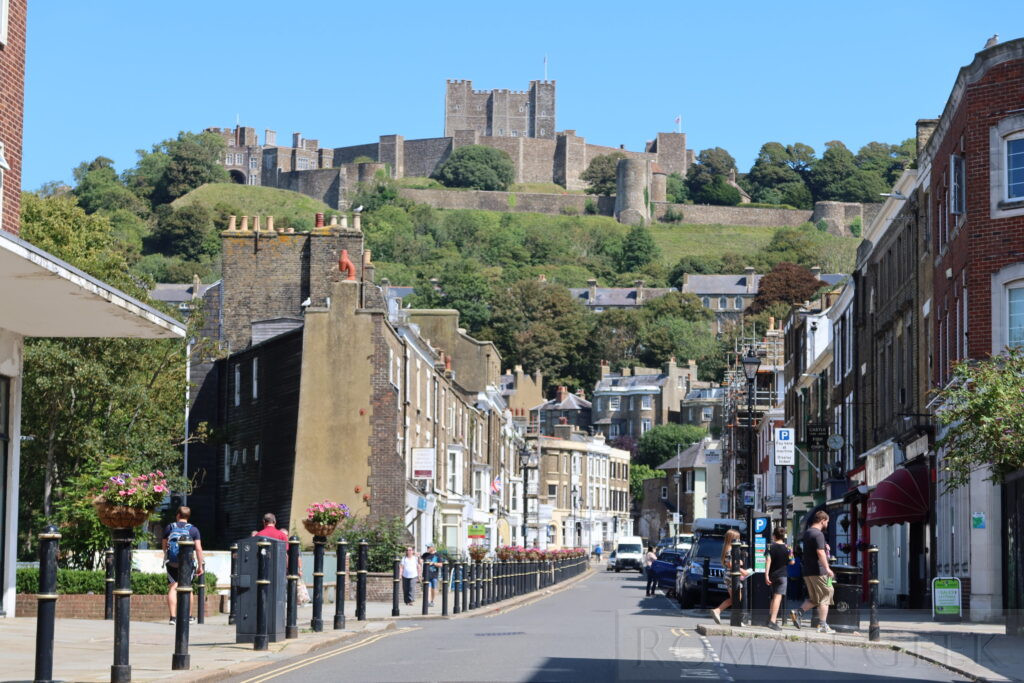
Dover Castle
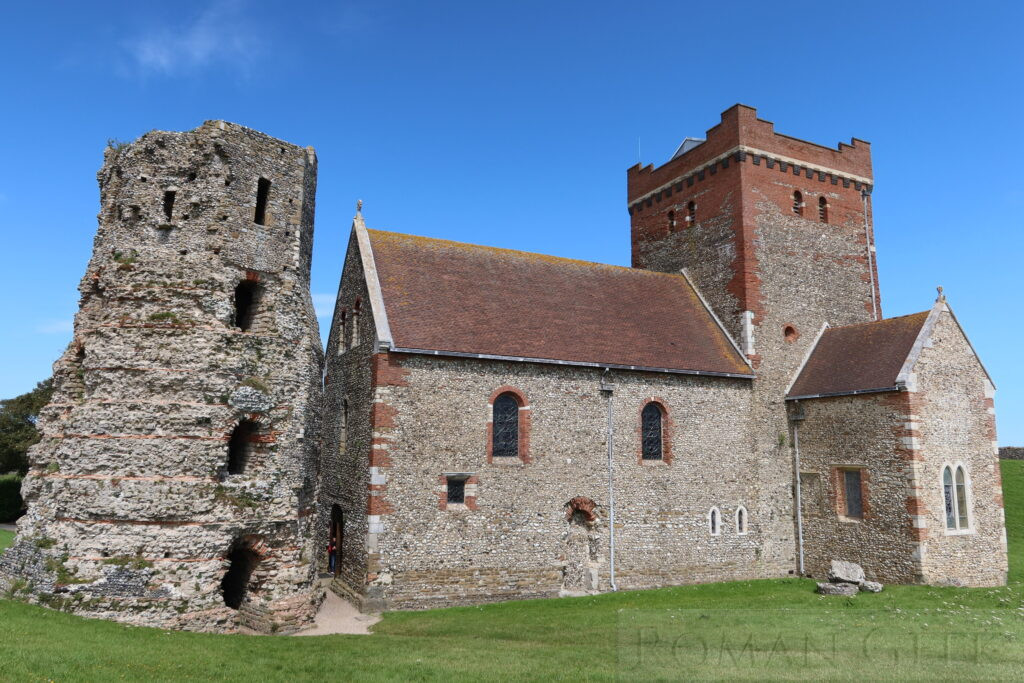
Dover Roman Lighthouse
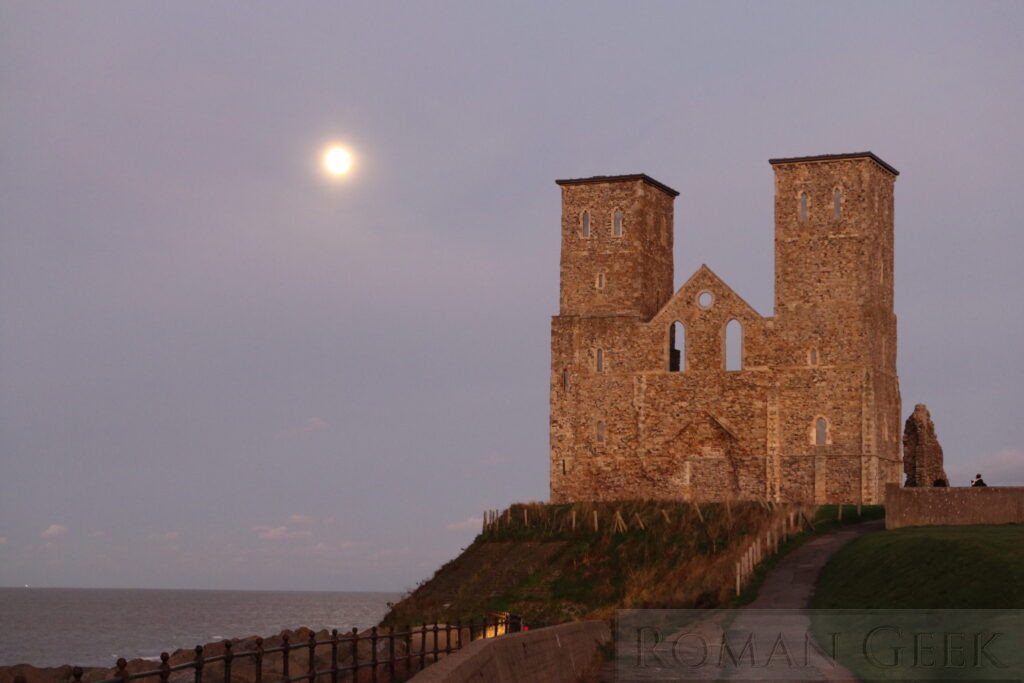
Reculver Twin Towers and Roman Fort, Kent
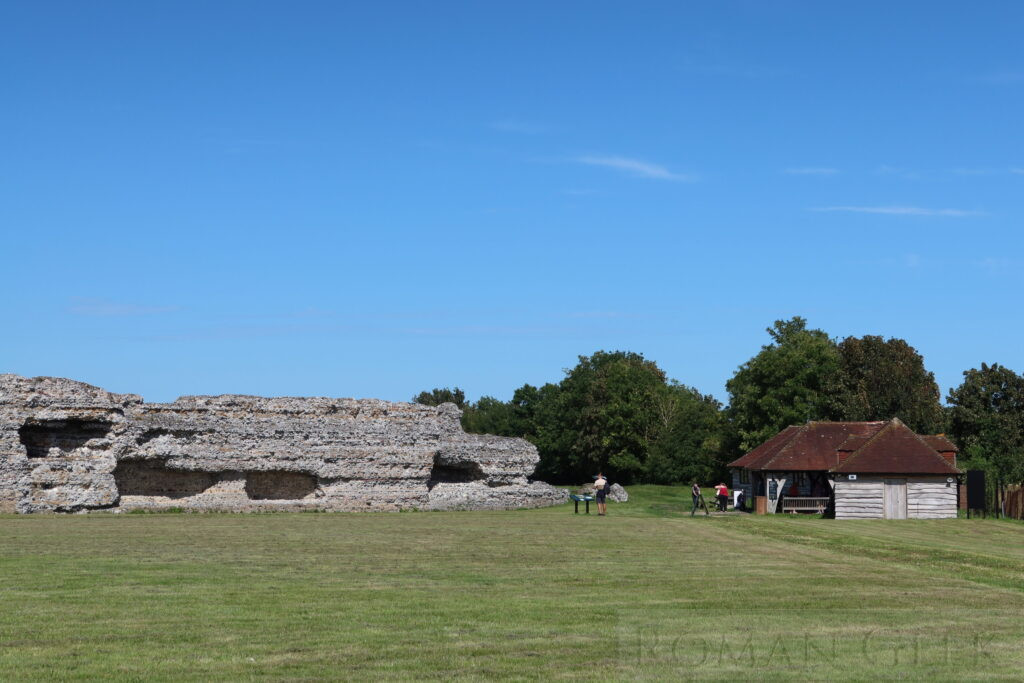
Richborough Roman Fort