Crypte Archeologique, Paris

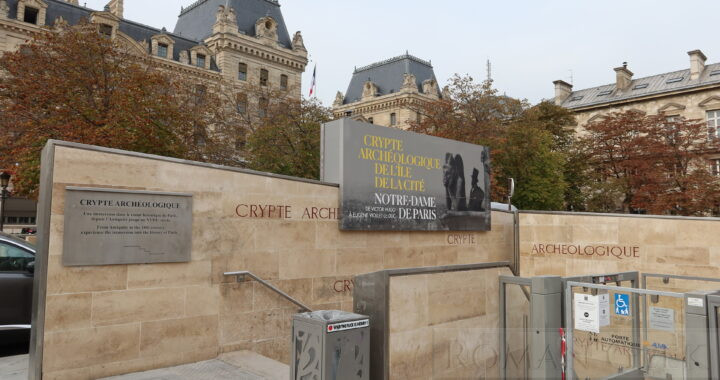
Crypte Archeologique

  • The Crypte Archeologique is an underground museum housing an archeological site of buildings in Paris dating back to the Gallo-Roman period.
  • It is located at le Parvis Notre Dame, Place Jean Paul II, which is in front of the cathedral of Notre Dame on the Isle de la Cite in Paris.


Photo: Crypte Archeologique

Arenes de Lutece, Paris

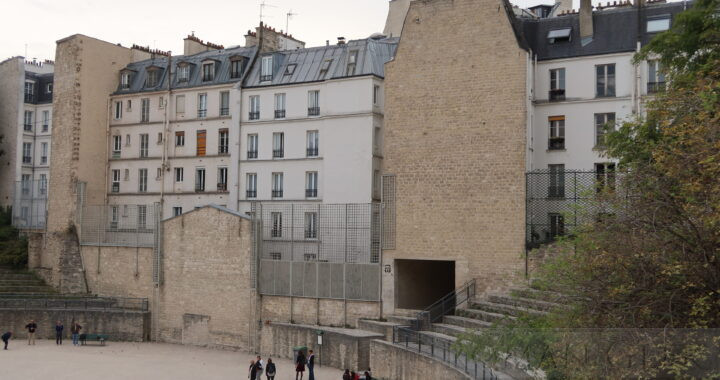
Arenes de Lutece

  • Les Arenes de Lutece are the Remains of a 1st century CE Gallo-Roman Theatre, located at Rue Monge in Paris.
  • Events at this venue are held on a regular basis.

Description

  • Vestiges of the stage and nine niches are still visible, however, the seating is a reconstruction.
  • The theatre could accommodate up to 15,000 spectators and was also used as an Amphitheatre for Gladiator contests.
  • Seating in the Theatre was not semi-circular like most Roman theatres, but closer to a circle in a similar design to Ancient Greek theatres.
  • The central performance area was surrounded by an 8 feet (2.5m) high wall and parapet, which separated the audience from the actors or gladiators.


Photo and map: Les Arenes de Lutece

Thermes de Cluny, Paris

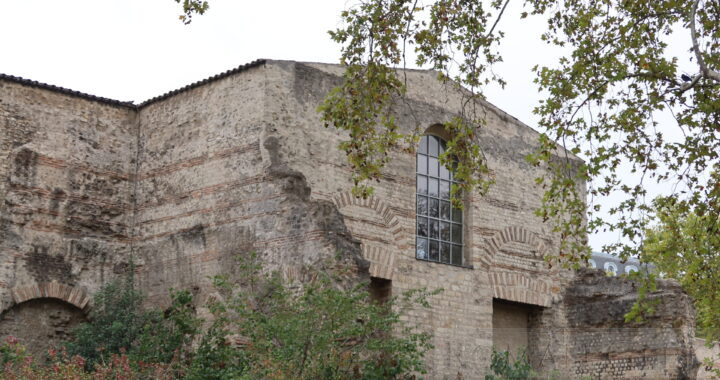
Thermes de Cluny

  • The Thermes de Cluny are extensive Ruins of Gallo-Roman Baths in Paris that now form part of the Musee de Cluny, a Museum of the French Middle Ages.
  • The Frigidarium and the Gymnasium are incorporated inside the museum, the Caldarium and Tepidarium remain as Ruins outside, in the grounds of the museum.


National Museum of the French Middle Ages and Roman Baths of Cluny.

  • The Entrance to the Baths is through the Museum of Middle Ages.
  • Housed inside the Frigidarium is the Pillar of the Boatmen, a 1st century CE monumental column built by the Paris guild of boatmen in honour of Jupiter.
  • It carries an inscription by the Nautae Parisiaci (Guild of Paris Boatmen) who dedicated the column to the Roman Emperor Augustus, the Roman God Jupiter and various Gallic Gods.


Photo: Thermes de Cluny

Pecs

  • Pecs is a city located in the Baranya County of southern Hungary. It is a UNESCO World Heritage Site and noted for its wine production founded by the Romans.
  • It was Roman Sopianae in the Province of Pannonia Inferior. After the Province was split 297 CE, it became the capital of Pannonia Valeria.

Roman Sites

  • Roman Necropolis
    • Located at Setater, in front of the cathedral of Saints Peter and Paul, Pecs.
    • An early Christian Necropolis dating from the latter half of the 4th century CE.
    • It holds 16 funerary monuments and murals with Christian motifs, including Burial chambers, Chapels and a Mausoleum containing a Sarcophagus.

Museums

  • Pecs Archeology Museum and Lapidarium
    • Located at 12 Szechenyi square, Pecs.
    • Roman Tombstones and Sarcophagi are located in the courtyard of the museum.


Pecs Cathedral

Sunda Strait

  • The Sunda Strait connects the Indian Ocean with the Java Sea.
  • It is located between the Indonesian islands of Java and Sumatra.


Sunda Strait

Cap Vert

  • Cap Vert, or the Cape Verde Peninsula, is located in Senegal, and is the most westerly point of the continent of Africa at Longitude 23.04°W, Latitude 16.53°N.
  • It was known to the Romans as Hesperu Ceras.

Cape Verde Islands

  • The Cape Verde Islands are located 354 miles (570km) west of Cap Vert, and are named after the peninsular.

Pliny the Elder

  • Pliny the Elder quotes the Greek Zenophon of Lampsacus as saying that the Cape Verde Islands (Gorgades), were two days sail from Cap Vert (Hesperu Ceras), the westernmost point of Africa).

Canary Current

  • The Canary Current is the part of the Atlantic Gyre which flows south along the African Coast through the Canary Islands and Cape Verde Islands.
  • It is a surface current driven by the wind, used by the Phoenicians and the Carthaginians to explore West Africa.
  • It then turns west after the Cape Verde Islands and becomes the North Equatorial Current, a westward wind driven current, flowing west towards the Caribbean.


Cape Vert, Senegal

Canary Current

  • The Canary Current is the part of the Atlantic Gyre which flows south along the African Coast through the Canary Islands and Cape Verde Islands. It is a surface current driven by the wind, used by the Phoenicians and the Carthaginians to explore West Africa.
  • It then turns west after the Cape Verde Islands and becomes the North Equatorial Current, a westward wind driven current, flowing towards the Caribbean.

Hanno the Navigator

  • Hanno the Navigator was Hanno II, King of Carthage between c.480-440 BCE.
  • Hanno describes a voyage with a Fleet of 60 ships, leaving Carthage and passing through the Strait of Gibraltar.
  • Carthage entrusted him to create seven colonies along the coast of West Africa, from Morocco to the Gulf of Guinea.


Canary Current

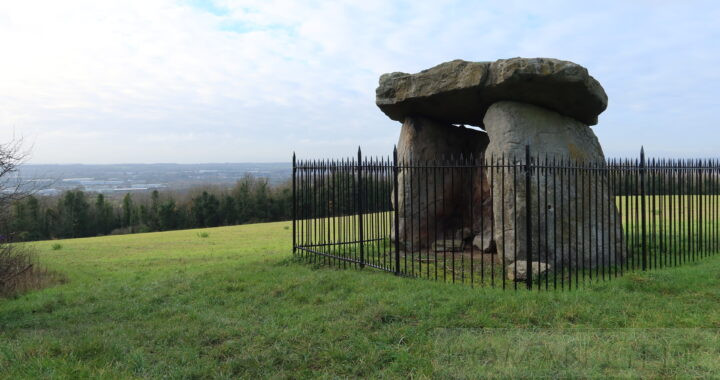
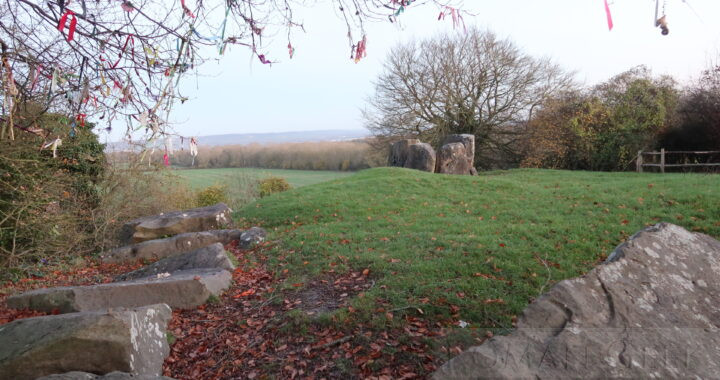
Kit's Coty House, near Aylesford, Kent, is a Megalith dating from 4,000 BCE.

Kit’s Coty House

  • Kit’s Coty House is a Bronze Age Megalith dating known from c.4,000 BCE and is located 1.5 miles (2km) north of Aylesford in Kent.
  • It is one of several Bronze Age Monuments grouped along the river Medway, known as the Medway Megaliths.

The Medway Megaliths

  • East of the Medway:
    • Kit’s Coty House
      • A chambered long barrow dating from c. 4,000 BCE.
    • Little Kit’s Coty House
      • Also known as the Countless Stones, as according to local folklore, the number seemed to constantly change, leading to an ill-fate for those who tried.
    • Coffin Stone
  • West of the Medway:


Kit’s Coty House

Coldrum Stones also known as Coldrum Long Barrow is located near Trottiscliffe in Kent.

Coldrum Stones

  • The Coldrum Stones, also known as the Coldrum Long Barrow, are the Ruins of a chambered long barrow from the the 4th millennium BCE.
  • The Stones are located next to the village of Trottiscliffe, near West Malling in Kent. They are one of several Bronze Age Monuments grouped along the river Medway, known as the Medway Megaliths.

The Medway Megaliths

  • East of the Medway:
    • Kit's Coty House
      • A chambered long barrow dating from c. 4,000 BCE.
    • Little Kit’s Coty House
    • Coffin Stone
  • West of the Medway:
    • Coldrum Stones
    • Chestnuts Long Barrow
    • Addington Long Barrow


Coldrum Long Barrow Parking

Siege of Noviodunum

The Date and Location

  • 52 BCE at Noviodunum, probably Neung-sur-Beuvron (20 miles south of Orleans).

The Reason for the Battle

  • During the winter of 53 BCE, Vercingetorix was besieging the Boii in Gergovia, a town given to them by the Aedui.
  • The Boii were a Helvetic tribe, from the migration of 58 BCE, whom Caesar had given permission to settle.
  • These were Roman Allies, like the Aedui, and Caesar could not allow Gergovia to fall, as the other Gallic Allied Tribes would have deserted him, risking the complete loss of Gaul.
  • Caesar wanted to force Vercingetorix to leave Gergovia and confront him in open battle at Noviodunum, which was one of four Gallic cities Caesar laid siege to. By the time Vercingetorix reached Noviodunum, the city had fallen and the main battle was postponed until the two armies met at Gergovia.

Caesar besieges three Gallic Cities allied to Vercingetorix

  • Caesar raced back from Italy, and immediately pushed the Cadurci out of Gallia Transalpina.
  • In January 52 BCE he crossed the snow covered Passes of the Cevennes in mid winter, catching the Arverni by surprise, and bypassing the Rhone valley blocked by Vercingetorix‘ Gallic Army. He then headed north to rejoin his Legions.
  • Caesar forced march northwards and started besieging the Gallic cities, trying to force Vercingetorix to pursue and confront him. and relinquish the siege of Gergovia.
  • Caesar positioned two Legions at Agedincum (Sens) to protect the Baggage Train and Supplies, and besieged the first three cities:
    • The Siege of Vellaunodunum (2 days from Sens), a city of the Senones. It surrendered and Caesar took 600 hostages.
    • The Siege of Genabum (Orleans) a city of the Carnutes. The city was burnt and its population massacred.
    • The Siege of Noviodunum Biturigum (Neung-sur-Beuvron 20 miles or 32km south of Orleans) in March 52 BCE. The town surrendered and hostages were given.

The Battle of Noviodunum (52 BCE)

  • Vercingetorix raced to confront Julius Caesar at Noviodunum, but the town had already surrendered.
  • However, when the citizens saw Vercingetorix‘ cavalry approaching, they closed the Gates and imprisoned the Romans inside.
  • Caesar then sent his German Cavalry to meet the Gauls. They successfully defeated the Gallic Cavalry, and forced them to return to Vercingetorix’ main Army, still some distance away.
  • The imprisoned Romans managed to recapture the town and it was re-occupied by Caesar.

The Siege of Avaricum

  • Caesar besieged Avaricum (Bourges) whilst Vercingetorix camped nearby and harassed Caesar’s besieging forces from a safe distance.
  • After 25 days, two siege engines were built in front of the walls and a Ramp constructed. Despite many attempts by tunneling under, and throwing pitch to set fire to them, the Engines finally reached the town walls, which then were breached.
  • Of the entire population of 40,000 only 800 escaped alive.

The Outcome

  • Caesar then set out to relieve Gergovia, whilst Vercingetorix attempted to prevent him arriving.
  • Finally the two armies met, resulting in the Battle of Gergovia.

Sources


Noviodunum (Neung-sur-Beuvron)