Hippo Regius

  • Hippo Regius was a Roman port whose Ruins are located in the modern port city of Annaba in northeastern Algeria.
  • It was located in the Province of Africa Proconsularis

History

Roman Sites

  • Villa of the Labyrinth
  • Villa of the Procurator
  • Outline of the Grand Basilica with Mosaics
  • Market
  • Forum

Museums

  • Annaba Museum
    • Also known as Le Musee des Ruines d’Hyppone, it is located in Annaba, above the Ruins of Hippo Regius.
    • The museum holds the Finds from Hippo Regius including a mosaic showing the Hunt with exotic animals, Statues and a rare 8 foot (2.5m) bronze trophy used for hanging a set of protective armour.

Roman Roads


Hippo Regius
Khongor Sand Dune

  • The Khongor Sand Dune, also known as the Khongoryn Els and the Singing Sands, is one of the biggest Sand dunes in the world, located in the Gobi Desert in Southwest Mongolia.
  • It is 7 miles (12km) wide, 111 miles (180km) long, with a height of 262 feet (80m).

Sarykum Dune

  • Sarykum Sand Dune is a Sand Dune in Dagestan in the Russian Federation. It is the largest sand dune in an area of sand dunes on the northwest coast of the Caspian Sea, and is the highest sand dune in Eurasia.
  • The Sarykum is very ancient and has a length of 1.9 miles (3km). whilst its height varies between 700-860 ft (213-262m).
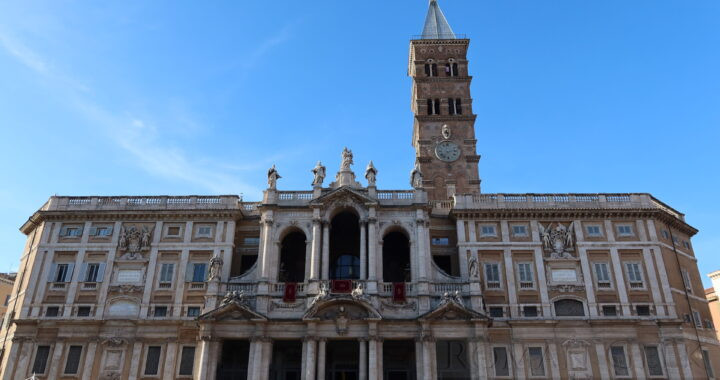
Basilica of Santa Maria Maggiore, Rome

Basilica of Santa Maria Maggiore

  • The Papal Basilica of Santa Maria Maggiore (431 CE) was one of the first churches to be built in honour of the Virgin Mary.
  • It is one of the Seven Pilgrim Churches of Rome.

Getting There

History

  • Constructed by Pope Celestine I, and consecrated by his successor on the 5th August 434 CE, the original building has been preserved, although added to over the centuries.
  • It holds the original mosaics from the 5th century CE, depicting the Virgin Mary, Christ and Moses crossing the Red Sea.
  • The Pope officiates at the annual Feast of the Assumption of Mary held on the 15th August.
  • Various Popes are buried in the church along with St. Jerome, who translated the The Bible from Hebrew into the Latin Vulgate.


Photo and Map: Basilica of Santa Maria Maggiore

Oresund

  • The Oresund, or The Sound, is a 73 mile (118km) Strait between Denmark and Sweden.
  • The Strait is only 2.5 miles (4km) wide between Helsingor in Denmark and Helsingborg in Sweden.


The Oresund at Helsingborg

Palk Strait

  • The Palk Strait is a channel through the Gulf of Mannar which separates Sri Lanka and India. The Strait connects Palk Bay with the Bay of Bengal.
  • The Strait passes through the narrowest part of the Gulf of Mannar which is impassable to larger ships due to a chain of rocks across it known as Adam’s Bridge.

Navigation

  • The Strait is unnavigable for large ships, although smaller craft have always been able to pass through.
  • Large vessels bound for the East Indian coast have always had to circumnavigate Sri Lanka to the East.


Palk Strait, Adam’s Bridge

Menai Strait

  • The Menai Strait is a 16 mile (25km) tidal waterway between northern Wales and the Island of Anglesey.

Bridges

  • There are two modern bridges across the Menai Strait:
    • Menai Suspension Bridge built in 1826 by Thomas Telford to carry the A5 road.
    • Britannia Tubular Bridge built in 1850 by Robert Stephenson to carry the railway and a road.

Anglesey

  • The Island of Anglesey was known to the Romans as Mona and was first occupied by Suetonius Paulinus in 60 CE, but he had to withdraw during Boudicca’s Revolt.
  • In 77 CE, Agricola occupied Anglesey before moving north into Caledonia. The Romans worked a Copper Mine in Parys Mountain
  • Caer Gibi Roman Fort kept watch on the Irish Sea and is associated with a nearby Roman watchtower located at the top of Holyhead mountain.

Roman Roads


Menai Strait

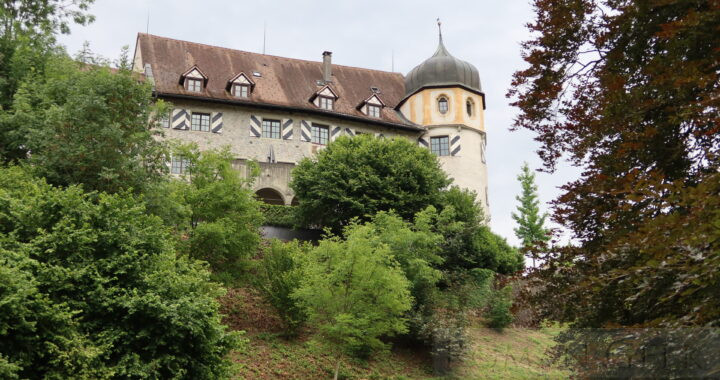
DeuringSchlossle Castle above the Roman Theatre

Bregenz

  • Bregenz is a city located on the eastern shore of the Lake Constance (Bodensee) and is in the State of Vorarlberg in western Austria.
  • It is noted for the Bregenzer Festspiele, an annual summer music festival.

History

  • Originally a Celtic city, Bregenz became the Roman city of Brigantium in 15 BCE, which was located in the Roman Province of Raetia.
  • The River Rhine enters Lake Constance 5 miles (8km) west of Bregenz.

Roman Sites

  • Outline of the Roman Theatre
    • The location of the outline (no ruins) of the Roman Theatre is located in front of a large tree in a private car park which can be viewed directly below the DeuringSchlossle Castle, in a road called Thalbachgasse, in Bregenz.
    • It had a capacity for 2,000 spectators.


Site of the Roman Theatre below DeuringSchlossle, Bregenz

Trento

  • Trento is a cathedral city on the river Adige located in the Region of Trento-Alto Adige/Sudtirol in northern Italy.
  • It became the Roman town of Tridentum in the 1st century BCE and was in the Province of Raetia.

Roman Sites and Museums

  • Tridentum S.A.S.S. (Spazio Archeologico Sotterraneo del Sa)s
    • This museum consists of a large underground excavated area with a section of Roman Road, buildings, part of the city wall and a tower, mosaics, hypocausts, courtyards and a well.
  • Area Archeologica di Palazzo Lodron
    • Located at Piazza Lodron 31, Trento.
    • Archeological Site with excavated Remains of the 1st century CE city.

Roman Roads


Trento

Chur

  • Chur is a cathedral city on the confluence of the rivers Plessur and Rhine and is located in the Canton of Grisons in Switzerland.
  • It became the Roman city of Curia Raetorum in 15 BCE and was in the Province of Raetia.

Museums

  • Ratisches Museum
    • Located in Hofstrasse 1, Chur.
    • The museum has an Archeological section in the basement with a Collection of Finds from all periods, including some from the Roman period.


Ratisches Museum, Chur