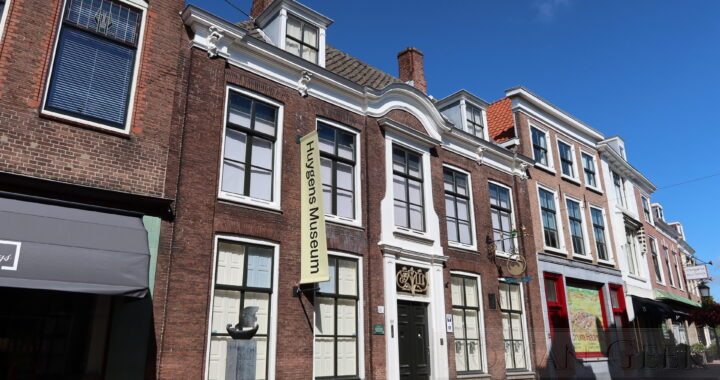
Swaensteyn Museum, (Part of the Huygens Museum) Voorburg

Voorburg

  • Voorburg is a town on the river Vliet or Fossa Corbulonis, which is a suburb of The Hague located in the Province of South Holland in the Netherlands.
  • It was the Roman town of Forum Hadriani located in the Province of Germania Inferior.

Roman Sites

  • Fossa Corbulonis
    • Voorburg is located on a Roman Canal dug in 47 CE called the Fossa Corbulonis.
    • This was a 23 mile (37km) long canal built to avoid the North Sea. It connected the river Rhine to the river Meuse from Leiden, Delft to Maasland-Sluys.
    • The Roman Canal is still functioning and is now known as the Rijn-Schie canal or the Vliet.

Museums

  • Swaensteyn Museum
    • Located in Herenstraat 101, Voorburg.
    • The museum holds a description of the Roman town of Forum Hadriani.


Swaensteyn Museum (Part of the Huygens Museum) Voorburg
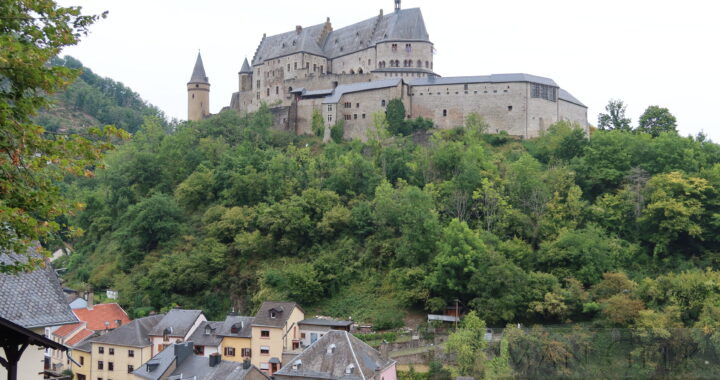
Vianden Castle, Luxembourg

Vianden

  • Vianden is a town in Luxembourg on the River Our in the Ardennes.

Vianden Castle

  • Constructed in the 11th century, the Castle of Vianden was built on the site of a Roman Castellum called Viennensis.
  • It was then rebuilt in the Gothic style during the 13th century onwards.
Vianden Castle, Luxembourg

Vianden Castle, Luxembourg


Vianden Castle

Mitla Pass

  • The Mitla Pass is located in the Sinai Peninsular of Egypt.
  • It has an Altitude of 1,570 ft (580 m) and a Length of 20 miles (32 km).

Strategic Location

Roman Road


Mitla Pass, Egypt:

Formentera

The ‘Insula Balearum’ (Balearic Islands)

History

  • The Balearic Islands remained independent after the Fall of Carthage in 146 BCE, but in 123 BCE, the Roman Commander C. Caecilius Metellus conquered the Islands and founded the cities of Palma and Pollentia.
  • They formed part of the Province of Hispania Tarraconensis, forming the fourth division ruled by a Praefectus pro legato.
  • Under Diocletian (284-305 CE), and during the fourth century CE, they became a separate Province called Hispania Balearica.

Roman Sites

  • Castellum de Can Blai
    • The base and outline of a Roman Castellum has been excavated.
    • It is located on the Carretera de la Savina on the middle of the island.


Formentera, Balearic Islands

Megiddo Pass

  • The Megiddo Pass is situated in the Carmel Mountains in Galilee, modern Israel, leading into the Jezreel Valley. Armageddon is the Greek name for Meggido.
  • The Roman Fort of Caparcotna, defended the Megiddo Pass. The Site is under the ruined village of ‘Lejjun’ today, which is named after ‘Legio’.

The Archeological City of Megiddo

  • Megiddo was a Bronze Age City State under the Canaanites, and also during the Iron Age under the Kingdom of Israel.
  • The Greek name for Megiddo was Armageddon.
  • Megiddo guarded the Megiddo Pass on the Via Maris
  • The City of Megiddo was occupied from 3,500-586 BCE.
  • Megiddo has a ‘Great Temple’ dating back to 3,500 BCE. It is ten times larger than any other Temple in the Middle East from this Period.
  • Megiddo was destroyed around 1,150 BCE before being rebuilt.
  • The Megiddo Church dates from the third century CE, and is one of the oldest churches in the world.
  • The Ruins of Megiddo were first excavated between 1903-1905 CE by the American Archeologist Gottlieb Schumacher, and have been the scene of many excavations since then.

Battles

  • Battle of Megiddo (c.1547 BCE)
    • between Pharaoh Thutmose III and the Canaanites.
  • Battle of Megiddo (609 BCE)
    • between Pharaoh Necho II who defeated Josiah and the Kingdom of Judah.
  • Battle of Megiddo (1918 CE)
    • During WW I, between General Allenby of the Allied Armies against the defending Ottoman Army.

Via Maris

Roman Legion

Armageddon

  • Armageddon is the Greek name for Megiddo.
  • The Book of Revelation Chap. 16. Line. 16 predicts a great Battle at Armageddon, that will precede the end of the world. As a result, Armageddon has come to mean the end of the world.


Megiddo Pass, Israel

Wailing Wall

History


Wailing Wall, Jerusalem

Battle of Philippi

  • The Battle of Philippi (42 BCE), near Kavala, Greece, was the last battle in the Liberators’ civil war (43-42 BCE) fought by the Second Triumvirate.
  • It was fought between Octavian and Mark Anthony against Brutus and Cassius.

Date and Location

  • 42 BCE near Philippi, modern Kavala in Greece.

The Reason for the Battle

  • After the Assassination of Julius Caesar in 44 BCE, his assassins, Brutus and Cassius left Italy and took control of the Eastern Provinces of Greece, Turkey and Syria.
  • They collected an army of 17 Legions which they marched into Greece. They also controlled the Republican Fleet.
  • Octavian and Mark Anthony left the third Triumvir, Marcus Lepidus, in Italy, and took 19 Legions to Greece.

First Battle of Philippi

  • In October, the two armies met on the field near Philippi.
  • Brutus pushed Octavian’s army back, but Mark Anthony pushed Cassius’ army back, and when a false rumour reached Cassius that Brutus had failed, he committed suicide.
  • Brutus then had to rally Cassius’ soldiers and retreat with them to base camp.
  • Octavian and Mark Anthony also withdrew their armies back to camp.
  • But during the Battle, Brutus’ Republican Fleet which controlled the coast, had destroyed all supplies trying to reach Octavian and Mark Anthony.
  • Brutus’ plan was to sit tight and using Sea power, wait until his enemy ran out of supplies. However, as desertions in his own army rose, his officers pleaded with him to attack.

Second Battle of Philippi

  • Finally, after three weeks Brutus attacked on October 23rd.
  • The Battle incurred very high casualties as Brutus’ army pressed forward using mostly the sword in hand to hand fighting, and not volleys of javelins or arrows. However, Brutus’ army started to be pushed back.
  • When Octavian reached Brutus’ camp, Brutus was unable to reform his routed army and had to flee the battlefield with just four legions.

The Outcome

  • Brutus committed suicide and the Second Triumvirate was victorious.
  • However, Parthia was now intent on gaining influence in the East:

After Philippi, Parthia again attempted to control Syria and Judaea

  • In 40 BCE, the General under Brutus, Quintus Labienus, was given a Parthian Army, and took over Syria and invaded Judaea.
  • The Roman Client King, Hyrcanus II, was deposed and a Persian Client King, Antigonus, installed in his place.

Asia Minor invaded by Labienus

  • Quintus Labienus then invaded eastern Asia Minor, and the East appeared to have fallen back into the Persian Empire.
  • Mark Anthony sent his General Ventidius, who reoccupied Turkey, killed Labienus, and expelled the Persian Army from Syria.
  • In 38 BCE, the Persian Army invaded again, but was again expelled by Ventidius.

Judaea and Syria restored to Rome

  • In 37 BCE, in Judaea, Antigonus was deposed by Herod, the new Roman Client King. Judaea and Syria were both securely back under Roman control.
  • However, by 33 BCE, despite several attempts by Mark Anthony and his Army, Armenia and the surrounding region were lost to Parthian control.


Kavala (Philippi), Greece

Peloponnese

  • The Peloponnese is the southern Peninsular of Greece.
  • Formerly, it was the territory of Sparta, but under the Romans it became part of the Province of Achaea.

Mount Taygetus

  • Its highest mountain in the Peloponnese is Mount Taygetos in the Parnon Range, at 7,887 ft (2,404 m).


Mt. Taygetus, Peloponnese