Acre

  • Acre is a port in Haifa Bay in Israel. The Old City of Acre is a UNESCO World Heritage Site surrounded by ancient walls and gates partly dating from the Crusader and Ayyubid Period.
  • During the Roman Empire it was known as Ptolemais Ace and was an important port located in the Province of Judaea. Its Aqueduct dates from the Ottoman Period.


Acre

Genoa

  • Genoa is a port city and capital of the Liguria Region of northern Italy. It has been an important maritime city since Antiquity.
  • It was known as Stalia to the Ligurians and Oppidum Genua to the Romans, according to Pliny the Elder. It was located in Italia.

Roman History

  • A Roman ally during the Third Punic War (149-146 BCE), Genoa was given Municipal Rights and became a Roman city with an Amphitheatre.

Medieval Sea Power

  • During the medieval period, the Genoese Republic (11th century CE-1787 CE) became a Mediterranean Sea Power whose great Sea Rival was the Venetian Republic of Venice.
  • Genoa, known as Gennes in French, has a claim to being the origin of the blue denim cloth called Jeans (after Gennes) today ‘Blue Jeans’, which was exported throughout Europe during the rule of the Genoese Republic.
  • The oldest chartered Bank in the world, the Bank of St. George, was founded in Genoa in 1407 CE.

Museums

  • Ligurian Archeology Museum
    • Located at Viale Durazzo Pallavicini, 16156 Genoa.
    • The museum covers every period of Ligurian history, including the Roman period.

Roman Roads


Ancient Port of Genoa

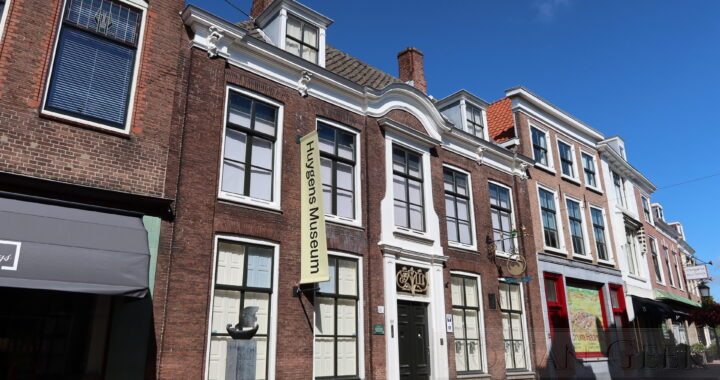
Swaensteyn Museum, (Part of the Huygens Museum) Voorburg

Voorburg

  • Voorburg is a town on the river Vliet or Fossa Corbulonis, which is a suburb of The Hague located in the Province of South Holland in the Netherlands.
  • It was the Roman town of Forum Hadriani located in the Province of Germania Inferior.

Roman Sites

  • Fossa Corbulonis
    • Voorburg is located on a Roman Canal dug in 47 CE called the Fossa Corbulonis.
    • This was a 23 mile (37km) long canal built to avoid the North Sea. It connected the river Rhine to the river Meuse from Leiden, Delft to Maasland-Sluys.
    • The Roman Canal is still functioning and is now known as the Rijn-Schie canal or the Vliet.

Museums

  • Swaensteyn Museum
    • Located in Herenstraat 101, Voorburg.
    • The museum holds a description of the Roman town of Forum Hadriani.


Swaensteyn Museum (Part of the Huygens Museum) Voorburg

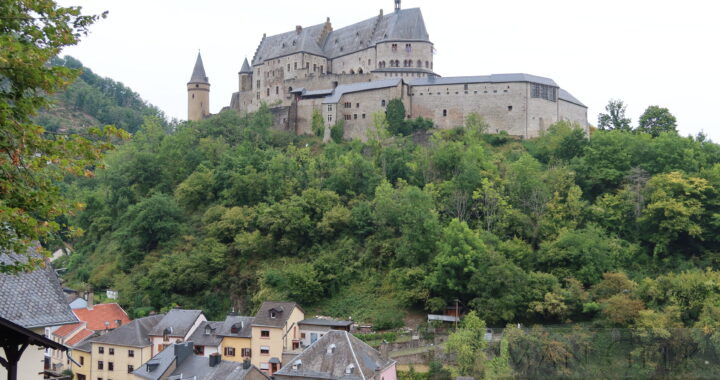
Vianden Castle, Luxembourg

Vianden

  • Vianden is a town in Luxembourg on the River Our in the Ardennes.

Vianden Castle

  • Constructed in the 11th century, the Castle of Vianden was built on the site of a Roman Castellum called Viennensis.
  • It was then rebuilt in the Gothic style during the 13th century onwards.
Vianden Castle, Luxembourg

Vianden Castle, Luxembourg


Vianden Castle

Enns

  • Enns is a town located near the confluence of the river Enns with the river Danube, in the State of Upper Austria in northern Austria.
  • It was the Roman Legionary Fortress of Lauriacum in the Province of Noricum.

History

Roman Sites

  • Church of St. Laurentius
    • The church is surrounded by the Trenches of the Legionary Fort of Lauriacum.
    • The Praetorium was underneath the modern church.

Museums

  • Museum Lauriacum
    • Located at Hauptplatz 19, Enns.
    • The Museum is on three floors and displays artefacts from the Roman Army Fortress with explanations of the life of the soldiers of the Legio II Italica Pia.

Roman Roads


Museum Lauriacum, Enns

El’ad

  • El’ad, also spelt Elad, is a city in the central distict of Israel, which is the site of the Mazor Roman Mausoleum dedicated to a unknown man and his wife dating from the 3rd century CE.
  • The Building is one of the few intact Roman buildings in Israel, and holds the remains of the two Sarcophagii.


Mazor Mausoleum, El’ad

Bethlehem

  • Bethlehem is the capital city of the Bethlehem Governate in the West Bank, Palestine, which is located 6 miles (10km) south of Jerusalem. It has a population of c. 25,000 inhabitants.
  • It holds the Church of the Nativity, a Unesco World Heritage Site, where Jesus was born according to the Gospels, and is a major site of Pilgrimage for Christians. It also holds Rachel’s Tomb, a site of Pilgrimage for Jews, Muslims and Christians.

History

  • Bethlehem is mentioned in the Amarna Letters (1350-1330 BCE).
  • The Bible refers to Bethlehem as a city of Rehoboam and where King David was anointed.
  • In the New Testament, the Gospels of Matthew and Luke state that Jesus was born in Bethlehem.

Roman Sites

  • Church of the Nativity (339 CE)
    • This Basilica was commissioned by Constantine I in 327 CE, after his mother, Helena, had visited the Site.
    • It was the first Church to be built in the Holy Land, and was dedicated on 31st May 339 CE.
    • The Grotto of the Nativity located in the crypt is considered to be the birthplace of Jesus.
    • The Church is a Unesco World Heritage Site.
    • The Catholic Midnight Mass on Christmas Eve is broadcast globally from this Church and is attended by the Latin Patriarch of Jerusalem. The Orhodox Church conducts the same ceremony 13 days later.
    • The Basilica is maintained by the Greek Orthodox Patriarchate of Jerusalem.

Other Sites

  • Rachel’s Tomb
    • Also known as the Bilal bin Rabah Mosque.
    • It is a site of Pilgrimage for Jews, Muslims and Christians and the current building dates from the Ottoman Period.
    • It is considered to be the burial site of Rachel, one of Jacob’s two wives, who died giving birth to Benjamin, as described in Genesis in The Bible.


Bethlehem

Rimini

  • Rimini is an extended coastal city located on the Adriatic in the Emilia Romagna Region of northeastern Italy.
  • It was founded by the Romans as Ariminum in 268 BCE and was located in Italia.

Roman Sites

  • Rimini Amphitheatre
  • Tiberius Bridge
  • Domus del Chirurgo
  • Augustus Arch

Museums

  • Arimini caput viarum
    • This offers a multimedia interactive tour of the Roman city of Arimini.

Roman Roads


Tiberius Bridge, Rimini

Aegean

  • The Aegean is the Sea located between Greece and Turkey.
  • It contains seven Groups of Islands, the North Aegean Islands, the Sporades, the Cyclades, the Saronic Islands, the Dodecanese and the Island of Crete.

History

  • Between 166-46 BCE, the region gradually came under the influence of Rome.
  • Since Antiquity, the Dodecanese had been under the control of Rhodes, and the Rhodian Navy, which the Romans abolished in 46 BCE.
  • Also since Antiquity, the Cyclades had been controlled by Crete. In 69 BCE Crete was invaded by the Roman Legions.

The Island of Rhodes

  • Rhodes was a powerful Sea Power, based on the Rhodian Navy,  between 323-46 BCE.
  • However, in 167 BCE the Island of Delos in the Cyclades, was given the status of a Free Port with no Harbour or Customs dues, according to Strabo.
    Deprived of the trade in Slaves and general Goods, Rhodes was left with the Grain and Wine trade, resulting in its harbour receipts collapsing from 1,000,000 drachmas to 150,000 in one year.
  • In 164 BCE Rhodes signed a Trade Agreement with Rome regarding the Dodecanese Islands and the Cyclades Islands, that brought the Aegean Sea under Roman Influence.
  • In 46 BCE the Rhodian Navy was abolished.
  • In c.79-81 CE Titus created the Provincia Insularum (Province of Islands) meaning the Dodecanese Islands, with Rhodes as the Capital.

The Dodecanese

  • The Dodecanese Island chain consists of 12 large islands and 150 smaller islands, controlled since antiquity by Rhodes.
  • In 164 BCE Rhodes signed a Trade Agreement with Rome, bringing the Islands under Roman Influence.
  • c.79-81 CE Titus created the Provincia Insularum (Province of Islands) meaning the Dodecanese Islands, with Rhodes as the Capital.
  • One known Governor of the Provincia Insularum was Plutarchos, who ruled under Julian (361-363 CE)
  • After 395 CE, the Provincia Insularum was placed under the Eastern Roman Emperor in Constantinople.
  • The Dodecanese Islands were eventually joined with Crete.
  • Karpathos was the Capital of the Island of Karpathos, Greece, which is halfway between Crete and Rhodes.
    • The Classis Carpathia was created in 390 CE, but there are no surviving records.

The Cyclades

  • This is a Group of 220 Islands surrounding the Island of Delos controlled since Antiquity by Crete.
  • The most prosperous island was the sacred island of Delos, birth place of Apollo, which was set up by Rome in 166 BCE as a Free Port. Within two years this bankrupted the Rhodian Navy.
  • In 164 BCE, Rhodes was obliged to sign a Trade Alliance with Rome, bringing the Islands into the Roman Sphere of Influence.
  • The Cyclades were either assigned to the Province of Asia or Achaea, and later to the Province of Crete.

Cyclades as a Place of Exile

  • Rome used the Cyclades as a place of Exile, mainly the Islands of Gyaros, Amorgos, Serifos and Patmos.
  • Gyaros:
    • An Island of the Cyclades, in the Aegean Sea, Greece. Considered to be a barren and arid island.
  • Patmos:
    • An Island in the Sporades, in the Aegean Sea, Greece. Exiles were put to Forced Labour in the Mines and Quarries. According to Eusebius, in 95 CE Domitian banished the Apostle John to Patmos where he was inspired to write the Book of Revelation.
  • Amorgos and Serifos

The Island of Crete

  • The Pirates of Crete controlled Crete during the first and second century BCE.
  • Rome finally invaded the island in 69 BCE with 3 Legions under Quintus Caecilius Metellus. He took 3 years to subdue Crete. He was awarded the title of ‘Creticus’.


The Aegean Sea

Brindisi

  • Brindisi is a port city on the Adriatic in the Apulia Region of southern Italy, which has historically always been the main port of trade with Greece.
  • It was the Roman port of Brundisium and was connected to Rome by the Via Appia (264 BCE). Under the Romans it was both a commercial and naval port located in Italia which connected Italy to the port of Durres and Greece.

History

  • It was conquered by the Romans in 267 BCE and made it into a naval port which connected with Durres (Dyrrachium) and Greece and later to the Eastern Roman Empire.

Roman Sites

  • A Roman Column
    • The column stands in front of the harbour and was a landmark for sailors with a height of 61 ft 6″ (18.7m). It was one of a pair that marked the end of the Via Appia.

Museums

  • ‘Francesco Ribezzo’ Brindisi Archeological Museum
    • Piazza Duomo, 6, 72100, Brindisi.
    • The Museum holds 3,000 bronze sculptures just from the classical Greek period, as well as Statues and busts from the Roman period.

Roman Roads


Brindisi