
Ibiza

The ‘Insula Balearum’: Balearic Islands

History

  • The Balearic Islands remained independent after the Fall of Carthage in 146 BCE.
  • But in 123 BCE, the Roman Commander C. Caecilius Metellus, conquered the Islands and founded the cities of Palma and Pollentia.
  • They formed part of the Province of Hispania Tarraconensis, forming the fourth division ruled by a Praefectus pro legato.
  • Under Diocletian (284-305 CE), and during the fourth century CE, they became a separate Province called Hispania Balearica.

Roman Sites

  • Roman Bridge
    • Pont Vell (Old Bridge) in Santa Eularia des Riu

Museum

  • Archeological Museum of Ibiza and Formentera
    • It is located in Ibiza, opposite the Cathedral in the Old Town of Dalt Vila.
    • The museum holds a pottery collection which includes Amphorae.
    • A second part of the Museum is located in the archeological site of Puig de Molins Necropolis and acts as a visitor centre.


Ibiza, Balearic Islands
Jeddah

  • Jeddah is located on the Red Sea and was founded around 500 BCE as a fishing village.

Description


Jeddah, Saudi Arabia

Museum of Cairo

  • The Museum of Cairo is also known as the ‘Museum of Egyptian Antiquities’ or the ‘Egyptian Museum’ and is located in Tahrir Square, Cairo, Egypt.
  • The Museum holds 120,000 items, the largest collection in the world of Finds from the Pharaohs of Egypt. It will be replaced soon after 2022 by the Grand Egyptian Museum at Giza.

Exhibits

  • Second Floor
    • The Museum holds the Gold Mask and other Finds from the Tomb of Tutankhamun.
    • It holds Artifacts from many of the Tombs of the Pharaohs, found in the Valley of the Kings, including items from the Tombs of Queen Hatshepsut and Thutmosis III.
  • First Floor
    • Papyrus and coins from the Greek, Roman and Islamic Periods.
    • Statues, Tables and Sarcophagii from the New Kingdom (1550-1069 BCE)
  • Other Exhibits


The Museum of Egyptian Antiquities, Cairo:

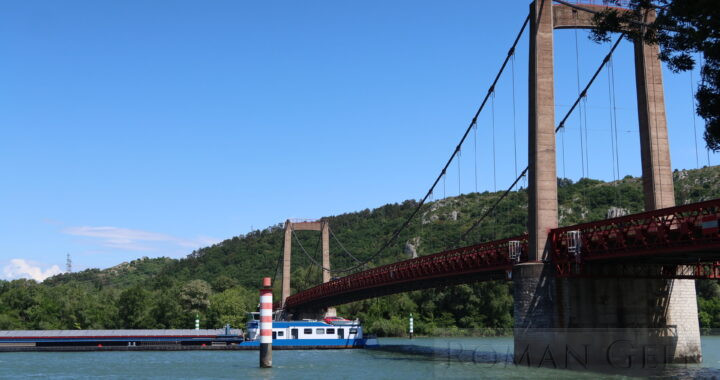
Viviers suspension bridge on the Rhone (built in 1951)

Rhone

  • The Rhone is the fourth longest river in France at 338 miles (545 km).
  • But is 504 miles (813 km) long from its source in Switzerland to the Mediterranean.

Route

  • It rises in Switzerland and passes through Lake Geneva before descending to Lyon.
  • Then it continues to run down the Rhone valley past Arles.
  • It finally empties via the Rhone Delta into the Mediterranean.

Lyon

  • Lyon is a Cathedral city located at the confluence of the Rivers Saone and Rhone in the Auvergne-Rhone-Alpes Region in central France.
  • It was founded by the Romans in 43 BCE as Lugdunum and became an important port and capital city of the Province of Gallia Lugdunensis.

Wine

  • The Rhone valley is one of the great wine producing regions of France.
  • Viticulture started 500 years before the Roman invasion, but was greatly developed during the Roman Empire.
  • Wine Amphorae and later Barrels of wine travelled in vessels along the Rhone to their markets.

The Rhone Bargemen

  • The Rhone Bargemen have towed barges north up the Rhone since Antiquity as towing was the only method of travelling upstream.
  • The technique, still employed up to 100 years ago, was for 40-50 men with a team of up to 80 horses or oxen on the towpath, to tow a convoy of barges weighing over 1,000 tons.
  • The river was difficult to navigate due to flooding, strong currents, islands, collapsed river banks and towpaths, or low water levels in the summer.
  • In the Spring, a strong current due to melt flow, combined with northerly winds makes progress up stream almost impossible.
  • In the Summer, when the winds are light and the current is weak, travel northward becomes much easier, but the water levels can run too low for vessels to pass.

Arles Rhone 3 Vessel

  • This is a unique vessel found buried in the mud of the riverbank at Arles and now in the Arles Museum of Antiquities.
  • It is a 1st century CE flat bottomed Roman river cargo boat, a sort of giant punt, which was found intact with its steering oar, towing mast, pulleys, anchors and a cargo of stones.
  • It was 102 feet (31m) long, 10 feet (3m) wide and 3 feet (1m) deep. The towing rope was threaded through the Bow section which was pointed.

Arles

  • Arles is a cathedral city located on the river Rhone in the Provence-Alpes-Cotes d’Azur Region of southeastern France, and which was known to the Romans as Arelate. Arles has the greatest concentration of Roman Monuments of any French city in France and was listed as a UNESCO World Heritage Site in 1981.
  • During the Roman Period, it was a strategic port city which had a permanent pontoon bridge across the Rhone made of anchored vessels. It was located in the Province of Gallia Narbonensis.
  • Goods from the Mediterranean were transferred at Arles onto Rhone river barges which then were towed up to Lyon and beyond.

The Camargue

  • The Parc naturel regional de Camargue is protected regional park and nature reserve consisting of marshes located south of Arles between the two arms of the Rhone Delta, the Rhone and the Petite Rhone.
  • It is Europe’s largest river delta and is made up of wetlands and lagoons which are home to the Camargue Pink Flamingos, Camargue Horses and Camargue Cattle, used in bull fighting, who all roam free and are indigenous to the region.

The Mistral

  • The Mistral is one of the eight winds of the Mediterranean.
  • A north westerly wind that blows down the Rhone valley on average at 30 mph (50 kph), with gusts that can reach up to 55 mph (90 kph). At night, the wind slows down considerably.
  • It usually occurs during the Winter and the Spring, but can also occur all year round.
  • The Mistral can last anything from one to two days, more often for several days, and sometimes up to one week.
  • It is produced by an area of high pressure in the Bay of Biscay feeding cold dry air into a Low over the Bay of Genoa. It is usually accompanied by clear weather and blue skies.
  • The Mistral affects the Rhone valley from Lyon to Marseille, Provence, Languedoc to the east of Montpellier, and continues south to Corsica and Sardinia, and occasionally on to the African coast.
  • It can cause unexpected storms in the Mediterranean between Corsica and the Balearic Islands. The Regions it affects depend on whether the wind is from the north west, the north or the northeast.


Viviers suspension bridge on the Rhone

Levant

Mediterranean Current

  • The Mediterranean current flows anticlockwise around the eastern mediterranean, and passes in a northerly direction along the Levantine coast. Once it reaches the coast of Turkey, it flows westward back towards Sicily.

Prevailing Winds

  • In the summer the winds are predominantly Westerlies, and the Khamsin, hot southerly winds from February to June, enabling sailing vessels to travel north.
  • In the Autumn the winds become Northwesterlies or Northerlies, making it almost impossible for a sailing vessel to continue North.
  • There were many ports to put into in the event of bad weather, along the Levantine coast.

The Levant Coastal Ports

Phoenicia

  • Phoenicia was a powerful maritime power based in modern Roman Lebanon and Roman Syria, operating between 1550-330 BCE.
  • Phoenicia is the area known as Canaan mentioned in The Bible, consisting of the northern part of the Levant.
  • Phoenicia was continually trading or at war with Ancient Egypt. The Report of Wenamun around 1107 BCE, describes this trade during a tense period between the two countries.

Cities of Phoenicia:

  1. Arwad was a well fortified island city off the coast of Syria, with a powerful Phoenician navy whose ships are mentioned on Monuments in Egypt and Assyria. The city dominated the area as far south as Sidon, and the trade inland along the Orontes valley.
  2. Ugarit. dominant between c.1450-1200 BCE.
  3. Byblos, possibly the oldest city in the Ancient World.
  4. Sidon was an Ancient Phoenician Port City, located in modern Lebanon.
  5. Tyre was the great naval Port of Phoenicia. It became the Leader of Phoenicia around 900 BCE.

Assyrian Empire

  • The Assyria Empire was dominant in the Levant between c. 2,600-605 BCE. Its Capital was Ashur or Assur in Iraq (founded c. 2600 BCE).

Persian Empire

  • After the collapse of the Assyrian Empire at the Battle of Carchemish in 605 BCE, where the combined Assyrian and Egyptian armies were defeated. The Babylonian Empire ruled in the Levant from 605 BCE, until it was replaced by the Persian Empire in 539 BCE.
  • The Battle of Megiddo (609 BCE) preceded the Battle of Carchemish when the Egyptian army under Necho II defeated the Judaean King Josiah (Bible 1 Esdras), whilst enroute to challenge the Persians at Carchemish.
  • The Achaemenids founded the Persian Empire and ruled Syria from 538-331 BCE, and Egypt from 525-332 BCE.

Alexander the Great

  • Conquered the Levant and Syria (333-332 BCE)
    • 333 BCE Siege of Tyre
    • 333 BCE Battle of Issus against Darius III and the Persian Army
    • 332 BCE Siege of Gaza
    • 332 BCE Occupation of Egypt without a Battle, and visit to consult the Oracle of Siwa Oasis.
    • 331 BCE Assyria and Babylonia
    • 331 BCE Battle of Gaugamela


Byblos, Lebanon

Balearic Islands

  • The Balearic islands are located off the east coast of Spain and comprise the islands of Majorca, Minorca, Ibiza and Formentera in the western Mediterranean.
  • They were known to the Romans as the ‘Insula Balearum’ with the capital at Pollentia on Majorca and included in the Province of Hispania Tarraconensis until 284 CE, when they became a separate Province.

Insula Balearum

History

  • The Balearic Islands remained independent after the Fall of Carthage in 146 BCE. However, the two natural harbours at Palma and Pollentia soon became pirate bases and the Romans were forced to intervene.
  • In 123 BCE the Roman Commander C. Caecilius Metellus conquered the Islands and founded the cities of Palma and Pollentia. Pollentia became the capital of the Roman Balearics.
  • From 123 BCE, they formed part of the Province of Hispania Tarraconensis, forming the fourth division ruled by a Praefectus pro legato.
  • From 284 CE, under Diocletian (284-305 CE), they became a separate Province called Hispania Balearica.
  • In 455 CE, the Balearics fell to the Rise of Vandal Naval Power, but after c. 553 CE came under the Rule of the Byzantine Empire until the 10th century CE.
  • The Balearics exported high quality grain and wine and were self sufficient.

Balearic Slingers

  • The islands were famous in Antiquity for their Balearic Slingers, who were experts at slinging stones or lead bullets with great accuracy at their targets.
  • They were subsequently incorporated into units of the Roman Army.


Pollentia Roman capital city, Alcudia, Balearic Islands

Formentera

The ‘Insula Balearum’ (Balearic Islands)

History

  • The Balearic Islands remained independent after the Fall of Carthage in 146 BCE, but in 123 BCE, the Roman Commander C. Caecilius Metellus conquered the Islands and founded the cities of Palma and Pollentia.
  • They formed part of the Province of Hispania Tarraconensis, forming the fourth division ruled by a Praefectus pro legato.
  • Under Diocletian (284-305 CE), and during the fourth century CE, they became a separate Province called Hispania Balearica.

Roman Sites

  • Castellum de Can Blai
    • The base and outline of a Roman Castellum has been excavated.
    • It is located on the Carretera de la Savina on the middle of the island.


Formentera, Balearic Islands

Megiddo Pass

  • The Megiddo Pass is situated in the Carmel Mountains in Galilee, modern Israel, leading into the Jezreel Valley. Armageddon is the Greek name for Meggido.
  • The Roman Fort of Caparcotna, defended the Megiddo Pass. The Site is under the ruined village of ‘Lejjun’ today, which is named after ‘Legio’.

The Archeological City of Megiddo

  • Megiddo was a Bronze Age City State under the Canaanites, and also during the Iron Age under the Kingdom of Israel.
  • The Greek name for Megiddo was Armageddon.
  • Megiddo guarded the Megiddo Pass on the Via Maris
  • The City of Megiddo was occupied from 3,500-586 BCE.
  • Megiddo has a ‘Great Temple’ dating back to 3,500 BCE. It is ten times larger than any other Temple in the Middle East from this Period.
  • Megiddo was destroyed around 1,150 BCE before being rebuilt.
  • The Megiddo Church dates from the third century CE, and is one of the oldest churches in the world.
  • The Ruins of Megiddo were first excavated between 1903-1905 CE by the American Archeologist Gottlieb Schumacher, and have been the scene of many excavations since then.

Battles

  • Battle of Megiddo (c.1547 BCE)
    • between Pharaoh Thutmose III and the Canaanites.
  • Battle of Megiddo (609 BCE)
    • between Pharaoh Necho II who defeated Josiah and the Kingdom of Judah.
  • Battle of Megiddo (1918 CE)
    • During WW I, between General Allenby of the Allied Armies against the defending Ottoman Army.

Via Maris

Roman Legion

Armageddon

  • Armageddon is the Greek name for Megiddo.
  • The Book of Revelation Chap. 16. Line. 16 predicts a great Battle at Armageddon, that will precede the end of the world. As a result, Armageddon has come to mean the end of the world.


Megiddo Pass, Israel

Arabia Felix

  • The Romans divided the Arabian Peninsular into three areas, Arabia Felix, Arabia Deserta and Arabia Petrae.

Arabia Felix (Happy Arabia)

  • This was Southern Arabia, the Yemen: It was divided amongst 4 main Kingdoms all of which had advanced hydraulic systems in place.
    1. Sabaean Kingdom (Yemen)
      • with the capital at Marib, then later, at Sana (Sanaa). This was the most powerful Kingdom.
    2. Kingdom of Ma’in
    3. Kingdom of Hadramaut
      • with the capital at Sabwa. They traded Incense and Cinnamon traded through their Port of Cana (Mukalla).
    4. Kingdom of Zufar (Oman)
      • their capital was the lost city of Ubar of which nothing is known.

Arabia Deserta (Desert Arabia)

Arabia Petraea


Arabian Peninsular