
Valley of the Temples

  • The Valley of the Temples, also known as the Temples of the Valley, or in Italian, Templi dei Vallei, are seven Ancient Greek Temples built in the Doric style, located in Agrigento, Sicily. They have been a UNESCO World Heritage Site since 1977.
  • The Temples were built in a holy area on top of a hill and represent some of the greatest Doric architecture from fifth century BCE Magna Graecia.

Agrigento

  • Agrigento was the ancient Greek city of Akrigas, known as Agrigentum to the Romans.
  • The fortress city was the location of the Battle of Agrigentum in 262 BCE, during the First Punic War (264-246 BCE).

The Seven Temples

  1. Temple of Concordia
    • This is the best preserved Temple, built in c.440 BCE.
  2. Temple of Juno Lacinia
    • Built c.440 BCE.
  3. Temple of Asclepius
    • Built c.430 BCE.
  4. Temple of Heracles
    • Built circa 470-510 BCE.
  5. Temple of Vulcan Lacinia
    • Built in c.430 BCE.
  6. Temple of the Dioscuri
    • Built in c.450’s BCE.
  7. Temple of Zeus in the Olympeion Field
    • Possibly built in c.480 BCE.
    • The Tomb of Theron is in the same Temple complex.

Museums

  • Archeological Museum of Agrigento
    • Located at Contrada San Nicola. 92100 Agrigento.
    • The museum is divided into two sections and holds artefacts from the Roman and Greek period.


Valle dei Templi, Agrigento, Sicily
Malabathrum

  • Malabathrum was the term used in the Classical World (and the Medieval world) to describe Cinnamon, which came from India and Nepal.

Description

Use

  • Malabathrum was used as one of the ingredients in Roman Perfume.
  • Malabathrum was used in Roman Cuisine, and was mentioned in the Recipes of Apicius.
  • It was also used to flavour Greek wine.

Cost

  • Malabathrum cost 300 Denarii per pound (lb).

Roman Perfume

  • Roman Perfume was widely used by the Ancient Egyptians, the Ancient Greeks and across the Roman Empire.
  • Aphrodite, the Goddess of Love, was associated with Perfume.
  • The Temples used large quantities of perfume as Incense and often had perfume workshops nearby.
  • The Romans used Perfumes in their Bathhouses.
  • Perfume was also worn by Royal Families, the Aristocracy and by Politicians.
  • Perfumes were used in Medicine.


Nepal

Hoopoe

  • The Hoopoe is a distinctively coloured bird with black and white wings, a pink body, a crest on its head and a long curved bill.
  • It is about the same size as a starling. The Hoopoe produces one to three broods each year.

A Sacred Bird in the Ancient World

Onomatopoeic Name

  •  The Hoopoe had three names.
    • Latin: ‘Upupa’
    • Ancient Greek: ‘Epops’
    • English: ‘Hoopoe’
  • All three names are Onomatopoeic and mimic the call of the Hoopoe bird.
    • Its call sounds like ‘Hooo Pooo’, and is repeated 3 to 5 times.

Species and Habitat

  • There are three species.
    • The Eurasian Hoopoe (Upupa epops)
      • Europe (migrate to the Tropics in Winter)
      • Asia (migrate to the Tropics in Winter)
    • The African Hoopoe (Upupa africana)
      • Africa (some migratory others sedentary)
    • The Madagascan Hoopoe (Upupa epops marginata]
      • Madagascar


Gaza

  • Gaza is an ancient city in the Levant which has been continuously inhabited since at least 1,500 BCE.
  • From 6 CE onwards, Gaza was part of the Roman Province of Judaea.

History


Gaza

Ebro

  • The River Ebro is the second longest river in the Iberian Peninsular at 578 miles (930km), the longest being the Tagus.
  • The Ebro flows southeast from Cantabria, through Zaragoza and empties into the Mediterranean south of Tarragona.

Roman River Traffic

  • During the Roman period the Ebro was navigable inland from Logrono (Vareia) to the Roman Mediterranean sea port of Amposta (Amni Amposita), which is now inland.
    • Logrono (Vareia)
    • Zaragoza (Caesaraugusta)
      • Zaragoza was an important Port in the flow of Goods in both directions.
    • Amposta (Amni Amposita).

Battle of Ebro River (217 BCE)

  • The Battle of the River Ebro (217 BCE) took place during the Second Punic War (218-201 BCE).
  • It was a Naval battle between the Roman Republic and the Carthaginian Navy, which took place in the Spring of 217 BCE in the mouth of the River Ebro, Spain. The result was a defeat for Carthage.


Logrono

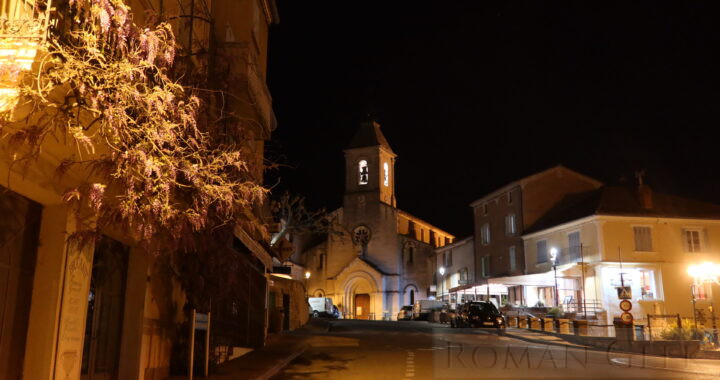
Beaumes de Venise, Orange

Beaumes de Venise

  • Beaumes de Venise is a wine produced from Beaumes de Venise, near Orange, in the Rhone valley of southern France.
  • The wine was well-known to the Romans.

Pliny the Elder

  • Pliny the Elder (23-79 CE) wrote about the exceptional muscat wine produced at Beaumes on the southern Rhone, France.
  • Beaumes de Venise still produces two types of wine, a fortified sweet white muscat wine and a red Cotes du Rhone Villages.


Photo and map: Beaumes de Venise

Gerrha

  • Gerrha was an independent Arab city state and port on the Persian Gulf between 650 BCE to 300 CE.
  • It is thought to have been located somewhere opposite Bahrain, possibly at Al-Uqair.

Trade

  • It was an important Port involved in the trade with India.
  • Its trading partner was Charax Spasinu, another City State, further up the Persian Gulf.
  • Strabo described the houses of the wealthy in Gerrha as being decorated with Gold, Silver and Precious Gems, and says that Gerrha was the richest Arab city.


Al Uqair

Lost Library of Ivan the Terrible

Link with Constantinople

  • In 1472 CE, The Russian Grand Prince Ivan III married Princess Sophia Paleologue, who’s uncle was the last Emperor of the Byzantine Empire.
  • Part of her Dowry seems to have been a collection of Works from the Imperial Library of Constantinople, rescued from the Ottoman Invasion of 1453 CE.
  • Ivan the Terrible (1530-84 CE), his grandson, is known to have amassed a huge Library of Works from the Classical Age.

Sources

  • Only two accounts confirm the existence of this Library:
    1. In 1606 CE, Vasili Ivanovitch (Czar Vasili IV 1606-10 CE) requested that the Patriarch of Constantinople send a scribe to translate some ancient Greek works into Russian. A monk, Maxim the Greek, was sent from the monastery in Mount Athos and claimed to have seen the Library whilst he translated several of the works.
    2.  The other account was by Johann Wettermann, a German priest from Livonia, who visited Moscow and made a catalogue of 800 books, apparently only a small part of the collection he had seen.
  • In 1822 CE, the Catalogue was apparently found by Professor Dabelov of Tartu University, but later lost again.
  • In the 1930’s, a Russian Archeologist, Ignaty Stelletsky, claimed the Lost Library was located in the tunnels under the Kremlin in Moscow, but although he searched for it, he was unable to find its location. He also claimed to have found the Catalogue written by Johann Wettermann.


Kremlin, Moscow


Edessa

  • Edessa was located in the modern city of Urfa, also known as Sanliurfa, in Turkey.
  • It was an important centre of early Christianity and had its own Bishop. It was in Upper Mesopotamia.

History

  • Edessa became a Greek city under the Seleucid Empire (312-63 BCE), then Capital of the Kingdom of Osrhoene, and continued to flourish under the Roman and Byzantine Empires.
  • In 217 CE Caracalla, considered to have been the Roman Empire’s most tyrannical Emperor, was assassinated on the road between Edessa and Carrhae.

Battle of Edessa (260 CE).

  • In 260 CE, Edessa was the site of the Battle between the Persian King Shapur I and the Roman Emperor Valerian.
  • The Romans lost the battle and the entire Roman army of 60,000, including the Roman Emperor, were taken into captivity and never returned.

Mandylion of Edessa

  • The Mandylion Icon of Edessa was a shroud that was believed to hold the image of Jesus.

Museums

  • Sanliurfa Archeology and Mosaic Museum
    • Located at Haleplibahce caddesi, Sanliurfa, it is an archeological museum in two sections:
      • The Mosaic section
        • which includes the Mosaic of Orpheus (184 CE).
      • The Archeology section
        • which includes Finds from all periods of history including nearby Gobekli Tepe and Harran (Carrhae).


Edessa