Camel Caravans

  • The Camel Caravans were known as the ‘fleets of the desert’ and could number thousands of camels.
  • Strabo (c.64BCE-c.24CE) wrote that they were organised like an army.

Organisation

  • Size
    • The caravan could involve hundreds, sometimes thousands, of camels. A 10,000 camel caravan would extend up to 28 miles in length and usually moved in a long thin line astern.
  • Leaders
    • Every caravan had a leader who knew the route and the stopping places.
  • Groups
    • The caravan was divided into groups of 5 to 12 camels, tied together, under the charge of one camel driver.
  • The camels
    • They were rested and fattened for two months prior to their great trek.
  • Speed
    • The caravan’s speed was limited by the speed of the men leading each line, who walked at around 3 miles per hour (5 kph). This gave a day’s range of about 15-25 miles per day, travelling for around 11-13 hours.
  • Oases
    • Oases, forts or cities were placed at 15 to 25 mile (25-40km) intervals for the caravans to be fed, watered and rested.
  • Time of travel
    • Camel caravans moved either by day, setting off before dawn, or by night, setting off in the late afternoon and using the moonlight, with travel lasting around 12 hours.
  • Navigation
    • Navigation was done by a guide, who used their knowledge of the desert landmarks. They also used the direction of the prevailing winds, and the positions of the Sun by day and the Stars by night, particularly the Pole Star.
  • Weather
    • Bad weather such as sandstorms, might halt a caravan for days.
  • The Dunes
    • When travelling the great sand dunes, the camels would have to climb the up the slope then stagger down the other side. Where possible, it was easier to walk along the ridge of the dune.
  • Number of Trips
    • Depending on the distances involved, the Caravan could achieve one round trip per year.

The Routes

King's Highway

Via Maris

Incense Road

  • Camel Caravans travelled along the Incense Road from Yemen to the Levant Coast. Each stage was about 20 to 25 miles (30-40km)  in length, and each resting place was either a city or an oasis.
  • The Route ran parallel to the Red Sea coast, 100 miles (160km) inland, with the possible exception of Jeddah:
    • Shabwa (Capital of Hadhramaut)
    • Timna (Capital of Qataban), Yemen (The start).
    • Marib, the capital of the Sabaean Kingdom
    • Najran oasis, Yemen
    • Jeddah (possibly)
    • Yathrib (Medina)
    • Dedan, (Al Khuraybah)
    • Hegra (Mada’in Saleh) Al-‘Ula oasis
      • From Hegra a route led to Taym, Duma to northern Mesopotamia.
    • Aramava, probably the oasis of Wadi Rum, next to the Wadi Rum Desert.
    • Petra
    • Gaza on the Mediterranean Sea. (The end)

The Nile to the Red Sea

The Sahara Routes

  • ‘The Way of the Forty’
    • Darb el-Arba Caravan Route meaning ‘the Way of the Forty’, took 40 days from Kobbei in Darfur, Sudan.
    • It bypassed the swamps of the Sudd which made the Nile impassable.
    • The Romans built a chain of mud brick Forts to protect the Route. It was in continuous operation until the 20th century CE.
  • Tripoli to Lake Chad
    • This route operated during the Roman Period and until the 20th century CE.
      • Tripoli in Libya
      • via Murzuk
      • Lake Chad in southeastern Chad.
  • Timbuctu to Morocco and Algeria
    • A Medieval Salt Road from Timbuctu, Mali, which ran across the Sahara to Morocco and Algeria via Tuat, until the 1950’s. Thousands of Camels were deployed in the caravan.
      • Morocco and Algeria
      • Tuat
      • Timbuctu, Mali
  • Benghazi to Wadir
    • A Medieval route which ran from Benghasi in Libya, via Kufra to Wadai in southwestern Chad and operated until the 20th century CE.
      • Benghasi, Libya
      • Kufra
      • Wadai, Chad
  • Cirta to the Niger and Chad
    • Cirta (Constantine)
    • Lambaesis
      • A Roman Legionary Fort which guarded the Passes through the Aures Mountains.
      • Its retired legionaries lived in nearby Timgad.
    • Touggourt
      • An oasis that lies on the northern edge of the Erg. It has extensive oases fed by underground rivers where date palm forests grow.
      • El Oued
        • The road branched east to the oasis at El Oued and the port of Gabes (Tacapae).
    • Ouargla (Wargla)
      • An oasis in the Erg.
    • Hassi Messaoud
      • Another oasis in the Erg, 53 miles or 85km southeast of Ouargla, where a road branched east to the oases of:
      • Borj El khadra
        • Located in Tunisia on the eastern edge of the Erg, then on to the port of Gabes (Tacapae) also in Tunisia.
      • Ghadames
        • Located in Libya, known to the Romans as Cydamus, and near to Borj El Khedra, then on to the port of Tripoli (Oea) also in Libya.
    • Erg of Bilma
      • This sand sea lies in Niger and the caravans passed through a chain of ten oases running along the Kaouar cliffs. The last oasis before reaching the Sahel is the Bilma oasis.
    • Sahel African Kingdoms
  • Tunis to Kano
    • A Medieval route which ran from Tunis via Ghat, and the Mountains of Air, to Kano in Nigeria, and operated until the 20th century CE.
      • Tunis
      • Ghat
      • Mountains of Air
      • Kano, Nigeria

The Silk Road

Kharga Oasis

Flying Fish

  • The Flying fish gets its name from being able to fly for 160 ft (50m) or more, by gliding at up to 20 ft above the surface.
  • It is a defense mechanism to escape predators, but occasionally they land on a ship’s deck.

Methods of Fishing

The following methods have remained unchanged since antiquity:

  • China Sea:
    • Gillnets are vertical lines of nets that entrap the fish, usually around the gills.
  • Indian Ocean:
    • Dipnets are a hand net on a long handle, dipped under the fish.
  • Oceania:
    • In the Solomon Islands they are traditionally fished on moonless nights by being caught in nets held between vessels, attracted by holding up a torch.

Location

  • Flying fish are found in mainly Tropical and Subtropical waters, in all the Oceans, between the surface to a depth of 650 feet (200m).


Delphi

  • Delphi appears to have been a site of worship since 1,400 BCE, and again from 800 BCE.
  • It held tremendous importance to the Ancient Greeks who believed the location was ‘Omphalos’ or the centre of the world.

History

  • Delphi was considered to be the Greek centre of wisdom and was the location of the Sanctuary and the Temple of Apollo. From 486 BCE, the Pythian Games were held at Delphi.
  • Delphi was the location of the Sanctuary of Apollo, and the Temple of Apollo, on the slopes of Mount Parnassus.
  • Delphi held tremendous importance to the Ancient Greeks who believed the location was ‘Omphalos’ or the centre of the world.

Delphi Archeological Museum

Temple of Apollo (330 BCE-390 CE)

  • The first Temple was destroyed in a fire during 548/7 BCE.
  • The second Temple was completed in c.511 CE, but was destroyed in an earthquake in 373 BCE.
  • The third Temple was built in 330 BCE but closed and dismantled by Theodosius I in 390 CE.
  • The visible Remains at Delphi today are from this Temple.
  • An ‘eternal flame’ was burnt in the Temple of Apollo.
  • Plutarch was a Priest at the Temple of Delphi, and friend of the Pythea, Priestess of the Oracle.
  • Three phrases in Greek were inscribed over the entrance to the Temple, and enigmatically, the Letter E (see below).

The Navel of the Ancient World

  • The Ancient Greeks believed that Delphi was the Centre (Navel) of the World.
  • A giant snake called ‘Python’, who was the son of Gaia, guarded the Navel of the World.
  • At Delphi, Apollo shot an arrow at the giant snake and killed him.
  • To atone for his crime, Apollo had to flee and spend eight years as a servant, before being allowed to return and be forgiven.

The Omphalos Stone at Delphi

  • A navel carved from stone still remains at Delphi.
  • ‘Omphalos’ means navel. Pausanias describes this stone in his ‘Description of Greece’.

The Septeria

  • An annual festival called the ‘Septeria’, re-enacted the killing of the Dragon, the flight, the atonement and Apollo’s return.

The Oracle

  • The Pythia, was the priestess presiding over the Oracle, who delivered prophesies inspired by Apollo.
  • No prophesies were given during the winter months as Apollo was considered to live in Hyperborea. He was replaced by Dionysus during his absence.
  • The Pythia only gave Prophesies on the seventh day of each month. The Oracle of Delphi was considered to be completely trustworthy.
  • The Pythia sat near the Temple, on a tripod, over a crevice in the rock.
  • It is thought that Gases emitted from this crevice caused the Pythia to go into a trance, during which the God Apollo was able to possess her and pass the Prophesies.

The Oracle under the Romans

  • The Romans continued consulting the Oracle.
  • The Emperor Hadrian is known to visited the Oracle twice.
  • The last recorded Prophesy by the Oracle was in 362 CE to the Emperor Julian ‘the Apostate’.
  • The Oracle is thought to have continued until 395 CE, when Theodosius I closed all the Sanctuaries as being too Pagan.

Pythian Games

  • One of the four Panhellenic Games of Ancient Greece.
    • Year 1: Olympic Games
    • Year 2: Nemean Games and Isthmian Games.
    • Year 3. Pythian Games.
    • Year 4: Nemean Games and Isthmian Games.
  • The Pythian Games were started in 586 BCE, were held here every four years, and attended by athletes from all over Greece. They were held 2 years after the Olympic Games.
  • The Athletic Games were the same as the Olympic Games.
  • Unlike the Olympic Games, the Games also included competitions in art and dance.
  • The Games were still being continued as late as 424 CE. Unlike the Olympic Games, they were not abolished by Theodosius in 395 CE.

Musikos agon

  • Delphi was also the centre for musical competitions called the Musikos agon.

The Treasuries

  • Many of the Greek cities gave a Tithe (tenth) of their annual income to Delphi, building Treasuries there to contain the wealth.

Hippodrome

The 147 Delphic Maxims

  • A total of one hundred and forty seven Delphic maxims were inscribed on the Temple Walls, and were written down by the fifth century CE Greek scholar, Stobaeus.
  • Their origin was attributed to the Seven Sages of Greece during the Classical Period.

Plutarch’s description of the Delphic Inscriptions

  • Plutarch (46-120 CE) was one of the Priests at Delphi, and a friend of Clea the Pythea. He describes three Greek phrases carved into the entrance to the Temple:
    • ‘Know Thyself’
    • ‘Nothing in excess’
    • ‘Make a pledge, and mischief is nigh’
  • Plutarch also describes another enigmatic inscription: a large Letter E.

The Letter E at Delphi

    • The ancient Greeks themselves did not understand its significance, and puzzled over its meaning. Although there is no obvious explanation, the Greek letter E for Epsilon represents the number five, which may have been significant.
    • Plutarch gave seven explanations as to the meaning of the Letter E. One of these explanations is that there were seven vowels in the Greek Alphabet. Each vowel represented the Seven Classical Planets, and E represented the second Planet after the Moon, which was the Sun, represented by Apollo


Delphi


Bitumen

  • Bitumen is a black resinous petroleum based substance that oozes naturally from the ground.
  • It is found in Iraq, Iran, Syria, Bahrain and Kuwait.

Uses of Bitumen in the Ancient World

    • Adhesive
      • for putting eyes onto statues and to repair broken pottery.
      • Decorative art on pottery and other objects, consisting of shells, stones or mother of pearl were held in place by Bitumen.
    • Disinfectant
      • in medicine.
    • Embalming Fluid
      • in Ancient Egypt, in a mixture consisting of Bitumen, Conifer Resin, Grease and Beeswax.
    • Flammable material
      • in Incense.
    • Insecticide
    • Sealant
      • in Coffins and Sarcophagi.
    • Sealant
      • to seal baths and also roofs made from palm leaves.
    • Sealant
      • to waterproof canoes and hulls of vessels.
    • mortar
      • for building Palaces, Public Buildings and Ziggurats.
    • Surfacing material
      • in the Processional Way in Babylon.
    • Terraces
    • Waterproofing
      • used for coating containers and wooden posts.


Iraq

Dilmun Civilisation

  • The Dilmun Civilisation is regarded as one of the oldest known Bronze Age civilisations in the Middle East. It is thought to have been based on the island of Bahrain in the Persian Gulf.
  • In the Epic of Gilgamesh, the Sumerians describ Dilmun as a Garden of Paradise.

History

  • Dilmun flourished between 3000 BCE and 800 BCE, until it was absorbed into the Persian Empire in 600 BCE. A clay tablet dated to 567 BCE states that Dilmun was then ruled by the King of Babylon.
  • Bahrain in the Persian Gulf, is considered to have been the home of the Dilmun Civilisation.
  • Bahrain is located in the Persian Gulf, off the coast of Saudi Arabia, whilst Iran is 124 miles (200 km) away on the opposite coast.
  • Dilmun acted as an intermediary in the Trade between Mesopotamia and India.
  • In 2,300 BCE, a Clay Cuneiform tablet mentions that Dilmun had its own fleet of ships which brought Tribute in the form of Wood for the King of Lagash.
  • The Weights and Measures used in Dilmun were identical to those used in India for the trade in Ingots.
  • Dilmun seems to have hosted an important Metal Exchange in Ingots of various metals.

Trade


Bahrain

Kumari Kandam

  • Kumari Kandam is a Lost Continent, which is referred to in Tamil Works and Sanskrit Literature. It is known as the Atlantis of the Indian Ocean.
  • One theory is that it may have been ruled for almost ten thousand years by the Pandyan Kings before having sunk off the south coast of India and Sri Lanka.


Indian Ocean:

Cleopatra’s Needle

  • Cleopatra’s Needle is one of three Ancient Egyptian Obelisks with the same name, in London, Paris, and New York.
  • They are all over 3,000 years old. Two of the obelisks are from Heliopolis and the third is from Luxor.

Origin of the Name

  • Despite their name, the only link between the Obelisks and Cleopatra, is that two of them were moved by Augustus and placed in front of the Temple she dedicated to Julius Caesar, the Caesareum.

Origin of the Obelisk

  • Cleopatra’s Needle is one of a pair of Obelisks, moved from the Caesareum, and originally moved by the Romans from the Temple of Ra-Atum in Heliopolis, Egypt.

Move to London

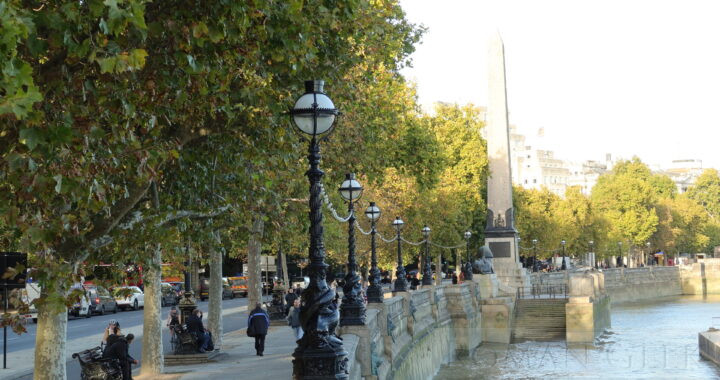
  • The Obelisk was erected on Victoria Embankment, London, on the 12th September 1878.
  • Underneath the Pedestal is a Time Capsule for 1878 containing; a portrait of Queen Victoria, 12 photographs of the most beautiful British women, a set of British Coins, Bradshaw’s Railway Guide, copies of the Bible in various languages, 215 translations in different languages of the verse from John 3:16, a three foot bronze model of the Obelisk, a copy of Whittaker’s Almanac, a map of London with copies of 10 Daily Newspapers, a box of cigars and various other artefacts.

Cleopatra's Needle, New York

  • The New York Obelisk, also called Cleopatra’s Needle, and is from the same pair of Obelisks from the Caesareum, originally from the Temple of Ra-Atum in Heliopolis, Egypt. It was erected in New York Central Park on 22nd February 1881.

Cleopatra's Needle Paris

  • The Paris Obelisk is also called Cleopatra’s Needle, ‘L’Aguille de Cleopatre’. It was erected in 1826 in the Place de La Concorde, Paris. It is usually referred to now as the Luxor Obelisk.
  • The Paris Obelisk is one of a pair of Obelisks commissioned by Ramesses the Great that stood in front of the Luxor Temple. Its twin still stands today in front of the Luxor Temple.

History of these Obelisks

The Hieroglyphs


Photo and map: Cleopatra’s Needle, Victoria Embankment

Cantre’r Gwaelod

  • Cantre’r Gwaelod meaning the ‘Lowland Hundred’ is a Lost Kingdom located under the sea in Cardigan Bay, between Bardsey Island and Ramsey Island in Wales.
  • Also known as the ‘Welsh Atlantis’, its location lies approximately 20 miles (32km) offshore.

The Legend

  • The Legend was first described in the Black Book of Carmarthen, written in the 13th century CE, and developed further during the 17th century CE.
  • The capital was Caer Gwyddno and its Ruler was Gwyddno Garanhir.
  • Cantre’r Gwaelod lay in a low-lying land protected from the sea by a dyke with multiple sluice gates, which were opened at low tide to drain the dyke.
  • Two Princes were in charge of the sluice gates, and when one got careless and left the sluice gate open, the tide came in and flooded the kingdom.
  • A similar Legend exists in the Conway estuary with another submerged lost kingdom called Helig an Glanawg. It is possible that the two legends relate to the same lost kingdom.


Cardigan Bay

Meroitic War

  • The Meroitic War (27-22 BCE) was a war fought by the Roman Empire against Queen Candace of Kush.

The Reason for the War

  • A series of Meroitic attacks on southern Egypt forced the Roman Governor into a show of force.

The War

  • Strabo describes the Meroitic War by Rome against Queen Candace Amanirenus of Kush, as lasting 5 years.
  • 26 BCE
    • The Prefect of Egypt, Aelius Gallus, marched south and invaded the Kushan Kingdom but was obliged to fall back due to epidemics.
  • 23 BCE
    • As a result of this weakness, Queen Candace, prepared to invade Egypt and approached the Frontier at Elephantine Island with an Army.
  • 22 BCE
    • The new Prefect of Egypt, Gaius Petronius, reinforced the depleted Legions, marched up the Nile, invaded Kush, and sacked Napata, Capital of the Kushans.

The Outcome

  • This ended any threat to Egypt from the south for almost three centuries.
  • Later, between 250-280 CE, a renewed series of invasions from Kush took place by the Blemmyes.

Sources


Napata, Sudan

Paestum

  • Paestum is an Archeological Site located next to modern Paestum, which is 26 miles (43km) south of Salerno and 60 miles (98km) south of Naples in the Campania Region of southern Italy.
  • Paestum was an Ancient Greek city called Poseidonia, whose Ruins are still in situ. It is noted for its three Greek Temples which are still standing after 2,500 years.

History

  • The Romans renamed it Paestum after conquering Magna Graecia during the Pyrrhic War (290-275 BCE) and annexing it to Italia.
  • The Temples have remained standing for 2,500 years despite numerous earthquakes in the region.
  • This is because there is no mortar between the cylinders that make up the columns. The columns rock, but don’t fall down.

Archeological Park of Paestum

  • Three massive Greek Temples in the Doric style dating from 550 – 500 BCE:
    • Greek Temple of Hera I (c. 550 BCE)
    • Greek Temple of Hera II (c.450 BCE)
    • Greek Temple of Athena (c. 500 BCE)
  • Roman Amphitheatre.
  • Painted Tombs, including the Tomb of the Diver.
  • Paestum City Walls (3 miles or 5km perimeter)

Museums

  • Archeological Museum at Paestum
    • Via Magna Graecia, 917/919, 84047, Paestum.
    • The museum contains the ‘Tomb of the Diver’ with its frescoes and other Finds from Paestum.

Roman Roads


Temples of Paestum, Italy