Tunis

  • Tunis is the capital city and major port of Tunisia located opposite the Strait of Sicily in the Mediterranean.
  • During the Phoenician and Roman period, Tunis was known as Carthage and was a major naval power.

The Roman Sites

  • Carthage Roman Theatre and Odeon
  • Carthage Roman Villas
  • Carthage Roman Amphitheatre
  • The Antonine Baths

Museums

  • Carthage National Museum (Currently closed until June 2026)
    • Byrsa Hill, Byrsa, Tunis.
    • The Roman Finds on display include sculptures, Sarcophagii and Amphorae.
  • Carthage Punic Port and Museum (Check for opening times)
    • Rue du 2 mars 1034, Site Archeologique de Carthage, Tunis.
    • The Archeological site holds the Remains of the Punic port.
  • Bardo National Museum (Currently closed until further notice)
    • Located at P7, Tunis.
    • The Bardo National Museum of Tunis houses one of the largest collection of Roman Mosaics in the world.
    • They were excavated from Roman villas in Carthage, Hadrumentum and Utica.

History

  • Carthage was the Capital city and Naval Base of the Carthaginian Empire (814-146 BCE).
  • The Punic Wars (264-146 BCE) between Rome and Carthage ended the Carthaginian Empire in 146 BCE.
  • In 49-44 BCE Julius Caesar built the new city of Carthage.
  • Between 14-24 CE, the Revolt of Tacfarinas briefly defied Rome.
  • By 100 CE, Carthage had a population of 500,000 and was fourth most important city in the Roman Empire.
  • In 397 CE, the Council of Carthage was held to decide the Christian Biblical Canon, meaning which canonical works would form the Christian Bible.
  • In 439 CE Oct 19, Gaiseric the Vandal, captured Carthage which became the capital of the Vandal Kingdom in North Africa for 100 years.
  • In 533-4 CE, Carthage was recaptured by the Byzantine Empire.
  • In 698 CE, the Ummayad Arab Empire conquered Carthage at the Battle of Carthage. To prevent any further return of Byzantine influence, Carthage was sacked and destroyed and instead the city of Tunis was founded nearby.
  • Between 698-1160, Tunis was an important city under the Ummayad Caliphate, the Abbasid Caliphate and the Fatamid Caliphate.
  • Between 1160-1229 Tunis was part of the Almohad Caliphate based in Spain. Between 1229-1534 it was part of the Hafsid Caliphate.
  • Tunis became a Province of the Ottoman Empire between 1534-1881 CE, and a Protectorate of the French Empire between 1881-1956 CE.
  • In 1956 Tunis became the capital of the Independent State of Tunisia.


Roman Theatre of Carthage, Tunis
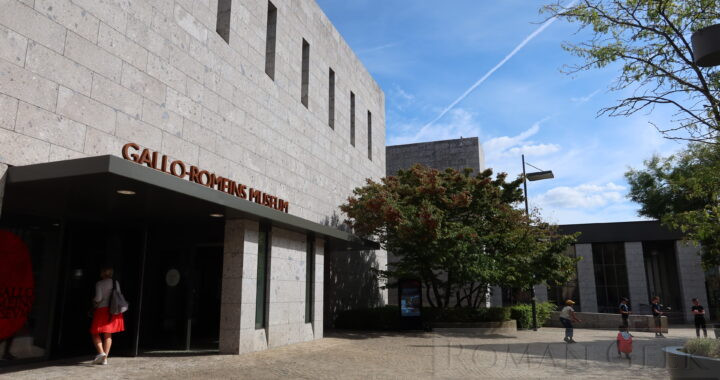
Gallo-Roman Museum Tongeren, Belgium

Tongeren

  • Tongeren is a cathedral city on the river Geer located in the Flemish Region, also known as Flanders, of northeastern Belgium.
  • It was the Roman town of Atuatuca Tungrorum in the Province of Germania Inferior.

History

Roman Sites

  • Roman Wall
    • The base of a 1 mile (1.5km) section has survived with its towers.
Roman Wall and Tower, Tongeren

Roman Wall and Tower, Tongeren

  • Partially Reconstructed Roman Temple
    • Reconstructed over the original foundations.
Reconstructed Roman Temple, Tongeren

Reconstructed Roman Temple, Tongeren

  • Roman Earthwork
    • A raised earthwork carried a wooden aqueduct.

Museums

  • Gallo-Roman Museum
    • Located at Kielenstraat 15, Tongeren.
    • The museum holds a Collection of Roman Jewelry, Statues, Pottery, Glassware and a Roman Dodecahedron.
    • Gallo-Roman Museum

Roman Roads


Gallo-Roman Museum, Tongeren

25 de Abril Bridge, Lisbon, Portugal

Lisbon

  • Lisbon is the capital of Portugal and a cathedral city located on the north bank of the mouth of the river Tagus and the Atlantic Ocean. It is in the Lisbon and Alentejo Region of Portugal and is the most westerly capital of Europe.
  • It was the Roman town of Felicitas Julia Olisipo in the Province of Lusitania.

History

  • Underneath the modern city have been found the Roman remains of Bath houses, a Circus, Fish Factories, a Hippodrome, Insulae, a Necropolis and Temples. But although few of these are visible, Lisbon’s Museums hold a unique collection of Roman artefacts.
  • Lisbon has a similar Legend to Rome, that of the Seven Hills of Lisbon. They are Sao Roque, Sao Jorge, Sao Vicente, Santo Andre, Samta Catarina, Chagas and Sant’Ana.

Roman Sites

  • Roman Theatre (5,000 spectators)
    • The Lisbon Roman Theatre Museum is located opposite.
  • Roman Underground Galleries
    • Only open once a year.

Aguas Livras Aqueduct

  • Although not Roman, it is in part inspired by Roman design.
  • It is an 18th century Aqueduct covering 11 miles (18km), water began flowing in 1748 CE.
  • It reaches a height of 213 feet(65m) over the Alcantara River.

Museums

  • National Archeological Museum
    • It is located in the Praca do Imperio, 1400-026, Lisbon.
    • The Collections:
      • Sculptures and Sarcophagi from Classical Antiquity.
      • Roman mosaics, mostly from the 3rd century BCE, with themes from Greek Mythology.
      • Gold jewelry and Ancient jewelry, which includes items from the Greco-Roman period.
      • Roman coins, a total collection of 30,000, only some of which are on display.
      • Roman Amphorae and artefacts, including the ‘Atlantic bronzes’ from the Roman period.
      • Roman Epigraphy (Inscriptions), a collection of templates for funerary, votive and honorific inscriptions.
  • Lisbon Roman Theatre Museum
    • The museum is located opposite the remains of the 1st century CE Roman theatre which had a capacity for 5,000 spectators.
  • Calouste Gulbenkian Museum
    • This Art Museum houses Greco-Roman Art from the period of Classical Antiquity.
    • The museum holds 6,000 works of art with 1,000 on display.

Roman Roads

Other Sites

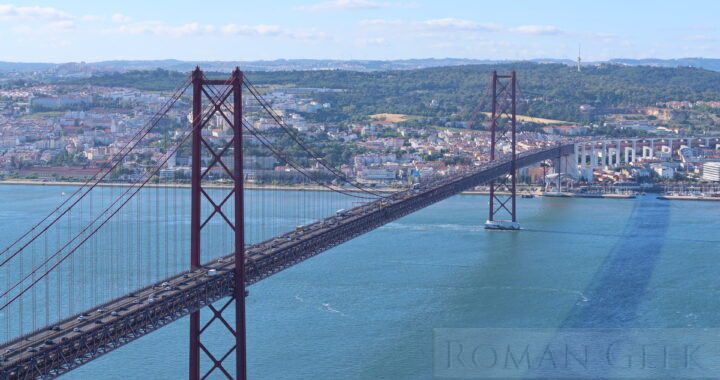
  • 25 April Bridge
    • It is a suspension bridge that croses the Tagus river and is the longest suspension bridge in Europe.
  • Dei Cristo (Christ the King) Monument in Almada, Lisbon
    • It is a statue of Christ standing on a tower opposite the city of Lisbon.


National Archeological Museum, Lisbon

Cairo

  • Cairo is a Port city on the River Nile, and the capital of Egypt.
  • Cairo was established in 969 CE under the Fatimid Caliphate.

The Roman Sites

  • Fort Babylon
    • The original Fort was built in c. 525 BCE, which the Romans then rebuilt and this fort still stands today.
    • It was next to Trajan's Canal connecting the Nile to the Red Sea.
  • Museum and Churches inside Fort Babylon

Museums

  • Museum of Cairo
    • The Museum of Cairo is also known as the ‘Museum of Egyptian Antiquities’ or the ‘Egyptian Museum’. It It is located in Tahrir Square, CairoEgypt.
    • The Museum holds the largest collection in the world of Finds from the Pharaohs of Egypt.
    • There are over 120,000 items including Mummies, Statues, Coins and fragments of inscribed Papyrus with Egyptian Hieroglyphs.
  • Coptic Museum
    • It is located inside Fort Babylon in Cairo.
    • The museum holds 15,000 objects of the Coptic Collection of Christian Antiquities. This includes Coptic Artefacts, Wall Paintings, Illuminated Manuscripts and Textiles.


Museum of Cairo, Cairo

Orbe-Bosceaz Roman Villa, Switzerland

Bosceaz

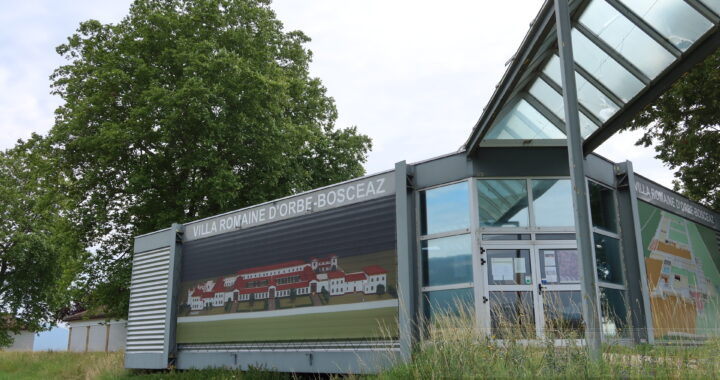
  • Orbe-Bosceaz is the archeological site of a large Roman Villa in Switzerland from the 1st-3rd century CE.
  • The site holds extensive mosaics which are preserved under a series of pavilions with a welcome centre.

The Roman Site

  • The site holds well preserved Mosaics from the Roman Villa depicting Roman Gods and Mythology.

Museums

Orbe-Bosceaz Roman Villa, Switzerland

Orbe-Bosceaz Roman Villa, Switzerland


Orbe-Bosceaz Roman Villa, Switzerland

Goeblange Roman Villa, Luxembourg

Goeblange

  • Goeblange is the site of two Roman Villas located 8 miles (13 km) south of Luxembourg City. The Ruins are open to the Public.
  • The villa Meicher was a 1st-4th century CE Villa rustica. The second villa nearby dates to the same period and may have been built to house the workers.

Links

Goeblange Roman Villa, Luxembourg

Goeblange Roman Villa, Luxembourg

Roman Roads


Goeblange Roman Villas, Luxembourg

Echternach Roman Villa

Echternach

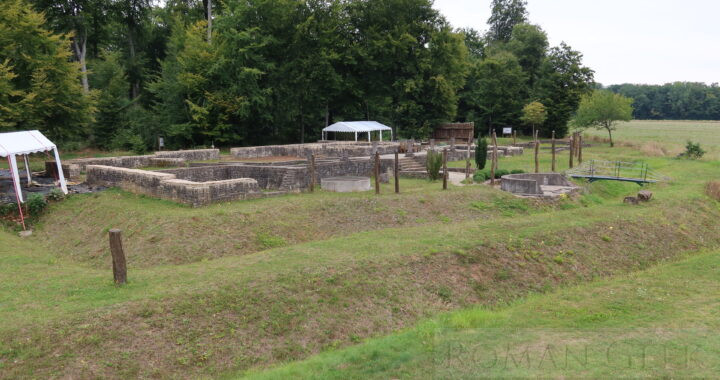
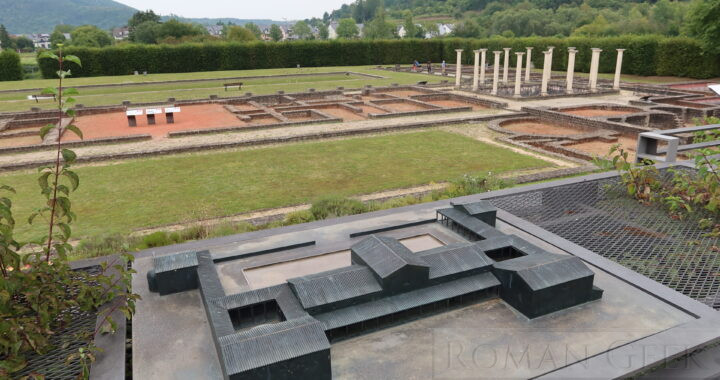
  • Echternach is a third century CE Roman Villa complex located at 47 Rue des Romains, Echternach, in Luxembourg.
  • Built on the scale of a Roman Palace, the site holds the ruins of a 60 Room building.

Links


Echternach Roman Villa

Volubilis

History

  • Volubilis was founded in the 3rd century BCE as the capital of the Kingdom of Mauretania, which included the region from northern Morocco to Algeria.
  • It became an important city under the Romans, until it was lost to the Berbers after 285 CE.
  • It remained inhabited until the 10th century CE, at which point it was abandoned and its inhabitants moved to Fez. The city remained intact because it was so remote, which is why it is so well preserved.
  • An earthquake devasted Volubilis during the 18th century CE, and some of the stone was reused to build the Palaces of nearby Meknes.
  • Artefacts from Volubilis, especially mosaics, are on display in both the Volubilis Archeological Museum and the Rabat Museum of History and Civilisations.

Volubilis Roman City

  • Visitors can walk through the city, as the street plan is intact, passing through the ruined buildings.
    • Basilica (Macrinus (217-218 CE)
    • Capitoline Temple
    • Temple of Saturn
    • Baths of Gallienus (253-268 CE)
    • Two other Baths
    • Arch of Caracalla (198-217 CE)
      • holds a dedication to Caracalla which is readable
    • Decumanus maximus and Tingis Gate
    • House of Orpheus
      • holds the Orpheus mosaic
    • House of the Athlete
      • holds a mosaic of an athlete riding a donkey backwards
    • House of the Ephebe
      • mosaic of Bacchus in a chariot drawn by leopards
    • House of the Knight
      • mosaic of Bacchus and Ariadne
    • House of the Labours of Hercules
      • mosaic of the Four Seasons
    • House of Venus
      • mosaic of Diana, Nymphs and Actaeon
      • mosaic of chariots in the Hippodrome
    • Gordian Palace with Colonnade and shops

Museums

  • Volubilis Archeological Museum
    • Located on the Site of Volubilis
  • Rabat Museum of History and Civilisations
    • Located at Rue El Brihi, Rabat.
    • The museum holds an extensive collection of the archeological Finds from Morocco, including from the Roman Period.

Roman Roads

  • Roman Road
    • Volubilis-Tamouda-Tangier (Tingis)

Volubilis

Sevastopol

  • Sevastopol, also written as Sebastopol, is a major commercial port and naval base for the Russian Black Sea Fleet located in the Crimea.
  • The ruins of the Roman port and naval base of Chersonesus Taurica lie 3 miles (5km) to the west.

Chersonesus Taurica

  • Under the Romans, Chersonesus Taurica was the capital city of the Crimean peninsular which was also called Chersonesus Taurica. Chersonesus in Greek means Peninsular.
  • It was inhabited until the 14th century CE.

Roman Sites

  • Chersonesus Taurica (Ruins)
    • The site holds the remains of Greek, Roman and Byzantine buildings
    • Walls and Towers
    • Amphitheatre
    • Greek Temple
    • ‘1935 Basilica’
    • Tombstones

Museums

Nearby Roman Sites

  • Charax
    • The Ruins of this Roman Fortress are located between Yalta and Alupka.


Sevastopol, Crimea

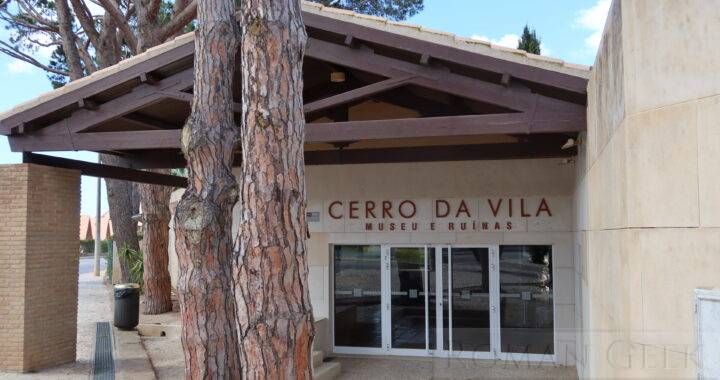
Cerro da Vila is the Remains of a Roman Villa

Cerro da Vila

  • Cerro da Vila is the Remains of a Roman Villa which had its own port, located next to the coastal resort town of Vilamoura near Faro in the Algarve, Portugal.
  • Access to the Ruins is located on the private Avenida Cerro da Vila, opposite the Hotel da Marinha, Vilamoura.

Description

  • Discovered in 1963, the Ruins have been excavated and are open to the Public.
  • The Roman Villa dates from the 1st century CE and consisted of two buildings with one on the harbour, which contained baths, a necropolis, dams and two rectangular fish salting tanks.


Cerro da Vila, Vilamoura, Portugal