Bishop Auckland

  • Bishop Auckland is a town located on the river Wear, 12 miles (19km) southwest of Durham, in County Durham.
  • A Roman fort called Vinovia, also known as Binchester Roman Fort, lies one mile north of Bishop Auckland.

Binchester Roman Fort

  • Binchester Roman Fort, known as Vinovia, is located 1.5 mile (2km) north of Bishop Auckland in County Durham.
  • It guarded the crossing of Dere Street to Corbridge and Scotland over the river Wear.
  • A branch of Dere Street ran from Binchester due north direct to Newcastle.

Roman Roads


Bishop Auckland

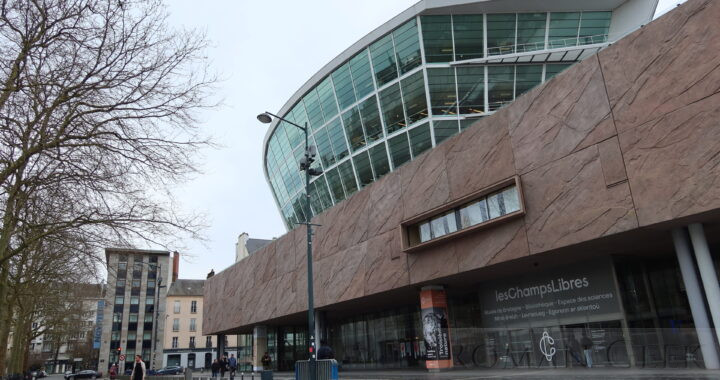
Museum of Brittany in Rennes holds artefacts from the Roman period.

Rennes

  • Rennes is a cathedral city located at the confluence of the Vilaine and the Ille rivers. It is the capital of the Brittany Region of northwestern France..
  • Rennes became part of Roman Gaul in 50 BCE, and in 22 BCE became part of Gallia Lugdunensis. It was the Civitas of the Redoni Gallic Tribe and was known to the Romans as Civitas Riedonum or Condate Riedonum.

The Roman Sites

  • Remains of the Gallo-Roman city wall in Rue de la Monnaie.
  • Remains of a Roman Temple under the Jacobin Convent.

Museums

  • Museum of Brittany
    • The museum holds Artefacts from the Roman Era.

Roman Roads

  • Lyon-Rennes-Carhaix Plouguer-Pointe St. Mathieu (on the coast).

Rue de la Monnaie, Rennes

Carhaix

  • Carhaix-Plouguer is a town in Brittany located 51 miles (86km) to the east of Brest.
  • Carhaix was the Roman town of Vorgium, capital of the Osismii Galli Tribe, and was on a junction of eight Roman Roads.

The Roman Sites

  • A pair of Roman Aqueducts.


Roman Aqueduct of Carhaix

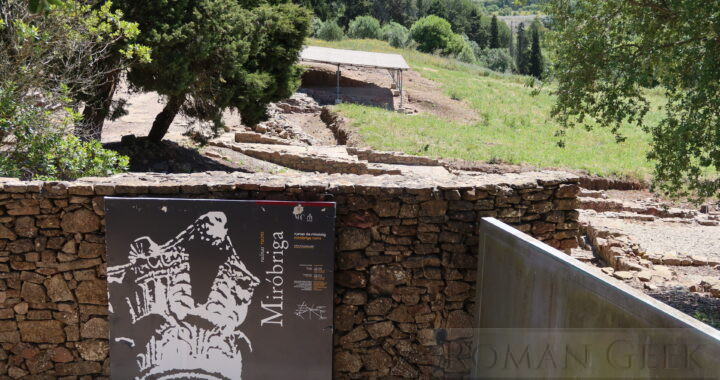
Mirobriga is a well preserved Ruin of the Roman Town of Mirobriga

Mirobriga

  • Mirobriga is a well preserved Ruin of the Roman Town of Mirobriga Celticorum, located near Santiago do Cacem, 89 miles (143km) south of Lisbon, in the Lisbon-Alentejo Region of southwest Portugal.
  • It was in the Province of Lusitania.

Roman Sites

  • Roman Baths
  • Roman Bridge
  • Roman Forum
  • Roman Hippodrome (seating for 25,000 spectators)
  • Roman Mosaics

Museums

  • Museo de Santiago do Cacem
    • It is located at Praca Municipal, 7540-136 Santiago do Cacem.
    • This archeological museum holds Roman Finds from Mirobriga.

Roman Roads


Ruins of Mirobriga, Santiago do Cacem

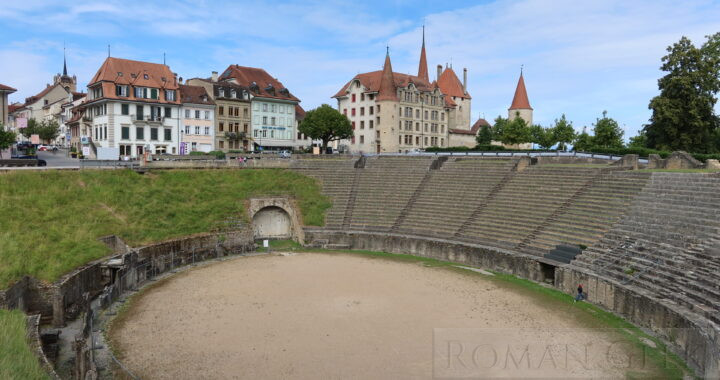
Avenches Roman Amphitheatre, Switzerland

Avenches

  • Avenches is a town located to the south of Lake Neuchatel in the Vaud Canton of Switzerland.
  • It was founded between 15-13 BCE as the Roman city of Aventicum and until 120 CE, it was the first capital of the Province of Raetia.

Roman Sites

  • The Roman Ruins of Aventicum:
    • Amphitheatre and Museum
    • Theatre
    • Temples
    • City Wall

Museums

Avenches Castle

  • Built in the 13th century, Avenches Castle was renovated in the Renaissance style during the 15th century.
Avenches Castle

Avenches Castle

Avenches Roman Amphitheatre and Museum, Switzerland

Elephantine Island

  • Elephantine Island is located in the river Nile opposite Aswan, Egypt.
  • The Ruins of several Temples, two Nilometers and the Aswan Museum are on the island. The Aswan Museum holds a collection of artefacts found on the island.

History

Ancient Egyptian Sites

  • Temple of Satet
    • As early as 3,000 BCE, there was a Temple of Satet.
    • The Ruins are still standing, along with the small Temple of Heqaib and a Step Pyramid.
  • Temple of Thutmose III
    • However, very little is left of the Temple of Thutmose III, the Temple of Amenhotep III and the Temple of Khnum as they were all dismantled.
  • Nilometer
    • Near the Temple of Satis is a corridor Nilometer with a flight of 99 stone stairs leading down to the Nile with the heights marked off along the stair wall in Hieroglyphs, Roman Numerals and in Arabic.
  • Nilometer
    • Another Nilometer exists at the southern end of the island near the Temple of Khnum.
    • This is a Basin that fills.

Museums

  • Aswan Museum
    • The museum is located on Elephantine Island and holds artefacts found from excavations all over the island.

The Ancient Egyptian Fort

  • The Ancient Egyptians maintained a Garrison at Elephantine, as this marked the southern Border of Egypt.
  • According to the Elephantine Papyri, this was manned by a contingent of Jewish Mercenaries during the period of the Babylonian Exile (587-539 BCE). They built their own Temple of Yahweh.

The Ivory Trade

  • The Island was also used as a warehouse for Ivory that came down the Nile from Africa.
  • The name Elephantine Island is possibly derived from the storage of elephant tusks here.

Navigation on the Nile

Nilometer

  • The Nilometer indicated the height of the Nile and measured the annual rise and fall of the Nile.
  • Records were kept from the time of the Pharaohs, enabling the Egyptian priests to announce the date of the first Nile Flood and the date of its maximum height.
  • Other Nilometers on the Nile:
    • One near Cairo
    • Another at Alexandria
    • Several located in various Temples along the banks of the Nile:
    • One at the Temple of Philae, at Philae Island.
    • One at the Temple of Kom Ombo, which had a Nilometer that consisted of a channel that led to a deep cylindrical well inside the Temple building.


Temple of Satet, Elephantine Island

Cherchell

  • Cherchell is a Mediterranean seaport town 55 miles (90km) west of Algiers in the Tipaza Province of Algeria, and was known to the Romans as first Lol and then Caesarea Mauretaniae.
  • It was the capital of first the Kingdom of Numidia, then the Roman Province of Mauretania Caesariensis.

History

Roman Sites

  • Theatre
  • Amphitheatre (rectangular, not oval)
  • Baths
  • Basilica
  • Forum
  • Column
  • Aqueduct
  • A copy of a Roman Fountain stands in Roman Square (the original is in the museum courtyard)

Group of Monuments Nearby

  • Royal Mausoleum of Mauretania
  • Other Monuments
    • from the Phoenician and Roman Periods lie along this road. They are a UNESCO World Heritage Site.

Museums

  • Archaeological Museum of Cherchell
    • Located at J55R+8FF, Cherchell.
    • The museum holds a collection of Finds excavated from Caesarea including fine mosaics, such as the Mosaic of the Vine workers.
    • It also holds marble sculptures such as the Bust of Cleopatra Selene II and a Roman Fountain with four lion heads in the museum courtyard.

Roman Roads


Cherchell, Algeria

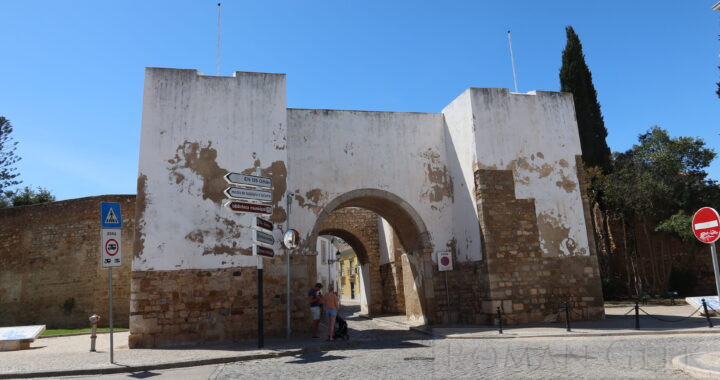
Arco de Repouso, Faro, Portugal, entrance to Faro old town. The walls date from the Roman period.

Faro

  • Faro is a cathedral city located on the ria Formosa Lagoon in Algarve Region in southern Portugal.
  • It became the Roman city of Ossonoba in the Province of Lusitania.

History

  • Faro was founded by the Phoenicians in the 4th century BCE, and subsequently came under the control of the Romans, the Byzantines, the Visigoths and the Moors.
  • The Ria Formosa Lagoon is designated a Natural Park and is visited every year by thousands of birds on their migratory journeys. Three cities are located near the lagoon: Faro, Tavira and Olhao.

Roman Sites

  • Faro Walls and Octagonal Towers
    • Although these date from the period of rule of the Byzantine Empire (6th-7th century CE), parts of the walls date from the earlier Roman Period.

Roman Sites nearby

  • Mirobriga
    • A Roman Town 100 miles (160 km) north of Faro.
  • Cerro da Vila
    • A Roman Villa with mosaics (1st century CE) 14 miles (23 km) northwest of Faro.
  • Roman Ruins of Milreu (or Estoi)
    • These are the remains of a Villa rustica, that include mosaics, baths, a temple, a mausoleum and other structures. It is 5.6 miles (9km) north of Faro.
  • Tavira Roman Bridge
    • This is 18 miles (30 km) east from Faro.

Museums

  • Faro Archeological Museum
    • Located at Largo Dom Afonso II 14, 8000-167 in Faro, the museum holds a large collection of Roman Artefacts.

Roman Roads


Casa do Arco do Repouso, Walls of Faro, Faro

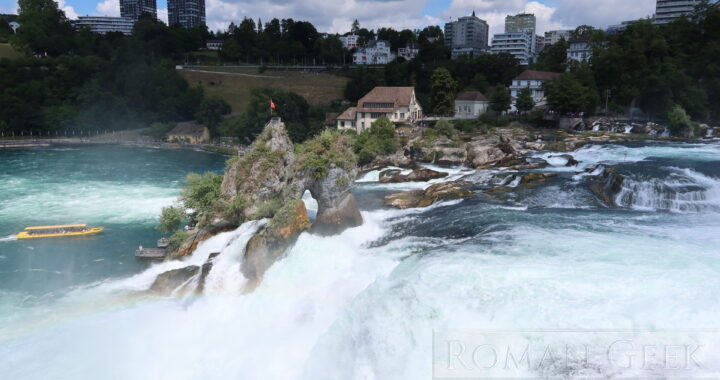
Rhine Falls, Switzerland

Rhine Falls

  • The RhineFalpz (Rhine Falls) are located on the Rhine, 1.5 miles (2.4km) from Schaffhausen in Switzerland, just on the border with Germany.
  • It is the largest and most powerful Waterfall or Cataract in Europe and was in the Roman Province of Raetia.

Description

  • Width: (492ft (150m)
  • Height: 49-69ft (15-21m)
  • Two high rocks stand mid river in the Falls and can be visited by boat.
  • The greatest flow of water over it is in June and July as the winter snows melt.
  • Laufen Castle on the south shore has various viewing platforms open to the public.
Rhine Falls, Schaffhausen, Switzerland

Rhine Falls, Schaffhausen, Switzerland


Rhine Falls, Schaffhausen, Switzerland

Tripoli

  • Tripoli is a port and the capital city of Libya. It is also known as ‘Tripoli of the West’ to differentiate it from Tripoli in Lebanon.
  • It was the Roman city of Oea in Tripolitana.

History

  • Tripoli was the Roman city of Oea and formed the three cities of Tripolitana, along with Sabratha and Leptis Magna.
  • The city has remained continuously inhabited since it was founded by the Phoenicians in the 7th century BCE.
  • Unlike Sabratha and Leptis Magna, which ceased to be inhabited, Tripoli has almost no visible Roman Remains.

Roman Sites

  • The Arch of Marcus Aurelius in Oea, Tripoli.

Museums

  • Red Castle Museum
    • Located in the Red Castle, Tripoli.
    • The Assaraya Alhamra Museum or Red Castle Museum holds Archeological collections found in Libya that cover the whole historical period from the Phoenicians to the Modern Period.


Tripoli