Tipaza

  • Tipaza is a seaport and capital city of the Province of Tipaza located 40 miles (65km) west of Algiers in Algeria.
  • It holds the Ruins of Roman seaport of Tipasa known as Colonia Aelia Augusta Tipasensium which was in the Province of Mauretania Caesariensis. It is a UNESCO World Heritage Site.

Roman Sites

  • Forum
  • Curia
  • Roman Baths (four)
  • Theatre
  • Basilica
  • Christian Cemetery
  • Phoenician Necropolises and Tombs

Museums

  • Tipasa Archeological Museum
    • Located at HVCX+6C, Tipaza.
    • The museum holds a collection of Glass, Statues, Sarcophagii, Coins, Jewellery and Mosaics including the Mosaic of the Captives.


Tipaza

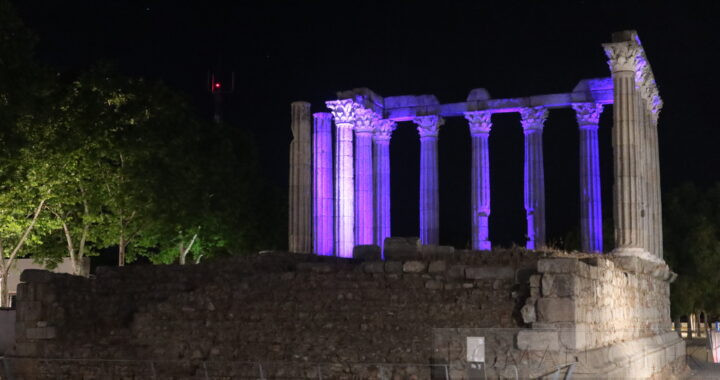
Roman Temple of Evora, Evora, Portugal

Evora

  • Evora is a cathedral city located 87 miles (140km) east of Lisbon in the Alentejo Region of southern Portugal. It is a Unesco World Heritage Site.
  • It was the Roman city of Liberalitas Julia in the Province of Lusitania.

Roman Sites

  • Roman Temple of Evora
    • The Plinth and many of the Columns are still standing with their capitals and architrave in situ.
    • It was built in the first century CE in honour of Augustus, and has survived mainly it was incorporated into subsequent buildings.
  • Prata Aqueduct
    • This is not a Roman structure but was built in 1537 CE.

Museums

  • Evora Museum
    • It is located at the Largo do Conde de Vila Flor, 7000-804, Evora.
    • This archeological museum holds artefacts from the Roman period.

Roman Roads

  • Evora was linked by a Roman road to the Provincial capital of Merida.


Roman Temple of Evora, in Evora


Dougga

  • Dougga is a town in Tunisia which holds the Ruins of a Berber, Punic and Roman city. It is a UNESCO World Heritage Site.
  • It was known as Thugga to the Romans and was located in the Province of Africa Proconsularis.

Dolmens

  • Dougga has a large collection of funerary Dolmens whose dating has been variously estimated to be between 1,500-500 BCE.

Punic-Libyan Sites

  • Numidian Bazina Tombs
  • Punic-Libyan Mausoleum of Dougga

Roman Sites

  • Dougga holds one of the best preserved small Roman cities in North Africa.
    • Trifolium Villa
    • Market with Portico
    • Licinian Baths
    • Roman Sepulchres
    • Hypogeum
    • Arch of Septimius Severus (193-211 CE)
    • Arch of Severus Alexander (222-235 CE)
    • Forum
    • Theatre (c.169 CE)
      • well preserved and had seating for 3,500 spectators
    • Auditorium
      • An annex of the Temple of Liber
    • Circus (no visible Ruins)
    • Roman Baths
      • Bath of the Cyclopses
        • mosaic on display in the Bardo National Museum.
      • Antonian Bath
      • Ain Doura Baths
    • Temple of Massinissa (c.139 BCE)
    • Capitol (c.167 CE)
    • Temple of Mercury
    • Temple of August Piety
    • Temple of Minerva
    • Temple of Caracalla’s Victory in Germany
    • Temple of Pluto
    • Temple of Saturn
    • Temple of Juno Caelestis
    • House of Lacheb
    • Victoria Church
    • Aqueducts and Cisterns
    • Streets
    • House of Venus mosaic
    • Ain Doura Bath mosaic
    • Walls

Museums

  • Bardo National Museum, P7, Tunis
    • The museum holds impressive moasics and statues from Dougga


Dougga

Regensburg

  • Regensburg is a cathedral city on the confluence of three rivers, the Danube, the Regen and the Naab, and is in the State of Bavaria in southeastern Germany. The city is noted for its medieval city which is a UNESCO World Heritage Site.
  • It was built in 171 CE as the new Roman Fortress of Castra Regina and was located in the Province of Raetia.

History

  • The first fortress was built in 90 CE.
  • The Fortress of Castra Regina was built in 171 CE by the Legio III Italica who were based here between 171-c.400 CE.
  • Roman Beer was brewed and drunk mainly on the frontier Provinces of the Rhine and Danube. A brewery was excavated at Regensburg legionary fortress.

Roman Sites

  • Porta Praetoria, the northern Gateway.
  • Parts of the Fortress walls

Museums

  • Historische Museum Regensburg
    • Located at Dachauplatz, Regensburg.
    • In the Roman Department, the museum holds various Artefacts including the founding inscription, a coin hoard and models and reconstructions of Castra Regina, the Roman Fortress.

Roman Roads

  • Limes Germanicus
    • Regensburg was connected by a military road behind the Limes Germanicus to the Rhine.
  • Danube Limes
    • Regensburg was connected by a military road that ran behind the Danube Limes to the Black Sea.

Regensburg Roman Fort

Sbeitla

  • Sbeitla is a town in the Kasserine Governate of west central Tunisia. It is located 29 miles (46km) north east of Kasserine.
  • It is the site of Roman Sufetula located in the Province of Africa Proconsularis and holds some of the best preserved Roman Ruins in Tunisia.

Roman Sites

  • Roman Forum
  • Capitoline Temples
  • Arch of Antoninus Pius
  • Roman Baths

Museums

  • Archeological museum of Sbeitla
    • The museum holds statues and mosaics from Roman Sufetula.


Roman Forum of Sbeitla


Berenice

  • Berenice, also known as Berenice Troglodytica, was an Ancient Egyptian Port located at Medinet-el Haras on the Red Sea in Egypt.
  • The Ruins of the Roman Port of Berenice have been excavated, but very little is visible. Today, the harbour has silted up.

History

  • Berenice was founded in 275 BCE by Ptolemy II of Egypt (285-246 BCE), who named the city after his mother, Berenice I. He built Berenice to give his Fleets shelter on their way to and from Myos Hormos.
  • Berenice was further south than Myos Hormos, lying on the border with Kush. It took a caravan from Coptos 12 days to travel the 230m (370 km).
  • Berenice, along with Myos Hormos, was the Terminus for the Sea Route from Africa, India and the Far East.
  • The harbour was protected by the island of Ophiodes. The City came to have a population of around 10,000 people.
  • Berenice was the Port where Trade from Africa, India and the East was disembarked.
  • The other Port on the Red Sea trading with the East was Myos Hormos, which was another five days sail to the north.
  • Both Myos Hormos and Berenice ceased to be used by the fourth century CE, and were replaced by Clysma (Suez), which was connected to the Nile by Trajan's Canal.

Berenice, the Port to India

  • Pliny the Elder
  • Strabo
    • wrote that 120 ships left Berenice every year around the middle of July, to sail to India. They used the Southwest Monsoon which blows from May to September, taking 3-6 weeks. He commented that the Fleet returned before the end of the year.
  • Periplus of the Erythraean Sea
    • This was written c. 100 CE by an unknown Alexandrian.
    • It starts at Berenice in Egypt and describes the Red Sea across to India and the Ganges, and another Route from Berenice down to the East Coast of Africa (Azania).
    • All the distances are measured from Berenice.
  • The Fleet returned with the Northwest Monsoon which blows from November to March.
  • Since Berenice was the first Egyptian Port on the return journey, part of the Fleet could quickly disembark its Goods and put them on the Camel Caravans to Coptos.

Camel Caravan from Berenice to Alexandria

Roman Roads

Roman Legion

Types of Imported Goods

  • Pepper:
    • An earthenware vessel containing the largest find during the Roman period of black peppercorns from India, was unearthed at Berenice.
  • Spices:
    • from India and Indonesia: Cardamom, Cloves.
  • Frankincense:
    • from Southern Arabia, has been excavated.
  • Myrrh:
    • from Arabia
  • Ivory:
    • from southeast Africa via Somalia
  • Tortoise shells:
    • from Somalia
  • Precious Gems:
    • from southern Africa via Somalia
  • Silk:
    • via Thailand and Sri Lanka, from China known as Seres.

Origin of the Goods

  • Arabia:
  • Ethiopia:
    • Elephants and Elephant Tusks Ivory.
  • Somalia:
    • Ivory, Tortoise shells, Precious Gems.
  • India:
    • Spices from the Malabar coast, in south western India.
  • Sri Lanka:
  • Thailand:
  • Java:
    • Spices, such as Pepper.
  • China:

Goods Exported

  • Wine:
  • Amber:
    • from the Baltic to India.
  • Tin:
    • from Portugal and Spain to India.
  • Resin Blocks:
    • Resin blocks from the Syrian Fir Tree in Syria and Turkey have been excavated and were probably exported to India.
    • The Resin was used for medicinal purposes, as an antiseptic, a diuretic, as a skin cream, and to prevent hair loss.
    • It was also used in mummification and was therefore similar to Frankincense.

Goods Exchanged in India according to the Periplus of the Erythraean Sea

  • Exports to Barbaricum in India:
    • Clothing, Linen, Topaz, Coral, Frankincense, Glassware, Silver and Gold Plate, Wine.
  • Imports from Barbaricum:
  • Imports from Barigaza:
    • Cotton, Cloth, Rice, Sesame oil, wheat.

Origin of the Merchants

  • Archeologists have found Inscriptions and writings in eleven different languages, including Latin, Greek, Hebrew, Coptic and Sanskrit.
  • Evidence has been found of a Tamil community from southern India.

Possible Roman Red Sea Fleet

  • The vessels were perhaps part of a Roman Red Sea Fleet based in Myos Hormos and Berenice.
  • The Trade was possibly conducted in vessels built in India, judging from the fragments of Teak wood, that have been found in buildings in Berenice (perhaps reused from dismantled vessels).

Muziris Papyrus

  • The Muziris Papyrus is a Papyrus dating from the second century CE written in Greek.
  • It is a contract between a Merchant of Alexandria and an Alexandrian Financier, regarding a cargo of Pepper and Spices from Muziris on India.
  • The Muziris Papyrus indicates Roman ownership of the Red Sea vessels.


Berenice, Egypt

Milan

  • Milan is a cathedral city located on the Naviglio canal waterway system that connects to in the Lombardy Region of northern Italy. It is the home of the Italian Stock Exchange and one of the Fashion Capitals of the world.
  • It was known to the Romans as Mediolanum and was located in Italia.

History

  • The Romans took control of Milan from the Insubres in 222 BCE.
  • In 259 CE, the Alemanni were defeated by the Roman Emperor Gallienus (253-268 CE) at the Battle of Milan.
  • In 260 CE, Gallienus created a Cavalry Regiment based in Milan, the Comitatenses, who formed a separate unit to the Legions, and were able to move to any Frontier or Region at short notice. They were a highly mobile unit, able to move in just a few days, to stop either a Germanic incursion or to suppress a Rebellion.
  • In 286 CE Diocletian moved the capital from Rome to Milan, where he placed the Emperor of the West, Maximian (285-308 CE).
  • In 313 CE, Constantine I issued the Edict of Milan, where the Roman State recognised Christianity.
  • In 402 CE, the Visigoths laid siege to the city, and the Western Emperors moved the capital again from Milan to Ravenna. In 452 CE, Milan was sacked by Attila the Hun. It was sacked again by the Ostrogoths in 539 CE.

Roman Sites

  • Roman Amphitheatre Park and Antiquarium Alda Levi
    • Via E. De Amicis, 17, Milan
    • The Antiquarium is a museum which explains the history of the Amphitheatre, now only a park, which once could hold 35,000 spectators.

Museums

  • Archeological Museum of Milan
    • Located at Corso Magenta, 15-20123, Milan
    • The museum has a section describing the history of Mediolanum. Roman Statues and Tombs are displayed along the cloisters.

Roman Roads


Milan

Xanten Open Air Archeological Park

Xanten

Xanten: A Roman City on the Lower Rhine

Overview

Xanten is an attractive medieval town on the lower Rhine in Germany which was founded by the Romans in c.15 BCE as Castra Vetera. Xanten is famed for its Open Air Archeological Park, where the Roman fort walls and various buildings from the Roman town of Colonia Ulpia Traiana have been reconstructed. Xanten is also at the centre of a German epic known as the Nibelungen saga, whose story revolves around Siegfried, Prince of Xanten. Xanten used to be a port on the Rhine, but now lies several hundred metres away.

Roman History

Xanten was the location of one of the four permanent Roman bridges across the Rhine. It was the first HQ for the Roman Navy on the Rhine, the Classis Germanica. It was a double fortress with two legions, probably the Legio XVII (c.15 BCE-9 CE) and Legio XVIII (c.15 BCE-9 CE). Then in 9 CE, the catastrophic Battle of the Teutoburg Forest, led to both legions never returning to Xanten. They were replaced by two more legions, but just sixty years later another catastrophe hit Xanten, when both legions were massacred in the Batavian Revolt of 69 CE. The Batavians managed to set up a breakaway Kingdom of Batavia along the Rhine. The Rebellion was suppressed in 70 CE, and to prevent this happening again, both the legionary and Navy HQ were moved to Cologne permanently, and the Fortress in Xanten was developed into the city of Colonia Ulpia Traiana. 

Later History

Xanten was occupied by the Franks from the 5th century onwards. Around 700 CE a church was built on what was thought to be the grave of St. Viktor and called Sanctos (Place of Saints), which is how Xanten got its name. The attractive medieval town grew up around the religious centre. In 939 CE, the Holy Roman Emperor Otto I defeated a major rebellion near Xanten. Between 1263-1544, Saint Victor’s cathedral was built. In 1200 CE the heroic poem, ‘Nibelungenlied’ and the heroes of the ‘Nibelungen saga’ was written, a saga that incorporates history and mythology and forms part of German and Scandinavian culture. It is centred on the mythical Siegfried of Xanten.

Xanten Walking Tour

  • Your geolocation will appear as a blue dot that moves on the map as you walk.
  • You may start anywhere on the map and just follow the blue line to the next point of interest.

Things to do and Places to Visit in Xanten

1. LVR-Archeological Park Xanten
Xanten Open Air Archeological Park

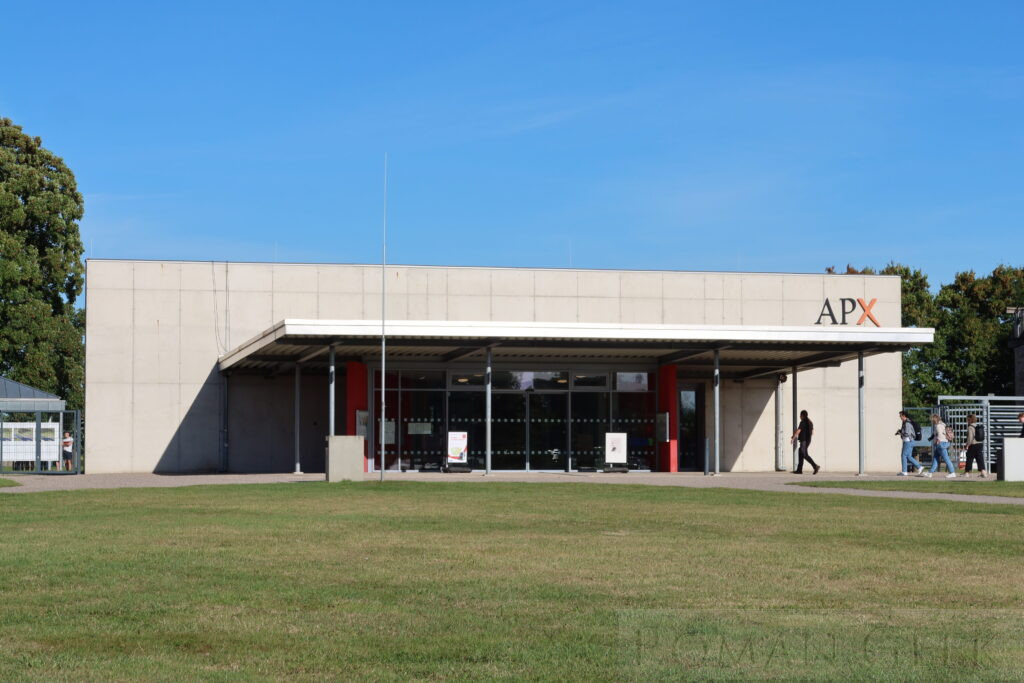
Xanten Open Air Archeological Park

Description: Xanten Archeological Park is Europe’s largest open air museum on the site of the Roman Legionary Fortress of Castra Vetera and the town of Colonia Ulpia Traiana. To help get around, a small tourist train regularly tours the site.

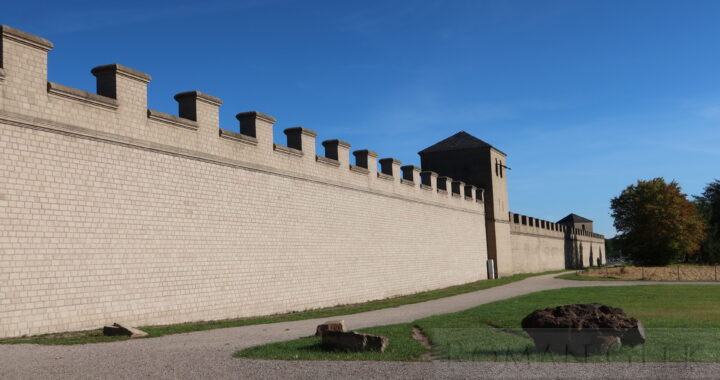
The reconstructed buildings include Roman Baths which had double glazing to keep Baths warm in winter, a Roman military hospital built to house 6-8 per cent of the Legions soldiers, a Roman Temple, a Roman Amphitheatre, a Roman Hotel, the Roman city walls and gates and a Roman Lifting Crane.

2. Klever Gate

Description: Guarding access to the northwestern part of Xanten, is the impressive Klever Gate. Built in 1393, this is the only surviving medieval gate from the old city of Xanten. Klever Gate is a double gate where the outer towers and the inner tower are connected by a bridge over what used to be the medieval city moat, but which is now a park. The gate was restored to its present condition in 1843, and again after 1945.

3. Kriemhild Windmill

Description: Opposite the Archeological Park is Xanten medieval town centre. Kriemhild windmill is located on top of the old city wall as it was built originally as a defensive tower. This is the only working windmill to operate daily on the lower Rhine. It restarted making bread in 1992, which can be bought in the mill shop and is also sold locally. Visitors can observe the internal mechanism at work, watch flour being ground, enjoy a coffee in the garden outside and even climb the stairs to the top and see the panoramic view.

Historical Insight: The windmill is a ‘Dutch Gallery Mill’, fitted with a dome that rotates at the top and a circular wooden walkway below. The vanes are placed at an angle so the sails don’t collide with the tower in strong winds.

4. Stifts Museum: The Chapter Museum

Description: This is an ecclesiastical Museum with rare examples on display of the goldsmith’s art, wood carvings, liturgical vestments, sculptures, books and the history of the Canons Foundry in Xanten.

5. De Pauw Obelisk

Description: In front of the cathedral stands the De Pauw Obelisk: Cornelius de Pauw (1739-1799) was a Dutch philosopher, geographer and diplomat at the court of Frederick the Great of Prussia. He was reputed in his lifetime to be Europe’s foremost authority on the Americas (yet he never visited the Americas). Due to his scholarly work and owing to the fact he also had French Nationality, Napoleon Bonaparte erected this Obelisk in his honour.

6. Saint Victor Cathedral

Description: Constructed between 1263-1544, the cathedral is a classic example of Gothic architecture. It is named after Victor of Xanten, a 4th century Christian legionary, who is believed to have been executed in the Xanten Amphitheatre. The cathedral is the largest cathedral between the sea and Cologne. The cathedral library houses one of the most important religious libraries on the lower Rhine. Although it is called a cathedral, it has never been the seat of a Bishop.

7. Marktplatz Xanten

Description: This large and attractive town square is surrounded by many lively bars and restaurants and various museums. The cobbled surface enhances the atmospheric medieval buildings that surround it. Various events and markets are held here throughout the year.

8. Xanten City Hall

Description: Located at 2 Karthaus on Marktplatz, the Xanten Rathaus was originally built in 1628 as a Carthusian monastery. After restoration it is now used as the Town Hall.

9. Gothic House

Description: Located at Bruckstrasse 10, just off Market Square, the Gothic House exhibits an impressive facade made using glass, local red bricks and stones from the nearby Roman fort. Built around 1540, the building probably served as a trading house for a wealthy merchant. Today, it houses a cafe and restaurant.

10. Siegfried Museum

Description: Located at Kurfurstenstrasse 9, the museum displays objects, productions, films and installations that are dedicated to the heroic poem, ‘Nibelungenlied’ and the heroes of the ‘Nibelungen saga’. This is a heroic saga written around 1200 CE, that incorporates history and mythology and forms part of German and Scandinavian culture.

Historical Insight: During the 19th and 20th centuries, it was considered the national epic of the Germans. Richard Wagner based his world famous Opera, ‘The Ring of the Nibelungen’ (1876) on this saga.The story revolves around Siegfried of Xanten, who slays the Dragon to win the ring, and how after his death, his lover Brunnhilde returns the ring to the Rhinemaidens. The saga starts in 436 CE, with the breakaway Burgundian Kingdom under Gunthahar being crushed by the Roman general Aetius, helped by his Hunnic auxiliary soldiers. It continues with the Battle of Chalons in 451, the death of Attila the Hun in 453, and the death of Brunichildi in 613, before entering the German High Middle Ages and ending in 1200.

Further Afield

11. The Lakes

Description: To the northwest of the LVR-Archeological Park are two large man-made lakes where gravel used to be extracted. The Xantener Nordsee and the Xanterner Sudsee which are now used for water sports, sailing and swimming. Both lakes have scenic circular footpaths to walk around.


Between 83-90 CE, two new Provinces of Germania Inferior and Germania Superior were created along the Rhine Frontier and split off from Gaul. They were centred respectively on Cologne and Mainz.

Travel Tips

  • Best time to visit: Spring and autumn for mild weather and fewer tourists.
  • Photography hotspots: Castra Vetera Open Air Archeological Park, Xanten old town, St. Victor’s cathedral
  • Nearby Attractions: Wuppertal Suspension Monorail

Visitor FAQ

  • What is Xanten famous for?
    • LVR-Archeological Park with a reconstruction of a legionary fortress, Siegfried of Xanten and the Nibelungen saga.
  • Can I see Roman Ruins in Xanten?
    • Yes. The LVR-Archeological Park is full of reconstructed ruins and the museum holds a huge selection of the artefacts excavated there.
  • How far is Dusseldorf from Xanten city centre?
    • Approximately 55 minutes by car.
  • Are there Guided Tours of Xanten historical sites?
    • Yes, local guides offer walking tours highlighting the cathedral, the Old Town and other venues.
  • Is Castra Vetera the same as Xanten?
    • Yes. Castra Vetera was a legionary fortress until 70 CE, before it became the civilian city of Colonia Ulpia Traiana, associated with nearby modern Xanten.
  • Which Roman Province was Castra Vetera located in?
  • What was the role of Castra Vetera (Xanten) in the Roman Empire?
    • Castra Vetera controlled one of the four bridges across the Rhine. It was a major fortress protecting the frontier.
  • Which Roman Roads connected Xanten?
    • The Rhine Frontier military road, which ran from the North Sea to Switzerland.

Quick Facts

  • Modern Location: Xanten, Germany
  • Category: Historic city centre, Roman legionary fortress and city, 13th century cathedral, tourist destination
  • Activities: Walking tours, Sightseeing, Photography
  • Nearby Roman Site: LVR-Open Air Archeological site
  • Nearest Roman road: Rhine Frontier military Road
  • Roman Province: Germania Inferior


Nearby Attractions
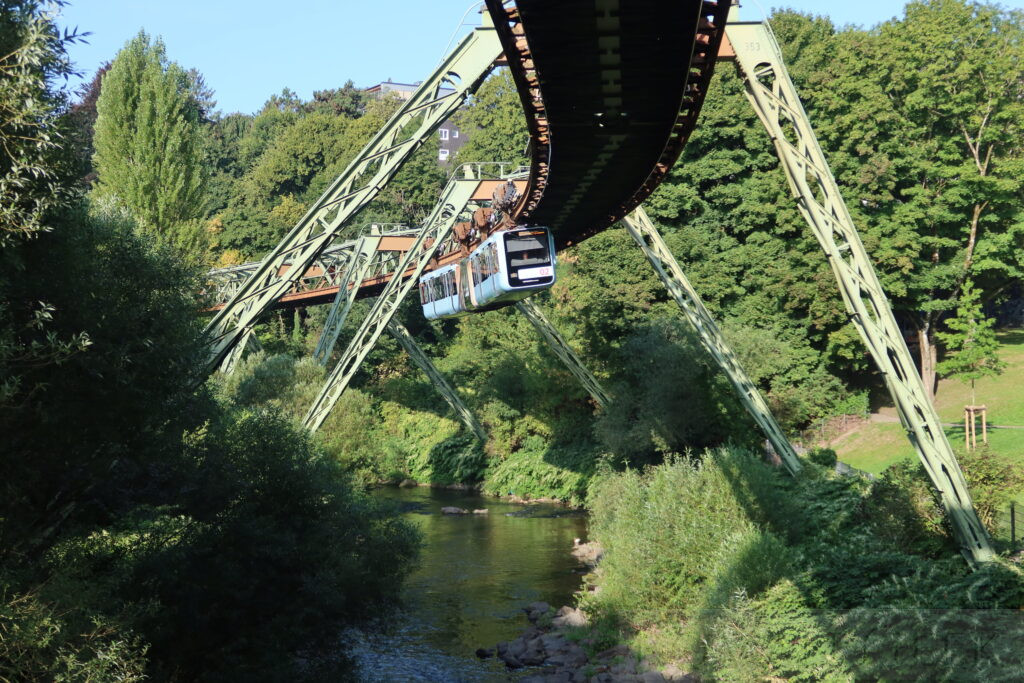
Wuppertal Schwebebahn
Wuppertal Schwebebahn

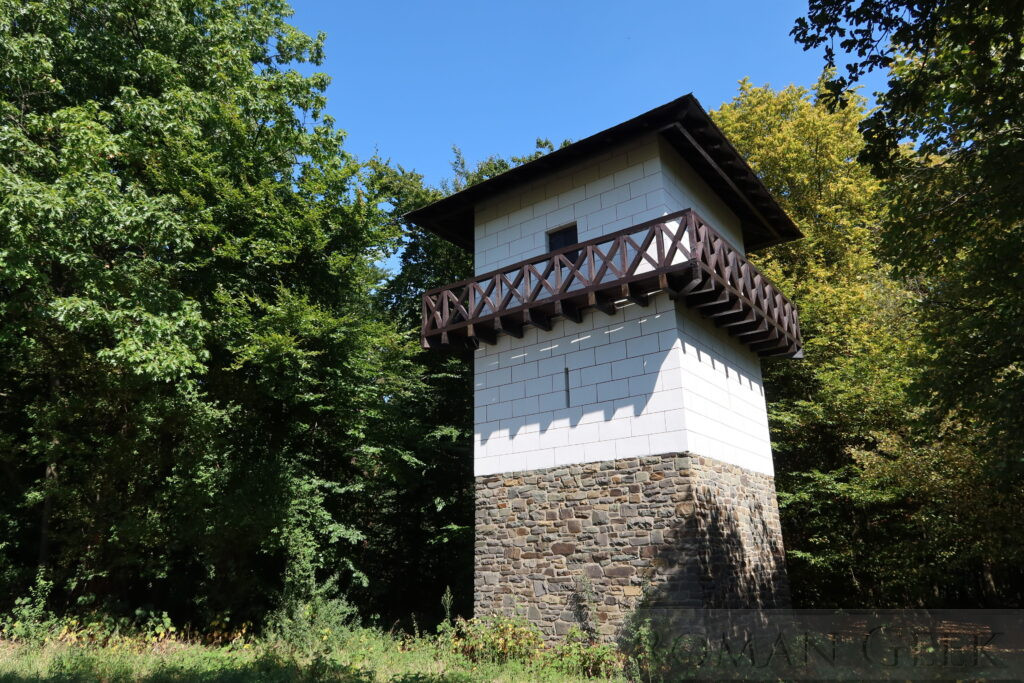
Neuss Roman Watchtower

Neuss Roman Watchtower


Cyrene

History

  • Cyrene was founded by the Ancient Greeks from Santorini (Ancient Thera) in 631 BCE, according to Herodotus in Book IV of the The Histories. They were sent by the Oracle of Delphi.
  • Between 250-96 BCE it was ruled by the Ptolemaic Kingdom of Egypt.
  • It was given to Rome in 96 BCE and became a Roman Province in 74 BCE.
  • Rebellions occurred during the First Jewish-Roman War (66-73 CE) and the Kitos War (115-117 CE). During the latter, the inhabitants were so badly massacred that the city had to be repopulated.

The Greek and Roman Monuments

  • There are Three Monumental complexes, the Sanctuary of Apollo, the Acropolis and the Agora and Roman Forum and the fourth area is the Necropolis of Cyrene.
    • The Sanctuary of Apollo
      • Fountain of Apollo written about by Pindar, Callimachus and Herodotus.
      • Temple of Apollo (7-4th century BCE)
      • Temple of Artemis (7-6th century BCE)
      • Sacella of Persephone, Hades and Hecate
      • Votive Monuments and Treasuries
      • Baths of Trajan
      • Roman Amphitheatre built into the Greek Theatre.
    • The Acropolis
    • The Agora and Roman Forum
      • Bouleuterion
        • Capitoleum
      • Agora
      • Forum
      • Nomophylakion (Public Archives Depository)
    • The Necropolis Complex of Cyrene

Museums

  • Cyrene Antiquity Museum
    • Located next to the Ruins of Cyrene in the town of Shahhat, Libya.
    • The museum holds 200 statues including the Sphinx, the Three Graces, the Head of Atheana and The Kore of Torolina.
    • The Venus of Cyrene was displayed in Rome between 1913-2008, after which it was returned to Libya. Its current location is uncertain.
  • British Museum
    • Apollo of Cyrene

Roman Roads

Ruins of Cyrene

St. Catherine’s Monastery

  • St. Catherine’s Monastery is an Eastern Orthodox Monastery located at the base of the Biblical Mount Sinai in Egypt. It is a UNESCO World Heritage Site.
  • It was built between 548-565 CE by Justinian I (527-565 CE) and is a sacred landmark in Christianity, Islam and Judaism.

Roman Sites

  • Chapel of the Burning Bush
    • The Monastery contains the Roman ‘Chapel of the Burning Bush’ built by Helena, the Mother of Constantine I.
  • Library
    • It also holds the world’s oldest Library to still be in operation since its foundation between 548-565 CE.


St. Catherine’s Monastery