Aleppo

  • Aleppo is the second largest city in Syria and is located on the Aleppo (Queiq) river. It has been continuously inhabited for 6,000 years.
  • It was known as Beroea to the Romans and after 64 BCE became part of the Province of Syria.

Roman Sites

  • Church of Saint Simeon Stylites, Deir Semaan, Aleppo (Ruins)
    • The Ruins are located at Mount Simeon, Deir Semaan, 21 miles (35km) northwest of Aleppo.
    • The Church was built in 475 CE and consisted of a central octagon topped by a dome, from which four Basilicas were attached.
    • Saint Simeon lived and preached on a platform set on a 10 foot (3m) high column, over which the church was built after he died.

Museums

  • National Museum of Aleppo
    • Located on Baron Street, Aleppo.
    • The museum contains a rich collection of artefacts from all periods of history including the Roman Period.

Roman Roads


Church of Saint Simeon Stylites, Deir Semaan, Aleppo

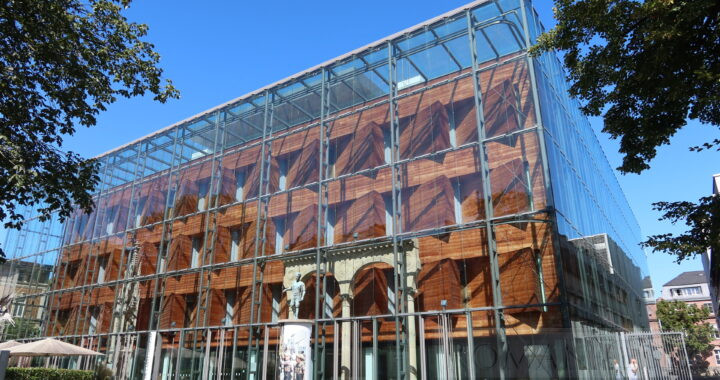
Rheinisches Landesmuseum Bonn

Bonn

  • Bonn is a city located on the River Rhine in the State of North Rhine-Westphalia in Germany.
  • It was the Roman Legionary Fortress of Bonna located in Germania Inferior.

History

  • Bonn was founded in 12 BCE as a small fortlet, then it was rebuilt in the 1st century CE as the Legionary Fortress of Castra Bonnensis.
  • Roman Legions posted to the Fortress:

Museums

  • Rheinisches Landesmuseum Bonn
    • The National Rhine Museum Bonn, holds Antiquities from all Periods including the Roman Period.
    • The museum holds the Aachen Portico, items of Roman Jewelry and other Roman Artefacts.

Roman Roads

  • A Military Road
    • The road followed the west bank of the Rhine and connected the Limes Germanicus.

Bonn

Zaghouan

Zaghouan, Tunisia

Zaghouan is a historic town in northern Tunisia, located approximately 37 miles (60 km) south of Tunis. It is best known for its exceptional Roman hydraulic engineering, serving as the primary water source for ancient Carthage and modern Tunis.

Zaghouan is widely identified with the Roman city of Zica, which was part of the Province of Africa Proconsularis, one of the most important Roman administrative regions in North Africa.

Why Zaghouan Is Historically Significant

Zaghouan’s importance in antiquity stems from its natural mountain spring at Djebel Zaghouan, which enabled the Romans to construct one of the most ambitious water-supply systems in the Roman Empire.

This system includes:

  • A monumental Roman Water Temple
  • An extensive aqueduct network
  • Continuous water delivery from antiquity to the present day

Roman Water Temple (Temple des Eaux)

The water supply for Carthage originated at Djebel Zaghouan, where a powerful spring emerges from the mountain.

At this source, the Romans built the Temple des Eaux, a monumental Water Temple and Fountain constructed directly over the spring. The structure served both religious and engineering purposes, marking the official starting point of the aqueduct system that carried water to Carthage.

The Zaghouan Roman Aqueduct

The Zaghouan Roman Aqueduct is one of the longest known Aqueducts in the Roman Empire, extending approximately 82 miles (132 km).

Construction Timeline

  • Construction began during the reign of Hadrian (117–138 CE)
  • Completed in 162 CE to supply water for the Baths of Antonius in Carthage

Engineering Features

  • Combination of underground channels and above-ground arcades
  • Designed to maintain consistent water flow across long distances
  • One of the most advanced hydraulic systems of the Roman world

Surviving Remains and Modern Use

Several portions of the aqueduct remain visible today:

  • Standing columns near Mohammedia, approximately 2 miles (3 km) south of Zaghouan
  • Additional sections near Uthina (Oudna)

In 1859, large sections of the aqueduct were restored. Notably, the system continues to supply water to Tunis today, making it one of the longest continuously used water infrastructures in history.

Roman Water Temple, Zaghouan

Sabratha

History

  • Sabratha was one of the three cities of the ‘Tripolis’, which included Oea and Leptis Magna,

Ruins

  • Basilica (6th century CE)
  • Bes Mausoleum
  • Capitolium
  • Curia
  • Forum
  • Forum Baths
  • Harbour (crumbling)
  • Mosaics
  • Olive Press Building
  • Theatre of Sabratha with its backdrop on three levels.
  • Temple of Liber Pater
  • Temple of Isis
  • Temple of Serapis
  • Theatre Baths

Museums

  • Sabrata Museum
    • This is located on the Archeological Site of Sabratha.
  • National Museum of Libya, Tripoli.
    • Also known as the Red Castle Museum, it holds many artefacts from Sabratha.

In Films

  • The Black Tent 1956
    • with Donald Sinden, Anthony Steel and Anna Maria Sandri. Much of the Film is set in the ruins of Sabratha.


Sabratha, Libya

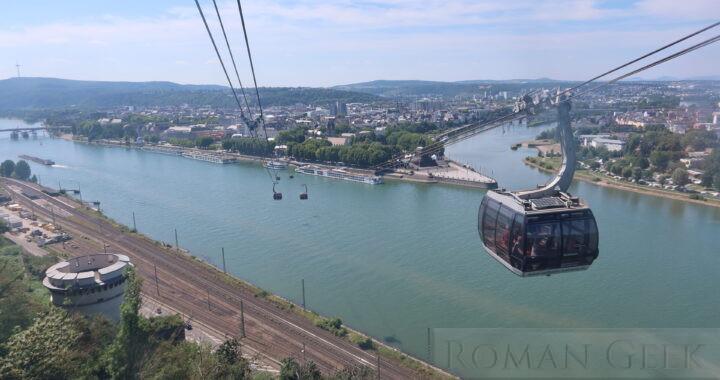
The view from Ehrenbreitstein Fortress, Koblenz

Koblenz

  • Koblenz is a cathedral city located at the confluence of the Rhine and the Moselle in the State of Rhineland Palatinate in western Germany.
  • It was built in 9 BCE by Drusus the Elder as the Roman Fortress of Castellum apud Confluentes and later became part of the Province of Germania Superior.

History

  • Julius Caesar had first built a wooden bridge across the Rhine in 55 BCE during the Gallic Wars. The Site is thought to have been to the south of Koblenz.
  • In 49 CE a permanent Roman bridge was built across the Rhine.

Vineyards

  • The Romans established vineyards all along the Moselle between Trier and Koblenz.

Museums

  • Landesmuseum Koblenz
    • Located in the Ehrenbreitstein Fortress on the east bank of the Rhine opposite its confluence with the Moselle.
    • A seasonal Cable Car connects Koblenz waterfront with the hilltop fortress by crossing the Rhine.
    • The museum holds a reconstruction of a Roman Pile Driver used to build Caesar’s wooden bridge across the Rhine in 55 BCE.
Ehrenbreitstein Fortress, Koblenz

Ehrenbreitstein Fortress, Koblenz

Ehrenbreitstein Fortress

  • The current Fortress was built by the Prussians between 1817 and 1828. A medieval fortress was constructed c. 1,000 CE. It guards the confluence of the Rhine with the Moselle.
  • The fortress sits on the site of a Roman Fortress.
  • It has an elevation of 387 ft (118m).

Roman Roads

  • A Road ran beside the Rhine from the North Sea to Switzerland.


The view from Ehrenbreitstein Fortress, Koblenz

Alexandria

History

  • It was founded in 322 BCE under the Ptolemaic Dynasty, and became the Capital of the Roman Province of Egypt after 31 BCE.

The Roman Sites

Museums

  • Alexandria National Museum
    • It is located at 131 El-Shaheed Galal El-Desouky, Bar Sharqi.131 El-Shaheed Galal El-Desouky, Bab Sharqi, Alexandria.
    • It holds 1,800 Artefacts and Art objects found in Alexandria. The collection includes statues, jewllery and coins.
  • Greco-Roman Museum
    • Located at Al Mesallah Sharq, Al Attarin, Alexandria.
    • The museum holds a collection of Artefacts covering Alexandria’s period under the Greek Ptolemies and the Roman Empire from 332 BCE onwards. It includes Mummies, Sarcophagii and Statues.

History

  • The Population of Alexandria in 40 BCE was said by Diodorus Siculus to be 300,000.
  • By 100 CE, it had become the second largest city in the Roman Empire with a population between 500-750,000. (Rome had a population of one million).
  • Egypt had its own currency, the Alexandrian Tetradrachm.
  • The Port was home to the Alexandrian Grain Fleet, and it was the Naval Base of the Classis Alexandrina.
  • Alexandria had harbours on the Mediterranean Sea and also on Lake Mareotis behind the city. A navigable canal from Alexandria connected Lake Mareotis to the Nile at Cairo.
  • The Trade with India arrived in Alexandria, after having been shipped down the Nile from Coptos and the Red Sea port of Berenice. Goods paid Duty in Egypt, partly documented by the Alexandrian Tariff (54 items). The Coptos Tariff, which lists all the road Tolls, reveals what People and Goods travelled to and from the Red Sea.
  • In 365 CE Alexandria was devastated by the Crete Earthquake and Tsunami of 21 July 365 CE. Ships were left beached miles inland.

The Lost Monuments

Pharos of Alexandria

  • Alexandria was the greatest Port in the Roman Empire covering an area of 60 hectares.
  • Its Lighthouse was one of the Seven Wonders of the Ancient World, the Pharos of Alexandria, which could be seen up to 50 miles away. It was built on an island, connected to the mainland by a causeway.
  • The harbour was divided into two, with the western harbour for commercial vessels, and the eastern harbour where the Roman Navy was based.

Great Library of Alexandria

  • Founded by Ptolemy I Soter (323-283 BCE).
  • The Great Library of Alexandria was the most important Library in the Ancient World, followed in second place by the Library of Pergamon.
  • The Great Library was part of a complex of buildings which included the Musaeum of Alexandria an Institute, where Greek scholars could study, using the Library.
  • In 391 CE the Great Library was then destroyed by the Coptic Christian Patriarch Theophilus.

Roman Legions

Classis Alexandrina

  • Alexandria was the home port of the Classis Alexandrina, the Roman Navy in Egypt.
  • They partly escorted the Alexandrian Grain Fleet towards Italy and patrolled the Nile.

Alexandrian Grain Fleet

  • The Harbour was the home of the Alexandrian Grain Fleet which sailed to Rome with 20 million Modii of Egyptian grain twice every year.
  • It supplyied one third of Rome‘s Grain. The other two thirds was supplied by North Africa.
  • The Alexandrian Tariff was a list of 54 Items from the East that were subject to Duty.

Christianity

  • Founding:
    • In 42 CE, the Church records that the Alexandrian Episcopate was founded by St. Mark the Evangelist.
    • By 300 CE, Alexandria was the centre of Christianity in Egypt.
  • Patriarch of Alexandria:
    • Egypt came under the Alexandrian Episcopate, presided over by the Archbishop or Patriarch of Alexandria.
  • The Pentarchy:


Roman Amphitheatre, Alexandria

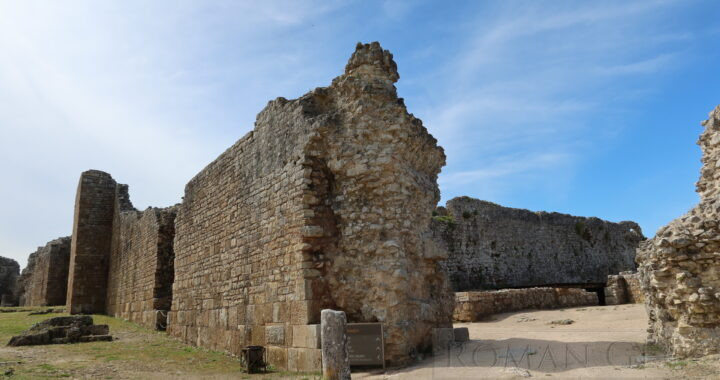
Conimbriga Monographic Museum, Portugal

Conimbriga

  • Conimbriga is the best preserved Roman city in Portugal and was made a National Monument of Portugal in 1910.
  • It is located 123 miles (198 km) north of Lisbon and 9 miles (16 km) south of Coimbra at Condeixa-a-Velha in the Centro Region of Portugal.

History

  • It dates from between the 2nd century BCE to the 5th century CE, and became a Municipium between 69-79 CE and was in the Province of Lusitania.

Roman Sites

  • Roman Amphitheatre
  • Roman Aqueduct
  • Roman Basilica
  • Roman Baths
  • Roman Forum
  • Roman residential houses (Domus)
  • Roman Walls

Museums

  • Conimbriga Ruins and Museum
    • The Museum is located on the Roman ruins of Conimbriga at Condeixa-a-Velha.

Roman Roads


Conimbriga Roman Ruins at Condeixa-a-Velha

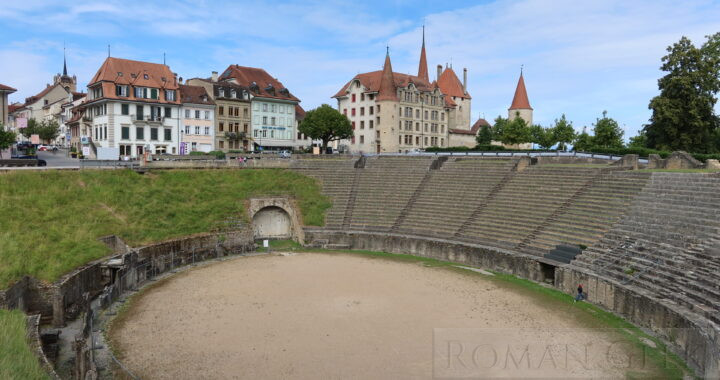
Avenches Roman Amphitheatre, Switzerland

Avenches

  • Avenches is a town located to the south of Lake Neuchatel in the Vaud Canton of Switzerland.
  • It was founded between 15-13 BCE as the Roman city of Aventicum and until 120 CE, it was the first capital of the Province of Raetia.

Roman Sites

  • The Roman Ruins of Aventicum:
    • Amphitheatre and Museum
    • Theatre
    • Temples
    • City Wall

Museums

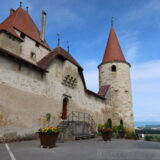
Avenches Castle

  • Built in the 13th century, Avenches Castle was renovated in the Renaissance style during the 15th century.
Avenches Castle

Avenches Castle

Avenches Roman Amphitheatre and Museum, Switzerland

Elephantine Island

  • Elephantine Island is located in the river Nile opposite Aswan, Egypt.
  • The Ruins of several Temples, two Nilometers and the Aswan Museum are on the island. The Aswan Museum holds a collection of artefacts found on the island.

History

Ancient Egyptian Sites

  • Temple of Satet
    • As early as 3,000 BCE, there was a Temple of Satet.
    • The Ruins are still standing, along with the small Temple of Heqaib and a Step Pyramid.
  • Temple of Thutmose III
    • However, very little is left of the Temple of Thutmose III, the Temple of Amenhotep III and the Temple of Khnum as they were all dismantled.
  • Nilometer
    • Near the Temple of Satis is a corridor Nilometer with a flight of 99 stone stairs leading down to the Nile with the heights marked off along the stair wall in Hieroglyphs, Roman Numerals and in Arabic.
  • Nilometer
    • Another Nilometer exists at the southern end of the island near the Temple of Khnum.
    • This is a Basin that fills.

Museums

  • Aswan Museum
    • The museum is located on Elephantine Island and holds artefacts found from excavations all over the island.

The Ancient Egyptian Fort

  • The Ancient Egyptians maintained a Garrison at Elephantine, as this marked the southern Border of Egypt.
  • According to the Elephantine Papyri, this was manned by a contingent of Jewish Mercenaries during the period of the Babylonian Exile (587-539 BCE). They built their own Temple of Yahweh.

The Ivory Trade

  • The Island was also used as a warehouse for Ivory that came down the Nile from Africa.
  • The name Elephantine Island is possibly derived from the storage of elephant tusks here.

Navigation on the Nile

Nilometer

  • The Nilometer indicated the height of the Nile and measured the annual rise and fall of the Nile.
  • Records were kept from the time of the Pharaohs, enabling the Egyptian priests to announce the date of the first Nile Flood and the date of its maximum height.
  • Other Nilometers on the Nile:
    • One near Cairo
    • Another at Alexandria
    • Several located in various Temples along the banks of the Nile:
    • One at the Temple of Philae, at Philae Island.
    • One at the Temple of Kom Ombo, which had a Nilometer that consisted of a channel that led to a deep cylindrical well inside the Temple building.


Temple of Satet, Elephantine Island

Cherchell

  • Cherchell is a Mediterranean seaport town 55 miles (90km) west of Algiers in the Tipaza Province of Algeria, and was known to the Romans as first Lol and then Caesarea Mauretaniae.
  • It was the capital of first the Kingdom of Numidia, then the Roman Province of Mauretania Caesariensis.

History

Roman Sites

  • Theatre
  • Amphitheatre (rectangular, not oval)
  • Baths
  • Basilica
  • Forum
  • Column
  • Aqueduct
  • A copy of a Roman Fountain stands in Roman Square (the original is in the museum courtyard)

Group of Monuments Nearby

  • Royal Mausoleum of Mauretania
  • Other Monuments
    • from the Phoenician and Roman Periods lie along this road. They are a UNESCO World Heritage Site.

Museums

  • Archaeological Museum of Cherchell
    • Located at J55R+8FF, Cherchell.
    • The museum holds a collection of Finds excavated from Caesarea including fine mosaics, such as the Mosaic of the Vine workers.
    • It also holds marble sculptures such as the Bust of Cleopatra Selene II and a Roman Fountain with four lion heads in the museum courtyard.

Roman Roads


Cherchell, Algeria