Anglesey

Caer Gibi Roman Fort

  • Caer Gibi was a Sea Fort with only three walls, the fourth being open to the Harbour.
  • It has a similar design to the Saxon Shore Forts of southeastern Britain.
  • The Fort is associated with a nearby Roman watchtower located at the top of Holyhead mountain.

Bryn Celli Ddu

  • Bryn Celli Ddu is a restored Neolithic Passage Grave in Anglesey, Wales, located 1/2 mile (1km) from the Menai Strait.
  • It was originally surrounded by a Henge with Standing Stones (now lost). Inside the Grave is a Pillar whose function is unknown.
  • The alignment of the Passage is towards the Summer Solstice Sunrise.
  • The Henge has been dated to c.3,000 BCE.

Copper Mine

  • The Romans worked a Copper Mine in Parys Mountain.

Roman Roads

Nearby Sites


Anglesey

Caernarfon

  • Caernarfon is a port town in Wales located on the Menai Strait opposite the Island of Anglesey.
  • It was founded as the Roman Fort of Segontium and is noted for the medieval Caernarfon Castle which is a UNESCO World Heritage Site.

History

Auxiliary Unit

Roman Sites

  • Segontium Roman Fort
    • The Site is open to visitors and holds the vestiges of Roman buildings in the fort.
  • Caernarfon Castle
    • This is a medieval castle built in 1283 CE, near to the Roman Fort.

Roman Roads

Nearby Sites


Segontium Roman Fort

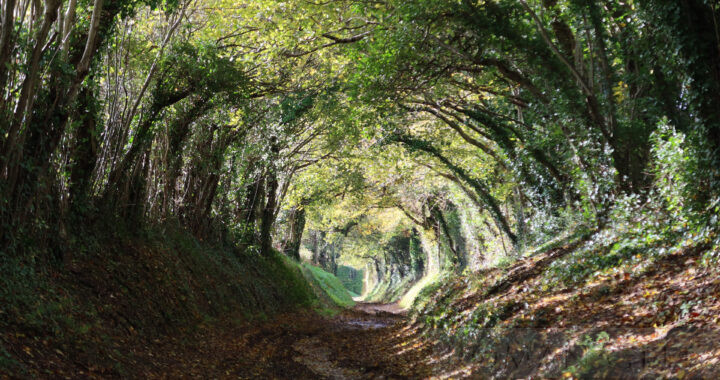
Halnaker Tunnel, Stane Street

Stane Street

  • Stane Street is a 57 mile (91km) long Roman Road that connected London with Chichester.
  • The modern A3, A24, A29 and A285 parallel the Roman Road between London and Chichester.

Preserved Sections

  • Stane Street has a preserved section between Mickleham Downs and Thirty Acres Barn, Ashstead, which is listed as a National Monument.
  • Another preserved section of Stane Street climbs over the hilltop beside of Bignor Roman Villa, and also exists as a footpath near Halnaker on the way to Chichester.

Posting Stations

  • Known Posting Stations are Alfoldean and Hardham.
  • Probable Posting Station Sites (Mansiones) are Merton Priory, Ewell and Dorking.

The Route

  • London
    • The A3 from London Bridge tp Clapham Common and the A24 from Clapham Common to Ewell follows the straight Roman alignment for 12 miles (20km).
  • Merton Abbey
  • Morden
  • Ewell
  • Epsom
  • Dorking
  • South Holmwood
  • Alfoldean
  • Billingshurst
  • Hardham (Pulborough)
  • Bignor Roman Villa
  • Halnaker tunnel
  • Chichester
  • Dell Quay

Roman Roads in Britain


Halnaker tunnel, Stane Street

Norton

  • Norton is a village located 1 mile (1.5km) southwest of Bannaventa, a Roman Statio (Posting Station), near Daventry in the Province of Britannia. There are no visible Remains above ground.
  • Bannavem Taburniae is said to have been the place of birth of St. Patrick, the Patron Saint of Ireland, which may have been Bennaventa.

Roman Roads


Bannaventa Roman Town

Ilkley

  • Ilkley is a Spa town located on the river Wharfe 12 miles (19km) north of Bradford, in the West Riding of the County of Yorkshire.
  • It was a Roman Fort, possibly named Olicana, located on a crossing of two Roman roads, in the Province of Britannia.

Roman Site

  • The Site of the Fort is under the Manor House Art Gallery and Museum
  • Part of the Roman Wall is beside the Manor House, with signs pointing to the ground plan of the Walls.

Museums

  • Manor House Art Gallery and Museum
    • Located at Castle Yard, Ilkley.
    • The museum holds Finds that have been excavated from the Roman Fort including a Roman Altar.
    • All Saints Parish Church, standing nearby, has two Roman Altars built into the Tower.

Roman Roads

Ilkley

Luton

  • Luton is a town on the river Lea in Bedfordshire founded by the Saxons during the sixth century CE.
  • It is the location of the Head Office of Easyjet Airlines and Vauxhall Motors at nearby Charlton.

Ancient Sites

  • Waulud’s Bank
    • Possible Neolithic Henge dating from c.3,000 BCE.

Local Attractions

  • Whipsnade Zoo
  • Woburn Safari Park
  • Luton Hoo
  • Leighton Buzzard Light Railway


Waulud’s Bank, Luton


Caer Gibi Roman Fort

  • Caer Gibi is a Roman Fort and port located in the Port of Holyhead on the island of Anglesey in Wales.
  • It’s Roman name is unknown. The Fort is associated with a nearby Roman watchtower located at the top of Holyhead mountain.

The Roman Fort

  • The Site is open to visitors.
  • The three walls of the fort are still standing, and remains of the four corner towers are visible.

Roman Roads

Nearby Sites


Caer Gibi Roman Fort

Atherstone

  • Atherstone is a market town located on the river Anker in the County of North Warwickshire in England.
  • The village of Mancetter, now a suburb of Atherstone, was the site of a Roman Settlement called Manduessedum.

History

  • In c. 50 CE, Mancetter was the location for a Legionary Fortress built to house the Legio XIV Gemina, which was located where Watling Street crossed the river Anker.
  • The settlement of Manduessedum then grew up around the fortress.
  • Queen Boudicca is believed to have been defeated near Manduessedum at the Battle of Watling Street during Boudicca's Revolt.
  • The Ruins of up to 30 Roman Pottery Kilns have been found nearby.

Roman Roads

Mancetter


Old Kilpatrick

  • Old Kilpatrick was the Roman Fort of Clotagenium, near the western terminus of the Antonine Wall in Scotland.
  • There are no visible Remains as the Site lies underneath the Gavinburn Bus Depot. Finds from the Fort are in the Hunterian Museum Glasgow.

Antonine Wall

  • The Antonine Wall was a Roman Defensive Wall in Scotland that was built of stone and turf between 138-142 CE.
  • It ran from coast to coast between Glasgow and Edinburgh.


Old Kilpatrick

Leicester

  • Leicester is a cathedral city located on the river Soar in the County of Leicestershire in the East Midlands Region of England.
  • It was the Roman Tribal capital of the Corieltauvians called Ratae Corieltauvorum, beside the bridge carrying the Fosse Way over the river Soar.

Roman Sites

  • Jewry Wall
    • Located beside St. Nicholas’ Church, this is a ruined wall of a Roman building with two archways.
  • Roman Baths
    • The excavated foundations are open to view beside the ruined wall.

Museums

  • Jewry Wall Museum
    • Also located beside St. Nicholas’ Church and the ruined Roman wall.
    • The museum holds Roman artefacts from the excavated site.

Roman Roads


Jewry Wall Museum, Leicester