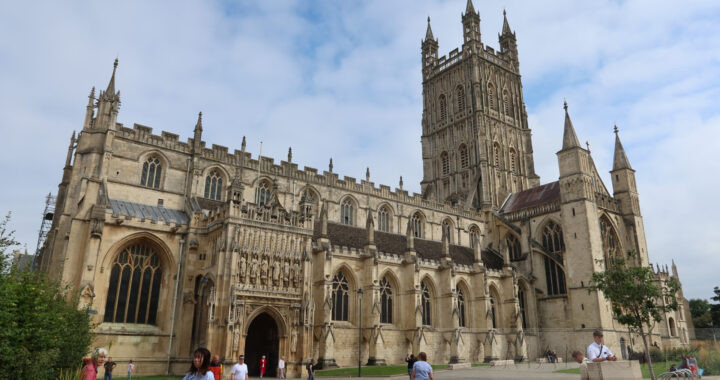
Gloucester Cathedral

Gloucester

  • Gloucester is a port and cathedral city located on the river Avon in Gloucestershire.
  • It was a Roman Fort which became the town of Colonia Nervia Glevum in 97 CE. The Roman street plan is echoed by the location of Northgate, Southgate, Eastgate and Westgate.

Roman Legion

  • It was on an important crossing of the River Severn and was probably occupied by the Legio II Augusta before they moved across the Severn to Caerleon.

Museums

Roman Roads

Nearby Sites


Gloucester City Museum

South Shields Roman Fort

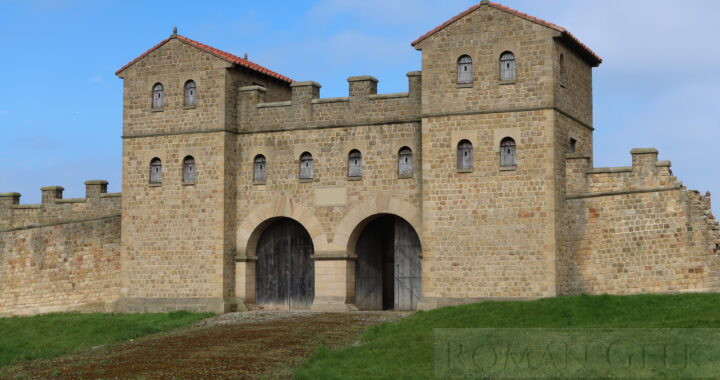
South Shields Roman Fort

  • South Shields Roman Fort was called Arbeia and is located on the south side of the mouth of the river Tyne at South Shields.
  • The Fort has been reconstructed and can be visited.

History

  • Built around 120-128 CE, by the Legio VI Victrix, Arbeia became the naval supply base for Hadrian's Wall along with Wallsend Roman Fort on the north side.
  • In 208 CE during Septimius Severus' Caledonian Campaign, 18 Granaries were built out of stone to supply the army.
  • There was a Vicus, a civilian settlement, nearby.
  • Until recently, the Tyne river Pilots were based in front of the Roman Fort and in Roman Times the river Pilots may have been based inside the Fort.

Roman Auxiliary Units

  • Ala I Pannoniorum Sabiniana (c.128 CE)
    • First Wing of Sabinus’ Pannonians: 500 cavalry from Pannonia who moved to Halton Chesters during the third century CE.
  • Ala I Hispanorum Asturum:
    • First Wing of Asturians (dates uncertain)
  • Cohort V Gallorum: (c.222 CE)
    • There was only room for half of this 1,000 strong cavalry unit to be based here.
  • Numerus Barcariorum Tigrisiensium (c.400 CE)
    • The Company of Bargemen from the Tigris. Last Unit to be recorded here in the Notitia Dignitatum. A unit was also recorded at Lancaster.

Roman Site and Museum

  • Arbeia Roman Fort
  • The Fort holds reconstructions of Roman Buildings:
    • Roman Gatehouse
    • Roman Commandants’ House, the Praetorium.
    • Roman Barracks
    • Display of Roman Soldier’s clothing and armour.
    • Footings of 18 Granaries built of stone.

Roman Roads

Nearby Sites


Photo and map: Arbeia Roman Fort, South Shields

Carmarthen

  • Carmarthen is a town on the River Tywi or Towy in the County of Carmarthenshire, Wales.
  • It was the Roman town of Moridunum, civitas of the Demetae Tribe, and had a fort that guarded the river crossing on the Roman road to Caerleon.

Roman Sites

  • Roman Amphitheatre (c.75 CE)

Museums

  • Carmarthenshire Museum
  • Carmarthen Town Museum
  • Carmarthen Castle Museum

Roman Roads

Nearby Sites


Carmarthen Amphitheatre

Caerwent

  • Caerwent is a village located on the Nedern Brook in the County of Monmouth, Wales.
  • It was founded in 75 CE as the Civitas of Venta Silurum, capital of the Silures Tribe, in the Province of Britannia.

History

  • A Roman Stone bearing the inscription Civitas Silurum was found and is now held in the Parish Church.
  • Caerwent was built by the Legio II Augusta based nearby in the Roman Legionary Fortress of  Caerleon.

Roman Sites

  • Caerwent Roman Town
    • Roman Walls, up to 16ft (5m) high.
    • Foundations of a Basilica and Forum.
    • Foundations of a Temple.
    • The main Roman Road, running through the town.
    • Some of the Finds from Caerwent, such as the Painted Peacock wall painting, are in the National Roman Legion Museum in Caerleon.

Roman Roads


Venta Silurum, Caerwent

Walton Castle

  • Walton Castle near Felixstowe is the potential location of one of the Saxon Shore Forts, possibly called Dummoc.
  • The fort is now lost to the sea, although some remains are visible at low tide. It guarded the estuaries of the rivers Deben, Orwell and Stour.

Saxon Shore Forts

  • The Saxon Shore Forts were a chain of Roman Naval Forts in southeastern England that stretched from Portchester to the Wash, whose function was to defend the River estuaries and coastline from Pirate attacks by seaborne invaders.
  • The Forts date to the third century CE and are mentioned in a 4th century CE document known as the Notitia Dignitatum.

Roman Roads

Nearby Sites


Walton Castle, Felixstowe


Godmanchester

  • Godmanchester is a town located opposite Huntingdon, on the eastern bank of the River Great Ouse in the County of Cambridgeshire.
  • It was the Roman town of Durovigutum at the crossroads of the Via Devana and Ermine Street, and the crossing point over the River Great Ouse.

Museums

  • Porch Museum Godmanchester (Closed)
    • The museum is currently closed while it transfers to a new location in St. Mary’s Church.
    • The museum holds a display of Roman Artefacts and an explanation of Durovigutum Roman town.

Roman Roads

Godmanchester

Wallsend Roman Fort, Newcastle

Wallsend Roman Fort

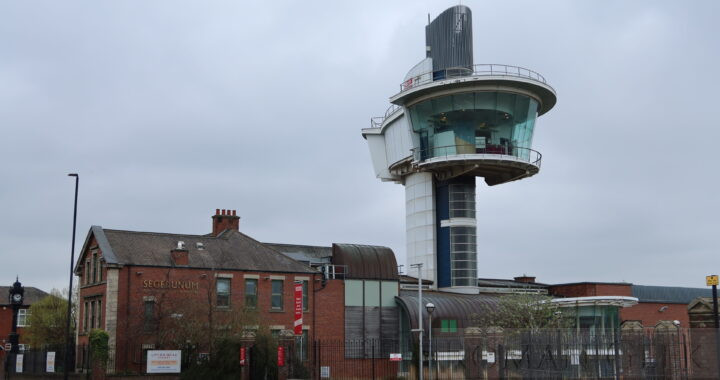
  • Wallsend Roman Fort was called Segedunum and is located in Wallsend on the north bank of the River Tyne in the County of Tyne and Wear.
  • It was the Fort where Hadrian's Wall ended on the River Tyne. The Fort was both a Port and safe Harbour that could shelter sea-going vessels that supplied the Wall.

History

  • Wallsend Roman Fort was built around 127 CE as an extension to the Wall which was originally planned to end at Newcastle.
  • This four mile extension of the Wall is narrower than the main Wall and has no Vallum.
  • Hadrian’s Wall surrounded the Fort and ran into the Tyne here, where it formed a Breakwater and Barrier which defended the mouth of this important River.
  • It has been suggested that the wall ran right across the river Tyne to the south bank.

Roman Site and Museum

  • Segedunum Roman Fort
    • The museum has a viewing gallery that overlooks the site.
    • It holds Finds from the site including a stone Roman Toilet seat.
    • Visitors can walk around the visible outline of the Remains.

Roman Roads

Nearby Sites


Photo and map: Segedunum Roman Fort and Museum

Halnaker Tunnel, Stane Street

Stane Street

  • Stane Street is a 57 mile (91km) long Roman Road that connected London with Chichester.
  • The modern A3, A24, A29 and A285 parallel the Roman Road between London and Chichester.

Preserved Sections

  • Stane Street has a preserved section between Mickleham Downs and Thirty Acres Barn, Ashstead, which is listed as a National Monument.
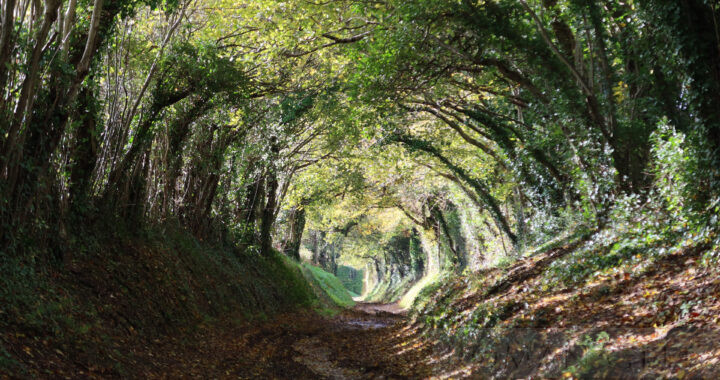
  • Another preserved section of Stane Street climbs over the hilltop beside of Bignor Roman Villa, and also exists as a footpath near Halnaker on the way to Chichester.

Posting Stations

  • Known Posting Stations are Alfoldean and Hardham.
  • Probable Posting Station Sites (Mansiones) are Merton Priory, Ewell and Dorking.

The Route

  • London
    • The A3 from London Bridge tp Clapham Common and the A24 from Clapham Common to Ewell follows the straight Roman alignment for 12 miles (20km).
  • Merton Abbey
  • Morden
  • Ewell
  • Epsom
  • Dorking
  • South Holmwood
  • Alfoldean
  • Billingshurst
  • Hardham (Pulborough)
  • Bignor Roman Villa
  • Halnaker tunnel
  • Chichester
  • Dell Quay

Roman Roads in Britain


Halnaker tunnel, Stane Street