Cirencester Roman Amphitheatre

Cirencester

  • Cirencester is a town on the River Churn, a Tributary of the Thames, in the County of Gloucestershire.
  • It was the Roman town of Corinium Dobunnorum, built c.50 CE and was Roman Britain’s second largest town.

History

  • Cirencester was situated on the Junction of two Roman Roads: Fosse Way and Akeman Street.
  • It was the Capital of the Roman Province of Britannia Primae between 294-408 CE.
  • The Wool Trade and Industry was the basis of Roman Cirencester’s economy.
  • A Sator Square was found in Cirencester.

Roman Sites

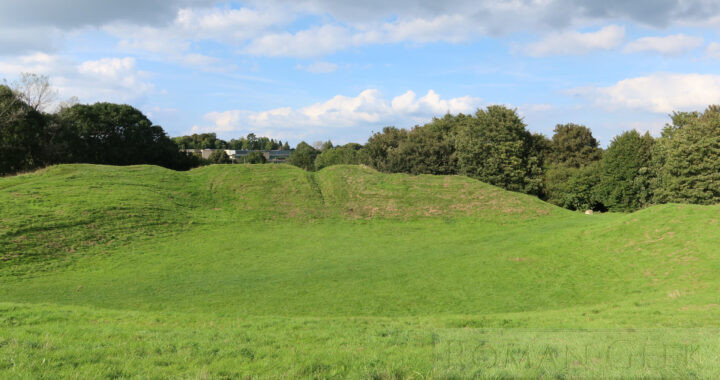
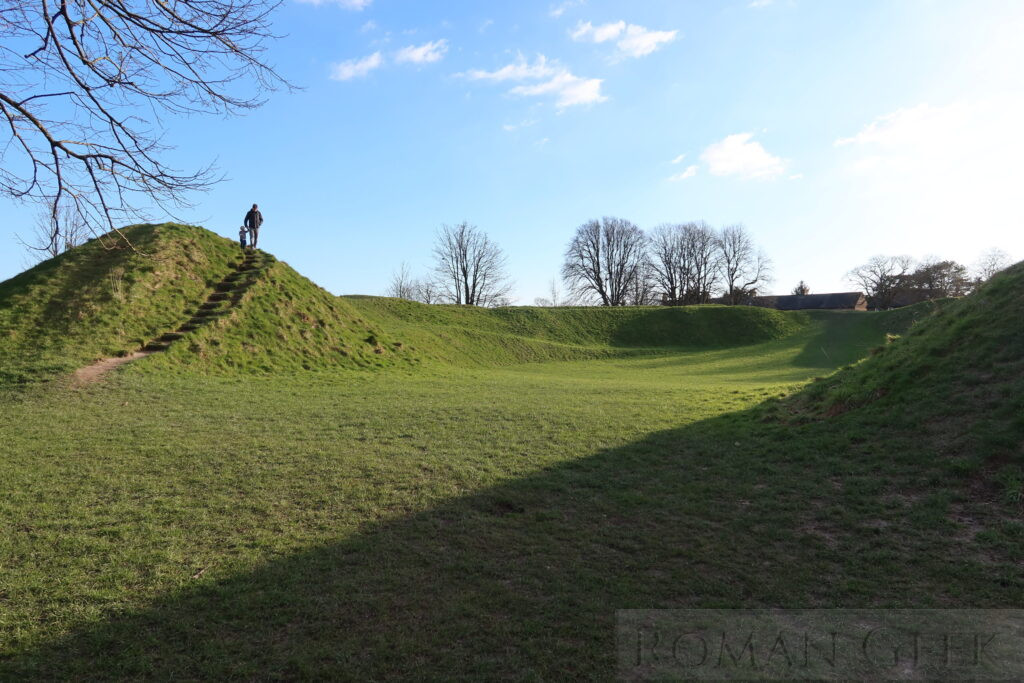
  • Cirencester (Corinium) Roman Amphitheatre
    • Grassy mounds show the shape, but the Stonework has not been excavated.

Museums

Roman Roads

Nearby Sites


Cirencester Amphitheatre

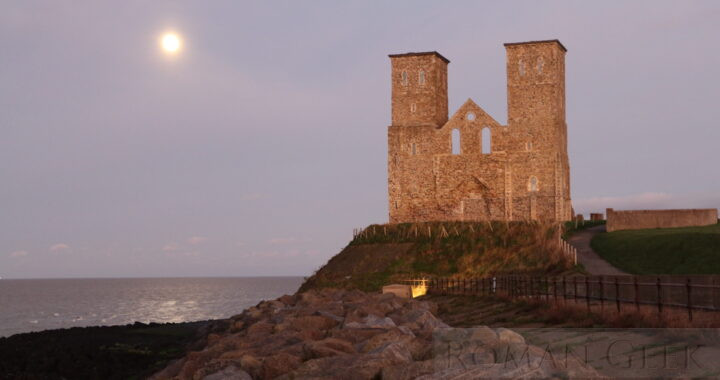
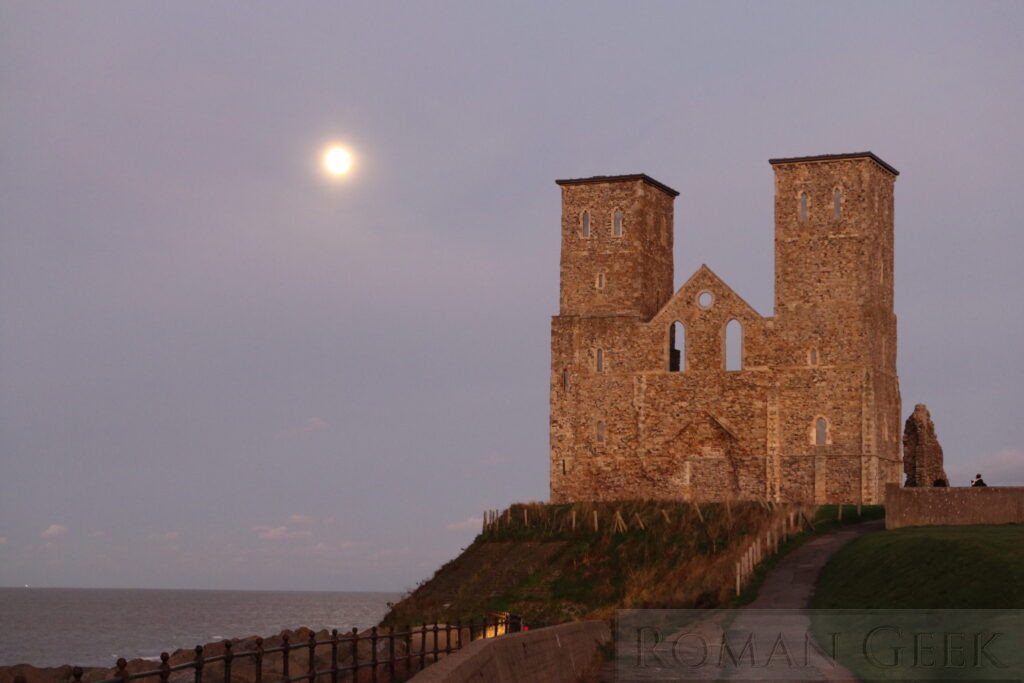
Reculver Twin Towers and Roman Fort

Reculver

  • Reculver is a village on the southern coast of the Thames Estuary in the County of Kent.
  • It is the location for one of the Saxon Shore Forts called Regulbium.

Saxon Shore Forts

  • The Saxon Shore Forts were a chain of Roman Naval Forts in southeastern England that stretched from Portchester to the Wash, whose function was to defend the River estuaries and coastline from Pirate attacks by seaborne invaders.
  • The Forts date to the third century CE and are mentioned in a 4th century CE document known as the Notitia Dignitatum.

Roman Sites

  • Regulbium Roman Fort
    • Inside the Roman Walls are the towers of a 12th century CE church known as Reculver Towers.
    • The fort guarded the Thames Estuary.

Roman Roads


Reculver Towers and Roman Fort

Northernhay Gardens, Exeter

Exeter

Exeter: A cathedral city with Roman walls

Overview

Exeter is a cathedral city located on the river Exe in the County of Devon in the South West Region of England. Founded as a Roman Fortress in 55 CE, the city thrived in the medieval period with a Gothic cathedral founded in 1050, a castle that overlooks Northernhay Gardens and its medieval city walls. The Royal Albert Memorial Museum has large collections of art and antiquities and there are Underground Passages to discover nearby. Exeter was awarded UNESCO city of Literature in 2019.

History

Exeter was besieged by Vespasian in 49 CE, and then rebuilt as a Roman Legionary Fortress, Isca Dumnoniorum in 55 CE. After 70 CE it became the capital city of the Domnonii Tribe. There was also a smaller fort and Roman harbour at Topsham. The Roman Forum, Basilica and Baths are too close to the cathedral to have been excavated and displayed. Although a number of Roman coins have been found, none date after 380 CE. During the medieval period Exeter became a hub for the wool trade, becoming England‘s fourth largest city by the 17th century. The Norman Cathedral was founded in 1050 and the medieval city walls and castle followed shortly after. Today, Exeter has a world class University, attractive shopping and restaurant areas and a thriving Bookbinding industry.

Exeter Walking Tour

  • Your geolocation will appear as a blue icon that moves on the map as you walk.
  • You may start anywhere on the map and just follow the blue line to the next point of interest.

Things to Do and Places to See in Exeter

1. Exeter Cathedral

Exeter Cathedral

Exeter Cathedral

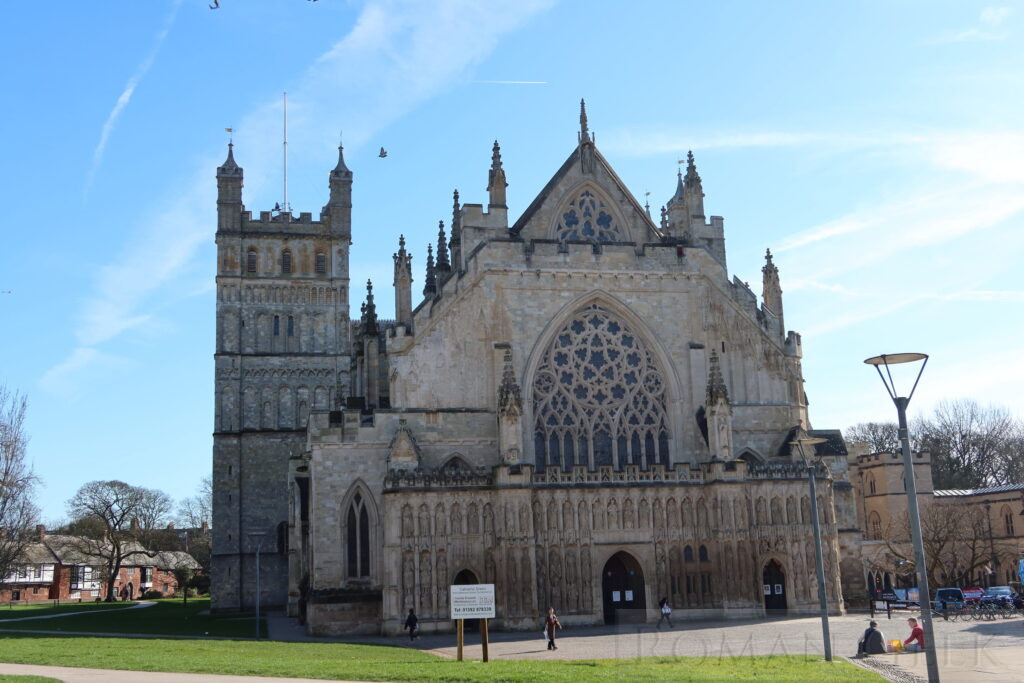
Description: Founded in 1050, Exeter cathedral was built in the Norman Style and because there is no central tower, the cathedral Nave has one of the longest uninterrupted vaulted ceilings in Europe. The ceiling artworks include grotesques and scenes of the murder of Thomas Becket and there is a 15th century Astronomical clock. The cathedral library is home to the famous Exeter Book, which holds the oldest collection of Old English Poems, and dates from 990 CE, but is not on public display.

2. Cathedral Close

Description: Opposite the cathedral lies Cathedral Close, an area of medieval buildings and cafes to relax in. In the Close stands a statue of Richard Hooker, an influential sixteenth century Theologian during the reign of Elizabeth I.

3. Exeter Guildhall

Description: Located in the High street, Exeter Guildhall is claimed to be the oldest municipal hall in England, as there has been a Guild recorded here since 1,000 CE. The current building was completed in 1470. The oak paneling in the main hall dates from 1594 and the carved oak door from 1593. After the Monmouth Rebellion in 1685, Judge Jeffries held the Bloody Assizes in this Guildhall. Although it is still a working building, it is open to the Public when not in use for Events.

4. Underground Passages Tour

Description: The underground tunnels which once brough clean water into the city can now be explored with guided tours. The guides tell stories that cover Exeter’s darker history of sieges, plagues and disease.

5. Gandy Street

Description: Gandy street is the location for shops, restaurants, cafes and clubs as well as the Phoenix Arts Centre. This cobbled alley is thought to have inspired J.K. Rowling’s Diagon Alley in the Harry Potter series.

6. Exeter Phoenix Arts Venue

Description: Located just off Gandy Street, the Phoenix Centre is a multi-arts venue which is home to art galleries, a solar-powered cinema, comedy, talks, and performances.

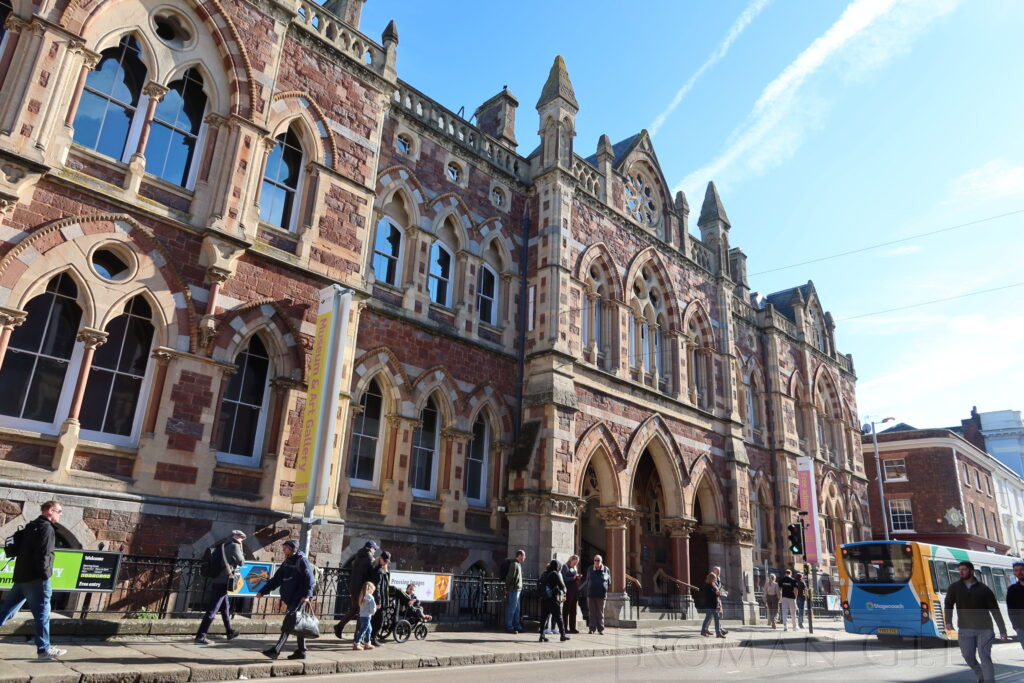
7. Royal Albert Memorial Museum (RAMM) and Art Gallery

Royal Albert Memorial Museum, Exeter

Royal Albert Memorial Museum, Exeter

Description: Located at Queen Street, it is open 10-5pm and closed Mondays. The Museum holds four main Collections consisting of Antiquities, Art, Natural History and World Cultures. The Roman Empire Collection displays artefacts which include Roman Amphorae, Brooches, Beads, Coins and Pottery. Of  particular interest is the Seaton Hoard, a collection of 22,888 Roman coins called Nummi dated between 260-348 CE. From the Bronze Age are the Erme Ingots, a group of 44 Tin Ingots found in 1992 on the bed of the River Erme Estuary, 3 miles (5km) to the west of Burgh Island. The Ingots are round, oval and two are H-shaped, which matches the description by Diodorus Siculus (c.90-30 BCE) of the trade in Tin Ingots from southwest Britain in the 1st century BCE.

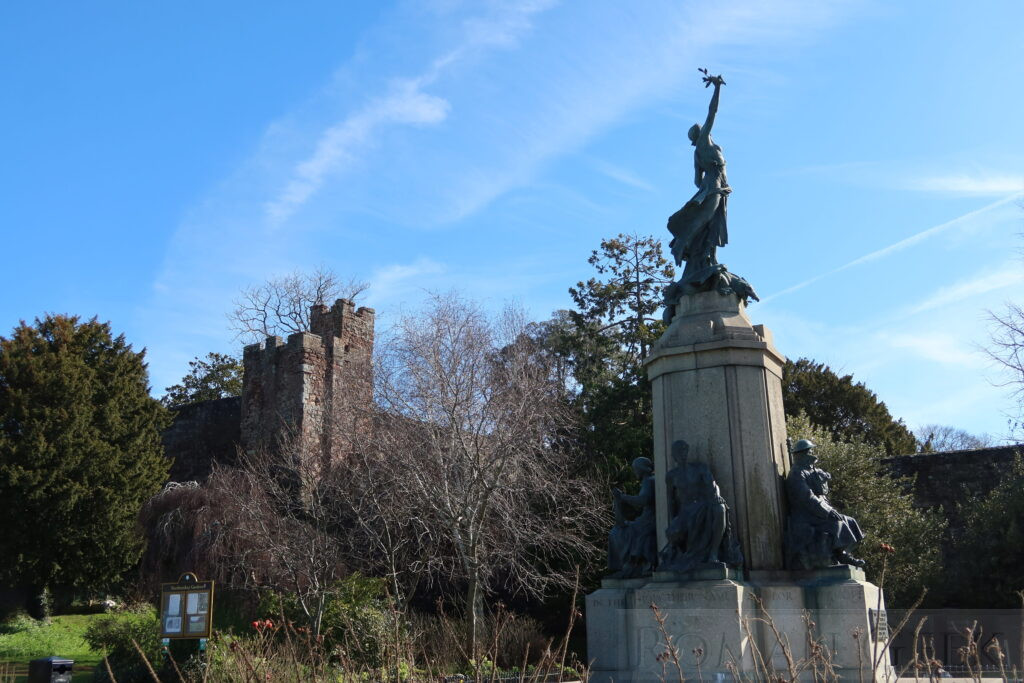
8. Northernhay Gardens

Northernhay Gardens, Exeter

Northernhay Gardens, Exeter

Description: Located just outside the castle, Northernhay Gardens was created by the City Chamber in 1612 as a pleasure park for Exeter residents, making it the oldest public open space in England. The Gardens follow a long stretch of Roman wall and the only length of Saxon city wall in England.

The city walls encompass Exeter castle, also known as Rougemont castle, where views of the exterior can be seen from Northernhay Gardens. It is now a private venue for events and weddings, but its courtyard can be accessed on weekdays for views of the front of the building.

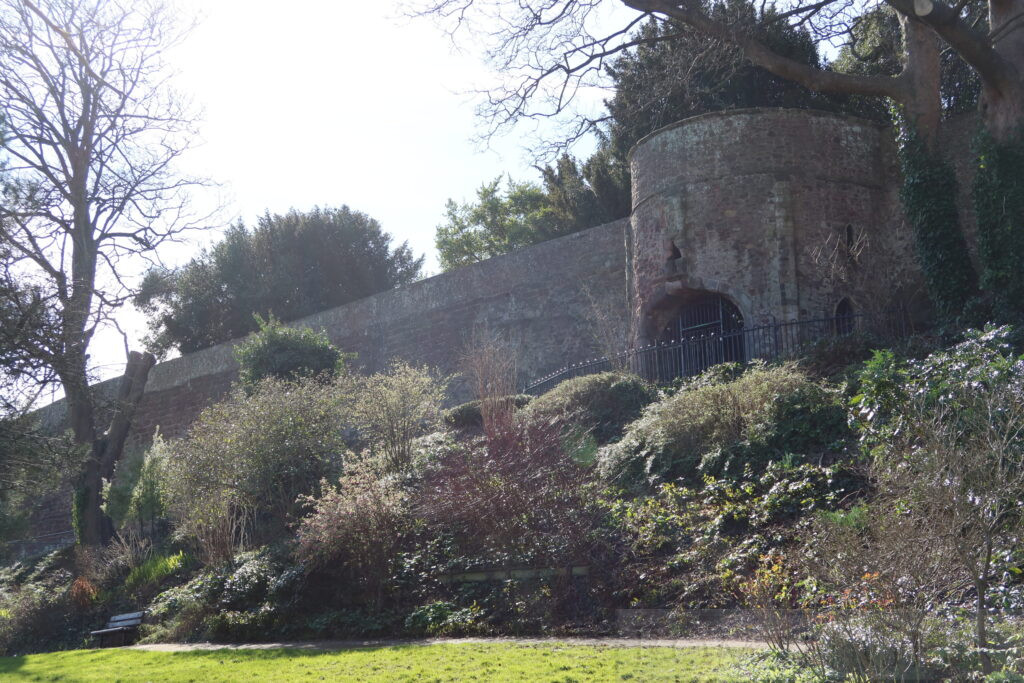
9. Exeter Medieval City Walls

The circuit of Exeter Roman Walls is 70% intact.

Exeter City Walls

Description: Located in Northernhay Gardens, the medieval city walls were built on top of the Roman Ramparts of the Fortress, with the Roman construction still visible in the lower part of the walls. The entire wall circuit can be walked around, with over 70% of the walls still intact.

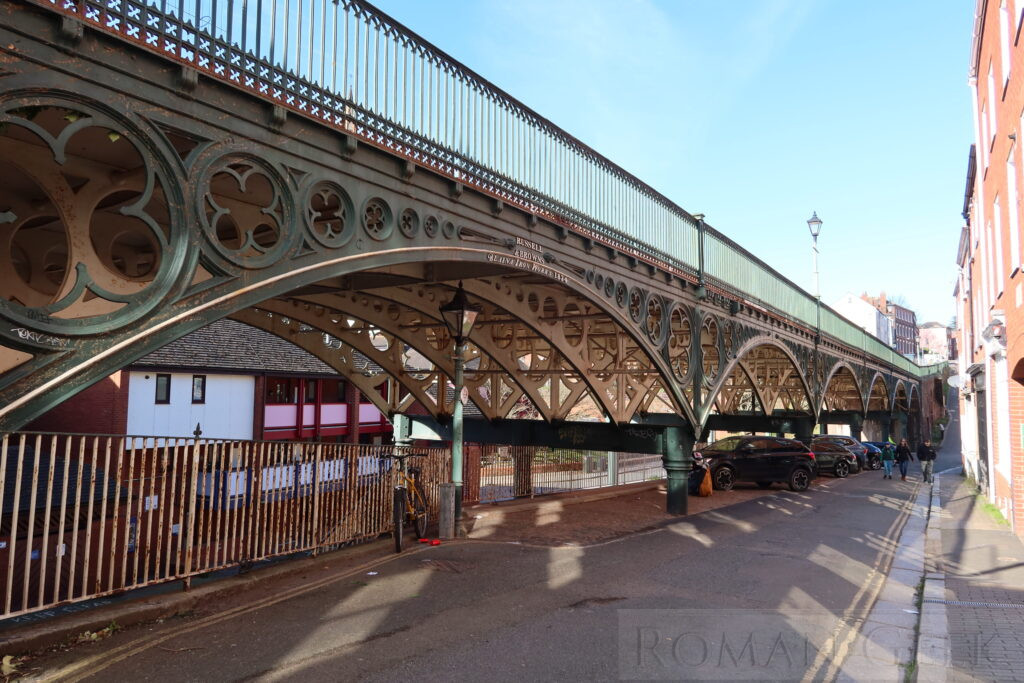
10. Iron Bridge

Iron Bridge, Exeter

Iron Bridge, Exeter

Description: Opened in 1835, this cast iron bridge transformed the narrow hilly road into Exeter and enabled heavy horse drawn vehicles to travel easily across the valley on its level surface. It is still open for light road traffic as well as pedestrians.

11. The House That Moved

Description: Now located at 24 West Street, The House That Moved is a historic timber framed pre-Tudor building that dates from 1460. It was saved from demolition by moving it from one street to another. Edmund street and Frog street were about to be demolished to make way for the Exeter bypass. To save the building, a specialist contractor placed the entire house on steel girders supported by wheels. Edmund Street was then closed to traffic by the police, and the building was precariously moved at a snail’s pace, for 231 feet (70 metres) up the 1:10 gradient hill, from 16 Edmund Street to 24 West Street. The move took four and a half hours.

12. Old Exe Bridge

Description: Completed in 1214, this is the oldest surviving medieval bridge in Britain, and the oldest medieval bridge with a chapel. It almost certainly replaced a Roman wooden bridge that took the old Roman road to the west. It was replaced in 1778 and the arches across the river Exe demolished. It has been preserved in its own park just off Frog Street, near The House That Moved.

13. Exeter Quayside

Description: Located beside the river Exe, the Quayside is a relaxing area full of cafes and restaurants where performances and events are organised during weekends. The historic Custom House built in 1680 serves as a testament to Exeter’s thriving wool trade. Today, it serves as a visitor centre with exhibitions and interactive displays.

14. Exeter Ship Canal Basin

Description: Located along Haven road on the opposite bank to Exeter Quayside, it is reached by Butt’s Ferry, a pedestrian hand-pulled cable ferry crossing the river Exe. The historic Exeter Ship Canal was constructed in 1566, and runs for 5 miles (8km) to the Exe Estuary. The Canal Basin was constructed later in 1830. The canal’s main export was woolen cloth, mainly serge, while imports consisted of coal and timber.

Further Afield

15. Exeter Northcott Theatre

Description: Located on the Streatham campus of Exeter University, the Auditorium is built in a semicircle with a capacity for 464 spectators. Opened in 1967, it quickly developed a reputation for fostering new talent. Actors such as Celia Imrie, Robert Lindsay, Diana Rigg, Imelda Staunton and John Nettles all developed their careers here.

Travel Tips

  • Best time to visit: Spring and autumn for mild weather and fewer tourists. There are multiple Festivals held in June and July and the Exeter Carnival is held in November.
  • Photography hotspots: Exeter Cathedral, medieval City walls and castle, Iron Bridge, Old Exe Bridge
  • Nearby Attractions: Burgh IslandLooe IslandDorchester

Visitor FAQ

  • What is Exeter famous for?
    • Exeter is known for its 12th century medieval cathedral, Underground passages, Roman era city walls, a thriving Bookbinding industry for which it was awarded UNESCO city of literature in 2019, the Exeter Book – which contains the largest known collection of Old English Poetry dating from 990 CE, and Exeter University. Authors who mention Exeter include Charles Dickens, Agatha Christie and Daphne du Maurier, while J.K. Rowling attended University here.
  • Can I see Roman Ruins in Exeter?
    • Yes, the medieval city walls are built on top of the original Roman walls, which are visible. There are also many Roman artefacts in the Royal Albert Memorial Museum in Exeter.
  • How far is Burgh Island from Exeter city centre?
  • Are there Guided Tours of Exeter historical sites?
  • Is Isca Dumnoniorum the same as Exeter?
    • Yes, Exeter was built by the Romans as Isca Dumnoniorum in 55 CE, when they moved the Belgae tribe from their Oppidum nearby.
  • Which Roman Province was Exeter located in?
  • Which Roman Roads connected to Exeter?
  • What was the role of Isca Dumnoniorum (Exeter) in the Roman Empire?
    • Exeter served initially as a key military fortress for the defense of the southwest, with a strategic road leading northeast to another Legionary Fortress at Lincoln. The Exeter Fortress was occupied by the Legio II Augusta between 56-66 CE, after which it moved to Gloucester and then eventually on to Caerleon.

Quick Facts

  • Modern Location: Exeter, England
  • Category: Historic city centre, medieval cathedral, tourist destination
  • Activities: Walking tours, Sightseeing, Photography
  • Nearby Roman Site: Dorchester
  • Nearest Roman road: Fosse Way
  • Roman Province: Britannia

Nearby Attractions

Dorchester was the Roman town of Durnovaria Durotrigum, which has preserved its Roman Amphitheatre known as Maumbury Rings.

Dorchester Roman Amphitheatre

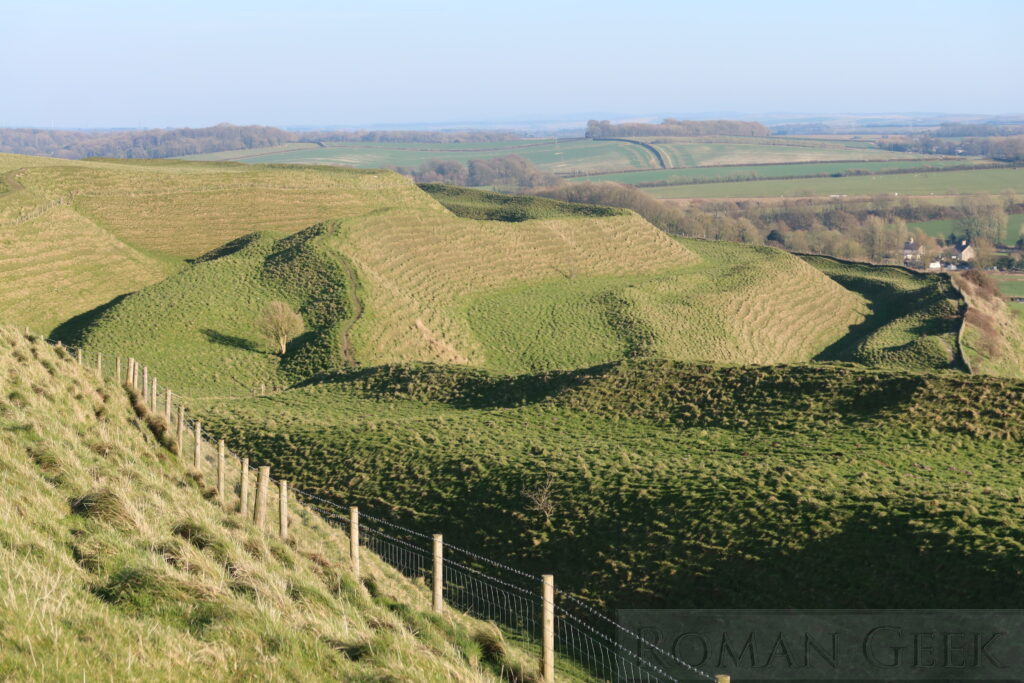
Maiden Castle is an Iron Age Hill Fort, considered to be the largest Hill Fort in Europe. It is located 1.5 miles (2.6km) from Dorchester.

Maiden Castle, Dorset

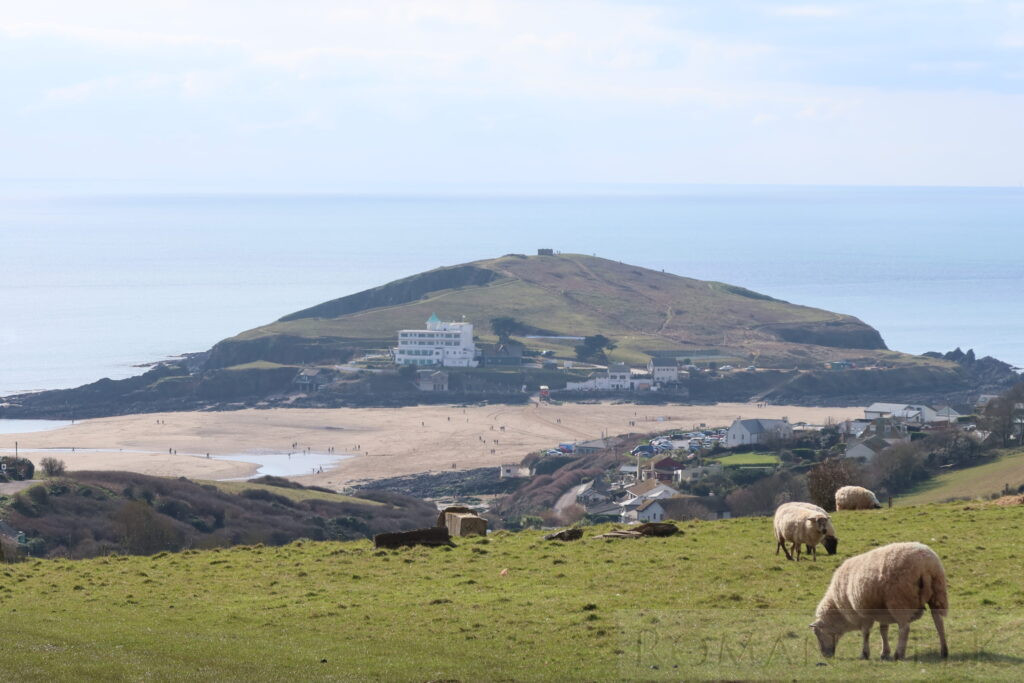
Burgh Island is a tidal island opposite Bigbury-on-Sea in Devon. It was possibly Ictis or Mictis mentioned in the Ancient Tin Trade in Britannia.

The tide is out at Burgh Island, Bigbury-on-Sea, Devon

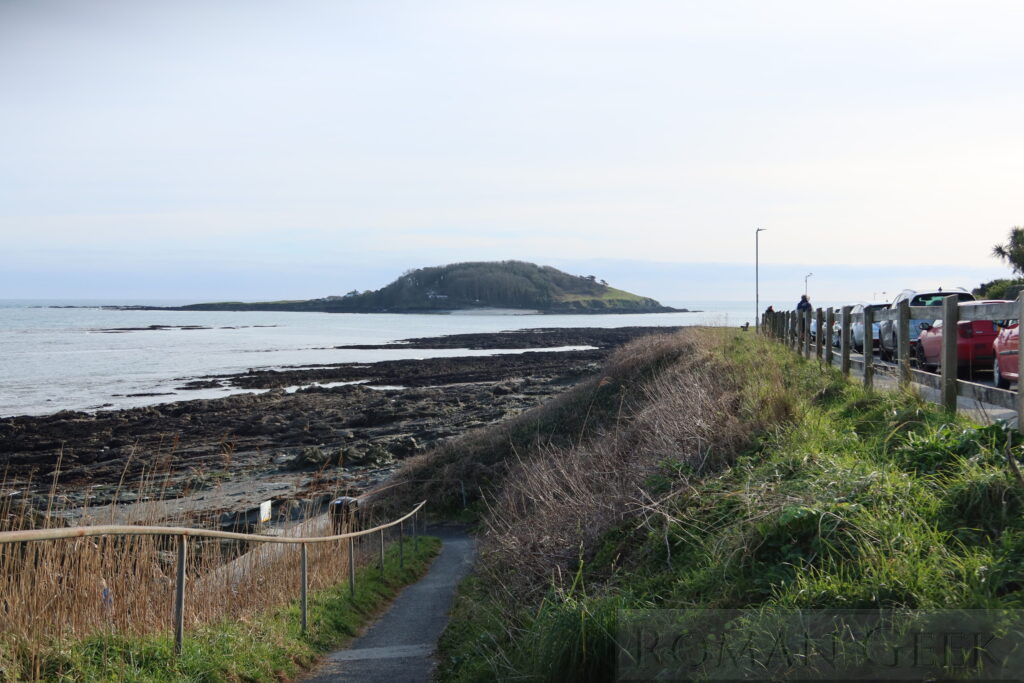
Looe Island, Cornwall

Looe Island, Cornwall


Great Hall, Winchester

Winchester

Winchester:  The Saxon capital of England

Overview

Winchester is a city located on the River Itchen in Hampshire. It was the Saxon capital of England until 1066 CE, and is noted for its Cathedral containing the Relics of the Saxon Kings and the Danish King Canute. Winchester is the County town of Hampshire.

History

Winchester was founded in 70 CE as the civitas capital of the Belgae tribe, and named Venta Bulgarum (market of the Bulgae). The Romans built temples, public buildings and town houses. At the beginning of the 3rd century CE they encircled it with a defensive stone wall. Venta Belgarum was at the centre of the Roman Wool trade and like London, had a Procurator of the Wool Warehouse.

In 519, The Saxon King Cerdic established the kingdom of Wessex and Winchester became one of his capitals, known as Wintanceaster. From 871 CE Alfred the Great (871-899) ruled Saxon Wessex from Winchester castle. Between 927 and 1066 Winchester was the capital of Anglo-Saxon England. After the Norman Conquest, William I built a new castle here in 1067, and Winchester continued as the Norman capital until they finally moved the Court and Administration to London during the 12th century.


Things to Do and Places to See in Winchester

1. Westgate Museum

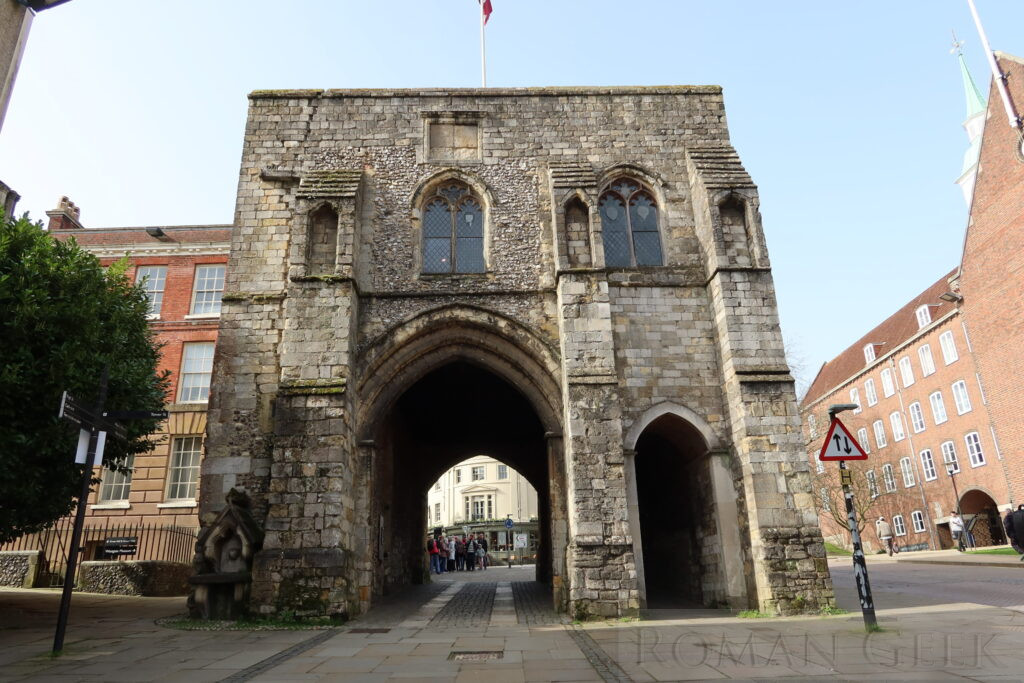
Westgate Museum, Wichester

Westgate Museum, Wichester

Description: Located in the High Street and built in the 12th century over the old Roman gate, the Westgate was medieval Winchester castle’s primary gateway and now houses a museum of Winchester’s history.

2. Great Hall

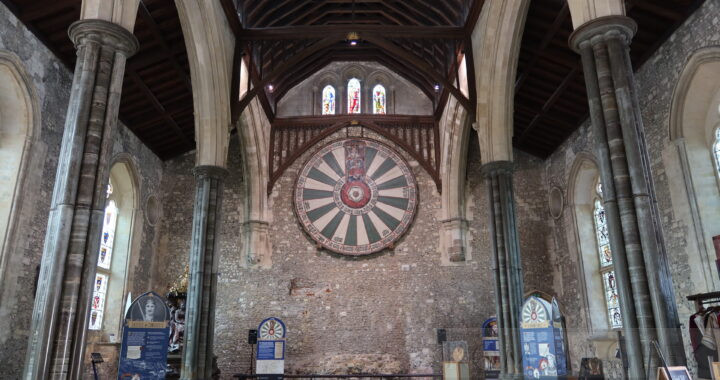
Great Hall, Winchester

Great Hall, Winchester

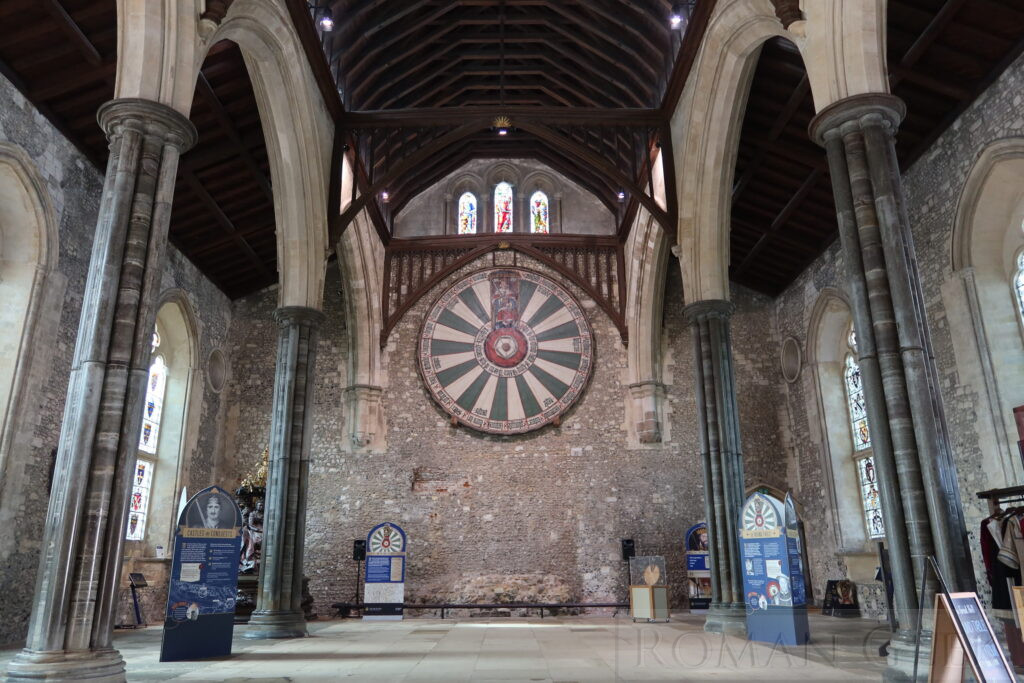
Description: Located in Castle avenue, the Great Hall was built in 1235 by Henry III, and is only building that has survived from Winchester Castle. The Great Hall was home to the Winchester Assize Court for 700 years, from 1273 until 1974. Famous cases held here were the trial of Sir Walter Raleigh for treason in 1603, and after the Monmouth Rebellion, Judge Jefferies conducted part of the ‘Bloody Assizes’ here in 1685.

Winchester Round Table

Winchester Round Table

Winchester Round Table

Description: Hanging in the Great Hall is the Winchester Round Table, around the edge are the names of the 25 knights of the legendary King Arthur. It was commissioned by Henry VIII, although the wood has been dated to 1280. The table is round to signify that all 25 knights had equal status.

3. The Rifleman’s Museum

Rifleman's Museum, Winchester

Rifleman’s Museum, Winchester

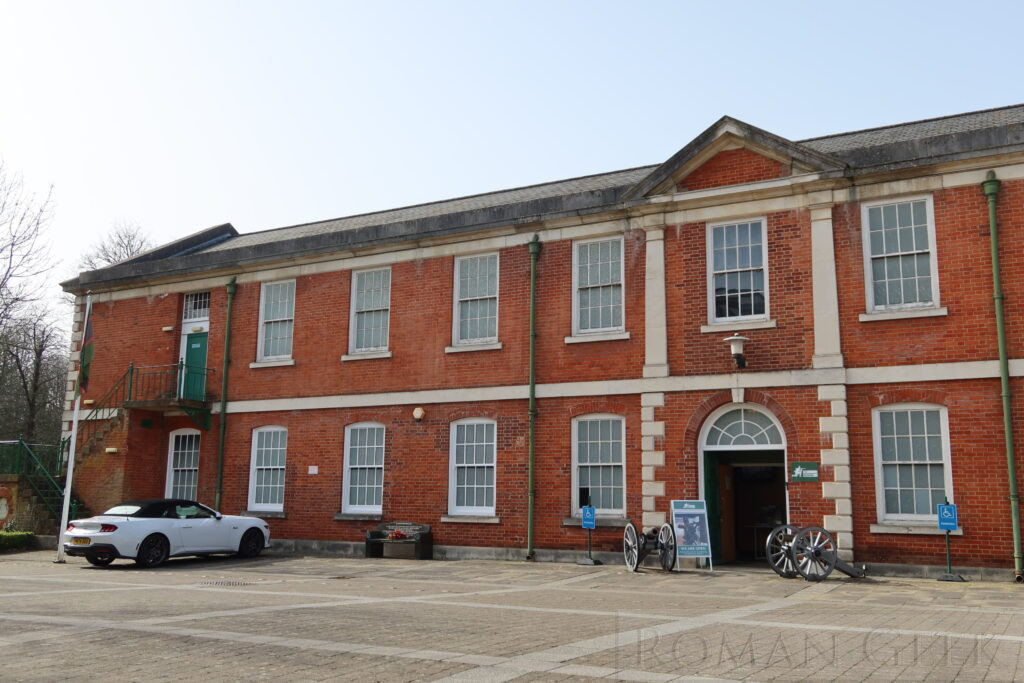
Description: Located at Peninsular Barracks, the museum forms part of Winchester’s 6 military museums and brings together the collections of several regiments of the British Army, which united to form the Royal Green Jackets Regiment. There is an exhibition on the Napoleonic Wars featuring a 25 square metre Diorama of the Battle of Waterloo in 1815 with 30,000 model soldiers and horses, with a light and sound commentary. Other displays cover the Two World Wars and other wars since 1945, such as the First Gulf War 1990-91.

4. Theatre Royal

Theatre Royal, Winchester

Theatre Royal, Winchester

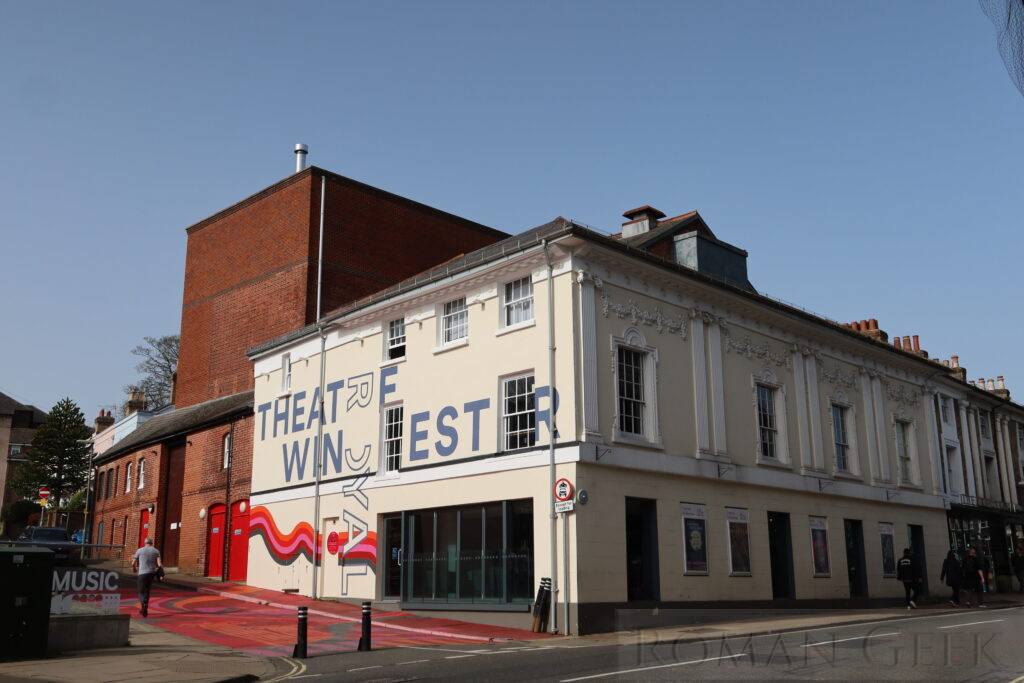
Description: Located at 21-23 Jewry street, the theatre opened in 1914, and is the last surviving Cine-variety theatre in England. The Auditorium has 400 seats and was built in the Edwardian style on two levels with stalls and a circle. By the 1930’s a cinema showing often included a feature film, a B movie, a newsreel, a cartoon and a complete live stage show, featuring famous stars from variety theatre or radio. The theatre presents a diverse programme of drama, dance, family theatre, music and talks throughout the year and a Christmas Pantomime.

5. Buttercross Monument and High Street

High Street, Winchester

High Street, Winchester

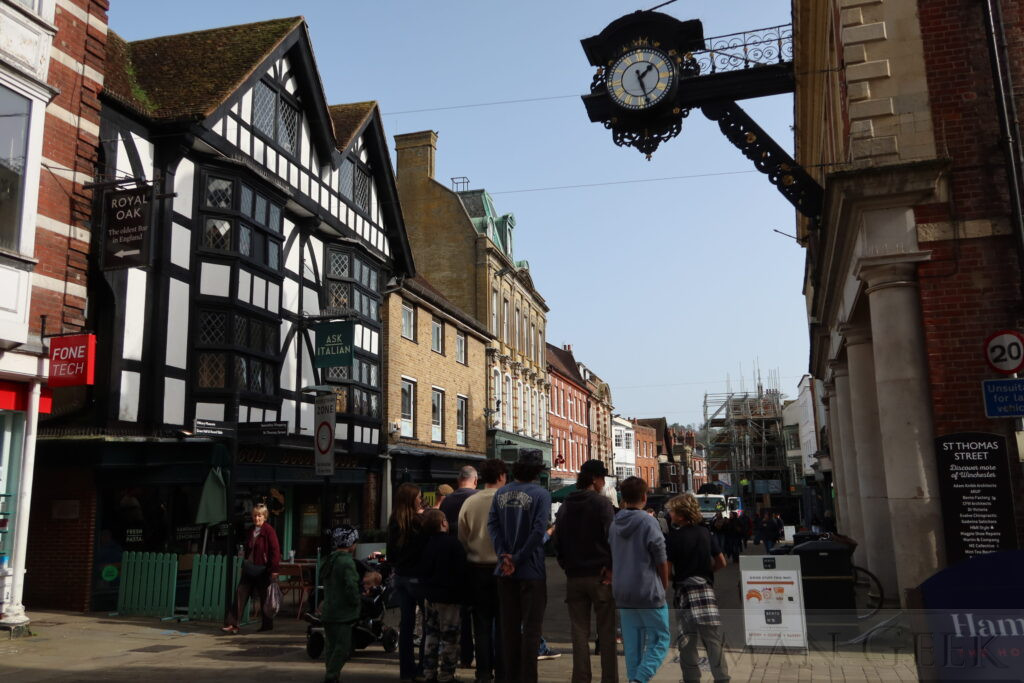
Description: Located in the High Street, this is a 15th century Ancient Scheduled Monument that features 12 statues of Saints and the Virgin Mary. It was restored in 1865 by George Gilbert Scott. The High Street is a pedestrianised road with atmospheric cafes, speciality shops, pubs and restaurants.

6. Winchester City Museum

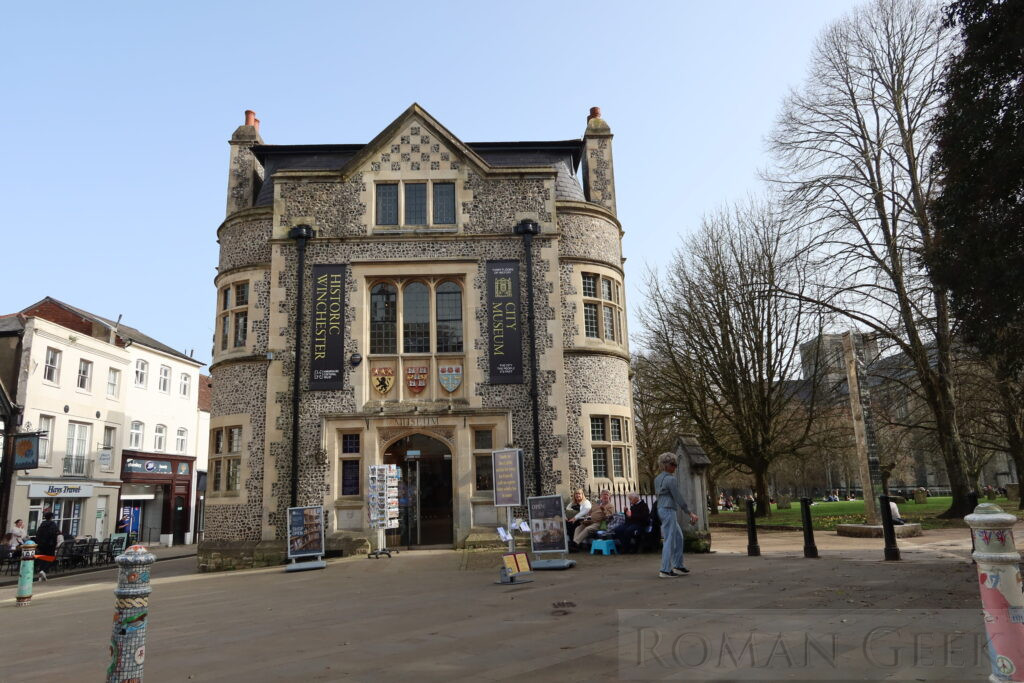
Winchester City Museum

Winchester City Museum

Description: Winchester City Museum is located at The Square, adjacent to Winchester Cathedral. The museum holds a Venta Bulgarum Gallery describing the Roman town.

7. Winchester Cathedral

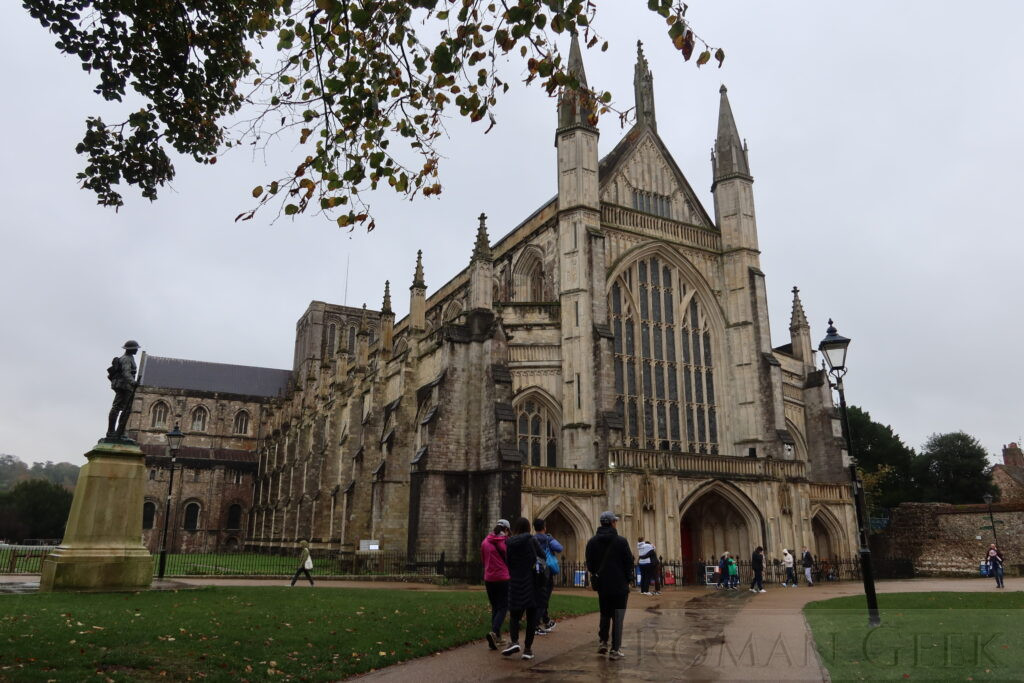
Winchester Cathedral, burial place of King Canute and his son Harthacanute.

Winchester Cathedral, burial place of King Canute.

Description:  Located at 9 the Close, Winchester Cathedral was opened in 1093 and is the sixth largest medieval cathedral in Britain, with the longest medieval nave in northern Europe, at 558 feet (170 m). The Nave ceiling is vaulted and best viewed in a mirror. It was built in the Norman and Early Gothic style of architecture. The 12th century Winchester Bible is on display in the cathedral and the Morley library holds a collection of rare books. The Cathedral Crypt holds a sculpture by Anthony Gormley called ‘Sound II’.

Historical Insight: The cathedral holds the Relics of the Saxon Kings, the Danish King Canute and the resting place for the author Jane Austen is in the north aisle. The shrine of St. Swithun once stood here.

Tip: The Movie ‘The Da Vinci Code’ used the cathedral as a set in 2005.


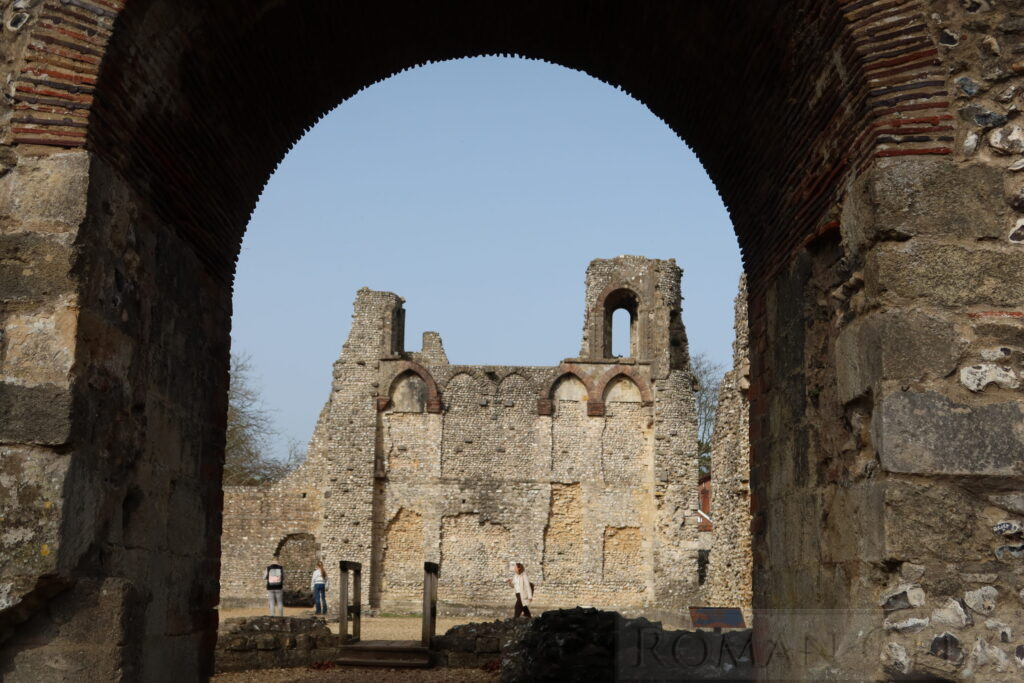
8. Wolvesey Castle (Old Bishop’s Palace)

Description: The entrance is located in College street, where stand the monumental remains of the 12th century Bishop’s Palace, once the residence of the Bishops of Winchester. It is managed by English Heritage and is open to the public.

9. Winchester City Walls

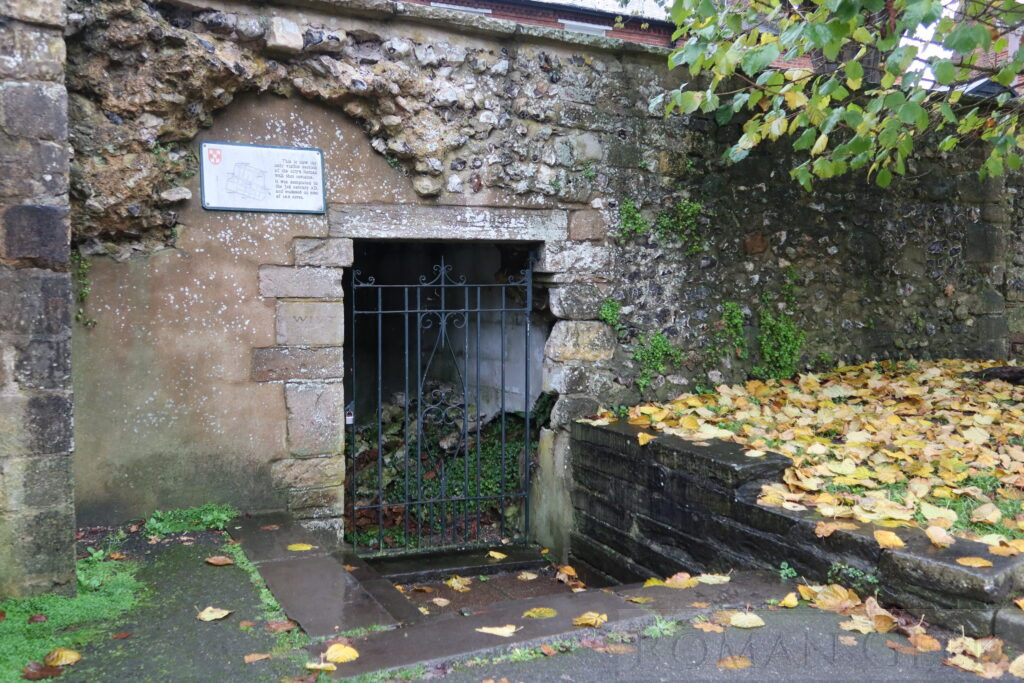
Remains of the Roman Wall in an Alcove behind the Bishop on the Bridge Pub at Winchester

Remains of the Roman Wall

Description: The surviving part of the medieval city walls are located between Wolvesey Castle grounds and the river Itchen. The Roman city built its walls in the 3rd century CE. Today, there are no Roman remains above ground, although one tiny piece of the wall is preserved in an alcove on the riverside behind the Bishop on the Bridge Pub. The medieval walls were built over the Anglo-Saxon walls, but they still follow the line of the original Roman Walls. Of the six original gates, only two survive, Westgate and Kingsgate.

10. Winchester City Mill

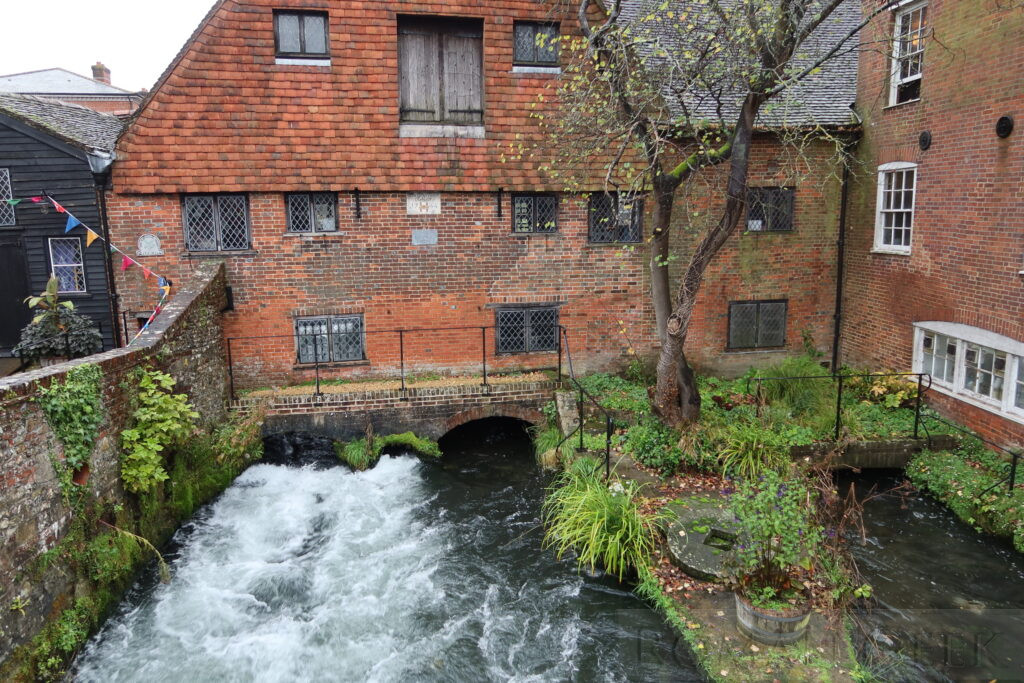
Winchester Water Mill

Winchester Water Mill

Description: Located on Bridge street, this is a working water mill on the river Itchen, with the current building dating from 1744. However, the first record of a mill here dates back to 1086 in the Domesday Book. The mill is currently owned by the National Trust who operate a cafe and shop and keep the water wheel running daily with flour milling demonstrations at weekends. Film of otters passing through the river under the mill are played back on a monitor.

11. Alfred the Great Statue

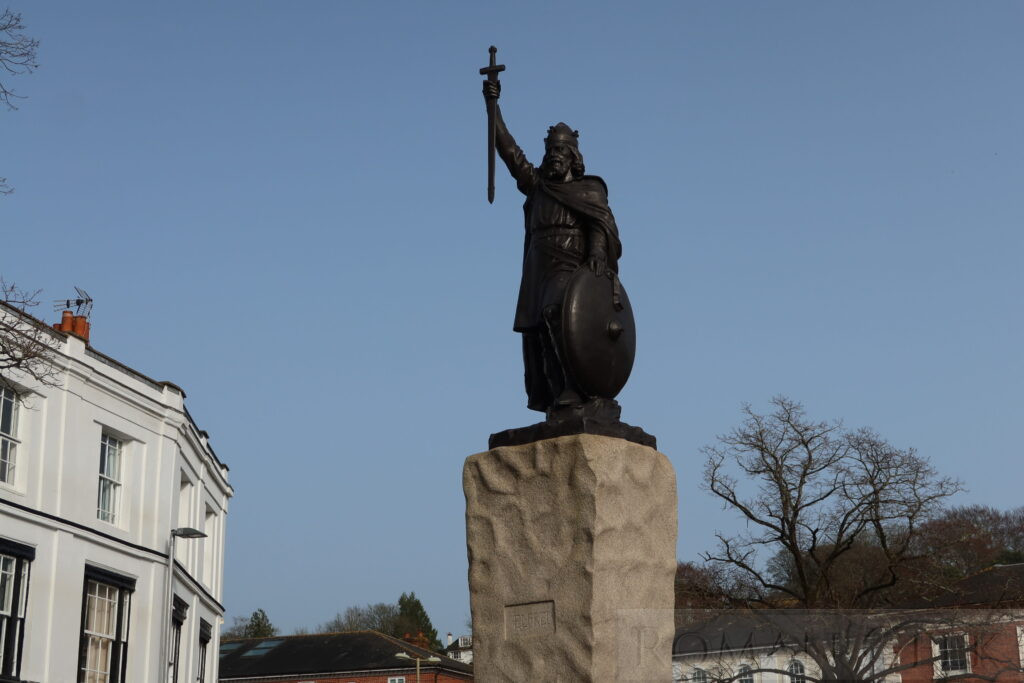
Alfred the Great Statue, Winchester

Alfred the Great Statue, Winchester

Description: Located on Broadway, Alfred the Great was the Anglo-Saxon king of Wessex who ruled from Winchester and is considered to be the founder of the Kingdom of England. By convention the list of kings and queens of England begins with Alfred the Great as the first English Monarch (886-899).


Further Afield

12. Hospital of St. Cross

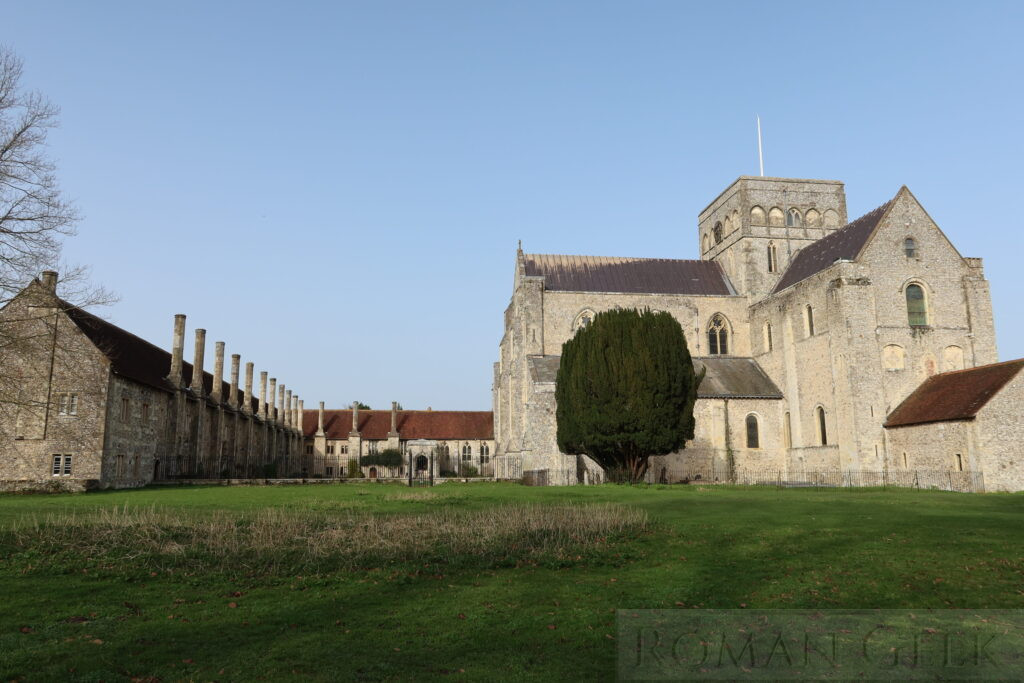
Hospital of St. Cross, Winchester

Hospital of St. Cross, Winchester

Description: Locate on Back street, the Hospital is a Grade I listed building which is known as England’s oldest Almshouse, and was founded by the Bishop of Winchester in 1136. The building is constructed of stone and consists of a church and two quadrangles. The Norman chapel was begun in 1135 and resembles a miniature cathedral rather than a chapel. The Hospital was used as a set during filming of the 2009 film, ‘The Day of the Triffids’. The Hospital continues an ancient tradition known as the ‘Wayfarer’s Dole’, consisting of a cup of ale and a portion of bread.

13. St. Catherine’s Hill

St. Catherine's Hill, Winchester

St. Catherine’s Hill, Winchester

Description: Located opposite the Hospital of St. Cross are the Iron Age Ramparts on top of St. Catherine’s Hill, a 220 foot (117m) chalk hill beside the river Itchen. There are wooden stairs to reach the top with panoramic views over Winchester and the surrounding areas. It has been designated a Site of Special Scientific Interest (SSSI) because of its unusual flora. Once a year the pupils and staff from Winchester College assemble at dawn on top of the hill.

Winchester Walking Tour (2-3 hrs)

  • Your geolocation will appear as a blue dot that moves on the map as you walk.
  • You may start anywhere on the map and just follow the blue line to the next point of interest.


Travel Tips

Visitor FAQ

  • What is Winchester famous for?
    • Winchester is known for being the Saxon capital of England, the seat of King Alfred the Great. An 11th century medieval cathedral holding the 12th century Winchester Bible and containing the Relics of the Saxon Kings and the Danish King Canute, and the burial place of author Jane Austen. It has medieval city walls, the 13th century Great Hall holding the Round Table linked to Arthurian Legend. Winchester college, which is the oldest continuously running school in England since 1382. John Keats wrote ‘To Autumn’ here and Thomas Hardy’s Wessex novels refer to Winchester as Wintoncester. The pop song ‘Winchester cathedral’ composed by Geoff Stephens reached number 4 in the UK in 1966 and number 1 in the US and Canada.
  • Can I see Roman Ruins in Winchester?
    • Yes, the medieval city walls are built on the original Roman walls. There are many Roman artefacts in Winchester city museum.
  • How far is Stonehenge from Winchester city centre?
    • Approximately 50 minutes by car.
  • Are there Guided Tours of Winchester historical sites?
    • Yes, local guides offer walking tours highlighting the Cathedral, the Old Town and other venues. Contact Walking Tours of Winchester.
  • Is Venta Bulgarum the same as Winchester?
    • Yes, Winchester was founded by the Romans in 70 CE, when they moved the Belgae tribe from their Oppidum nearby.
  • Which Roman Province was Canterbury located in?
  • What was the role of Venta Bulgarum (Winchester) in the Roman Empire?
    • Winchester served as a key economic hub for the wool trade, with its own Procurator of the Wool Warehouse, and roads leading to other Roman cities, including the Portway to London. The River Itchen probably connected Winchester with Clausentum at Bitterne Manor, Southampton, where the wool would have been transferred to sea-going vessels.
  • Which Roman Roads connected to Winchester?
    • Portway from London to Dorchester, had a branch at Silchester to Winchester, Southampton and Portchester. Ermin Street from Gloucester to Silchester, also had a branch to Winchester, Southampton and Portchester. Iter XV, Iter XII and Iter VII of the Antonine Itinerary all show connections to Winchester.

Quick Facts

Nearby Attractions

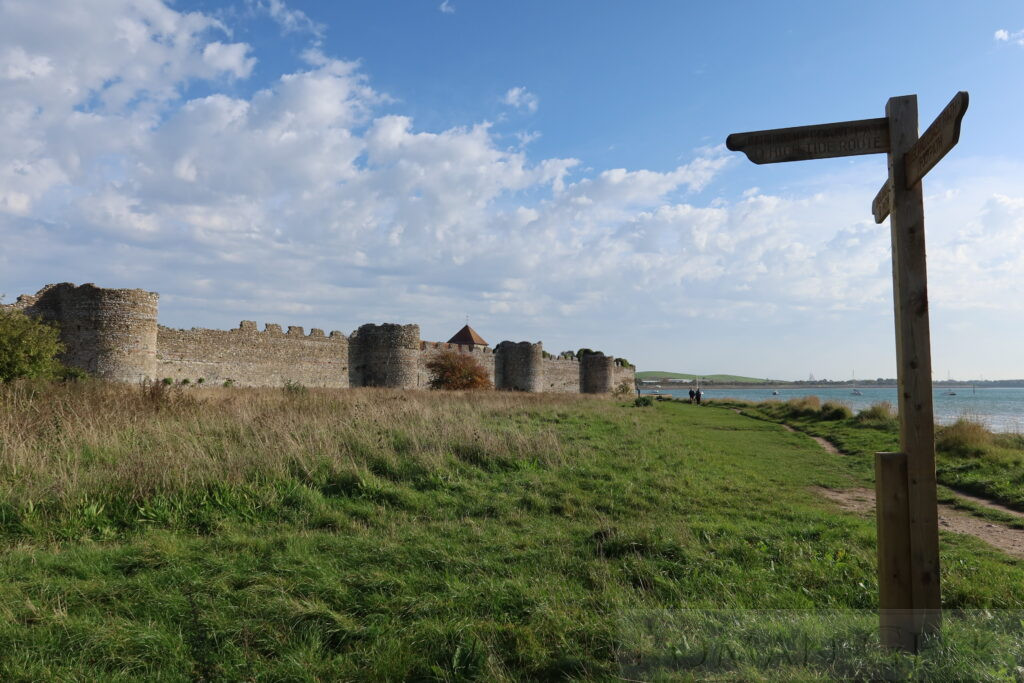
Portchester Castle

Portchester Castle

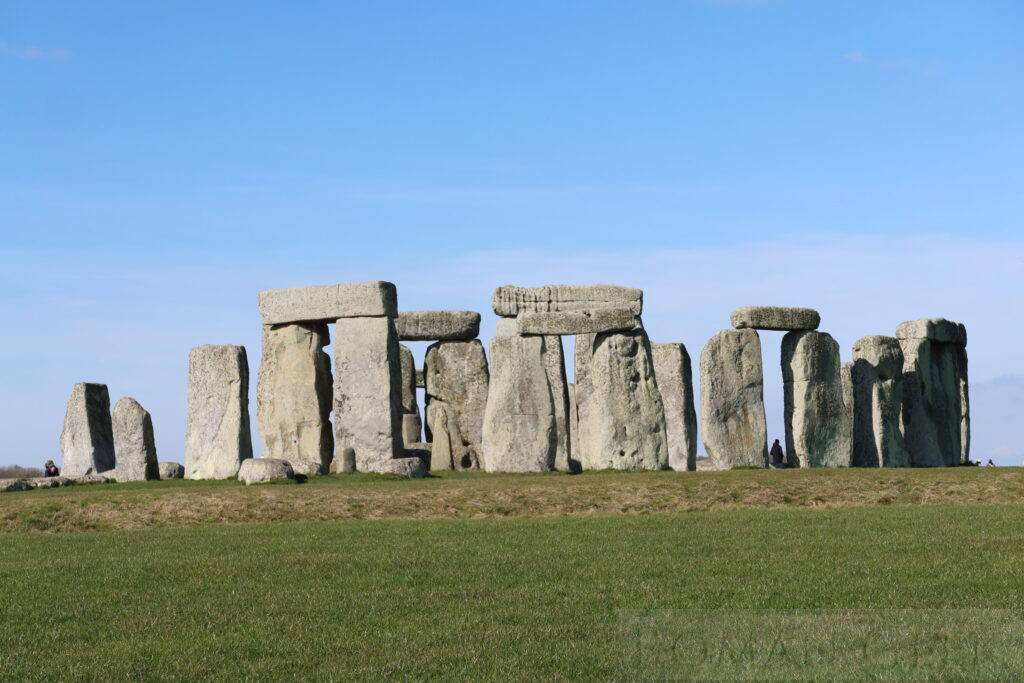
Stonehenge is a Henge Monument in Wiltshire near Salisbury, constructed between 2,600 and 2,300 BCE, which may have served as an Astronomical Observatory.

Stonehenge, Wiltshire

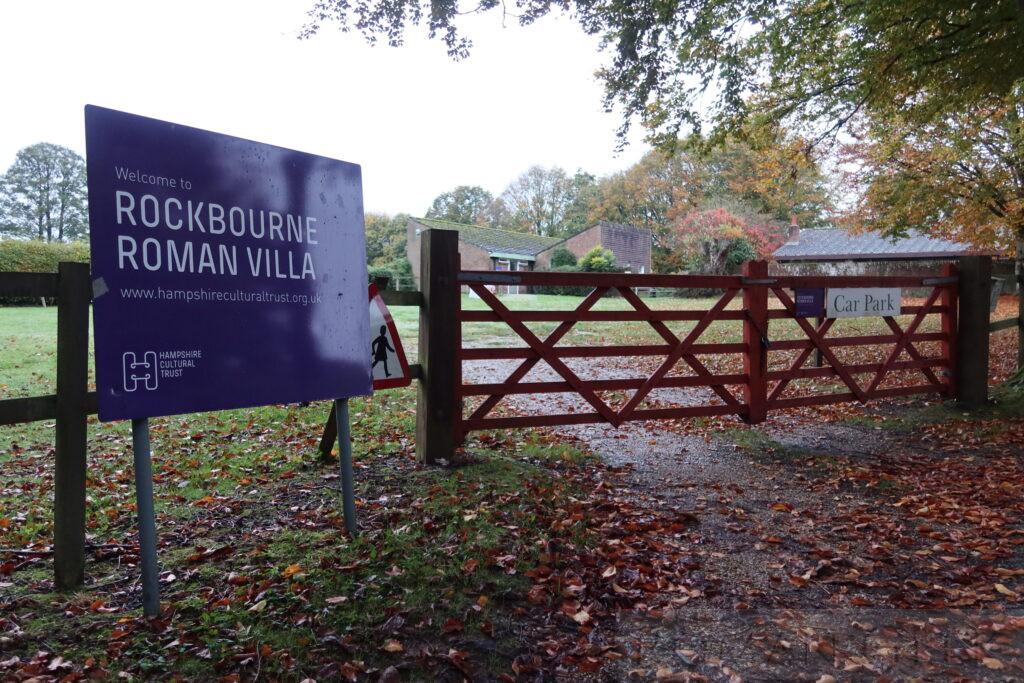
Rockbourne Roman Villa near Fordingbridge in the New Forest. The villa has a museum, mosaics, hypocaust and baths.

Rockbourne Roman Villa. The villa has a museum, mosaics, hypocaust and baths.

Neolithic House at Butser Ancient Farm near Petersfield.

Neolithic House at Butser Ancient Farm near Petersfield.


Caistor-on-Sea

  • Caistor-on-sea is a village on the North Sea coast, to the north of Great Yarmouth, in the County of Norfolk.
  • It is the location of one of the Saxon Shore Forts, called Garriannonum.

Roman Sites

  • The Roman Fort
    • Only the remains of the walls at ground level are visible, along with the V-shaped defensive ditches.
    • Located on the opposite river bank to Burgh Castle, it also guarded the entrance to the Norfolk Broads.

History

  • The Saxon Shore Forts were a chain of Roman Naval Forts in southeastern England that stretched from Portchester to the Wash, whose function was to defend the River estuaries and coastline from Pirate attacks by seaborne invaders.
  • The Forts date to the third century CE and are mentioned in a 4th century CE document known as the Notitia Dignitatum.

Roman Roads

Nearby Sites


Caistor Roman Fort, Caistor-on-Sea

Cottages view, North Bridge, Colchester

Colchester

Colchester: Britain’s oldest recorded city founded in 43 CE.

Overview

Colchester was the first capital of Roman Britain and is Britain’s first recorded city, making it the oldest Roman city. It is located on the River Colne in Essex, and has been a Garrison town for 2,000 years. It has an 11th century Norman castle, built over a Roman Temple and two thirds of its Roman walls are intact. Colchester is home to Colchester Zoo, ranked as one of the top five zoos in the UK.

Roman History

Colchester was originally Camulodunun, an Iron Age stronghold to the west of modern Colchester, belonging to the Catuvellauni Tribe under King Cunobelinus, ‘King of the Britons’ (9-40 CE) located to the west of Colchester. By 25 CE, Cunobelin had acquired St. Albans and annexed Kent. After the Roman Conquest of Britannia (43 CE), Colchester was founded as Camulodunum, also known as Colonia Victricensis, and as the existing seat of regional power, became the Roman capital of the Province of Britannia between 43-60 CE. The Legion that built Camulodunum was the Legio XX Valeria Victrix. It was on a junction of two Roman Roads, the Pye Road to London and the Via Devana to Chester.

In 77 CE [yadawiki link=”Pliny the Elder”] recorded that [yadawiki link=”Anglesey”] was approximately 200 miles from Camulodunum. This is the first written reference of a Place Name in Britannia making it Britain’s oldest recorded city, and the first city in Britain to be awarded the title of Colonia.

Colchester was the location of the beginning of Boudicca's Revolt, where Colchester and the Temple of Claudius were burnt to the ground. Boudicca went on to burn London and St. Albans, before being defeated at the Battle of Watling Street. After this, in 60 CE, the capital was moved permanently to London.

Medieval History

In 527 CE, Colchester became a city in the Saxon Kingdom of Essex. Between 869-917 CE, the Vikings briefly incorporated the city into the ‘Danelaw‘. In 917 it was ‘saved’ by the Saxon King Edward the Elder. After the Norman Conquest of 1066 it became a Norman stronghold with a castle and an abbey and a thriving port. The medieval harbour was at Hythe, today’s Hythe Hill. A major textile industry developed after the arrival of Flemish Protestants during 16th century, when Colchester’s main trading partner became Bruges. By 1600, Colchester had become the seventh wealthiest wool town in England, up from twelfth in 1524.


Things to Do and Places to See in Colchester

1. Colchester Castle Museum
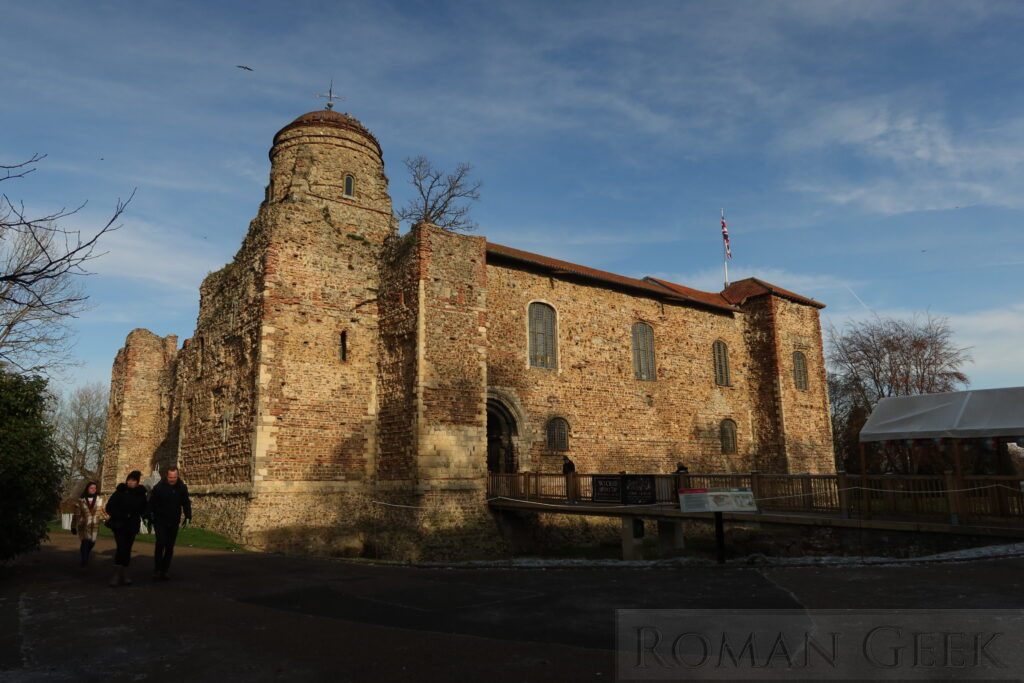
Colchester Castle Musuem

Colchester Castle Musuem

Description: Colchester Castle is a Norman castle begun in 1076 and completed by Henry I (1100-1135). It was built over the sizeable Roman Temple of Claudius. This had two effects, it placed the Keep in the centre of the town, rather than on the outside which was unusual for a Norman Keep, and also gave it an area of 152 by 112 feet (46 m × 34 m), making it the largest Keep in Europe by area. The Castle Walls are made of reused Roman Brick and Stone from the old Roman Town.

Historical Insight: Eudo Dapifer (aka Eudo Fitz-Hubert) (c.1055-1120), the High Steward to William the Conqueror, his son William II and his brother Henry I, built the castle and became its first Constable. Eudo also built the nearby St. John’s Abbey, was gifted lands in Essex, including the town of Colchester, and eventually made Constable of the Tower of London. The castle itself, is thought to have been designed by Gundulf Bishop of Rochester, who designed Rochester Castle and the White Tower at the Tower of London, all three of which share strong similarities. Opinion is divided as to whether the castle originally had three or four storeys, or if it only ever had two.

Tip: Inside the castle is the Colchester Museum which holds Roman exhibits including the Colchester Sphinx, Mosaics and other artefacts.

2. Vaults of the Roman Temple of Claudius

Description: The Temple of Claudius was built between 54-60 CE, on the same scale as Temples in Rome. Today only the vaults and podium remain and are now underneath Colchester Castle. Access to the Roman vaults is from inside the castle.

Historical Insight: It was one of eight pagan Roman Temples in Britain and was the largest of its kind. The Temple was built in the impressive octastyle with columns running down the sides, and was dedicated to Claudius and the Cult of the Roman Emperor.

3. The Obelisk in Castle Park
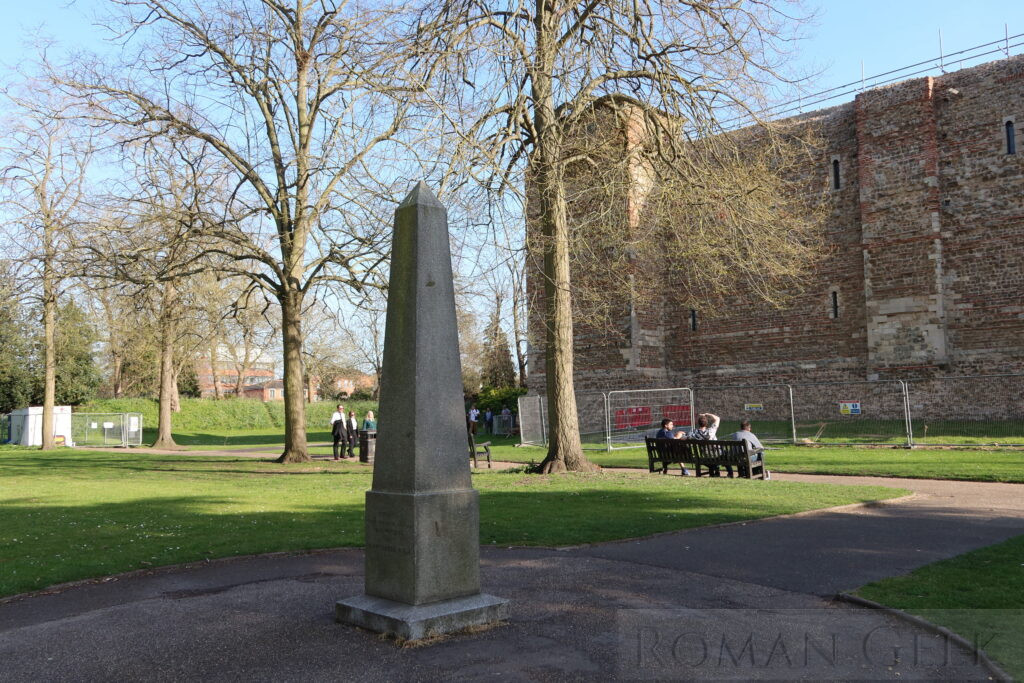
Obelisk, Castle Park, Colchester

Obelisk, Castle Park, Colchester

Description: The Obelisk is located in Upper Castle Park (which is free to enter) behind the Castle. Continue towards Middle Mill Weir and you will see the Old City Wall to the right.

Historical Insight: The Obelisk marks the execution spot of two defending Royalist Captains Sir Charles Lucas and Sir George Lisle, who were executed by Sir Thomas Fairfax, the Parliamentary General of the New Model Army on August 28, 1648, after the 11-week Siege of Colchester during the English Civil War (1642-51).

4. Hollytrees museum
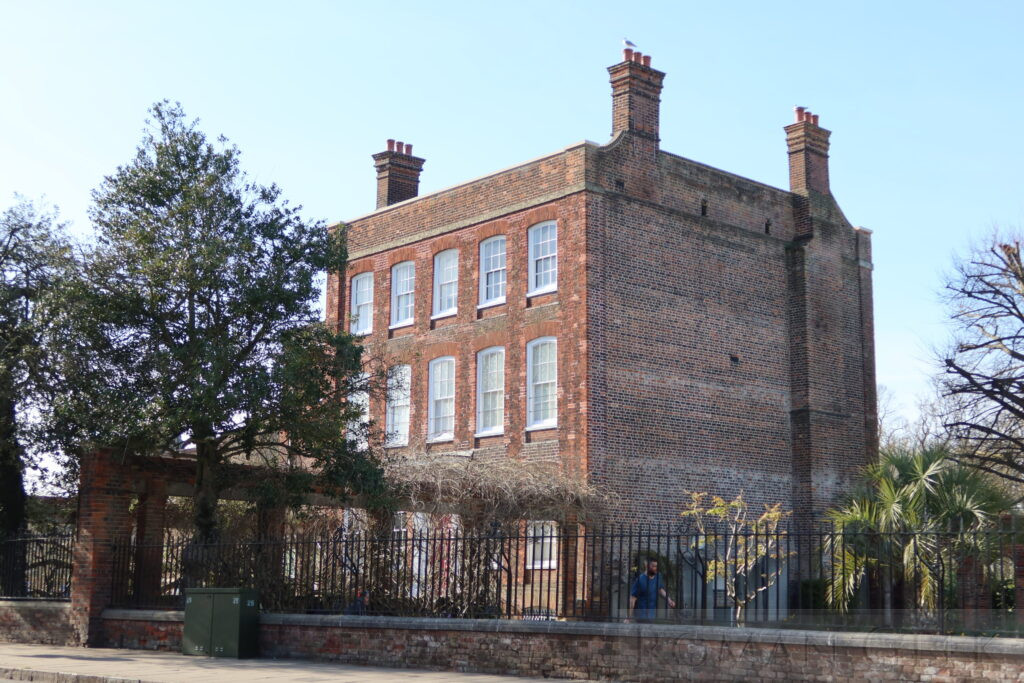
Hollytrees Museum, Colchester

Hollytrees Museum, Colchester

Description: Located beside Colchester castle, ‘Hollytrees’ is a Grade I listed Georgian townhouse that was constructed in 1719. Since 1929 it has been the local history museum for Colchester and also houses the Visitor Information Centre. The Bernard Mason Gallery holds a collection of watches and clocks dating from the 17th century, which includes lantern clocks by William Bacon, John Smorthwait and Nathaniel Hedge.

Tip: There are displays of vintage toys and games, and the history of the nursery rhyme ‘Twinkle, Twinkle, Little Star’ and its connection to Colchester.

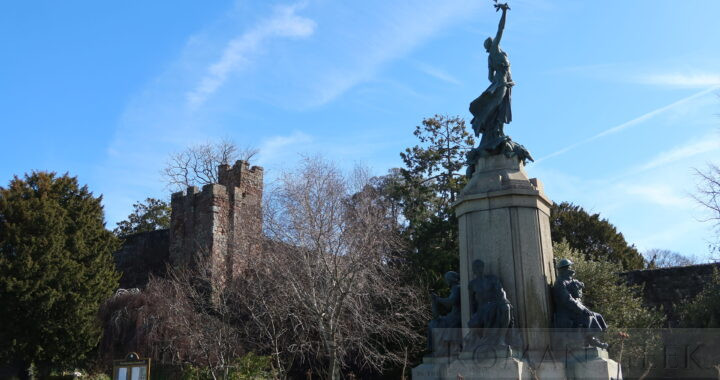
5. Colchester War Memorial
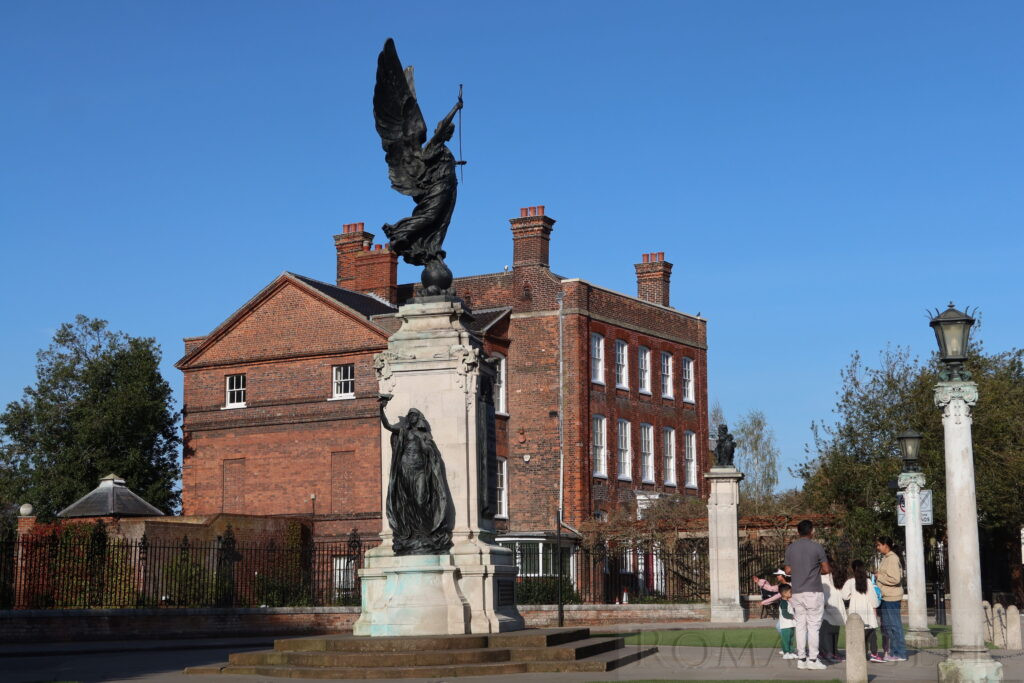
Colchester War Memorial

Colchester War Memorial

Description: Located in front of the castle, the Memorial is a Grade II listed monument which includes the surrounding posts, lamp columns, railings and gates. The Portland stone pedestal has three bronze figures created by the sculptor Henry Fehr, a Statue of Nike, Goddess of Victory (on top), a Statue of St. George and a Statue of Peace. The Memorial is one of 50 in Colchester.

6. Firstsite
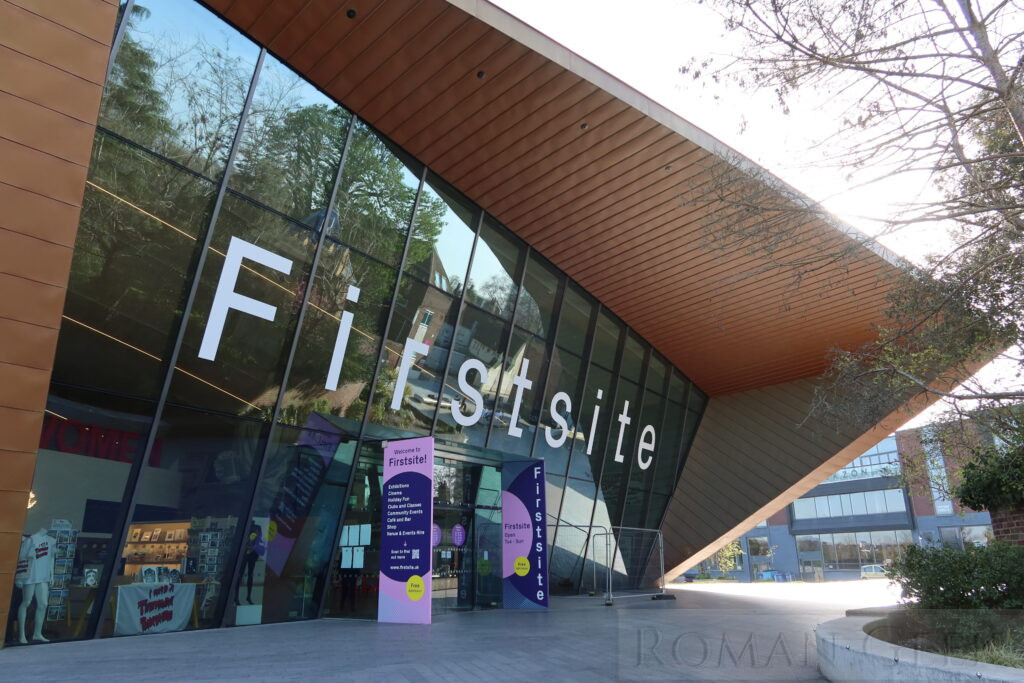
Firstsite, Colchester

Firstsite, Colchester

Description: Firstsite is a free exhibition, film and events site with a cafe and shop. Completed in 2011 by Rafael Vinoly Architects, design winners from over 100 contestants, the highly distinctive gold crescent shaped building clad in copper-aluminium houses the contemporary visual arts centre and museum.

Historical Insight: The museum holds the Berryfield Roman Mosaic dating from 200 CE. This was first unearthed in 1923 as the dining room floor of a Roman townhouse, over which the Firstsite building now stands.

7. Natural History Museum
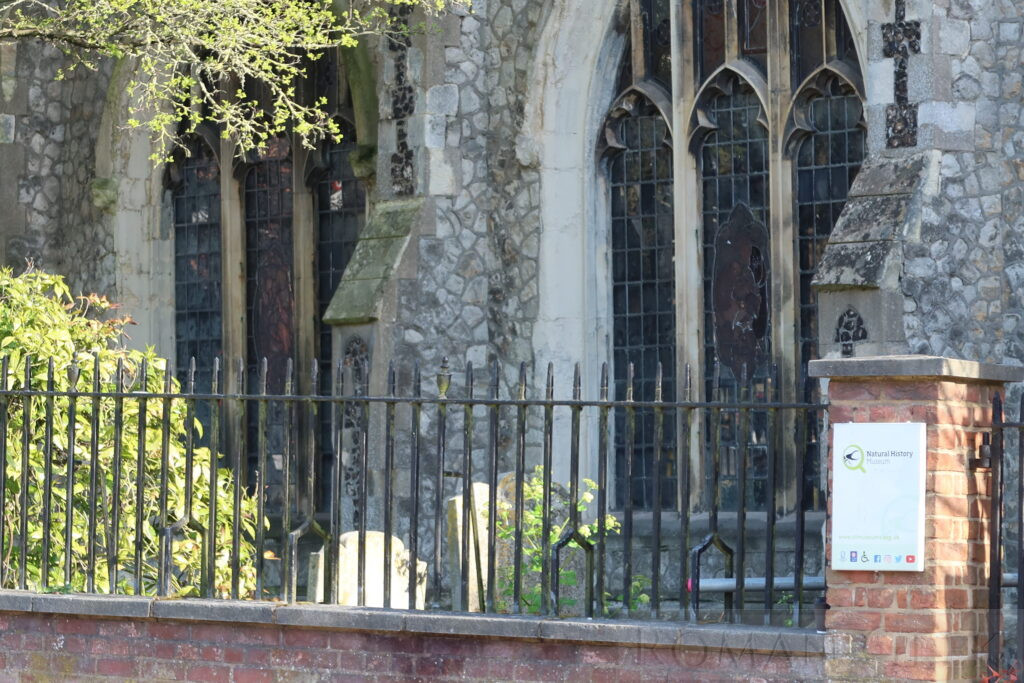
Natural History Museum, Colchester

Natural History Museum, Colchester

Description: Since 1958, this free museum is located opposite Colchester castle in the atmospheric former 12th century All Saints’ Church. The flint tower was built in the 15th century. The museum has interactive displays, and many exhibits to learn about animals, birds and insects.

Tip:  The museum includes a woolly mammoth.

8. Roman Theatre in Maidenburgh Street
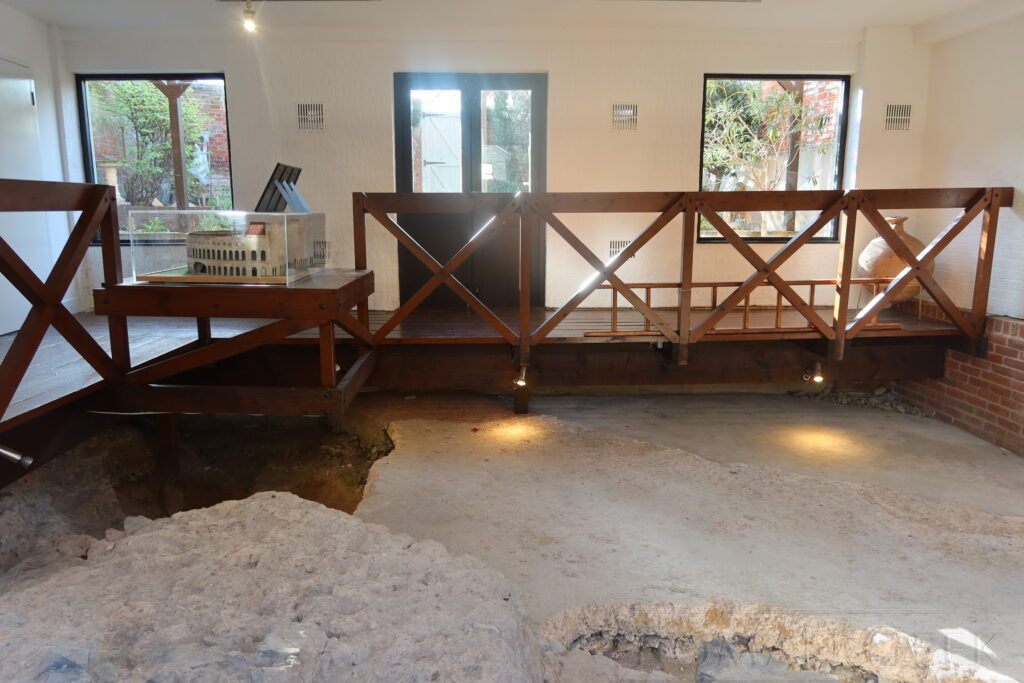
Roman Theatre in Maidenburgh street, Colchester

Roman Theatre in Maidenburgh street, Colchester

Description: Located in the town centre, near to the castle, the D shaped Theatre is no longer visible above ground. Built in the 2nd-3rd centuries, it would have had seating for 3,000 spectators. The top of the curved wall has been excavated and is on display.

Historical Insight: Colchester had two Roman Theatres, the other at Gosbecks located 2 miles (3.5km) southwest of Colchester. A Roman Circus track for chariot racing has also been excavated and lies underneath Colchester Garrison. However, there is no trace of the Roman amphitheatre.

9. East Stockwell Street
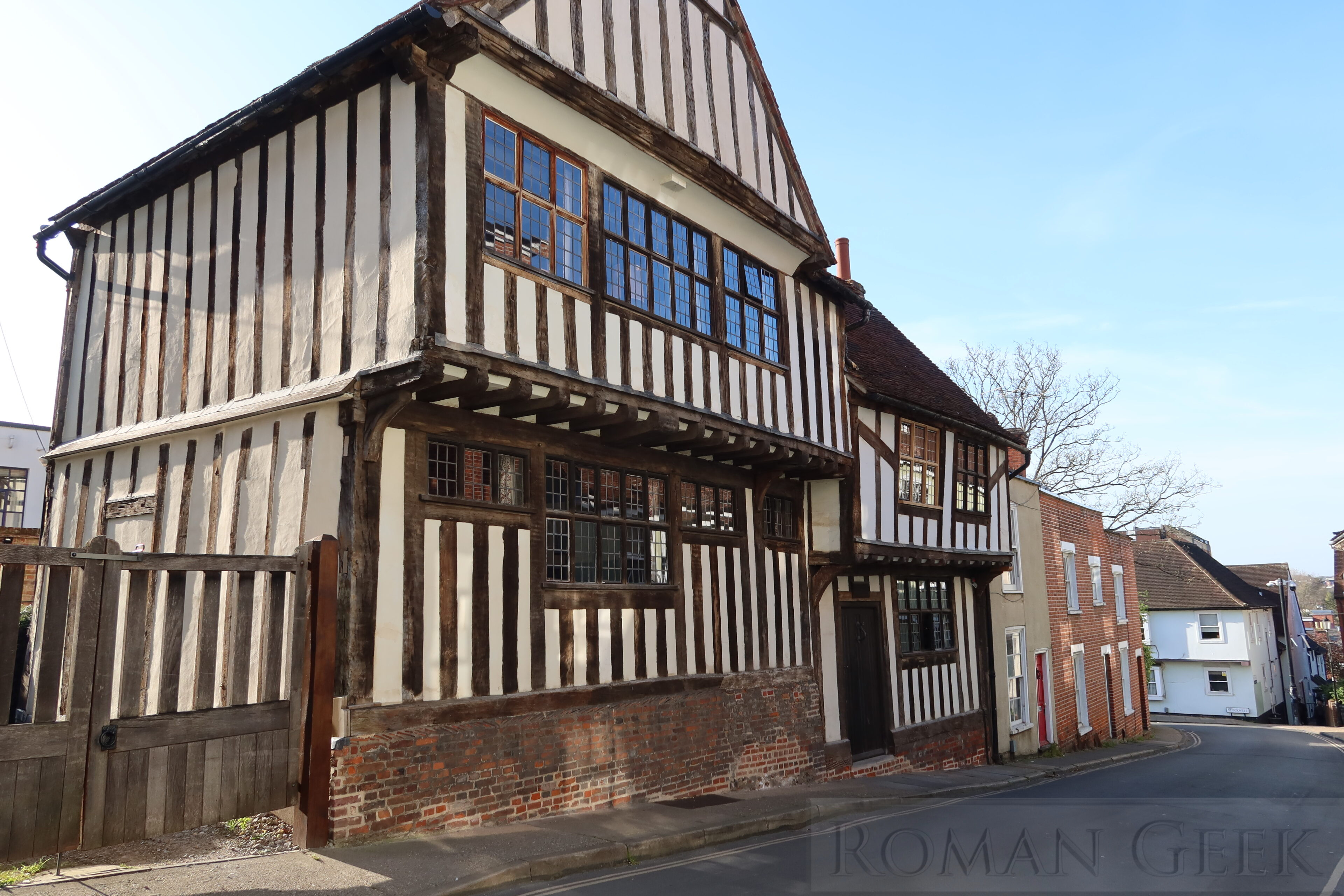
Peake's House, E. Stockwell Street, Colchester

Peake’s House, E. Stockwell Street, Colchester

Description: This is in the Dutch Quarter, an area located just north of the High Street, which became the home in the 1570’s of Flemish Protestant refugees, who had fled religious persecution after a rebellion against Catholic Spain was defeated by the Duke of Alba.

The area includes Maidenburgh Street, East Stockwell Street, West Stockwell Street, Quaker’s Alley, St. Helen’s Lane, Northgate Street and Nunn’s Road. Some of the houses predate the 1570’s, such as Peake’s House (featured above) dating from the 14th-15th centuries, which is a combination of three houses 30, 31 and 32. It is currently let by the Landmark Trust, but owned by Colchester Borough Council, who open it to the Public for one week in September.

10. West Stockwell Street
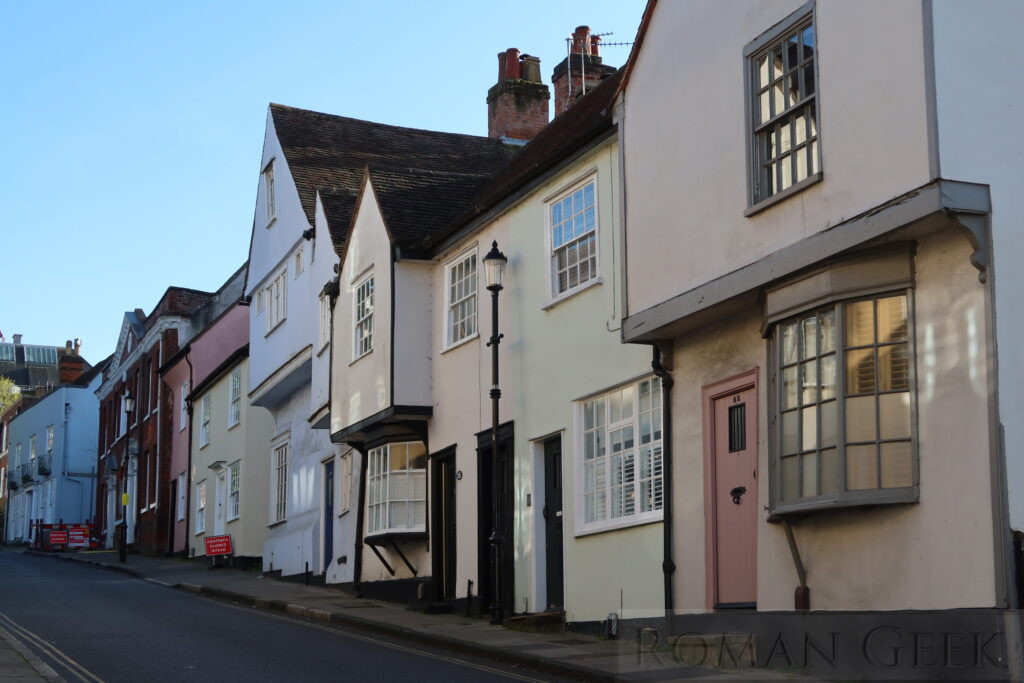
W. Stockwell Street, Colchester

W. Stockwell Street, Colchester

Description: West Stockwell Street is also in the Dutch Quarter, a group of historic streets known for their timber-framed buildings with a number listed as Grade I and II.

Historical Insight: The area grew in the 16th century with the arrival of Flemish Protestant Refugees known as the ‘Dutch Weavers’, but who also came from Belgium, the Netherlands and France to escape persecution. They built houses with distinctive large windows for maximising the light for weaving and created a textile industry in Colchester. They produce a type of cloth known as ‘Bey’. Over sixty of these historic houses still stand today, including Taylor House at 11-12 W. Stockwell Street.

11. Colchester Town Hall and High Street
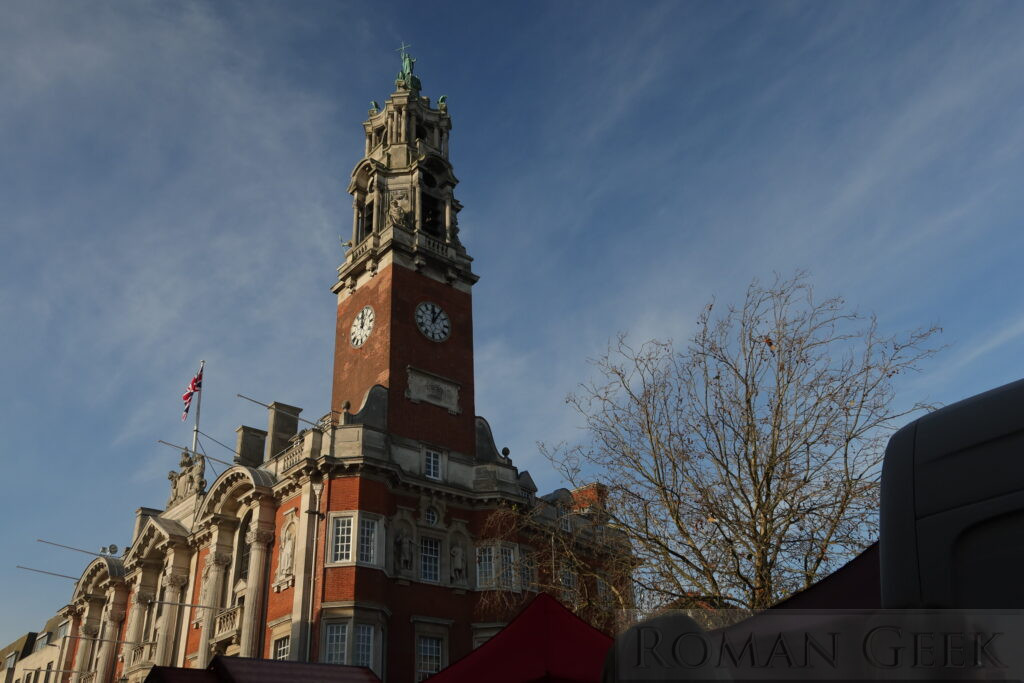
Colchester Town Hall

Colchester Town Hall

Description: This Grade I listed building was completed in 1902 in the Edwardian Baroque style, and is the third Town Hall to be built on the site. The first was built in 1277. A number of events take place in the magnificent Moot Hall, such as Christmas and New Year’s Parties and the Colchester Oyster Feast. The Tower stands at a height of 192 feet (59m), and was built to commemorate Queen Victoria’s Diamond Jubilee.

The facade features six life-size statues of key figures in Colchester’s history, created by L.J. Watts in 1902. From left to right Eudo Dapifer (Founder of St. John’s Abbey), Queen Boudicca (The Iceni Queen who burnt Colchester when she rebelled against Rome), Saint Helena (Patron Saint of Colchester),  King Edward the Elder (who saved Colchester from the Vikings in 917),  William Gilbert (Discoverer of electromagnetism) and St. Paul. The tower is topped by a bronze statue of St. Helena.

The High Street follows the alignment of the main Roman east-west street, the Decumanus Maximus. It is a vibrant hub holding an interesting mix of independent shops, bars, restaurants and cafes. The Red Lion pub was built in 1465.

12. Jumbo Water Tower
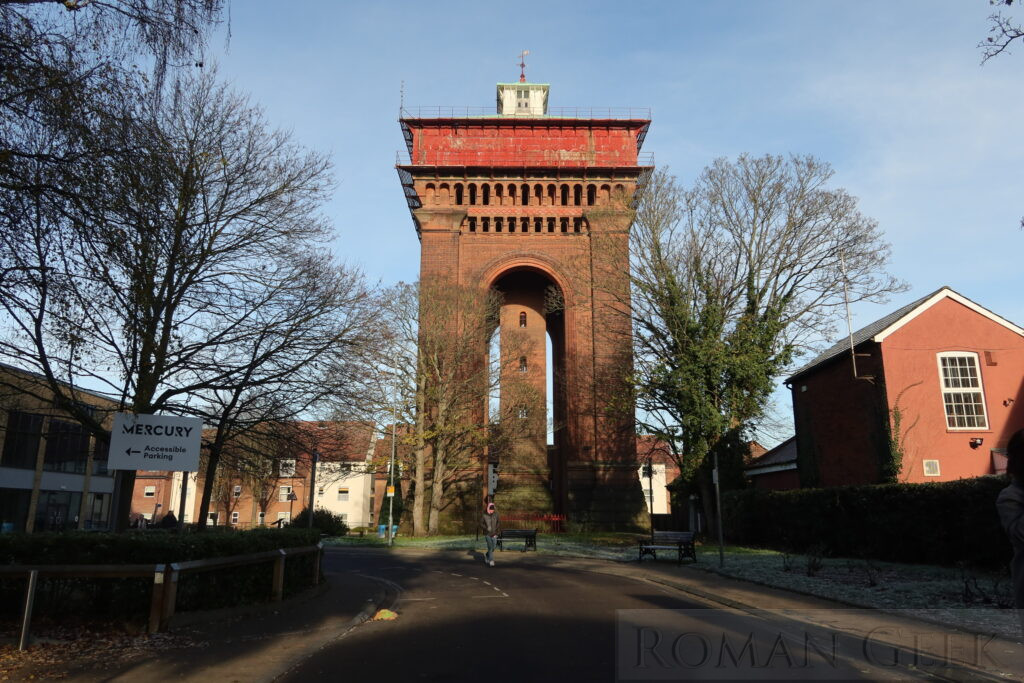
Jumbo Water Tower, Colchester

Jumbo Water Tower, Colchester

Description: Located near the Balkerne Gate, the Victorian water tower was built in 1883 and is the largest water tower in the UK. The tower has a height of 131 feet (40m) and used 1,2 million bricks. It is a Grade II listed building which ceased to be used as a water tower in 1987, and although there have been various projects to convert the tower, it currently remains unused. It stands beside the Mercury Theatre.

Historical Insight: It was nicknamed ‘Jumbo’ in 1883, by an annoyed local resident and the name has stood the test of time.

13. Mercury theatre
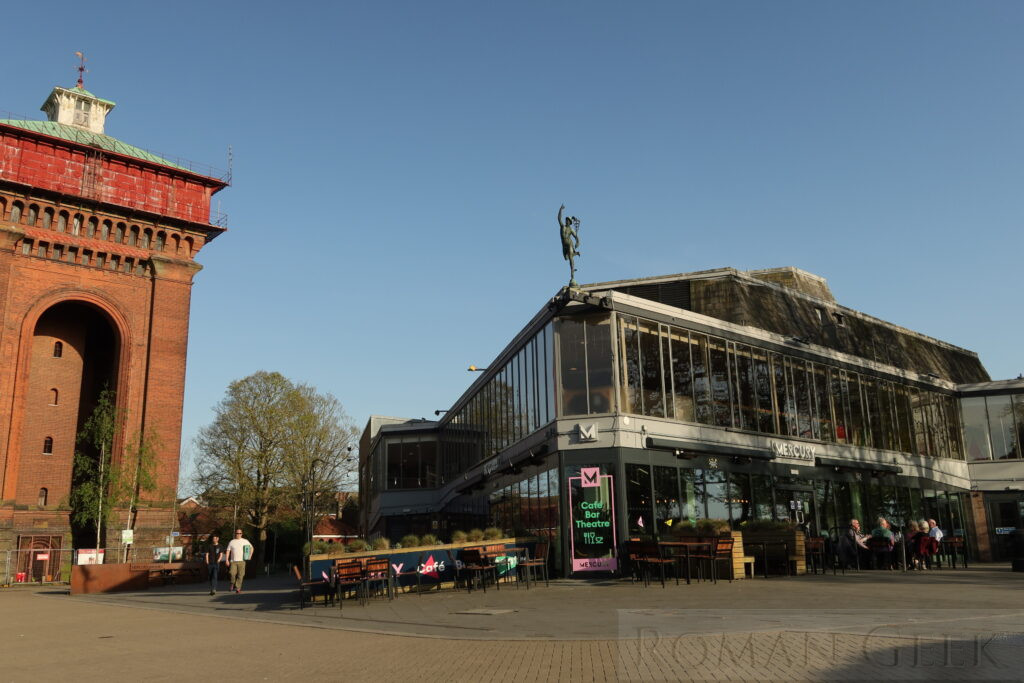
Mercury Theatre, Colchester

Mercury Theatre, Colchester

Description: Located beside the Balkerne Gate and Jumbo Tower, the venue has two auditoria and offers performances of drama, comedy and music. The design is identical to the Salisbury Playhouse. Trevor Howard began his career with the Colchester Repertory Company and Productions at the Mercury have included works by John Cleese and Martin Clunes.

14. Balkerne Gate and Roman Walls
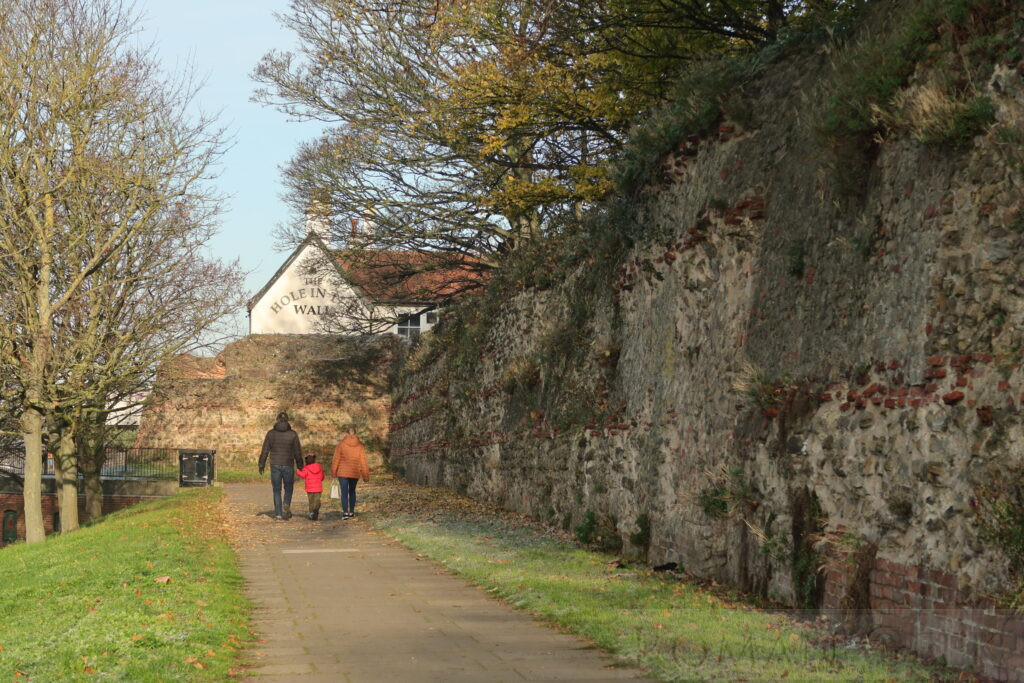
Balkerne Gate and the Hole in the Wall pub

Balkerne Gate and the Hole in the Wall pub

Description: The Balkerne Gate is one of the largest surviving Roman Gateways in Britain. The Roman walls are 1.7 miles (2.8km) long, 7 feet (2.4m) wide and were originally 19 feet (6m) high. Two Gates have survived from the original six and there are medieval bastions that support the Wall. The Hole in the Wall Pub sits beside the Gate.

Historical Insight: Colchester Roman City Walls are two thirds intact and can be walked around. They were constructed between 65-80 CE, immediately after Boudicca's Revolt (60-61 CE), when Camulodunum was razed to the ground, and the need for protective walls became clear.
Balkerne Gate, Colchester

Balkerne Gate, Colchester

15. Colchester Arts Centre
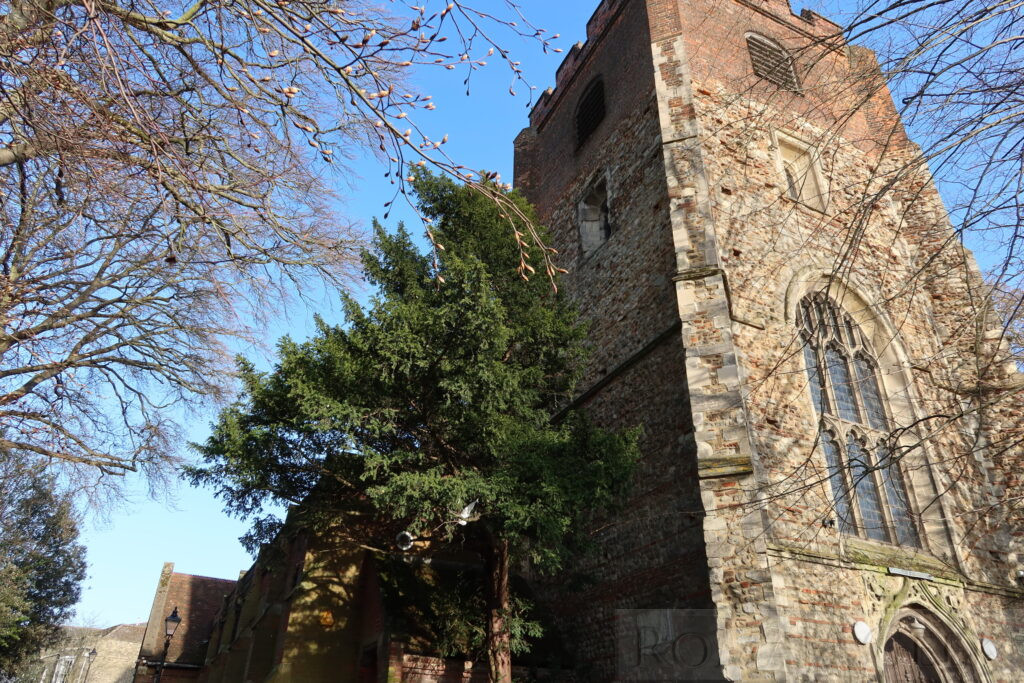
Colchester Arts Centre

Colchester Arts Centre

Description: Located in a former 13th century church of St. Mary-at-the-Walls, the Arts Centre opened in 1980 and holds shows, live music and workshops and a regular Farmer’s Market. Comedians and Bands who have played here include Eddie Izzard, Jo Brand and Harry Hill, Coldplay and The Strokes.

16. Holy Trinity Church
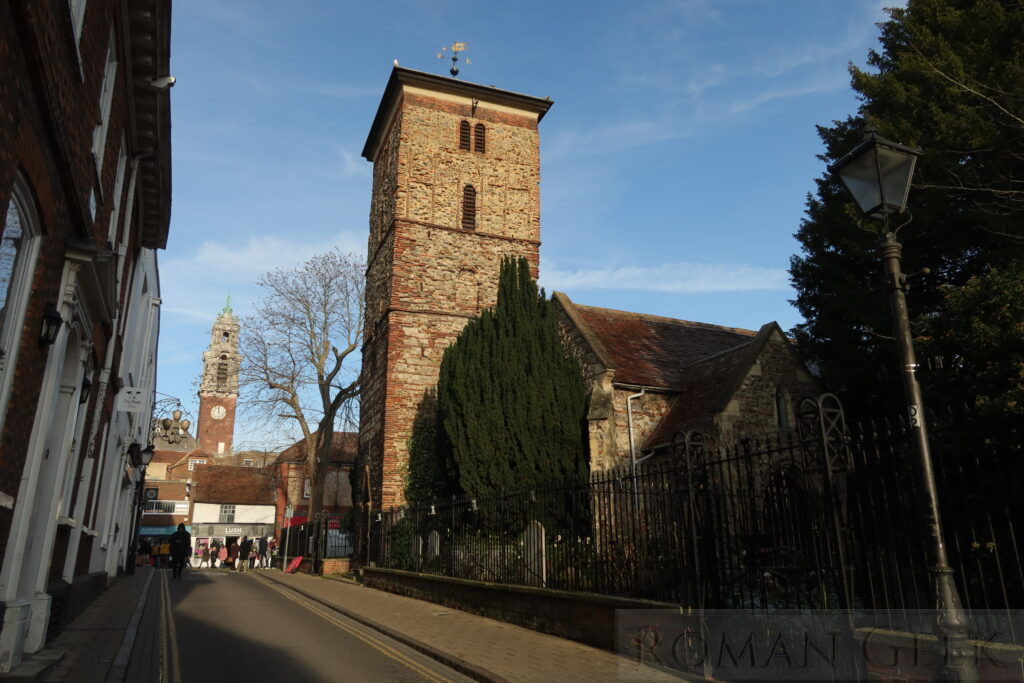
Holy Trinity Church, Colchester

Holy Trinity Church, Colchester

Description: Located on Trinity Street, opposite the city library, this is the oldest church in Colchester. It has an Anglo-Saxon tower dating from 1020. The churchyard includes the graves of the discoverer of electromagnetism and physician to Elizabeth I, William Gilberd and of Composer John Wilbye. The church has been closed to the Public since 1997.

17. Trinity street and ‘The South Lanes’ Area
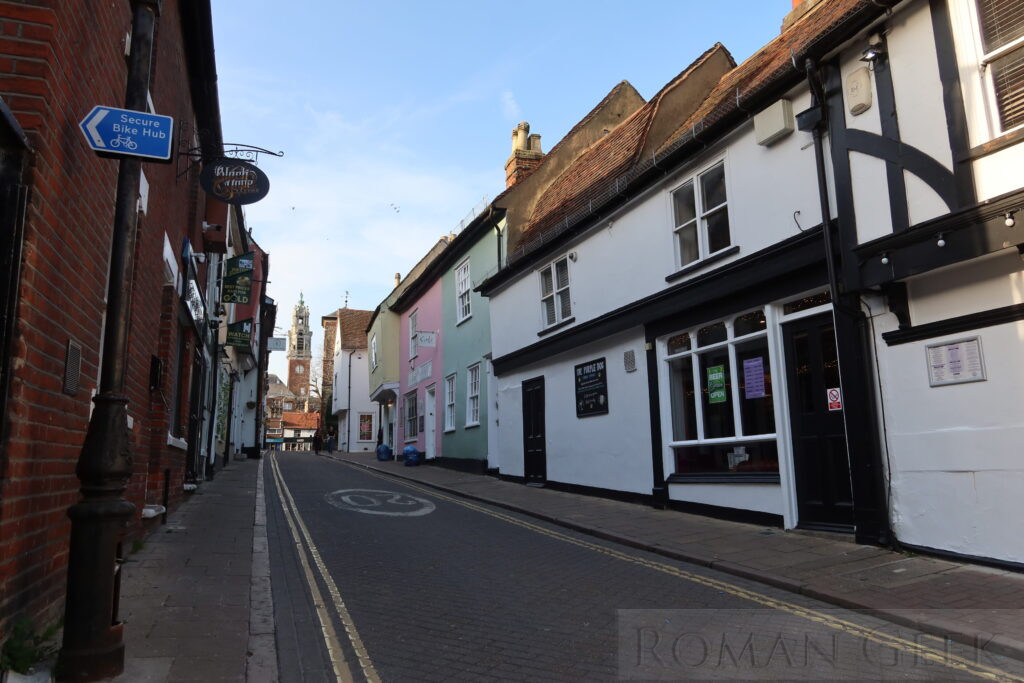
Trinity Street, Colchester

Trinity Street, Colchester


Description: Trinity Street was recently voted to be one of Colchester’s most atmospheric streets and hosts interesting buildings, independent shops and quirky cafes.

Tip: It is part of ‘The South Lanes’ area, a scenic neighbourhood that includes Sir Isaac’s Walk, Eld Lane and Scheregate Steps.

18. City Wall: Priory Road Car Park
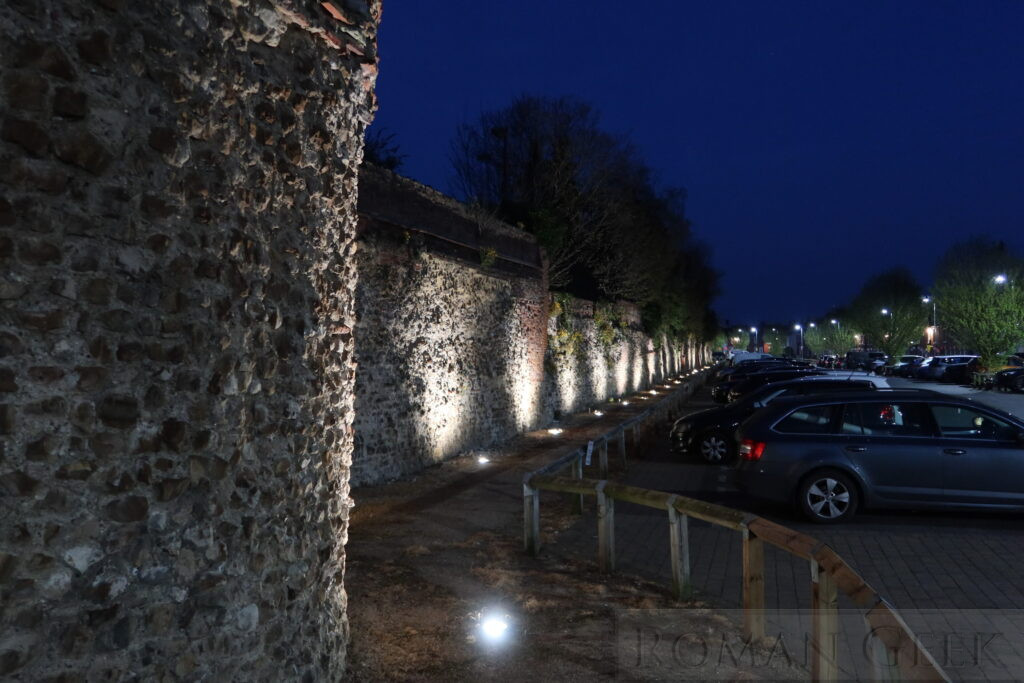
Medieval Wall Priory Street, Colchester

Medieval Wall Priory Street, Colchester

Description: The City Wall is intact along the length of Priory Road Car Park and the rampart behind it supports Castle Park above.

Historical Insight: The wall was originally constructed by the Romans between 65-80 CE, and is composed of mudstone and Roman bricks with a rubble core. During the 2nd century CE, an internal earth rampart was added for extra strength. The city wall was maintained during the medieval period but today only one of its six gates remains, the Balkerne Gate in the east.

19. St. Botolph Priory Ruins
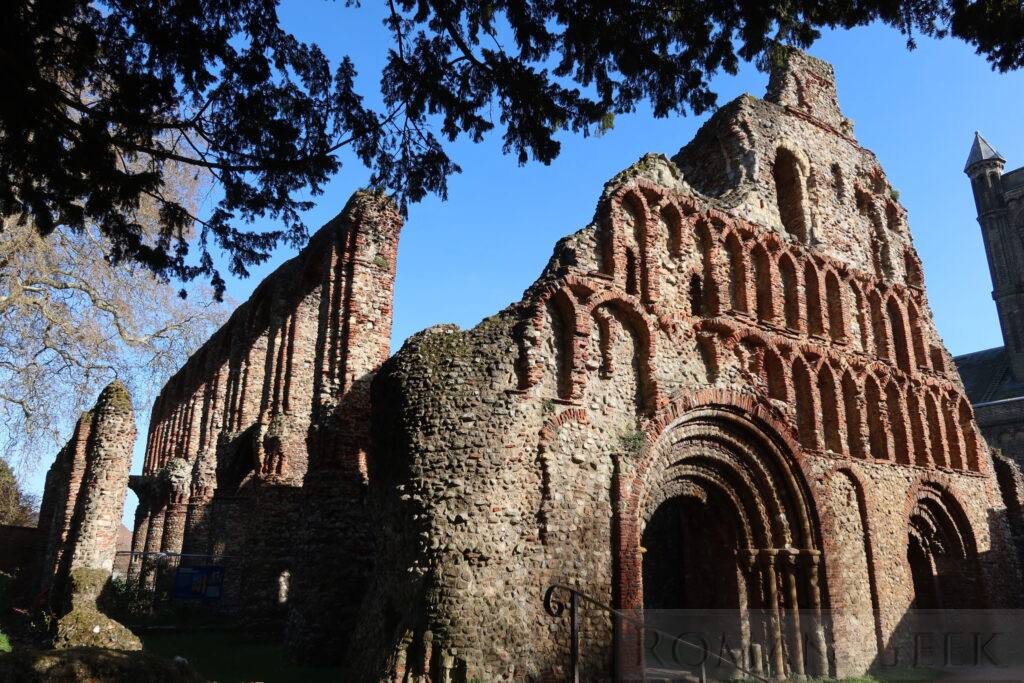
St. Botolph Priory Ruins, Colchester

St. Botolph Priory Ruins, Colchester

Description: Founded in 1093 CE as the first Augustinian Priory in England, it is a Grade I listed Monument. The 11th century Priory is now managed by English Heritage.

Historical Insight: The house was headed by a Prior and 12 Canons, and was the senior Augustinian Priory in England. The Priory was an extensive landowner and possessed several mills. For most of its existence it was locked in a rivalry with the adjacent St. John’s Abbey. Despite being dissolved in 1536, the Priory remained more or less intact until the Siege of Colchester in 1648, when it was bombarded and reduced to its current state of ruin.

20. St. Botolph’s church
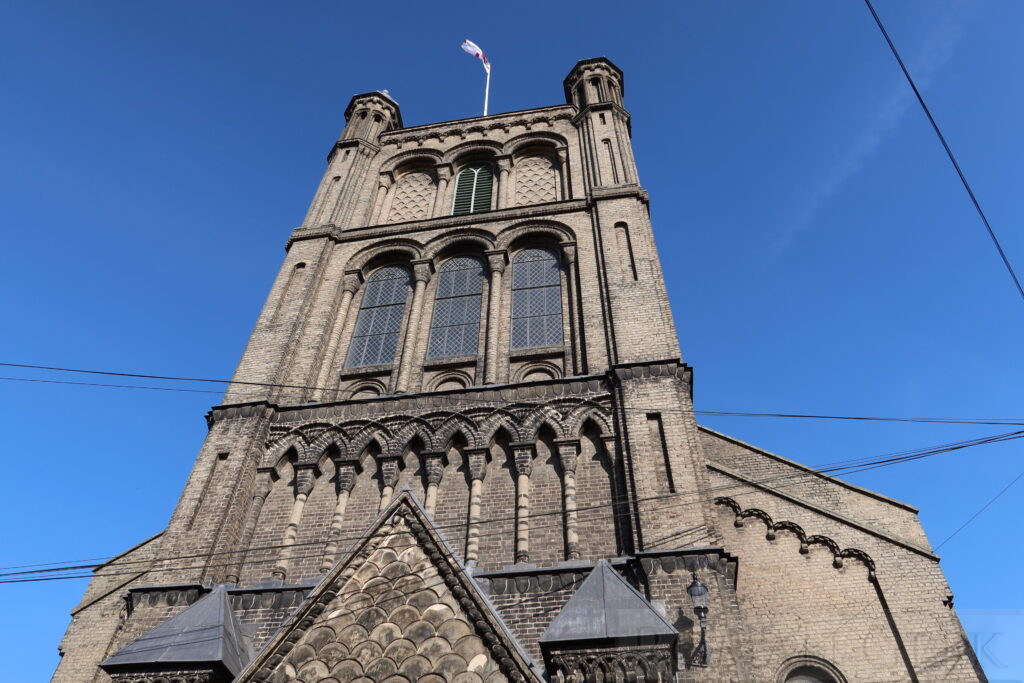
St. Botolph's Church

St. Botolph’s Church

Description: Built in 1837 in the style of the 12th century St. Botolphe’s Parish church which it replaced, this new church was designed to accommodate 1,080 people. It features a distinctive white brick tower, which was nicknamed at the time ‘The White Elephant’. During WWII, the church was almost destroyed by air raids and had its own team of fire wardens to deal with incendiary bombs.

Further Afield

21. St. John’s Abbey Gatehouse
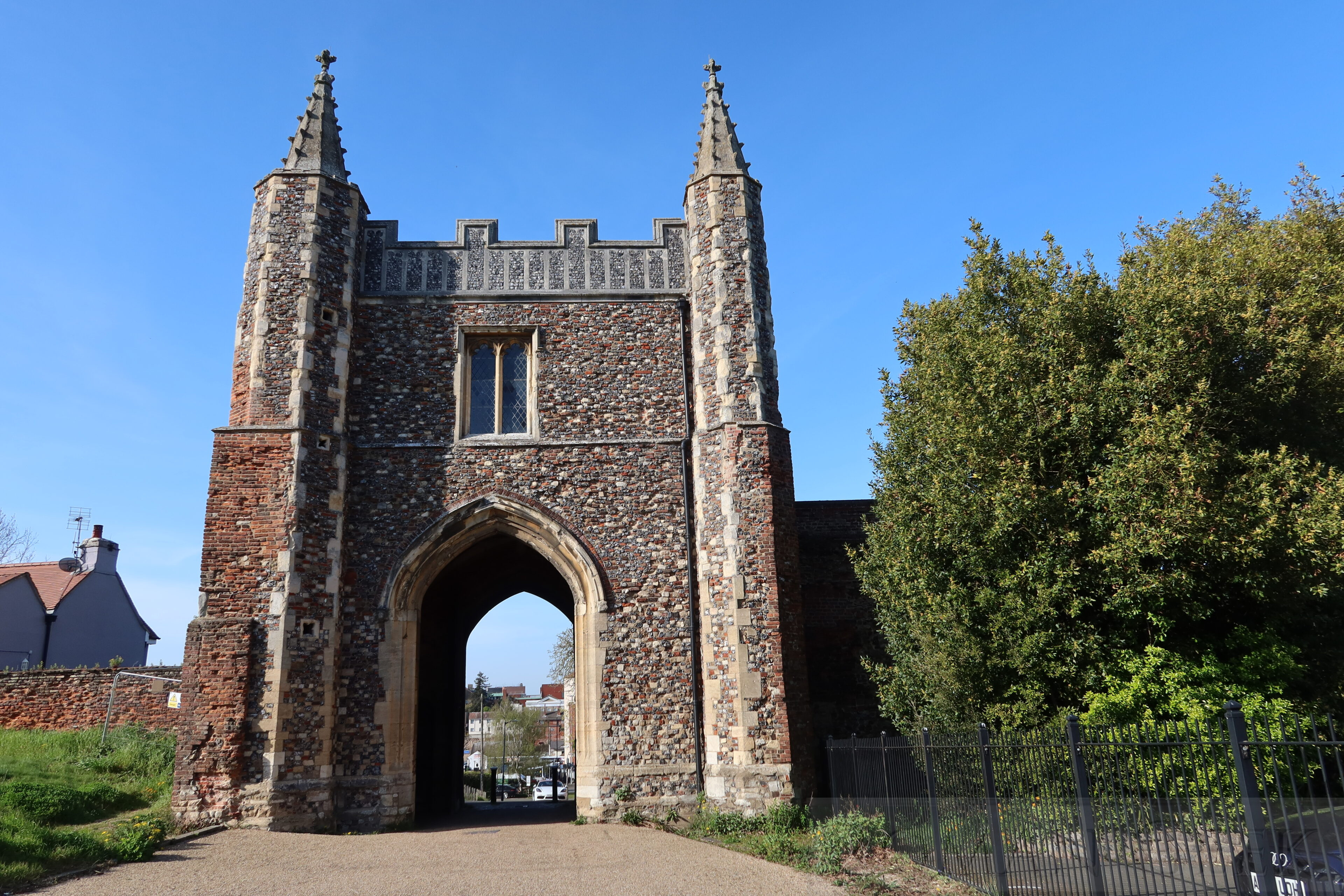
St. John's Abbey Gatehouse, Colchester

St. John’s Abbey Gatehouse, Colchester

Description: The Gatehouse is all that remains of the former Benedictine abbey. Eudo Dapifer, the High Steward to King William II (William Rufus), founded St. John’s as a Priory in 1096, but it was granted Abbey status in 1104 and completed in 1115.

Historical Insight: A long-standing rivalry developed between the Abbey and the townspeople and also with St. Botolphe’s Augustinian Priory nearby. The Abbey maintained its ships at Brightlingsea. During the Wars of the Roses (1455-1487), Richard III stayed at the Abbey several times. After the Dissolution of the Monasteries in 1536, John Beche, the last Abbot, was tried and executed in 1539, as one of the three Abbots (Colchester, Glastonbury and Reading) who refused to hand over their Abbeys. The remains of the abbey were destroyed during the Siege of Colchester during the English Civil War (1642-51).

22. Roman Circus Visitor Centre
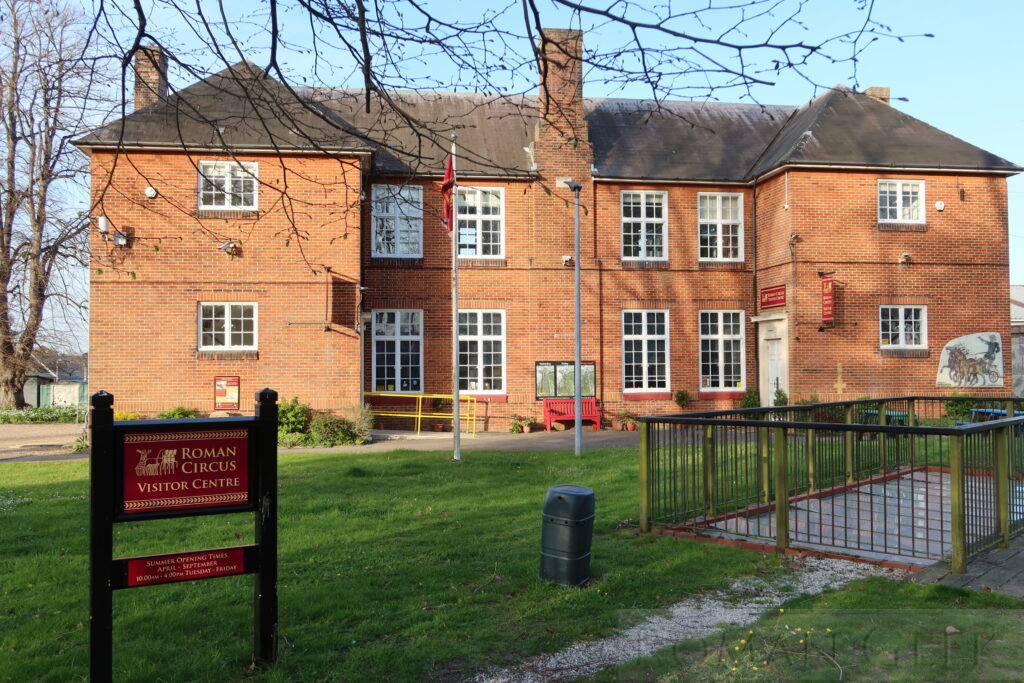
Roman Circus Visitor Centre, Colchester

Roman Circus Visitor Centre, Colchester

Description: Dedicated to the only known Roman chariot racing track in Britain. Discovered in 2004, the Circus appears to have accommodated up to 8,000 spectators for chariot races. Visitors can walk part of the outline of the circus, see reconstructed stumps of the starting-gates and central gateway.

Tip: Inside the Visitor Centre is a replica of a Roman racing-chariot and charioteer, audio-visual displays, a model of Roman Colchester in 200 CE and a scale model of the Roman Circus itself.

23. Butt Road Roman Church
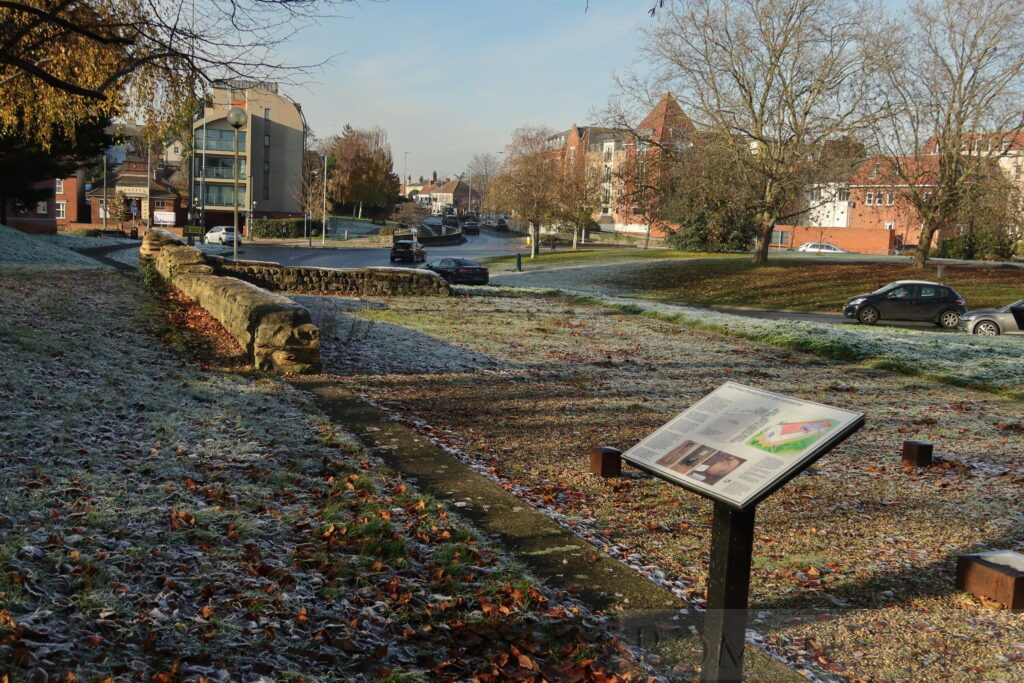
Butt Road Roman Church, Colchester

Butt Road Roman Church, Colchester

Description: The remains are located just off the Maldon road roundabout beside the Police Station. The church was located during excavations by the Victorian Archeologist William Wire who thought it was a Roman temple.

Historical Insight: Built between 320-340 CE and in use until c.400 CE, it is now considered to be one of the first Christian churches to be built in Britain, as it is aligned east-west with a curved eastern end. A cemetery was also found with 371 burials, 61 of which were oriented east-west, along with a hoard of 500 Roman coins dating to 330 CE.

24. Middle Mill Weir
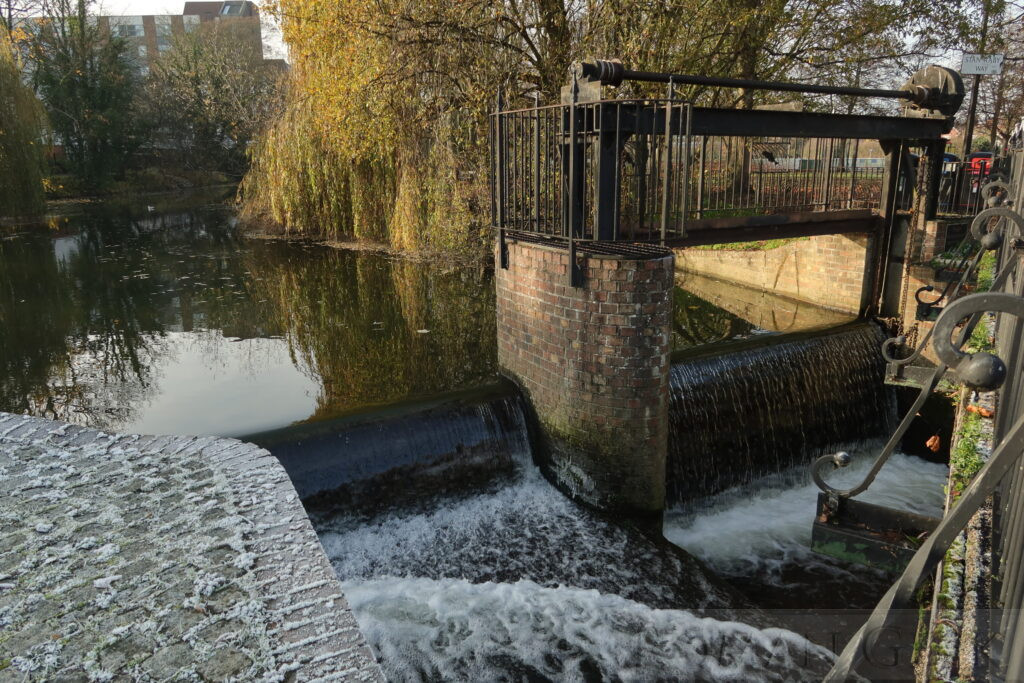
Middle Mill Weir, Colchester

Middle Mill Weir, Colchester

Description: Located on the River Colne in Lower Castle Park, The Middle Mill Weir was a 900 year old structure regulating the river flow. However, due to a surge in December 2023, the Weir collapsed and is no longer in use. The footbridge was replaced and the river can still be crossed on foot.

25. North Bridge
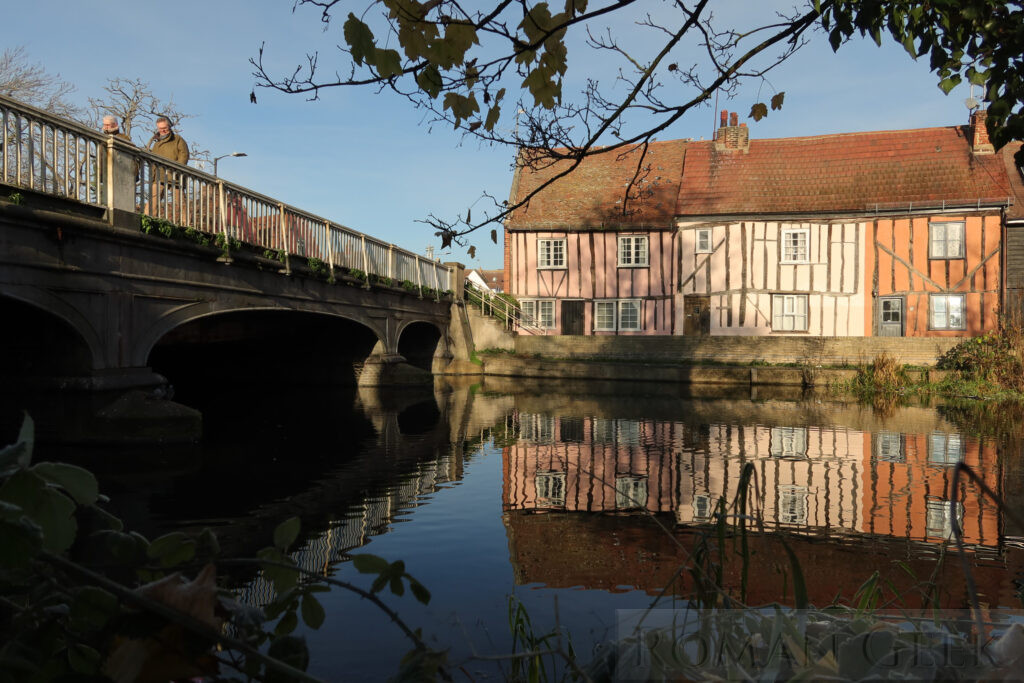
Cottages view, North Bridge, Colchester

Cottages view, North Bridge, Colchester

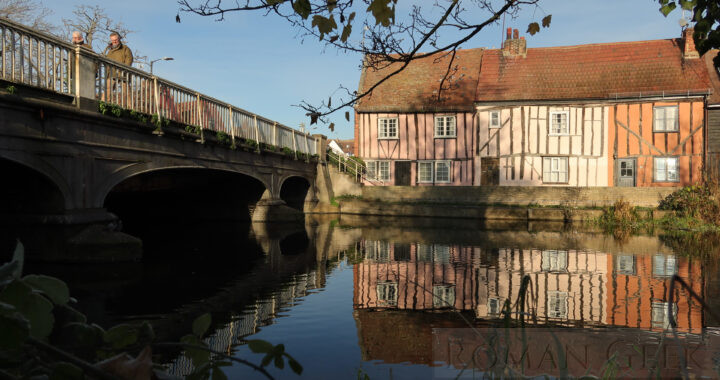
Description: This historic Cast Iron Grade II listed bridge was built in 1843, in the same year as the Railway arrived from London. It has three arches carrying North Station Road over the river Colne. It replaced an older medieval bridge. Beside it are Grade I and II listed cottages.

Nearby Attractions

1. Lexden Earthworks and Bluebottle Grove

Description: Iron Age Fort 10 minutes drive from Colchester town centre.

2. Roman Theatre of Gosbecks

Description: Located 2m (3.5km) southeast of the town centre, it was D shaped and could hold 5,000 people. It was an earth embankment surrounded by a Kentish Ragstone wall, which has now gone.

Colchester Zoo

3. Colchester Zoo
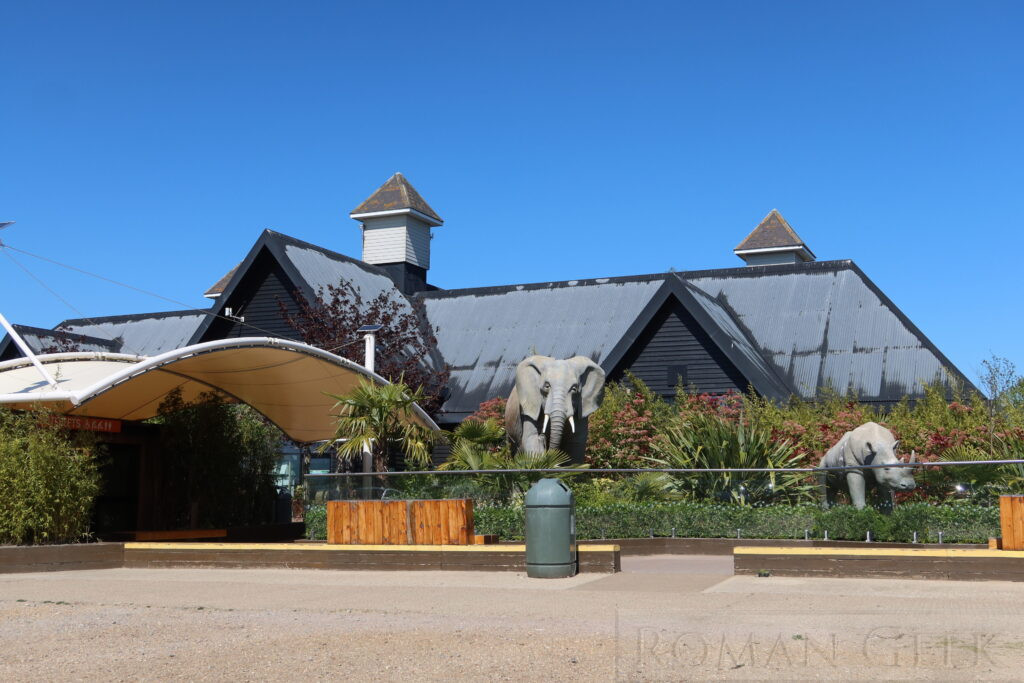
Colchester Zoo

Colchester Zoo

Description: 15 minute drive from Colchester town centre. The Zoo is located in a 60 acre country park on the Maldon road, Heckfordbridge, Essex, which lies 4 miles (6km) southwest of Colchester. The Zoo was opened in 1963 and has been featured on TV and Radio. It is home to approximately 240 different species from around the world, some of which are rare and endangered.

Tip: The collection includes Rainbow lorikeets, Aldabra Giant Tortoise, Koi carp, Madagascar Lemurs, Otters, Gibbons, Burmese Pythons, Red Pandas, Giraffes, Rhinoceros, African Bush Elephants, Cheetahs, Spotted Hyenas, Mandrills, Warthogs, South American Sea Lions, Bornean Orangutangs, Komodo Dragons, Amur Tigers, Sun Bears, Meerkats, Green Anaconda, Linnaeus’s Two Toed Sloths, Chimpanzees, Crocodiles, Monkeys, Iguanas, Andean Condors, King Vultures and many more species.

4. Beth Chatto’s plants and gardens

Description: 20 minute drive from Colchester town centre. This is a world famous plant nursery created by Award winning plantswoman Beth Chatto OBE. The gardens are maintained using sustainable methods.

Colchester Walking Tour (2-3 hrs)

  • Your geolocation will appear as a blue icon that moves on the map as you walk.
  • You may start anywhere on the map and just follow the blue line to the next point of interest.


Travel Tips

  • Best time to visit: Spring and autumn for mild weather and fewer tourists.
  • Photography hotspots: Colchester castle,  Castle Park, Dutch Quarter
  • Nearby Attractions: Colchester Zoo

Visitor FAQ

  • What is Colchester famous for?
    • First recorded city in Britain and oldest Roman city known as Camulodunum.
    • 11th century Norman Keep, one of the largest in Europe.
    • Vaults of the Roman Temple of Claudius underneath the castle.
    • Two thirds of the Roman town walls are still intact.
    • Holds the remains of the only known Roman chariot racing track in Britain.
    • Jane Taylor, who wrote the nursery rhyme ‘Twinkle, twinkle, little star’ in 1806, lived and wrote in Colchester.
    • Military town, there has been a garrison present for 2,000 years.
    • Colchester is famous for its native Oysters from the river Colne, which are celebrated with an annual Oyster Feast every October since 1540. The oysters are harvested between September to April.
    • In 1884, Colchester experienced a major earthquake that damaged or destroyed 1,200 buildings.
    • The booming cloth industry led to the term “on tenterhooks,” which refers to the tenter frames used to dry cloth.
  • Can I see Roman Ruins in Colchester?
    • Yes. The Temple of Claudius, Roman city walls, Roman Theatre in Maidenburgh Street.
  • How far is Colchester Zoo from Colchester city centre?
    • Approximately 15 minutes by car.
  • Why does Colchester have a Norman castle but no Norman cathedral?
    • Because Colchester came under the Diocese of London where the Bishop resided. However, Colchester was the location for two major Abbeys, St. John’s and St. Botolph’s.
  • Are there Guided Tours of Colchester historical sites?
    • Yes, local guides offer walking tours highlighting the Castle, the Old Town and other venues.
  • Is Camulodunum the same as Colchester?
    • Yes, Colchester was founded by the Romans as Camulodunum in 43 CE.
  • Which Roman Province was Colchester located in?
  • What was the role of Camulodunum (Colchester) in the Roman Empire?
    • Canterbury served as the first capital of Britannia and was a key economic hub and port.
  • Was there a Roman Mint at Colchester?
    • Yes. During the breakaway Britannic Empire (293-296 CE), the ‘Emperors’ Carausius (287-293 CE) and Allectus operated a Roman Mint at Colchester in conjunction with London. The Mint Marks on their coins show: ‘C’ and ‘CL’.
  • Which Roman Roads connected Colchester?

Quick Facts

  • Modern Location: Colchester, England
  • Category: Historic city centre, Norman castle, tourist destination
  • Activities: Walking tours, sightseeing, photography
  • Nearby Roman Site: Vaults of the Roman Temple of Claudius under Colchester castle
  • Nearest Roman road: Via Devana, Pye Road.
  • Roman Province: Britannia
 

Brighton Pavilion

Brighton

Brighton: Eclectic Seaside City in Southern England

Overview

Brighton is a vibrant coastal city located on the south coast of southern England which offers a huge range of Attractions for everybody, from the Royal Pavilion and Gardens to Museums, SeaLife, The Lanes and Brighton Pier and Beach. Visitors can enjoy eating and drinking in a wide selection of bars, cafes, pubs and restaurants across the city centre or the seafront. It is the nearest seaside to the capital, thus earning its nickname ‘London by the Sea’.

History

Although Brighton itself did not exist as a settlement during the Roman Period, the remains of several Roman villas have been found locally, although the sites are not open to the public. It is thought that the mouth of the river Adur at Portslade-by-sea, now a suburb of Brighton, may have been the Roman ‘Portus Novus’ marked on a Roman map called Ptolemy's Geographia (2nd century CE). Brighton was founded by the Anglo-Saxons as ‘Beorhthelm’s farm’ and later developed into a fishing village known as ‘Bristelmestune’ which expanded into a town during the Medieval Period. The fishermen’s houses are in what is now ‘The Lanes’. During the 18th century, the town developed into a coastal city and a popular resort, helped by the construction of the Royal Pavilion for the future George IV in 1787 and the opening of the London to Brighton railway in 1841. In 1997 it became the City of Brighton and Hove.

Getting there by Rail

There are direct trains to Brighton from London Victoria, London Bridge, Cambridge, Peterborough, Southampton and Hastings. The Station itself is a masterpiece of Victorian architecture, a Terminus with eight platforms covered by an enormous curved double canopy made of glass and wrought iron, completed in 1883.

Brighton Walking Tour

  • Your geolocation will appear as a blue icon that moves on the map as you walk.
  • You may start anywhere on the map and just follow the blue line to the next point of interest.

Things to Do and Places to Visit

1. Brighton Toy and Model Museum

Brighton Toy and Model Museum

Brighton Toy and Model Museum

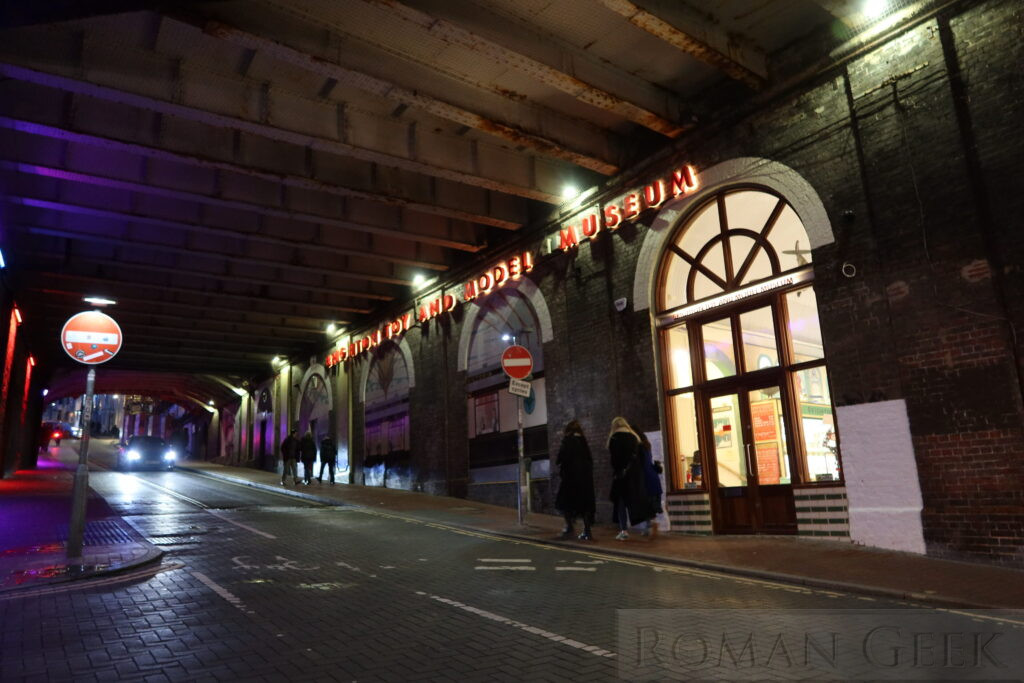
Description: Located underneath the forecourt of Brighton Railway Station at 55 Trafalgar Street, is the Toy and Model Museum occupying four of the arches that support the station. The museum holds various model railway dioramas, including an ‘O Gauge’ and a ‘OO Gauge’ layout dating from the 1930’s. The Collection features 10,000 items such as model aircraft, boats, cars, puppets and soft toys, that date from pre-1900 up to 1960.

2. North Laine Shopping, Bar and Restaurant District

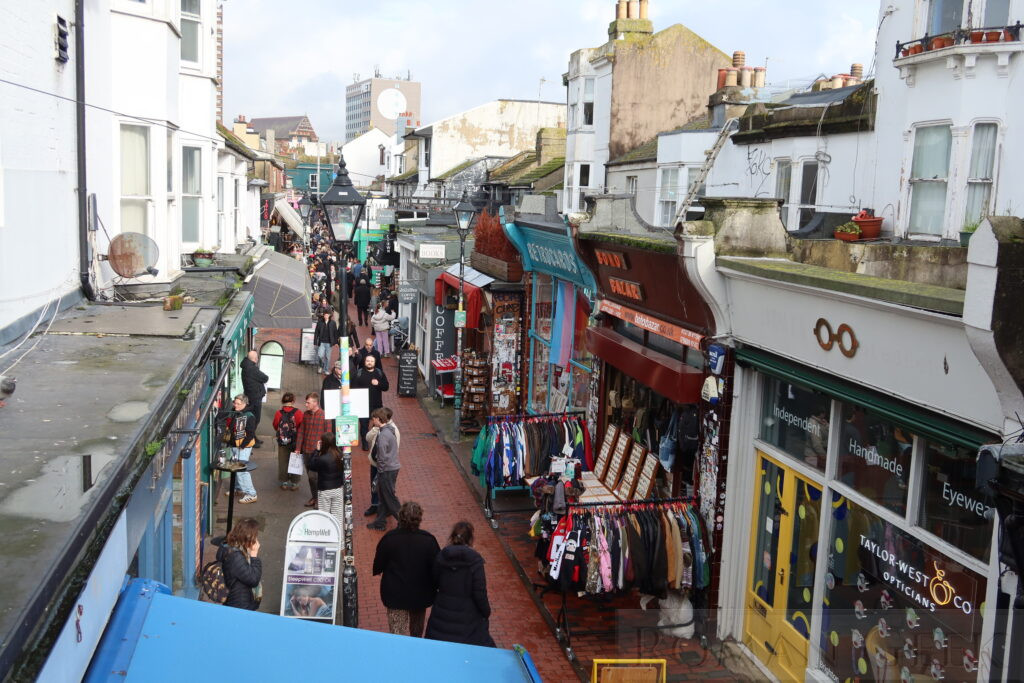
North Laine District, Brighton

North Laine District, Brighton

Description: This area offers 400 shops and cafes in a lively, artistic atmosphere with pedestrian-friendly streets like Sydney Street and Kensington Gardens. There is a Saturday flea-market held on Upper Gardner street.

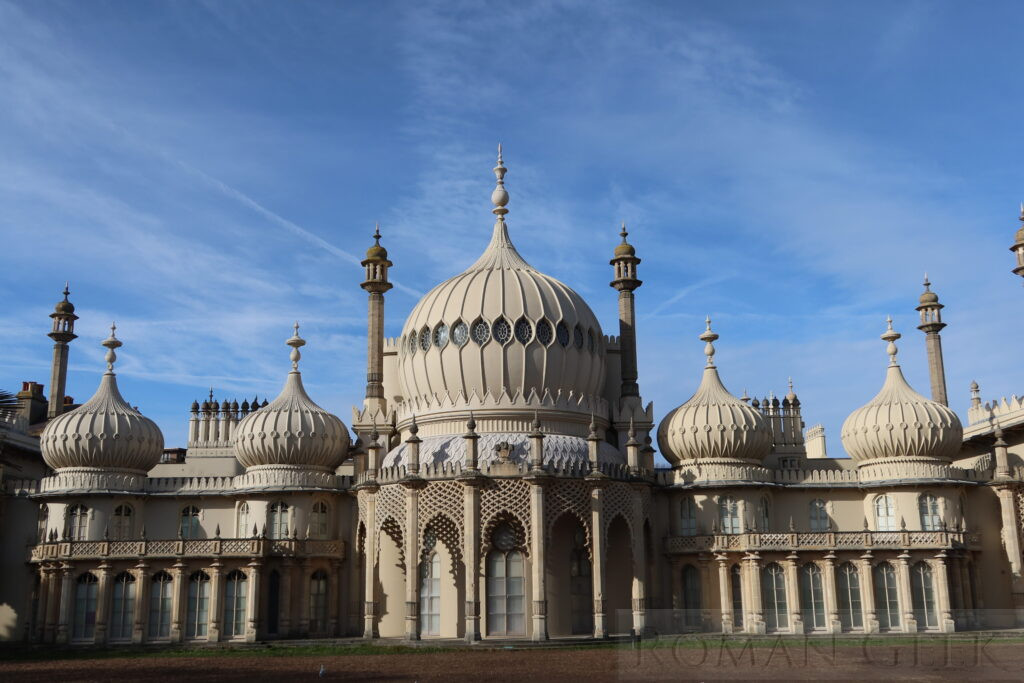
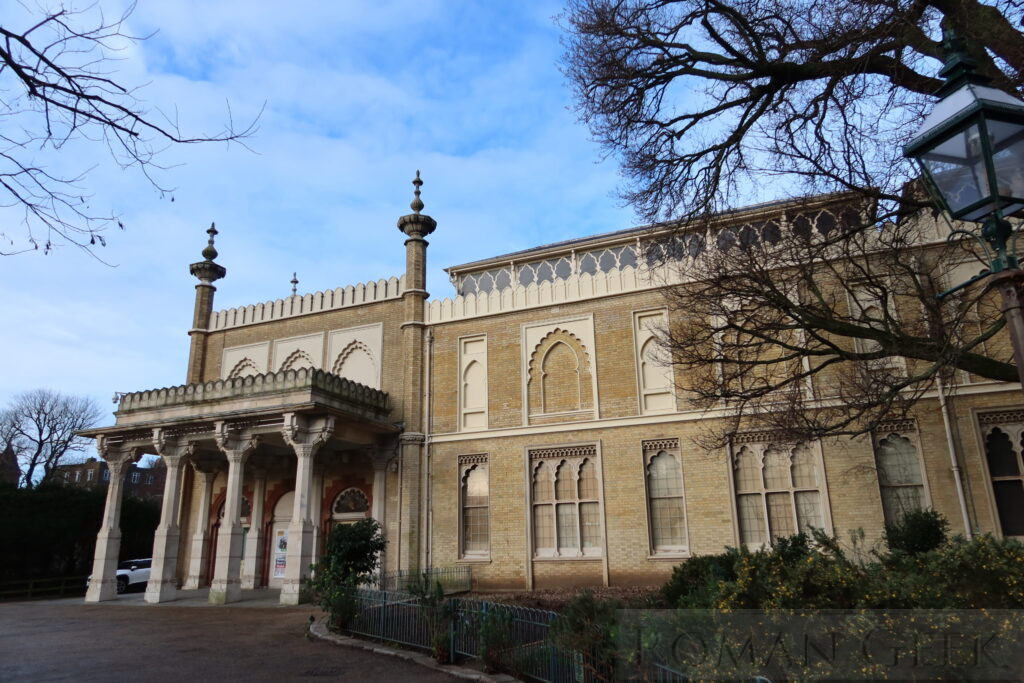
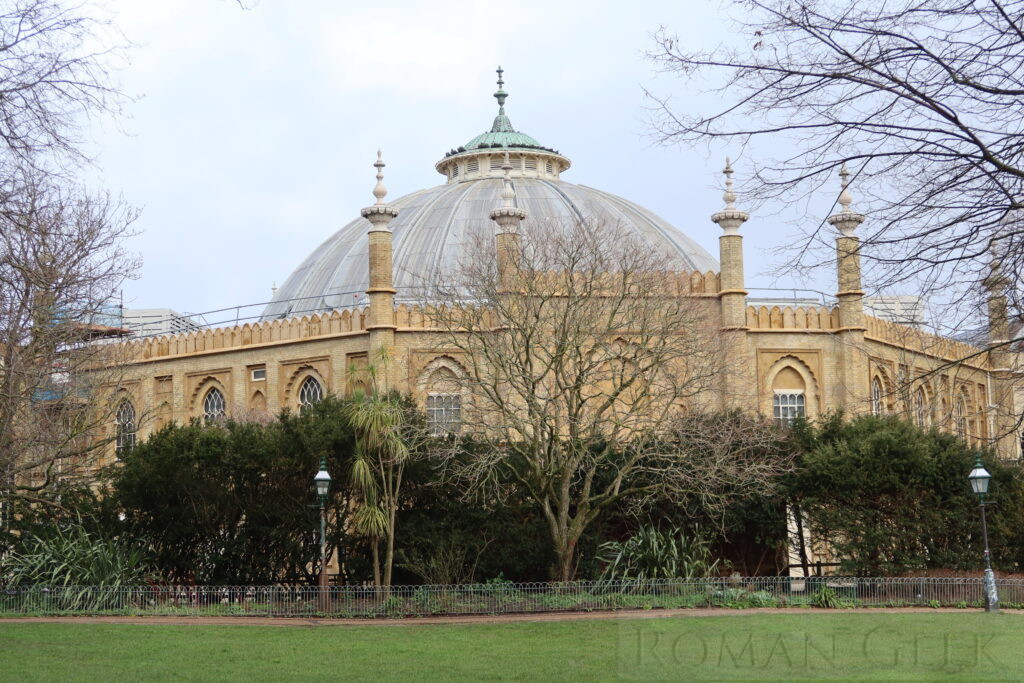
3. Brighton Pavilion

Brighton Pavilion

Brighton Pavilion

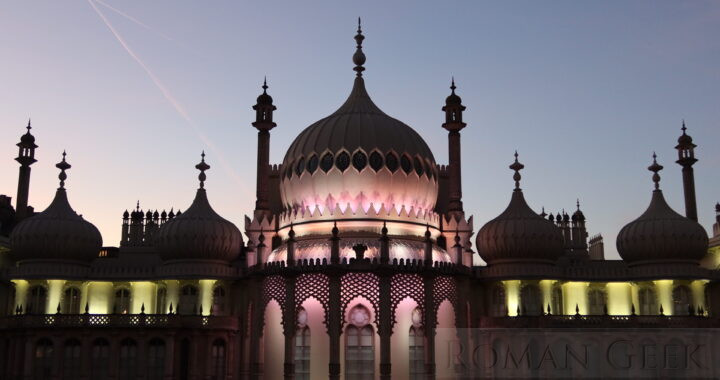
Description: Also known as the Royal Pavilion, the building began as a Royal Seaside Palace for King George IV in 1787 CE, whilst he was still Prince of Wales. It was built in the Indo-Saracenic style, a design typical of government buildings built by the British in India during the 19th century CE. John Nash added the domes and minarets in 1815. However, Queen Victoria did not approve, and the Pavilion was sold to the city of Brighton in 1850, as she preferred the seaside at Osborne House on the Isle of Wight.

4. Brighton Museum and Art Gallery

Brighton Museum and Art Gallery

Brighton Museum and Art Gallery

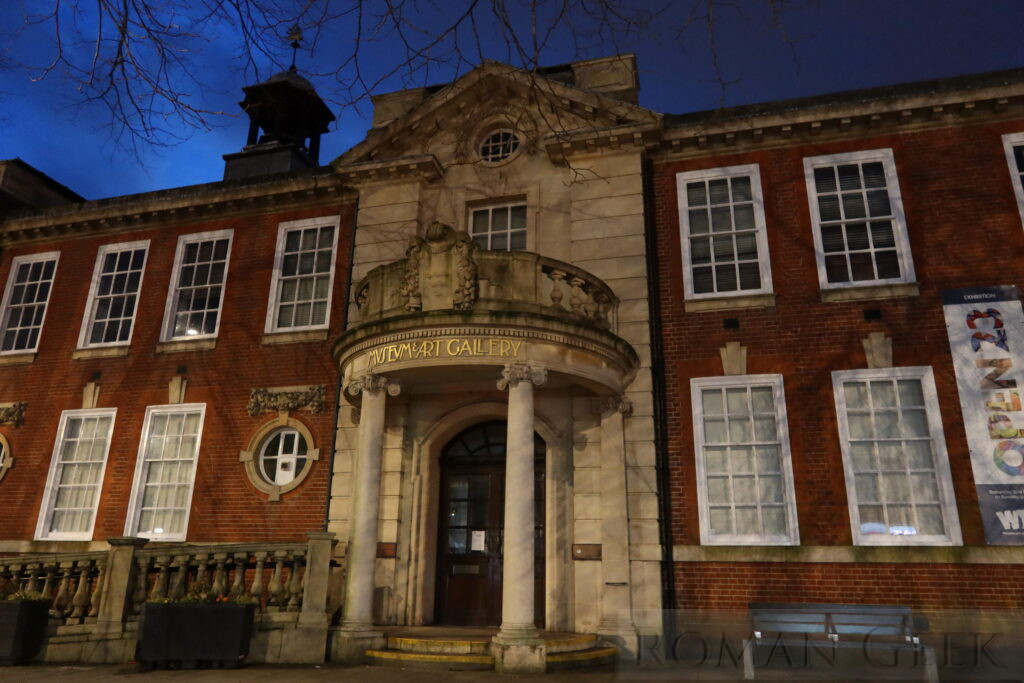
Description: Located at Royal Pavilion Gardens, Pavilion Parade, Brighton BN1 1EE. The Museum holds multiple collections of interest such as Costume and Textiles, Film and Media, Fine Art, Local and Social History, the Decorative Arts, Toys and World Art and the Natural Sciences.

5. Brighton Dome

Brighton Dome

Brighton Dome

Description: Brighton Dome is an Arts Venue located next to the Brighton Pavilion which was opened in 1867. It features Live Music, Comedy, Dance and Theatre. It holds three venues, the Concert Hall, the Corn Exchange and the Studio Theatre, and has a seating capacity for 1,700 spectators. The Dome also features a Pipe Organ.

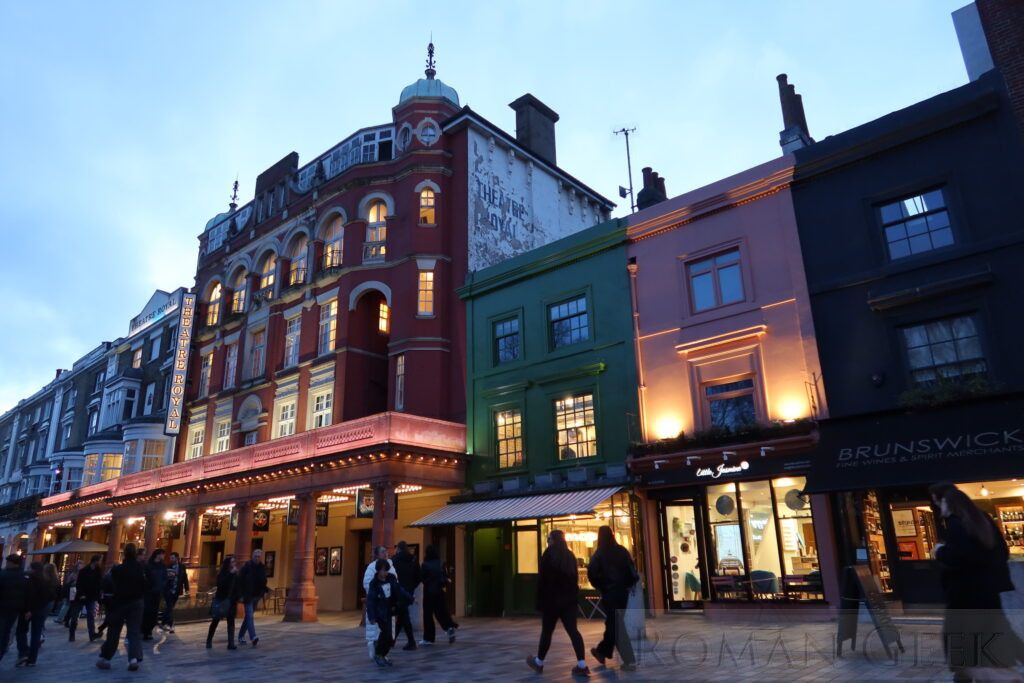
6. Theatre Royal Brighton

Theatre Royal. Brighton

Theatre Royal. Brighton

Description: Located in New Road, The Theatre hosts West End Shows, Plays, Musicals, Opera, Ballet and Concerts, with Backstage Tours also available for the Public who want to go and take a look behind the scenes. The Theatre Royal opened in June 1887, and has a seating capacity for 966 theatre goers.

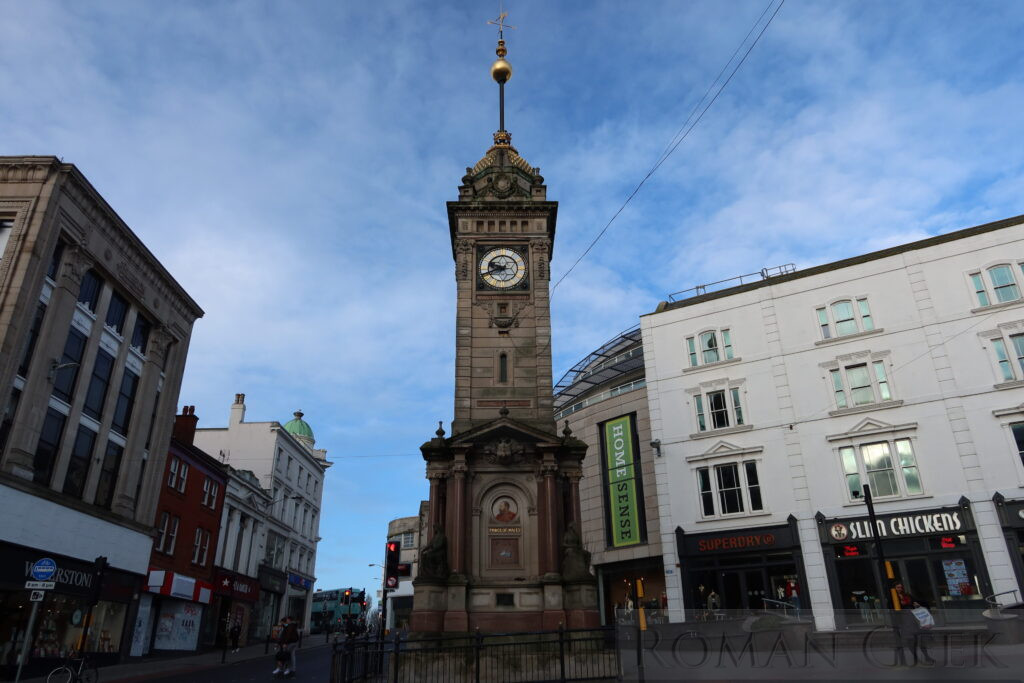
7. Jubilee Clock Tower

Jubilee Clock Tower, Brighton

Jubilee Clock Tower, Brighton

Description: The Clock Tower was built in 1888 at the junction of West street and North Street to mark Queen Victoria’s Golden Jubilee in 1887. Many Jubilee Clock Towers were built at the same time around the country. The Tower has four clock faces and a weather vane which sits on top of the mast at the top of the tower. For a short period, a time ball built by Volk was operated electrically and rose up the mast every hour when it received a signal from the Royal Observatory at Greenwich. After complaints were made about the noise it made, it was disengaged and now remains fixed at the top.

8. The Lanes Shopping, Bar and Restaurant District

The Lanes, Brighton

The Lanes, Brighton

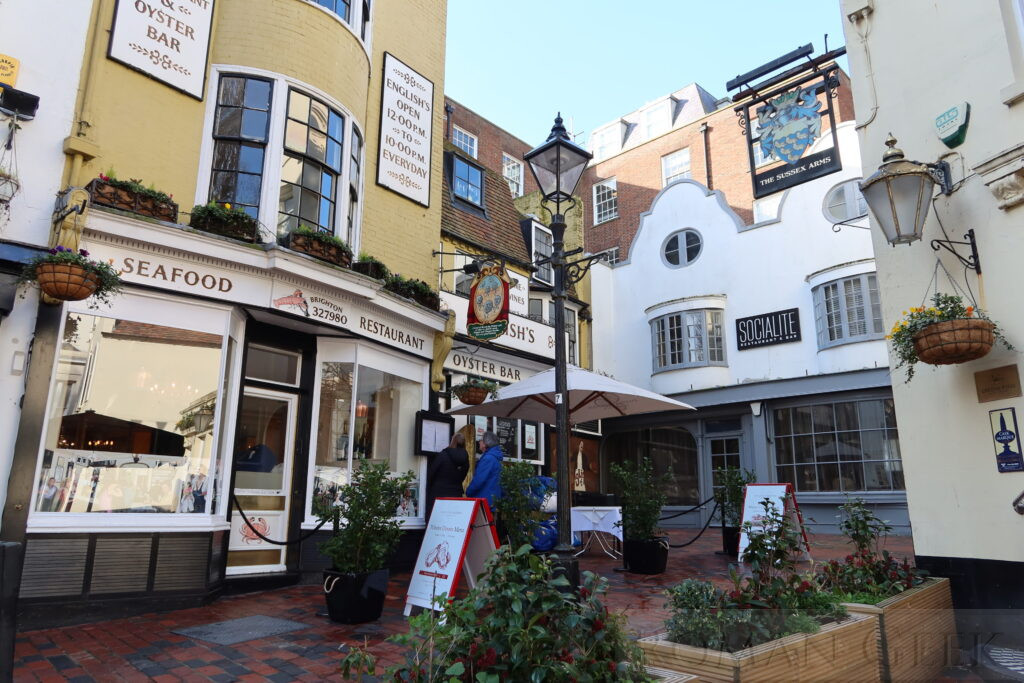
Description: Just north of the Seafront is an atmospheric collection of narrow streets called The Lanes offering 300 shops and cafes.. Originally developed as fishermen’s cottages, the area now consists of historic and narrow jewellery focused alleyways, mingling with small boutiques, cafes, pubs and restaurants. The Lanes are built over the original Saxon settlement of Brighthelmstone. Although the medieval buildings have mostly been replaced, the newer buildings have followed the contours of the old alleyways.

9. Brighton Palace Pier

Brighton Palace Pier

Brighton Palace Pier

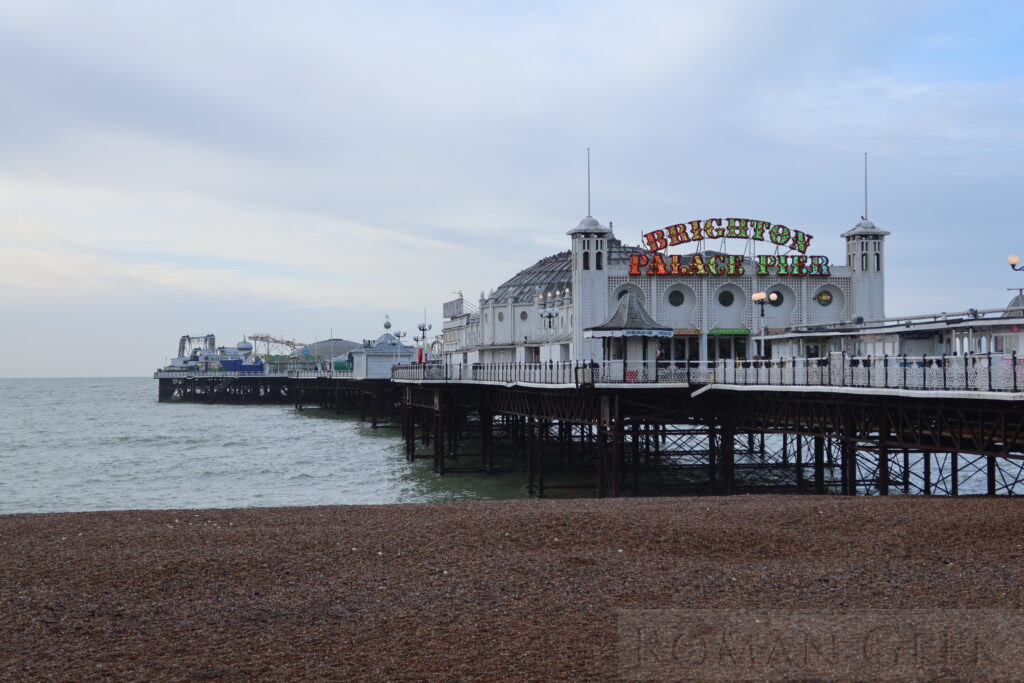
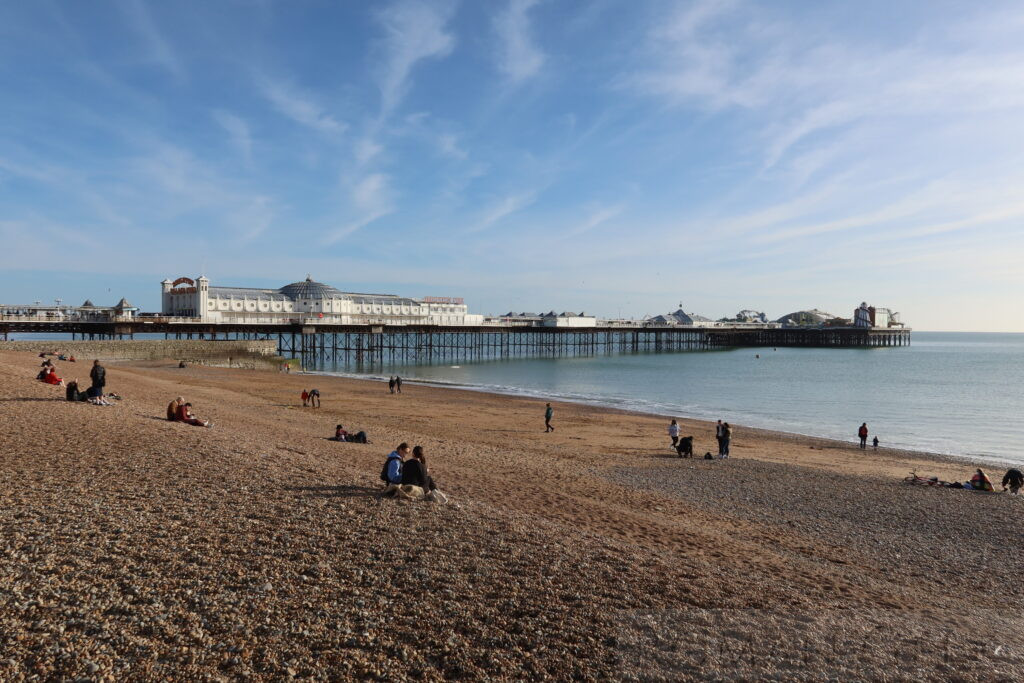
Description: Also known as Brighton Pier, it features fairground rides, a roller coaster and an arcade with slot machines. It receives almost 4 million visitors a year. The Pier opened on 20th May 1899 with a theatre which was dismantled in 1986. It has a length of 1,722 feet (525m).

10. Sea Life

Sea Life, Brighton

Sea Life, Brighton

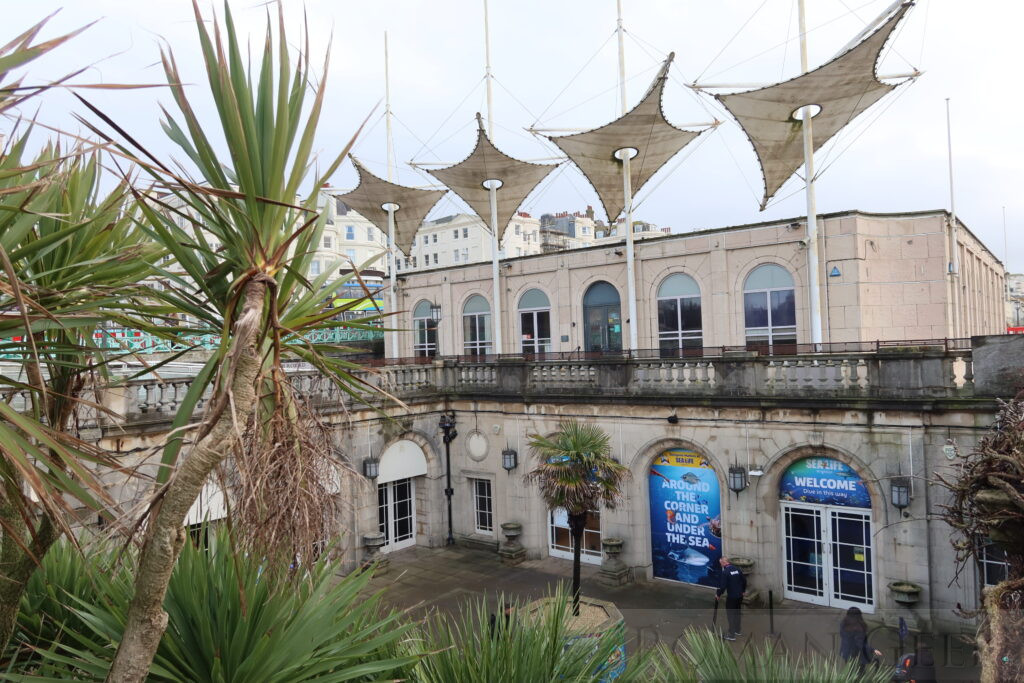
Description: Located opposite Brighton Pier, Sea Life opened in 1872 as the Brighton Aquarium and is the oldest operating Aquarium in the world. The Aquarium features over 100 species and 5,500 forms of marine animals and fish. This includes Sharks, a Giant Turtle, a Manta Ray, Star Fish, Seahorses, Terrapins, an Anaconda and a £2.7 million artificial Coral Reef that displays the changes between day and night.

11. Madeira Drive, Madeira Terrace and Walkway

Madeira Drive and Terrace, Brighton

Madeira Drive and Terrace, Brighton

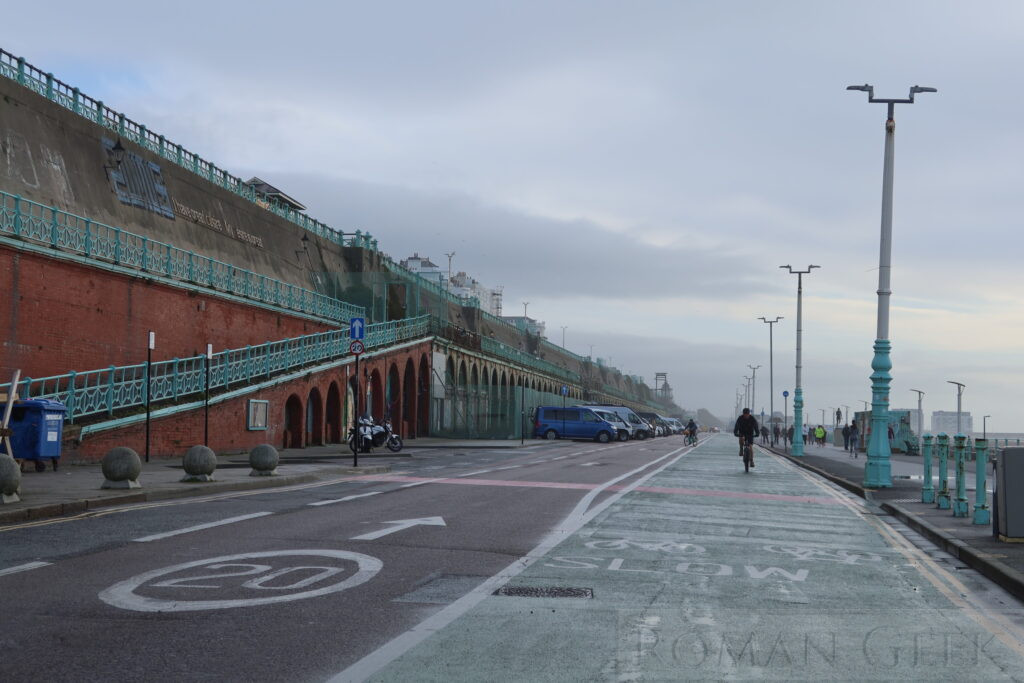
Description: Madeira Drive runs from Brighton Pier to the Marina. It is the Finishing Line for various events, such as the annual London to Brighton Veteran Car Run for veteran cars, cycles and motorbikes, the London to Brighton Bike Ride and the Brighton Speed Trials in September. Built in 1897, under the south cliff on Madeira Drive, the Victorians completed Madeira Terrace using 151 cast iron arches with three levels of walkways designed for ‘Promenading’ and connected by staircases. The arches extend for 2,837 feet (865m) where towards the eastern end is the Madeira Lift designed in the style of a Pagoda, which raised people from Madeira Drive to the Marine Parade above.

12. Volk’s Electric Railway

Volks Electric Railway, Brighton

Volks Electric Railway, Brighton

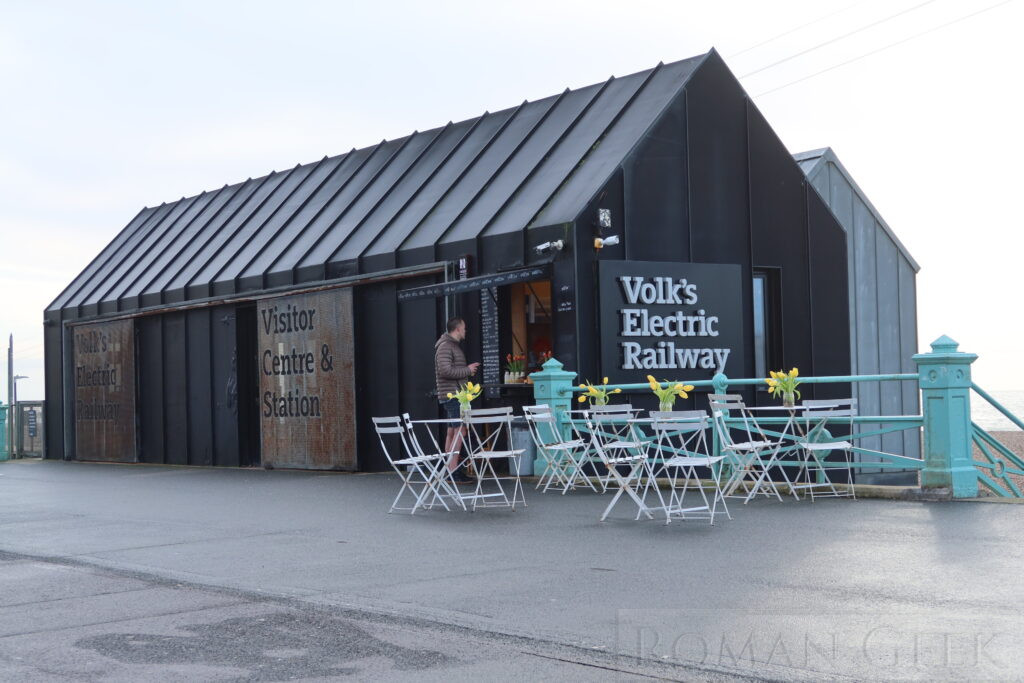
Description: Also located beside Brighton Pier is Volk’s Electric Railway. This runs along the seafront beside Madeira Drive. Although not the first, it is the oldest operating electric railway in the world and was opened in 1883. In the summer months it operates between Brighton Pier and Brighton Marina and consists of a narrow gauge railway which is 1 mile (1.5 km) long, and uses a third rail to provide 110v electric power.

13. Brighton Beach

Palace Pier Brighton

Palace Pier Brighton

Description: Brighton Beach is a very wide, four mile (6 km) stretch of pebbled beach which stretches out either side of Brighton Pier.

14. Brighton Fishing Museum

Brighton Fishing Museum

Brighton Fishing Museum

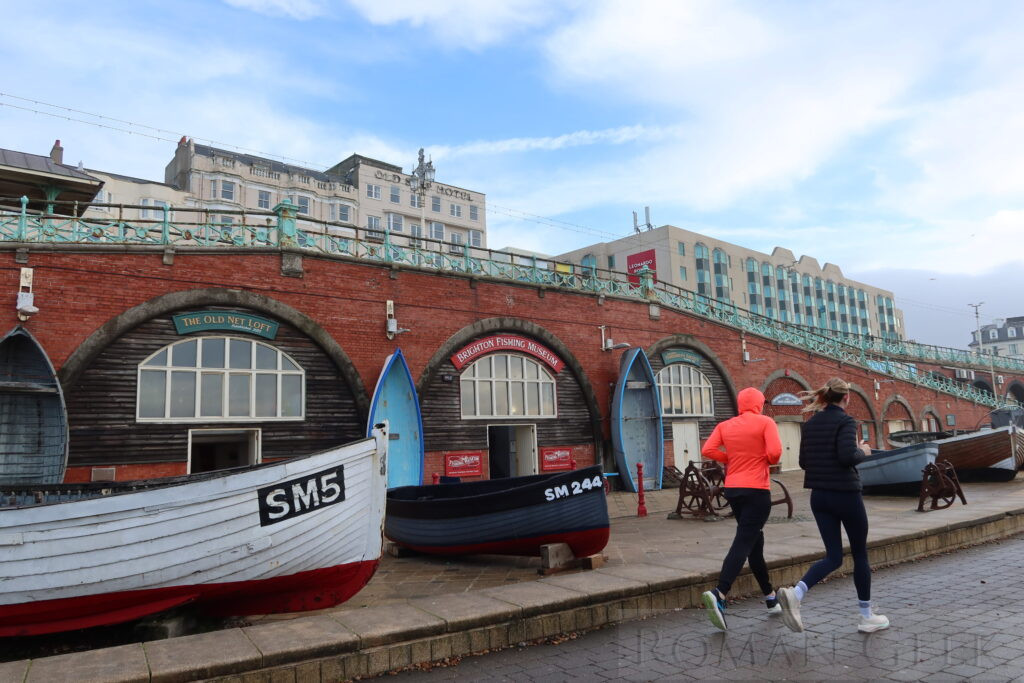
Description: Located to the west of Brighton Pier, the museum occupies two of the arches on the King’s Road which runs along the beachfront. The Arches were built for the Fishing Community in the 1860’s. The Museum holds Artefacts and ships which reflect the activities of Brighton’s Fishing Community between 1800-2,000 CE. The Brighton Lifeboat Station has now moved to Brighton Marina.

15. Rampion Offshore Wind Farm Visitor Centre

Rampion Offshore Windfarm Visitor Centre

Rampion Offshore Windfarm Visitor Centre

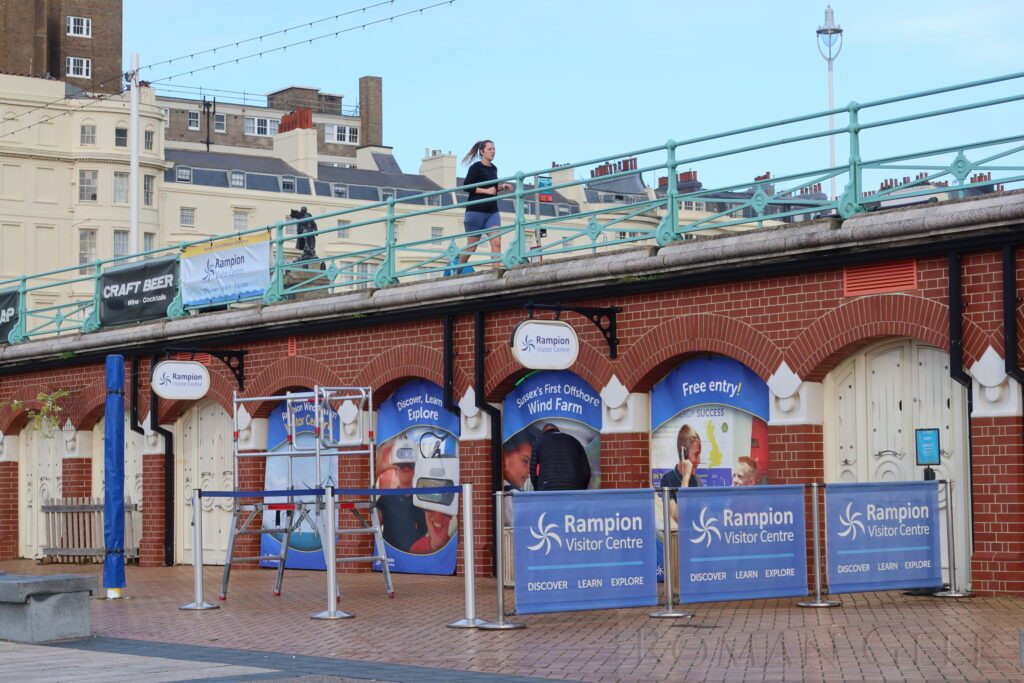
Description: The Rampion Visitor Centre is located on the King’s Road next to the i360. As well as exhibitions, the visitor centre holds a 360° Virtual Reality Experience where users can do a ‘virtual tour’ as if they were out in the wind farm. Brighton Wind Farm is owned by Rampion Offshore Wind Limited and consists of 116 wind turbines located 8-12 miles (13-20km) from the coast, covering an area between East Worthing and Brighton. The cost was £1.3B. Sightseeing trips of the Wind Farm are available from Brighton Marina.

16. Brighton i360

Brighton i360

Brighton i360

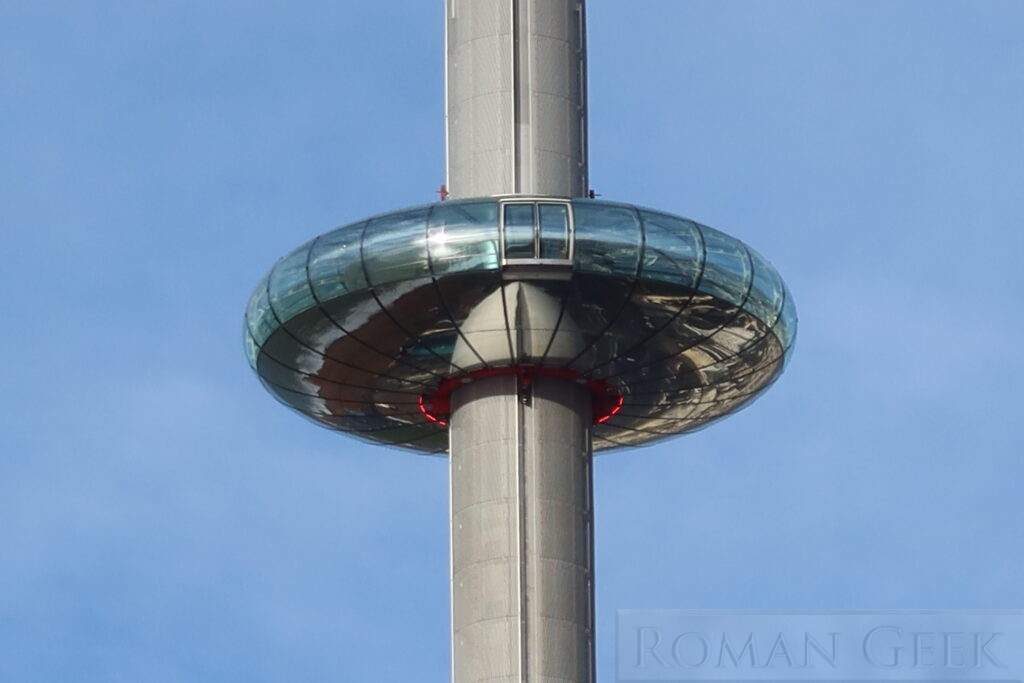
Description: Located on the Lower King’s Road, this observation tower is Europe’s tallest moving platform. It consists of a glass viewing pod that rises up from the ground on a column to reach a height of 530 feet (162m). There are spectacular views over the whole of Brighton.


Further Afield (10 mns by Bus)

17. Brighton Marina

Brighton Marina

Brighton Marina

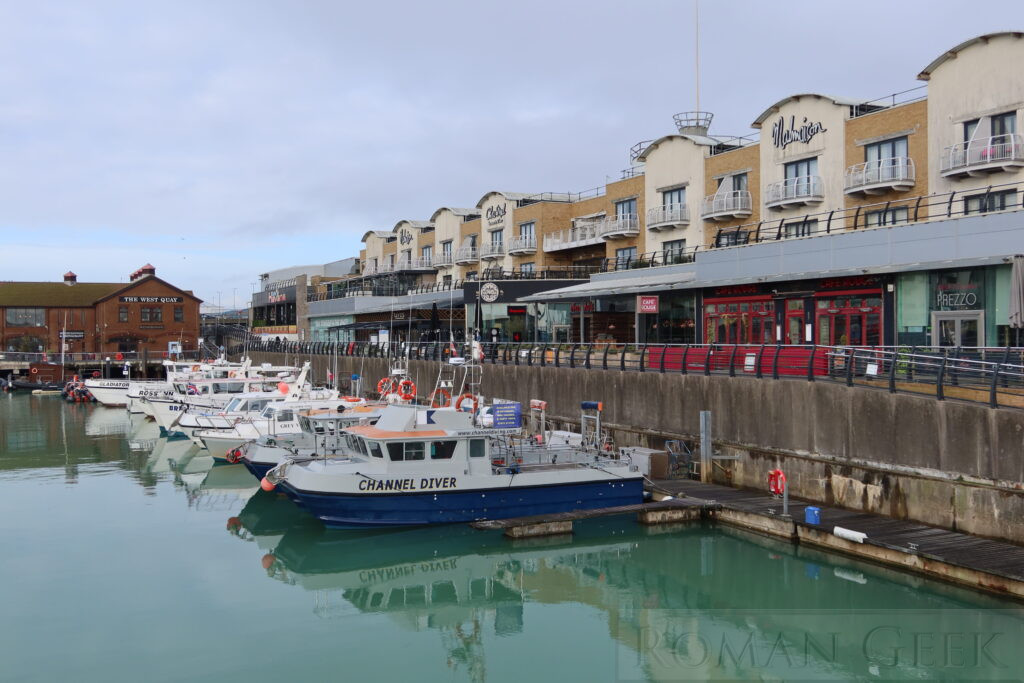
Description: Brighton Marina is an artificial marina constructed between 1971-1979 which was built out into the sea. The Marina has residential housing, berths for 1600 vessels, the Brighton Lifeboat Station, a Bowling Alley and numerous Cafes, Bars, Restaurants and a Hotel. Sightseeing trips to the Wind Farm are available from Brighton Marina.

18. Whitehawk Camp

Whitehawk Camp, Brighton

Whitehawk Camp, Brighton

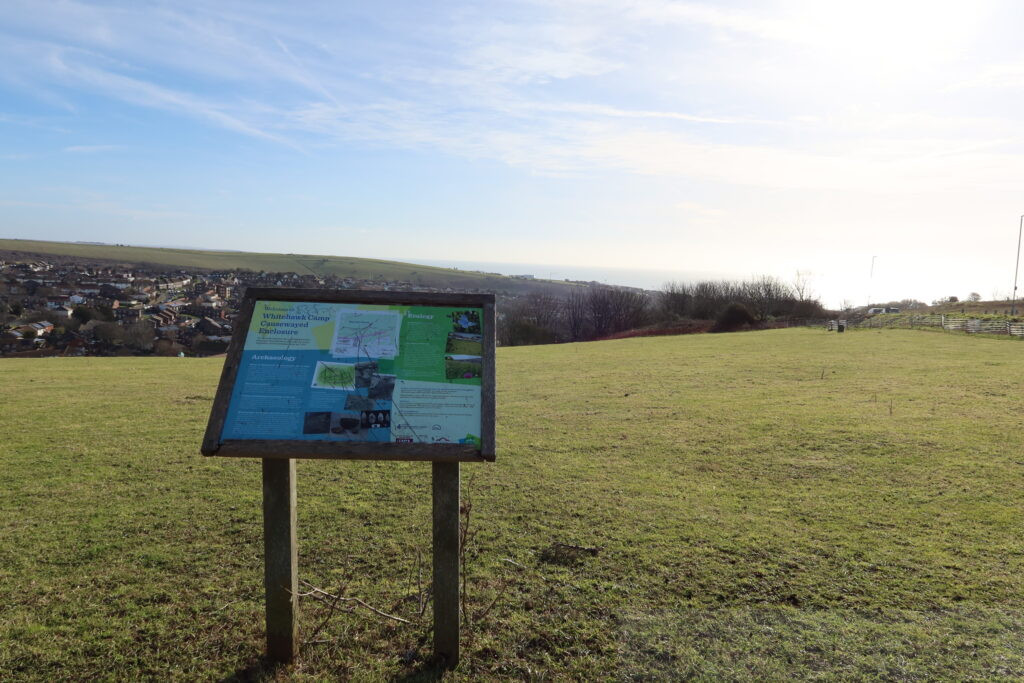
Description: Next to Brighton Racecourse on Whitehawk Hill is a Neolithic Causewayed Enclosure known as Whitehawk Camp. It is dated to between 3,700-2,700 BCE.

19. Brighton Racecourse

Brighton Racecourse

Brighton Racecourse

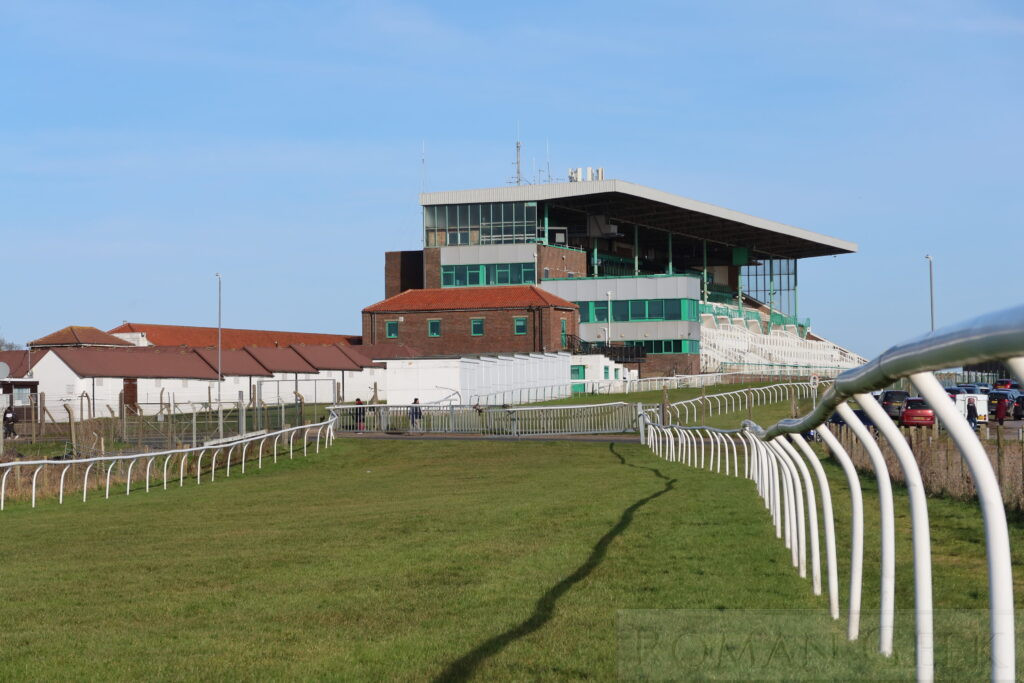
Description: Brighton Racecourse is located on top of Whitehawk Hill on the South Downs, 1 miles (1,5km) from Brighton city centre. The track hosts flat races and is a left hand course in the shape of a horseshoe with a length of 1.5 miles (2km).

20. The Pepper Pot

The Pepper Pot, Brighton

The Pepper Pot, Brighton

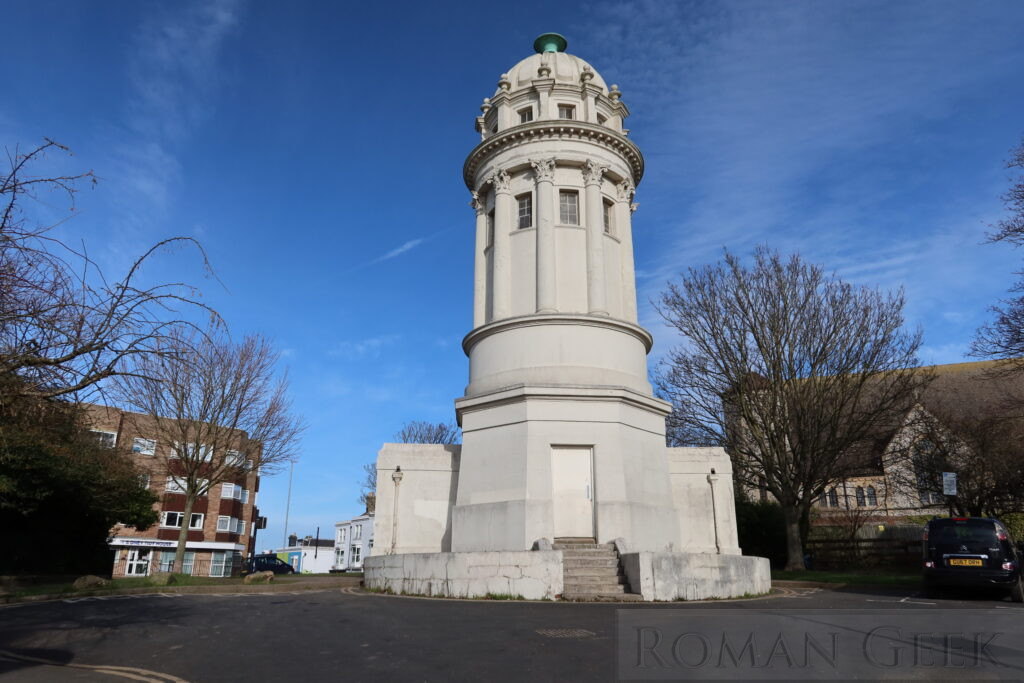
Description: The Pepper Pot is a white tower constructed in 1830 at the same time as a villa (now dismantled) and located at 11 Tower Road in an attractive public park called Queen’s Park.. It is a ten sided cylinder surrounded by eleven Corinthian columns built on an octagonal plinth, and which reaches a height of 60 feet (18m). Built in the Neoclassical style, it is an exact copy of the Choragic Monument of Lysicrates (335 BCE) situated near the Acropolis in Athens. Now owned by Brighton Council, it is not open to the Public.

Travel Tips

  • Best time to visit: Spring and autumn for mild weather and fewer tourists. Brighton Festival (May), Great Escape Music Festival (May), Brighton Marathon (April/May), London to Brighton Cycle Run (June and September), Brighton Naked Bike Ride (June/July), Brighton Pride (August), London to Brighton Veteran Car Run (November)
  • Photography hotspots: Brighton i360, Brighton Pavilion, Brighton Palace Pier and Beach, The Lanes
  • Nearby Attractions: Cissbury Ring, Worthing Museum and Art Gallery, Pevensey Castle, Fishbourne Roman Palace, Seven Sisters White Cliffs

Visitor FAQ

  • What is Brighton famous for?
    • Brighton is known for its historic Lanes quarter, Britain’s most eccentric Palace – the Brighton Pavilion, the i360 Observation Tower, Seafront, Nightlife and England’s oldest Aquarium. It is famed for its creative arts scene, alternative lifestyle and being the Green capital of Britain and the LGBTQ capital of Britain. The Brighton Dome is where an unknown band called Abba won the 1974 Eurovision song contest with ‘Waterloo’.
  • How far is the Seafront from Brighton city centre?
    • Approximately 5-10 minutes walk.
  • Are there Guided Tours of Brighton historical sites?
    • Yes, local guides offer walking tours highlighting the Royal Pavilion, the Old Town and other venues. Contact Visit Brighton.
  • Is ‘Beorhthelm’s Tun’ the same as Brighton?
    • Yes, Brighton was founded by the Anglo-Saxons as Beorhthelm’s Tun meaning Farm, becoming shortened to Brighton by the 1800’s.
  • Which Roman Province was Brighton located in?
  • Can I see Roman Ruins in Brighton?

Quick Facts

  • Modern Location: Brighton, England
  • Category: Historic city centre, seafront, tourist destination
  • Activities: Walking tours, Sightseeing, Photography, Events, Nightlife
  • Nearby Roman Site: Fishbourne Roman PalacePevensey Castle
  • Roman Province: Britannia
Nearby Attractions

Worthing Museum

Worthing Museum

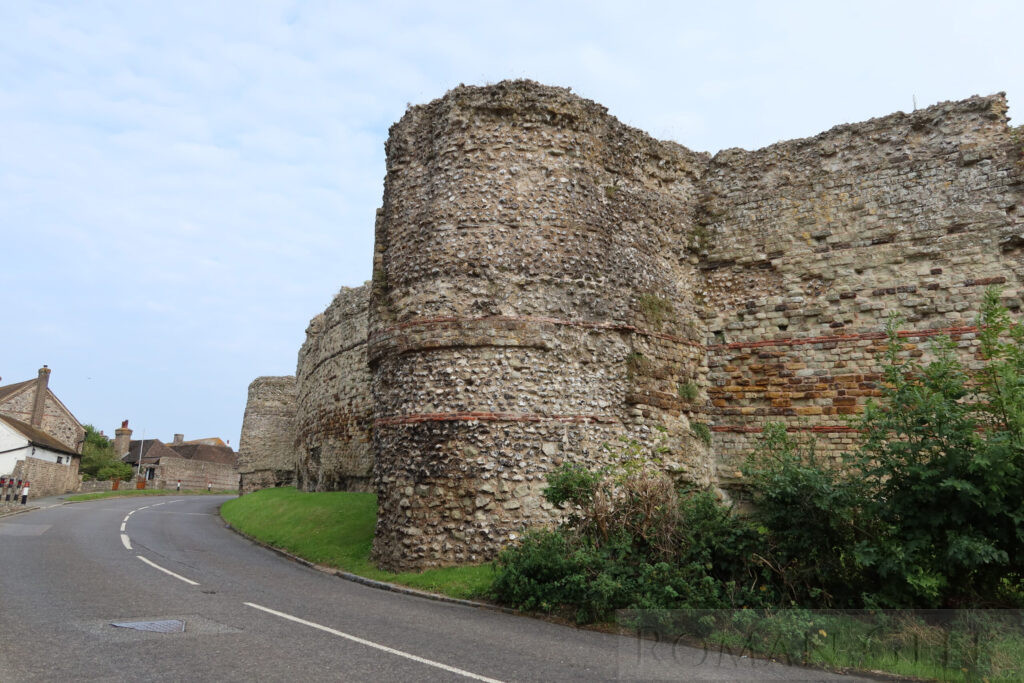
Pevensey Roman Fort

Pevensey Roman Fort

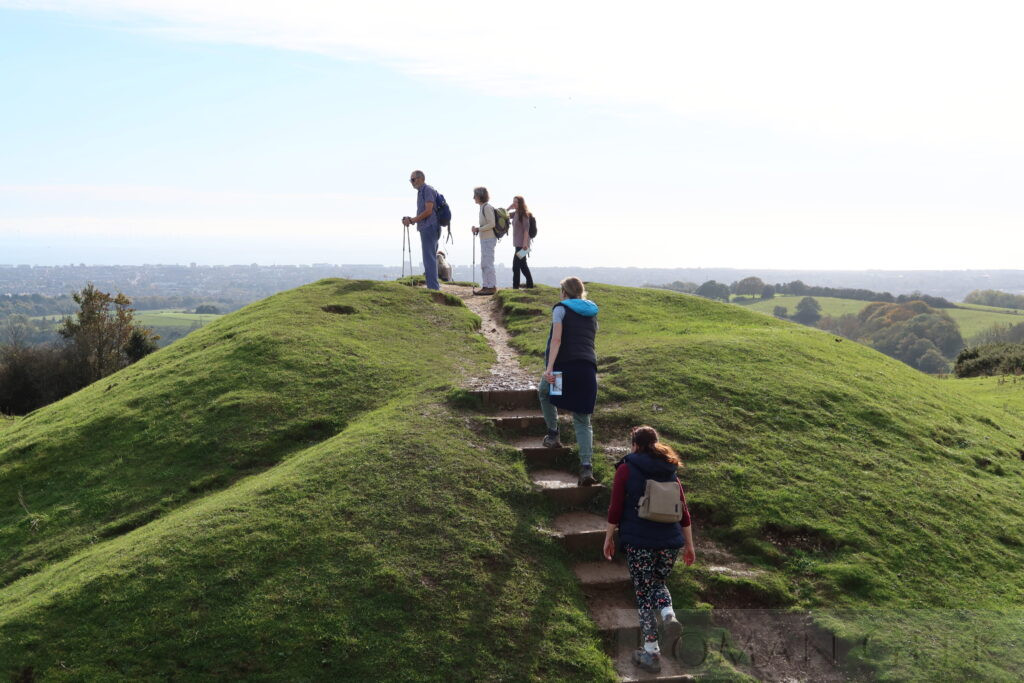
Cissbury Ring is a Neolithic Flint Mine and the second largest Iron Age Hillfort in Europe.

Cissbury Ring is a Neolithic Flint Mine and the second largest Iron Age Hillfort in Europe.

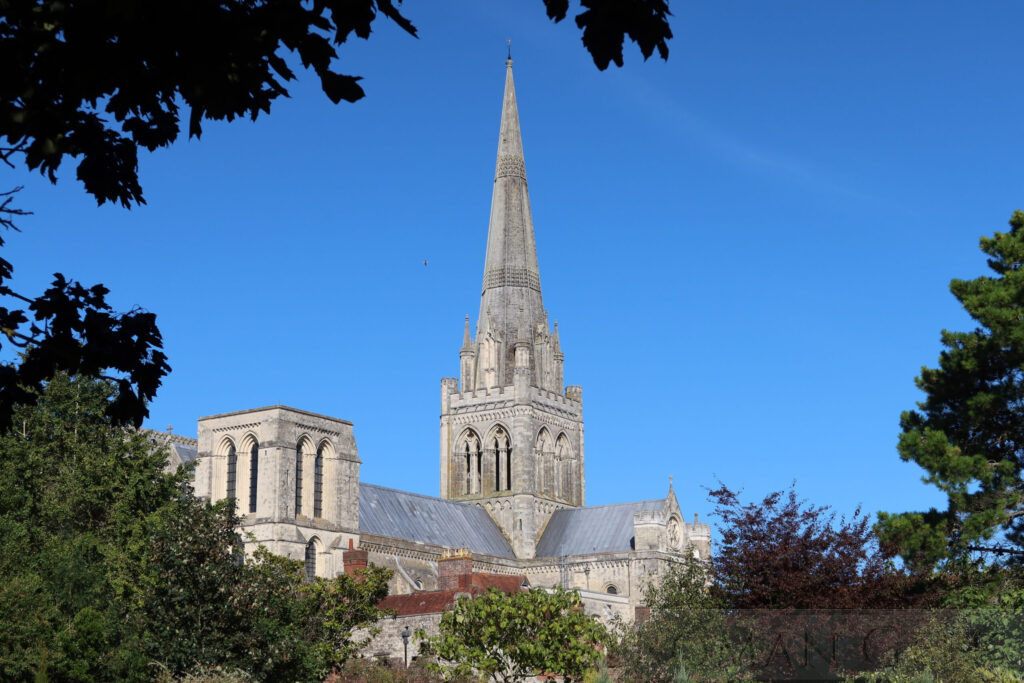
Chichester Cathedral

Chichester Cathedral


Reading Museum

Reading

  • Reading is a town located on the junction of the River Thames with the River Kennet in the County of Berkshire.
  • The Reading Museum holds a copy of the Bayeux Tapestry and the Finds from nearby Roman Silchester known as Calleva Atrebatum.

Museums

Roman Sites

  • Silchester
    • Located 9 miles (14km) to the southwest of Reading.
    • The village of Silchester holds the Remains of the Roman town of Calleva Atrebatum including the Roman Walls and Amphitheatre.

Roman Roads


Reading Museum

Corbridge

  • Corbridge is a village, located 16 miles (25km) west of Newcastle, in the County of Northumberland.
  • It was a Roman Fort named either Corstopitum or Coria, built in c.85 CE to guard the Bridge carrying Dere Street over the River Tyne.

History

  • Corstopitum was occupied between c.85-c.408 CE and grew to become a Fort within a Town.
  • Corbridge was possibly the tidal limit of the Tyne in Roman times, and so would have acted as a forward supply base for Hadrian's Wall acting in conjunction with barges from the North Sea base at South Shields.
  • Today the Tidal limit is several miles downstream at Wylam Bridge.

Corbridge Hoard

  • The Corbridge Hoard is a collection of Roman Legionary body armour and weapons dating between 122-138 CE, and found at the Roman Fort of Corbridge, near Hadrian’s Wall.
  • It was discovered in a chest on the site of the old Roman Fort in 1964 CE.
  • The Hoard is housed in two locations: Corbridge Roman Town Museum and The Great North Museum Hancock in Newcastle.

Roman Sites

  • Corbridge Roman Town
    • The site has been excavated and visitors can walk around the Remains.

Museums

  • Corbridge Roman Town Museum

Roman Roads

Nearby Sites


Corbridge Roman Town

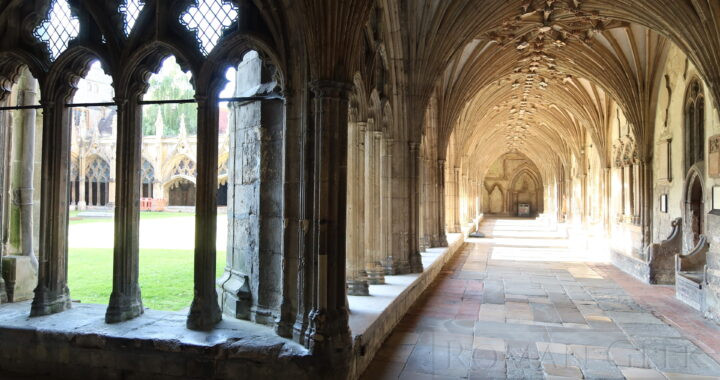
Canterbury Cathedral Cloisters

Canterbury

Canterbury: a Roman city in Kent

Overview

Canterbury is a Cathedral city on the river Great Stour in the County of Kent. The Cathedral is a UNESCO World Heritage Site.

History

Canterbury was founded by the Cantiaci around 30 BCE, which then became the Roman city of Durovernum Cantiacorum in 43 CE based on Watling Street, the Roman Road between London and Richborough. The cathedral was founded in 597 CE by St. Augustine, and is the seat of the Archbishop of Canterbury. After the murder in 1170 of Thomas Becket, then archbishop of Canterbury, the cathedral became a major site of pilgrimage. These pilgrims are the subject of the Canterbury Tales written by Geoffrey Chaucer in 1400.


Things to Do and Places to See in Canterbury

1. Westgate Towers Museum and Viewpoint

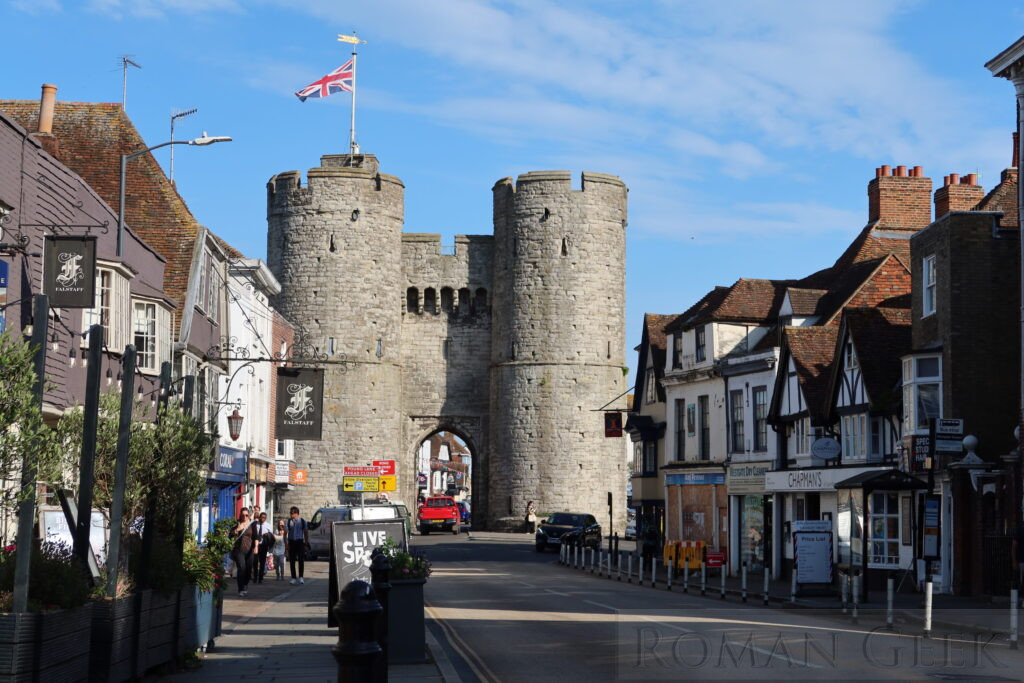
Westgate Towers Museum, Canterbury

Westgate Towers Museum, Canterbury

Description: Located at 1 Pound Lane, Westgate Towers was built around 1379. It is a 60 feet (18 m) high medieval gatehouse, making it the largest surviving city gate in England. Originally, there was a drawbridge over the Stour and a portcullis. The road still passes between the towers. It acted as a prison for Canterbury for 400 years. Inside is the Westgate Towers Museum which holds exhibits from the city’s history.

Tip: There is access to the rooftop with panoramic views over Canterbury.

2. Westgate Gardens and Punt Tours

Westgate Gardens and Punt Tours, Canterbury

Westgate Gardens and Punt Tours, Canterbury

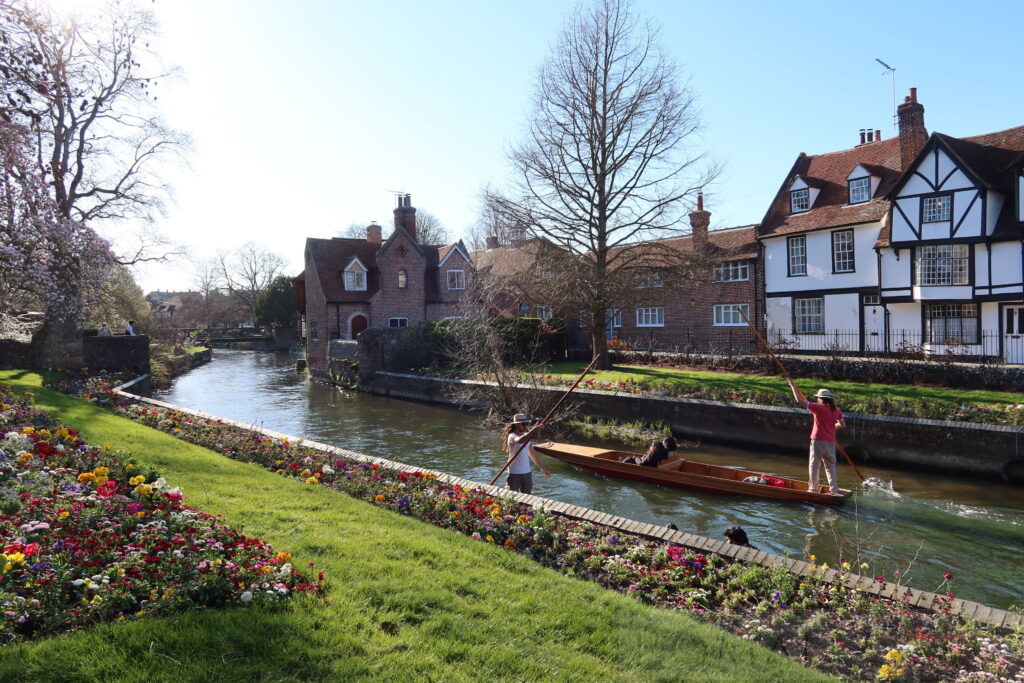
Description: Located by the Westgate Towers Museum, Punts operate sightseeing tours from Westgate Bridge through the Westgate gardens which and offer a relaxing riverside atmosphere. Visitors can also walk through the gardens beside the river surrounded by beautiful flower beds. The gardens are free to enter.

3. Marlowe Theatre

Marlowe Theatre, Canterbury

Marlowe Theatre, Canterbury

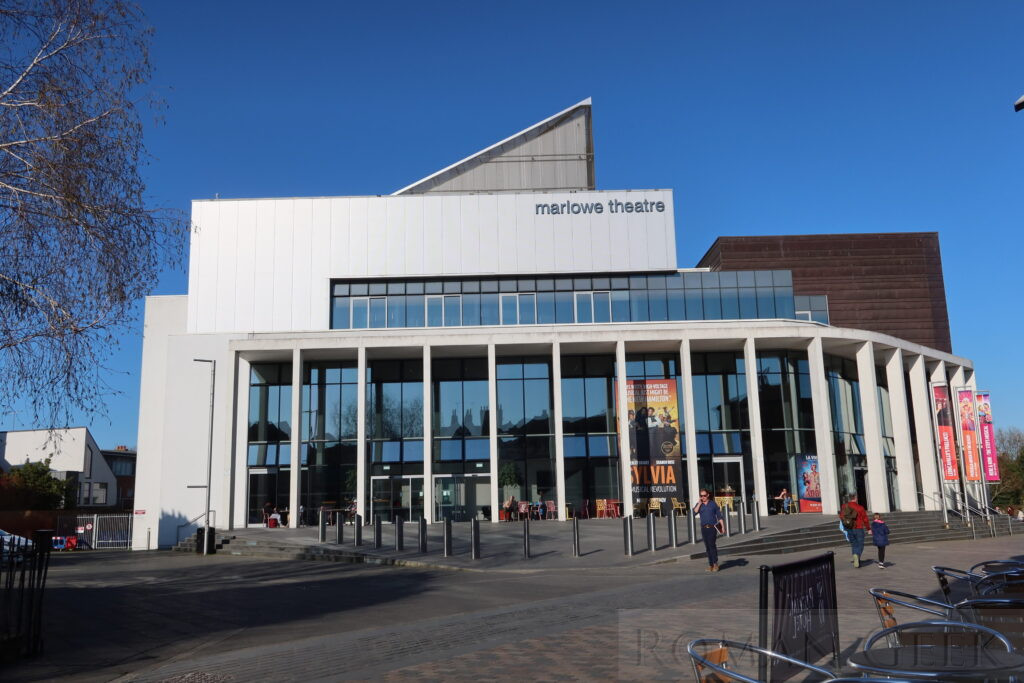
Description: Located at The Friars, The Theatre offers year-round productions of Shakespeare, musicals, dance and stand-up comedy. It was completed in 2011 and has seating for 1,200 spectators.

Historical Tip: The theatre is named after the English Playwright Christopher Marlowe, who was born in Canterbury in 1564. Marlowe was the leading Elizabethan Playwright before Shakespeare. He established the popular drama and blank verse style, that William Shakespeare (also born in 1564), was able to refine after Marlowe’s premature death at 29.

4. High Street Shopping Area

Queen Elizabeth's Guest Chamber, Canterbury

Queen Elizabeth’s Guest Chamber, Canterbury

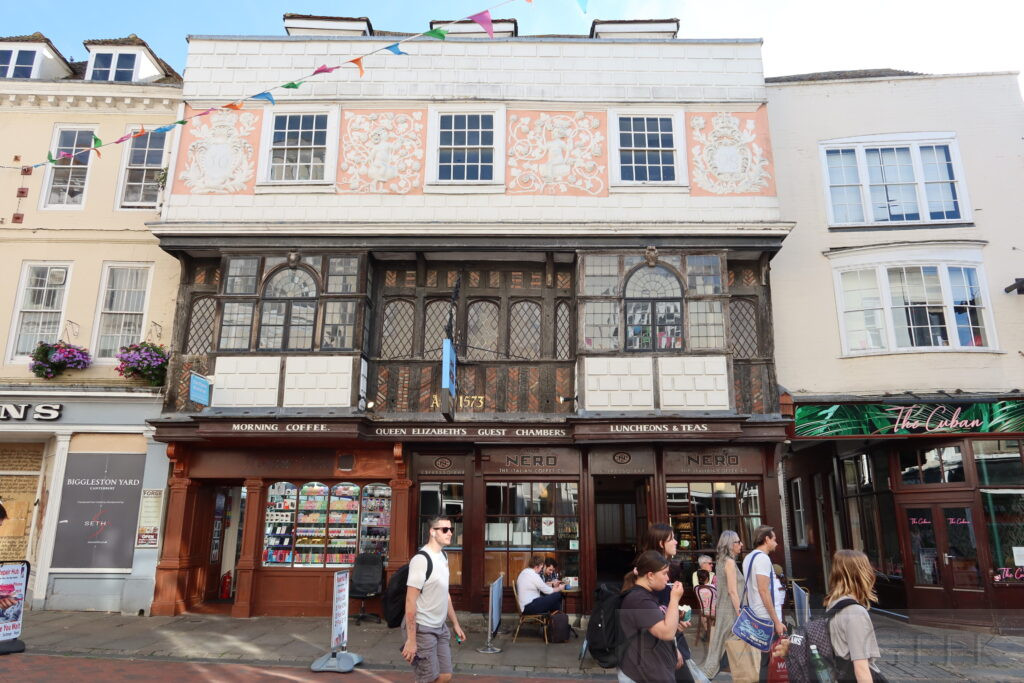
Description: Canterbury’s main shopping area centres on the High Street and St. Georges street, where a market takes place on Wednesdays and Fridays. Here you will find many cafes, pubs and restaurants located in atmospheric houses. Located at 43-45 High Street is Queen Elizabeth’s Chamber and Crown Yard, where she is alleged to have stayed in 1573. Another area full of vibrant boutiques, cafes and restaurants is located in the cathedral quarter and Buttermarket.

5. Franciscan Gardens and Greyfriars Chapel

Franciscan Gardens and Greyfriars Chapel, Canterbury

Franciscan Gardens and Greyfriars Chapel, Canterbury

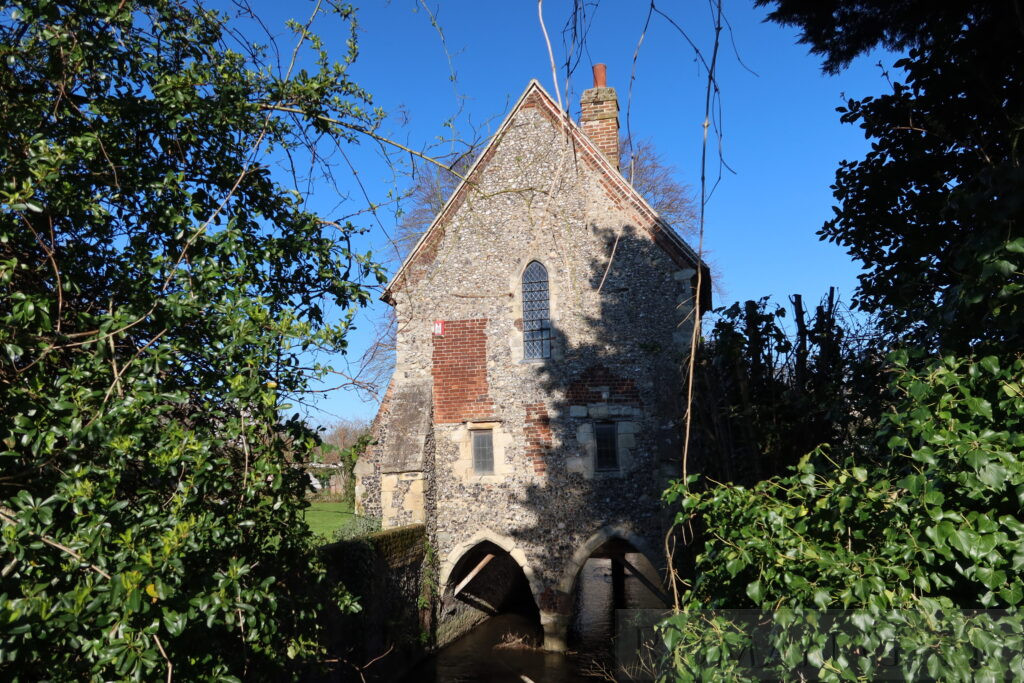
Description: Located at 25 High St, the 800-year-old site is a 1.5 acre Heritage garden along the river Stour. There is an entry fee. The Greyfriars Chapel is the only building to survive from the Friary and is unusual in that it spans the river Stour which runs beneath it.

6. King’s Bridge, The Old Weavers House and Punt Tours

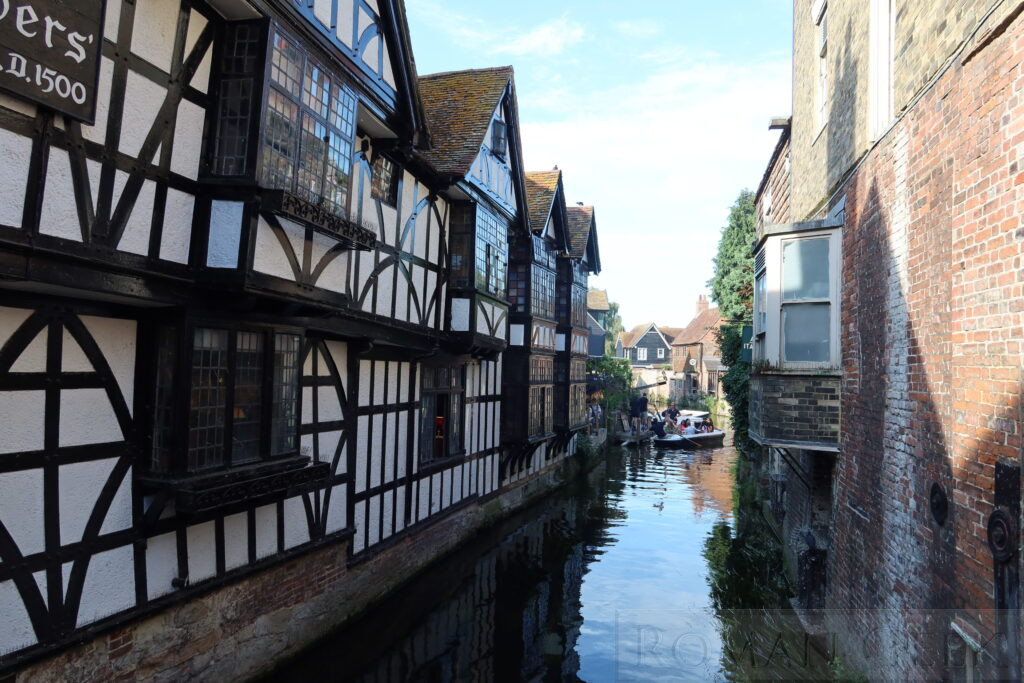
Old Weaver's House, Canterbury

Old Weaver’s House, Canterbury

Description: The King’s Bridge is where the High Street crosses the Stour offering atmospheric views of the buildings along the river. The Old Weavers House is a historic half-timbered 16th century Tudor building that sits beside the Bridge on the river Stour. It derives its name from the Flemish and Huguenot weavers who had fled religious persecution and were granted the right to operate their business in Canterbury by Elizabeth I. It is now a restaurant with Punt tours being offered from a landing at the back of the building.

Historical Insight: Behind the building is a medieval ‘Ducking stool’ which overhangs the river. The unfortunate ‘witch’ would be ducked for several minutes. If she survived she was guilty, if she drowned she was innocent!

7. Punting on the River Stour: Water Lane

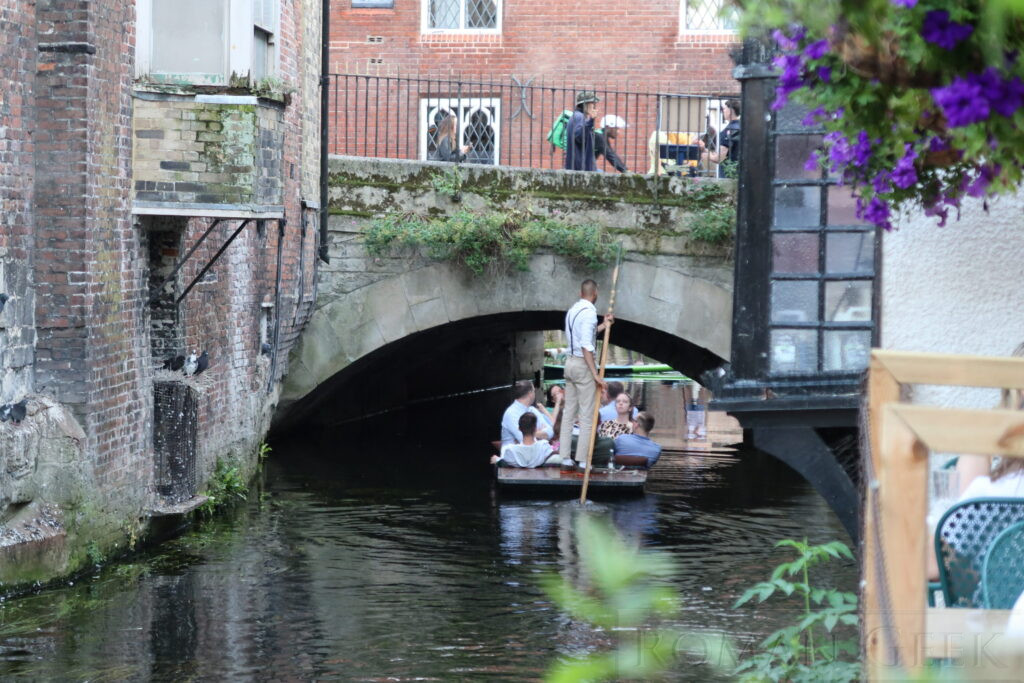
Punt under the King's Bridge on the Great Stour, Canterbury

Punt under the King’s Bridge on the Great Stour, Canterbury

Description: This scenic river divides into two arms and the part that flows through the heart of the city is considered to have been a Roman canal. Punts operate sightseeing tours from Westgate Bridge, Water Lane and King’s Bridge behind the Old Weaver’s House.

8. Beaney House of Art & Knowledge

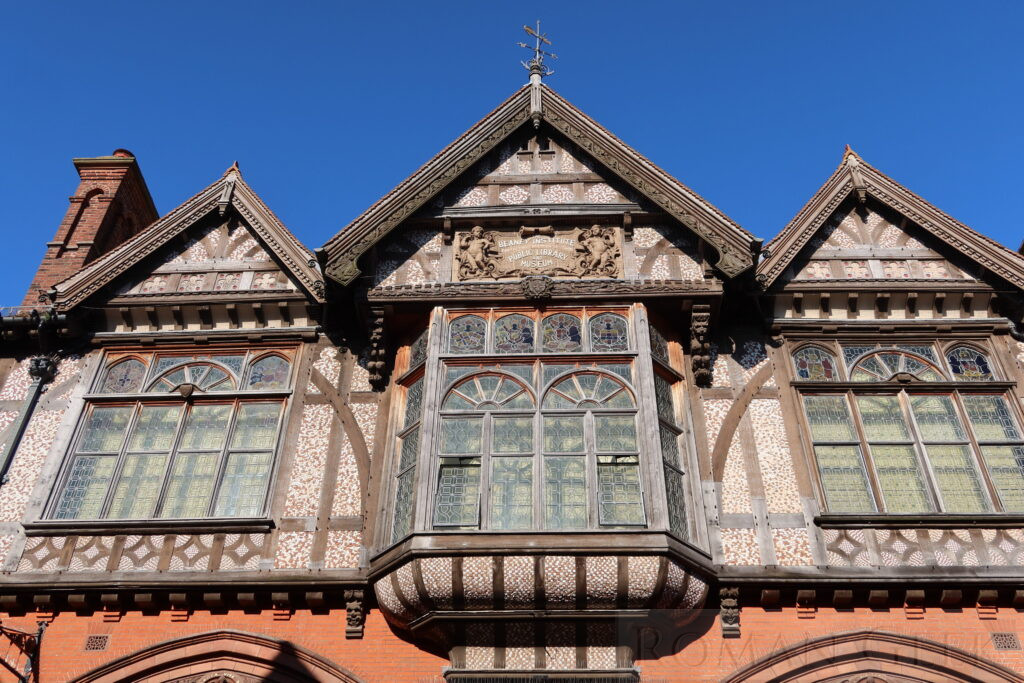
Beaney House of Art and Knowledge, Canterbury

Beaney House of Art and Knowledge, Canterbury

Description: Located at 18 The High Street, this is the Canterbury museum, library and art gallery. Opened in 1899, this Grade II Listed building is constructed in the style of the Tudor Revival (also known as mock Tudor).

9. Canterbury Roman Museum

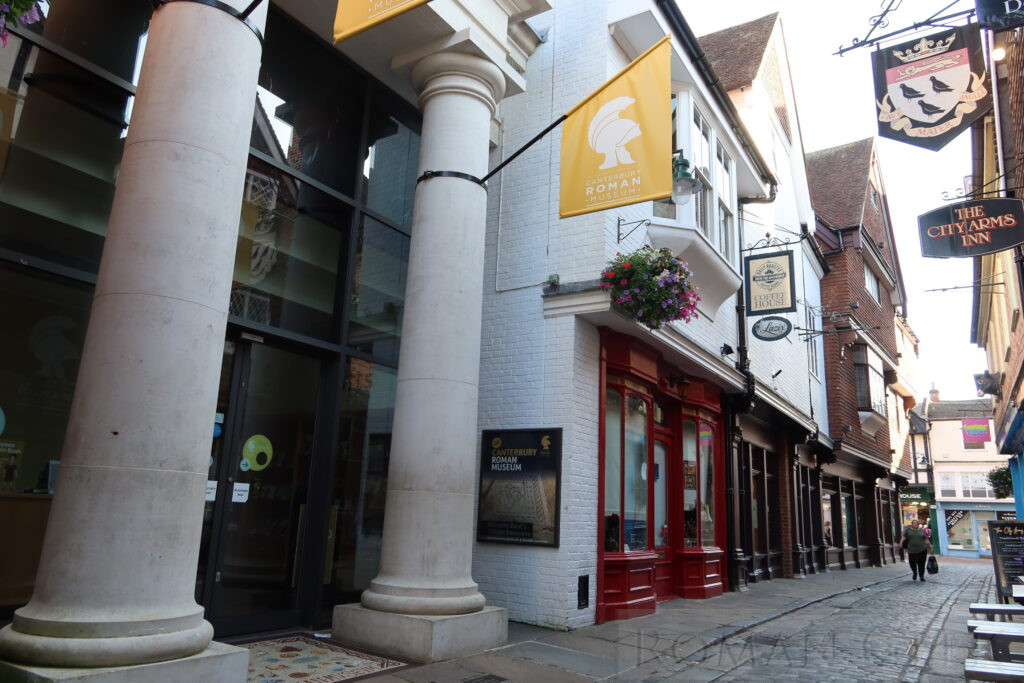
Canterbury Roman Museum

Canterbury Roman Museum

Description: Canterbury Roman Museum is located at 11a Longmarket, Butchery Lane, Canterbury. The Museum holds three Roman Mosaics, a Roman Silver Hoard and a reconstructed Roman House.

10. Christchurch Gate and Butter Market

Christchurch Gate in Butter Market, Canterbury

Christchurch Gate in Butter Market, Canterbury

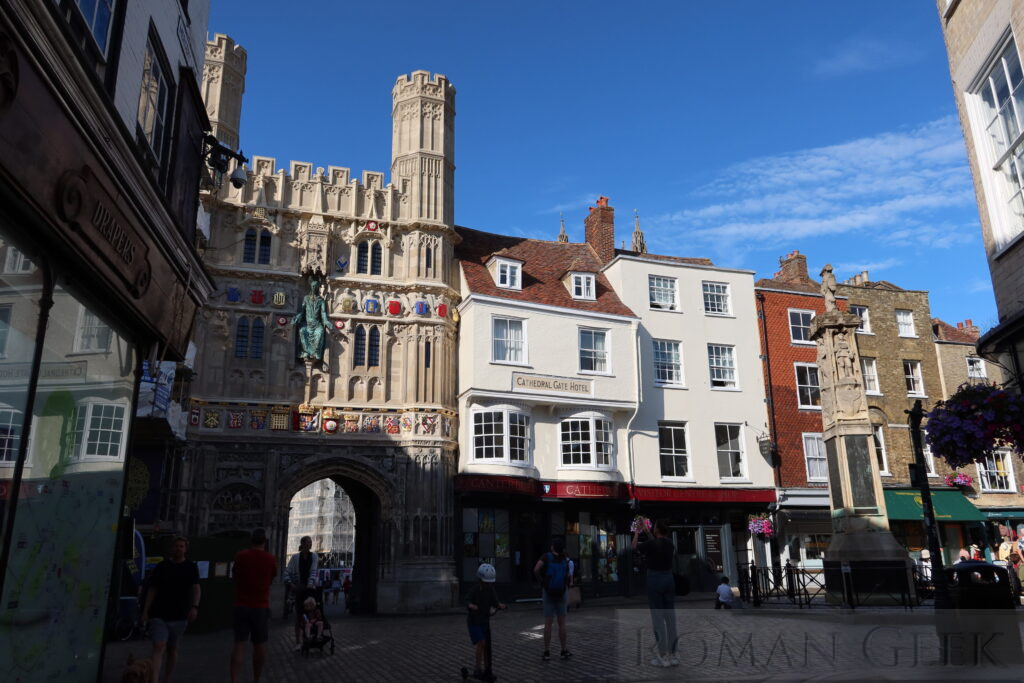
Description: Visitors to the cathedral must pass primarily through Christchurch Gate located in Buttermarket. Completed in 1521, it was built in the Renaissance style and has twin octagonal towers overlooking the square below.

Historical Insight: Buttermarket was the site of a Bull Stake where bulls were tied up and baited by dogs, until the construction of a market hall in 1664. This was demolished in 1888 and replaced by a memorial to Christopher Marlowe, Canterbury’s Playwright. In 1921, this was replaced by Canterbury’s World War I War Memorial which still stands in the square.

11. Canterbury Cathedral

Canterbury Cathedral

Canterbury Cathedral

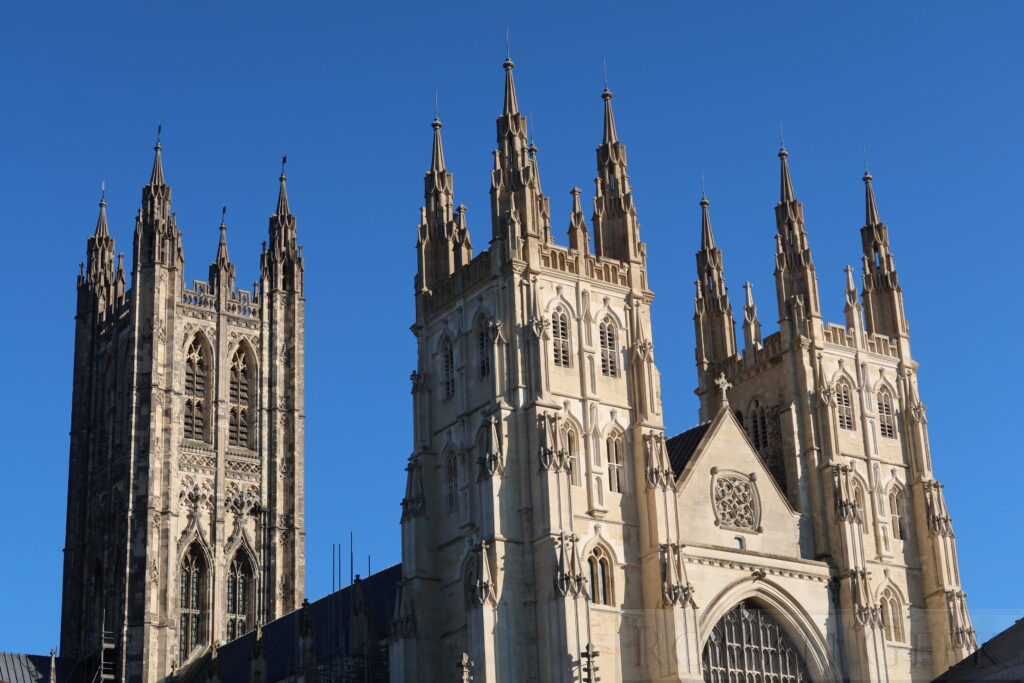
Description: Located at 11 The Precincts, Canterbury Cathedral is the seat of the Archbishop of Canterbury. Founded in 597 by St. Augustine of Canterbury, it is one of the oldest Christian buildings in England and a UNESCO World Heritage Site. The cathedral was rebuilt by the Normans in 1077 using stone from Caen in France, using a mixed style of Romanesque (Norman) and Early English Gothic Architecture. It features flying buttresses, high vaulting and pointed arches. After the assassination of the Archbishop in 1170, the cathedral became a place of pilgrimage to visit the shrine of St. Thomas Becket in the Trinity chapel. Destroyed during the Dissolution of the Monasteries in 1538, a candle now marks the spot where the shrine once stood.

Historical Insight: Unusually, England has two Archbishops, the Archbishop of Canterbury (Primate of all England) who is the senior Bishop, and the Archbishop of York (Primate of England). This because in the sixth century, there were two dominant Anglo-Saxon Kingdoms, Northumbria and Kent, and each Kingdom received an Archbishop, a tradition which has been maintained to the present day.
12. King’s Mile Shopping Area

King's Mile Shopping Area, Canterbury

King’s Mile Shopping Area, Canterbury

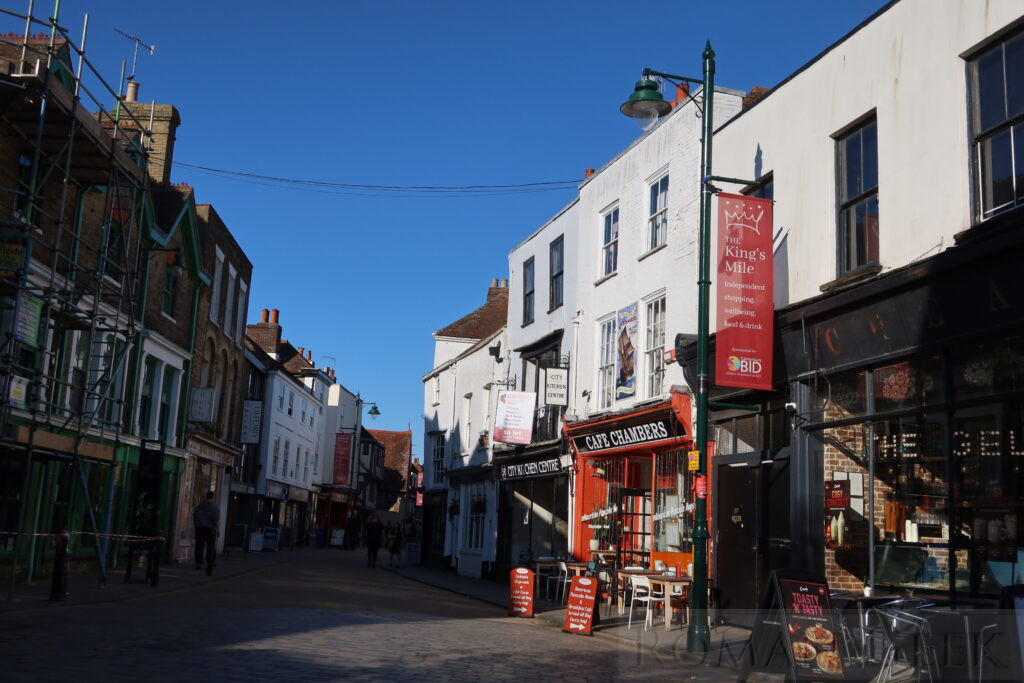
Description: More shops and cafes can be found in the King’s Mile shopping area, which runs from the cathedral along Palace Street and North Street.

13. The Crooked House

Crooked House Canterbury

Crooked House Canterbury

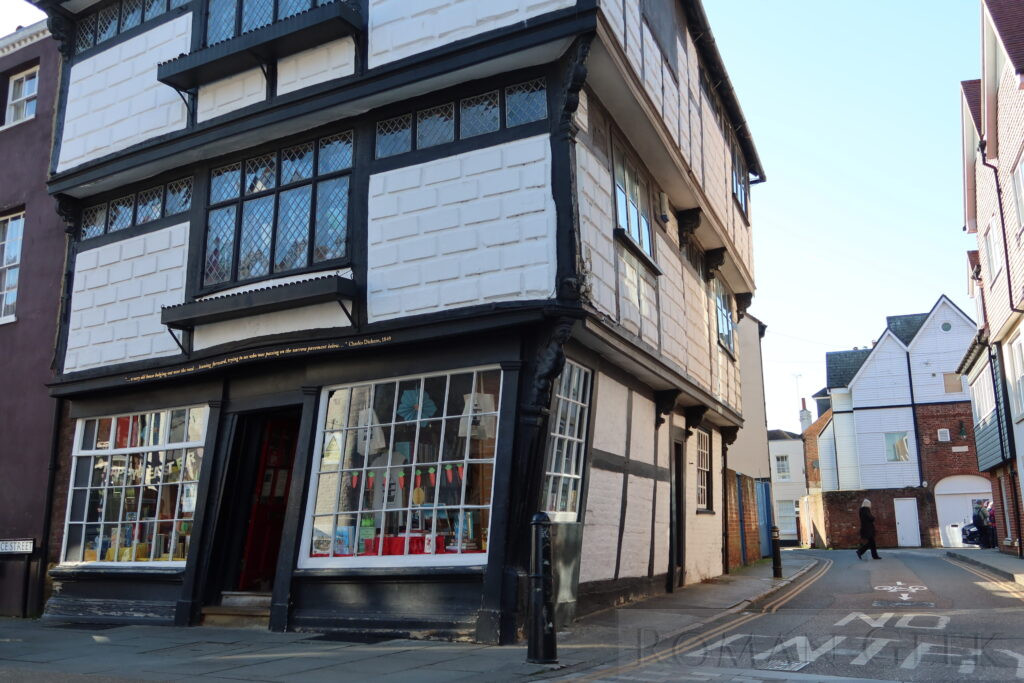
Description: Located in Palace Street, it was built in 1617 and is currently a second-hand bookshop. The structure is now held together by a steel frame and is possibly the most photographed building in Canterbury.

Tip: It has an interesting slanted front door with a quote from David Copperfield by Charles Dickens written above it: ‘A very old house bulging over the road…leaning forward, trying to see who was passing on the narrow pavement below’. Part of the novel is set in Canterbury.

14. St. Augustine’s Abbey and Museum

St. Augustine's Abbey and Museum, Canterbury

St. Augustine’s Abbey and Museum, Canterbury

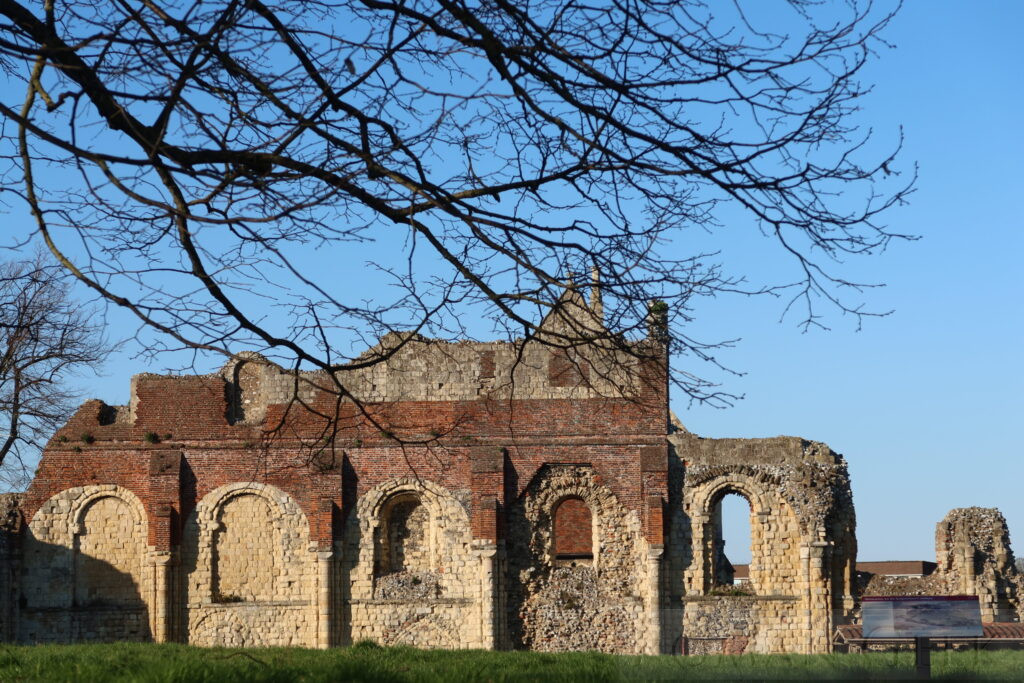
Description: The Abbey was a Benedictine Monastery founded in 598 CE by St. Augustine himself, and which continued until the Dissolution of 1538, after which it was mostly dismantled. Run by English Heritage, there is a museum, shop and picnic area.

15. St. Martin’s Church

Description: Founded before 597 CE, but rebuilt in that year, St. Martin’s Church is the oldest Christian Church still in use in England. It is a Grade I listed building and a UNESCO World Heritage Site along with Canterbury Cathedral and St. Augustine’s Abbey.

Historical Insight: Queen Bertha was a Christian Frankish Princess who married the pagan Aethelberhrt of Kent in 580 CE, with the proviso that she could continue to practise her religion. She brought her chaplain Liudhard, the Frankish Bishop of Senlis. They were given an existing building, which they dedicated to St. Martin of Tours. Bertha was instrumental in bringing over St. Augustine of Canterbury in 597 CE, who used this church as his base until the cathedral was built.

Tip: In 1844, the Canterbury-St. Martin’s hoard of 6th century Saxon gold coins was found in the churchyard, including the Liudhard Medalet, the oldest example of Saxon coinage dated to between 578-589 CE. It bears a Latin inscription naming Bertha’s Chaplain, Bishop Liudhard, who died in the 590’s. The coin is now in the World Museum collection in Liverpool. The Churchyard also contains the grave of Mary Tourtel (d. 1948), creator of Rupert Bear.

16. Canterbury Roman and Medieval Walls

Canterbury City Wall

Canterbury City Wall

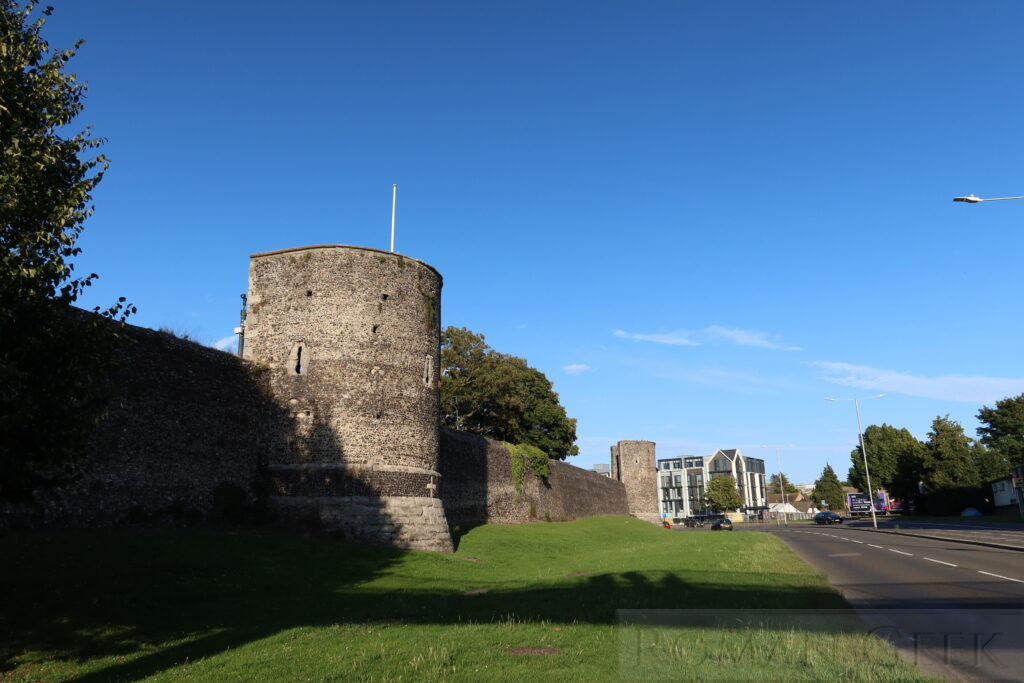
Description: The 3rd century CE Roman walls and towers were rebuilt after 1363 CE in preparation for the One Hundred Years War. Over half of the circuit survives today and can be walked on.

17. Dane John Mound and Gardens

Dane John Mound and Gardens, Canterbury

Dane John Mound and Gardens, Canterbury

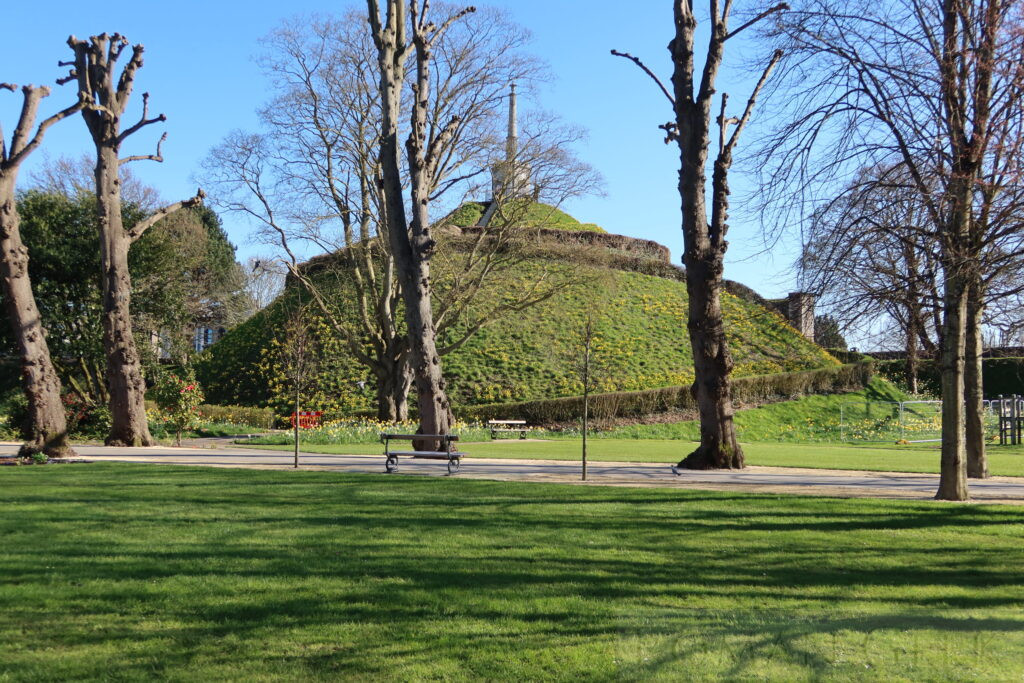
Description: Located in Dane John Gardens, Dane John Mound is a former Roman Cemetery which was later converted into a Norman Motte and Bailey (Dane John is from the French Donjon). On top of the Mound is a sundial and stone obelisk, dedicated to Alderman James Simmons, who created the Gardens around 1803.

18. Canterbury Castle

Canterbury Castle

Canterbury Castle

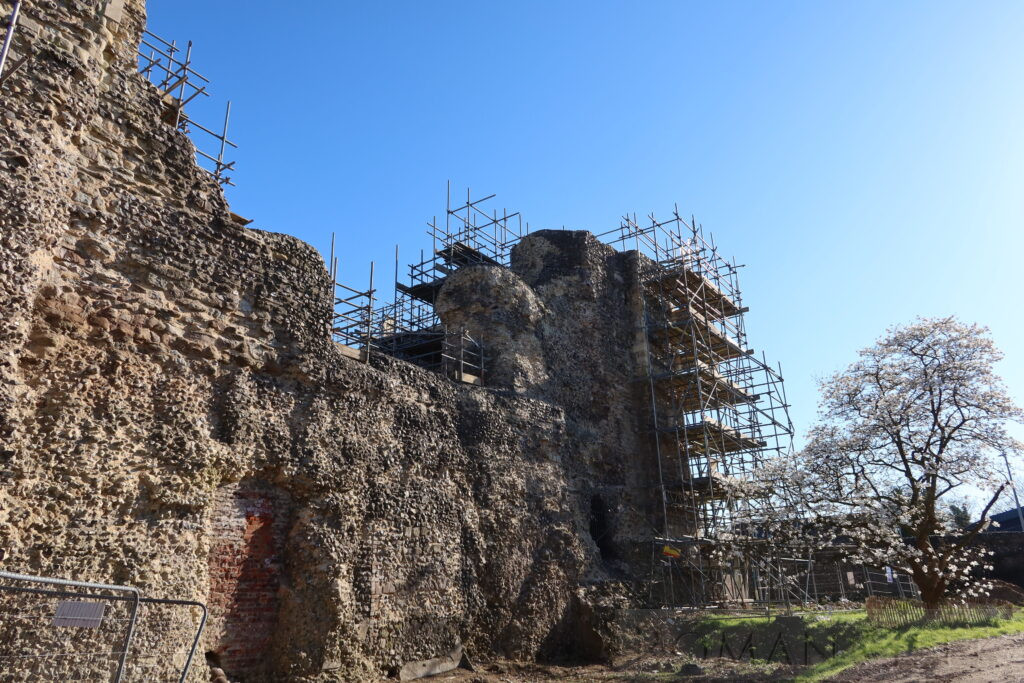
Description: The ruined castle consists of a stone Keep built by Henry I after 1100 CE. It is not open to visitors. The Normans built three castles to guard the road from Dover to London: Dover castle, Canterbury castle and Rochester castle.

Canterbury Walking Tour

  • Your geolocation will appear as a blue icon that moves on the map as you walk.
  • You may start anywhere on the map and just follow the blue line to the next point of interest.

Travel Tips

  • Best time to visit: Spring and autumn for mild weather and fewer tourists. King’s Mile Summer Run (June), Great Stour RiverFest (September), Canterbury Festival (October to November), Canterbury Christmas Market (December)
  • Photography hotspots: Westgate Towers Museum Rooftop, River Great Stour, Canterbury Cathedral
  • Nearby Attractions: ReculverDover Roman LighthouseRichborough Roman Fort

Visitor FAQ

  • What is Canterbury famous for?
    • Canterbury is known for its UNESCO Heritage Cathedral, its Roman, and its Medieval city walls, It is the destination for the Canterbury Tales written by Geoffrey Chaucer in 1400 and the novel David Copperfield, published by Charles Dickens in 1850, is partly set in Canterbury.
  • Can I see Roman Ruins in Canterbury?
    • Yes, Canterbury Roman Museum holds three Roman Mosaics, a Roman Silver Hoard and a reconstructed Roman House. Also, the medieval city Walls are built on the original Roman Walls.
  • How far is Dover from Canterbury city centre?
    • Approximately 20 minutes by car.
  • Are there Guided Tours of Canterbury historical sites?
    • Yes, local guides offer walking tours highlighting the Cathedral, the Old Town and other venues. Contact Visit Canterbury.
  • Is Durovernum Cantiacorum the same as Canterbury?
    • Yes, Canterbury was founded by the Cantiaci around 30 BCE, which became the Roman city of Durovernum Cantiacorum in 43 CE.
  • Which Roman Province was Canterbury located in?
  • What was the role of Durovernum Cantiacorum (Canterbury) in the Roman Empire?
    • Canterbury served as a key economic and military hub with roads leading to four key fortresses defending the Kent coast. It lay on Watling Street the road leading from the Continent to London.
  • Which Roman Roads connected Canterbury?

Quick Facts

Nearby Attractions

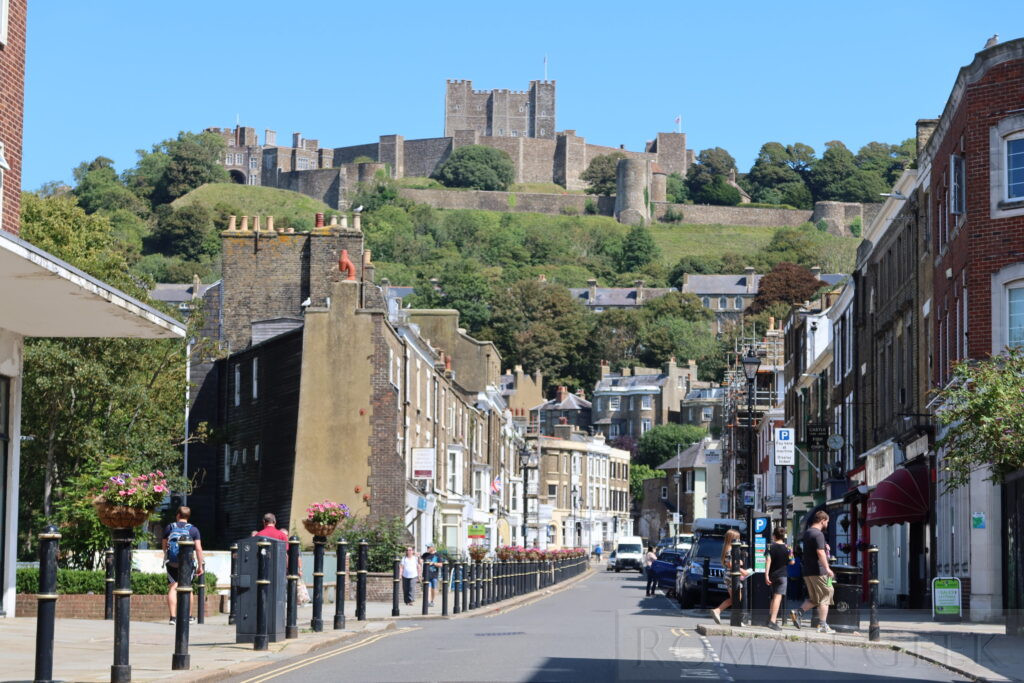
Dover Castle

Dover Castle

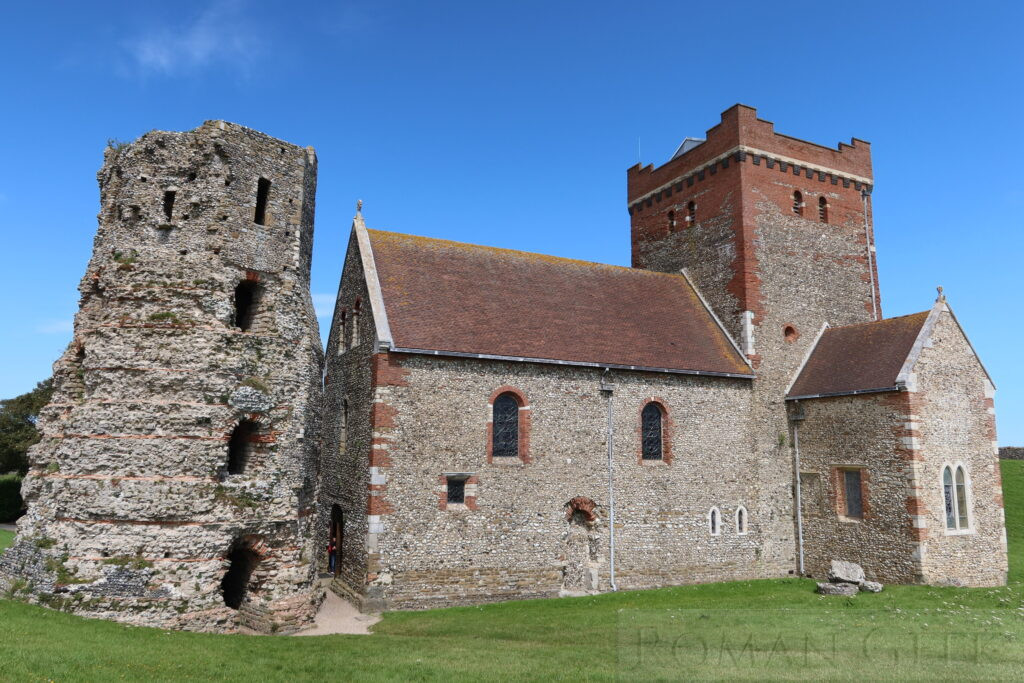
Dover Roman Lighthouse

Dover Roman Lighthouse

Reculver Twin Towers and Roman Fort, Kent

Reculver Twin Towers and Roman Fort, Kent

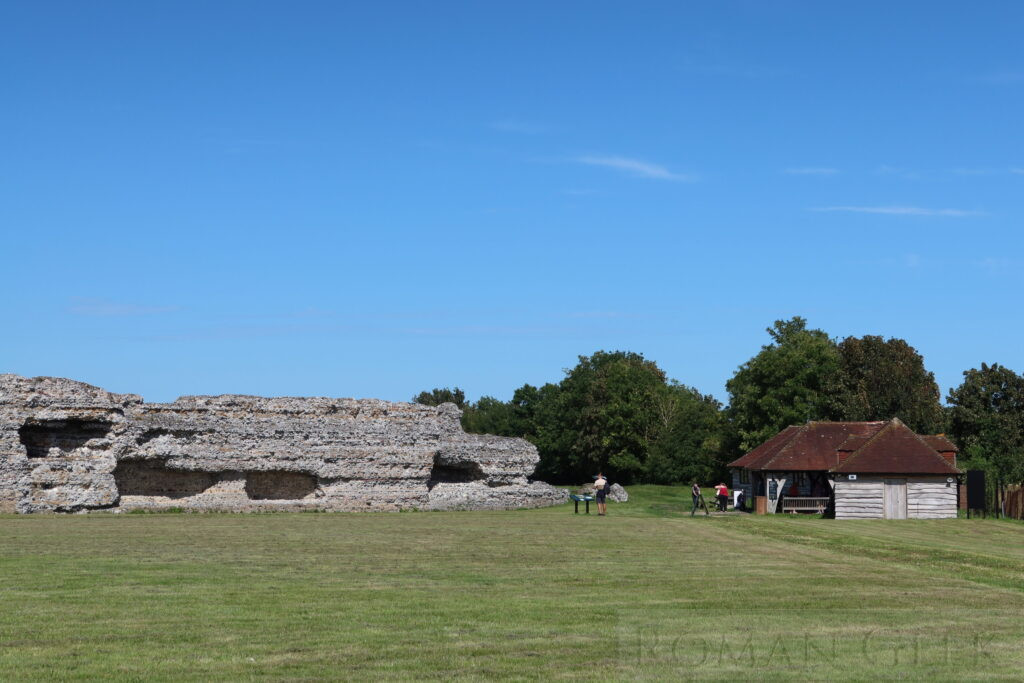
Richborough Roman Fort

Richborough Roman Fort