National Museum of Archeology Malta

  • The National Museum of Archeology Malta holds the National collection of Ancient Artefacts found in Malta.
  • It is located at Auberge de France, Republic Street, Valletta in Malta.

Artefacts

  • The Museum houses items from the Neolithic Period, the Bronze Age and the Phoenician Period.
  • It includes a room with a reproduction of the Cart Ruts of Malta.
  • One of the two Cippi of Melqart is housed here.
  • The National Numismatic Collection is located on the top floor.


National Museum of Archeology Malta, Valletta

Church of the Holy Sepulchre

  • The Church of the Holy Sepulchre, also known as the Church of the Resurrection, holds two of the holiest sites in Christianity, Golgotha and The Empty Tomb of Jesus.
  • It is located in the Christian Quarter of Jerusalem in Israel and is a site of Christian Pilgrimage.

Golgotha

  • Also known as ‘Calvary’, this is the site of Jesus' Crucifixion which was identified in 325 CE by Helena of Constantinople, the mother of Constantine I.

The Empty Tomb of Jesus

  • This is the site of Jesus' Burial and Resurrection.

History

  • The Church of the Holy Sepulchre was built and consecrated by the Roman Emperor Constantine I on the 13th Sept 335 CE.
  • However, it is not the first known Christian Church. This is the Aqaba Church at Aqaba of which only the Foundations remain. Built between c.293-303 CE it predates the Church of the Holy Sepulchre by approximately 30 years.


Church of the Holy Sepulchre

Cyzicus

  • Cyzicus was an ancient Greek city whose Ruins are located on the southern coast of the Sea of Marmara, near Erdek in the Balikesir Province of Turkey.
  • It became a Roman port city under Tiberius (14-37 CE) in the Province of Asia.

History

  • Eudoxus of Cyzicus
    • He was a sea Captain who first sailed to India in 118 BCE, then twice attempted to circumnavigate Africa.
  • Classis Pontica
    • Cyzicus became the location of a Roman Naval Fleet called the Classis Pontica in 170 CE.

Roman Sites

  • The Ruins that are still visible are:

Roman Roads


Ruins of Cyzicus, Erdek, Turkey

Villa Romana del Casale

History

  • The huge villa was built on the scale of a palace, and was part of a large Latifundium.
  • It was mentioned as the Filosofiana in the Antonine Itinerary (4th century CE).

Roman Mosaics

  • The villa holds an almost unique collection of well preserved and highly detailed Roman Mosaics.
    • Hunting Mosaic
      • One mosaic depicts a hunt showing wild animals, such as lions, being captured and transported in ships.
    • Athletics Mosaic
      • Another mosaic depicts an athletic competition, including ten women athletes who are all wearing the Bikini.
    • Roman Skiers
      • The Mosaic depicts a man on what appears to be a pair of skis. Mount Etna is nearby and is covered in snow for several months of the year.


Villa Romana del Casale, Sicily

Roman Baths Museum in Bath

  • The Roman Baths Museum is located in the city of Bath in Somerset.
  • Known as Aquae Sulis to the Romans, it was the location of a Hot Spring, Temple and Roman Baths which now form part of the museum.

The Museum

  • Located at Abbey Churchyard, Bath, the complex consists of the Roman Baths, a Roman Temple and a sacred Spring. Visitors are not able to enter the water.
  • The Museum holds artefacts found around the baths  including:


Roman Baths Museum, Bath

Archeological Museum of Baiae

  • The Archeological Museum of Campi Flegrei is located inside the Aragonese Castle of Baiae.
  • The Castle Museum holds a reconstruction of a sunken Nymphaeum and many sculptures rescued from under the water. There are also good views over the Bay of Pozzuoli.

Getting There

  • Located at Via Castello 39, Bacoli near Naples.

Artefacts

  • Nymphaeum
    • The Museum holds a reconstruction of the Nymphaeum of Claudius, with the Sculptures found there, including one of Ulysses.
  • Plaster Casts of Baiae
    • There are hundreds of Roman plaster copies of Greek bronze statues.
  • Other Artefacts
    • Artefacts from Baiae, Cuma and Pozzuloli are held in other rooms in the museum.

Underwater Archaeological Park of Baiae

  • In 2002 the Underwater Archeological Park of Baiae was created nearby for viewing by glass-bottomed boats, snorkeling and scuba diving.
  • Preserved underwater, in depths varying between 16-40 ft (5-13 m), are Roman mosaics, statues, marble floors, Baths and the remains of Pisoni’s Villa.


Archeological Museum of Baiae

Underwater Archaeological Park of Baiae

  • The Archeological Park of Baiae in Baiae near Naples, was created in 2002 for viewing by glass-bottomed boats, snorkeling and scuba diving.
  • Preserved underwater, in depths varying between 16-40 ft (5-13 m), are five areas for viewing the Roman mosaics, statues, marble floors, baths and remains of Pisoni’s Villa.

Getting There

  • Located at Via Lucullo, 94, Bacoli, near Naples.

Baiae

  • Baiae was a resort town near Naples, frequented by the Roman Emperors and the Aristocracy.
  • By the 8th century CE, Baiae had sunk below the sea.


Underwater Archeological Park of Baiae

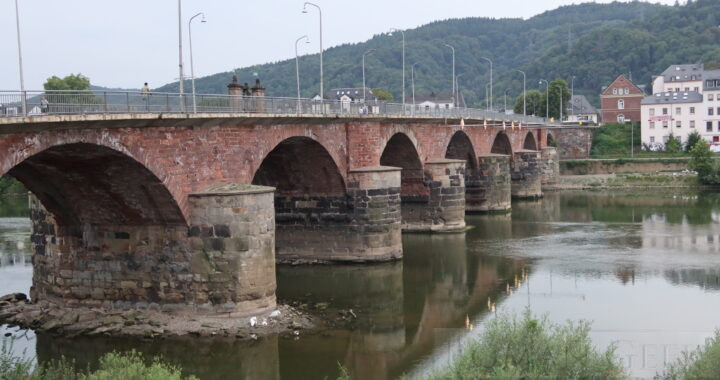
Trier Roman Bridge

Trier Roman Bridge

  • Trier Roman Bridge is located on the river Moselle in Trier, Germany.
  • It was built in the 2nd century CE, and has nine original stone piers, although the upper structure has been renewed twice.

Trier

  • Trier was an important Roman City on the Moselle and holds many Roman buildings, some of which are still intact:
    • Porta Nigra (Black Gate)
    • Trier Imperial Roman Baths
    • Constantine Basilica
    • Trier Roman Amphitheatre
    • Trier Roman Bridge


Trier Roman Bridge

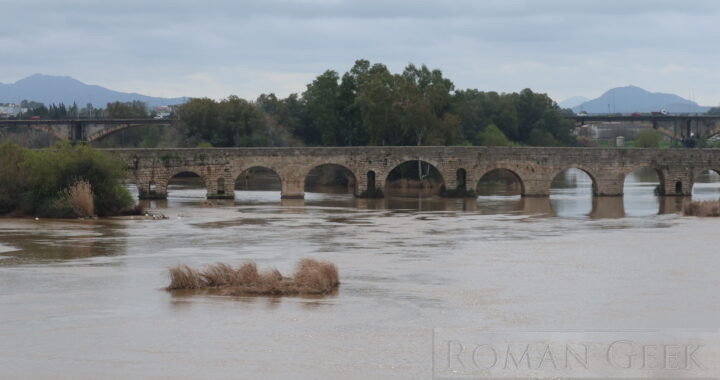
Guadiana Roman Bridge at Merida in Spain, holds the record for being the longest surviving Roman Bridge, with 60 spans and a length of 2,365 ft (721 m).

Guadiana Roman Bridge

  • The Puente Romano Merida is a Roman Bridge that crosses the Guadiana River at Merida in Spain.
  • It holds the record of being the longest surviving Roman Bridge.

History

  • The bridge was constructed during the reign of Trajan (98-117 CE)
  • Originally having 62 spans, it is still the longest surviving Roman Bridge, with 60 spans and a length of 2,365 ft (721 m).
  • It was restricted to pedestrians only in 1991.

Nearby Sites


Guadiana Roman Bridge, Merida

Alcantara Roman Bridge

  • The Alcantara Roman Bridge is a bridge over the river Tagus located in Alcantara in western Spain.
  • It was completed in 106 CE by Trajan (96-117 CE). It was rebuilt in 1453 using masonry from the same quarry as the Romans.


Alcantara Roman Bridge