Dezful Roman Bridge

  • The Roman Bridge is located in Dezful, Iran, and crosses the river Dez. Today, only the foundations are Roman.
  • After Shapur I defeated Valerian in 262 CE, he forced the captured Roman Legions to build this bridge. This was in addition to the building of the city of Bishapur and the Band-e Kaisar Roman Bridge and Dam.


Dezful Roman Bridge

Ulpia Traiana Sarmizegetusa

  • Ulpia Traiana Sarmizegetusa was the Roman Capital of Dacia (Roumania).
  • It was built by Trajan in 106 CE, after the Dacian Wars (85-106 CE), to replace the Dacian Capital of Sarmizegetusa Regia, 25 miles (40 km) away.


Ulpia Traiana Sarmizegetusa

Tomis

  • Tomis was the capital of the Roman Province of Moesia Inferior in modern Bulgaria.
  • The Ruins of Tomis are located in Constanta, Roumania.

History

  • In 29 BCE the area came under Roman influence, with Tomis becoming the capital of Moesia Inferior.
  • Between 8-16 CE, the Roman Poet Ovid was banished to Tomis by Augustus. Whilst here he wrote ‘Tristia’ and ‘Epistulae ex Ponto’.
  • A 10 mile (16km) aqueduct once supplied Tomis with water.
  • Modern Constanta is built over Roman Tomis.

Roman Sites

  • Ovid’s Square
    • Mosaics and the Remains of Buildings, workshops, shops and Public Baths.
  • Archeology Park (Parcul Arheologic)
    • Located in Ferdinad Boulevard, Constanta. Open 24hrs.
    • On display in the Park are the Remains of Roman Buildings, Columns, Capitals, Amphorae and a Tower (6th century CE).

Museums

  • Museum of National History and Archaeology
    • Located at 12 Ovid Square, Constanta.
    • The museum holds Roman Artefacts excavated from Tomis.


Archaeology Park of Tomis, Constanta

Virunum

  • Claudia Virunum was a Roman city whose Ruins are located near Maria Saal and Magdalensberg in Austria.
  • Virunum was the capital city of the Roman Province of Noricum, and after 297 CE, capital of the smaller Province of Noricum Mediterraneum.

Roman Sites

  • Roman Amphitheatre of Virunum (1st century CE)
    • 9063 Maria Saal, Zollfeld.
    • Outline only. Visits by appointment with the Archeological Park.

Museums

  • Archeological Park, Magdalensberg.
    • Magdalensberg LandesStrasse 15, Magdalensberg.
    • Holds the excavated Ruins of Virunum with reconstructions and displays of artefacts.

Roman Roads


Archeological Park, Magdalensberg

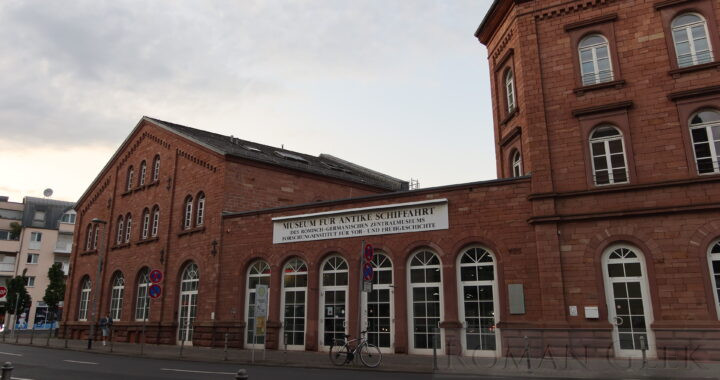
Roman Ancient Ship Museum, Mainz

Mainz Ancient Ship Museum

  • The Museum fur Antike Schiffahrt (Museum of Ancient Shipping) is located in Mainz, Germany.
  • Currently closed, when it reopens it will contain reconstructions of Roman Galleys found buried under the riverbank of the Rhine.

Vessels on Display

  • Between 1981-1982, five Roman military ships and two Roman cargo vessels were found buried in the river mud during a building excavation.
  • The Museum has on display a reconstruction of a Navis Lusoria, a 30 oared naval galley, and of a cargo galley.
  • The museum also contains artefacts relating to the sailors of the Roman navy in Germany.

Mainz Roman Naval Base


Mainz Ancient Ship Museum

Melita

  • Melita was the capital of Roman Malta and was known to the Romans as the ‘Citta Notabile’.
  • Today, the Roman city ruins are located in the towns of Mdina and Rabat.

Roman Sites and Museums

  • The Domus Romana Museum
    • The Museum is located at Mdina on the remains of a 1st century BCE Roman Villa, which holds well-preserved mosaics and other artefacts.
  • Walls of the Punic-Roman Fortress
    • The walls are located on the Mdina bastions.


Domus Romana Museum at Mdina

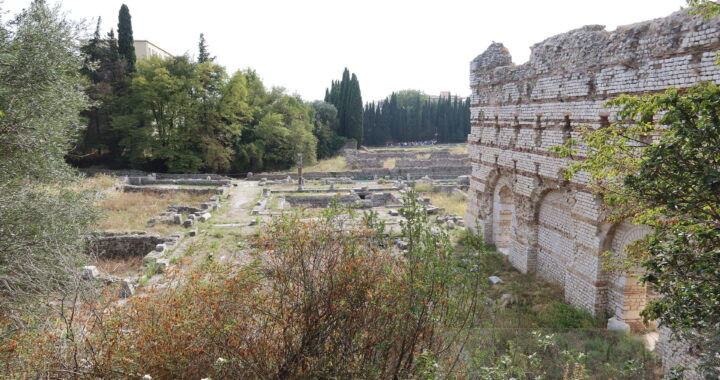
Cemelenum, Nice

Cemenelum

  • Cemenelum was a Roman town whose Ruins are located in the Cimiez suburb of Nice in the Provence Alpes Cote d’Azur Region of southeastern France.
  • It was the capital of the Roman Province of Alpes Maritimae.

Roman Sites and Museum

  • Archeological Museum of Nice Cimiez
    • The Museum incorporates the Ruins of Cemenelum and artefacts found on the site.
      • Amphitheatre
      • Baths
      • Basilica
      • Arena

Auxiliary Alpine Regiment

  • Cohors I Ligurum et Hispanorum
    • This was one of the Roman Alpine Regiments, based at Cemenelum in Nice, between c. 14-70 CE, after which it was merged with a Spanish unit.
    • It then moved to Niedenberg in Germania Superior between 116-134 CE.
    • Alpine regiments usually contained the tribal name in their title, hence ‘Ligurum’ (Ligurian) and ‘Hispanorum’ (Hispani).

Roman Roads

Photo and map: Cemenelum, Cimiez, Nice

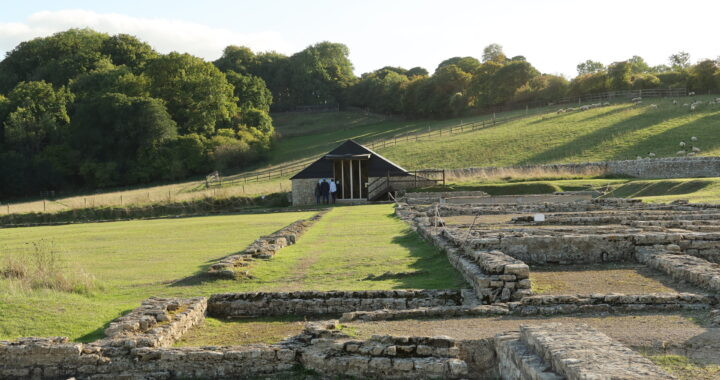
North Leigh Roman Villa

North Leigh Roman Villa

  • North Leigh Roman Villa is a Ruin located on the River Evenlode, 0.5 mile (1km) north of the village of North Leigh in Oxfordshire, 7 miles from Woodstock.
  • It was the fourth largest Roman Villa in England. Only the foundations and a Mosaic are visible.

Description

  • The Villa rustica was begun in the first century CE and by the fourth century CE, had 60 rooms in three wings around a central courtyard, with the fourth side consisting of a protective wall and gateway.
  • Further buildings extended to the southwest. It fell into disuse in the fifth century CE.
    • 60 rooms in three wings.
    • 16 rooms contained Mosaics.
    • 11 rooms had underfloor Hypocaust heating.
    • 4 bath suites.

Nearby Sites

  • The Ridgeway
    • The Hillforts from west to east: Barbury Castle, Liddington Castle, Uffington Castle and White Horse, Segsbury Camp – The River Thames – Pulpit Hill, Ivinghoe Beacon.
  • Woodstock
    • Oxfordshire Museum, Woodstock
    • The museum holds several Roman Artefacts including a Roman ceramic face pot, the Stoke Lyne Coin Hoard (3rd century CE) and the Tombstone of a retired soldier, Lucius Valerius Geminus (79 CE).
  • Saxon Mound Castle
    • The castle mound is located next to Brailes Hill, which is on private land and is the second highest point in Warwickshire at 761 ft (231m).
    • The Saxon Castle Mound has excellent views over the plain.
  • The Rollright Stones
    • Located at Great Rollright, 15 miles (24km) to the north of North Leigh Roman Villa.
    • They are a Bronze Age Monument consisting of Standing Stones known as the Kings Men Stone Circle, the King Stone and the Whispering Knights Dolmen.


Photo and map: North Leigh Roman Villa

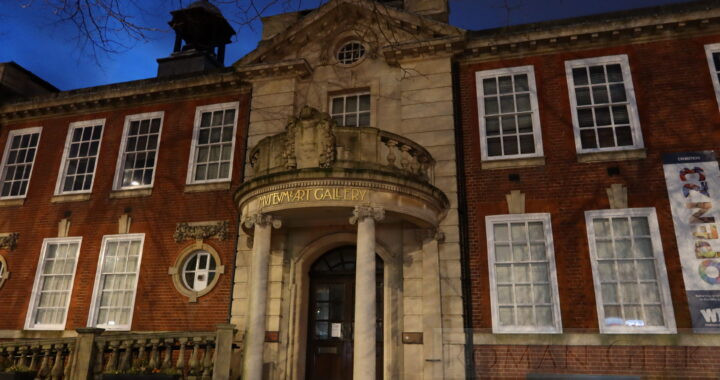
Worthing Museum

Worthing Museum and Art Gallery

  • The Worthing Museum and Art Gallery is located at Chapel Road, Worthing, West Sussex.
  • It holds several Roman Coin Hoards on public display.

Collections

  • The Museum holds excellent displays of Roman Artefacts including partial displays of the:
    • Patching Hoard
      • 23 Gold Solidi of which 10 are Visigothic copies.
    • Goring Hoard
    • The Washington Denarii
    • Mill Road Hoard
    • Pulborough Hoard
      • 1,559 Roman Coins

Nearby Sites

Roman Roads


Photo and Map: Worthing Museum and Art Gallery

Noviodunum

  • Noviodunum was a Roman fort and port on the lower Danube located 1 mile (2km) east of Isaccea in modern Roumania.
  • It was located in the Province of Moesia Inferior

Legio I Jovia

  • The Legio I Jovia, also known as Legio I Jovia Scythica, was founded by Diocletian between 284-305 CE.
  • Between c.284-c.400 CE the Legion was based at Noviodunum in Roumania.

Classis Moesica

  • The Classis Moesica was the Roman Navy River Fleet of the Lower Danube in the province of Moesia Inferior.
  • Classis means Fleet in Latin. The fleet operated between the Iron Gates on the Danube, to Chersonesus Taurica (The Crimea) from 41 CE.
  • From 10 CE onwards the Fleet was based at Noviodunum, with detachments based at the ports of Novae, Oescus and Tomis (Constanta).
  • The ships used in the Fleet were the Liburnian, some of which had Rams.

Battle of Noviodunum (369 CE)

  • In 369 CE, the Battle of Noviodunum was fought on the opposite bank to Noviodunum between the Emperor Valens (364-375 CE) and a Germanic army.

Siege of Noviodunum (52 BCE)

  • The Battle is not to be confused with the earlier Siege of Noviodunum in 52 BCE, a town of the same name in Gaul, during the Gallic Wars (58-51 BCE).


Noviodunum, Isaccea, Roumania