Jersey Celtic Coin Hoard

  • A Hoard of 70,000 Celtic coins of the Curiosolitae Gallic Tribe along with Roman coins and various gold torcs, silver bracelets and glass beads, were found in a field in Jersey.
  • Also known as The Grouville Hoard, it dates to the period of the Gallic Wars (58-51 BCE).

Museums

  • La Hougue Bie Museum, Jersey
    • Located at La Route de la Houghe Bie, Grouville, Jersey.
    • The hoard is on display in the museum.


La Houghe Bue Museum

Stone Roman Trireme prow under the Basilica of San Bartolomeo, Tiber Island, Rome

Tiber Island

  • Tiber island is located in the middle of the river Tiber in Rome.
  • The Temple of Asclepius in Rome was built on the Island in 291 BCE. The entire island was reconstructed out of marble to represent the shape of a ship. Only the marble prow remains today.

Getting There

  • Location: Tiber Island is accessed by the Ponte Fabricio from the east and the Ponte Cestio from the west.

Temple of Asclepius in Rome

  • The Temple was started in 293 BCE, after a great Plague had hit Rome. It was ordered by the Roman Senate after consulting the Sybilline Books.
  • A ship was sent to Epidauras to obtain a statue of Asclepius.
  • They also obtained a snake which entwined itself around the mast, like the Rod of Asclepius.
    On arrival in Rome it slithered onto the island and was seen as a sign sent from Asclepius to build his Temple there.
  • The entire Tiber Island was covered in white limestone called Travertine and shaped like a Trireme as a reminder of this event.
  • It was given a prow and a stern, and an obelisk was placed in the centre to represent the mast.

The Site today

  • The Temple was destroyed and replaced in c. 1,000 CE by the Basilica of San Bartolomeo all’Isola. The fresh water well near the altar is the original well used during the Roman period.
  • In keeping with the same theme, a hospital was built in 1584 CE, which also stands on the site of the Temple, but on the opposite end to the Basilica.

Stone Roman Prow

  • The Stone Roman prow is still visible today at the base of the Basilica of San Bartolomeo all’Isola, where it points to the remaining arch of the Pons Aemilius.

Ponte Fabricio (62 BCE)

  • The Bridge of Fabricius, also known as the Ponte Fabricio in Italian and the Pons Fabricio in Latin, is the original and best preserved bridge in Rome. It connects Tiber Island with the East Bank of the Tiber.
  • It was built in 62 BCE, and on the parapet are two marble pillars known as the Quattro Capi, which each have a double headed sculpture of Janus.

Ponte Cestio (62-27 BCE)

  • The Ponte Cestio or Pons Cestius in Latin, connects Tiber Island with the West Bank of the Tiber.
  • It was the first stone bridge from Tiber island to the Trastevere area.
  • It was rebuilt in 370 CE.
  • Then completely rebuilt and lengthened in 1888-92 CE. Only the middle span is original.


Photo and map: Stone Roman Prow under the Basilica of San Bartolomeo, Tiber Island

Actium Trophy Monument

  • The Actium Trophy Monument is a Victory Monument and Sanctuary to Apollo, with dedications to Neptune and Mars, built by Octavian, and located at Nicopolis, Preveza,
  • It was built on the site where his tent had been pitched during the Battle of Actium in 31 BCE, to recognise his victory over Mark Anthony and Queen Cleopatra VII.

The Roman Ruins

  • The Monument has a wall which once held 35 Rams of the captured Galleys. 23 sockets for these are still visible today.
  • The size of the sockets at the western end of the wall are much larger than at the eastern end.
  • This indicates the wall held Rams for ‘Fives’ and ‘Sixes’ at the eastern end, increasing to ‘Nines’ and ‘Tens’ at the western end.
  • At the same time Octavian founded the city of Nicopolis, near Smyrtoula.
  • To celebrate the victory, he also inaugurated the Actian Games to be conducted every four years.

Other Trophy Monuments


Actium Trophy Monument, Nicopolis, Preveza

Romano-Germanic Museum Cologne

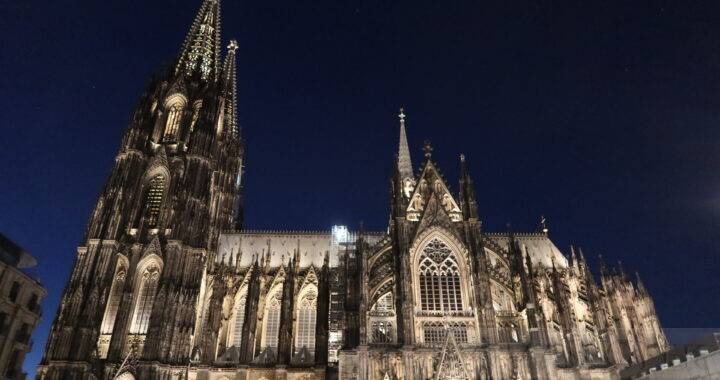
Cologne Roemisch Germanisches Museum

  • The Roemisch-Germanisches Museum of Cologne houses a collection of mosaics and artefacts from the Roman Legionary Fortress and city over which modern Cologne has been built.
  • The Museum is located next to Cologne Cathedral which is at Domkloster, 4, 50667, Cologne. The museum is currently closed for Renovation. The Artefacts are on view at the Belgian House, Cacilienstrasse 46, near Neumarkt.

Description

  • The Cologne Roman German Museum is one of two top museums in Germany covering the Roman Period, the other being the Landesmuseum in Trier.
    • The museum is built around the site of a 3rd century CE Roman villa, in order to display the Dionysus Mosaic found in the villa.
    • On display are artefacts found in the Legionary Fortress and the Roman city including portraits, inscriptions and pottery.
    • There is also a large collection of locally manufactured Roman Glass and a collection of reconstructed Roman Vehicles.
Romano-Germanic Museum Cologne

Romano-Germanic Museum Cologne


Roemisch-Germanisches Museum is located beside Cologne Cathedral

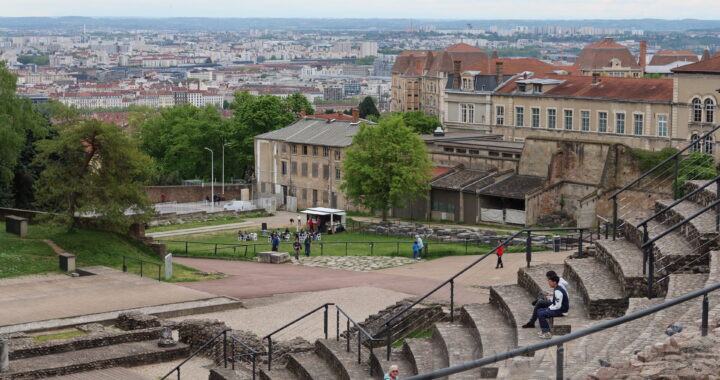
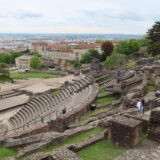
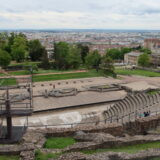
One of the Lyon paired theatres, Lugdunum Museum

Lugdunum: Gallo Roman Museum of Lyon

  • The Gallo Roman Museum in Lyon, France, is located at 17 Rue Cleberg, Lyon, France and is built beside a rare set of Roman Paired Theatres that overlook the city.
  • The Museum holds a collection of artefacts from the Roman period.

Monuments and Artefacts

  • The Roman Paired Theatres
    • The Roman Theatre of Fourviere had 10,000 seats.
    • Also discovered here was a rare pulley mechanism for raising the curtain from below.
    • The Roman Odeon had 3,000 seats, for Music and Poetry readings.
    • It was very unusual to have Paired Theatres. The only other Paired Theatres in Gaul were at Vienne, of which only one now remains in existence.
  • Lyon Tablet
    • A bronze tablet recording the Emperor Claudius‘ speech recommending Noble Gauls be permitted to enter the Roman Senate.
  • Coligny Calendar
    • The Coligny Calendar is a Lunisolar Calendar engraved in the Gaulish language on a Bronze Tablet, dating to the end of the second century CE.


One of the Lyon paired theatres, Lugdunum Museum

One of the Lyon paired theatres, Lugdunum Museum

One of the Lyon paired theatres, Lugdunum Museum

One of the Lyon paired theatres, Lugdunum Museum


One of the Lyon paired theatres, Lugdunum Museum

One of the Lyon paired theatres, Lugdunum Museum


Lugdunum Museum

Castellum Divisorum, Nimes

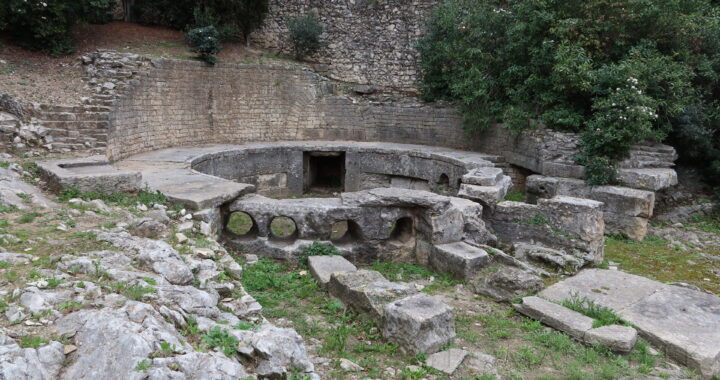
Nimes Castellum Divisorum

  • The Catellum Divisorum is a well preserved Roman circular water cistern located in Nimes.
  • It has ten lead pipes leading from it to distribute the water into the town.

Nimes

  • The city of Nimes holds some of the best preserved Roman Sites in France.
  • Roman Artefacts are held in the Nimes Museum of Romanity.


Photo and map: Castellum Aquae, Nimes

Classe Archeological Park

  • The Classe Archeological Park is located on the old harbour of Classe, located 2.5 miles (4km) from Ravenna.
  • It holds the Ruins of the Roman Naval Base of the Classis Ravennas which controlled the Adriatic.

Classis Ravennas

  • The Latin for Fleet was Classis. The Classis Ravennas was the Fleet of the Roman Navy based at Classe, Ravenna, which employed 10,000 men and a large fleet of war galleys.
  • The Harbour could accommodate 250 ships, according to Jordanes, writing in the 6th century CE, who was quoting Dio Cassius from the 3rd century CE.

Classe

  • Classe (meaning ‘Fleet’), is the name of the Harbour which was the home to the Eastern Mediterranean Fleet.

Fossa Augusta

  • The Fossa Augusta was a Roman Canal, which connected the Harbour at Classe to the River Po Delta, its surrounding lagoons and the Adriatic.

Military Expeditions known to have set off from Classe


Classe, Ravenna

Circus of Maxentius

  • The Circus of Maxentius, also known as the Circus of Caracalla, was constructed in 309 CE by Maxentius (306-312 CE) on the Via Appia in Rome.
  • Like the Circus Maximus, the Site of the Monument can still be visited.

Getting There

  • Location: Via Appia Antica, 153, Parc de la Caffarella, Rome.
  • Nearest Metro Station: Colli Albani, Line A.

History

  • The inaugural Games of 309 CE, were held as a Funeral for the young son of Maxentius, Valerius Romulus.
  • The Circus could hold 10,000 spectators.
  • In 312 CE, three years after the Inauguration, Maxentius was defeated by Constantine I, and it would appear that the Circus was never used again.

The Roman Site

  • The Circus was never built over and remains in situ today.
  • The Ruins of the two towers stand at one end of the grassed over track. The side walls are covered in undergrowth, but still exist.
  • The Agonalis Obelisk or Obelisk of Domitian which he commissioned in 81 CE as a monument to himself, was moved in 309 CE to become the Spina of the Circus of Maxentius. It is now in the Piazza Navona, Rome.


Circus of Maxentius

Circus Flaminius

  • The Circus Flaminius was a large circular area located to the south of the Campus Martius and to the north of Tiber Island in Rome.
  • It was created in 220 BCE, according to Varro. It is no longer in existence.

Description

  • It was possibly paved by Augustus (27 BCE-14 CE).
  • Under Tiberius, in 15 and 19 CE, Monumental Arches were added to the northern and southern entrances.
  • It had fallen into disuse by the fifth century CE and the area was built over in later centuries.

Use

  • It was used for displays during Roman Triumphs.
  • The only Roman Games held here were the Taurian Games, celebrated every five years from 140-160 CE under Antoninus Pius.
  • It was also used as a market and for Roman Assemblies to conduct their voting.
  • It is unlikely that Chariot Races were held in the Circus Flaminius as these were held in the better equipped and already established venue of the Circus Maximus.


Piazza Costaguti, a possible location of the Circus Flaminius