Temple of Mars Ultor

  • The Temple of Mars Ultor, or Mars the Avenger, was built in Rome in 2 BCE by Augustus, to celebrate his victory over Brutus and Cassius at the Battle of Philippi in 42 BCE.
  • It is located in the Forum of Augustus and had an octastyle facade whilst inside was a huge marble statue of Mars.

Resting place of the Lost Eagles of the Legions


Temple of Mars Ultor

Goseck Circle

  • The Goseck Circle is a Neolithic Circle in Goseck, Germany, constructed around 4,800 BCE, which acted as an Astronomical Observatory.
  • The Site slightly predates another Astronomical Observatory at Nabta Playa in Egypt, built around the same time.

Description

  • The Site consists of a Ditch containing two pallisaded rings.
  • Apertures in the rings were aligned with the winter and summer solstices.


Goseck Circle

Aurasius Mons

  • The Aurasius Mons are the Aures Mountains, which form part of the Saharan Atlas Mountain chain in Northeastern Algeria.
  • The highest Peak is Mount Chelia with an altitude of 7,638 feet (2,328m).


Mount Chelia, Aures Mountains, Algeria

Mauryan Empire

  • The Mauryan Empire (322-185 BCE) was founded by Chandragupta Maurya (321-297 BCE).
  • The Empire ruled over most of the Indian Subcontinent and had its capital at Pataliputra.

History

  • Chandragupta created the Mauryan Empire by occupying the former Greek Satraps left behind after the Invasion of India by Alexander the Great in 326 BCE.

Ashoka

  • Ashoka (304-232 BCE) was the grandson of Chandragupta and became Emperor of the Mauryan Empire between 268-232 BCE.
  • He is the best known Mauryan Emperor whose Empire included most of India, with the exception of modern Tamil Nadu and Kerala.

Grand Trunk Road

  • Chandragupta’s successors built the Grand Trunk Road, which linked from the Ganges in Bangladesh to Kabul in Afghanistan.
  • It was built during the 3rd century BCE, and is still in use today and is known by the same name.

North Indian Empires

  • The Mauryan Empire (322-185 BCE)
  • The Shunga Empire (185-73 BCE)
  • The Kushan Empire (30-375 CE)

Southern Indian Empires

  • The Satavahana Empire (228 BCE-224 CE)
  • Tamilakam Kingdoms (300 BCE-c. 300 CE)
    • Chola Dynasty (c. 300 BCE-1279 CE)
    • Pallava Dynasty (275 BCE-897 CE)
    • Pandyan Dynasty (400 BCE-618 CE)
    • Chera Dynasty (300 BCE-1100 CE)


Pataliputra

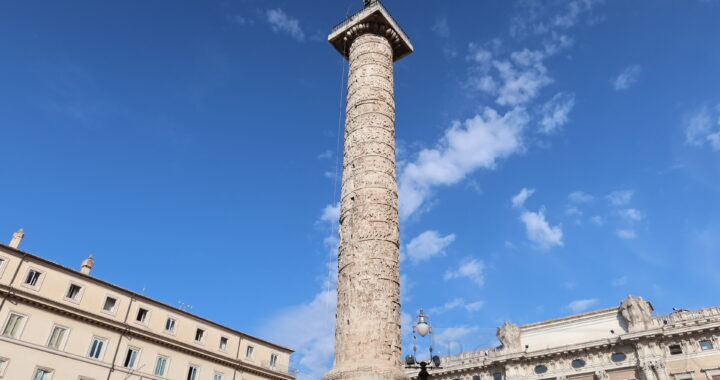
Column of Marcus Aurelius, Rome

Marcus Aurelius Column

  • The Marcus Aurelius Column is a Roman victory column located in Piazza Colonna, Rome, based on Trajan's Column.
  • It was built to celebrate the victory by Marcus Aurelius (161-180 CE) over the Marcomanni in 176 CE.

Getting There

  • Location: Piazza Colonna, Rome.

Reliefs

Other Columns


Image and Map: Marcus Aurelius Column, Rome

Taxila

  • Taxila was an ancient city which is now an archeological site located 19 miles (32km) northwest of modern Islamabad in Northern Pakistan.
  • The Emperor Chandragupta Maurya (321-297 BCE), Founder of the Mauryan Empire, was educated at Taxila.

Grand Trunk Road

  • The Grand Trunk Road ran for 1,600 miles (2,600km), from Chittagong on the mouth of the Ganges in Bangladesh to Kabul in Afghanistan via the Khyber Pass.

Library of Taxila

  • The Library of Taxila or Takshashila functioned from the 5th century BCE to the 5th century CE.
  • It was the centre of Hindu and Buddhist learning.
  • It held the Vedas, the Eighteen Arts, a Law School, a Medical School, and the School of Military Science.


Archeological site of Taxila

Janiculum Hill Watermills

  • The Watermills on the Janiculum Hill were fed by an Aqueduct that ran downhill. The wheels are thought to have been turned by the undershot method. They ground the grain for Rome.
  • The watermills were there when the Aurelian Walls were built to include them in 275 CE, and they were still in use during the Gothic Siege of 537 CE and may have continued working up until the 9th century CE.


Janiculum Hill, Rome

Iona

  • Iona is an island off the Isle of Mull, part of the Inner Hebrides on the west coast of Scotland.
  • It has been known as the ‘Isle of the Druids’ since antiquity.

Description

  • Iona is the location of the ancient Iona Abbey which is the burial site for the graves of Norse Kings, of Irish Kings and Scottish Kings, including Macbeth.
  • Iona was one of the Christian seats of learning, along with Lindisfarne, until the Viking Raids which began in 794 CE.
  • It is believed that the Book of Kells may have been begun at Iona, before the Monks and the Monastery were forced to move to the Abbey at Kells as a result of the Viking Raids from 794 CE onwards.


Iona Abbey