Chedworth Roman Villa

Chedworth Roman Villa

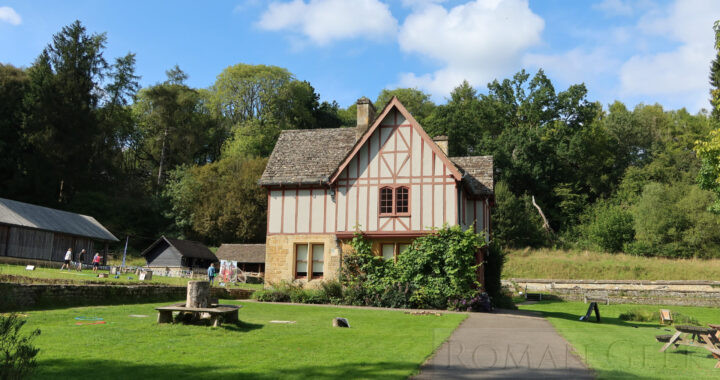
  • Chedworth Roman Villa is located 8 miles (16km) north of Cirencester, overlooking the river Coin close by the Fosse Way.
  • Built in c. 120 CE, it is the second largest villa in Britannia and was in use until the fourth century CE.

Description

  • Chedworth has a natural spring with a pool which holds a shrine or Nymphaeum. A Temple existed to the south east of the villa.
  • By the fourth century CE there were three wings around a central courtyard. 11 rooms had Roman Mosaic floors and there were 2 bathhouses.

Links


Chedworth Roman Villa

Bosporan Kingdom

  • The Bosphoran Kingdom was a Roman Client Kingdom between 8 BCE-341 CE, which was also known as Chersonesus Taurica.
  • It consisted of the Crimean Peninsular and its capital city, also called Chersonesus Taurica, and included the Eastern Crimea on the other side of the Kerch Strait.

History

  • Mithridates VI of Pontus was briefly King of this Kingdom in 63 BCE, after which it came under Roman Influence.
  • Between 8 BCE-38 CE it was a Roman Client Kingdom under King Aspurgus, assisted by a Roman Army.
  • Between 63-68 CE it became part of the Roman Province of Moesia Inferior under Nero, who deposed King Cotys I.
  • In 69 CE Galba restored it as a Roman Client Kingdom which it continued to be until 341 CE.
  • After 341 CE the record is unknown. It may have fallen to the Huns and the Alans, or become a Client Kingdom of the Byzantine Empire.

Silk Road

  • The Bosporan Kingdom was one of the Routes on the Silk Road.
  • In the Ancient World, trade passed out of China, through Afghanistan, down the River Oxus into both the Aral Sea and the Caspian Sea.
  • The Volga discharges into the Caspian Sea. There is a short overland connection where the River Don passes close to the Volga.
  • The Don then flows through the Sea of Azov and into the Black Sea, past the Crimean Peninsular and its Port.


The Crimea

Ashmolean Museum, Oxford

Ashmolean Museum

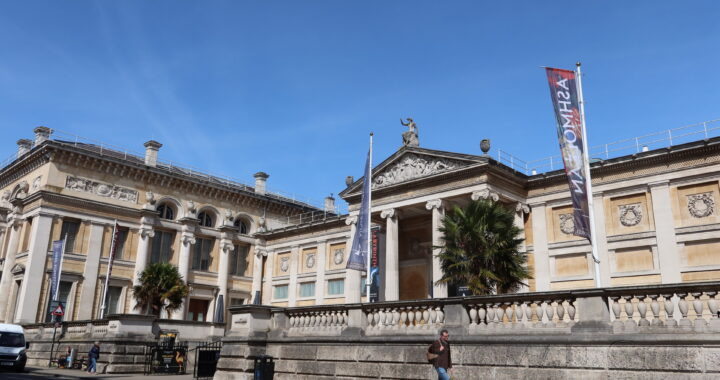
  • The Ashmolean Museum of Art and Archeology houses a collection of artefacts ranging from Ancient Greece, Ancient Rome, Ancient Egypt and the Minoan Civilisation.
  • The Museum is located in Beaufort street, Oxford.

History

  • The first building was built in 1678-1683 when Elias Ashmole donated his Cabinet of Curiosities to Oxford University in 1677. It was the world’s first University Museum and the Britain’s first Public Museum.
  • One wing is occupied by the Taylor Institute (known as the Taylorian), the Oxford University Library dedicated to European Languages.

The Collections

Ancient World

  • Oxyrhynchus Papyri.
  • The Parian Marble (Chronology of Greece 1582 BCE to 299 BCE)
  • The Metrological Relief. (A marble containing Greek Measurements)
  • The Minoan Collection of Sir Arthur Evans.
  • The Kish Tablet.
  • The Sumerian King List.
  • Piranesi Candelabra

Medieval

  • The Alfred Jewel.
  • The Abingdon Sword.
  • The Watlington Viking Hoard.

Modern

  • Drawings by Michelangelo, Raphael and Leonardo da Vinci.
  • Paintings by Paul Cezanne, Pablo Picasso, Anthony Van Dyck and John Constable.
  • Paintings by J.M.W. Turner
  • The Messiah Stradivarius
  • The Pissarro Archive
  • Lawrence of Arabia’s Ceremonial Arab Dress.
  • Oliver Cromwell’s Death Mask.
  • The Michael Sullivan Collection of Chinese Paintings.

Links


Photo and map: Ashmolean Museum, Oxford

Hagia Sophia

  • The Hagia Sophia, currently a Mosque in Istanbul, was built by the Byzantine Emperor Justinian I in 537 CE as the Cathedral of the Byzantine Empire.
  • It continued in use until 1453 CE, when it became a Mosque and four Minarets were added. In 1935 it became a Museum, and in 2020 was returned to being a Mosque.

Columns

  • Eight of the rose granite columns in the Hagia Sophia were transported by Justinian I in 537 CE from the colonnade of the Great Court of the Baalbeck Roman Temples.
  • They came originally from a quarry at Aswan in Egypt.


Church of the Holy Apostles (no longer extant)

  • The Church of the Holy Apostles was built by Constantine I between 330-337 CE.
  • It was the second most important church after the Hagia Sophia. The Church was destroyed in 1462 CE and no vestiges remain.
  • It was the Mausoleum for the Eastern Roman Emperors of the Byzantine Empire starting with Constantine I, in 337 CE until 1056 CE with Theodora, after which there was no more space. The Emperors were placed in Porphyry Sarcophagi.


Hagia Sophia, Istanbul

Provincia Insularum

  • Provincia Insularum meant the ‘Province of the Islands’ and referred to the Dodecanese Islands in the Aegean Sea, Greece.
  • They became a separate Roman Province under Titus (c. 79-81 CE) until 395 CE when they were passed to the Eastern Roman Empire.

The Dodecanese

  • The Dodecanese Island chain consists of 12 large islands and 150 smaller islands, controlled since antiquity by Rhodes.
  • Capital city
  •  History
    • In 164 BCE Rhodes signed a Trade Agreement with Rome, bringing the Dodecanese Islands under Roman Influence.
    • In c.79-81 CE Titus created the Provincia Insularum meaning the Dodecanese Islands, with Rhodes as the capital. There is one known Governor, Plutarchos, under Julian (361-363 CE)

Under the Eastern Roman Empire (after 395 CE):

  • Capital city:
  • History:
    • After 395 CE, the Provincia Insularum was placed under the Eastern Roman Emperor in Constantinople.
    • The Dodecanese Islands were eventually joined with Crete under the control of Karpathos.
    • This was the Capital of the Island of Karpathos, Greece, which is halfway between Crete and Rhodes.

The Cyclades

  • This is another group of 220 Islands surrounding the Island of Delos controlled since Antiquity by Crete.
  • Capital city:
  • History:
    • Under the Roman Empire, the Cyclades were either assigned to the Province of Asia or Achaea, and later to Crete.
    • The most prosperous island was the sacred island of Delos, birth place of Apollo, which was set up by Rome in 166 BCE as a Free Port. Within two years this bankrupted the Rhodian Navy, who in 164 BCE were obliged to sign a Trade Alliance with Rome, bringing the Islands into the Roman Sphere of Influence.
    • Rome used the Cyclades as a place of Exile, mainly the Islands of Gyaros, Amorgos, Patmos and Serifos.


Rhodes and the Dodecanese

Cyclades

  • The Cyclades are a group of 220 Islands in the Aegean surrounding the Island of Delos which was controlled since Antiquity by Crete.

The Cyclades

  • This group of 220 Islands surrounds the Island of Delos, which was controlled since Antiquity by Crete.
  • Capital city:
  • History:
    • Under the Roman Empire, the Cyclades were either assigned to the Province of Asia or Achaea, and later to Crete.
    • The most prosperous island was the sacred island of Delos, birth place of Apollo, which was set up by Rome in 166 BCE as a Free Port. Within two years this bankrupted the Rhodian Navy, who in 164 BCE were obliged to sign a Trade Alliance with Rome, bringing the Islands into the Roman Sphere of Influence.
    • Rome used the Cyclades as a place of Exile, mainly the Islands of Gyaros, Amorgos, Patmos and Serifos.

The Dodecanese

  • The Dodecanese is another Island chain consisting of 12 large islands and 150 smaller islands, controlled since antiquity by Rhodes.
  • Capital city
  •  History
    • In 164 BCE Rhodes signed a Trade Agreement with Rome, bringing the Dodecanese Islands under Roman Influence.
    • In c.79-81 CE Titus created the Provincia Insularum meaning the Dodecanese Islands, with Rhodes as the capital. There is one known Governor, Plutarchos, under Julian (361-363 CE)

Under the Eastern Roman Empire (after 395 CE):


The Cyclades

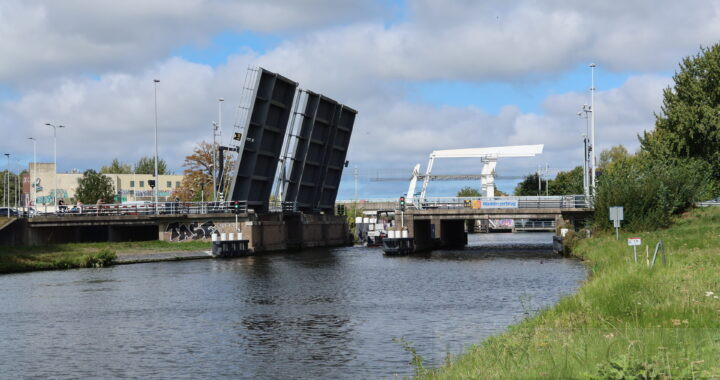
Kortevliet junction with the 'Old Rhine', Leiden

Fossa Corbulonis

  • The Fossa Corbulonis was built in Germania Inferior in 47 CE by General Corbulo.
  • It was a 23 mile long Roman Canal, built to avoid the North Sea that connected the Rhine to the river Meuse from Leiden, and Delft to Maasland-Sluys.

The Canal

  • The canal still exists today and is known as the Vliet or the Rijn-Schlie canal. It is still navigable.
  • It starts at the Oude Rijn (Old Rhine) at Leiden and runs for 23 miles (36km) to connect with the Delfshavense Schie canal at Delft.
  • It runs through Voorschoten, Leidschendam, Voorburg, The Hague and Rijswijk.

Archeological Park of Matilo

  • A Roman Fort was located at the junction of the Fossa Corbulonis with the River Oude in Leiden.
  • The Fort has been reconstructed using Earth Embankments and Timber Towers and can be visited.
  • Archeological Park of Matilo

Sources


Kortevliet junction with the ‘Old Rhine’ at Leiden

Aerarium Militare

  • Aerarium Militare was the Military Treasury instituted by Augustus to collect the Receipts of the Inheritance Tax and Sales Tax.
  • These Taxes then paid for the Legionaries Pensions.

Description

  • The building was located on the Capitoline Hill.
  • The Office was run by three Prefects, the Praefectii Aerarii Militaris, who were appointed by the Emperor for three years.

Income

  • Augustus set up this Pension Fund with 170,000,000 Sesterces from his private wealth. As this was insufficient he instituted two new Taxes.
    • A Tax on Sales at Auction: ‘Centesima rerum venalium’:
      • Specifically collected to fund military pensions.
    • An Inheritance Tax: ‘Vicesima Hereditatium’:
      • Fixed at 5% begun under Augustus (except gifts to children and spouses), which was also collected by the Aerarium Militare. Exemptions were made for the immediate family members who inherited or Estates below a certain value.

Expenditure

  • Donativium:
    • A Gift from the Emperor to the Legions, usually on Accession. The Praetorian Guard war frequently granted Donativium, to buy their loyalty in times of crisis.
  • Praemium:
    • A Lump Sum on Retirement when Discharged after 20 years Service under Augustus:
      • Legionary:
        • 12,000 sesterces. It was approximately thirteen times his annual salary. It was later doubled under Caracalla (198-217 CE) to 20,000 sesterces.
      • Praetorian Legionary:
        • 20,000 sesterces. Possibly also doubled under Caracalla but not confirmed.
    • If there was no cash to pay the lump sum, the Legionary would have his term of service extended until he could be paid.


Capitoline Hill

Dodecanese

  • The Dodecanese are an Island chain in the Aegean in Greece, which consist of 12 large islands and 150 smaller islands.
  • The islands have been controlled by Rhodes since Antiquity.

History of the The Dodecanese

  • The Dodecanese Island chain consists of 12 large islands and 150 smaller islands, controlled since antiquity by Rhodes.
  • Capital city
  •  History
    • In 164 BCE Rhodes signed a Trade Agreement with Rome, bringing the Dodecanese Islands under Roman Influence.
    • In c.79-81 CE Titus created the Provincia Insularum meaning the Dodecanese Islands, with Rhodes as the capital. There is one known Governor, Plutarchos, under Julian (361-363 CE)

Under the Eastern Roman Empire (after 395 CE):

  • Capital city:
  • History:
    • After 395 CE, the Provincia Insularum was placed under the Eastern Roman Emperor in Constantinople.
    • The Dodecanese Islands were eventually joined with Crete under the control of Karpathos.
    • This was the Capital of the Island of Karpathos, Greece, which is halfway between Crete and Rhodes.

The Cyclades

  • This is another group of 220 Islands surrounding the Island of Delos controlled since Antiquity by Crete.
  • Capital city:
  • History:
    • Under the Roman Empire, the Cyclades were either assigned to the Province of Asia or Achaea, and later to Crete.
    • The most prosperous island was the sacred island of Delos, birth place of Apollo, which was set up by Rome in 166 BCE as a Free Port. Within two years this bankrupted the Rhodian Navy, who in 164 BCE were obliged to sign a Trade Alliance with Rome, bringing the Islands into the Roman Sphere of Influence.
    • Rome used the Cyclades as a place of Exile, mainly the Islands of Gyaros, Amorgos, Patmos and Serifos.

Rhodes and the Dodecanese

Durres

  • Durres is a Port city in the Northern Albania Region of Albania.
  • After 146 BCE it became the Roman Port of Dyrrachium in the Province of Macedonia.

History

  • Durres was founded as Epidamnos by the Greeks from Corinth in the 7th century BCE.
  • After 146 BCE it became part of the Roman Empire.
  • Its importance lay in being at the start of the Via Egnatia, the Roman road connecting the Adriatic to the Aegean at Constantinople.
  • Dyrrachium was linked to the Port of Brindisi on the opposite coast, where the Via Appia ran direct to Rome.
  • Under Diocletian (284-305 CE), Dyrrachium became the capital of Epirus Nova.

Roman Sites

  • Durres Amphitheatre
    • It was constructed in c.120 CE, had a capacity for 20,000 spectators, and was the largest Amphitheatre in the Balkans.
    • Today, it is half built over by housing.
  • Byzantine Walls (6th century CE)

Museums

  • Durres Archeological Museum
    • Located on Rruga Taulantia, Durres, in front of the beach.
    • The museum holds over 3,000 Artefacts from the excavations of Dyrrachium, which cover the Ancient Greek, Hellenistic and Roman Periods.

Roman Roads


Durres