Salzburg

  • Salzburg, meaning ‘Salt Fortress’, is a city on the river Salzach, meaning ‘Salt River’, which is in the State of Salzburg in northwestern Austria. It is a UNESCO World Heritage Site and is noted for the singing Von Trapp Family, made world famous in the Musical ‘The Sound of Music’.
  • It was known to the Romans as Juvavum and located in the Province of Noricum.

Salt Mines

  • Salt made Salzburg wealthy.
  • Salt was transported from the nearby Hallstatt and Hallein Salt Mines, down the Salzach river and distributed along the Danube.
  • Today the Halstatt Mine is a Museum.
  • The Hallein Salt Mine was worked for 7,000 years until recently, and produced Salt Rock Crystals. Today it is closed.

Museums

  • Hallstatt Salt Mine
    • This is the Hallstatt Culture is associated with the Celtic, Proto-Celtic and Illyrian peoples who lived and worked in this Salt Mine between the 8th-5th century BCE, the Early European Iron Age.
  • Cathedral Excavations Museum
    • The Museum is closed for refurbishment until 2028, however guided tours are available by prior request.
    • Located underneath Salzburg Cathedral at Domplatz 1a, this museum forms part of the Salzburg Museum.
    • The museum holds Finds, architectural remnants and mosaics from a Roman villa which was located underneath the Cathedral.

Roman Roads


Salzburg

Palatine

  • The Palatine Hill is one of the Seven Hills of Rome.
  • The Palatine Hill and the Forum Romanum can be visited as part of an open air museum, the Entrance is in Via San Gregorio, Rome.

Buildings

Roman Festivals

  • The Palatine was the site of the Festival of Lupercalia.

The Seven Hills of Rome


Palatine Hill, Rome

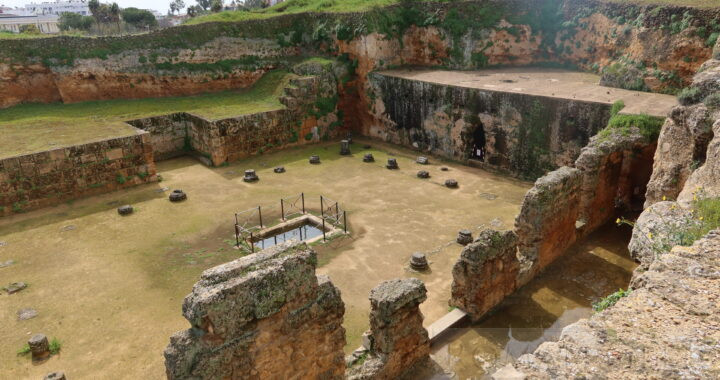
The villa sized Tomb of Servilia, Carmona, Spain

Carmona

  • Carmona is a town located on the river Corbones, a tributary of the river Guadalquivir, 20 miles (33km) northeast of Seville in Andalucia, Spain.
  • The town already existed under Carthage, and after 206 BCE, it became Roman Carmo, a station on the Via Augusta in the Province of Baetica.

Roman Sites

  • Carmona Roman Necropolis
    • Tomb of the Elephant
    • Tomb or Mausoleum of Servilia (The size of a villa)
  • Seville Gate (part Roman)
  • Cordoba Gate (part Roman)
  • Roman Bridge (below Carmona)
  • Carmona Roman Amphitheatre
    • The site is unexcavated and not open to visitors.

Museums

  • Carmona City Museum
    • Located at Calle San Ildefonso, 1, 41410, Carmona.
    • Holds Artefacts from all historical periods, including mosaics and columns from the Roman period.

Roman Roads

Nearby Sites

  • Italica
    • Roman city located at Santiponce, 7 miles (11km) to the north of Seville.
  • Seville
    • Located 20 miles (33km) southwest of Carmona.


Roman Necropolis of Carmona, Mausoleum of Servilia

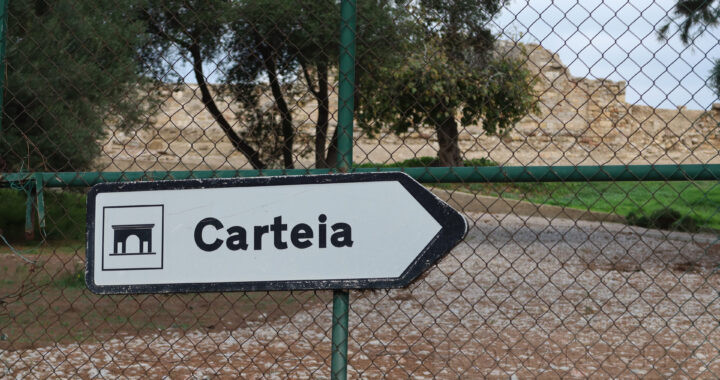
Carteia, San Roque

Carteia

  • Carteia was a Roman Naval base in Baetica. The Roman ruins are between the town of San Roque and Gibraltar.
  • Strabo wrote that it was founded by the Phoenicians in 940 BCE.

Naval Base

  • 206 BCE: Naval Battle of Carteia:
    • Adherbal, the Carthaginian Admiral was confronted by the Roman Admiral Gaius Laelius, who defeated the Carthaginians during the Second Punic War (218-202 BCE).
  • 190 BCE: Carteia finally fell to the Romans.
  • 67 BCE: Carteia became a Roman naval base:
    • Pompey made Carteia his base when the conflict between Pompey and the Pirates resulted in Rome clearing the Mediterranean of Pirates permanently.

Roman Sites

  • Roman Temples
  • Roman Kilns
  • Roman Forum

Strait of Gibraltar

  • The Strait of Gibraltar is the sea between Gibraltar and Morocco, and the Atlantic and the Mediterranean.
  • The distance at the narrowest point is 8.1 miles (13km) and the winds blow predominately from the east (the Levante) or the west (the Poniente).

Pillars of Hercules

Roman Roads


Carteia, San Roque


Carteia, near La Linea

Hallein Salt Mine

  • The Hallein Salt Mine is located in Austria, near Salzburg (Latin name ‘Juvavum’)
  • The Mine was worked for 7,000 years until recently, and produced Salt Rock Crystals. Today it is closed.

Salzburg

  • Salzburg in German means ‘Salt Fortress’.
  • The river Salzach means ‘Salt River’, down which the Salt was transported and distributed along the Danube. Salt made Salzburg wealthy.

Other nearby Salt Mines


Hallein Salt Mine, Austria

Band-e Kaisar

  • Band-e Kaisar means ‘Caesar’s Bridge’, and is also known as the ‘Bridge of Valerian’. It is located near Shushtar in Iran, then known as Susa.
  • It is a combined Roman Road, Bridge and arched Dam and is the easternmost Roman Monument, and has been a Unesco World Heritage Site since 2009 CE.

History

  • It was built by the captured Roman Legions after their disastrous defeat by the Persians under Shapur I at the Battle of Edessa in 260 CE.
  • Valerian was the only Roman Emperor to be captured and taken as a prisoner of war. The Legions then built the city of Bishapur where Valerian lived out his captivity.

Construction

  • The 1,600 ft (500 m) long Roman Dam consisted of approximately 40 arches over the River Karun. The Weir was an arched bridge carrying the road from Pasargadae to Ctesiphon. It was the first combined Bridge and Dam in Persia.
  • The construction took between 3 to 7 years to complete, and its Ruins are still standing.
  • As an overflow Dam, it was used to irrigate the surrounding area.
  • The Dam was subsequently copied by Persian engineers, influencing their techniques of hydraulic engineering.

Shushtar Historical Hydraulic System

Bishapur (Ruins)

  • In 266 CE, the captured Roman Legionaries built the nearby city of Bishapur, in the Province of Fars, where they, and Valerian, then lived.
  • The Legionaries built a Palace for Shapur I, with Roman Mosaics.
  • They also constructed the Temple of Anahita.


Shushtar Hydraulic System, Iran

Abydos

  • Abydos was a city in Ancient Egypt with a Temple complex, famous for being the Cult Centre of Osiris and a Site of Pilgrimage by Ancient Egyptians.
  • It is considered one of the most important archaeological sites in Egypt and holds the Temple of Set I. It is located northwest of Luxor at a point 7 miles (11km) west of the Nile.

History

  • The Tomb of Djer
    • Djer was the third Pharaoh of the First Dynasty (c.3,000 BCE).  This was perceived as the Tomb of Osiris.
  • Annual Re-enactment of the Myth of Osiris:
    • At the Osiris Temple in Abydos an annual re-enactment of the Myth of Osiris took place with hundreds of Priests and Priestesses playing the roles of all the Gods.
    • It took place during the fourth month, the month of Chioak, after the Annual Rise of the Nile, which was the beginning of the Agricultural season when the farmers started planting.
    • The Procession then travelled from the Temple of Osiris to the Tomb of Djer.
  • ‘Raising of the Djed’:
    • During the Pharaoh’s Jubilee year, in the month of Chiok, a ceremony called ‘Raising the Djed’ occurred, where a wooden Djed Pillar would be hauled upright by ropes.
    • Raising the Djed Pillar symbolised the rebirth of Osiris.

Monuments

  • Temple of Seti I (c.1,300 BCE)
    • also known as the Great Temple of Abydos
    • an Osireion is located at the rear of the Temple.
    • Abydos King List
      • The Gallery of the Lists in the Temple of Seti I holds Egyptian Hieroglyphs listing the names of 76 Pharaohs of Ancient Egypt.
    • Abydos Graffiti
      • Phoenician and Aramaic graffiti was written on the walls of the Temple of Seti I.
    • Helicopter Hieroglyphs
      • One set of Hieroglyphs is thought to contain images of a helicopter, a zeppelin or plane and a submarine.


Abydos