Naples

  • Naples is a cathedral city and Port in the Bay of Naples located in the Campania Region of southern Italy. It is the third most important city in Italy, after Rome and Milan.
  • It is a UNESCO World Heritage Site and home to the NATO Allied Joint Military Command Naples.

History

  • It was founded as Neapolis, a Greek city in the 6th century BCE, and was a city in Magna Graecia. This was annexed by Rome in 275 BCE and kept the same name. Nearby are the Ruins of Pompeii and Herculaneum.
  • Located on the Bay of Naples, the city continued to be Greek speaking during the Roman Republic and Roman Empire, and remained a centre of Greek Culture.
  • Two Emperors spent their holidays in Neapolis, Tiberius (13-37 CE) and Claudius (41-54 CE).

Roman Sites of Naples

  • Roman Theatre of Naples
    • Located at Vico Cinquesanti, 80138, Naples. It is a 1st century Theatre located in the heart of Old Naples.
  • Terme Romane
    • Roman Baths located at Via Terracina, 429, 80125, Naples.

Pompeii and Herculaneum

  • These two Roman cities were located east of Naples and covered by volcanic ash during the eruption of Mount Vesuvius in 79 CE.
  • The Excavations have revealed perfectly preserved Roman Architecture and Art which is open to visitors. Many of the Finds are in the National Archeological Museum of Naples.

Baiae

Museums

  • National Archeological Museum Naples
    • Located at Piazza Museo 19, Naples.
    • Mosaics, recovered from Pompeii and nearby towns, including the Alexander Mosaic.
    • Roman Bronzes, from the Villa of the Papyri
    • The Farnese Collection, including the Roman marble statues, Toro Farnese, Atlante Farnese and Ercole Farnese.
    • The Pompeii Collection, which includes Paintings, Statues and Frescoes.

Roman Roads


Naples, Italy

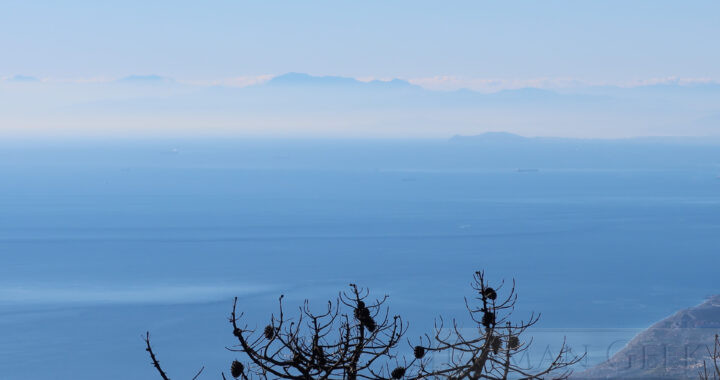
Rif Mountains and Punta Almina, Ceuta, from Los Reales de Sierra Bermeja, Estepona

Ceuta

  • Ceuta is one of two Spanish Autonomous cities on the north coast of Morocco, along with Melilla.
  • The city is located on the peninsular of Almina, known as Punta Almina, and is dominated by a low mountain called Monte Hacho.

History

  • Originally a Phoenician port, Ceuta became the Roman town and port of Septem located in the Province of Mauretania Tingitana.
  • It was connected by roads with Tangier and Volubilis.


Image: The Rif Mountains and Punta Almina viewed from above Estepona in Spain.

Map: Ceuta

Droitwich

  • Droitwich, also known as Droitwich Spa, is a town located on the river Salwarpe 7 miles (12km) north of Worcester in the County of Worcestershire.
  • It was known as ‘Salinae Dobunorum’, the ‘Salt of the Dubonni’ Tribe, and was a very important Roman Town, with a Roman villa and a Roman salt works to extract salt from the Brine Springs.

The Brine Springs

  • The Brine springs at Droitwich are the second warmest after Bath.
  • They were worked during the Iron Age, and continued to be worked through the Roman, Saxon, Norman and Medieval Periods until the Victorian Period.
  • The Romans boiled off the water, which yielded large quantities of Salt inexpensively and on an industrial scale. Every gallon of brine produces two and a half pounds of salt.

Salinae Dobunorum

  • There is a buried Roman Villa (not open to the Public) which belonged to the owner of the Springs. Later the Springs were leased to contractors.
  • The Salt Works (not open to the Public) consisted of water tanks to store the Brine, and various engineering works associated with large scale salt production.
  • Two Roman Forts were constructed at different times, but they no longer exist.
  • A network of Salt roads radiated out from Droitwich to transport the Salt around the country.

Museums

  • Droitwich Spa Heritage Centre and Salt Museum
    • Located at St. Richard’s House, Victoria Square, Droitwich Spa.
    • The museum recounts the history of Salt production in Droitwich and holds some artefacts from the Roman period.

Roman Roads

  • Salt Roads:
    • The Salt would then go by a network of Salt Roads radiating from Droitwich to other parts of Britannia. There was a Salt Road from Droitwich via Stratford-on-Avon to East Anglia.


Droitwich Brine Springs

Mount Vesuvius

  • Mount Vesuvius is an active volcano located near Naples in Italy.
  • It famously erupted in 79 CE and buried Pompeii and Herculaneum.

Spartacus (73-71 BCE)

Eruption of 79 CE

Eruptions since 79 CE

  • Intermittent eruptions occured in 203, 472, 512, 787, 968, 991, 999, 1007 and 1036  CE.
  • Vesuvius was inactive between 1300-1631 CE.
  • Then in 1631 CE an Eruption killed 3,000 people.
  • Frequent Eruptions then continued in 1660, 1682, 1694, 1698, 1707, 1737, 1760, 1767, 1779, 1794, 1822, 1834, 1839, 1850, 1855, 1861, 1868, and 1872
  • In the last century there were Eruptions in 1906, 1926, 1929 and 1944 CE.
  • Vesuvius last erupted in 1944 CE during WW II.

Sources

  • Pliny the Younger (61-112 CE) wrote the story of his uncle’s attempt to rescue the Pompeians in two letters addressed to Tacitus (c.56-117 CE)

Active Volcanoes


Mt. Vesuvius, Naples

Gerona

Gerona

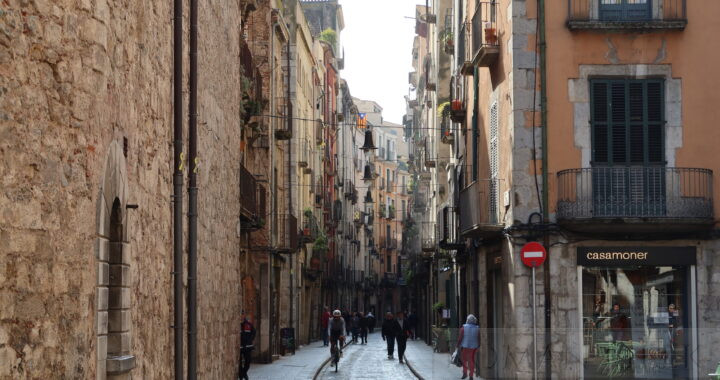
  • Gerona, also known as Girona, is a cathedral city and capital of the Province of Gerona located on the river Ter in the Autonomous Community of Catalonia in northeastern Spain.
  • The Roman city of Gerunda was founded in the 1st century BCE as a city of the Ausetani Iberian Tribe and was in the Province of Hispania Tarraconensis.

Museums

Roman Roads

Nearby Sites

  • Ampuries
    • Greek and Roman city and Archeological Site.


Gerona

Irun

  • Irun is a port town located on the mouth of the river Bidasoa, which marks the Frontier with France. It is in the Basque Autonomous Community.
  • It was the Roman port of Oiasso, in the Province of Hispania Tarraconensis. Oiasso is now located under the Old Town of Irun, but Finds are held in the Oiasso Roman Museum.

Museums

  • Oiasso Roman Museum
    • Holds Artefacts from the Necropolis, the Port and its Warehouses.

Roman Roads


Oiasso Roman Museum, Irun

Tyre

  • Tyre is an ancient Port city in Lebanon, that has been continuously occupied since 2,750 BCE.
  • It was located in the Roman Province of Syria.

History

  • Tyre was one of the earliest cities of Phoenicia, founded in 2,750 BCE and becoming its leading city in c. 900 BCE.
  • In Greek Mythology, Tyre was where Europa was born.

Roman Sites

  • The Sites are in the land based Roman City, as the old island city of Tyre is now underwater.
    • Roman Theatre
    • Roman Arch
    • Roman Hippodrome
    • Roman Columns of the Wrestling School, the Palaestra

History

  • Tyre was originally founded on the mainland in 2,750 BCE according to Herodotus.
  • It became an island city which developed into a Maritime Power that dominated the Mediterranean Sea.
  • By 2,350 BCE the ships of Tyre had a monopoly on the Tin Trade, essential for making Bronze.
  • In c. 1200 BCE Tyre was attacked by the Sea Peoples, using swords and weapons made of Steel not Bronze. The Sea People ravaged the eastern Mediterranean, and Tyre had to be rebuilt.
  • Tyre became the leader of Phoenicia around 900 BCE.
  • King Hiram of Tyre (969-936 BCE) was an ally of King David and King Solomon in The Bible.
  • Tyre is considered to be the daughter of Tarshish in The Bible (Isaiah 23.10.).
  • Tarshish sent Silver, Lead, Copper and Tin to be stored in Tyre, which then went East, according to the The Bible (Ezekiel 27:12.).
  • By c. 837 BCE, Tyre was one of the twelve kingdoms along the sea coast of the Levant that paid Tribute to the King of Assyria.
  • Between 821-774 BCE, Pumayyaton (Pygmalion in Greek) was King of Tyre.
  • In 814 BCE Pygmalion sent his eldest daughter Elissa, Queen Dido, with colonists to create the colony of Carthage. After being given independence in 650 BCE, Carthage eventually eclipsed Tyre in Power and Influence.
  • In 332 BCE Uzzimilk was the last King of Tyre before the invasion of Alexander the Great.

Marinus of Tyre

  • Marinus of Tyre (c.70-130 CE) was a Greek Cartographer, Geographer and Mathematician who worked between 100-130 CE, based in Tyre, Syria.
  • The Roman Cartographer Ptolemy (90-168 CE) stated that he used Marinus’ World Chart (c.114 CE) to compile his own Ptolemy's Geographia.

Tyre in Greek Mythology

  • In Greek Mythology, the Phoenicians founded Europe.
  • The King of Tyre, King Agenor, had a daughter, Princess Europa. She was abducted by Zeus and taken to Crete. King Agenor sent her brothers to bring her back, specifying they were not to return until they had found her. Unable to locate Europa, and forbidden to return without her, they each set up cities on the continent, in particular Cadmus who founded Thebes in Greece, where he also introduced the Greek Alphabet.
  • Meanwhile Europa had three sons, King Minos of Crete, King Rhadamanthus of the Cyclades and Prince Sarpedon of Lycia.

Temple of Melqart

  • The Temple of Melqart in Tyre was described by Herodotus, as having one pillar of gold and another of Emerald. Melqart was Hercules to the Greeks and Romans.
  • Strabo wrote that two Bronze Pillars in the Temple were generally believed to be the Pillars of Hercules, however, after closely examining the Pillars, he decided the claim was untrue.
  • Melqart was the ‘Lord of Tyre’, and its Kings were thought to be descended from him.

Wars

  • Tyre alternated between War and Trade with the Pharaohs of Egypt.
  • Between 586-573 BCE Tyre was besieged by Nebuchadnezzar, King of the Babylonian Empire, resulting in payment of Tribute.

Tyrian Purple

  • Purple Dye from the shells of Murex was manufactured in Tyre. The Dye was as expensive as silver.
  • The Murex shell was featured on the early coins of Tyre.

Tyrian Shekel

  • The coins of Tyre started being minted from c. 450 BCE:
    • The Tyrian Shekel portrayed a Dolphin over a Murex shell with the Phoenician letters ‘SLSN’ above. The concensus is that these letters indicated ‘one thirtieth’, but it is not known what coin the fraction one thirtieth is of.
    • On the other side is an Owl holding a Flail and Crook. The Flail and the Crook are symbols of Osiris, the Egyptian Deity. Egypt was Tyre’s oldest trading partner. The Owl was the symbol used on Athenian coins at this time, and may reflect trade in the direction of Greece.
  • From c. 390 BCE:
    • The Shekel starts portraying Melqart riding a Seahorse (Hippocamp), and the Dolphin over the Murex shell, is now shown below.

Siege of Tyre (332 BCE)

  • In 332 BCE Alexander the Great successfully besieged Tyre, which resulted in it being conquered and connected to the mainland by an artificial promontory so that it could never be used as an island fortress again.
  • The last King of Tyre was called ‘Uzzimilk’.
  • During the siege, the pilgrims to the Temple of Melqart from Carthage, were allowed to go home and pass through the lines.
  • Despite being conquered, the city continued in use under the Greeks and then the Romans.

Sources

  • Herodotus (c.484-c.420 BCE)
  • Amarna Letters (1350 BCE)
    • these refer to the Mayor of Tyre, Abimilku, writing frequently to Akenaten to discuss Water, Wood and the Nomadic Habiru in their wanderings.


Tyre

Canary Islands

  • The Canary Islands are located in the Atlantic Ocean off the coast of Morocco.
  • They were known to the Romans as ‘Insulae Canarius’ meaning ‘Islands of the dogs’.

History

  • The Romans also thought they might be the ‘Fortunate Islands‘ or ‘Islands of the Blessed’ of Greek Mythology.
  • In 10 CE, during the reign of Augustus, a Roman Expedition from Mogador in Morocco, set out and explored the Canary Islands, Madeira and possibly the Cape Verde Islands.
  • Pliny the Elder wrote that an expedition set off in 50 BCE under the Mauretanian King Juba II, but that they found no people only dogs. ‘Canarius’ is dog in Latin, and so he called them the ‘Insulae Canarius’.

The Guanches

  • The Guanches are the indigenous population of the Canary Islands and are thought to be descended from the Berbers of North Africa.
  • Between 1402-1496 the Castilian Monarchs conquered the islands and made them into the Kingdom of the Canary Islands.

Canary Current

  • The Canary Current is the part of the Atlantic Gyre which flows south along the African Coast through the Canary Islands and Cape Verde Islands.
  • It then turns west and becomes the North Equatorial Current flowing towards the Caribbean.

Roman Prime Meridian

Mogador

Cape Verde Islands

Hesperides

  • Pliny the Elder also stated that the time taken to sail from the Gorgades (Cape Verde Islands) to the Hesperides (Ladies of the West) was 40 days. The Hesperides may have been further around the Cape of Africa, or across the Atlantic in South America.

Macaronesia


Canary Islands

Madeira

  • Madeira is a Portuguese archipelago of four islands located in the Atlantic Ocean, 320 miles (520km) from Morocco and 250 miles (400km) north of the Canary Islands.
  • The capital is Funchal. Madeira may have been the Islands of the Blessed in Greek Mythology.

Islands of the Blessed

  • Plutarch wrote in ‘Parallel Lives’, ‘Sertorius’ (75 CE), that a Roman  Commander called Quintus Sertorius (died 72 CE), heard mention in Cadiz, of the Islands of the Blessed.
  • He said that the sailors there spoke of a pair of idyllic islands in the Atlantic, 10,000 leagues from Africa.
  • The Islands of the Blessed have been variously identified with the Canary Islands, Cape Verde Islands, Azores and even Bermuda.

Macaronesia


Madeira