Cartagena

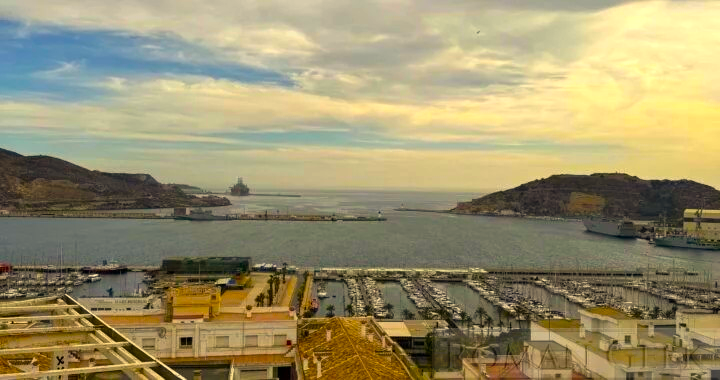
  • Cartagena is a port city located in the Autonomous Community of Murcia in southeastern Spain. It has the best natural harbour in the western Mediterranean and is the home base of the main Spanish Naval Fleet.
  • It was conquered by the Romans in 209 BCE and renamed Carthago Nova (New Carthage), and located in the Province of Hispania Tarraconensis.

History

  • It was named New Carthage by the Carthaginian General Hasdrubal when he arrived in c. 227 BCE to set up the main Carthaginian Naval Base for the conquest of Spain.
  • Since then it has remained the most important harbour in the western Mediterranean.

Roman Sites

  • Roman Theatre
  • Casa de la Fortuna
    • A Roman villa with Mosaics and Murals.
  • Roman Colonnade
  • The Augusteum
  • Torre Ciega Necropolis

Museums

  • Cartagena Roman Theatre Museum
    • The museum is located in the theatre.

Roman Roads


Cartagena
Worcester

  • Worcester is a cathedral and university city located on the river Severn in the County of Worcestershire, 30 miles (48km) southeast of Birmingham. Royal Worcester Porcelain has been made here since 1751, and Lea and Perrins Worcestershire Sauce since 1837.
  • It was possibly known to the Romans as Vertis, which would have overlooked a ford on the Severn where the tidal river stopped.

Roman Town

  • Historians consider Worcester to be the probable site of ‘Vertis’, but very little evidence of a Roman town remains, as the Medieval city has been built over the site.
  • A few Roman coins and pottery are the only Remains to have been found.
  • The name Vertis is derived from the Ravenna Cosmography, a list of Place Names in the Roman Empire.
  • Its position on the Roman road between Droitwich and Gloucester makes it the most likely candidate.


Worcester Cathedral


Naples

  • Naples is a cathedral city and Port in the Bay of Naples located in the Campania Region of southern Italy. It is the third most important city in Italy, after Rome and Milan.
  • It is a UNESCO World Heritage Site and home to the NATO Allied Joint Military Command Naples.

History

  • It was founded as Neapolis, a Greek city in the 6th century BCE, and was a city in Magna Graecia. This was annexed by Rome in 275 BCE and kept the same name. Nearby are the Ruins of Pompeii and Herculaneum.
  • Located on the Bay of Naples, the city continued to be Greek speaking during the Roman Republic and Roman Empire, and remained a centre of Greek Culture.
  • Two Emperors spent their holidays in Neapolis, Tiberius (13-37 CE) and Claudius (41-54 CE).

Roman Sites of Naples

  • Roman Theatre of Naples
    • Located at Vico Cinquesanti, 80138, Naples. It is a 1st century Theatre located in the heart of Old Naples.
  • Terme Romane
    • Roman Baths located at Via Terracina, 429, 80125, Naples.

Pompeii and Herculaneum

  • These two Roman cities were located east of Naples and covered by volcanic ash during the eruption of Mount Vesuvius in 79 CE.
  • The Excavations have revealed perfectly preserved Roman Architecture and Art which is open to visitors. Many of the Finds are in the National Archeological Museum of Naples.

Baiae

Museums

  • National Archeological Museum Naples
    • Located at Piazza Museo 19, Naples.
    • Mosaics, recovered from Pompeii and nearby towns, including the Alexander Mosaic.
    • Roman Bronzes, from the Villa of the Papyri
    • The Farnese Collection, including the Roman marble statues, Toro Farnese, Atlante Farnese and Ercole Farnese.
    • The Pompeii Collection, which includes Paintings, Statues and Frescoes.

Roman Roads


Naples, Italy

Rif Mountains and Punta Almina, Ceuta, from Los Reales de Sierra Bermeja, Estepona

Ceuta

  • Ceuta is one of two Spanish Autonomous cities on the north coast of Morocco, along with Melilla.
  • The city is located on the peninsular of Almina, known as Punta Almina, and is dominated by a low mountain called Monte Hacho.

History

  • Originally a Phoenician port, Ceuta became the Roman town and port of Septem located in the Province of Mauretania Tingitana.
  • It was connected by roads with Tangier and Volubilis.


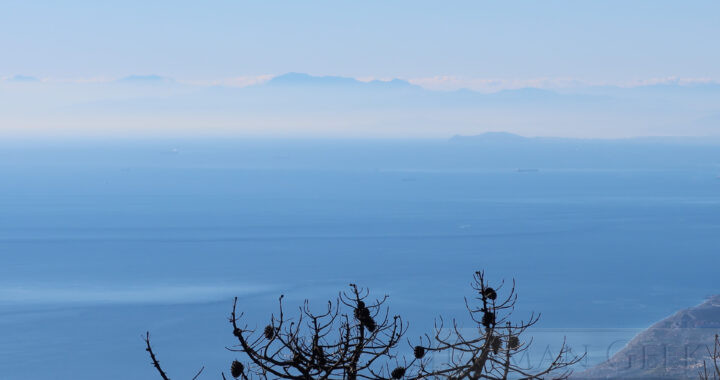
Image: The Rif Mountains and Punta Almina viewed from above Estepona in Spain.

Map: Ceuta

Droitwich

  • Droitwich, also known as Droitwich Spa, is a town located on the river Salwarpe 7 miles (12km) north of Worcester in the County of Worcestershire.
  • It was known as ‘Salinae Dobunorum’, the ‘Salt of the Dubonni’ Tribe, and was a very important Roman Town, with a Roman villa and a Roman salt works to extract salt from the Brine Springs.

The Brine Springs

  • The Brine springs at Droitwich are the second warmest after Bath.
  • They were worked during the Iron Age, and continued to be worked through the Roman, Saxon, Norman and Medieval Periods until the Victorian Period.
  • The Romans boiled off the water, which yielded large quantities of Salt inexpensively and on an industrial scale. Every gallon of brine produces two and a half pounds of salt.

Salinae Dobunorum

  • There is a buried Roman Villa (not open to the Public) which belonged to the owner of the Springs. Later the Springs were leased to contractors.
  • The Salt Works (not open to the Public) consisted of water tanks to store the Brine, and various engineering works associated with large scale salt production.
  • Two Roman Forts were constructed at different times, but they no longer exist.
  • A network of Salt roads radiated out from Droitwich to transport the Salt around the country.

Museums

  • Droitwich Spa Heritage Centre and Salt Museum
    • Located at St. Richard’s House, Victoria Square, Droitwich Spa.
    • The museum recounts the history of Salt production in Droitwich and holds some artefacts from the Roman period.

Roman Roads

  • Salt Roads:
    • The Salt would then go by a network of Salt Roads radiating from Droitwich to other parts of Britannia. There was a Salt Road from Droitwich via Stratford-on-Avon to East Anglia.


Droitwich Brine Springs

Mount Vesuvius

  • Mount Vesuvius is an active volcano located near Naples in Italy.
  • It famously erupted in 79 CE and buried Pompeii and Herculaneum.

Spartacus (73-71 BCE)

Eruption of 79 CE

Eruptions since 79 CE

  • Intermittent eruptions occured in 203, 472, 512, 787, 968, 991, 999, 1007 and 1036  CE.
  • Vesuvius was inactive between 1300-1631 CE.
  • Then in 1631 CE an Eruption killed 3,000 people.
  • Frequent Eruptions then continued in 1660, 1682, 1694, 1698, 1707, 1737, 1760, 1767, 1779, 1794, 1822, 1834, 1839, 1850, 1855, 1861, 1868, and 1872
  • In the last century there were Eruptions in 1906, 1926, 1929 and 1944 CE.
  • Vesuvius last erupted in 1944 CE during WW II.

Sources

  • Pliny the Younger (61-112 CE) wrote the story of his uncle’s attempt to rescue the Pompeians in two letters addressed to Tacitus (c.56-117 CE)

Active Volcanoes


Mt. Vesuvius, Naples

Gerona

Gerona

  • Gerona, also known as Girona, is a cathedral city and capital of the Province of Gerona located on the river Ter in the Autonomous Community of Catalonia in northeastern Spain.
  • The Roman city of Gerunda was founded in the 1st century BCE as a city of the Ausetani Iberian Tribe and was in the Province of Hispania Tarraconensis.

Museums

Roman Roads

Nearby Sites

  • Ampuries
    • Greek and Roman city and Archeological Site.


Gerona

Irun

  • Irun is a port town located on the mouth of the river Bidasoa, which marks the Frontier with France. It is in the Basque Autonomous Community.
  • It was the Roman port of Oiasso, in the Province of Hispania Tarraconensis. Oiasso is now located under the Old Town of Irun, but Finds are held in the Oiasso Roman Museum.

Museums

  • Oiasso Roman Museum
    • Holds Artefacts from the Necropolis, the Port and its Warehouses.

Roman Roads


Oiasso Roman Museum, Irun

Valencia

  • Valencia is a port city with sandy beaches located on the Gulf of Valencia in the Autonomous Community of Valencia in eastern Spain. It is on almost the same latitude as Palma de Mallorca in Majorca.
  • It was founded in 138 BCE by the Romans as Valentia Edetanorum and was located in the Province of Hispania Tarraconensis.

Museum and Roman Town

Roman Roads


Archeological Centre of Almoina, Valencia