Pompey’s Pillar

  • Pompey’s Pillar is a Roman Triumphal red granite column 90 ft (25m) high, standing in AlexandriaEgypt.
  • It was named ‘Pompey’s Pillar’ by medieval historians because Pompey was executed in Alexandria in 48 BCE, and they believed his head was enclosed in the capital on top of the Pillar.

History

  • The Column was raised in Alexandria in honour of Diocletian (284-305 CE), after he had besieged and re-captured the city in 298 CE.
  • Originally, it was topped by a statue of Diocletian.
  • The column was taken from the nearby Temple of Serapis, which was built by Ptolemy III Euergetes (246-222 BCE).
  • It is the largest Monolithic Column to be erected in Egypt and the only one not composed of drums.
  • The Pillar is 90 ft (xxm) high, while the column shaft is 67 feet (20m) high, with a diameter of 8ft 11  inches (2.71m)


Pompey’s Pillar, Alexandria
Kom Ombo

  • Kom Ombo is a town and Temple of the same name, located on the Nile near Aswan in Egypt. It was originally the city of Nubt.
  • It is located 31 miles (50km) north of Aswan and is the site of a double temple built between 180-47 BCE and the Sobek Necropolis.

History

  • Kom Ombo was always a garrison city under the Pharaohs, the Greeks and the Romans.
  • The known Roman Legion based at Kom Ombo was a Vexillatio of the Legio III Diocletiana (c. 400 CE).

Monuments

  • The Kom Ombo Double Temple
    • It is a Double Temple begun by Ptolemy VI Philometor (c.180 BCE) and completed in 47 BCE. Later additions were made during the Roman Period.
    • The Northern Temple is dedicated to both Haroeris or Horus the Elder, also known as the ‘Good Doctor’.
    • The Southern Temple is dedicated to the crocodile God, Sobek, creator of the World and God of the Underworld.
    • The Double Temple is completely symmetrical.
    • The sick made a pilgrimage here in the hope of becoming cured.
    • Roman outer corridor added along with Roman decorated Forecourt.
  • The Sobek Necropolis

    • This is a cemetery located at el-Shatb.
    • In addition to human remains, excavations revealed a large amount of animal mummies, mostly crocodile mummies ranging from 6-16 feet (2-5m) in size.
    • The Ancient Egyptians brought votive offerings to the Temple, amongst which were mummified crocodile eggs, which were also found at the Necropolis.

Museums

  • Crocodile Museum
    • The museum contains 40 crocodile mummies. (over 300 were found nearby).
    • When a crocodile was mummified, gold and ivory teeth and eyes were inserted, and these are on display.
    • It is thought the Priests kept a live crocodile, considered sacred, in the Temple, and when it died it was mummified.


Temple of Kom Ombo

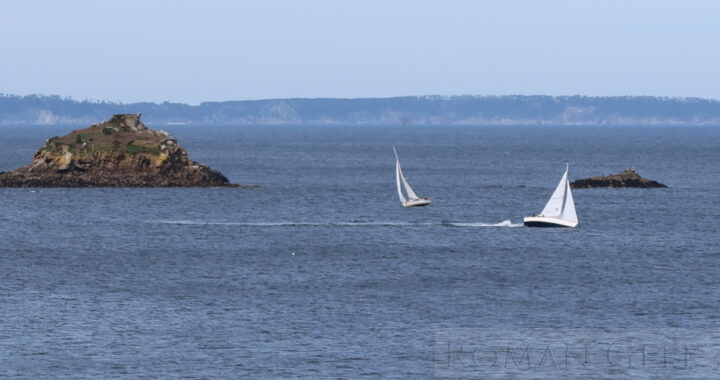
The Bay of Douarnenez, Finisterre, France

Ys

  • Ys is a Breton Legend of a Sunken City known as ‘Ker-Is’, which in French is known as the ‘Ville d’Ys’.
  • It is reputed to lie off the coast of Brittany, locally believed to be the Bay of Douarnenez, in Finistere.

Sources

  • Hammond Innes: ‘Sea and Islands’ Collins 1967 – Chapter III ‘The Breton Coast’
    • He quotes local tradition that up until the French Revolution in 1789, the priests from all the churches around the Bay rowed out into the middle of the Bay each year and said a Mass for the lost souls of the sunken city.
  • Walter de la Mer: ‘Sunk Lyonesse’ 1922
    • This is a Poem about the lost Land.
  • Edouard Blau wrote the libretto and Edouard Lalo composed the music for the opera: ‘Le roi d’Ys’ in 1888.
    • It is based on the Breton Legend of the Sinking of Ys, capital of  the kingdom of Cornouaille.

Carnac

  • The Bronze Age Standing Stones of Carnac are located 83 miles (134km) to the southeast of the Bay of Douarnenez.

Other Legends of Sunken Cities

  • Lyonesse:
    • Cornwall in England, opposite Brittany in France, has a similar Legend of a country called Lyonesse, lost beneath the Sea.
    • It was located between Cornwall and the Scilly Isles.
  • St. Michael's Mount:
    • A tidal island opposite Penzance in Cornwall, reveals sunken trees at very low tides.
  • Cantre’r Gwalod’:
    • This is the Welsh Legend of a lost country called ‘Cantre’r Gwalod’ which was reputed to lie in Cardigan Bay on the coast of Wales.


Bay of Douarnenez, Brittany

Scilly Isles

  • The Scilly Isles are an archipelago of inhabited and uninhabited islands that lie 28 miles (45km) southwest of Land’s End and are part of the County of Cornwall.
  • They were known to the Romans as Scillonia Insula, indicating only one island.

History

  • The islands appear to have remained unoccupied by the Romans.
  • It was possibly Ictis or Mictis of the Tin Islands of the Ancient Tin Trade of Britannia.
  • A Legend exists in Cornwall about a Lost Kingdom called Lyonesse, which was based on a peninsular that once linked Lands End with the Scillies, but was lost in one night.

Bronze Age Sites

  • Bronze Age Stones
  • Urn Cremations

Museums

  • Isles of Scilly Museum
    • Church Street, St. Mary’s, Isles of Scilly.
    • The museum holds a collection of Roman-British Finds.


Isles of Scilly Museum, St Mary’s

Isle of Portland

  • The Isle of Portland, also known as Portland, lies south of Weymouth in Dorset. It is possibly either Ictis or Mictis in the Tin Islands of the Ancient Tin Trade.
  • Portland is thought to have been called Vindelis by the Romans. Portland Stone has been quarried on the Island since the Roman Occupation.

History of Portland

  • Chesil Beach is a natural pebblestone barrier with a lagoon behind it, running 18 miles (29km) from West Bay to Portland. Chesil Beach and Portland are part of the Jurassic Coast, A UNESCO World Heritage Site.
  • Portland Harbour has existed for centuries as a port of refuge.
  • The Anglo-Saxon Chronicle records the first Viking landing at Portland in 789 CE, four years before the attack on Lindisfarne in 793 CE.
  • Henry VIII built two castles to defend Portland harbour in 1541 CE.
  • The Admiralty built a Harbour with four Breakwaters for the Royal Navy between 1849-1872 CE. At the time, it was the largest man-made harbour in the world.


Portland Bill, Isle of Portland

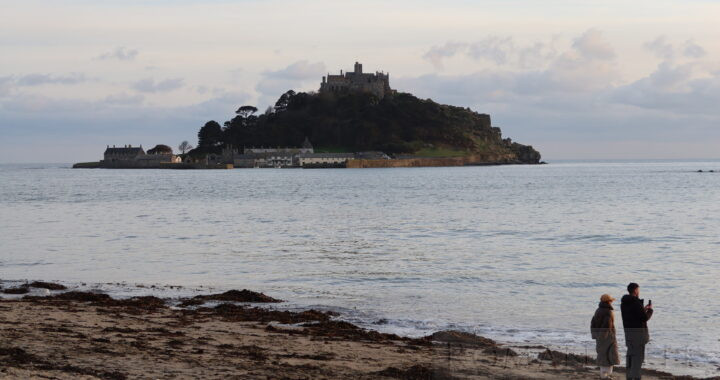
St. Michael's Mount is a tidal island with a castle opposite Penzance in Cornwall. It was twinned with Mont Saint-Michel in France for over 350 years.

St. Michael’s Mount

  • St. Michael’s Mount is a tidal island with a castle opposite the town of Marazion in Cornwall.
  • It is linked to the town by a causeway which becomes visible at low tide.

Description

  • During the Bronze Age, It may have been Ictis or Mictis in the Tin Islands of the Ancient Tin Trade.
  • A Norman Church, Priory, Castle and Harbour were built in the 12th century CE.
  • Edward the Confessor (1042-1066 CE) gave St. Michael’s Mount to the Benedictine Monastery at Mont Saint-Michel. The relationship ended in 1424 CE.

Mont Saint Michel, France

  • The same name exists on another tidal island located 200 miles (330km) to the southeast, off the coast of Normandy, France.
  • It was also the site of a Benedictine monastery between the 8th-11th centuries CE, which ran both the islands.


St. Michael’s Mount (from Marazion Long Stay Car Park)

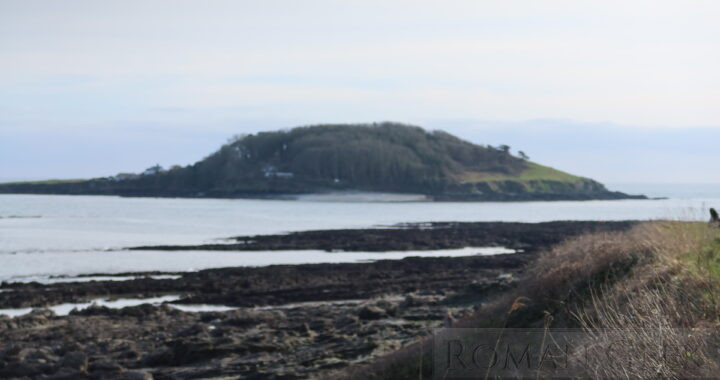
Looe Island is located one mile (1.5km) off the coast at Looe, Cornwall. It may possibly have been Ictis or Mictis mentioned in the Ancient Tin Trade of Britannia.

Looe Island

  • Looe Island is located one mile (1.5km) off the coast at Looe, Cornwall.
  • It may possibly have been Ictis or Mictis mentioned in the Ancient Tin Trade of Britannia.


Looe Island, Cornwall

Gibraltar

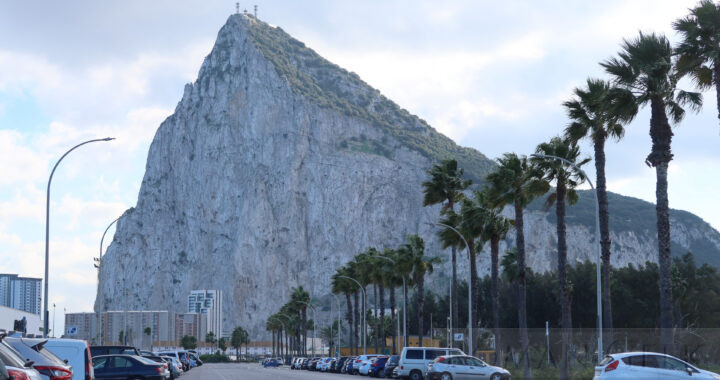
Rock of Gibraltar

Carteia

  • The Archeological site of Carteia is located between Gibraltar and San Roque in the Bay of Gibraltar.
  • It was a Roman naval base here from 67 BCE onwards.
  • The site holds the Ruins of Roman Temples, Kilns and a Forum.

Gibraltar

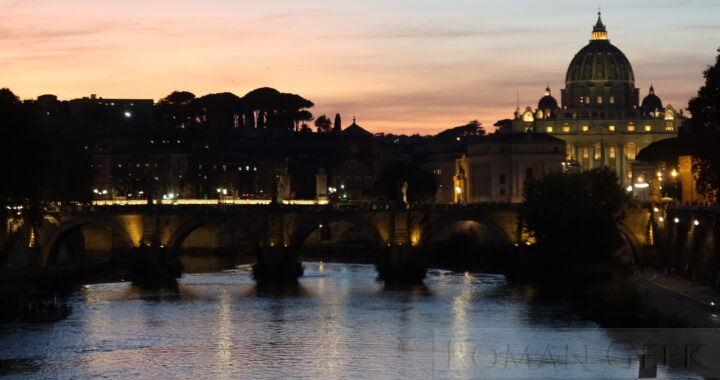
Pont Sant' Angelo, Rome

Tiber

  • The river Tiber is a 252 miles (406 km) long Italian river that rises in the Appenines, passes through Rome and reaches the Mediterranean Sea at Ostia.
  • Between 1888-1892, the river embankments in Rome had walls built to protect the city from flooding.

Tiber Island

Docks of Ancient Rome

Bridges over the Tiber

Roads crossing the Tiber

  • Via Campana:
  • Via Portuensis:
    • This was started by Claudius, and extended by Trajan from Rome to Portus.
    • It ran near the west bank of the Tiber departing from the Pons Aemilius in Rome with the Via Campana before diverging into the hills.
    • After Constantine I, this became the main road to the coast, and the older Via Ostiensis declined in importance.
  • Via Ostiensis:
    • This road ran from Rome to Ostia near the east bank of the Tiber without crossing the river.

Towpath

  • A Roman towpath ran along the western side of the Tiber between Rome and Ostia, and was specifically for oxen to haul the barges upriver, as described by Procopius. The first river crossing was at the Pons Aemilius. There may have been a ferry below that point.

Roads to the Ports

  • The Via Ostiensis ran ran between Ostia and Rome to the south of the Tiber, only running along its bank for a short distance.
  • The Via Portuensis, built by Claudius (41-54 CE) ran between Portus and Rome to the north of the Tiber. The route was shared with the Via Campana and then split halfway before the roads rejoined to enter Rome together at the Pons Aemilius.

Ostia

  • Ostia was the first port of Rome.

Portus

  • Portus became the main port for Rome when it was constructed by Claudius in 42 CE. It was later expanded by Trajan (98-117 CE).


View from Ponte Umberto I of Ponte San Angelo, Rome

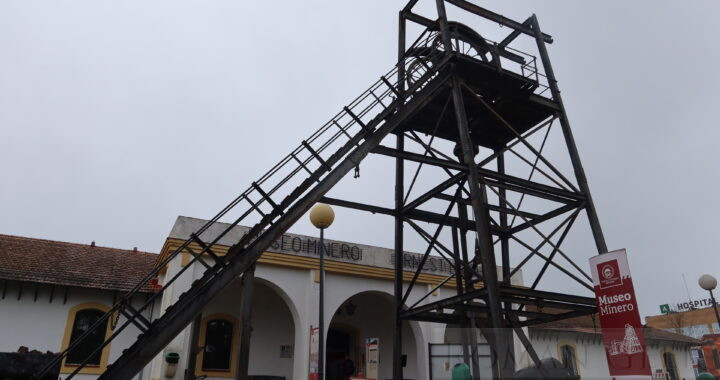
The Rio Tinto Mines were Gold and Silver Mines near Huelva in Andalucia, Spain. The Rio Tinto Mining Museum holds a reconstruction of a Roman Mine.

Rio Tinto Mines

  • The Rio Tinto Mines were Gold and Silver Mines near Huelva in Andalucia, Spain.
  • The mines are located along the Rio Tinto.

History

  • Mining was conducted here by the Phoenicians and the Romans, and still continues today for other minerals.
  • There were also Mines in the nearby Penibetica mountains, which produced Iron, Silver, Quartz, Lead, and Marble.
  • Today, the mines produce copper and pyrites, which is exported through the port of Huelva.

Rio Tinto Mining Museum

  • The Museum is located in Plaza Ernest Lluch, 21660 Minas de Riotinto, Huelva, Spain.
  • The Museum holds a collection of archeological artefacts, mining machinery and railway locomotives covering the period from pre-history until mining operations ended in 2001.
  • There are 16 rooms located in the former hospital of the Rio Tinto Mining Company.
  • Each room is dedicated to a theme: a recreated Roman mine, the locomotives of the Rio Tinto Railway amongst other themes.

Nearby Sites

  • Huelva
    • Huelva is a port city located on the tidal estuary of the river Odiel, 62 miles (99km) northwest of Cadiz.
    • The Rio Tinto mines produce copper and pyrites, which is exported through the port of Huelva.


Rio Tinto Mining Park, Plaza Ernest Lluch