
Cyclades

  • The Cyclades are a group of 220 Islands in the Aegean surrounding the Island of Delos which was controlled since Antiquity by Crete.

The Cyclades

  • This group of 220 Islands surrounds the Island of Delos, which was controlled since Antiquity by Crete.
  • Capital city:
  • History:
    • Under the Roman Empire, the Cyclades were either assigned to the Province of Asia or Achaea, and later to Crete.
    • The most prosperous island was the sacred island of Delos, birth place of Apollo, which was set up by Rome in 166 BCE as a Free Port. Within two years this bankrupted the Rhodian Navy, who in 164 BCE were obliged to sign a Trade Alliance with Rome, bringing the Islands into the Roman Sphere of Influence.
    • Rome used the Cyclades as a place of Exile, mainly the Islands of Gyaros, Amorgos, Patmos and Serifos.

The Dodecanese

  • The Dodecanese is another Island chain consisting of 12 large islands and 150 smaller islands, controlled since antiquity by Rhodes.
  • Capital city
  •  History
    • In 164 BCE Rhodes signed a Trade Agreement with Rome, bringing the Dodecanese Islands under Roman Influence.
    • In c.79-81 CE Titus created the Provincia Insularum meaning the Dodecanese Islands, with Rhodes as the capital. There is one known Governor, Plutarchos, under Julian (361-363 CE)

Under the Eastern Roman Empire (after 395 CE):


The Cyclades

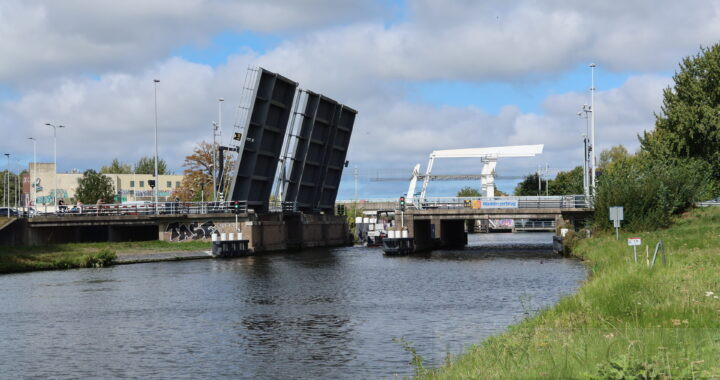
Kortevliet junction with the 'Old Rhine', Leiden

Fossa Corbulonis

  • The Fossa Corbulonis was built in Germania Inferior in 47 CE by General Corbulo.
  • It was a 23 mile long Roman Canal, built to avoid the North Sea that connected the Rhine to the river Meuse from Leiden, and Delft to Maasland-Sluys.

The Canal

  • The canal still exists today and is known as the Vliet or the Rijn-Schlie canal. It is still navigable.
  • It starts at the Oude Rijn (Old Rhine) at Leiden and runs for 23 miles (36km) to connect with the Delfshavense Schie canal at Delft.
  • It runs through Voorschoten, Leidschendam, Voorburg, The Hague and Rijswijk.

Archeological Park of Matilo

  • A Roman Fort was located at the junction of the Fossa Corbulonis with the River Oude in Leiden.
  • The Fort has been reconstructed using Earth Embankments and Timber Towers and can be visited.
  • Archeological Park of Matilo

Sources


Kortevliet junction with the ‘Old Rhine’ at Leiden

Aerarium Militare

  • Aerarium Militare was the Military Treasury instituted by Augustus to collect the Receipts of the Inheritance Tax and Sales Tax.
  • These Taxes then paid for the Legionaries Pensions.

Description

  • The building was located on the Capitoline Hill.
  • The Office was run by three Prefects, the Praefectii Aerarii Militaris, who were appointed by the Emperor for three years.

Income

  • Augustus set up this Pension Fund with 170,000,000 Sesterces from his private wealth. As this was insufficient he instituted two new Taxes.
    • A Tax on Sales at Auction: ‘Centesima rerum venalium’:
      • Specifically collected to fund military pensions.
    • An Inheritance Tax: ‘Vicesima Hereditatium’:
      • Fixed at 5% begun under Augustus (except gifts to children and spouses), which was also collected by the Aerarium Militare. Exemptions were made for the immediate family members who inherited or Estates below a certain value.

Expenditure

  • Donativium:
    • A Gift from the Emperor to the Legions, usually on Accession. The Praetorian Guard war frequently granted Donativium, to buy their loyalty in times of crisis.
  • Praemium:
    • A Lump Sum on Retirement when Discharged after 20 years Service under Augustus:
      • Legionary:
        • 12,000 sesterces. It was approximately thirteen times his annual salary. It was later doubled under Caracalla (198-217 CE) to 20,000 sesterces.
      • Praetorian Legionary:
        • 20,000 sesterces. Possibly also doubled under Caracalla but not confirmed.
    • If there was no cash to pay the lump sum, the Legionary would have his term of service extended until he could be paid.


Capitoline Hill

Dodecanese

  • The Dodecanese are an Island chain in the Aegean in Greece, which consist of 12 large islands and 150 smaller islands.
  • The islands have been controlled by Rhodes since Antiquity.

History of the The Dodecanese

  • The Dodecanese Island chain consists of 12 large islands and 150 smaller islands, controlled since antiquity by Rhodes.
  • Capital city
  •  History
    • In 164 BCE Rhodes signed a Trade Agreement with Rome, bringing the Dodecanese Islands under Roman Influence.
    • In c.79-81 CE Titus created the Provincia Insularum meaning the Dodecanese Islands, with Rhodes as the capital. There is one known Governor, Plutarchos, under Julian (361-363 CE)

Under the Eastern Roman Empire (after 395 CE):

  • Capital city:
  • History:
    • After 395 CE, the Provincia Insularum was placed under the Eastern Roman Emperor in Constantinople.
    • The Dodecanese Islands were eventually joined with Crete under the control of Karpathos.
    • This was the Capital of the Island of Karpathos, Greece, which is halfway between Crete and Rhodes.

The Cyclades
  • This is another group of 220 Islands surrounding the Island of Delos controlled since Antiquity by Crete.
  • Capital city:
  • History:
    • Under the Roman Empire, the Cyclades were either assigned to the Province of Asia or Achaea, and later to Crete.
    • The most prosperous island was the sacred island of Delos, birth place of Apollo, which was set up by Rome in 166 BCE as a Free Port. Within two years this bankrupted the Rhodian Navy, who in 164 BCE were obliged to sign a Trade Alliance with Rome, bringing the Islands into the Roman Sphere of Influence.
    • Rome used the Cyclades as a place of Exile, mainly the Islands of Gyaros, Amorgos, Patmos and Serifos.

Rhodes and the Dodecanese

Second Cataract

  • The six Nile Cataracts are a series of shallow rapids, (not waterfalls) between Aswan and Khartoum. They became unnavigable when the Nile rose.
  • The Second Cataract was also known as the Great Cataract, and was nine miles long. Ships were unable to pass upstream until the Nile started to flood. It is now submerged under Lake Nasser.

The 6 Nile Cataracts

  1. First Cataract, Aswan
  2. Second Cataract, Nubia
  3. Third Cataract, Tombos in Nubia
  4. Fourth Cataract, the most difficult Cataract to pass, Napata previous capital of Kush
  5. Fifth Cataract, confluence of the Nile and Atbarah River.
  6. Sixth Cataract, city of Meroe, capital of Kush


Second Cataract

Third Cataract

  • The six Nile Cataracts are a series of shallow rapids, (not waterfalls) between Aswan and Khartoum. They became unnavigable when the Nile rose.
  • The Third Cataract is at Tombos in Nubia. There was a granite quarry near Tombos. Many Buildings and Statues in Ancient Egypt were constructed by stone taken from this quarry.

The six Nile Cataracts

  1. First Cataract, Aswan
  2. Second Cataract, Nubia
  3. Third Cataract, Tombos in Nubia
  4. Fourth Cataract, the most difficult Cataract to pass, Napata previous capital of Kush
  5. Fifth Cataract, confluence of the Nile and Atbarah River.
  6. Sixth Cataract, city of Meroe, capital of Kush


Third Cataract

Fourth Cataract

  • The six Nile Cataracts are a series of shallow rapids on the Nile, not waterfalls, between Aswan and Khartoum. They became unnavigable when the Nile rose.
  • Fourth Cataract, the most difficult Cataract to pass, was near Napata previous capital of Kush.

The six Nile Cataracts

  1. First Cataract, Aswan
  2. Second Cataract, Nubia
  3. Third Cataract, Tombos in Nubia
  4. Fourth Cataract, the most difficult Cataract to pass, was near Napata previous capital of Kush
  5. Fifth Cataract, confluence of the Nile and Atbarah River.
  6. Sixth Cataract, city of Meroe, capital of Kush


Merowe Dam, Sudan


Fifth Cataract

  • The six Nile Cataracts are a series of shallow rapids, not waterfalls, on the river Nile between Aswan and Khartoum. They became unnavigable when the Nile rose.
  • The Fifth Cataract was the confluence of the river Nile with the river Atbara.

The six Nile Cataracts

  1. First Cataract, Aswan
  2. Second Cataract, Nubia
  3. Third Cataract, Tombos in Nubia
  4. Fourth Cataract, the most difficult Cataract to pass, Napata previous capital of Kush
  5. Fifth Cataract, confluence of the Nile and Atbarah River.
  6. Sixth Cataract, city of Meroe, capital of Kush


Fifth Cataract, confluence of the Nile and Atbara rivers

Sixth Cataract

  • The six Nile Cataracts are a series of shallow rapids, not waterfalls, between Aswan and Khartoum. They became unnavigable when the Nile rose.
  • The Sixth Cataract lay near the city of Meroe, capital of Kush.

The six Nile Cataracts

  1. First Cataract, Aswan
  2. Second Cataract, Nubia
  3. Third Cataract, Tombos in Nubia
  4. Fourth Cataract, the most difficult Cataract to pass, Napata previous capital of Kush
  5. Fifth Cataract, confluence of the Nile and Atbarah River.
  6. Sixth Cataract, city of Meroe, capital of Kush


Sixth Cataract, near Khartoum, Sudan

Edfu

  • Edfu or Idfu is city located on the west bank of the Nile in Egypt.
  • It was known to the Romans as Apollonopolis Magna, and dates back to the Old Kingdom (2575-2150 BCE).

The Temple of Horus at Edfu

  • Located between Esna and Aswan.
  • It is the second largest Temple after the Karnak Temple Complex.
  • It was begun in 237 BCE by Ptolemy III.
  • The Temple is believed to have been built on the site of the battle between Horus and his uncle Set.

Roman Legion


Edfu, Egypt