Nile Delta

  • The Nile Delta is the world’s largest river delta. It is a flooded savanna located down river from Cairo, where the Nile spreads out and drains into the Mediterranean Sea.
  • The Delta stretches 150 miles (240 km) from Alexandria to Port Said. In Ancient Egypt, this was the most fertile area for agriculture and the most heavily fortified, with every river mouth protected by forts.

Ancient Sources

  • Diodorus Siculus
    • ‘Bibliotheca historica’ Vol.1, Chapter 33.
    • Writing between 60-30 BCE, he stated that every mouth of the Nile had a fortified town on either side of the river mouth, equipped with defensive artillery.
  • Pliny the Elder (23-79 CE)
    • Natural History. He stated that the Nile had seven branches in the Delta. Today, only two exist.

The Seven Branches of the Delta

  • From West to East:
    • Canopic to Alexandria (defunct)
    • Bolbitine (Rosetta, still active today)
    • Sebennytic (defunct)
    • Phatnytic (Damietta, still active today)
    • Mendesian (defunct)
    • Tanitic (defunct)
    • Pelusiac to Pelusium (defunct)

Aswan Dam

  • Today, the Delta is shrinking as a result of Flood Control measures and the building of the Aswan Dam that limits river water reaching the Delta.
  • As a result, the Nile Delta only retains two of its original seven branches, the Damietta and the Rosetta.

Bird Migration

  • The Nile Delta is part of the East Africa Flyway bird migration route between Europe and Africa.
  • Millions of birds fly every year along this route and the Egyptian wetlands are critical stopover sites.


Nile Delta, Egypt
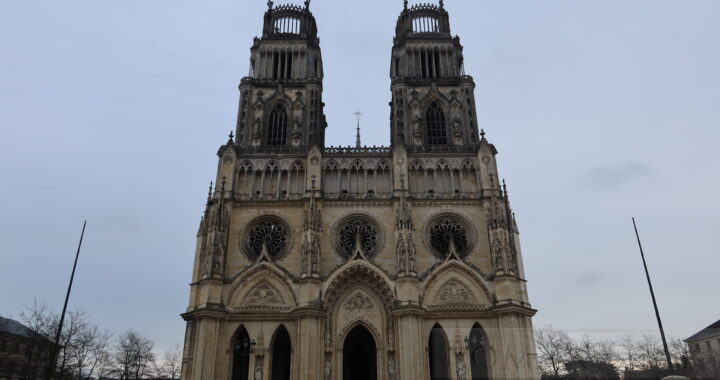
Orleans Cathedral

Orleans

  • Orleans is a Cathedral city on the river Loire and is the capital of the Centre-Val de Loire Region in north central France.
  • It is noted for its Gothic Cathedral of Sainte-Croix (1278-1329 CE) and as being the location where Joan of Arc saved the city of Orleans from a siege by the English in 1432 CE.

History

  • Orleans was originally Cenabum, the Gallic Oppidum of the Carnutes. It was a port city with a bridge across the Loire.
  • In 52 BCE, during the Gallic Wars, the Carnutes leaders, Cotuatus and Conetodunus, decided to attack the Roman Garrison wintering in Cenabum and slaughtered them. Julius Caesar swiftly returned and razed the city to the ground.
  • Later, the Emperor Aurelian (270-275 CE) rebuilt the ruins of Cenabum in 274 CE into a new fortified city which he called civitas Aurelianorum. The name eventually changed to become Orleans.
  • Civitas Aurelianorum was located in the Province of Gallia Lugdunensis.
  • Orleans Cathedral was built between 1278-1329 CE.
  • In 1432 CE, during the Hundred Years War between France and England, Joan of Arc famously raised the Siege of Orleans and saved the city.

Battle of Chalons (451 CE)

  • In 451 CE, the Roman General Flavius Aetius told his Visigothic allies to make their base at Orleans in order to meet the invading Hunnic army led by Attila the Hun.
  • The Battle took place near Chalons in the Champagne area of France where both armies suffered severe losses, and Attila was forced to retreat.

Battle of Orleans (463 CE)

Roman Sites

  • Gallo-Roman City Walls
    • Along the north side of Orleans Cathedral and along Rue de la Tour-Neuve,

Museums

  • Hotel Cabu Musee d’Histoire et d’Archeologie
    • Located at Square Abbe Desnoyers, 1, Orleans.
    • It holds a Gallo-Roman collection of bronze statues.


Cathedral of Orleans

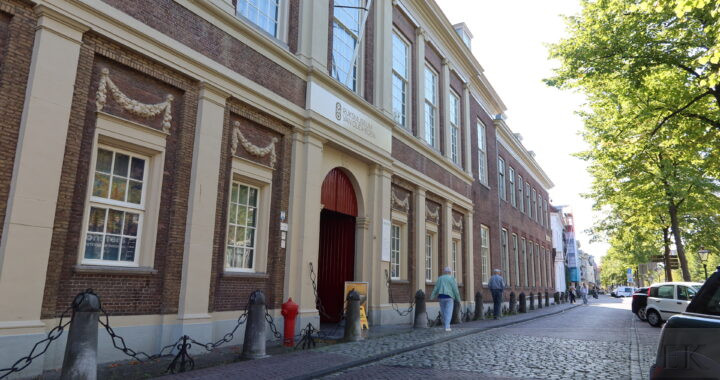
Dutch National Museum of Antiquities, Leiden

Leiden

  • Leiden is a port and university city located on the confluence of the Nieuwe Rijn (new Rhine) and Oude Rijn (old Rhine), 5 miles (8km) from the sea, in the Province of South Holland, Netherlands.

Leiden University

  • Leiden is a Medieval city which holds one of the world’s top universities, Leiden University.
  • It was founded in 1575 CE and is associated with the Leiden University Medical Centre (LUMC) which specialises in clinical and medical research.

Museums

  • Dutch National Museum of Antiquities, Leiden
    • Location: Rapenburg 28, Leiden. 
    • The Museum holds the Finds from the various Roman Sites around the country.


Museum of Antiquities, Leiden

Troy

History

  • Troy was strategically located near the mouth of the Dardanelles or Hellespont, connecting the Aegean to the Black Sea.
  • Augustus rebuilt Troy as ‘Ilium’ (‘Troy IX’) in the first century BCE as a Roman city.
  • Troy was rediscovered and excavated by Dr Heinrich Schliemann in 1870.
  • Although not an island, Troy has been considered as one of the possible locations for Atlantis.

UNESCO World Heritage Site

  • Troy is listed as a UNESCO World Heritage Site.
  • It is a citadel on a hill in Turkey, next to the village of Hisarlik, which is 18 miles (30 km) southwest of the city of Cannakale.
  • Nine different cities have been excavated on the site, and they are numbered ‘Troy I – Troy IX’.
  • The cities date from 3,000 BCE to 500 CE.

Homer

  • Troy was the site of the Iliad and Odyssey, written by the Ancient Greek Epic Poet, Homer.
    • The Iliad
      • The Iliad covers the Fall of Troy in 1184 BCE, the final few weeks of the ten year Siege of Troy
    • The Odyssey

Helen of Troy

  • In Homer‘s Iliad, Helen of Troy, also known as Helen of Sparta, was the wife of Menelaus, King of Sparta.
  • She had the reputation of being the most beautiful woman in the world.
  • When she was abducted by Prince Paris of Troy, it caused the Trojan War.
  • In Goethe’s Faust, Faustus described her as ‘the face that launched a thousand ships’.

Eratosthenes

  • Eratosthenes dated the Trojan War between 1194-1184 BCE.
  • The Ancient Greeks and Romans believed the Fall of Troy to have been a historical event.

Heinrich Schliemann

  • The Iliad was considered to be a Myth until Heinrich Schliemann excavated the Ruins of Troy in May 1873 and discovered the treasures of the ancient city buried under a hill at the village of Hisarlik. The village is 18 miles (30 km) southwest of the modern city of Canakkale.

Roman Grand Tour

Lost Tomb of Achilles

  • After Paris killed Achilles in Troy, his body was taken away, but accounts vary of where he was buried.
  • The Emperor Caracalla visited the Tomb in 216 CE on his way to Parthia.


Troy

Amphitheatre of the Three Gauls

  • The Amphitheatre of the Three Gauls was located at the ‘Sanctuary of the Three Gauls’ where the ‘Concilium Galliarum’ or Council of the Three Gauls was held in Lyon where all the Gallic Tribes in Roman Gaul met every year.
  • The Amphitheatre no longer exists, but there is a reconstruction inside Lugdunum: Gallo Roman Museum of Lyon.

The Council

  • During the Roman Period, Representatives of the 60 Tribes of the Three Gauls met on the first of August each Year, at the ‘Sanctuary of the Three Gauls’, located at the confluence of the Rhone and Saone Rivers.
  • Originally, there were only 1,800 seats, for the Delegations of the 60 Gallic Tribes. This was expanded after 136 CE to seat 20,000 enabling other visitors to watch the Games which accompanied the Imperial Cult.
  • The first of August was a celebration of the first day of the month named in Augustus’ honour, and also the Day of Worship of the Gallic Sun God Lugh, after whom Lugdunum (Lyon) was named.

Condate Altar

  • The Altar stood in the Concilium Galliarum. In front of the Altar, each of the 60 Gallic Tribes had their Name engraved on a Stone Seat arranged in a semi-circle.
  • The ‘Condate Altar’ was dedicated to Dea Roma, the Goddess of Rome and the Roman State, and to Augustus. A religious ceremony conducted by the High Priest, himself one of the Gallic elite, celebrated the Imperial Cult and drew the Gallic Aristocracy into the career structure of the Roman Empire. This concept was successfully repeated throughout all the cities of the Empire.

The Lyon Tablet


Lugdunum Gallo Roman Museum, Lyon

Aqaba

  • Aqaba is a port in Jordan located on the Red Sea.
  • It was known to the Romans as Aila or Aelana, and annexed as part of the Roman Province of Arabia Petraea in 106 CE.

History

Roman Sites

  • Aqaba Church (Foundations only) (c.293-303 CE)
    • This is the first known Christian Church to be constructed.
    • It predates the Church of the Holy Sepulchre in Jerusalem (335 CE) by some 30-30 years.
    • However, the church was destroyed by the Galilee Earthquake on 18-19 May 363 CE.

Museums

  • Aqaba Archeological Museum
    • It is located next to the Mamluk Castle (16th century CE) in old Aqaba.
    • The Museum holds a Collection of Artefacts from dating from the Bronze Age to the Caliphate (7th – 12th centuries CE).
    • The museum holds a Roman Milestone from the Via Traiana Nova.

Roman Legions

Roman Road


Aqaba, Jordan

Ophir

Biblical origin of the Name Ophir

  • Book of Genesis 10:25 Eber has two sons, Peleg and Joktan.
  • Book of Genesis 10:26 Joktan has thirteen sons, and one is called Ophir.
  • The City, Port or country of Ophir was presumably named after him.

Biblical Reference

  • The Bible says that King Solomon received a cargo from Ophir every three years, consisting of Gold, Silver, Precious Gems, Sandalwood, Ivory, Apes and Peacocks.
  • In the Old Testament, Book of Kings I, 10:22, King Solomon and Hiram I of Tyre, returned together from Ophir with a cargo of Gold, precious gems and ‘Algum wood’. They arrived at the Red Sea port of Ezion-Geber, Idumea, (Edom) near Aqaba and Eilat.

Possible Location based on known Trade Routes

The Periplus of the Erythraean Sea describes trade routes to the following areas:

  • Arabian Peninsular:
    • Yemen, Red Sea.
  • Africa:
    • Adulis, on the Red Sea coast of Ethiopia or Eritrea.
    • Great Zimbabwe, Zimbabwe, which has Precious Gems.
    • Sofala, Mozambique which has Gold Fields.
  • Asia:
    • The Coast of Pakistan
    • The Coast of Southern India
    • Northern Sri Lanka

Possible Location based on the travel time

  • Both countries below have Gold deposits and fit the 3 year round trip description.
  • All the other destinations could have been done as a round trip in one or two years.
    • The Philippines.
    • The Solomon Islands.

Possible Location based on a Spanish Travel Itinerary from c.1522 CE.

  • A Spanish Travel Itinerary dating from 1519-1522, specifically states how to find Ophir.
  • It is in the ‘Coleccion general de documentos relativos a las islas Filipinas existentes en el Archivo de Indias de Sevilla, Tomo III, Document 98’. (General Archives of the Indies to Spain).
  • The Itinerary starts from the Cape of Good Hope to India, then Burma, Sumatra, the Moluccas, Borneo, Sulu and China.

Possible Location based on known Exports

  • ‘Gold, Ivory and Peacocks’:
    • Southern India and Sri Lanka, home of the Dravidians, was famous in the ancient world for having Gold, elephants and peacocks.
  • ‘Apes, Precious Gems and Silver’
    • Also, all found in Southern India.
  • ‘Sandalwood’ (also known as Aloes)
    • In the Ancient World Sandalwood came mostly from Southern India.
    • It was used in Ayurvedic medicine to tone the skin, during meditation and for Yoga. The Ancient Vedic writings of India record the use of Sandalwood.
    • It was also used by the Ancient Egyptians to embalm their dead.

However, a return journey from Egypt to India could be done in one year, whereas King Solomon received a cargo from Ophir every three years.


The Phillipines:

Opposite Continent

  • The Opposite Continent is mentioned in the Critias by Plato (424-327 BCE).
  • In it he discusses the Myth of Atlantis, and the ‘Opposite Continent’, and how to reach it by the chain of six islands.

Possible Location

  • It has been suggested that the ‘Opposite Continent’ may refer to the Americas.
  • The chain of six islands may refer to Britannia, the Orkneys, the Faroes, Iceland, Greenland, and Newfoundland, which was a route partly used by the Viking, Eric the Red to colonise Greenland in 985 CE according to the Icelandic Sagas.

Sargasso Sea

  • A possible description of the Sargasso Sea also exists in a 5th century BCE document called the Periplus of Himilco.
  • The Periplus was a Sea Guide for Sailors in the Ancient World.
  • Himilco led a Punic expedition along the Atlantic coasts of Western Europe, Spain, Portugal and France, which he described in his Periplus.
  • The Periplus also described a part of the Atlantic as being covered in seaweed, possibly an early description of the Sargasso Sea.
  • He was quoted by Rufus Festus Avienus in his ‘Ora Maritima’, written in the fourth century CE, but which is now lost.


Back to Lost cities of antiquity


Taprobane

  • The Island of Sri Lanka was known as ‘Taprobane’ to the ancient Greeks and Romans and was named by Ptolemy on his world chart (c.150 CE).
  • Taprobane was also known as ‘Serendivis’ to the Romans, as ‘Lanka’ to the Indians, and as ‘Serendib’ to the Arabs and the Persians. The word Serendipity is derived from this word.

History

  • In 543 BCE King Vijaya invaded from West Bengal with a fleet of 700 ships, and set up the Kingdom of Tambapanni.
  • The Dynasty lasted 2,358 years until 1815 CE, when Sri Lanka became part of the British Empire. Sri Lanka gained independence on 4th February 1948.
  • The Royal Dynasties are mentioned in the historical sources.
  • During the Greek and Roman Period, ships and merchants from Africa, India, Persia, Arabia, Egypt, China and East Asia all traded at Sri Lanka’s ancient ports.
Periplus of the Erythraean Sea
    • This Ship’s Pilot was written in the first century CE, and mentions ships travelling directly to Taprobane from the Red Sea.

Relations with Rome

    • In 30 BCE Queen Cleopatra VII planned to protect her son Caesarion from Octavian by sending him to Taprobane, along with some advisers and a quantity of wealth, but he was executed by order of Octavian with the remark Two Caesars is one too many.
    • King Bhatikabhaya (22 BCE-7 CE) sent an Envoy to Rome who brought back Red Coral which was incorporated into the sacred Monument of the Ruwanwelisaya, a domed Temple built by King Dutugemunu around 140 BCE.
    • In 41 CE male dancers from Taprobane were working in Rome and witnessed Caligula‘s assassination.

Pliny the Elder (23-79 CE)

    • In 41-54 CE Pliny the Elder wrote that during the reign of Claudius (41-54 CE), Rome and Taprobane first officially recognised each other as a result of a chance encounter. He tells of a Freedman, possibly called Lysas, who belonged to Annius Plocamus, a Red Sea Customs Collector.
    • This Freedman was blown from Arabia to a Port in Taprobane called Hippuros. He was given hospitality for six months by the King of Taprobane, who was impressed by the good quality of Roman Coin in his possession. During this time he learnt Sinhalese. The King then sent an Ambassador with three Envoys to the Roman Emperor at Rome.

The Ancient Ports

  • Taprobane had three main Ports involved in the Silk Road along its coasts:

Manthai

    • Manthai is in the Northwest, on the Gulf of Mannar (3rd century BCE to 11th century CE). Manthai was known as Manthottam or Manthoddam, and was considered one of the great Ports on the Silk Road. Amongst its merchants were Greeks, Romans, Arabs, Persians, Ethiopians and Chinese.
Godavaya
    • Goadavaya in the South, on the Indian Ocean, (1st century BCE to 10th century CE) was also an important Port on the Silk Road, with ships coming from China and Goods going to the Red Sea and the Mediterranean Sea.
    • It was in the administrative region of Ruhunu Rata, ruled by the King’s brother at his Capital of Magampura.
    • A Temple dedicated to Gotha Pabbatha Rajamaha Vihara was built on the rock overlooking the harbour, in the second century CE. A Customs House was built to one side of the Temple.
    • An inscription from King Gajabahu I’s Reign (c.114-136 CE) shows Port Dues were collected from Godawaya Harbour and a portion went to the local Temple of Godapawath. Clay Seals bearing a Lion were used to show Payment had been made. Also a statue of Buddha which is 11 ft (3.5m) high, along with two smaller Boddhisattva statues.
    • 75,000 Late Roman Coins have been excavated from earthen containers in the area. Persian and Chinese pottery has also been found.

Gokanna

    • Gokanna (Trincomalee) in the Northeast, on the Bay of Bengal. Trincomalee Bay is one of the world’s Largest natural harbours.
    • It was in the administrative area of Rajarata, ruled directly by the King from the Capital at Anuradhapura.

Palk Strait

  • The Gulf of Mannar separates Sri Lanka and India. Between them exists a chain of rocks across the narrowest part of the Strait known as Adam’s Bridge. The channel through these rocks is called the Palk Strait.
  • This makes it unnavigable for large ships, although smaller craft have always been able to pass through. Large vessels have always had to circumnavigate Sri Lanka to the East.

Gemstones

  • Sri Lanka was famed in Antiquity for its Gemstones found in the Gravel Beds near Ratnapura, which are still mined today.
  • Gemstones found are the Sapphire, Aquamarine, Topaz, Garnet, Spinel, Zircon, Amethyst, Quartz, and Moonstone.
  • Mining consisted of Miners digging the gravel beds, washing the stones and separating the Gemstones from ordinary pebbles, as it still does today.

Monsoon

  • The Monsoon is a Tropical Wind that brings heavy rains to India, and then reverses direction.
  • The southwest Monsoons brought ships from the West. The northwest Monsoons sent home ships from the East.
  • The Monsoon continually varies in rainfall and can cause either drastic flooding or drought.
  • The Southwest Monsoon
    • Summer Monsoon: May to September.
    • It collects moisture over the Arabian Sea and reaches India where it ‘bursts’ over the western coast around the first of June, covering all of India by around the 15th of July. It then starts to leave India from the 1st of September and has left by the 1st of October.
    • The winds blow from the Indian Ocean onto the western coast of India and Sri Lanka.
    • When they reach the Western Ghats mountain range, their moisture is released as a continuous downpour over India.
    • The Himalayas stop the Monsoon Winds from reaching China.
  • The Northwest Monsoon:
    • Also known as the Winter Monsoon: October to December.
    • The Monsoon reverses direction collecting moisture over the Bay of Bengal, and usually ‘bursts’ over the eastern coast around the 20th of October, lasting up until the 10th of December.
    • The winds blow over the eastern Ghats mountain range, but only the Monsoon that has passed over the Bay of Bengal picks up moisture, and only Andhra Pradesh and Tamil Nadu receive rain during the winter.

Kings of Sri Lanka

  • King Vijaya
    • In 543 BCE he invaded from West Bengal with a fleet of 700 ships and set up the Kingdom of Tambapanni. He is thought to have landed at Manthai.
  • King Dutugemunu (161-137 BCE)
    • He built the Ruwanwelisaya.
  • Queen Anula (47-42 BCE)
  • King Bhatikabhaya (22 BC – 7 CE)
    • He sent an Envoy to Rome.
  • King Gajabahu I (c.114-136 CE)
    • He ruled the area known as Rajarata from his inland Capital at Anuradhapura (Founded in 377 BCE). The other two areas, Malaya Rata and Ruhunu Rata, were ruled by his brothers.

Buddhism

  • Buddhism was introduced to Sri Lanka around 245 BCE by Mahinda, son of the Indian Emperor Ashoka.
  • King Devanampiya Tissa ruled Sri Lanka during this period. Buddhism was later spread to China via the Silk Road.
  • The Sacred Tree:
    • In 245 BCE the Jaya Sri Maha Bodhi Tree was brought by Bhikkhuni Sangamitta. It is considered to have been a sapling from the Bodhi tree below which Gautama Buddha achieved enlightenment. It is located in Mahamewna Gardens in Anuradhapura. It is the oldest living tree in the world that has been planted by humans, with an unbroken historical record.
    • Mahamewna Gardens in Anuradhapura, Sri Lanka. Not only is it the closest authentic living link to Gautama Buddha, it is also the oldest human-planted tree in the world with a known planting date and a recorded history.
  • The Buddhist Monasteries:
    • There are many Buddhist monasteries in Sri Lanka.
  • The Great Stupa Ruwanwelisaya:
    • King Dutugemunu built this Stupa at Anuradhapura.
  • The Tissamaharama Raja Maha Vihara Buddhist Temple:
    • King Kavan Tissa of Ruhuna built this Temple in the 2nd century BCE. It holds one of the largest Stupas in Sri Lanka, the Tissamaharama Dagoba.

Monuments and Sites

  • The Capital Anuradhapura and the Ruwanwelisaya Stupa
    • Anuradhapura was founded as the Capital in 380 BCE and is one of the oldest continually inhabited cities in the World.
    • It was the Capital of Sri Lanka for 1,400 years.
    • It was surrounded by Buddhist monasteries and contains the Bodhi Tree.
    • Water was supplied by lakes in the city.
    • It holds the Great Stupa of Ruwanwelisaya, built by King Dutugemunu (161-137 BCE).
    • It is considered a Holy city by Buddhists around the world.
  • Sigiriya
    • Sigiriya is a 660 foot (200m) Rock Fortress located in the centre of Sri Lanka.
    • It is a Unesco World Heritage Site.
    • ‘Sigiriya’ means ‘Lion Rock.
    • King Kasyapa (477-495 CE) built his Palace on top of the Rock and briefly made it the Capital of Sri Lanka. Access was beneath the carved head, legs and paws of a giant Lion. Gardens, moats and walls defended the Rock. The gardens divide into three types, water gardens, cave gardens and terraced gardens. Cisterns in the upper rock provided water, and still function today. The western side of the Rock was painted with giant frescoes.
    • After he died it was used as a Buddhist monastery until the fourteenth century CE.
  • The Hindu Temple of Tenavaram, Matara
    • Located at Sri Lanka’s southernmost point, Dondra Head, it overlooked the Indian Ocean acting as a navigational beacon.
    • The exact date of its construction is unknown, but Ptolemy (c.150 CE), marked the location of a Hindu Temple on his map at ‘Dagana’, considered today to be the same place as Dondra Head, near Galle.
    • The Hindu Temple was rebuilt between circa the 5th-7th century CE.
  • Adam's Peak
    • A distinct conical mountain in southern Sri Lanka, surrounded by low hills and tropical forests.
    • It has a height of 7,359 ft (2,243m) and was originally thought to be the highest mountain in Sri Lanka.
    • It is located 25 miles (40km) northeast of Ratnapura and has always been considered a Sacred Mountain.
    • It is a major religious pilgrimage site in four religions, with the rock stairs cut in the mountain side. The main pilgrimage season being between December and May, with pilgrims climbing the mountain at night in order to observe the sunrise at dawn, and the shadow of the mountain.
    • A rock formation near the summit resembles a footprint. This is known in Buddhist tradition as ‘Sri Pada’ the sacred footprint of Buddha and in Hindu tradition as that of Shiva. In Western and Arabic tradition it is known as the footprint of Adam (or St Thomas) when he first set foot having been expelled from the Garden of Eden.
  • Dambulla Cave Temple
    • Located 92 miles (148km) east of Colombo, and the rock fortress of Sigiriya is 12 miles (19 km) away.
    • The caves are located in a distinctive rock that rises 525 ft (160m) above the surrounding plain.
    • It is a major pilgrimage site in Buddhism, dating back to the third century BCE.
    • There are approximately 80 caves locally of which the Five caves form the Temple complex.
    • Inside the Cave of the Divine King is a 46 ft (14m) high statue of Buddha, carved out of the rock.
    • Inside the Cave of the Great Kings are 16 statues of Buddha standing, 40 statues of Buddha seated, a statue of the Gods Saman and Vishnu, and two statues of important Sri Lankan Kings who donated generously to the Temple.
    • The statues were started in the first century BCE and continued being added to for the next 1,300 years.
    • The Dambulla cave monastery which is responsible for the Temple complex also dates from the first century BCE.

Sri Lankan Elephant

  • The Sri Lankan Elephant (Elephas maximus maximus) is one of the three sub-species of Asian Elephant, the others being ‘Indicus’ and ‘Sumatranus’.
  • Less than 10% of the male elephants have tusks. Historical Sources describe Elephants as being in Sri Lanka as far back as 200 BCE.

Sri Lankan Leopard

  • The Sri Lankan Leopard (Panthera pardus kotiya) is native to Sri Lanka, and used to live all over the island, but is now an endangered species with less than 1,000 leopards alive today.
  • They are predominantly a night hunter, but also hunt in the dawn and dusk and sometimes during the day.
  • Deer, wild boar, monkeys, snakes and birds make up its prey. It stalks in silence, then sprints at great speed, pouncing on its victim and killing it with one bite around the throat.
  • As they have no predator themselves, they eat their kill where it lies, very occasionally pulling it up into the trees.

Laccadives, Maldives and Chagos Islands

  • The Laccadives, Maldives and Chagos Islands were known in Taprobane as the ‘Twelve Thousand Islands’. According to Pliny the Elder, they did not use the stars when navigating to them. They were mentioned in the first century CE Periplus of the Erythraean Sea. The Laccadives are called the ‘Lakshadweep’ which means ‘one hundred thousand islands’ in Sanskrit, Hindi and Tamil. The most southerly island is Minicoy.
  • The Maldives are separated from the Laccadives by the Eight Degree Channel on the eight degree north Parallel of Latitude, which is south of Minicoy. North of Minicoy lies the Nine Degree Channel.
  • The Chagos islands consist of 60 islands and are situated 310 miles (500km) south of the Maldives, on the Chagos-Laccadive Ridge.

Andaman and Nicobar Islands

  • These consist of 572 islands and are located in the east of the Bay of Bengal. They form the western edge of the Andaman Sea with Burma, Thailand and the Malay peninsular to the east.
  • The two island groups are separated by the Ten Degree Channel on the ten degree north Parallel of Latitude.

Kumari Kandam

  • A lost continent, known as the Atlantis of the Indian Ocean, called ‘Kumari Kandam’ is referred to in Tamil Works and Sanskrit Literature. It was ruled for almost ten thousand years by the Pandyan Kings before having sunk off the south coast of India and Sri Lanka.
  • The Laccadive-Maldive-Chagos Islands lie on the Chagos-Laccadive Ridge and may have formed part of the base of this lost continent.

Serendib

  • The Arab and Persian name for Sri Lanka is Serendib and the word Serendipity comes from the name Serendib.
  • It is derived from the Sanskrit word for Sri Lanka which translates as ‘Dwelling place of Lion’s Island’.
  • In 1754 the English writer Horace Walpole wrote a version of the Persian fairy tale called ‘The Three Princes of Serendib’ in which he invented the word ‘Serendipity’ meaning a ‘pleasant surprise’.

Ancient Sources

  • The Mahavamsa:
    • This is a historical Poem written in the Pali language during the fifth century CE, based on Chronicles compiled by Buddhist Monks, that describes the Royal Dynasties of Sri Lanka from King Vijaya to the fifth century CE, and also includes descriptions of the Indian Kings.
  • The Dipavamsa:
    • This is an earlier work than the Mahavamsa but which covers the same period though in less detail.
  • The Culavamsa:
    • This describes Sri Lankan history from the fourth century CE until 1815 CE.
  • Greek and Roman Sources
    • Megasthenes (350-290 BCE) the Greek Geographer first mentioned the island.
    • Eratosthenes  (276-196 BCE) placed it in his Geography.
    • Ptolemy 139 CE, placed it in his geographical treatise.
    • Pliny the Elder (23-79 CE) discusses Taprobane in his Natural History.


Colombo, Sri Lanka

Tyre

  • Tyre is an ancient Port city in Lebanon, that has been continuously occupied since 2,750 BCE.
  • It was located in the Roman Province of Syria.

History

  • Tyre was one of the earliest cities of Phoenicia, founded in 2,750 BCE and becoming its leading city in c. 900 BCE.
  • In Greek Mythology, Tyre was where Europa was born.

Roman Sites

  • The Sites are in the land based Roman City, as the old island city of Tyre is now underwater.
    • Roman Theatre
    • Roman Arch
    • Roman Hippodrome
    • Roman Columns of the Wrestling School, the Palaestra

History

  • Tyre was originally founded on the mainland in 2,750 BCE according to Herodotus.
  • It became an island city which developed into a Maritime Power that dominated the Mediterranean Sea.
  • By 2,350 BCE the ships of Tyre had a monopoly on the Tin Trade, essential for making Bronze.
  • In c. 1200 BCE Tyre was attacked by the Sea Peoples, using swords and weapons made of Steel not Bronze. The Sea People ravaged the eastern Mediterranean, and Tyre had to be rebuilt.
  • Tyre became the leader of Phoenicia around 900 BCE.
  • King Hiram of Tyre (969-936 BCE) was an ally of King David and King Solomon in The Bible.
  • Tyre is considered to be the daughter of Tarshish in The Bible (Isaiah 23.10.).
  • Tarshish sent Silver, Lead, Copper and Tin to be stored in Tyre, which then went East, according to the The Bible (Ezekiel 27:12.).
  • By c. 837 BCE, Tyre was one of the twelve kingdoms along the sea coast of the Levant that paid Tribute to the King of Assyria.
  • Between 821-774 BCE, Pumayyaton (Pygmalion in Greek) was King of Tyre.
  • In 814 BCE Pygmalion sent his eldest daughter Elissa, Queen Dido, with colonists to create the colony of Carthage. After being given independence in 650 BCE, Carthage eventually eclipsed Tyre in Power and Influence.
  • In 332 BCE Uzzimilk was the last King of Tyre before the invasion of Alexander the Great.

Marinus of Tyre

  • Marinus of Tyre (c.70-130 CE) was a Greek Cartographer, Geographer and Mathematician who worked between 100-130 CE, based in Tyre, Syria.
  • The Roman Cartographer Ptolemy (90-168 CE) stated that he used Marinus’ World Chart (c.114 CE) to compile his own Ptolemy's Geographia.

Tyre in Greek Mythology

  • In Greek Mythology, the Phoenicians founded Europe.
  • The King of Tyre, King Agenor, had a daughter, Princess Europa. She was abducted by Zeus and taken to Crete. King Agenor sent her brothers to bring her back, specifying they were not to return until they had found her. Unable to locate Europa, and forbidden to return without her, they each set up cities on the continent, in particular Cadmus who founded Thebes in Greece, where he also introduced the Greek Alphabet.
  • Meanwhile Europa had three sons, King Minos of Crete, King Rhadamanthus of the Cyclades and Prince Sarpedon of Lycia.

Temple of Melqart

  • The Temple of Melqart in Tyre was described by Herodotus, as having one pillar of gold and another of Emerald. Melqart was Hercules to the Greeks and Romans.
  • Strabo wrote that two Bronze Pillars in the Temple were generally believed to be the Pillars of Hercules, however, after closely examining the Pillars, he decided the claim was untrue.
  • Melqart was the ‘Lord of Tyre’, and its Kings were thought to be descended from him.

Wars

  • Tyre alternated between War and Trade with the Pharaohs of Egypt.
  • Between 586-573 BCE Tyre was besieged by Nebuchadnezzar, King of the Babylonian Empire, resulting in payment of Tribute.

Tyrian Purple

  • Purple Dye from the shells of Murex was manufactured in Tyre. The Dye was as expensive as silver.
  • The Murex shell was featured on the early coins of Tyre.

Tyrian Shekel

  • The coins of Tyre started being minted from c. 450 BCE:
    • The Tyrian Shekel portrayed a Dolphin over a Murex shell with the Phoenician letters ‘SLSN’ above. The concensus is that these letters indicated ‘one thirtieth’, but it is not known what coin the fraction one thirtieth is of.
    • On the other side is an Owl holding a Flail and Crook. The Flail and the Crook are symbols of Osiris, the Egyptian Deity. Egypt was Tyre’s oldest trading partner. The Owl was the symbol used on Athenian coins at this time, and may reflect trade in the direction of Greece.
  • From c. 390 BCE:
    • The Shekel starts portraying Melqart riding a Seahorse (Hippocamp), and the Dolphin over the Murex shell, is now shown below.

Siege of Tyre (332 BCE)

  • In 332 BCE Alexander the Great successfully besieged Tyre, which resulted in it being conquered and connected to the mainland by an artificial promontory so that it could never be used as an island fortress again.
  • The last King of Tyre was called ‘Uzzimilk’.
  • During the siege, the pilgrims to the Temple of Melqart from Carthage, were allowed to go home and pass through the lines.
  • Despite being conquered, the city continued in use under the Greeks and then the Romans.

Sources

  • Herodotus (c.484-c.420 BCE)
  • Amarna Letters (1350 BCE)
    • these refer to the Mayor of Tyre, Abimilku, writing frequently to Akenaten to discuss Water, Wood and the Nomadic Habiru in their wanderings.


Tyre