
Gardens of Sallust

  • The Gardens of Sallust, also known as the ‘Sallustrian Gardens’, were landscaped Parks in Rome next to the Quirinal Hill, created by the Roman Historian Sallust (c.86-35 BCE).
  • The Park originally belonged to Julius Caesar and Sallust bought it after he died. Today, it is a private location for Events.

A Public Roman Park with Works of Art

  • Tiberius bought the estate in 20 CE and it remained in the Imperial family until 410 CE. The Emperors maintained the Gardens as a Public Park.
  • The Gardens included:
    • Many pavilions
    • A Temple to Venus
    • The Galatian Gauls and several copies of famous Greek Sculptures.
    • Pliny the Elder wrote that the Gardens held the remains of the two tallest men under Augustus, Posio and Secundilla, one measuring 10 feet 3 inches.
    • The Borghese Vase (now in the Louvre.
    • The ‘Obelisco Sallustiano’, one of the Obelisks of Ancient Rome.
    • The Ludovisi Throne.
    • The Falling Niobid.


The Gardens of Sallust
Mouth of Truth

  • The Mouth of Truth, called bocca della verita in Italian, is a giant face on a marble disc, possibly of a River or Sea God, with holes for the eyes, nostrils and mouth.
  • It was originally located in the Temple of Hercules

Getting There

  • Location: Piazza della Bocca della Verita. In front of the door of the Basilica di Santa Maria in Cosmedin.

Forum Boarium

  • Piazza della Bocca della Verita was the site of the ancient cattle market, the Forum Boarium.
  • It dates from approximately the 1st century CE, and may have once been a water fountain.
  • Superstition has it that if a person told a lie, when they put their hand in its mouth, it would be bitten off.

Roman Holiday

  • It was made famous in the 1953 Movie, Roman Holiday, where Gregory Peck frightens Audrey Hepburn by mimicking losing his hand in its mouth.


Basilica di Santa Maria

Lost Tomb of Achilles

  • The Tomb of Achilles is referred to by many ancient historians, but no location has survived today.
  • Achilles was killed by Paris, during the Fall of Troy, and his body was taken away, however accounts vary of where exactly he was buried.

Roman Grand Tour

  • The Roman Upper Classes had all read Homer‘s Iliad and the Odyssey.
  • They visited the ruins of Troy and saw the Grave of Achilles, as part of the Itinerary on the Roman Grand Tour of the Ancient World.
  • In 216 CE the Emperor Caracalla is recorded as having paid homage at the Tumulus, on his way to invade Parthia.


Museum of Troy, Canakkale

Mangrove swamps

  • Mangrove Swamps are forests of Mangrove trees that lie between the tidal reaches of salt water often around a river outlet, a creek or an island.
  • There are forests of Mangrove trees along both coastlines of the Red Sea, in Egypt, Sudan, Eritrea, Djibouti, Saudi Arabia and Yemen. They are also found in the coastal tropics of Africa, Asia, Indus Delta, Australia, South America and Florida, USA.

Description

  • Mangroves create a natural habitat and support a rich marine life as well as protecting coral reefs.
  • Mangroves were mentioned by Pliny the Elder (23-79 CE).


Dahlak Archipelago, Red Sea

Hattusa

  • Hattusa was the capital city of the Hittite Empire (1700-1200 BCE) whose ruins lie in the village of Bogazkale, 121 miles (194km) east of Ankara in Turkey.
  • The city was rebuilt in 1,700 BCE, over an earlier city that had been burnt, and lasted until c. 1,200 BCE.

Archeological Site of Hattusa at Bogazkale

    • The outline of the circuit of walls and temples is visible.
      • The city had an inner wall and an outer wall with a circuit over 4.5 miles (7 km) long.
    • Walls
      • A section of the walls has been reconstructed.
    • Two giant Sphinxes
      • located in one of the city gates.
      • A pair of sphinxes found at another gate are now in the Bogazkale Museum.
    • 30,000 Cuneiform Tablets
    • The Green Stone in the Great Temple.
    • The narrow entrance tunnel.
    • The stones with cylindrical holes.

Museums

  • Bogzakale Museum
    • This museum is next to the site of Hattusa, and houses many of the Finds from Hattusa.
  • Istanbul Archaeology Museums
    • Istanbul
    • Holds part of the 30,000 Cuneiform Tablet Archive from Hattusa.
    • Holds the tablets which describe the Peace Treaty after the Battle of Kadesh
  • Ankara Archeological Museum
    • This museum also holds part of the Cuneiform Tablet Archive.

The Mysteries of Hattusa

  • The Green Stone:
    • In the Great Temple ruins lies a cuboid Green Stone, whose function is unknown.
  • The cylindrical holes:
    • Many stones in the city have perfectly drilled cylindrical holes, that serve no known purpose.
  • The narrow entrance tunnel:
    • An impressive giant rampart has part of the southern wall built on it. Built into the rampart is a very narrow entrance tunnel 230 ft (70 m) long.
  • The Hittite language:
    • Hittite is found in two scripts, the Luwian Cuneiform Tablets and the Luwian Hieroglyphs.
    • It is not known whether these are two branches of the same Hittite language or derive from separate languages.
  • The Reason for its Destruction:
    • The city was destroyed c.1,200 BCE, at the same time as many other cities were destroyed in the Levant, but the method of destruction and by whom is unknown.

The Cuneiform Tablets

  • 30,000 Cuneiform tablets were discovered in the ruins, along with 3,000 seals.
  • The tablets are now housed in the Ankara Archeological Museum and the Istanbul Archaeology Museums.
  • The tablets contain the royal archives, correspondence, contracts, laws, ceremonies and a famous peace treaty with Egypt, from the Battle of Kadesh (c.1274 BCE).
  • The Double Headed Eagle symbol appears on some cylindrical seals dating from c. 1600-600 BCE. This seems to have been the symbol of the Hittite kings.


The Ruins of Hattusa, Turkey

Babylon

  • Babylon was the capital city of Babylonia (1895-539 BCE).
  • It is now an archeological site which lies on the east bank of the Euphrates, 53 miles (85km) south of Baghdad in Iraq.

Walls of Babylon

  • The city and its walls were rebuilt by Nebuchadnezzar II (605-562 BCE), to display the power of Babylon, his capital city, who possibly also built the Hanging Gardens of Babylon.
  • However, by 300 BCE, the Walls already lay in a state of decay.
  • The walls enclosed Babylon in a square, with the Euphrates river passing inside, lined with great quays along the waterfront.
  • Estimates of the dimensions of the Walls vary widely according to the accounts of various Ancient Historians, with the most detailed description given by Herodotus.

Wall Dimensions (Herodotus)

    • Construction:
      • Fired Bricks, not Stone, from clay removed to create the Moat.
    • Height:
      • 100-330 feet (30-100m)
    • Width:
      • 32-85 feet (10-26m)
    • Length:
      • 40-80 miles  (60-120km), but probably only 20 miles long. The actual Ruins are 2-3 miles  (3-5km) long.
    • Towers:
      • Around 250 towers, each rose about 10-15 feet (3-6m) above the height of the Walls.
    • Gates:
      • 25 Gates in each of the four walls, with Bronze Doors, according to Herodotus.
    • The Ishtar Gate:
      • This was the eighth gate in the Inner Wall of Babylon. All the bricks were glazed blue.
      • A complete reconstruction of the Ishtar Gate is housed in The Pergamon Museum, Berlin.
    • Road:
      • A road ran along the top, wide enough for a four horse chariot to turn according to Herodotus.
    • Moat:
      • The Walls were surrounded by a 260 ft (80m) wide Moat, from which the clay bricks were made.

Hanging Gardens of Babylon

Tower of Babel

  • Babylon is one of the possible locations for the Biblical story of the Tower of Babel.

Babylonian Exile

  • The Babylonian Exile refers to the period in The Bible between 587-539 BCE when the Judaean King and part of the Jerusalem population was removed to Babylon by King Nebuchadnezzar.

Fort BabylonEgypt

  • Babylon is a suburb of Cairo in Egypt, and not in Iraq.
  • Babylon is mentioned as a town from the Egyptian Pharaonic period by Ptolemy (121-151 CE) in his ‘Geography’.
  • Fort Babylon is a Roman Fortress built on Latitude 30° N on the boundary of Lower Egypt and Middle Egypt.


Babylon, Iraq

Temple of Asclepius in Rome

  • The Temple of Aesculapius (Asclepius) was located on Tiber Island in the middle of the River Tiber in Rome.
  • Started in 293 BCE after a great Plague hit Rome, it was completed in 291 BCE, by order of the Roman Senate after consulting the Sybilline Books.

Getting There

The Site today

  • The Temple was destroyed in c. 1,000 CE and the present Basilica of San Bartolomeo all’Isola was built over it.
  • Today, in keeping with the same theme, a hospital built in 1584 CE, stands on the site of the Temple.
  • The stone Roman prow is still visible under the Basilica where it faces the remaining arch of the Pons Aemilius.

History

  • The Temple and its facilities covered the entire island, which is boat shaped. An area was set aside for long term patients.
  • There was no charge and the poor and slaves were sent here, however gifts and donations were accepted.

Construction

  • A ship was sent to Epidauras to obtain a statue of Asclepius.
  • They also obtained a snake which entwined itself around the mast, like the Rod of Asclepius. On arrival in Rome it slithered onto the island and was seen as a sign sent from Asclepius to build his Temple there.
  • The entire Tiber Island was covered in marble and shaped like a ship as a reminder of this event.
  • It was given a prow and a stern, and an obelisk was placed in the centre to represent the mast.


Tiber Island, Rome

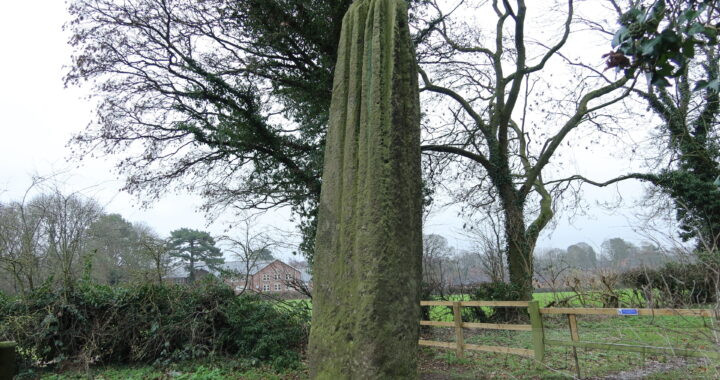
Devil's Arrows, Boroughbridge

Devil’s Arrows

  • The Devil’s Arrows are a group of three Bronze Age standing stones or menhirs, located next to the A1 road near Aldborough, near Boroughbridge, North Yorkshire.
  • The stones date from between 3,500-2,500 BCE are deeply grooved and stand between 18-22 feet (5-6m) high. They form a straight line which is aligned NNW to SSE. The Thornborough Henges are located nearby.


Photo and map: Devil’s Arrows, Boroughbridge, York

Abu Simbel Temples

  • The Abu Simbel Temples are two massive rock temples at Abu Simbel, 143 miles (230 km) southwest of Aswan in Egypt on the border with Sudan.
  • The two Temples are, the Great Temple of Ramesses II (1279-1213 CE) and the Small Temple of Hathor and Nefertari. They were relocated when the Nasser Dam was built between 1960-1970.


Abu Simbel Temples