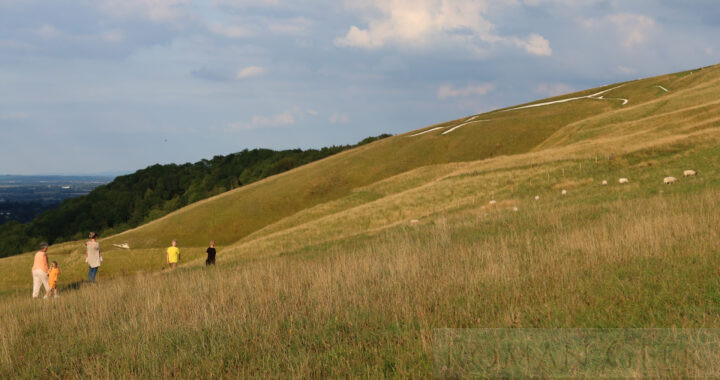
Uffington White Horse, Berkshire Downs

Uffington White Horse

  • Uffington White Horse is located on White Horse Hill, the Berkshire Downs, 10 miles (16km) east of Swindon, Berkshire and dates to the Iron Age (c. 1,200-400 BCE).
  • The drawing was originally dug 3 feet (1m) deep and was maintained by a country fair that was held by the local villages every seven years until recent times.


Uffington White Horse

Hundred Horse Chestnut

  • The Hundred Horse Chestnut is the oldest and largest known chestnut tree in the world, located in Sicily.
  • The tree is located 5 miles (8km) east of Mount Etna‘s centre, on it’s eastern slope.

 Description

  • It is estimated to be between 2,000-4,000 years old.
  • The tree is a Sweet Chestnut.
  • In local legend, the tree got it’s name when the Queen of Aragon visited Etna with one hundred knights, and they all sheltered under the tree from a storm.


Hundred Horse Chestnut

Pantelleria

  • Pantelleria is an Italian Island in the Strait of Sicily, located 62 miles (100km) from Sicily and 37 miles (60km) from Tunisia.
  • The Island holds various Bronze Age sites consisting of a village and over 50 tombs known as ‘Sesi’. These are smaller versions of the Nuraghe towers of Sardinia.


Pantelleria

Terracotta Army

  • The Terracotta Army is an army of terracotta warriors, horses and chariots, found buried in pits in the Mausoleum of Qin Shi Huang, the First Emperor of China (221-210 BCE) and founder of the Qin Dynasty.
  • The Army stands guard to the East of the his Tomb, and is part of a large Funerary Monument, built in c.209 BCE, located at Mount Li, Lishan. It is a Unesco World Heritage Site.

Description

  • The Army is located in a larger Necropolis which occupies 38 square miles (98 square km).
  • There are approximately 8,000 Warriors, 520 Horses, 130 Chariots and 150 Cavalry Horses.
  • Originally, most of the figures held real bronze weapons including Swords, Lances, Battleaxes, Scimitars, Shields, Crossbows and Daggers. The majority have subsequently been stolen.
  • There are other Pits which contain Terracotta figures of Officials, Entertainers and Musicians.
  • The Historian Sima Qian, describing the construction of the Tomb, wrote that 700,000 workers had been employed in its construction.


Terracotta Army, Lintong, Xi’an

Pireus

  • The Pireus is and was the Port for Athens and is located 5 miles (8km) southwest of the city.
  • The Port of Piraeus was one of the great naval bases of the Ancient World and held the Naval Harbour and Shipsheds for the Athenian Navy.

History

  • In 483 BCE, a new vein of silver was discovered in the Laurion Mines, which paid for 200 Triremes to be built and housed in the Pireus Shipsheds.
  • The Pireus was then fortified continuously and became one of the greatest naval bases in the Ancient World, until it was destroyed by the Romans under Sulla in 86 BCE. The Long Walls which ran from Athens to the Pireus were destroyed at the same time.

Ancient Greek Sites

  • Eetioneia
    • The circular Gate to the Harbour.
  • Zea shipsheds
    • Remains of the shipsheds and slipways.

Museums

  • Archeological Museum of Pireus
    • Char. Trikoupi 31, Pireas.
    • The museum holds statues and other Finds from Classical Antiquity that have been excavated from the area are on display.
  • Hellenic Maritime Museum
    • Located in Zeas Marina at Akti Themistokleous, Freattyda-Nipolies, Athens.
    • The museum holds 2,500 artefacts of naval history and a library of 17,000 books and magazines on naval history, including various ship models:
      • A model of Minoan ship from the 16th century BCE.
      • A model showing an Athenian Trireme from the 5th century BCE.
      • A model of a cargo ship from the 4th century BCE.
      • A model of a Byzantine Dromon from the 10th century CE.


Hellenic Maritime Museum, Pireus Harbour, Athens

Parallel of Agisymba

  • Marinus of Tyre constructed a World Map in 114 CE, with the southernmost Parallel of Latitude passing through an African country known as the Land of Agisymba.

Agisymba


Lake Chad

Parallel of Thule

  • The Parallel of Thule was a Parallel of Latitude named by Ptolemy after Thule, the most northerly point known to the Ancient World.
  • It’s location has never been confirmed but is thought to have been either the Shetland Islands, the Faroe Islands, Iceland or even Scandinavia.

Sources

  • Eratosthenes (c.275-195 BCE)
    • He located the Parallel of Thule as being at 66° North.
  • Ptolemy (90-168 CE)
    • He mentions Thule in his ‘Geographia’.
    • Ptolemy describes the Parallel of Thule as being at 63° N, and not at 66° N as described by Eratosthenes.
    • Ptolemy places Thule on his map to the north of the Orkney Islands (59° N), making it possibly the Shetland Islands (60° N), the Faroes (62° N), Trondheim (63° N) or Iceland (65° N).


Shetlands

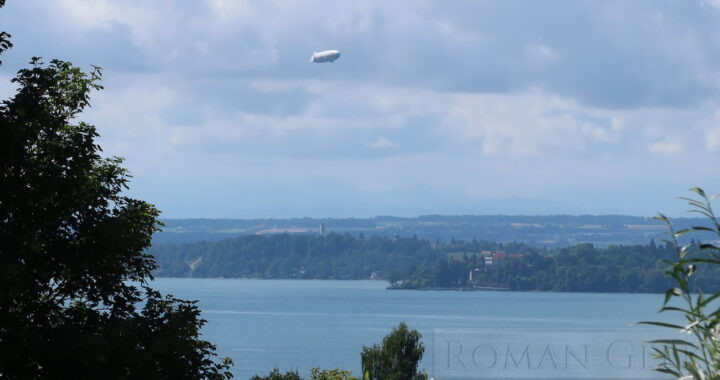
Lake Constance, Zeppelin Tour

Lake Constance

  • Lake Constance, also known as the Bodensee, lies on the borders of three countries, Germany, Austria and Switzerland.
  • The lake is divided into two parts, the Upper Lake (Obersee) and the Lower Lake (Untersee).

Rhine

  • The Rhine enters southeastern Lake Constance, the Obersee, at Bregenz in Austria.
  • And it exits the Untersee, in the West, and continues to the Rhine Falls.

Battle of Lake Constance (15 BCE)

  • During the conquest of Raetia, Tiberius conducted the Battle of Lake Constance, where his fleet of galleys defeated the fleet of the Vindelici.

Zeppelin Airship Tours

  • Zeppelin Airships tour Lake Constance from their base at Friedrichshaven.
Zeppelin Tour, Friedrichshaven, Lake Constance

Zeppelin Tour, Friedrichshaven, Lake Constance


Zeppelin Airship over Lake Constance

Curonian Spit

  • The Curonian Spit forms a barrier which separates the Curonian Lagoon from the Baltic Sea.
  • It stretches 62 miles (100 km) from Lithuania to Kaliningrad, a Russian enclave, and is a Unesco World Heritage Site.

Description

  • These are the highest moving sand dunes in Europe.
  • Most of the Dunes are covered in pine forests.
  • The average height is 98-115 feet (30-35m), but some dunes reach 187 feet (60m).
  • Its width varies from 1,300 feet (400m) to several miles wide.

Other Sand Dunes


Curonian Spit

Gulf of Lion

  • The Gulf of Lion (Golfe du Lion) extends around the Mediterranean Sea from the Spanish Border, along the coast of Languedoc-Roussillon and Provence to Toulon.
  • It was known to the Romans as Sinus Leonis.

Coastline

  • The coastline from the Spanish border northwards consists of lagoons (etangs) and salt marshes,
  • The Etang de Bages-Sigean near Narbonne holds pink flamingos.

The Camargue

  • The Camargue is located between the two arms of the Rhone forming the Rhone delta south of Arles.
  • It has been home to the Camargue horse for thousands of years, and the Camargue cattle.
  • There is a large colony of Pink Flamingos in the Camargue.

Rivers

  • The Rivers draining into the Gulf are the:
    • Tech, Tet, Aude, Orb, Herault, Vidourle, and the Rhone.

Winds

  • The Mistral
    • This wind blows down the Rhone valley from the northwest, and is a dry, cold wind that can reach over 100 mph (185 kph).
  • The Tramontane
    • Meaning, ‘over the mountains’, this is also a dry, cold wind that resembles the Mistral, but blows along the corridor between the Pyrenees and the Massif Central.


Gulf of Lion, France