Hyperborea

  • According to Greek Mythology, Hyperborea was a land of a mythical People, the Hyperboreans, who lived in a land beyond the north wind, the Boreas, where the sun shone twenty four hours a day.
  • The location of Hyperborea remains a mystery.

The location of Hyperborea according to Ancient Authors

  • Thrace
    • Homer (c.850 BCE)
      • He thought Hyperborea was to the north of Thrace.
    • Sophocles (496-406 BCE)
      • He thought Hyperborea was in Thrace.
  • Britannia
    • Hecataeus of Abdera (4th century BCE)
      • Writing in the fourth century BCE, he described Hyperborea as an island in the Ocean no smaller than Sicily, and beyond the land of the Celts, which had a circular Temple, possibly meaning Stonehenge or Avebury. This would identify Hyperborea with Britannia.
    • Pseudo-Scymnus (c. 90 BCE)
      • He thought that Boreas lived on the northeastern tip of Gaul, possibly Carnac, where he was represented by a pillar near the edge of the sea, and that Hyperborea was across the channel, in Britain. (Periegesis, 183)
  •  Iceland
    • Pomponius Mela (14 BCE-45 CE)
      • He thought Hyperborea was in the Arctic, possibly meaning Iceland. The Midnight Sun (24 hour daylight) lasts between May to July.


Iceland


Africa Proconsularis

  • Africa Proconsularis, also known as Africa Vetus (Old Africa), was a Roman Province located in modern Tunisia.

1. History

  • Pre-Roman history:
    • Bronze Age Dolmens at Enfida numbering 3,000, and there are more Dolmens at Dougga.
    • Carthage (814-146 BCE) a city state and sea-power.
  • Acquisition by Rome:
    • 146 BCE-439 CE: Acquired at the end of the Third Punic War after the defeat of Carthage, until it was lost in the Vandal Invasion of 439 CE.. Also acquired were the Punic Cities of Volubilis (Morocco), Lixus, Chellah, and Mogador (S. Morocco).
  • Timeline of this Province:
  • Under The Republic:
    • 146 BCE The City of Carthage was razed to the ground by the Romans, and Utica became the new Capital.
    • The Interior was left to the Client King Massinissa.
    • 146 BCE Massinissa’s kingdom was divided into smaller Roman Client Kingdoms
    • 122 BCE Gaius Gracchus founded Colonia Iunonia but it was abolished by the Roman Senate shortly after.
    • 112 BCE Jugurthine War: Jugurtha attempted to reunite these kingdoms and sacked Cirta.
    • 106 BCE Jugurtha was defeated and killed. Territory given to Mauretanian Client King Bocchus
    • 46 BCE Client King Juba of Numidia was defeated by Julius Caesar in his civil war against Pompey whose Client he was.
    • 46-25 BCE After Juba’s defeat Numidia briefly became Africa Nova,
    • 49-44 BCE Julius Caesar built the new city of Carthage
  • After Augustus’ reconstituted the Republic into an Empire (27 BCE):
    • 25 BCE Numidia, now known as Africa Nova, joined the Province of Africa Proconsularis.
    • 14-24 CE The Revolt of Tacfarinas.
    • 100 CE Carthage had population of 500,000 and was fourth most important city in the Empire.
  • After Diocletian’s Reforms (297 CE):
  • After Death of Theodosius (395 CE) and the final split into Eastern Empire and Western Empire:
    • 397 CE Council of Carthage decided on the Christian Biblical Canon; ie which canonical works would form the Christian Bible.
    • 439 CE Oct 19 Geiseric the Vandal captured Carthage. Later, he captured Rome in June 455 CE.
    • 533-4 CE Recaptured by the Byzantine Empire
  • Famous Persons from this Province:
  • Chief archeological Finds:

2. Geography

3. Political Organisation

  • Senatorial Province Type:
  • Governor:
  • Tribes and Population:
    • Berber tribes, Ancient Carthaginians of Phoenician descent, Roman Colonists
  • Language:
    • Phoenician
      • This evolved into Punic, which was still in use by 400 CE, according to St. Augustine.
  • Religion:
    • The Carthaginian (Punic) Gods continued to be allowed to be worshipped, in new Roman Temples but with Latin Names.

4. Military Organisation

  • Legions:
  • Navy:
  • Defensive Works:
    • Forts:
      • Trajan built a line of forts encircling the mountain ranges to stop Berber incursions: From Vescera (Biskra) to Ad Majores (Hennchir Besseriani) and to Castellum Dimmidi (Messaad).
    • Fossatum Africae:
      • This is a ditch with embankments stretching 460 miles (750 km) from the town of Ain Oulmene to the village of Matlawi.
  • Main Threats:
    • Potential to breakaway and reform as a Sea-power.

5. Economy

  • Chief Exports:
    • Slaves, Exotic Wild Animals, Pottery (see below), Olive Oil.
    • Grain:
      • Africa was the Granary of the Empire, 10,000,000 Bushels exported per annum to Rome under Nero.
      • African Grain Fleet transported the Grain.
  • Agriculture and Fishing:
    • Olives, Beans, Figs, Dates, Grapes, Fruit, Wool, Dyes, valuable Wood for furniture making.
    • Grain:
  • Manufacturing:
    • Pottery:
  • Mines:
  • Mints:

6. Transport

7. Relationship with Rome:

  • Africa was the ‘Granary of The Empire’, exporting 10,000,000 Bushels of Grain per Annum.
  • By 50 BCE it is thought that Africa was the most important source of Rome’s Grain supply, Africa supplied Rome’s Grain for 8 months of the year, using the African Grain Fleet. Later, Egypt would supply the grain for the other 4 months.
  • Rome continually had to act to prevent the re-emergence of a major maritime power like Carthage, particularly during civil wars, but were finally unable to prevent the Rise of Vandal Naval Power.
  • In 435 CE, the Vandals created a North African Kingdom based in Carthage, under King Geiseric between 428-477 CE, who also developed a powerful navy.
  • In 455 CE his Fleet arrived in Italy and conducted the Second Sack of Rome. The Vandals then became the dominant sea power in the western Mediterranean until 534 CE, when it was re-conquered by the Byzantine Empire.

8. History of Christianity in this Province:

  • 397 CE Council of Carthage decided on the Christian Biblical Canon, i.e. which canonical works would form The Bible.

9. Roman Authors describing this Province:

10. Films


Africa Proconsularis

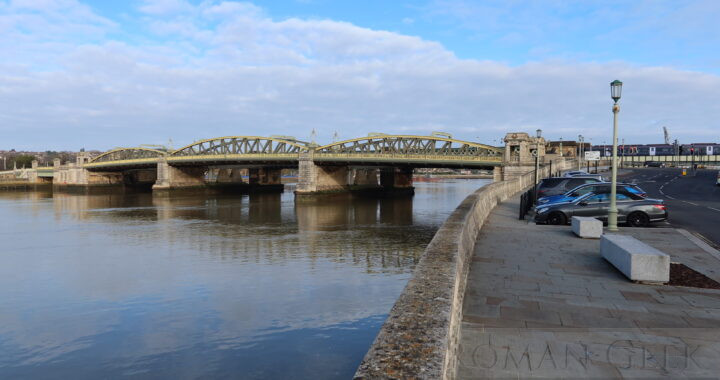
The Road and Rail Bridges across the Medway in front of Rochester Castle.

Roman Conquest of Britannia

  • The Roman Conquest of Britannia, also known as the Claudian Invasion, took place in 43 CE under the Roman Emperor Claudius.
  • Britannia remained a Roman Province for 367 years until 410 CE.

Date and Location

The Reason for the Invasion

The Adversaries

  • The Roman Imperial Legions under Aulius Plautius. The Emperor Claudius arrived later to accept the submission of the British Tribes.
    • versus:
  • The Britons under Caratacus.

The Winner

  • Winner: Claudius and the Roman Empire
  • Loser: Caratacus, Togodumnus and the Britons

The Commanders

Strength of the Forces under Aulus Plautius

Strength of the Forces under Caratacus

  • Unknown, but a sizeable force.

How the Armies were Deployed

  • Suetonius says the Invasion force was divided into three groups and that the second group commanded by Claudius left from Boulogne.
  • It is not known where the other two groups also departed from Boulogne or another port, but one probable location for the landing is Richborough in Kent.

Battle of the Medway

  • The British tried to oppose the invading army by attacking them when they crossed a major river and by guerilla attacks..
  • Battle of the Medway
    • The Roman Legions were opposed by a British force under Caratacus for two days when they tried to cross the River Medway.

Battle of the Thames

  • Battle of the Thames
    • The Legions were again opposed by a British force but succeeded in crossing the river, probably at the site of a ford between Lambeth and Westminster.
    • Togodumnus died shortly after.

The Submission of 11 British Kings

  • In 43 CE Claudius took submission from 11 British Kings accompanied by his War Elephant at nearby Gosbecks Park, Colchester. This was inscribed on the Arch of Claudius in Rome.
  • Britannia was then occupied for 367 years.

Colchester became the first Capital of Britannia

  • The Romans founded Colchester as the first Capital of Britannia, and it also became the first and oldest recorded town in Britain.
  • Colchester had been the Capital of King Cunobelin, known as ‘Britannia Rex’ or ‘King of the Britons’, according to Suetonius. He had united the Trinovantes and Catevallauni and was expanding westwards. London did not then exist.
  • The Romans chose Colchester in all probability because it had been the centre of political power in Britain under King Cunobelin, since he had controlled several Roman Client Kingdoms in Britannia.
  • However, after Boudicca's Revolt in 60-61 CE, the Capital was moved permanently to London (Londinium).

Governors of Britannia

Early Resistance

  • Between 43-51 CE, Caratacus, another ‘King of the Britons’, then led a resistance to the Roman Occupation for eight years until he was defeated, captured and sent to Rome.
  • In 60-61 CE Boudicca's Revolt almost succeeded in achieving independence until her armies were defeated at the Battle of Watling Street.

Timeline of the Province of Britannia

The Outcome

  • The Invasion led to the occupation of Britannia for 367 years, from 43 to c.410 CE.

Sources


Battle of the Medway (possible location at Strood opposite Rochester Castle)

Colossus of Rhodes

  • The Colossus of Rhodes was a Giant Statue of the God Helios that stood beside the harbour entrance of the city of Rhodes, in a similar manner to how the Statue of Liberty stands today at the entrance to New York Harbour in the USA.
  • It was 98 ft (30m) tall and considered to be one of the Seven Wonders of the Ancient World. The statue no longer exists.

Description

  • Construction was started in 292 BCE and it was completed in 280 BCE to celebrate Rhodes’ victory over the King of Cyprus.
  • It was destroyed by an earthquake in 226 BCE. The statue bent at the knees and fell over. The remains appear to have stayed on the ground for the next 800 years.
  • Many Roman historians visited and described the fallen statue, including Pliny the Elder and Strabo. It may have been part of the Roman Grand Tour.

Structure

  • Antigonus I Monophthalmus had besieged Rhodes unsuccessfully. After the Siege, he left all his Siege engines and equipment behind.
  • The Rhodians sold much of it and with the money decided to build the statue, using the Bronze and Iron that had been left behind.
  • The statue was built on a stone plinth, with bronze plates on the outside, infilled with stone.


Rhodes Old Harbour

Aquae Cutiliae

  • Aquae Cutiliae is a Spring in Italy which was considered to have healing powers by the Ancient Romans.
  • Two ailing Roman Emperors died here, Vespasian in 79 CE and his son Titus in 81 CE.

 Location

  • It is located near Cittaducale, 9 miles from Rieti, and 43 miles (69km) northeast of Rome.


Cittaducale

Mausoleum of Mausolus at Halicarnassus

History

  • Halicarnassus was the Ancient name for Bodrum.
  • It was built in 353-350 BCE for Mausolus, who was a Persian Governor, and his wife.
  • It was an elaborate Tomb above ground, with four Panels containing carved Reliefs.
  • On top of its pyramidal roof was a giant Quadriga, a chariot drawn by four horses.
  • The Mausoleum remained intact until at least the 10th century CE.

The Site

  • Ruins can be seen but with nothing left standing.


Ruins of the Mausoleum of Mausolus, Halicarnassus, Turkey

Saint Servatius Bridge, Maastricht

Maastricht

Maastricht: Birthplace of the European Union and the Euro

Overview

Maastricht is a city on the river Meuse and is the capital of the Province of Limburg in the Netherlands. It became famous as the location of the signing of the Maastricht Treaty in 1992, which is the Foundation Treaty of the European Union (EU) and laid the basis for the Euro Currency. The old town centre is mostly pedestrianised, has a busy cultural scene and features a European atmosphere, with residents speaking German, French and Dutch.

History

Maastricht was founded around 50 BCE as a Roman Castrum called Trajectum ad Mosam, where the Via Belgica crossed the river Meuse on a bridge. Excavations have revealed the remains of the bridge, road, baths, granary, houses and the walls of the Castrum, however no ruins are visible, except in the cellar of the Derlon Hotel. Items from the excavation are on display in the Public Library. Maastricht thrived during the medieval period, building the St. Servatius cathedral and city walls which still stand in places. Due to its strategic position crossing the Meuse, it was constantly besieged during wars, leading to the construction of an extensive underground tunnel system known as The Casemates.

Maastricht Walking Tour

  • Your geolocation will appear as a blue icon that moves on the map as you walk.
  • You may start anywhere on the map and just follow the blue line to the next point of interest.

Things to Do and Places to Visit in Maastricht

1. Saint Servatius Bridge
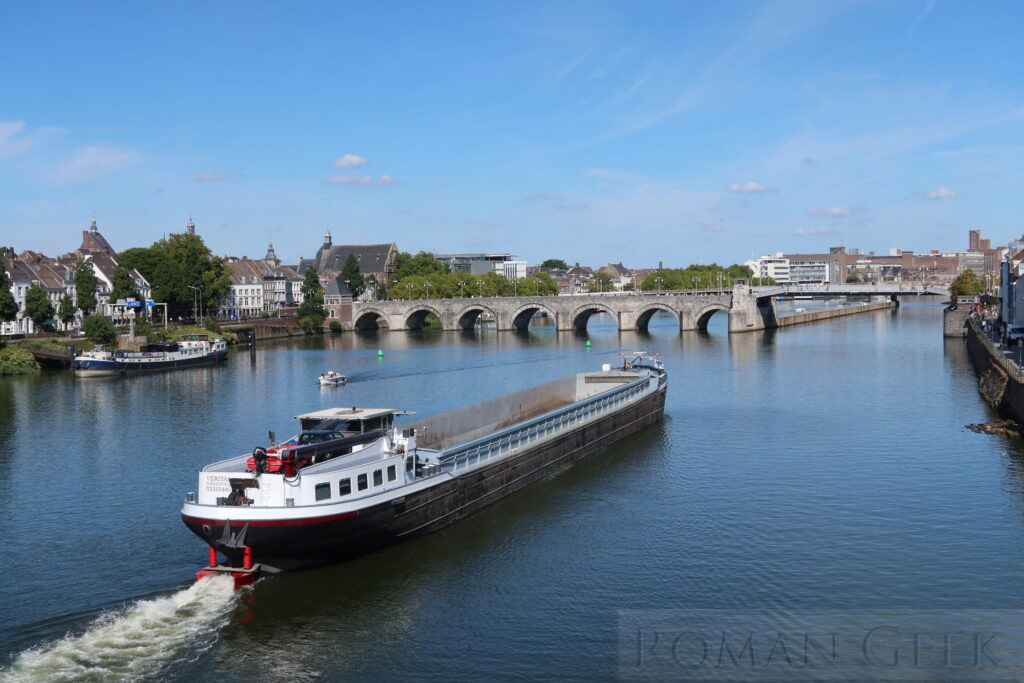
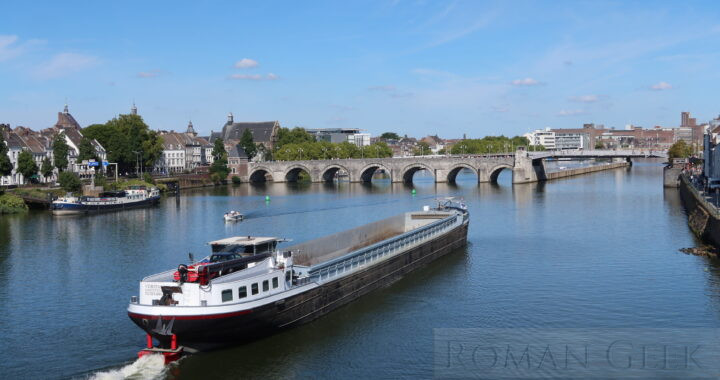
Saint Servatius Bridge, Maastricht

Saint Servatius Bridge, Maastricht

Description: Built over 700 years ago, between 1280-1298, the Saint Servatius Bridge (Sint Servaasbrug) is an arched stone bridge for pedestrians and cyclists only, and is named after the first Bishop of Maastricht, St. Servatius. The stone bridge has seven arches spanning 525 feet (160m) and a separate steel drawbridge spans the remaining 178 feet (54m), and connects central Maastricht with the Wyck district. Traffic congestion was first removed during the 1930’s, by the construction of the Wilhelmina Bridge 1,000 feet (300m) downstream, and then again in 1968 by the John F Kennedy Road Bridge..

Historical Insight: A wooden Roman Bridge was built in c.50 CE and carried the Via Belgica connecting the English Channel and Britannia with the Legions on the Rhine. It was the only crossing on the lower Meuse. However, disaster struck in 1275, when the wooden bridge collapsed under the weight of a procession, drowning 400 people. In 1280 CE the stone arched St. Servatius Bridge was re-built a little to the north of the old Roman bridge, whose position is now marked by a statue. Today, the bridge has been completely renovated using concrete, but covered using the original stones.

2. Meuse River Trips

Description: River boats depart from the Maaspromenade, located between the St. Servatius Bridge and the Wilhelmina Bridge. The standard sightseeing cruise has a duration of 50 minutes. There is a historic tour lasting 2 hours which passes through 3 locks and a historic tunnel. There is a scenic 4 Locks Voyage which takes 4 hours (not always available if locks are closed for maintenance). There is also a day trip to the Belgian city of Liege lasting 7.5 hours.

3. City Hall

Description: Located in Markt Square, the City Hall was completed in 1664 by Peter Post in the Dutch Baroque style during the Dutch Golden Age. In 1684, the building was topped by an 82 foot (25m) high octagonal bell tower containing a Carillon holding 49 bells.

Tip: The Carillon is still played today for special events such as Andre Rieu concerts and New Year’s Eve. The Carillon contains a mechanism that allows it to be played automatically. When Peter the Great, Tsar of Russia (1721-1725) visited Maastricht, he was so impressed, he built an exact copy of the tower at the monastery of Trinity Lavra St. Sergius, near Moscow.

4. Bookstore Dominicanen

Description: Located in the chancel of a former 14th century Dominican church, this unique bookshop not only sells books and music but is also a cafe. It regularly hosts debates, lectures, musical performances and exhibitions.

5. Vritjhof Theatre

Description: The Generalaashuis (The General’s House) is a Neo-Classical palace constructed in 1804 for a wealthy merchant, which was later used as Police station, public library and museum. However, after renovation in 1992, it became The Vrijthof Theatre with two halls, one holding 900 spectators and the other 110. In 2018 it underwent further significant acoustic renovation, to optimise the venue for orchestral and music performances.

6. Vrijthof Square

Description: The Square is unusual in that it has been in continual use since the Roman period. It holds a total of 38 national monuments, is surrounded by cafe terraces, restaurants and hotels, and holds multiple events all year round, such as a funfair in May. Uniquely in the Netherlands, there are two churches side by side in the same square, the Parish church of St. Johns and the Basilica of St. Servatius. This came about due to the volume of pilgrims, including the sick, visiting the tomb of St. Servatius, and the secular clergy felt the need by the 12th century for a separate parish church.

Artworks: The square holds various artworks. A reconstructed 13th century Liege Perron, a medieval orb shaped like a pine cone with a cross, that symbolised freedom, autonomy and justice. Two artworks in the square are dedicated to the Limburg Carnival, the fountain ‘Hawt uuch vas’ (Hold each other) surrounded by Carnival performers, and the ‘t Zaat Herremenieke (the Tipsy Band), depicting musicians playing wind instruments. A brass plaque commemorates the liberation of Maastricht on 14 September 1944 by the US Army Old Hickory Division. A bandstand is positioned in the centre of the square.

Tip: In July and August, Andre Rieu, the Dutch violinist and conductor who was born in Maastricht, performs traditional summer evening concerts here with his Johann Strauss Orchestra, transforming the square into a romantic open-air concert hall for 10,000 people.

7. Basilica of St. Servatius

Description: The Basilica is a minor basilica and not a cathedral. Built in 1039 CE in the Romanesque style, it is located over the grave of St. Servatius, the Bishop of Tongeren, who died in Maastricht in 384 CE. The grave can be visited in the crypt, and has attracted thousands of pilgrims. Since the 14th century, every seven years, a Pilgrimage of the Relics was organised in conjunction with Aachen cathedral and Kornelimunster Abbey, bringing many more pilgrims. The event was suspended in 1632, but revived again in the 19th century, last occurring in 2018.

Treasury: The Treasury of the Basilica of St. Servatius is now a museum of religious art and artefacts, which is accessed inside the Basilica. It holds a very rare 9th century silver Reliquary in the shape of a Triumphal arch and the Bust of St. Servatius (1580) made of precious metal and gemstones. The Emergency Chest, which holds the relics of several other bishops, is carried around the town every seven years during the Pilgrimage of the Relics, which ends in Vrijthof square.

8. St. Jan’s Church

Description: St. John the Baptist church was founded in 1200 and built in the Meuse Gothic Style during the 13th century. It changed to a Protestant church in 1633 when the Dutch Reformed Church became the owners.

Tip: The 15th century tower can be climbed in the summer and has panoramic views over Maastricht.

9. Vritjhof Museum

Description: The building is also known as the ‘Spanish Government’, one of the oldest houses in Maastricht. Since 2019 it is now exclusively a photography museum. The building was originally an ecclesiastical building for one of the Canons of the Basilica of St. Servatius.

Tip: Several first floor Gothic windows and medallions on a colonnade frieze display either portraits of Charles V, Holy Roman Emperor and King of Spain, or his motto ‘Plus ultra’. This is probably the origin of the building’s name.

10. Basilica of our Lady
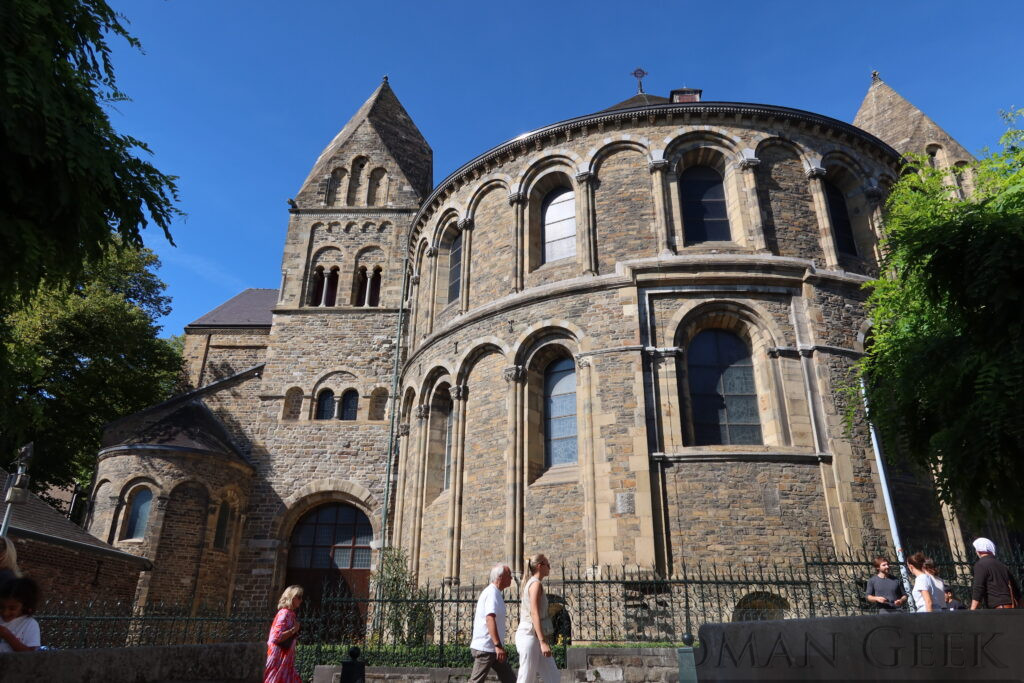
Basilica of our Lady, Maastricht

Basilica of our Lady, Maastricht

Description:  Built in the Romanesque style during the 11th and 12th centuries, the Basilica of Our Lady of the Assumption is a Roman Catholic parish church, thought to have been built over a Roman Temple dedicated to Jupiter. It is famous for its sacred wooden statue of the Virgin Mary, also known as Our Lady, Star of the Sea, which is visited by hundreds of pilgrims each day. Construction of the imposing Westwork (monumental west facing entrance) started after 1000 CE. The Treasury contains various reliquary boxes, cases and busts. It is part of the Mosan group of churches, centred around the Meuse, who share monumental Westworks and pseudo-transepts.

Star of the Sea chapel and the Cloisters: For many, the main attraction of the Basilica is the 15th century wooden statue of Our Lady, Star of the Sea, located in the Star of the Sea chapel. Twice a year it is carried around Maastricht in a religious procession. The current cloisters enclose a garden and are accessed through the church. They were built in the late Gothic style. Surviving Romanesque capitals can be viewed in the Bonnefantenmuseum in Maastricht.

Historical Insight: By 1100, the church was run by a college of 20 canons appointed by the prince-bishop of Liege, with the provosts also chosen by Liege cathedral. During the Middle Ages, this produced a strong rivalry with the Basilica of Saint Servatius, who had strong ties with the Emperors of the Holy Roman Empire and Aachen cathedral. Despite this, ever since the 14th century, every seven years, the Pilgrimage of the Relics has been organised in conjunction with the Basilica of Saint Servatius, along with Aachen cathedral and Kornelimunster Abbey. In 1794, a major rupture occurred when Napoleon incorporated Maastricht into the French First Republic, and dissolved all the churches in 1798. The Basilica lost its 33 altars and the gold and silver collection in the Treasury was melted down to pay for war taxes. The Desecration continued until 1837.

Restoration: Between 1887-1917 the church was restored to its present condition by the Dutch architect Pierre Cuypers. Pope Pius XI elevated the church to a minor Basilica in 1933. The large pipe organ dates from 1652 and was built by Andre Severin.

11. Helpoort City Gate and Fortress Museum

Description:

12. Natural History Museum

Description:

13. Stadts Park

Description:

14. Bosch Brewery Museum

Description:

15. Centre Ceramique Museum

Description: The museum holds a Cache of Eburones coins found near Maastricht

16. Bonnefanten Museum

Description:

Nearby Attractions:

16. North Cave Underground Tunnels

Description:

17. St. Peter’s Fort

Description:


Travel Tips

  • Best time to visit: Spring and autumn for mild weather and fewer tourists.
  • Photography hotspots: Vrijtof Square, St. Servatius Basilica and Bridge, Helpoort city gate.
  • Nearby Attractions: St. Peter’s Fort, North Cave Underground Tunnels.

Visitor FAQ

  • What is Maastricht famous for?
    • The city became famous as the location of the signing of the Maastricht Treaty in 1992, which is the Foundation Treaty of the European Union (EU) and laid the basis for the Euro Currency.
  • Can I see Roman Ruins in Maastricht?
    • No, there are no visible Roman remains.
  • How far is Aachen from Maastricht city centre?
    • Approximately 40 minutes by car.
  • Are there Guided Tours of Maastricht historical sites?
    • Yes, local guides offer walking tours highlighting the cathedral, the Old Town and other venues.
  • Is Trajectum ad Mosam the same as Maastricht?
    • Yes, it was founded by the Romans in 50 BCE, and means the ‘Crossing at the Meuse’.
  • Which Roman Province was Trajectum ad Mosam located in?
  • What was the role of Trajectum ad Mosam (Maastricht) in the Roman Empire?
    • It defended an important crossing point of the Meuse river on the Via Belgica, between Cologne and the English Channel.
  • Which Roman Roads connected Maastricht?

Quick Facts

  • Modern Location: Maastricht, Netherlands
  • Category: Historic city centre, 11th century cathedral, tourist destination
  • Activities: Walking tours, sightseeing, photography
  • Nearby Roman Site: Tongeren
  • Nearest Roman road: Via Belgica
  • Roman Province: Germania Inferior


Nearby Attractions
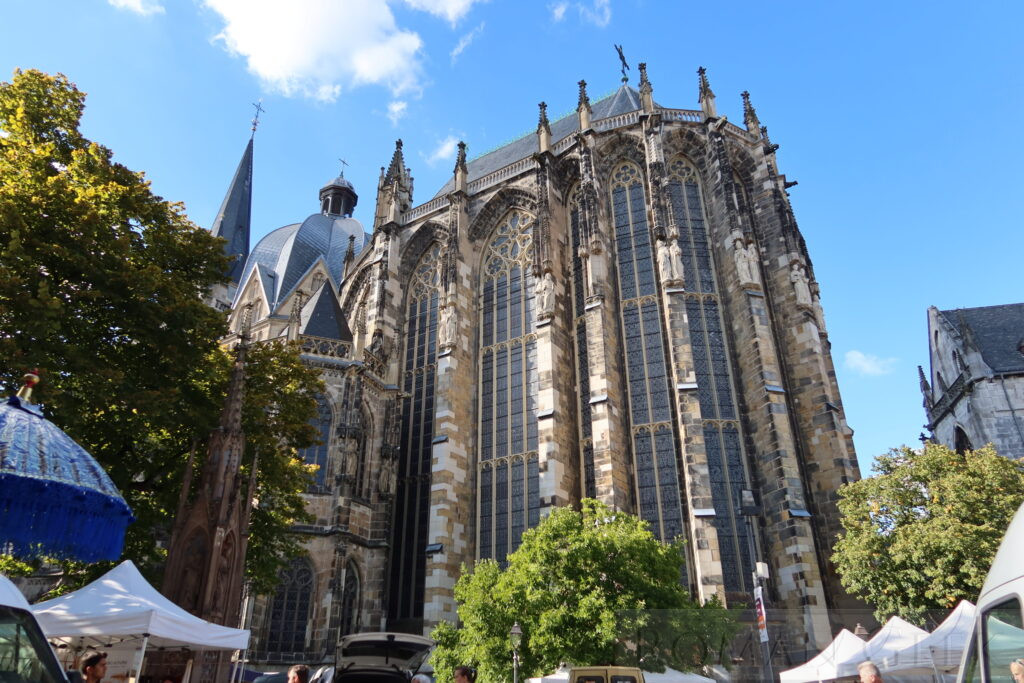
Aachen Cathedral
Aachen Cathedral

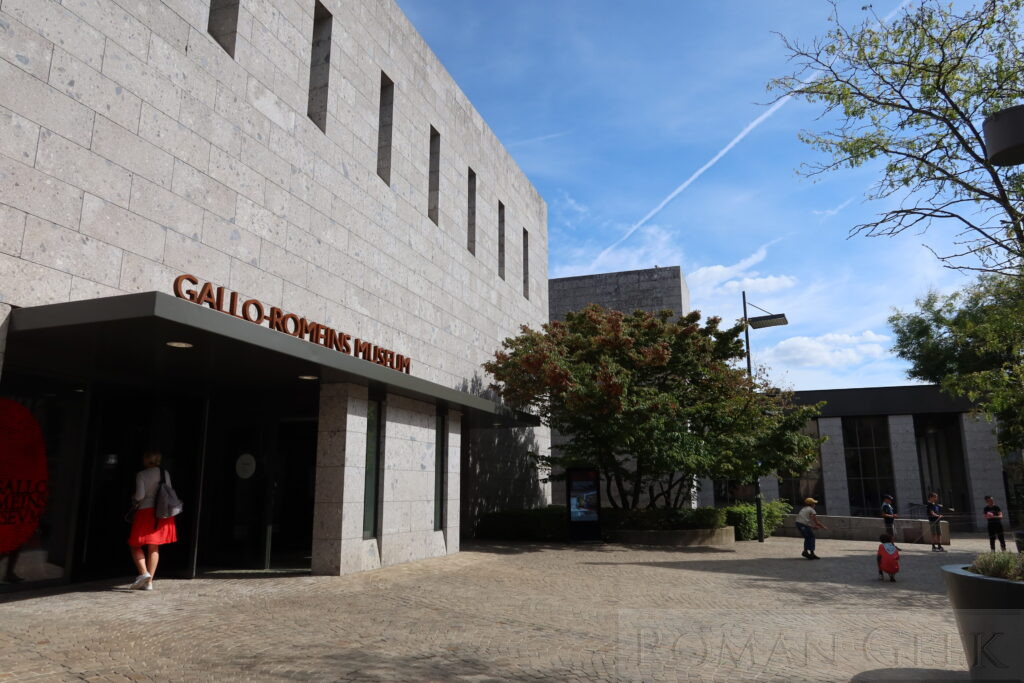
Gallo-Roman Museum Tongeren, Belgium

Gallo-Roman Museum Tongeren, Belgium
Chateau d'If, Marseille

Marseille

  • Marseille is a port city, the second largest city in France, located on the Mediterranean coast near the Rhone delta in the Provences-Alpes-Cote d’Azur Region.
  • It was founded as a Greek Colony in 600 BCE, known to the Greeks and to the Romans as ‘Massilia’, and was in the Province of Gallia Narbonensis.

History

  • Founded in 600 BCE, Marseille was a major trading hub for Goods descending the Rhone to reach the Mediterranean and vice versa. After the Second Punic War (218-201 BCE), Marseille preserved its commercial empire and remained independent until 49 BCE.
  • It was the site of the Siege of Massilia by Julius Caesar in 49 BCE during the Great Roman Civil War (49-45 BCE).
  • After 49 BCE, despite losing its political independence, Marseille remained a powerful commercial trading hub long after the Fall of the Western Roman Empire in 476 CE.

Verres

Museums

  • Museum of the Roman Docks, Place Vivaux, Marseille.
    • This museum is permanently closed until further notice.
    • The contents from the excavation of 20 Roman shipwrecks found in the harbour of Marseille are in the Museum of the Roman Docks.

Roman Roads

Chateau d’If

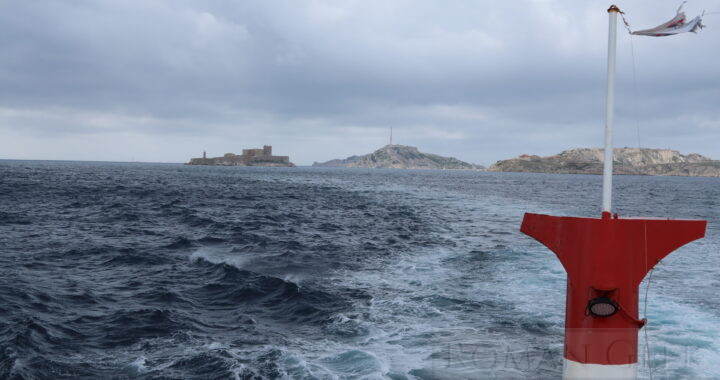
  • The island of If lies opposite the old port of Marseille and houses the Chateau d’If. Completed in 1529, it acted as a prison during its first 400 years.
  • Alexandre Dumas made the castle famous in his novel, The Count of Monte Cristo, where his hero, Edmond Dantes, is wrongly imprisoned for 14 years. He escapes, finds a hidden treasure on the island of Montecristo, and returns to take his revenge on those who betrayed him.


Photo and map: Chateau d’If, Marseille

Corryvreckan

  • The Corryvreckan is one of the world’s largest whirlpools, located between the Scottish islands of Scarba and Jura. At high tide it’s roar can be heard up to 10 miles (16km) away.

Hazard to Shipping

  • The Admiralty ‘West Coast of Scotland Guide’, warns sailors not to attempt to cross the passage without local knowledge.
  • The Tidal Race between the islands in the Corryvreckan channel reaches over 8 knots, and is made more dangerous by an underwater pinnacle of rock which produces the whirlpool.

Mythology

  • Cailleach Bheur, the Scottish Goddess of Winter, used the Corryvreckan to wash her tartan coat, once cleaned, the coat turned white, and became the blanket of snow that signalled Winter had arrived.
  • St. Adomnan of Iona (c.628-704 ) CE Abbot of Iona, described the Corryvreckan as the Charybdis Brecani.


The Corryvreckan