Nile

  • The Nile is the longest river in Africa and the World, at 4,160 miles long (6,670 km).
  • It consists of two rivers, the Blue Nile whose source is in Ethiopia and the White Nile, whose source is Lake Victoria in Uganda.

Origin of the Name

  • The word Nile is derived from the Greek word ‘Neilos’ meaning ‘valley’.
  • However, the Ancient Egyptians called the river ‘Ar’ or ‘Aur’ meaning ‘Black’, because the sediment left after the Flood was black.
  • It also had an alternative name, the Greek letter ‘Delta’, so named after the shape of the Nile Delta.

The Nile’s length compared

  • The Nile is the longest river in Africa, and in the World. It is 4,160 miles long (6,670 km). The second longest river is the Amazon at 4,000 miles long (6,437 km). The third longest is the river Yangtze at 3,917 miles (6,300 km). The Fourth longest river is the Mississippi at 3,902 miles (5,275 km).
  • All these rivers have been measured as a river system which includes their tributaries bearing different names.

Number of Countries on the Nile

  • 10 countries:
    • Egypt, Sudan, Ethiopia, Eritrea, Kenya, Burundi, Rwanda, Uganda, Congo, and Tanzania.

Nile Delta

  • The Nile flows into the Nile Delta where it split into seven branches. Only two exist today.
  • The Nile Delta is the world’s largest river Delta. It is a flooded savanna located down river from Cairo, where the Nile spreads out and drains into the Mediterranean Sea.
  • The Delta stretches 150 miles (240 km) from Alexandria to Port Said. In Ancient Egypt, this was the most fertile area for agriculture and the most heavily fortified, with every river mouth protected by forts.

Qena Bend

Sources of the Nile

  • The Nile has three constituent rivers and sources:
    1. The Atbara River whose source is in Ethiopia.
    2. The Blue Nile whose source is Lake Tana in Ethiopia.
    3. The White Nile whose source is Lake Victoria in Uganda.

The Constituent Rivers

  • The Nile consists of three rivers, which then unite and flow into the Mediterranean through the Nile Delta:
    • The Atbara river:
      • flows from Lake Tana in Ethiopia, joining the Nile at the town of Atbarah in the Sudan.
    • The Blue Nile:
    • The White Nile:
      • flows from Lake Victoria, Uganda, through the South Sudan, joining the Blue Nile at Khartoum in the Sudan.
    • Lake Victoria
      • Two Rivers flow into Lake Victoria, the Kagera and the Rubuvu, one of which must be considered the true source of the Nile.
      • The Kagera River:
        • It flows from Lake Rweru in Burundi, then between Rwanda and Burundi, Rwanda and Tanzania, to join with the river Rubuvu. It then flows between Tanzania and Uganda, and into Lake Victoria.
      • The Yellow Nile Wadi Howar:
        • This was a fourth Tributary of the Nile that ran from the Ennedi Region in Chad to the Nile above the Qena Bend.
        • It dried up 4,500 years ago and became a chain of Oases and lakes, known as Wadi Howar.
        • Camel Caravans used this riverbed, known as the ‘Way of the Forty’ from Kobbei in Darfur to the Nile, bypassing the swamps of the Sudd.

Annual Rise of the Nile

  • The Nile rose from June until October.
  • Lowest level: June
  • Highest level: October, when two thirds of the Nile waters are provided by the Blue Nile.
  • A Nilometer, consisting of a well with markings, indicated the height of the Nile and measured the annual rise and ebb of the Nile.
  • Pliny the Elder said that the annual rise of the Nile should average 24 feet. More would cause widespread flooding, less would cause a drought.
  • Records were kept from the time of the Pharaohs. Measuring the Nile enabled the Egyptian priests to announce the date of the first Nile Flood and the date of its maximum height. Taxation on agriculture was based on predicting how high the Nile would flood. On average, every fifth year, it would either be too excessive and destroy crops, or too low, and lead to drought. As it never rained in Egypt, everything depended on the Annual Flood of the Nile.
  • The waters of the Nile first rose as early as the beginning of June and continued rising until September when the level stabilised for two to three weeks. The level rose once more during October, reaching its highest level, before declining to its lowest level, in June.
  • The height of the Nile was measured by a Nilometer.
  • The annual Rise of the Nile was preceded by the Heliacal Rising of Sirius.

Nile Current

  • At Low water (December to June) the Nile flows at approximately one knot.
  • At High water (the peak is September) the Nile flows at approximately three knots.

The cause of the Annual Rise of the Nile

  • The Annual Rise of the Nile is caused by rainfall in Ethiopia. 80% of the Ethiopian rivers drain into the Blue Nile.
  • Light Rainfall starts between February and April.
  • The Southwest Monsoon brings heavy rainfall between mid June and mid September.
  • If there is little rainfall in Ethiopia, there is the risk of drought in the Sudan and Egypt.

Cataracts of the Nile

The Sudd

  • The Sudd is an area of swampland forming an inland delta on the White Nile in south Sudan, before the White Nile joins the Blue Nile at Khartoum. The Sudd covers an area 500 miles north to south, and 200 miles east to west. The amount of water in the Sudd depends on the outflow from Lake Victoria.
  • The swamp presents a barrier to travellers, along with the malaria bearing mosquitoes that breed in it. It was found to be impenetrable by early explorers attempting to find the source of the Nile.

Navigation of the Nile

  • The Nile is navigable in Egypt up to the Cataracts of the Nile on its border with the Sudan. After the Cataracts, the Nile is navigable to Khartoum in the Sudan, where it divides into the Blue Nile and the White Nile.
  • The Blue Nile is navigable from Khartoum to the Border with Ethiopia. Within Ethiopia, the Blue Nile passes from its Source at Lake Tana, through a series of Rapids and deep canyons making it unnavigable.
  • Navigation on the White Nile was blocked in the Sudan by a huge swamp called the Sudd. Today, the White Nile has been made navigable by a canal through the Sudd, and vessels can reach as far as Juba in South Sudan, which is close to the Border with Uganda.

Pliny’s description of Roman Navigation on the Nile

  • Pliny the Elder states that every year Goods were transported from Alexandria, 600 miles (965 km) up the Nile to Coptos, then across the Eastern Desert by caravan using the Coptos to Myos Hormos Roman Road to Myos Hormos and Berenice.
  • Pliny states that it took 12 days to sail the 400 miles (650 km) up the Nile from Alexandria to Coptos.
  • Southbound: brisk winds blow from the north during the summer and autumn, the ‘Etesian gales’, allowing vessels to sail south against the current.
  • Northbound: The current flows from south to north, taking vessels with it down to the Mediterranean, at all times of the year.
  • Elephantine Island was the limit of navigation on the Nile. After this, vessels could not pass the Cataracts of the Nile. According to Pliny the Elder, the Kushites, however, reached Elephantine Island, using collapsible boats, which they carried on their backs to pass the Cataracts.

Roman Expedition to find the source of the Nile

  • Both Seneca and Pliny the Elder were probably referring to the same expedition:
    • 62 CE Seneca records that Nero sent an expedition in this year, of Legionaries to Meroe, Nubia, who then went on to try to discover the source of the Nile.
    • 68 CE Pliny the Elder writes of a similar expedition, but 6 years later.
    • It would appear these expeditions failed to pass through the Sudd.

Ptolemy’s map (c.150 CE) and the Mountains of the Moon

  • Marinus of Tyre recorded that during the first century CE, a Greek Merchant called Diogenes, returning from India, landed near Rhapta on the east coast of Africa. After travelling inland for 25 days, he arrived at two great lakes and the snow covered Mountains of the Moon and described it as the Source of the Nile.
  • Ptolemy the Roman Cartographer c. 150 CE, then placed the Source of the Nile next to the two great lakes in Africa, on his map of the world, referring to the nearby mountain range as the Mountains of the Moon – ‘Lunae Montes’. This mountain range includes Mount Kilimanjaro, the highest mountain in Africa.

Rediscovery of the Source of the Nile (1630-1858 CE)

  • The Source of the Blue Nile was not discovered until the 1630’s by two Portuguese missionaries, Paez and Lobo.
  • The Source of the White Nile was not rediscovered until 1858 by two British Officers, Richard Burton and John Hanning Speke, who arrived in Zanzibar and travelled inland, in almost exactly the same way Diogenes had done nearly 2,000 years earlier.

The reason the Tombs and Pyramids are on the West Bank of the Nile

  • The Ancient Egyptians believed the Annual Rise of the Nile was controlled by the God Hapy.
  • The Nile was seen as the Road from Life to Death and the Afterlife.
  • The Sun was the God Ra who was reborn each day in the East, crossed the Nile, and then died in the West.
  • So, to the East of the Nile represented the source of Birth and Development, and to the West of the Nile represented Death and the Afterlife.
  • This is why all the Tombs and Pyramids are located on the West Bank.

Ancient Egyptian Calendar

  • The Calendar followed the three cycles of the Nile, consisting of 4 months with each month having 30 days.
  • Each month had 3 weeks each consisting of 10 days, the Decan.
  • This gave 360 days, with a 5 day New Year festival added to make up the 365 days in the year.
    1. Akhet: The Inundation season
    2. Peret: The Season of Emergence (Winter)
      • the Retreat of the Nile, which left the rich black silt deposit, and planting the crops could begin. Early January to early May.
    3. Shemu: The Season of the Harvest.
      • Early May to early September
    4. The 5 Epagnomal days:
      • to bring the number of days in the year to 365.

Nile Agriculture

  • Main Crops:
    • Wheat for making bread.
    • Flax for making Linen.
    • Papyrus for making paper.
  • Also:
    • Barley for making Beer.
    • Cotton for making clothing.
    • Melons, Pomegranates, Figs.

Animals of the Egyptian Desert

  • Jackals.
  • Antelopes.
  • Vultures.

Animals of the Nile

  • The Nile Crocodile.
  • White Ibis.
  • Blue Heron.
  • Gazelles.
  • Snakes: 30 species of snakes, half of which are venomous.
  • Fish, mostly eaten as dried fish.
  • Eels.

Animals of the Nile hunted to extinction by the Romans

  • The Desert Lion and the Wild Bull were hunted to extinction under the Romans for the Venatio.
  • The Nile Hippopotamus was hunted to extinction under the Romans.
  • The North African Elephant, which roamed from Carthage to Egypt and down the Red Sea, was also hunted to extinction at the same time. (3,500 Animals died in the Roman Circus, just during the Reign of Augustus, many of which were Elephants)
  • The Black Rhinoceros, which also became extinct under the Romans.

Films set on the Nile


Nile, Egypt

Piacenza

  • Piacenzia is a city on the right bank of the river Po at its confluence with the river Trebbia, 42 miles (69km) southeast of Milan, in the Emilia Romagna Region of northern Italy.
  • It was founded as the Roman city of Placentia in 218 BCE and was located in Italia.

History

  • Placentia was an inland port city that traded with the Adriatic along the river Po.
  • Nearby grew the commercial town of Veleia whose ruins are one of the major archaeological sites in northern Italy.

Roman Ruins

  • Veleia
    • The Archeological site of the city of Veleia is a short distance from Piacenza. It was a flourishing commercial city until the fifth century CE.

Museums

  • Piacenza Civic Museum
    • Palazzo Farnese,  Piazza della Cittadella, 29, 29121, Piacenza.
    • There are 15 rooms dedicated to the Roman Finds of Placentia.

Roman Roads


Piacenza

Persepolis

  • Persepolis was the Capital of the Achaemenid Empire (c.550-330 BCE) and is a UNESCO World Heritage Site.
  • Its Ruins are located 37 miles (60km) northeast of Shiraz in Iran.

Description

  • Persepolis appears to have been used more for ceremonial purposes than as a commercial centre.
  • It was destroyed by fire in 330 BCE during the conquest of Alexander the Great.

The Ruins

  • The Gate of all Nations
  • The Apadana Palace
    • (under which was found the Apadana Gold Hoard consisting of 13 gold coins dating from c.515 BCE)
  • The Throne Hall
  • Palaces
  • Tombs


Persepolis, Iran

Capua

  • Modern Capua is a cathedral city located on the river Volturno, 16 miles (25km) north of Naples, in the Campania Region of southern Italy.
  • However, this was not Roman Capua, but a town known to the Romans as Casilinum. The Remains of Roman Capua are in the nearby town of Santa Maria Capua Vetere.

Roman Sites in modern Capua (Casilinum)

  • Roman Bridge
  • Porta Napoli
    • This medieval Arch was in fact completed in 1240 CE, but is in the style of a Roman Arch.

Santa Maria Capua Vetere

  • Roman Capua is now the modern city of Santa Maria Capua Vetere (Old Capua), a few miles away, which holds the Roman Amphitheatre and other Roman structures.
  • Capua was annexed by the Romans from the Samnites in c. 338 BCE. It became a civitas sine suffragio.
  • The Via Appia (312 BCE) connected Capua with Rome. Spartacus was a Gladiator in Capua Roman Amphitheatre.
  • In 840 CE Roman Capua was razed, leaving only a church, and completely rebuilt in 856 CE as Santa Maria Capua Vetere.

Roman Sites in Santa Maria Capua Vetere

Museums in Santa Maria Capua Vetere

  • Gladiator Museum,
    • Located next to the Roman Amphitheatre.
  • Museo Archeologico dell’ Antica Capua
    • Via Roberto d’Angio, 48 – 81055, Santa Maria Capua Vetere.
    • The museum holds the Finds from Roman Capua.

Roman Roads


Roman Bridge, Capua

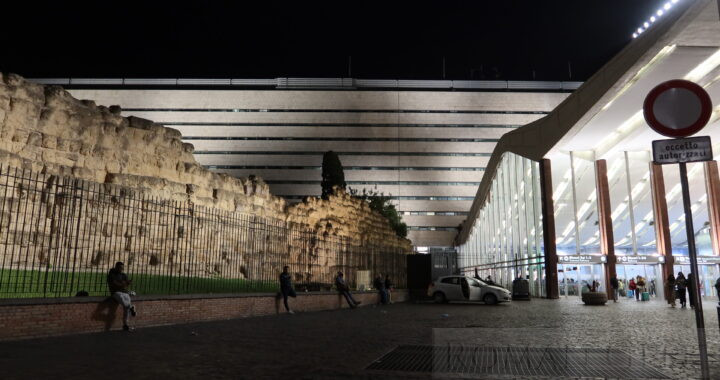
Servian Wall, Rome

Servian Wall

  • The Servian Wall, also known as the Republican Wall, was named after the sixth King of Rome, Servius Tullius, (575-535 BCE). It was the first wall to be built to enclose Rome.
  • After Brennius and the Gauls had sacked an undefended Rome in c.390 BCE, the Romans built the Servian Wall from c.380 onwards.

Getting There

  • Location: Beside the Forecourt of Roma Termini Rail Station, Rome.
  • Nearest Metro Station: Termini, Line A, Line B.

Dimensions

  • Built in stone, the wall was 33 feet (10m) tall, 12 feet (3.5m) wide and 7 miles (11.2km) long.

Gates

  • The Servian Wall had 16 gates.
  • Entry was through the Sceleran gate and exit through the Triumphalis gate.
  • The other gates were the Porta Sanquentus, Porta Quirinalis, Porta Collina, Porta Viminalis, Porta Esquilina, Porta Caelimontana, Portus, Querquetulana, Portus Capena, Portus Naevia, Portus Raudusculana, Portus Lavernalis, Portus Tregemina, Portus Carmentalis.
  • Arch of Dolabella was rebuilt in 10 CE from the Porta Caelimontana.

Agger

  • An Agger or embankment was built behind the Wall to strengthen it.

Hannibal

Aurelian Walls

  • Later, between 270-275 CE, the much longer Aurelian Walls were added, to a greatly expanded Rome. This was to meet the threat of the Germanic Invasions.
  • Two thirds of the Walls are still standing today.


Photo and Map: Servian Wall, Roma Termini Rail Station, Rome

Nilometer

  • The Nilometer was an instrument that measured the height of the Nile in Egypt. It was usually a set of steps cut into the rock beside the Nile.
  • Records were kept of the annual rise and ebb of the Nile which in turn affected how the level of Taxation would be set.

Annual Rise of the Nile

  • Lowest level: June
  • Highest level: October
  • Records were kept from the time of the Pharaohs. Measuring the Nile enabled the Egyptian priests to announce the date of the first Nile Flood and the date of its maximum height. Taxation on agriculture was based on predicting how high the Nile would flood. On average, every fifth year, it would either be too excessive and destroy crops, or too low, and lead to drought. As it never rained in Egypt, everything depended on the Annual Flood of the Nile.
  • The waters of the Nile first rose as early as the beginning of June, and continued rising until September when the level stabilised for two to three weeks. The level rose once more during October, reaching its highest level, before declining to its lowest level, in June.

Mythology

  1. The Egyptians dated the Annual Rise of the Nile from the heliacal rising of Sirius. They based their four seasons around the rise and fall of the Nile. They believed the Nile rose due to the tears Isis wept for her deceased husband Osiris.
  2. The flood waters are due to the annual heavy rains at the sources of the Blue and White Niles, and the melting snow in the Ethiopian Mountains.

Types of Nilometer

  • A portable Nilometer consisting of a stick with heights marked off on it.
    • One was kept in the Serapeum, the Temple of Serapis at Alexandria. It was ritually brought out, and used to measure each rise in the Nile waters, before being returned to the Temple. Constantine I ordered it to be placed to rest in the church of Alexandria.
  • A column in the river with the heights of the water marked off at intervals.
  • A flight of stairs leading down to the Nile with the heights marked off along the stair wall.
  • A channel from the Nile through a conduit that led to a deep cylindrical well within a Temple building.
    • The Temple at Kom Ombo had this type of Nilometer.
    • The Temple at Philae Island had a Nilometer inside the Temple building.

Location of Nilometers along the Nile

  1. Elephantine Island:
    • near Aswan, it was located near the Nile Cataracts on the Frontier of the Kingdom of Kush (Sudan). It was therefore the first place in Egypt where the rise in the Nile could be recorded.
  2. In the Temples:
    • The Temple at Philae Island held a Nilometer.
    • The Temple of Kom Ombo had a Nilometer inside the Temple building.
  3. Cairo:
    • Another Nilometer existed near Cairo, where the Nile rose about a week later than at Elephantine Island.
  4. Alexandria:
    • the portable Nilometer in the Temple of Serapis.
  5. Edfu and Esna.


Elephantine Island, Egypt:

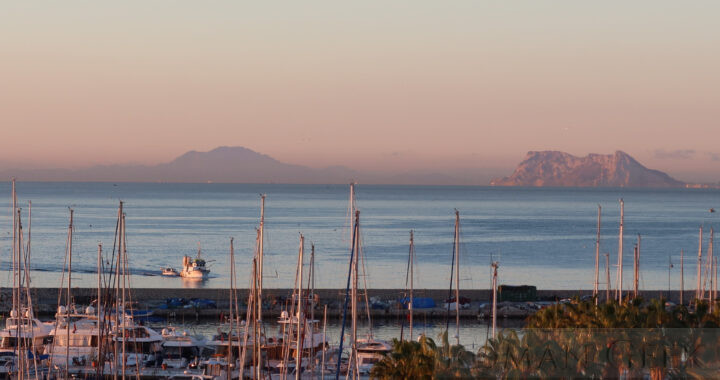
Gibraltar and Jebel Musa from Port of Estepona

Pillars of Hercules

Greek Mythology

  • In Greek Mythology they were created by Hercules whilst travelling to the Garden of Hesperides, as one of the Twelve Labours of Hercules. Instead of climbing the Atlas Mountains, he divided them, and connected the Atlantic with the Mediterranean Sea.

Plato

  • Plato stated that the lost empire of Atlantis was located beyond the Pillars of Hercules.

‘Non Plus Ultra’ and ‘Plus Ultra’

  • The Pillars were said by Renaissance historians to have had a message engraved upon them: ‘Non Plus Ultra’ meaning ‘Nothing further beyond’.
  • The Spanish King Charles V created his coat of arms depicting the Pillars of Hercules with the words ‘Plus Ultra’ meaning ‘Further Beyond’, in defiance of the old myth.
  • The Spanish Dollar also depicted the Pillars of Hercules as two vertical columns.
  • It is thought that the two vertical lines in the the American Dollar sign, originate from the Spanish Dollar, and therefore themselves depict the Pillars of Hercules.

The Temple of Hercules, Cadiz

  • Strabo described two bronze pillars eight cubits high in the Temple and states that they represented the true Pillars of Hercules.
  • This was located on an island adjacent to Cadiz and contained great wealth.
  • The Temple was visited by Hannibal before he invaded Italy, and later by Julius Caesar.
  • In 49 BCE Varro removed its wealth to nearby Cadiz.

Temple of Melqart, Tyre

  • Hercules was Melqart to the Phoenicians and Carthaginians.
  • The Temple of Melqart in Tyre was considered to be one of the most important temples in the ancient world.
  • Herodotus (c.484-c.420 BCE) wrote that he saw two columns in this temple, one made of pure gold and the other of an emerald stone that shone at night.


Strait of Gibraltar

Butrint

  • The Remains of the Greco-Roman city of Butrint is in Butrint National Park.
  • It is a UNESCO World Heritage Site located in the Vlore County of Albania, opposite the Greek island of Corfu.

History

  • It began as a Greek trading colony founded in 8th century BCE.
  • Butrint is built around a hill overlooking the Vivari Channel, which leads from the Straits of Corfu into Lake Butrint.
  • It became Buthrotum in 44 BCE when Julius Caesar made it a Roman colony.
  • In 31 BCE, Augustus made it the capital of the Province of Epirus and rebuilt the city after the Battle of Actium (31 BCE).
  • During the Middle Ages the city was Lost due to flooding caused by an earthquake.
  • Eexcavations started under Mussolini between 1928 until 1943. In 1944, The Albanian Communist Government came to power and continued the excavations under Enver Hoxha.

Butrint National Park

  • The Ruins and their surroundings are part of Butrint National Park.
  • It is located near the modern port of Saranda in Albania, opposite Corfu.
  • The Park can be reached either by Ferry from the Greek island of Corfu, or by Coach from Tirana in Albania.

Ancient Greek Sites

    • The Sanctuary
    • The Temple of Asclepius

Roman Sites

    • Defensive Wall
    • Lion Gate
    • Scaean Gate
    • Theatre
    • Roman Baths with Mosaic
    • The Forum
    • Roman Palace
    • The Nymphaeum
    • The Gymnaseum
    • The Great Basilica
    • There are many other buildings, houses and villas.

Museums

  • Venetian Castle Archaeological Museum
    • Located inside the Venetian Castle in Butrint National Park.
    • The museum holds a Collection of Artefacts, Sculptures and Mosaics and describes the history of Ancient Butrint.


Butrint National Park

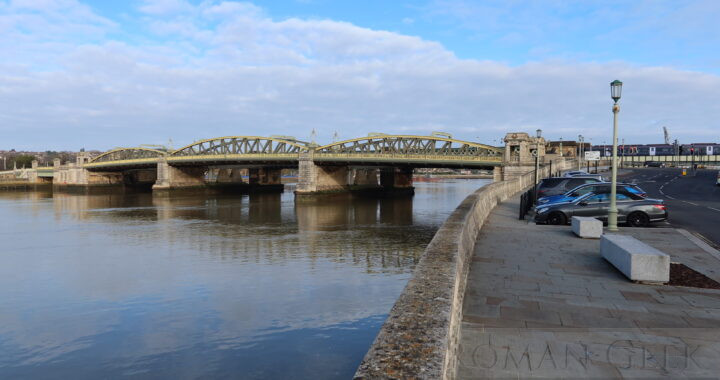
The Road and Rail Bridges across the Medway in front of Rochester Castle.

Roman Conquest of Britannia

  • The Roman Conquest of Britannia, also known as the Claudian Invasion, took place in 43 CE under the Roman Emperor Claudius.
  • Britannia remained a Roman Province for 367 years until 410 CE.

Date and Location

The Reason for the Invasion

The Adversaries

  • The Roman Imperial Legions under Aulius Plautius. The Emperor Claudius arrived later to accept the submission of the British Tribes.
    • versus:
  • The Britons under Caratacus.

The Winner

  • Winner: Claudius and the Roman Empire
  • Loser: Caratacus, Togodumnus and the Britons

The Commanders

Strength of the Forces under Aulus Plautius

Strength of the Forces under Caratacus

  • Unknown, but a sizeable force.

How the Armies were Deployed

  • Suetonius says the Invasion force was divided into three groups and that the second group commanded by Claudius left from Boulogne.
  • It is not known where the other two groups also departed from Boulogne or another port, but one probable location for the landing is Richborough in Kent.

Battle of the Medway

  • The British tried to oppose the invading army by attacking them when they crossed a major river and by guerilla attacks..
  • Battle of the Medway
    • The Roman Legions were opposed by a British force under Caratacus for two days when they tried to cross the River Medway.

Battle of the Thames

  • Battle of the Thames
    • The Legions were again opposed by a British force but succeeded in crossing the river, probably at the site of a ford between Lambeth and Westminster.
    • Togodumnus died shortly after.

The Submission of 11 British Kings

  • In 43 CE Claudius took submission from 11 British Kings accompanied by his War Elephant at nearby Gosbecks Park, Colchester. This was inscribed on the Arch of Claudius in Rome.
  • Britannia was then occupied for 367 years.

Colchester became the first Capital of Britannia

  • The Romans founded Colchester as the first Capital of Britannia, and it also became the first and oldest recorded town in Britain.
  • Colchester had been the Capital of King Cunobelin, known as ‘Britannia Rex’ or ‘King of the Britons’, according to Suetonius. He had united the Trinovantes and Catevallauni and was expanding westwards. London did not then exist.
  • The Romans chose Colchester in all probability because it had been the centre of political power in Britain under King Cunobelin, since he had controlled several Roman Client Kingdoms in Britannia.
  • However, after Boudicca's Revolt in 60-61 CE, the Capital was moved permanently to London (Londinium).

Governors of Britannia

Early Resistance

  • Between 43-51 CE, Caratacus, another ‘King of the Britons’, then led a resistance to the Roman Occupation for eight years until he was defeated, captured and sent to Rome.
  • In 60-61 CE Boudicca's Revolt almost succeeded in achieving independence until her armies were defeated at the Battle of Watling Street.

Timeline of the Province of Britannia

The Outcome

  • The Invasion led to the occupation of Britannia for 367 years, from 43 to c.410 CE.

Sources


Battle of the Medway (possible location at Strood opposite Rochester Castle)