Ephesus

  • Ephesus was an ancient Greek and Roman city whose Ruins lie 3 miles (5km) southwest of Selcuk in Turkey. It holds the largest collection of Roman Ruins in the East and is a UNESCO World Heritage Site.
  • It was acquired by Rome in 129 BCE and became the capital of the Roman Province of Asia under Augustus in 27 BCE.

History

Roman Sites

Ephesus has the largest Collection of Roman Ruins in the East. Only 15% have been excavated.

  • The silted up Harbour.
  • Library of Celsus
    • It once held 12,000 scrolls.
  • Basilica of St. John
  • Temple of Artemis at Ephesus
  • Odeon (150 CE)
  • Theatre
    • This had a seating capacity of 24,000, making it the largest outdoor Theatre in the Ancient World.
  • Temple of Hadrian (c. 140 CE)
  • Temple of Sebastoi
    • also known as the Temple of Domitian.
  • The Tomb or Fountain of Pollio (97 CE)

Museums

  • Ephesus Archaeological Museum
    • Located at Ataturk Mah, Ugur Mumcu Sevgi Yolu No: 26 Selcuk/ Izmir, Turkey.
    • The Museum holds the Finds from Ephesus.

Roman Roads


Ephesus Theatre

Brough-on-Humber

  • Brough-on-Humber, also known as Brough, is a town on the River Humber in the East Riding of Yorkshire.
  • It was a Roman Fort called Petuaria, Capital of the Parisii Tribe, which guarded the river crossing that connected Lincoln with York. The Roman Fort has no visible remains and is an earthwork under the Burrs Playing Field.

Humber Ferry Crossing

Roman Roads

Nearby Sites


Petuaria Roman Fort, Brough on Humber


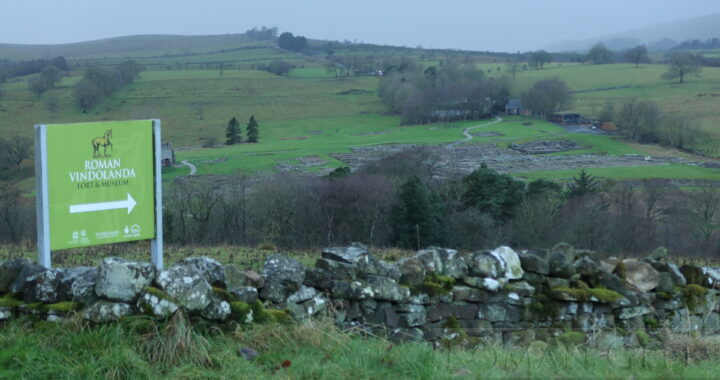
Vindolanda Roman Fort, Stanegate, near Hadrian's Wall

Vindolanda

  • Vindolanda Museum, also known as Chesterholm Museum, was a Roman Fort on the Stanegate, just south of Hadrian's Wall. It holds two reconstructed forts built in 1974, one of stone and the other of wood.
  • It is noted for a Find consisting of wooden writing tablets called the Vindolanda Tablets.

Vindolanda Tablets

  • This is a collection of thousands of wooden wax writing tablets that is now held in the British Museum in London.
  • They each contain letters written in ink describing the life of Roman soldiers in the Fort of Vindolanda and are dated between 85-102 CE.

Roman Site and Roman Army Museum

  • Roman Army Museum.
    • The museum holds Finds from the fort.
    • The Museum holds two reconstructions of the Vindolanda Roman Fort.

Roman Roads


Photo and map: Vindolanda Museum

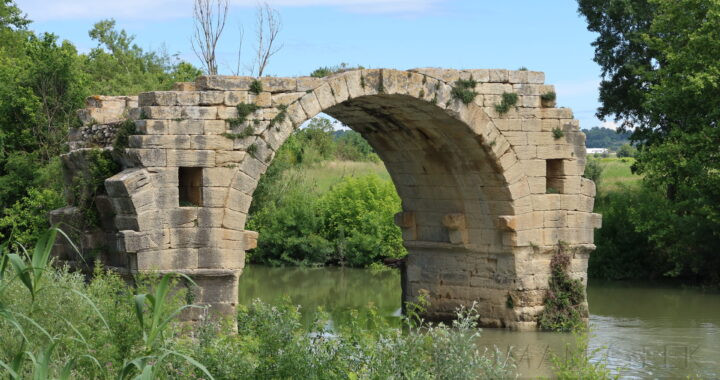
Pont Ambroix Roman Bridge at Ambrussum, Lunel

Lunel

  • Lunel is a town located on the river Vidourle in the Occitanie Region of Southern France.
  • The Roman ruins of Ambrussum lie nearby and there was a Posting station on the Via Domitia which crossed the river Vidourle over the Pont Ambroix. Ambrussum was in the Province of Gallia Narbonensis.

Roman Sites

  • The Ruins of Ambrussum
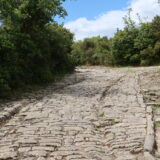
  • Roman road with cart rut marks.
  • Posting Station, with Hotel and Baths and Taverns.
  • The Pont Ambroix
    • A Bridge carrying the Via Domitia over the river Vidourle, but with only one Arch remaining today.

Museums

  • Archeological Site and Museum of Ambrussum
Ambrussum Roman Museum, Lunel

Ambrussum Roman Museum, Lunel

Roman Roads

Roman Road, Ambrussum, Lunel

Roman Road, Ambrussum, Lunel


Roman Bridge at Ambrussum, Lunel

Split

  • Split is a port city built around a perfectly preserved Roman Fortress known as Diocletian's Palace (305 CE) located in the Dalmatia Region of Croatia. It is a Unesco World Heritage Site.
  • It was the Roman town of Aspalathos in the Province of Dalmatia.

History

  • The Roman Fortress was completed in c. 305 CE in time for Diocletian to retire there after he resigned as Emperor.
  • Salona, located five miles (8km) from Split, was the Roman Capital of Dalmatia.

Roman Sites

  • Diocletian's Palace
    • The Outer Walls
    • Th North Gate
    • The West Gate
    • The South Gate
    • The East Gate or Silver Gate
    • The Emperor’s Apartment, along the seafront
    • The Peristyle
    • The Palace Cellars
    • Mausoleum of Diocletian
      • which forms part of the Cathedral of St. Domnius inside the Palace.

Museums

  • Museum of Croatian Archaeological Monuments
    • It is located at Ulica Stjepana Gunjace bb, Split.
    • The Museum is dedicated to Medieval Croatian Finds between the 7th-15th centuries CE.

Roman Roads

Nearby Sites

Transport Hub

  • Today, Split is a transport hub. It is the second most important city in Croatia, after Zagreb.
  • Split Airport:
    • Flights operate from all over Europe, and Air Croatia runs up to five Domestic flights a day between Split and Zagreb.
    • Split Harbour is close to the Town Centre and Diocletian's Palace.
  • Airport Coach:
    • A frequent Coach service operates from Split Airport into Split Coach Terminal, which is adjacent to the Ferry Port and Railway Station.
  • Split Coach Terminal:
    • This has almost hourly coaches to Zagreb and Dubrovnik, with other Coach services operating to many destinations in Europe.
  • Split Ferry Port:
    • This has regular Fast Catamaran Ferries as well as a Car Ferry Service to the Islands such as Hvar. There are larger Ferries operating a Day and a Night crossing to Ancona in Italy during the Summer.
  • Split Railway Station:
    • Located beside the Coach and Ferry Terminal. There are no trains to Dubrovnik.
    • There is a morning Departure to Zagreb and a night train to Zagreb, with various local trains throughout the day.
  • Split Bus Station:
    • Located in the centre of town, the Bus Station has regular local buses to Solin, location of the Roman Ruins of Solina. Local Buses also go to the Medieval harbour town of Trogir.


Diocletian’s Palace, Split

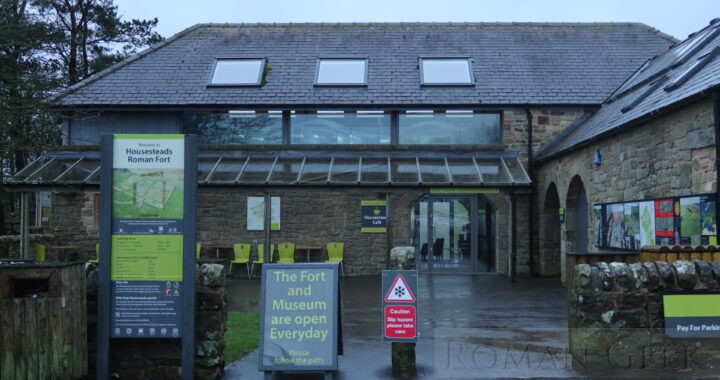
Housesteads Roman Fort

Housesteads

  • Housesteads was a Roman Fort called Vircovicium located on Hadrian's Wall in Britannia.
  • The site is now a museum near Haydon Bridge, Hexham where the Finds are on display to the public.

Roman Site and Museum

  • Housesteads Roman Fort Museum
    • Finds from the site are on display in the museum including Altars, Jewelry, Tools and Weapons.
    • The Base of a Granary.
    • Latrines, in an excellent state of preservation.
    • Visitors can see the Floors and remains of the Buildings.

Roman Roads


Photo and map: Housesteads Roman Fort

Dura Europos

  • Dura Europos was a Roman border city and fortress, known as ‘The Pompeii of the Syrian Desert’, in the Roman Province of Syria.
  • The Ruins are located above the banks of the Euphrates near Salhiye in modern Syria,. It was held by the Romans between 164-257 CE. It defended against the Parthian Empire, along with Nisibis and Amida.

History

  • Dura Europos controlled the river crossing on the Euphrates, where the caravan route passed between Antioch on the Orontes, and Seleucia on the Tigris.
  • Dura Europos was founded by the Seleucid Empire c.300 BCE.
  • 113 BCE Parthian Empire captured Dura Europos.
  • 116-121 CE Trajan captured Dura Europos, but it was later retaken by the Parthians.
  • 164 CE until 256-7 CE Dura Europos became a Roman Border Fortress, garrisoned by the Cohors XX Palmyrenorum, facing the Parthian Empire, along with Nisibis and Amida.
  • It continually changed hands between the Parthian Empire and the Roman Empire.
  • In 256-7 CE it was abandoned after a successful Siege by the Sassanid Empire under Shapur I.
  • During excavations, amongst the parchments found written in Latin and Greek, was a Roman Puzzle, the Sator Square.

The Roman Sites

  • Synagogue and its wall paintings.
  • The House church
  • Mithraeum

Museums

  • Deir ez-Zor Museum
    • Located in Deir ez-Zor, Syria. It holds the Finds from Dura Europas and other sites in Syria.
  • Yale University Art Gallery (YUAG)
    • Yale University, New Haven, Connecticut, USA.
    • The University Museum holds Finds from all continents and all periods of history including from Dura Europos.

Roman Roads

  • Caravan Road to the East


Dura Europos:

Uxellodunum

  • Uxellodunum is an Oppidum (Iron Age Hillfort) that was the capital of the Cadurci Gallic Tribe, located on the river Dordogne near Vayrac in the Lot Department.

The Gallic Wars 51 BCE

The Cadurci

  • Caius Caninius then set off with two Legions to pursue a marauding army of 5,000 under Drapes, the Senonian.
  • Drapes united with Luterius, Leader of the Cadurci, and occupied Uxellodunum (near Veyrac, on the Dordogne) in Gallia Transalpina, in the territory of the Cadurci. This was another hilltop city defended by steep cliffs, like Alesia. Drapes and Caninius fearing a repeat of Alesia (which had insufficient supplies), sent out foraging parties to collect grain from the surrounding countryside, and prepare for a long siege.

The Siege of Uxellodunum

  • Caninius besieged Uxellodunum, but avoided building an encirclement around it, as Caesar had done at Alesia, since he had insufficient Troops. Instead he intercepted and massacred a large foraging party.
  • Fabius then arrived with his Legions, and only then did Caninius finally completed the Circumvallation around the city.
  • When Caesar arrived, he recognised that depriving the city of water from a giant spring at the base of the walls was the only way to force a surrender, as they had sufficient supplies to hold out indefinitely.
  • Consequently he built a series of earthworks and wooden ramps towards the fountain. On it he built a tower to fire down on the defenders as they collected the water. The earthworks also protected the miners who were working from below to divert the stream to the fountain. Despite repeated attempts by the defenders by throwing blazing oil on the structure, it was eventually completed, and the fountain successfully diverted.
  • At this point Uxellodunum submitted.

The Consequence

  • Caesar was aware that the Gauls knew this was his last term as Governor of the Province. He wanted to prevent rebellion flaring up after he had gone. His policy was to treat the Tribes who had submitted and given hostages fairly, to encourage their loyalty. But those Tribes who had opposed him, he punished harshly, as a deterrent to the others.
  • He therefore took the harsh step of cutting off the hands of all the Gallic soldiers from Uxellodunum, but spared their lives, so that their fate be well known.

Bibliography

  • Gallic Wars: Book VIII
    • This Book describes a year in the Gallic Wars (58-51 BCE) conducted by Julius Caesar against the Celtic Tribes in Gaul, which then became a Roman Province for the next 400 years.
    • The Eighth Book of the De Bello Gallico (Commentary on the Gallic Wars) wasn’t written until after the death of Julius Caesar. It was written by his General, Aulus Hirtius, and describes the last year of the War in 51 BCE.


Uxellodunum

Birdoswald

  • Birdoswald was a Roman Fort called Banna located on Hadrian's Wall.
  • The Site is now a Museum run by English Heritage called Birdoswald Roman Fort.

Roman Site and Museum

  • Birdoswald Roman Fort
    • The Site holds reconstructions of the Fort and displays of Artefacts.
    • Visitors can walk around the excavated Remains of the Fort.

Hadrian's Wall

  • Hadrian’s Wall is a 74 mile Roman defensive stone wall with Forts at intervals, running east-west from the Irish Sea at Bowness-on-Solway to the North Sea at WallsendNewcastle.
  • It was built by the Roman Emperor Hadrian between 122-128 CE.

Roman Roads


Birdoswald Roman Fort, Hadrian’s Wall