Trabzon

  • Trabzon, also known as Trapezus and Trebizond in English, is a port city located in the Trabzon Province, part of the Black Sea Region of Turkey.
  • After 66 BCE, it became part of the Roman Client Kingdom of Pontus until 62 CE, when Nero absorbed eastern Pontus into the Province of Cappadocia.

History

  • Silk Road
    • Trabzon was the trade point for Goods from the Caucasus and Persia.
  • Zigana Pass
    • This Pass was controlled historically by Trabzon. The Road through the Pass connected with the interior of Armenia, the interior of Asia Minor and the Euphrates.
  • Classis Pontica
    • Trabzon was the location of a Fleet of the Roman Navy in c.64 CE, called the Classis Pontica.
    • It had 40 ships and 3,000 troops in 66 CE according to Josephus (BJ 2.366-7).

Roman Sites

  • Trabzon Walls
    • The Medieval Walls are built on Roman Walls which run around the old town, along the sides of two ravines.

Museums

  • Trabzon Museum
    • Located at Gazipasa, Zeytinlik Cd. No:7, 61030, Trabzon Merkez, Trabzon
    • The Ground Floor of the Museum is dedicated to Archeology and holds Finds from the Hellenistic, Roman and Byzantine periods.

Roman Roads


Trabzon

Mancetter

  • Mancetter is a village, now a suburb of Atherstone, located on the river Anker in the County of North Warwickshire in England.
  • The village of Mancetta was the site of a Roman Settlement called Manduessedum.

History

  • In c. 50 CE, Mancetter was the location for a Legionary Fortress built to house the Legio XIV Gemina, which was located where Watling Street crossed the river Anker.
  • The settlement of Manduessedum then grew up around the fortress.
  • Queen Boudicca is believed to have been defeated near Manduessedum at the Battle of Watling Street during Boudicca's Revolt.
  • The Ruins of up to 30 Roman Pottery Kilns have been found nearby.

Roman Roads


Mancetter

Classis Pontica

  • The Classis Pontica was the Fleet of the Roman Navy in the Black Sea. Classis means Fleet in Latin.

Description

  • The Pontic Fleet was based at Trabzon (Trapezus), with other bases at Sinope and Amastris on the Black Sea coast of turkey.
  • The Fleet had 40 ships and 3,000 troops in 66 CE, according to the Roman historian  Josephus (BJ 2.366-7).
  • The Provincial fleets were formed of Liburnae.


Tranzon (Trapezus)

Drusus Bridge, Bingen

Bingen

  • Bingen am Rhein is a city on the confluence of the river Nahe with the Rhine, and is where the Rhine enters the Rhine Gorge. It is in the State of Rhineland Palatinate in western Germany.
  • It was founded as the Roman Castra of Bingium to protect the crossing of the Nahe, and was located in the Province of Germania Superior.

History

  • The Navigation of the Rhine:
    • There is a rock barrier at Bingen which historically divided the Rhine into two navigable sections.
    • Until 1834, the river was unnavigable past Bingen without a pilot, and most barges transhipped their cargo by road around the reef to Lorch.
  • Classis Germanica:
    • The Roman Navy in Germany operated two separate fleets on the Rhine, one based above Bingen at Mainz, and the other below Bingen at Cologne.

Roman Sites

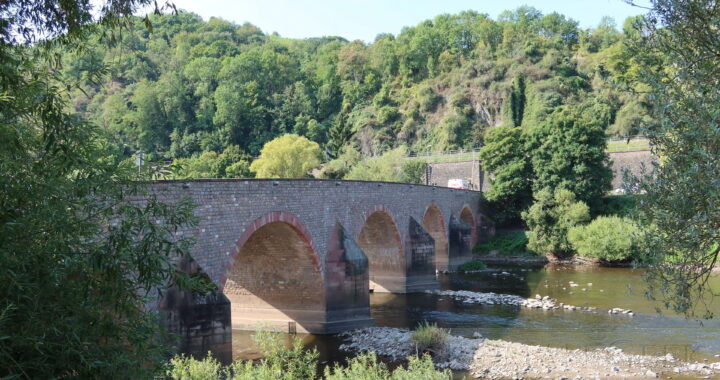
  • Drusus Bridge
    • This is a stone bridge which crosses the Nahe and dates from c. 1,000 CE, despite being rebuilt in 1772 and again in 1945.
    • The original Roman Bridge was built out of wood, then rebuilt in stone in c. 70 CE, which lasted until 891 CE.
    • A small Roman Chapel was built at one end of the bridge, which can be visited today.
  • Roman Villa (Ruins)
    • The Remains of a Roman Villa Rustica can be seen in nearby Weiler bei Bingen in the Binger Forest, about 2 miles (3km) west of Drusus Bridge.

Roman Roads


Drusus Bridge, Bingen

Montelimar Castle

Montelimar

  • Montelimar is a town in the Drome Departement of the Auvergne-Rhone-Alpes Region in southeastern France and is famed for its Montelimar Nougat.
  • The Romans called it Acumum and it was in the Province of Gallia Narbonensis.

Montelimar Castle

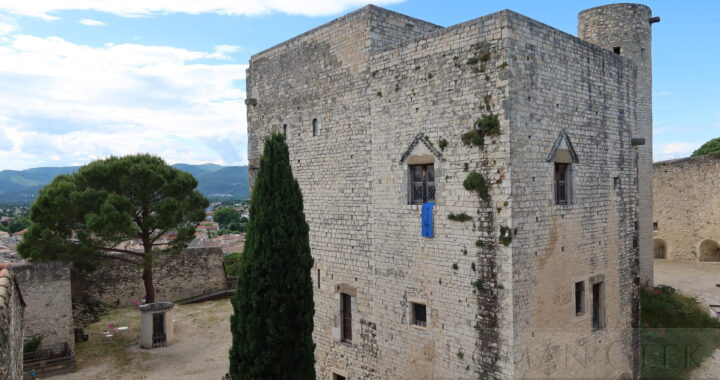
  • Standing on a hill above the town is the Chateau des Adhemar.
  • It is an 11th century Romanesque castle consisting of a fortified curtain wall (which can be walked) around a keep, house and chapel.
Montelimar Castle

Montelimar Castle

Alba-La-Romaine

  • Alba-La-Romaine is a town located 11 miles (18km) west of Montelimar.
  • It was the Gallo-Roman city of Alba Augusta Helviorum, also known as Alba Helviorum, capital of the Helvii Tribe, and was located in the Roman Province of Gallia Narbonensis.
  • Next to the town is the Archeological Site of the Roman city which holds a Roman Theatre, Forum, Basilica, Temples and Macellum (covered market) and nearby there are the ruins of three Temples, a Spa and Baths.
Alba-La-Romaine Roman MuseAI

Alba-La-Romaine Roman MuseAI


Montelimar

Newbury Bridge

Newbury

  • The town of Newbury is located on the river Kennet in Berkshire, and was founded in the late 11th century CE. It is mentioned in the Domesday Book of 1086 CE.
  • A Roman Post Station called Spinae was located here, mentioned in a Roman Document called the Antonine Itinerary (138-161 CE).

History

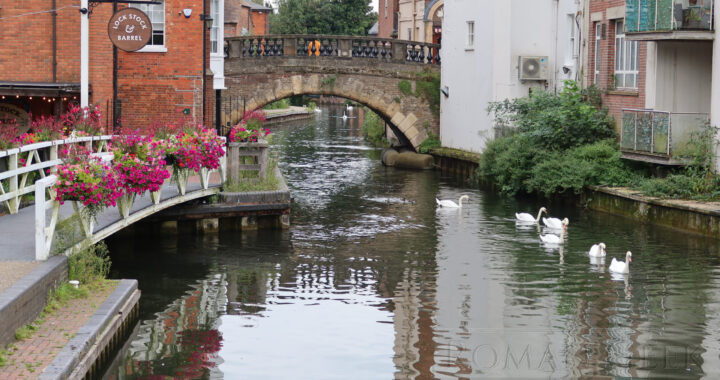
  • Newbury Bridge over the River Kennet was reconstructed in the 14th century CE.
  • The town developed on the wool and cloth trade.

Racecourse

  • Newbury Racecourse was inaugurated in 1905 and the Hennessey (Ladbroke’s since 2017) Gold Cup Steeplechase has been held here since 1960.

Antonine Itinerary


Newbury Bridge

Lichfield

  • Lichfield is a cathedral city located on the river Trent in the County of Staffordshire.
  • The Roman Fort of Letocetum was located in the village of Wall, 2 miles (3km) south of Lichfield, on the junction between Watling Street and Icknield Street.

History

  • There was a Statio or Roman Posting Station, a Mansio (hotel), a Bath house and various other civic buildings.
  • Letocetum went into decline when nearby Lichfield was founded in the 7th century CE.

Roman Site and Museum

  • Letocetum Roman Baths and Museum
    • The Site is managed by the National Trust and holds the Remains of:
      • Roman Bath House
      • Roman Mansio
      • The Museum, which holds Finds excavated from Letocetum.

Roman Roads


Letocetum Roman Baths and Museum, Lichfield

Ravenglass

  • Ravenglass is a Port village which lies on the Estuary of three rivers, the Esk, the Mite and the Irt, in the County of Cumbria.
  • It was the Roman fort and Naval base of Glannoventa, which formed part of the coastal extension of Hadrian's Wall. It is listed in Iter X of the Antonine Itinerary.

Roman Sites

  • Roman Bathhouse

Roman Roads


Ravenglass Roman Bath house

Peterborough

  • Peterborough is a cathedral city located on the river Nene in Cambridgeshire in the East of England Region.
  • The Roman Fort of Durobrivae was located 5 miles (8km) west at Water Newton, which guarded the crossing of the river Nene on Ermine Street.

History

  • Longthorpe, a suburb located 2 miles (3km) west of the town centre, was the site of a Roman Fort built in c. 44 CE to hold a Vexillatio of around 3,000 soldiers.
  • Peterborough exported Roman ceramic pottery known as Nene Valley Ware between the 2nd-4th century CE.
  • Durobrivae is mentioned in the Antonine Itinerary (2nd century CE).
  • A Roman Silver Hoard known as the Water Newton Treasure was found near the Roman Fort of Durobrivae.

Roman Roads

  • Ermine Street
  • Fen Causeway (24 mile or 39 km)
    • Peterborough-Eldernell-March-Denver (Norfolk)


Water Eaton (Durobrivae)

Strasbourg Archeological Museum, France

Strasbourg

  • Strasbourg is a cathedral city on an island in the river Ill which flows into the Rhine, located in the Nord Est Region of northeastern France. It is noted for being the official seat of the European Parliament.
  • It was founded by Drusus the Elder in c.12 BCE as the Roman Frontier Fortress of Argentorate or Argentoratum in the Province of Germania Superior.

Museums

  • 2 Place du Chateau, Strasbourg.
    • The museum holds:
      • The Mausoleum of veteran Marcus Valerius Rufus and his brothers.
      • One segment of the Strasbourg Roman Aqueduct Pipeline.

Strasbourg Cathedral

  • Construction of the Cathedral started in 1015 with a Romanesque style, but was finished in 1439 in the style of Rayonnant Gothic Architecture.
  • It was the world’s tallest building from 1647 to 1874 (227 years).
  • Strasbourg cathedral and Strasbourg Historic Centre are a UNESCO World Heritage Site.
  • Although the Cathedral was constructed later, a Roman Bishop for Strasbourg, Amand, was recorded in 347 CE.
Strasbourg Cathedral

Strasbourg Cathedral

History

  • Because Argentorate was a Frontier city it was burnt several times in 70 CE, 97 CE, 235 CE and 355 CE.
  • Two Roman Legions are known to have been based at Argentoratum:
  • The Alemanni
    • In 357 CE, it was the location of the Battle of Argentoratum, where Julian defeated the Alemanni.
    • In 366 CE, the Rhine froze and the Alemanni invaded again.
    • By the beginning of the 5th century CE, the Alemanni had overrun Alsace.
  • Strasbourg Roman Aqueduct had an unusual design utilising two buried pipelines created by inserting terracotta pipe segments together. One segment is in the Strasbourg Archeological Museum.

Roman Roads

  • Military Road
    • A Roman Road ran along the west bank of the Rhine from the North Sea to Switzerland.


Strasbourg Archeological Museum