Dover Roman Lighthouse

Dover Roman Lighthouse

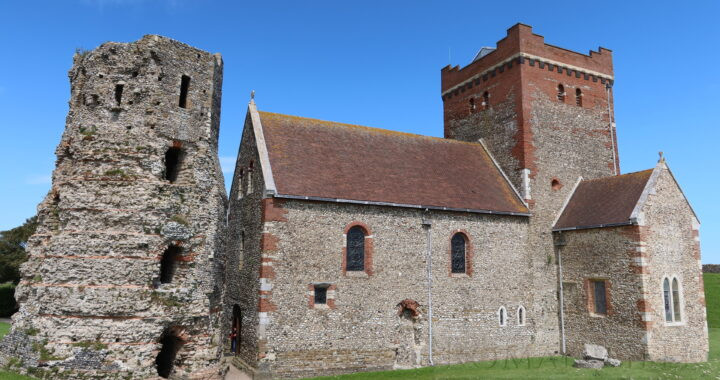
  • The Dover Roman Lighthouse or ‘Pharos’ is a well preserved octagonal building on five floors and is located next to Dover Castle in Dover, Kent in the South East Region of England.
  • It was visible to shipping navigating the Strait of Dover.

History

  • The Lighthouse was built shortly after the Roman Conquest of Britannia in 43 CE.
  • It was one of a pair of Roman Lighthouses, the other being on the other side of the Dour valley, on the western heights.
  • Both Lighthouses were 80 feet high (24m).
  • They guarded the ‘Fretum Gallicum’ (Straits of Dover).
  • They faced Boulogne Roman Lighthouse 33 miles away, with which they were intervisible.

Other Roman Lighthouses


Photo and map: Dover Roman Lighthouse
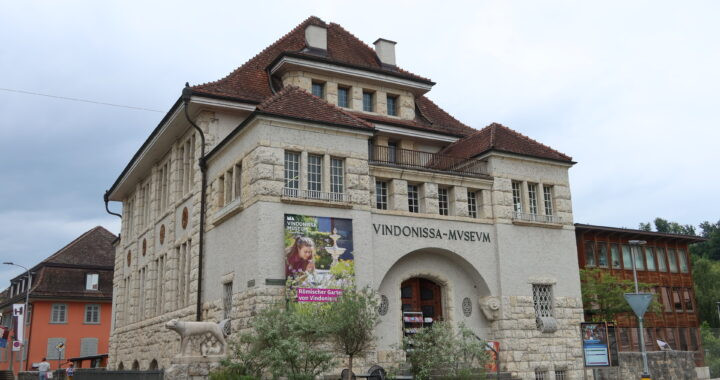
Vindonissa Roman Museum, Windisch

Windisch

  • Windisch is a city in Switzerland which was the Roman Legionary Fortress of Vindonissa.
  • The Vindonissa Museum in Brugg, Windisch, holds artefacts from the site and the part of amphitheatre and aqueduct are still standing.

The Roman Ruins

  • Roman Amphitheatre
  • Roman Aqueduct

Legions

Museum


Vindonissa Roman Museum, Windisch

Guernsey

Guernsey

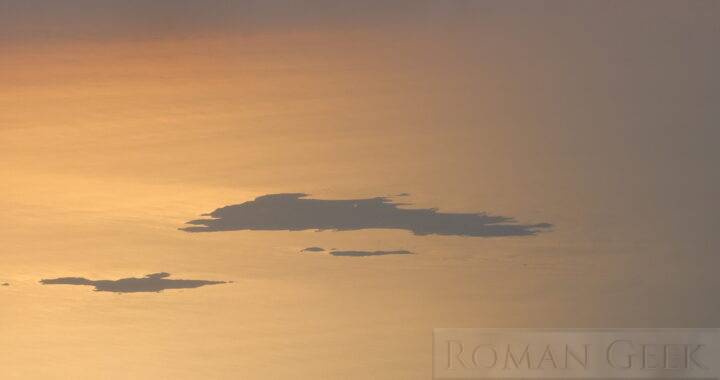
  • Guernsey is one of the Channel Islands located off the coast of northern France.
  • Each island is self-governing and passes its own legislation, however, they not Sovereign States, being owned by the Crown with the title British Crown Dependency.

History

  • The Islands were occupied by the Romans between 60-c.408 CE, and were known as the ‘Insulae Lenuri’ while Guernsey was known as ‘Sarnia’.

Roman Sites

  • The Guernsey Roman Shipwreck, the ‘Asterix’ was found in 1984, and dates to c.280 CE.
  • A Roman Waterfront Site was also discovered at La Plaiderie, in St. Peter Port.

Museums

Guernsey Dolmens

  • Guernsey has a number of Dolmens.


Dolmen de Dehus, Guernsey

Valkhof Museum, Nijmegen

Nijmegen

  • Nijmegen is a city on the river Waal in the Province of Gelderland in the Netherlands.
  • It was the Oppidum Batavorum and became the Roman town of Noviomagus which was located in the Roman Province of Germania Inferior.

History

  • In the 1st century CE, the Romans built a Fort to guard the Waal and Rhine valleys during the 1st century BCE. The Oppidum Batavorum grew up beside the fort.
  • In 69 CE the Oppidum Batavorum was destroyed during the Batavian Revolt.
  • In 71 CE the Legio X Gemina was stationed there.
  • In 98 CE the town became a Municipium.
  • 103 CE the Legio X Gemina was moved to Vienna.
  • 104 CE Trajan renamed the town Ulpia Noviomagus Batavorum.
River Waal, Nijmegen

River Waal, Nijmegen

The Smetius Collection

  • This was a Collection of 10,000 Roman Coins and 4,500 Artefacts collected by Johannes Smetius and his son Johannes Smetius Junior. They published their Collection in two Catalogues, one in 1644 and another 1678.
  • The whole Collection is now dispersed and lost.

Museums

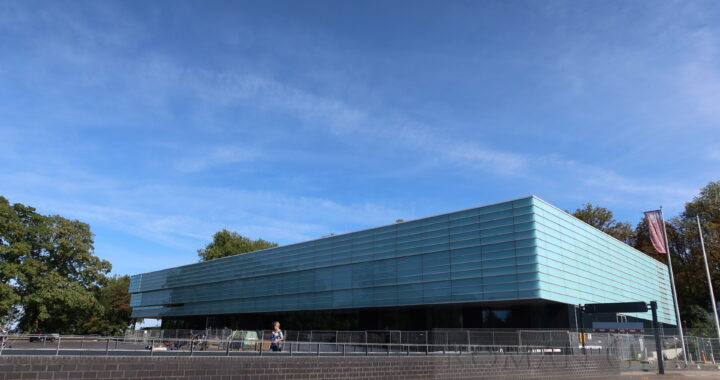
  • Valkhof Museum
    • Located at Kelfkensbos 59, Nijmegen, the museum holds Artefacts from the Roman period.
  • Victory Monument to Tiberius in the museum.
    • This is the remnant of a column which holds reliefs depicting Roman Gods and a Roman in a Toga performing a sacrifice to Tiberius.


Valkhof Museum, Nijmegen

The first Salisbury Cathedral was built in Old Sarum in 1092 BCE, but moved stone by stone in 1220 CE to modern Salisbury, just 2 miles away..

Old Sarum

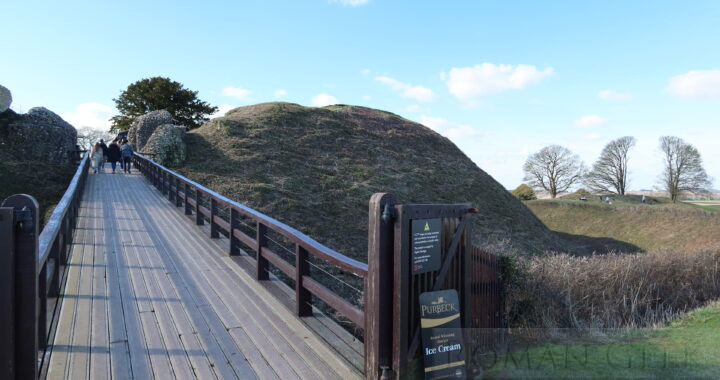
  • Old Sarum is a double walled Iron Age Fortress built around 500 BCE although the site has been occupied since 3,000 BCE.
  • It is located next to the River Avon, 2 miles (3km) north of Salisbury in Wiltshire.

History

  • The Romans built a Hill Fort here called Sorviodunum on a crossroads of two Roman roads.
  • In 1086 CE William the Conqueror invited all the Chieftains and Nobles to come to Old Sarum and recognise him as the new King of England.
  • The first Salisbury Cathedral was completed on this site in 1092 BCE, followed by a Royal Palace and a small town.
  • In 1220 CE the Cathedral and town were moved down to the Banks of the River Avon.
  • Salisbury Cathedral holds a model of medieval Old Sarum showing the town and cathedral inside the walls.
  • ‘Rotten Borough’: Until the 1832 Reform Act, Old Sarum was a ‘Rotten Borough’ that continued to have Parliamentary Representation even though nobody lived there.

Roman Roads

  • Portway
    • London-Silchester-Old Sarum- Dorchester
  • Roman Road
    • Old Sarum-Poole
  • Iter XV
  • Iter XII
    • For some reason part of Iter XV is repeated in this Iter XII.

Nearby Monuments


Old Sarum, Wiltshire

Trajan’s Bridge (c.100 CE) The Bridge carried the Roman Road from Leon to Braga. Commemorative Column of the Peoples The column was erected on the bridge in 104 CE and holds a dedication to Vespasian and Titus.

Chaves

  • Chaves is a town on the river Tamega in northern Portugal 6 miles (10km) from the Spanish Frontier.
  • It was known to the Romans as the spa town of Aquae Flaviae whose Baths were fed by hot springs. The town was located in a mining area in the Province of Hispania Tarraconensis.

Roman Sites

  • Trajan’s Bridge (c.100 CE)
    • The Bridge carried the Roman Road from Leon to Braga.
  • Commemorative Column of the Peoples
    • The column was erected on the bridge in 104 CE and holds a dedication to Vespasian and Titus.
  • Roman Baths of Chaves
    • Currently housed in a Museum that is under construction.

Museums

  • Museo da Regiao Flaviense
    • The Archeological Museum holds artefacts from the Roman period.
  • Museo das Termas Romanas de Chaves
    • The Museum houses the Roman Baths of Aquae Flaviae.

Roman Roads


Trajan’s Bridge, Chaves

Porta Savoia, Susa, Italy

Susa

  • Susa is a town in Italy located on the confluence of the rivers Cenischia and Dora Riparia, 31 miles (51km) west of Turin in the Piedmont Region of northwestern Italy.

History

  • It was a Roman Fortress called Segusio and was the Capital of the Province of Alpes Cottiae on the frontier with Italia.
  • Previously, it had been a Client Kingdom known as the ‘Gateway to Italy’ until it was annexed by Rome in 63 CE.
Susa Cathedral, Italy

Susa Cathedral, Italy

Roman Sites

    • Walls of the Roman Fortress Town
Roman Walls, Susa

Roman Walls, Susa

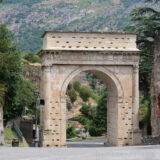
    • Triumphal Arch
      • Erected in 8 BCE by the Sugusian Chief in honour of Augustus.
Triumphal Arch, Suza, Italy

Triumphal Arch, Suza, Italy

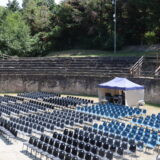
    • Roman Amphitheatre
      • Italy’s smallest built in c. 2 CE.
Roman Amphitheatre, Susa

Roman Amphitheatre, Susa


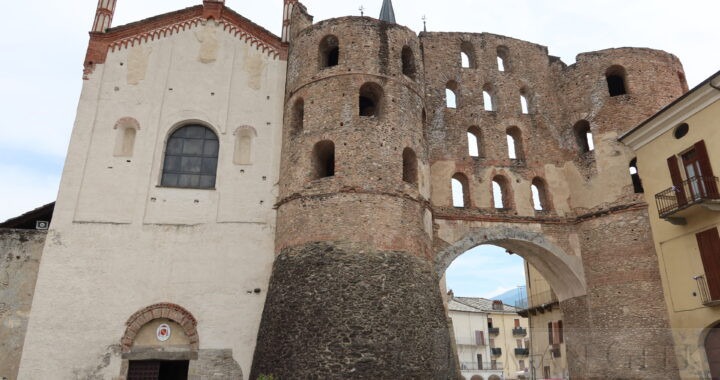
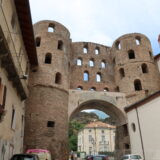
    • Porta Savoia
      • The Roman Gate. Susa Cathedral was later built attached to the Gate.
Porta Savoia, Susa, Italy

Porta Savoia, Susa, Italy


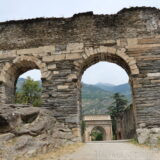
    • Graziani Thermal Viaduct
Roman Viaduct, Susa, Italy

Roman Viaduct, Susa, Italy

    • Archeological area of Piazza Savoia

Museums

  • Susa Civic Museum
    • Located in the Castello della Contessa Adelaide di Susa.
Susa Civic Museum

Susa Civic Museum, Located in the Castello della Contessa Adelaide di Susa.

Roman Roads


Porta Savoia, Susa

Clemens Sels Museum, Neuss

Neuss

  • Neuss is a city located at the confluence of the rivers Rhine and Erft, on the west bank of the Rhine opposite Dusseldorf, in the State of North Rhine-Westphalia in Germany.
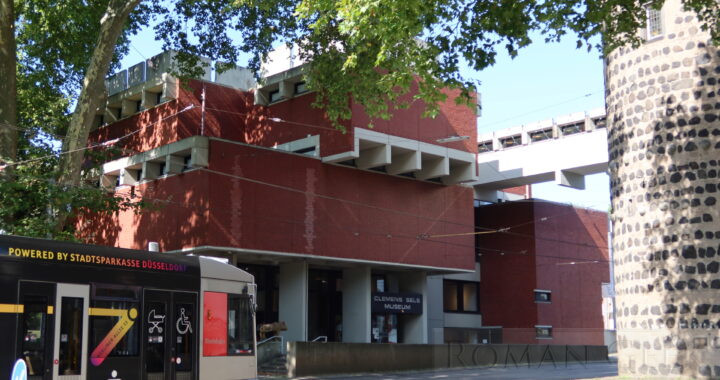
  • It is the location of the Clemens Sels Museum holding the Finds of Roman Novaesium and the Neuss Roman Watchtower at Reckenburg.

History

  • It was founded by Drusus the Elder in 16 BCE as a Roman Fort called Novaesium which developed into a Legionary Fortress located in the Roman Province of Germania Inferior.
  • Although the Fort has been excavated, no Remains are visible today.
  • The Fort is the location of the only known Valetudinarium or Roman Military Hospital.
  • In 69 CE the fort was destroyed during the Batavian Revolt but rebuilt afterwards and continued in use until 104 CE, after which, the Legions left the fort and it became a civilian town.
  • Roman Legions posted to Novaesium:
  • In 275 CE the town was destroyed by the Franks.
  • In the 350’s the town was destroyed again by the Alemanni.

Roman Sites

  • Neuss Roman Watchtower
    • This is a modern reconstruction of a Roman Watchtower built near the buried remains of the original fort at Reckenburg.

Museums

  • Clemens Sels Museum Neuss
    • Located at Am Obertor, Neuss.
    • The museum holds a Collection of Finds from the Roman Fortress of Novaesium including a Legionary Helmet, a seated statue of Jupiter, a stone sundial, a millstone, inscribed tombstones, glassware, Samian Ware and Tiles.
    • Other Finds from the Fortress are in the Rheinisches Landesmuseum Bonn.

Roman Roads

  • A Roman Road
  • A Military Road
    • The road ran along the west bank of the Rhine and connected the forts along the Limes Germanicus.


Clemens Sels Museum Neuss

The Ridgeway, Berkshire Downs

The Ridgeway

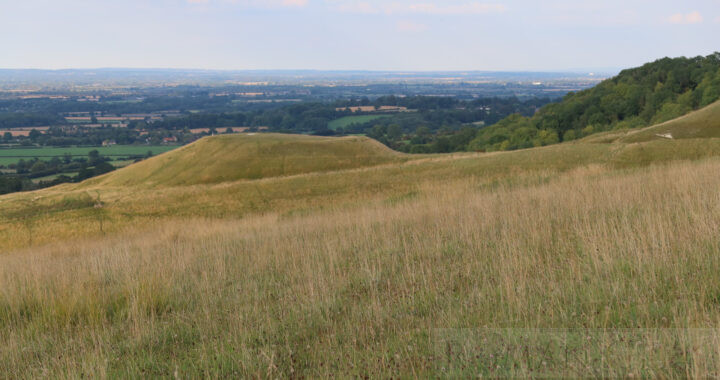
  • The Ridgeway is a 5,000 year old Bronze Age chalk road that connects Bronze Age hillforts positioned along the Berkshire Downs.
  • It is one of four pathways that combine to make the Greater Ridgeway that runs from Lyme Regis in Dorset to Hunstanton on the Wash in the North Sea.

The Route

The Icknield Way

  • This ancient east-west trackway possibly ran from Exeter to Hunstanton and consisted of:
    • The Wessex Ridgeway
    • The Ridgeway
    • Icknield Way Path
    • Peddars Way

The Four Highways of Medieval England


Uffington Castle, White Horse & Dragon Hill, Berkshire Downs

Famagusta

  • Famagusta is a deep water port founded in 274 BCE, after nearby Salamis was hit by an earthquake.
  • It is located 4 miles (6km) south from the ruins of Salamis, in the Turkish controlled area of Eastern Cyprus.

History of nearby Salamis and Cyprus

  • Finds from Salamis date to the 11th century BCE, when Copper was already being exported from Cyprus.
  • In 708 BCE, the Kings of Cyprus came under the control of Assyria and paid homage to the Assyrian King Sargon II.
  • Between 334/3 BCE, the Kings of Cyprus allied with Alexander the Great against Persia, and lent him their fleets. 120 ships belonginhg to the Kings of Cyprus besieged Tyre until it fell in 332 BCE. Cyprus then came under the control of Egypt.
  • In 58 BCE, Salamis became part of the Roman Province of Cyprus.
  • Salamis was rebuilt after an earthquake in the 4th century CE, by Constantius II (337-361 CE), who renamed it Constantia.
  • Cyprus was lost to the Arab Invasion of 654 CE, when the population abandoned Salamis and moved to Famagusta.

Roman Sites of Salamis

  • Theatre (restored), with 50 rows of seats for 15,000 spectators
  • Gymnasium (restored), with a colonnaded Palaestra.
  • Statue of Augustus
  • Baths
  • Public Latrines (with 44 seats)
  • Harbour Wall
  • Basilica
  • Water Cistern, near the Agora
  • The Roman Agora
  • Temple of Zeus
  • Necropolis

Museums

  • St. Barnabus Monastery and Icon Museum
    • near Salamis, Famagusta, N. Cyprus.


St. Barnabus Archaeological and Icon Museum