
Catania

  • Catania is a Port city on the northeast coast of the island of Sicily in the Region of Sicily in Italy. It is located at the base of Mount Etna.
  • It became a Roman city of the same name after the First Punic War (264-246 BCE) and was in the Province of Sicily.

Mount Etna

  • Catania was partially damaged by the eruption of Mount Etna in 121 BCE, but rebuilt its roofs and returned to prosperity.
  • The city has been damaged by volcanic eruptions 17 times in its history.

Roman Sites

  • Roman Amphitheatre
    • the ruins are sunk below ground level.
  • Roman Theatre
    • seating for 7,000 spectators.
  • Roman Odeon
    • seating for 1,500 spectators.
  • Roman Baths
    • Achilliane Thermae below ground with its arches and floors intact.

Museums

  • Theatre Museum
    • This is a very small museum beside the Roman Theatre that holds the Roman marble statues that were found on the Site.
  • Archeological Museum of Catania
    • Palazzo Ingrassia, Via Biblioteca, 4, 95124, Catania.
    • The museum holds Finds from the excavations of the Greek colony of Megara Hyblae as well as from other periods of history.

Roman Roads

  • A circular perimeter road connected all the coastal cities of Sicily.


Catania
Taormina

  • Taormina is a Port city on the northeast coast of the island of Sicily in the Region of Sicily in Italy.
  • It was the Roman city of Tauromenium located in the Province of Sicily.

Roman Sites

  • Greco-Roman Theatre (3rd century BCE)
    • Overlooking the sea, it could seat 5,400 spectators.
  • Roman Baths
  • Roman Odeon (smaller Theatre)

Museums

  • Taormina Archeological Museum
    • A very small museum next to the Roman Theatre which holds Roman Sculptures and Inscriptions from Taormina.
  • Badia Vecchia Museum
    • Located on the Arcipretura di Piazza Duomo, Taormina.
    • It holds Artefacts from the Greek and Roman periods.

Roman Roads

  • A circular perimeter road connected all the coastal cities of Sicily.


Taormina

Museo Archeologico di Olbia

  • The Archeological Museum of Olbia is located at the Via Isola Peddone, 07026, Olbia in Sardinia.
  • The museum holds the timbers of a Roman Cargo Shipwreck as well as Artefacts from the Roman and Phoenician periods.

Roman Ship

  • On display in the museum are the timbers of one Roman shipwreck and one Medieval shipwreck, and there is a reconstruction of the Roman ship’s cross section.
  • Also in the collection are two Roman Masts and three Roman Rudder Stocks.

The 12 Roman Shipwrecks

  • Excavations in Olbia harbour during 2001 found the shipwrecks of 12 cargo ships belonging to the Roman Grain Fleet, all sunk at the same time, possibly when the Vandals conquered Sardinia in 436 CE. They also found 5 medieval wrecks.
  • The timbers of the wrecks were dismantled and underwent a system of preservation, of which two vessels are now displayed in the museum.
  • Also found from the adjacent Roman dockyard were two oak masts measuring 26 feet (7.8m) and 24 feet (7.3m), the only Roman masts ever found, and dated to the reign of Nero (54-68 CE). Their bases were octagonal to secure them into the hull.
  • Four Roman Rudders were excavated, similar in size to the rudders from the Lake Nemi Roman Shipwrecks.
  • The remains of a Roman dockyard Crane were also found.


Olbia Archeological Museum

Bastia

  • Bastia is a Port and cathedral city on the northeastern tip of the island of Corsica in the Haute-Corse Departement of France.
  • Bastia began as the Roman town of Mantinorum Oppidum, which is now Cardo, a suburb of Bastia, which was in the Province of Corsica. Very few items have been found from the Roman period.

Museums

  • Musee de Bastia
    • The museum holds collections spanning the history of the region.


Bastia

Ajaccio

  • Ajaccio is a Port and cathedral city, which is the Capital of the island of Corsica, located on its west coast.
  • It is in the Haute-Corse Department of France and is world famous for being the birthplace of the French Emperor, Napoleon Bonaparte (1769-1821 CE).

Roman History

  • It’s Roman name is unknown, although it may have been Adjacium or Adiacium or Urcinium.
  • It was located in the Province of Corsica.
  • Very little has been found from the Roman period.

Museums

  • Maison Bonaparte
    • Rue Saint-Charles, 20000 Ajaccio.
    • The Museum is the former home of the Bonaparte family and is dedicated to the history of Napoleon and his descendents.


Ajaccio

Monaco

Monaco

  • Monaco is a tiny Independent State between France and Italy which is governed as the Principality of Monaco and has been ruled by the House of Grimaldi since 1297 CE. The Capital and Port of Monte Carlo is famed for its Casinos.
  • It was a Roman harbour called Portus Herculis Monaeci and located in the Province of Alpes Maritimae.

History

  • Monaco was originally settled in the 6th century BCE by the Phocaean Greeks.
  • The Port was named Portus Herculis because Hercules was thought to have passed through the area.
  • A Temple of Hercules is referred to in Roman sources, but no Temple has ever been found.


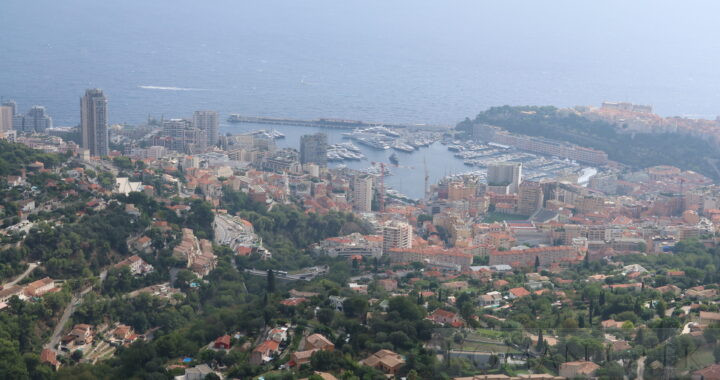
Photo and map: Port Hercule, Monaco

Museum of Ancient Ships of Pisa

  • The Museum of Ancient Ships of Pisa is a Museum that holds a collection of Roman ships found in Pisa, that date across 1,000 years of the Roman Period.

Location

  • The Museum is located at Lungarno Raniero Simonelli, 16, 56126, Pisa.

History of the Collection

  • The museum holds a unique collection of cargo ships and riverboats that were perfectly preserved with their cargoes when they sank in the mud during severe floods.
  • Pisa is a city on the river Arno, which empties into the Mediterranean at nearby Livorno, in the Tuscany Region of northern Italy.
  • It was the Roman inland port known as Portus Pisanus, then located 2.5 miles (4km) from the sea, and the only port between Genoa and Ostia.
  • In 1998, whilst excavating a new railway station, over 30 Roman shipwrecks were found in a remarkable state of preservation.
  • The ships date from over 1,000 years of the Roman Period between the 3rd century BCE to the 7th century CE.
  • The ships are now preserved in this museum, which opened in 2019.


Museum of Ancient Ships of Pisa

Pesaro

  • Pesaro is a Port city on the Adriatic in the Marche Region of northern Italy.
  • It was founded by the Romans in 174 BCE as Pisaurum and was located in Italia.

Roman Sites

  • Cathedral of Santa Maria Assunta
    • A Roman Mosaic is visible through a glass window in the floor.

Museums

  • Museo Oliveriano Archeology Museum
    • Located at Via Domenico Mazza, 61121, Pesaro.
    • Holds Roman sculptures, ceramics and coins.

Roman Roads


Pesaro

Firenze

  • Firenze or Florence is a cathedral city and capital of the Tuscany Region located on the river Arno in northern Italy. It is a UNESCO World Heritage Site and is world famous for its many Renaissance Buildings and Works of Art built when Florence was ruled by the Medici family.
  • It was founded in 59 BCE by Julius Caesar to settle his veteran soldiers and called Fluentia, which later became Florentia. It was in Italia.

Roman Sites

  • Remains of the Roman Amphitheatre
    • It is located in te Via De’ Bentaccordi. Firenze.
  • Roman Theatre
    • Located at Via Portigani, 1, Firenze.

Museums

  • National Archeological Museum of Florence
    • It is located at 1 piazza Santissima Annunziata, Firenze.
    • It holds the following Roman Sculptures:
      • Idolino of Pisaro (A Roman bronze copy of a classical Greek statue)
      • Torso de Livorno (Roman copy of a 5th century BCE Greek statue)
      • Gallo Treboniano (A 3rd century CE statue of a cockerel)
      • Minerva of Arrezo (Roman bronze copy of a 4th century BCE Greek statue)
  • The Uffizi Gallery
    • It is located at Piazzale degli Uffizi, 6, 50122 Firenze.
    • This is a world famous Art gallery dedicated to Renaissance Art.

Roman Roads


Firenze

Cosenza

  • Cosenza is a cathedral city on the confluence of the rivers Busento and  Cranti in the Calabria Region of southern Italy.
  • It was known to the Romans as Consentia, and was located in Italia. Alaric was buried here in 410 CE, but his tomb has never been found.

Museums

  • Museo dei Bretti e degli Enotri
    • Located at Vico Sant’Agostino, 3,87100, Cosenza.
    • The museum holds Finds from the Roman period.

Roman Roads