Bab el Mandeb

  • The Bab el Mandeb Strait (meaning Gate of Tears) is a 14 nautical mile (26km) wide channel located at the southern mouth of the Red Sea.
  • The Strait separates Yemen in Arabia and Djibouti in Africa.

Description

Arabia Felix

  • Next to the Bab el Mandeb Strait was Arabia Felix, modern Yemen and Southern Arabia, which traded Frankincense and Myrrh.
  • Arabia Felix consisted of four kingdoms:
    1. Sabaean Kingdom (Yemen) with the capital at Marib, then later, at Sana (Sanaa). This was the most powerful Kingdom.
    2. Kingdom of Hadramaut with the capital at Sabwa. They traded Incense and Cinnamon traded through their Port of Cana (Mukalla). Hadramaut became a Roman Ally and then in 25 BCE, it invaded the Sabaean Kingdom which then also became a Roman Ally.
    3. Kingdom of Ma’in with the capital at Timna, which controlled the Incense Road.
    4. Kingdom of Zufar (Oman) with their capital Ubar, a the lost city of which nothing is known.

Ocelis

  • The port of Ocelis was mentioned by Pliny the Elder in his ‘Natural History’ Book VI.
  • It was located next to the Bab el Mandeb Strait, on the Arabian coast.
  • Ocelis was the first port of call, for vessels leaving Berenice in Egypt, to collect fresh water. Sailing took 30 days. The alternative to Ocelis was Cane, in Arabia, source of Frankincense. The third option was Muza, but this was not recommended.
  • Indian vessels were not permitted to enter the Red Sea beyond Ocelis.
  • Ocelis to Muziris, the first Port of Trade in India, was 40 days sail.

Assab

Eudaemon

  • Aden in the Yemen was ‘Eudaemon’, mentioned in the Periplus of the Erythraean Sea. It is located outside of the Bab el Mandeb Strait on the Arabian coast. Originally, it was a port of transhipment, but had already been bypassed by the long distance Red Sea Fleets by the first century CE. It was built in the crater of an extinct volcano.


Bab-el-Mandeb Strait
Agri Decumates

  • The Agri Decumates, meaning the ‘Decumatian Fields’, was a Province in Roman occupied southern Germany.
  • It lay between the Rhine and the Danube, and included the Black Forest and parts of the Jura. Its details remain unknown.

History

  • The name Decumates is unknown, but may have meant that it consisted of ten cantons.
  • It was an area of Roman occupation which was only referred to by name by Tacitus in ‘Germania’ (Chap. 29), who simply stated that it was populated by the Helvetii. No other sources mention the Agri Decumates.
  • The area was occupied by Vespasian from 72 CE onwards.
  • It formed part of Germania Superior with the southern part in Raetia.
  • The Agri Decumates was protected by the Limes Germanicus, a series of Defenses that formed the Roman Frontier between the Rhine and the Danube.
  • It was lost in 260 CE when Gallienus declared the Gallic Empire and seceded from Rome.

Abandonment

  • The area was abandoned when Gallienus (259-60 CE) declared the Gallic Empire (260-274 CE).
  • Roman Rule ended officially after the reign of the Emperor Probus (276-282 CE).
  • It was then occupied by the Alemanni Germanic Tribe.


The Black Forest

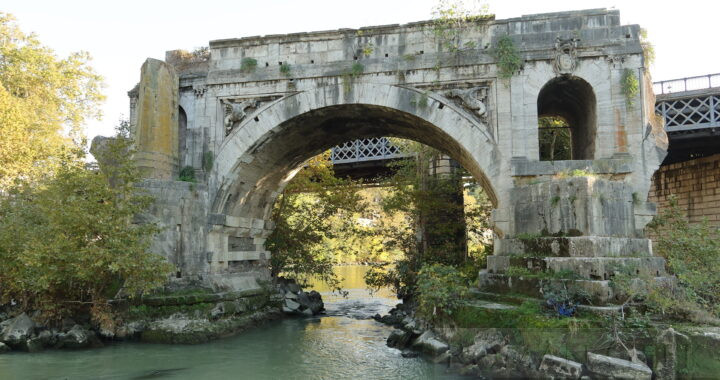
The Last remaining Arch of the Aemilian Bridge over the Tiber in Rome

Pons Aemilius

Getting There

  • Only one Arch remains standing in front of the Ponte Palatino.
  • It is best viewed either from this bridge or from the south of Tiber Island.

History

  • Built in timber in 179 BCE, the stone arches were added in 142 BCE.
  • It carried the Via Aurelia to Pisa and Gaul, and connected the Forum Boarium with the Trastevere area.
  • The bridge became the first stone bridge in Rome.
  • Only one Arch is visible today, south of Tiber Island.
  • The Cloaca Maxima emerges between the Pons Aemilius and the Pons Sublicius.

Roman Roads (starting at this bridge)


Pons Aemilius

Wakhjir Pass

  • The Wakhjir Pass lies at the eastern end of the Wakhan Corridor.
  • It was the main Pass connecting Afghanistan with China on the Silk Road.

Description

  • The Pass has an altitude of 16,151 ft (4,923m). Near the Pass is a cave which is the source of the Wakhjir river, and this river flows into the Amu Darya or river Oxus.
  • It lies at the eastern end of the Hindu Kush where they meet the Pamir and Karakoran mountains.
  • The Pass is cut-off for five months of the year, and often blocked during the other months.

Chalachigu Valley

  • East of the Wakhjir Pass lies the Chalachigu Valley, which is considered by the Chinese to be an extension of the Wakhan Corridor.
  • They refer to the Wakhjir Pass as the South Wakhjir Pass, as 10 miles (16km) away there is another Pass into China referred to as the North Wakhjir Pass. There are seven Passes between Afghanistan and China along a 46 mile (74km) border.
  • The Passes in the Chalachigu Valley are the Beyik Pass to Tajikistan, the Kilik pass and Mintaka Pass to Pakistan and the Wakhjir Pass and Tigarmansu Pass to Afghanistan.

Tashgurkan Fortress

  • Tashgurkan is a Chinese town near the approach to the Chalachigu Valley, where Caravans on the Silk Road stopped and waited for the Wakhjir Pass to open.
  • There has been a fortress here for 2,000 years, the current fort, the massive Princess Castle dates from the Yuan Dynasty (1279-1368 CE).


Wakhjir Pass

Dwarka

  • Dwarka is a city in the state of Gujarat, Northwest India, and founded by Krishna according to Legend. Dwarka in Sanskrit means ‘Gateway to Heaven’.
  • It is one of the four sacred Hindu pilgrimage sites and one of the sapta puri, the seven most ancient religious cities in India.

The Sunken City of Dwarka

  • Between 1984-1990, an underwater exploration project was undertaken by the Indian Government to find the sunken city of Dwarka. Using scuba equipment, underwater scooters and side scan sonar, the team confirmed the existence of a submerged city with walls, bastions, and pillars, lying offshore up to a depth of 20 ft (6m).
  • In 2007, artefacts started being raised and examined. The Finds included stone anchors, stone sculptures, objects made of bronze, copper and iron, seals and inscriptions dating to c.1,500 BCE and pottery dating to c.3,500 BCE.
  • The conclusion is that sunken Dwarka was a busy port city that was lost in a Flood around c.1,500 BCE. This coincides with the Deucalion Flood in Greek Mythology which has been dated by the Parian Marble to 1529-1528 BCE.


Dwarka

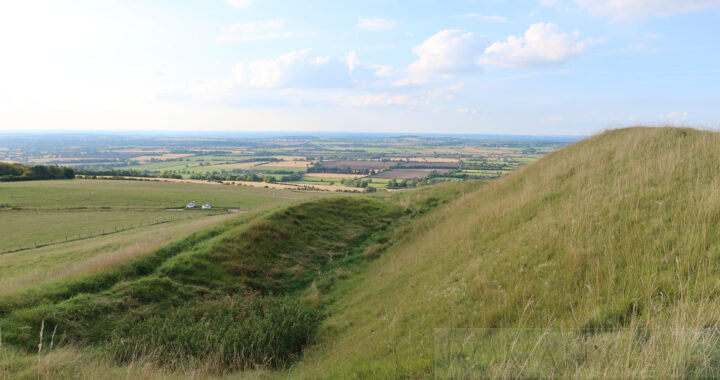
Uffington Castle, Berkshire Downs

Uffington Castle

  • Uffington Castle is a Hillfort on the top of Dragon Hill near Faringdon, and is the highest point in Oxfordshire. It dates to the Iron Age (c.1200-400 BCE).
  • Located on the nearby White Horse Hill is the Uffington White Horse. Both Monuments lie on The Ridgeway which runs along the Berkshire Downs.


Uffington Castle

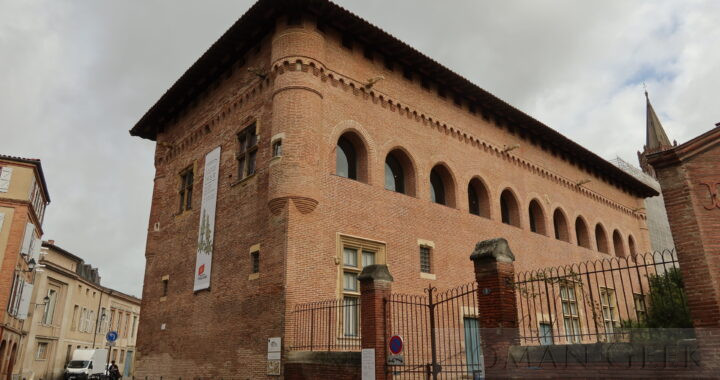
Toulouse Archeological Museum

Toulouse Archeological Museum

  • The Toulouse Archeological Museum, also known as the Musee Saint Raymond, is located next to the Basilica of St Sernin in Toulouse.

Artefacts

  • Emperors’ Busts
    • The Museum holds an unusually large collection of Emperors’ busts from the Roman villa at Chiragan, at Martres-Tolosan, 40 miles (60km) south of Toulouse, covering a period of three centuries. This suggests that the Villa was possibly an Imperial property until the the fourth century CE.
  • Twelve Labours of Hercules Reliefs
  • Mosaics
    • There is a collection of Roman Mosaics featuring the Sea God Oceanus from the Roman Villa at St. Rustica.


Toulouse Archeological Museum (Musee Saint-Raymond)

Tarpeian Rock

  • The Tarpeian Rock is a steep 80 ft (25m) cliff overlooking the Forum Romanum in Rome, used as a site of Execution for Murderers, Traitors, Perjurors and Slaves who had committed Theft. A shameful death was to be flung from the top of the cliff.
  • The Rock was named after Tarpeia, the Vestal Virgin, who had betrayed Rome to the Sabines when they tried to recapture their abducted women. Her body was the first to be thrown off the cliff.


Tarpeian Rock (Rupe Tarpea), Capitoline Hill

Temple of Juno Moneta

  • The Temple of Juno Moneta was built in 344 BCE and stood on the Arx or citadel of the Capitoline Hill.. No remains exist today.
  • It held the Libri Lentei, the Linen Rolls, which were possibly lists of elected Roman Officials, and also from 273 BCE, the Mint of Ancient Rome was placed next door to it.

The Mint

  • The Mint of Ancient Rome was in a building attached to the Temple and became synonymous with it.
  • The Goddess Moneta became associated with the Mint, and the word Moneta was corrupted to become Mint in Latin, and is the origin of the words, monetary and money, in English.
  • After the Assassination of Julius Caesar in 44 BCE, the Mint was closed until 38 CE.
  • It functioned for 400 years, from 273 BCE until it was eventually moved by Domitian (81-96 CE) to the other end of the Forum Romanum.


Capitoline Hill, Rome

Temple of Saturn

  • The Temple of Saturn was built by the last King of Rome, Tarquinius Superbus in c. 497 BCE. It was completely rebuilt in 42 BCE and again in 360 CE.
  • It was the State Treasury of Rome, the Aerarium.

The Roman Site

History

  • The State Treasury of Rome
    • The Temple of Saturn was the location of the Aerarium, the State Treasury of Rome.
    • All the Gold and Silver Reserves were stored in the Temple under the Republic and the Empire.
  • Under the Roman Republic
    • The Temple was divided into two areas:
      • The Common Treasury: It received the Tributum and Vectigalia.
      • The Sacred Treasury: Aerarium Sanctum: It was created after the Sack of Rome by the Gauls in c. 390 BCE. It was never touched unless The Roman Republic faced an extreme emergency. Its Revenue came from the Lex Manlia 357 BCE which claimed 5% on Roman Slaves who were given Manumissio.
    • The Roman Senate controlled the State Treasury, and elected a Quaestor to manage it.
  • Under the Roman Empire

The Temple of Saturn, Rome